Stockholm in 2 days: the essential weekend itinerary
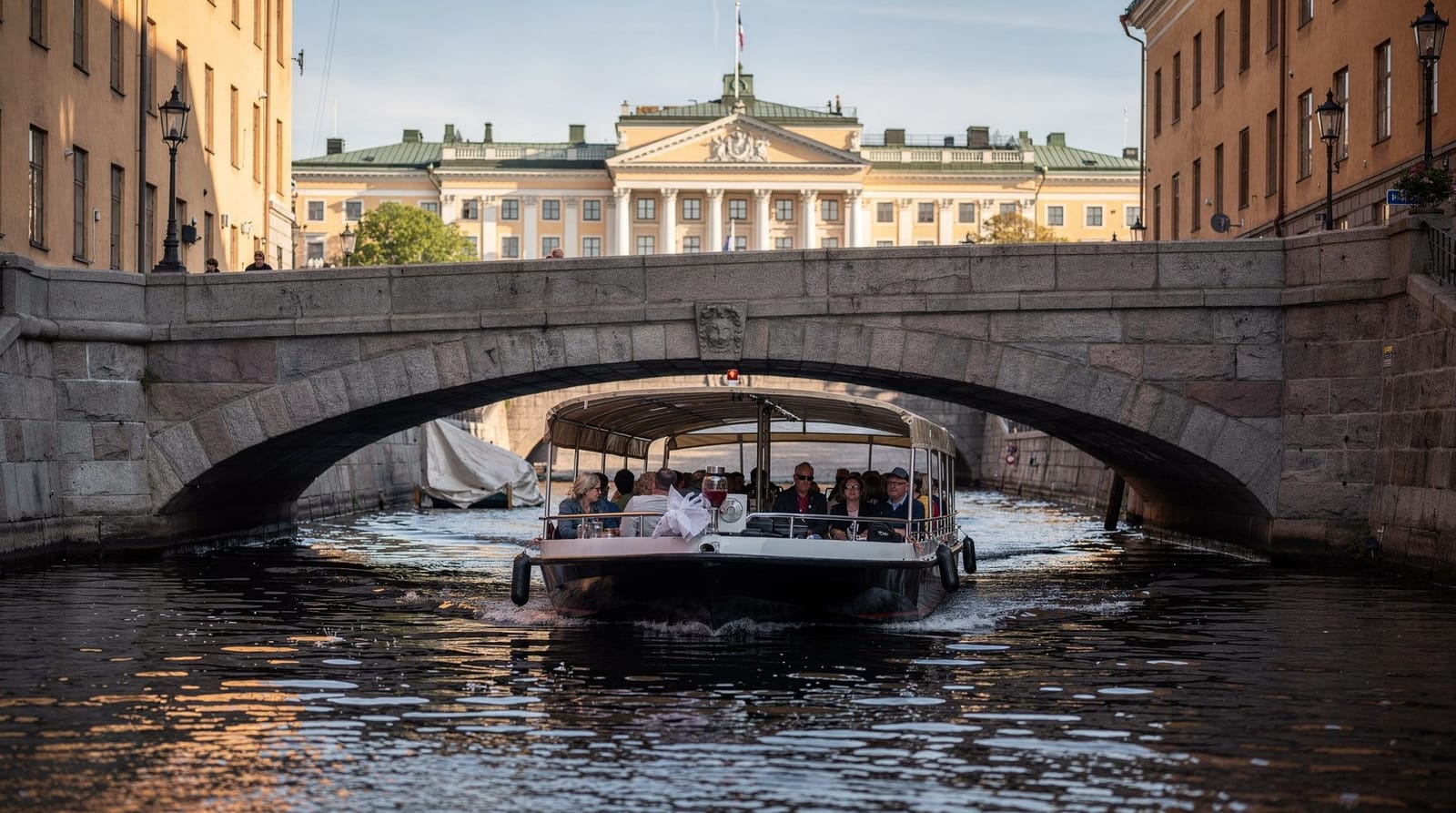
Stockholm: Royal Bridges canal boat tour
Duration: ~1 hour
Two days covers Stockholm’s essential character
Two days in Stockholm is a serious visit, not a rushed layover. It is enough time to understand the city’s distinct geography — the medieval island, the park island dense with world-class museums, the edgy southern neighbourhood — without the stress of a single crammed day.
This itinerary spreads the city’s three essential areas across two days in a logical sequence. Day one covers the historical core: Gamla Stan’s medieval streets, the Royal Palace, and Djurgården’s museum trio. Day two moves to the cultural and contemporary: ABBA Museum, Fotografiska, and a walk through Södermalm’s neighbourhood streets that show a different, less tourist-facing Stockholm.
The Royal Canal boat tour runs as a midday break on day one — an hour on the water that connects the day’s two halves while showing you the city from its most flattering angle.
What you get with two days: the essential Stockholm — the city that people mean when they say they’ve been. What you miss: the archipelago (needs a third day minimum), Drottningholm Palace (best as a half-day trip), and the full Södermalm food scene.
At a glance
| Day | Morning | Afternoon | Evening |
|---|---|---|---|
| Day 1 | Gamla Stan walk + Royal Palace | Royal Canal boat + Vasa Museum | Skansen sunset or Östermalm dinner |
| Day 2 | ABBA Museum | Fotografiska | Södermalm walk + dinner |
Day 1: Gamla Stan, the canal, and Djurgården museums
Morning: Gamla Stan and the Royal Palace
9:00am — Gamla Stan walk
Arrive at Slussen T-bana by 9am. Walk onto Gamla Stan immediately — the island is at its quietest before 10am when the tour groups arrive. Start at the southern end (Järntorget) and work your way north through the medieval street grid.
The essential stops on this walk:
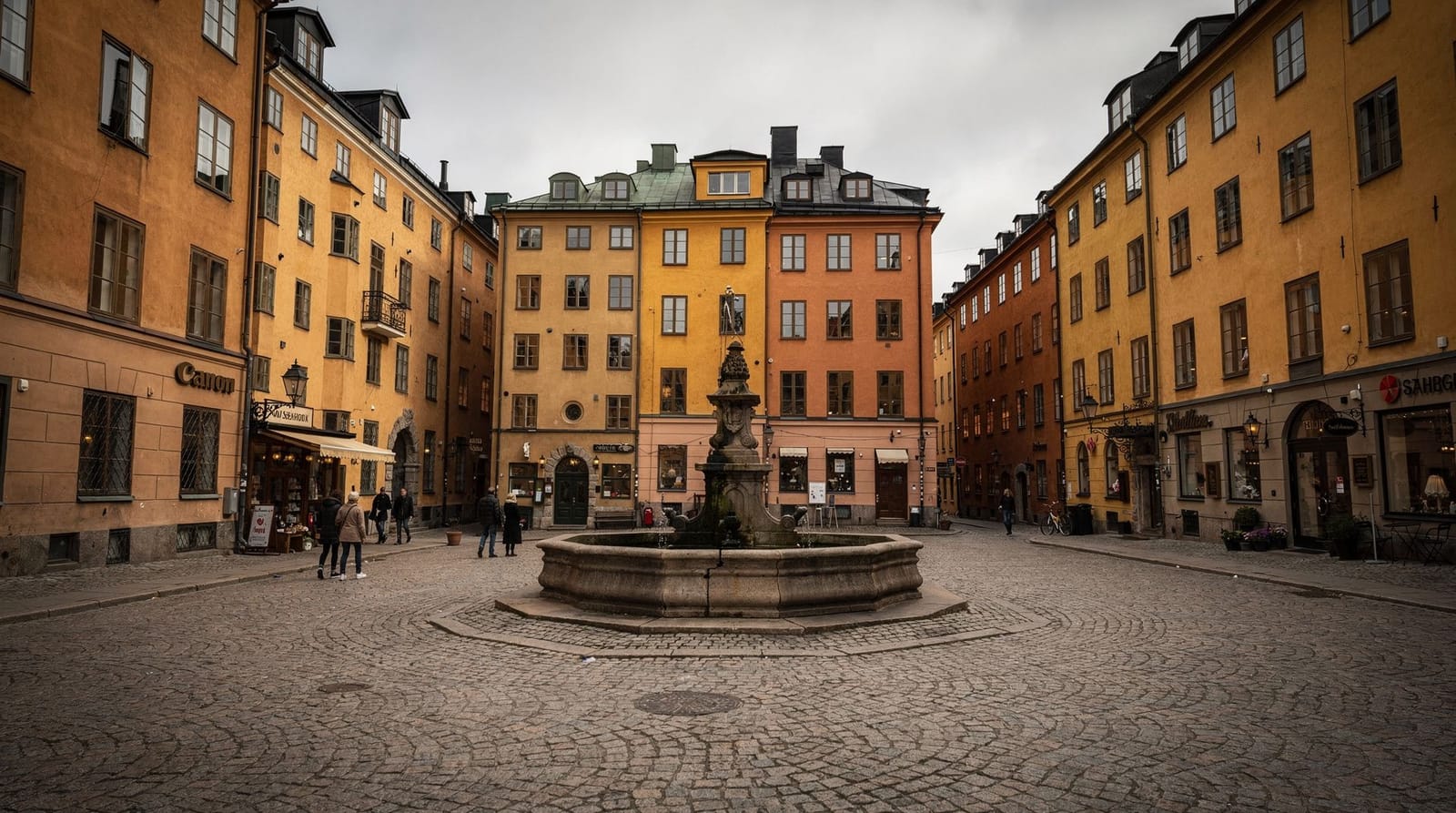
- Stortorget: The main square, surrounded by medieval merchant houses. Site of the Stockholm Bloodbath of 1520 — one of the most significant political events in Swedish history, described at the history guide.
- Mårten Trotzigs Gränd: Narrowest alley in Stockholm, 90cm wide, accessed off Prästgatan.
- The German Church (Tyska kyrkan): Seventeenth-century interior, often open in the morning.
- Nobel Museum: Allow 45 minutes for the exhibition on Stockholm’s most globally recognised institution. Pre-book your Nobel Prize Museum entrance ticket so it does not eat into the Royal Palace slot below.
For guided interpretation, a Gamla Stan secrets tour with fika covers the medieval history, the bloodbath site, and the hidden courtyards in two well-paced hours.
11:00am — Royal Palace
Walk to the northern end of Gamla Stan for the Royal Palace. The exterior courtyard is free; the palace museums charge separately per wing. The Changing of the Guard takes place daily at 12:15pm (summer) and is worth timing if you can — it draws a crowd but is genuinely impressive rather than tourist-trap ceremonial. The Royal Palace guide covers the interior museums in detail if you decide to explore beyond the courtyard.
Midday: Royal Canal boat tour
12:30pm — Royal Canal boat
From Stadshusbron (a 15-minute walk from Gamla Stan, or one stop on bus 3), board the Royal Canal boat. The Royal Bridges canal boat tour takes one hour and follows Stockholm’s inner waterways — under the bridges, past the City Hall, around the waterfront — with a live guide narrating Stockholm’s history and geography.
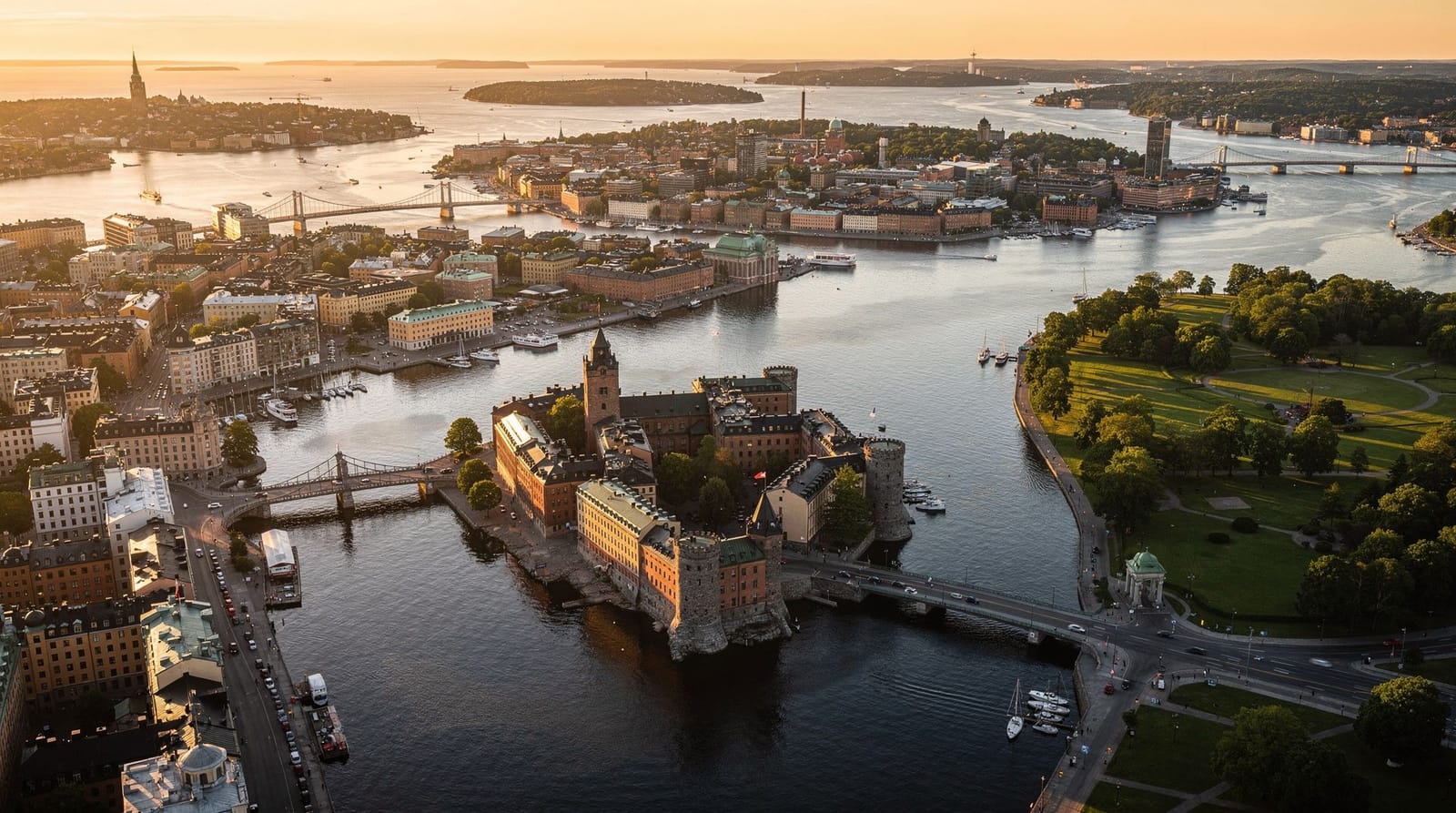
This tour does something no walk can: it shows you how the city’s 14 islands fit together, how the water defines its character, and why Stockholm is called the Venice of the North (a comparison Stockholm residents mildly resent but that is not entirely inaccurate). It is also a natural rest for the legs at midday.
Cost: approximately 230 SEK adult.
1:45pm — Lunch
After the boat, eat near the Djurgården ferry terminal. Gastrologik (Östermalm, slightly out of the way) is a Michelin-starred option. More practically: the café at Nordiska Museet or a picnic in the park assembled from the ICA supermarket near the ferry.
Afternoon: Djurgården museums
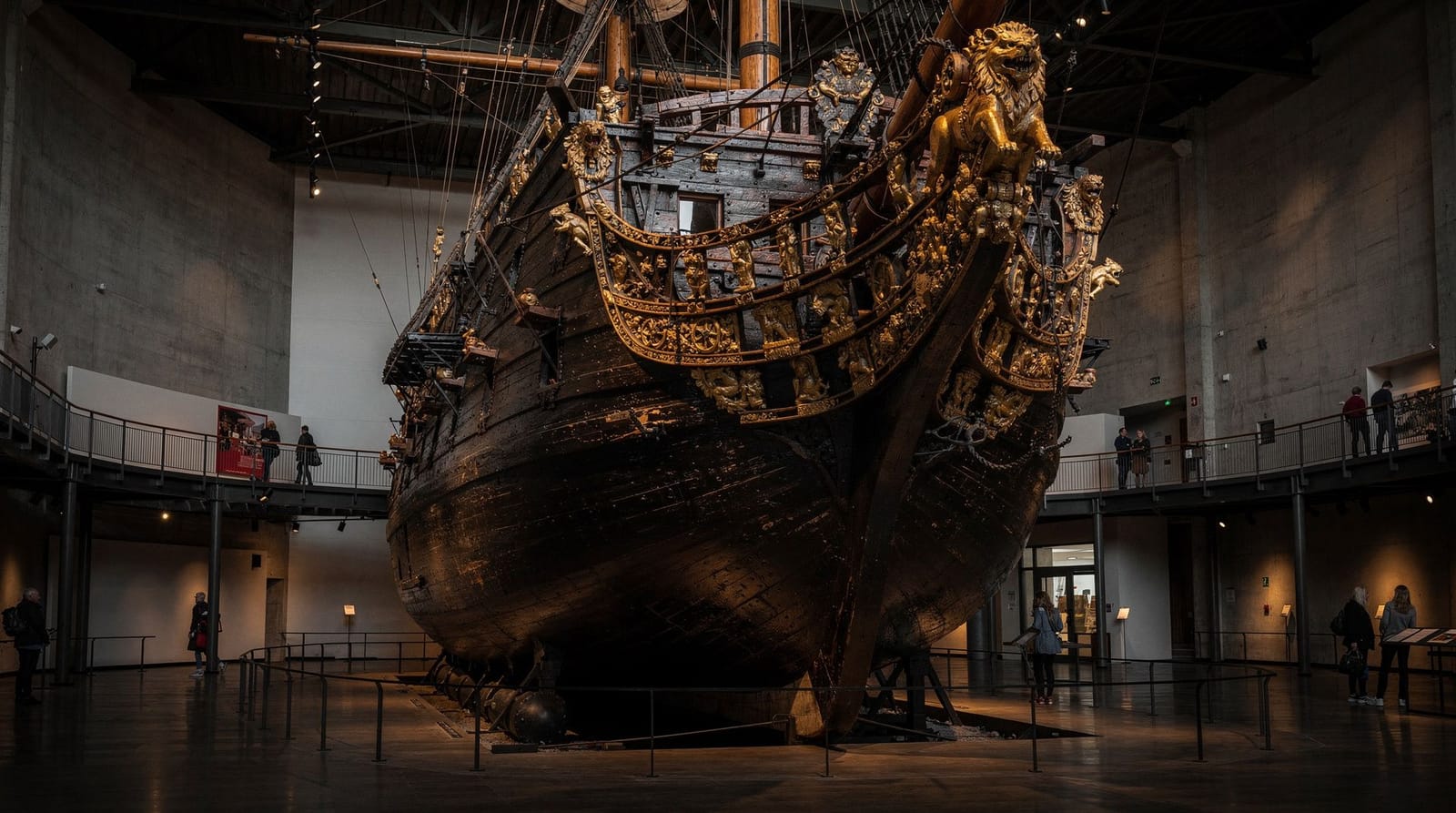
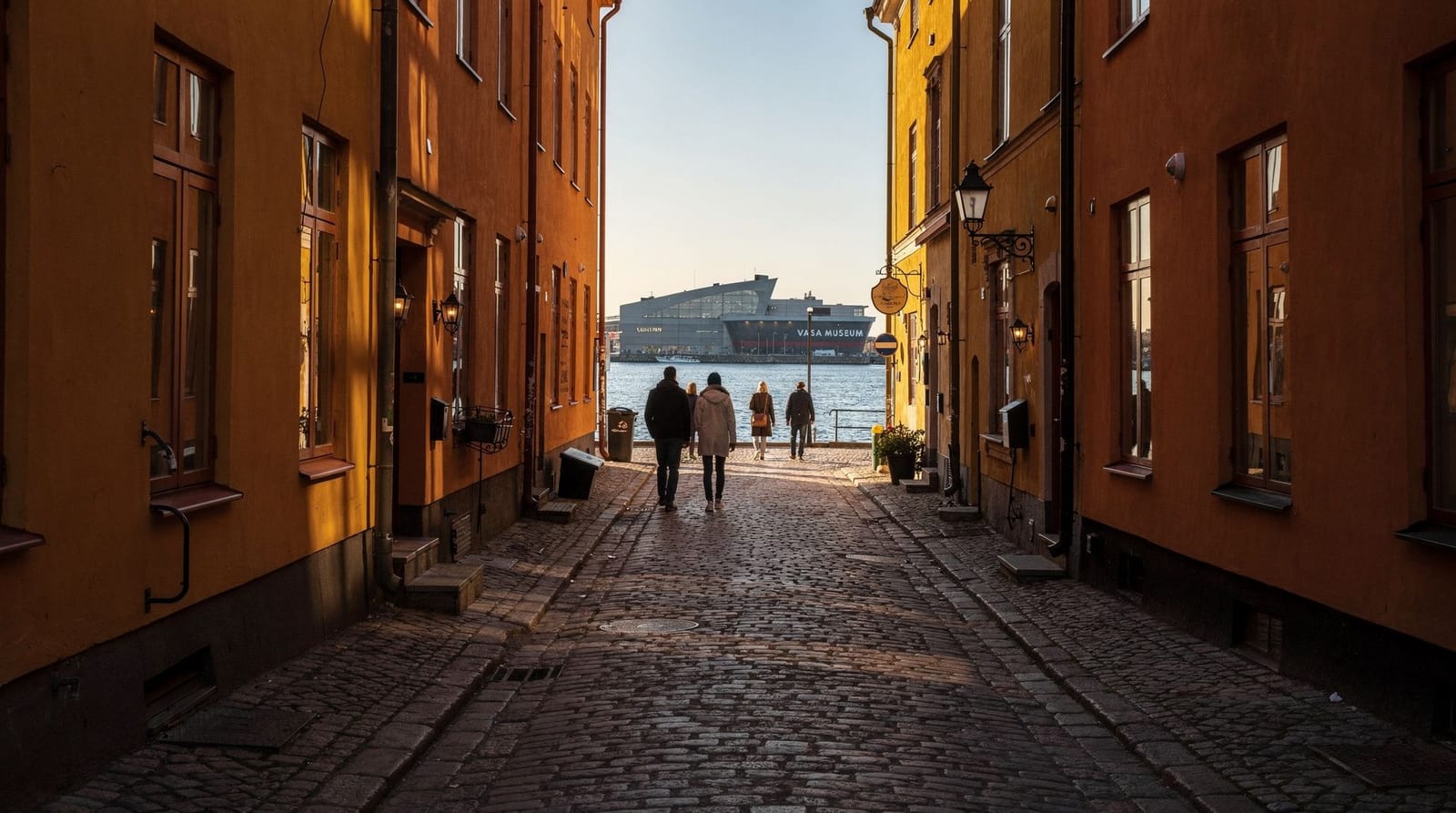
2:15pm — Vasa Museum
Take the ferry from Slussen to Djurgården (15 minutes, covered by SL pass) and head directly to the Vasa Museum. Pre-book your Vasa Museum entrance ticket online — summer queues without a pre-book can be 30–45 minutes.
The Vasa warship, which sank on its maiden voyage in 1628 and was raised almost perfectly intact in 1961, is the best single museum experience in Sweden. The scale of the ship — seven decks, 69 metres long, 1,200 carved decorations — is genuinely startling. Allow 90 minutes to two hours for the permanent exhibition.
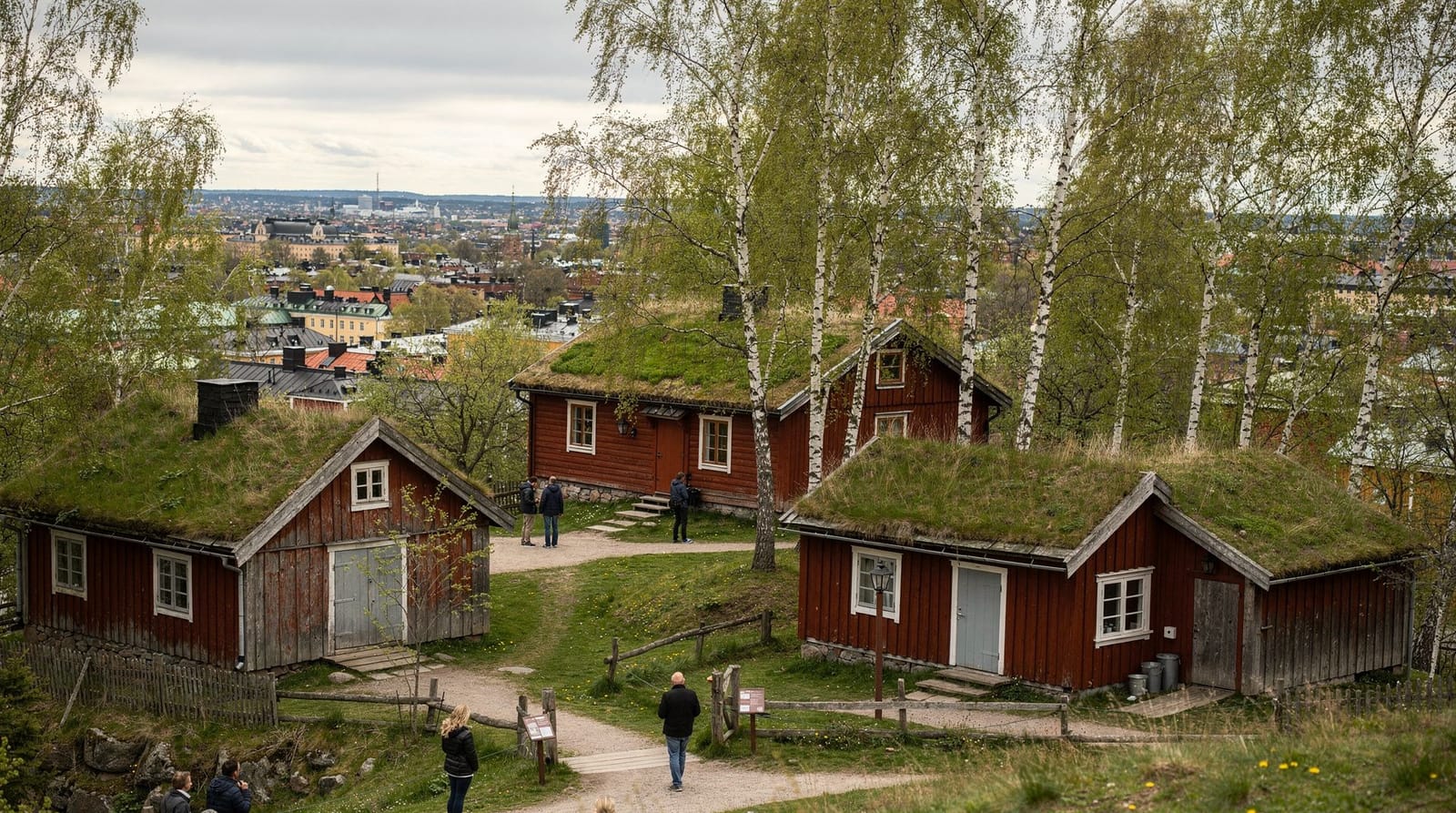
4:15pm — Skansen open-air museum
From the Vasa Museum, walk 15 minutes through Djurgården park to Skansen. A Skansen entrance ticket gives you access to 150+ historical buildings, the Nordic zoo, and working craftspeople demonstrating traditional skills. This is not a theme park — it is a serious museum that happens to be in the open air and populated by people in period dress doing period work.
In summer, the hilltop section gives extraordinary sunset views over Stockholm. In shoulder season, the buildings and the zoo are worth at least 90 minutes. See the Skansen guide for what to prioritise.
Cost: approximately 260 SEK adult.
Evening: dinner
6:30pm — Return and dinner
Take the tram or bus back from Djurgården to the city centre. For dinner:
- Östermalm (upmarket): Riche, Sturehof, or any restaurant around Humlegården park. Expect 350–500 SEK per main.
- Gamla Stan (atmosphere): Österlånggatan has better options than the tourist-facing Västerlånggatan. Fem Små Hus or Kryp In are well-regarded.
- Södermalm (affordable, local): If energy permits, take the T-bana to Medborgarplatsen and explore the restaurant strip around Folkungagatan. Pelikan serves traditional Swedish smörgåsbord in a 1906 beer hall setting — a genuine Stockholm experience.
Day 2: ABBA, Fotografiska, and Södermalm
Morning: ABBA Museum
9:30am — ABBA The Museum
ABBA The Museum is on Djurgården, a short bus or tram ride from the city centre. This is not a passive exhibition — you can sing backing vocals, duet with holograms of the band, and explore an archive of stage costumes, instruments, and memorabilia from one of the most commercially successful pop acts in history.
Pre-book your ABBA Museum entrance ticket — timed entry is now standard, and in summer the museum books out weeks ahead. Walk-in is sometimes possible on weekday mornings out of season.
Allow 2–3 hours. The museum covers ABBA’s career chronologically but also honestly — the personal lives, the business decisions, and the fact that the band’s music sold better after they split than when they were together.
Cost: approximately 290 SEK adult.
What the museum is not: a nostalgic cash-in. The permanent collection is genuinely curated and the interactive elements are more sophisticated than most music museums. That said, it rewards visitors who know ABBA’s music rather than just being aware of Mamma Mia.
Midday: lunch and transition
12:30pm — Lunch on Djurgården or Östermalm
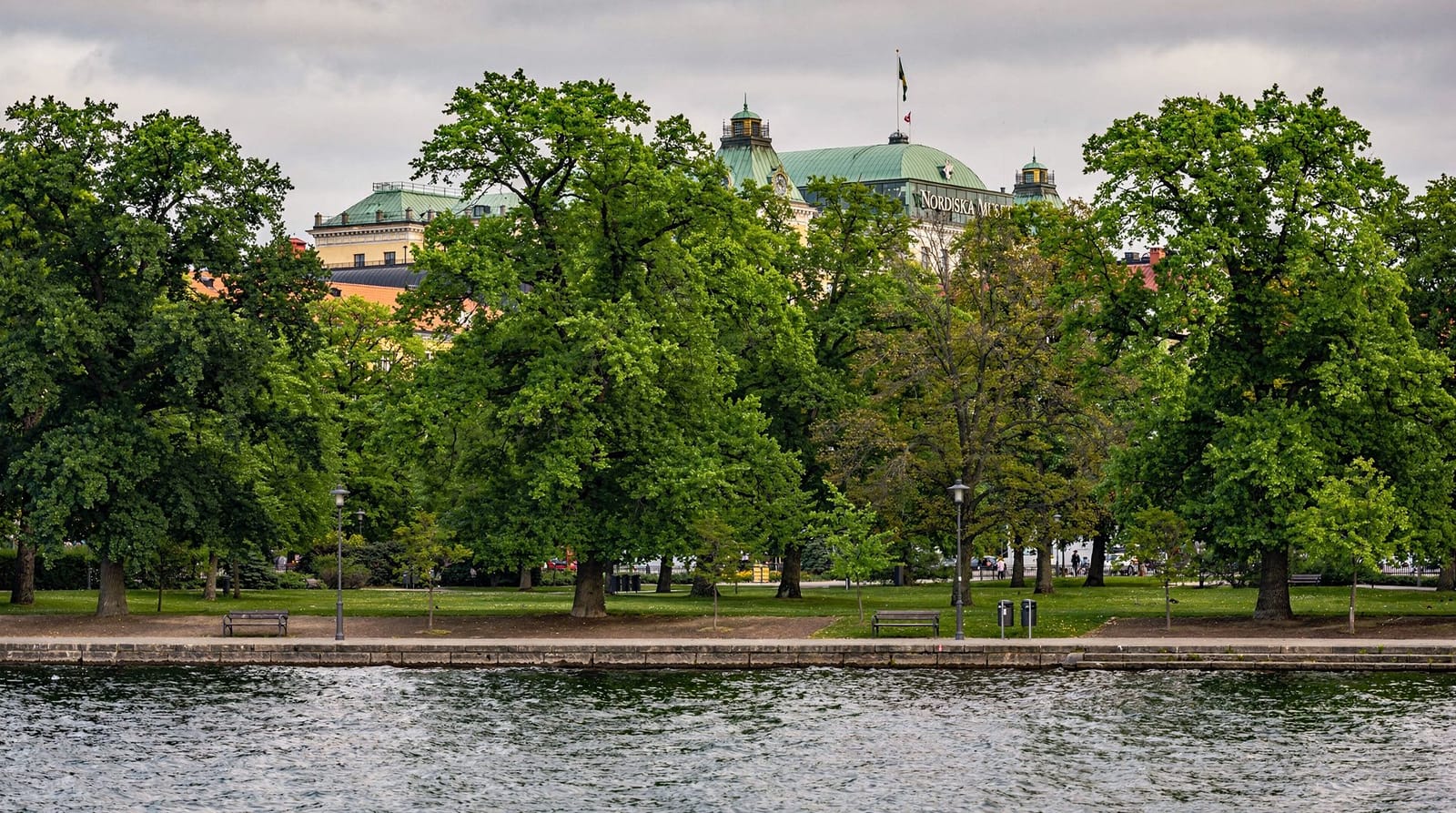
Eat near Djurgården before moving to Fotografiska. The café at Nordiska Museet (Swedish folk culture museum, also worth a quick visit if you have 45 minutes) is good. Alternatively, take the tram to Strandvägen on Östermalm for the waterfront café strip.
Afternoon: Fotografiska
1:30pm — Fotografiska
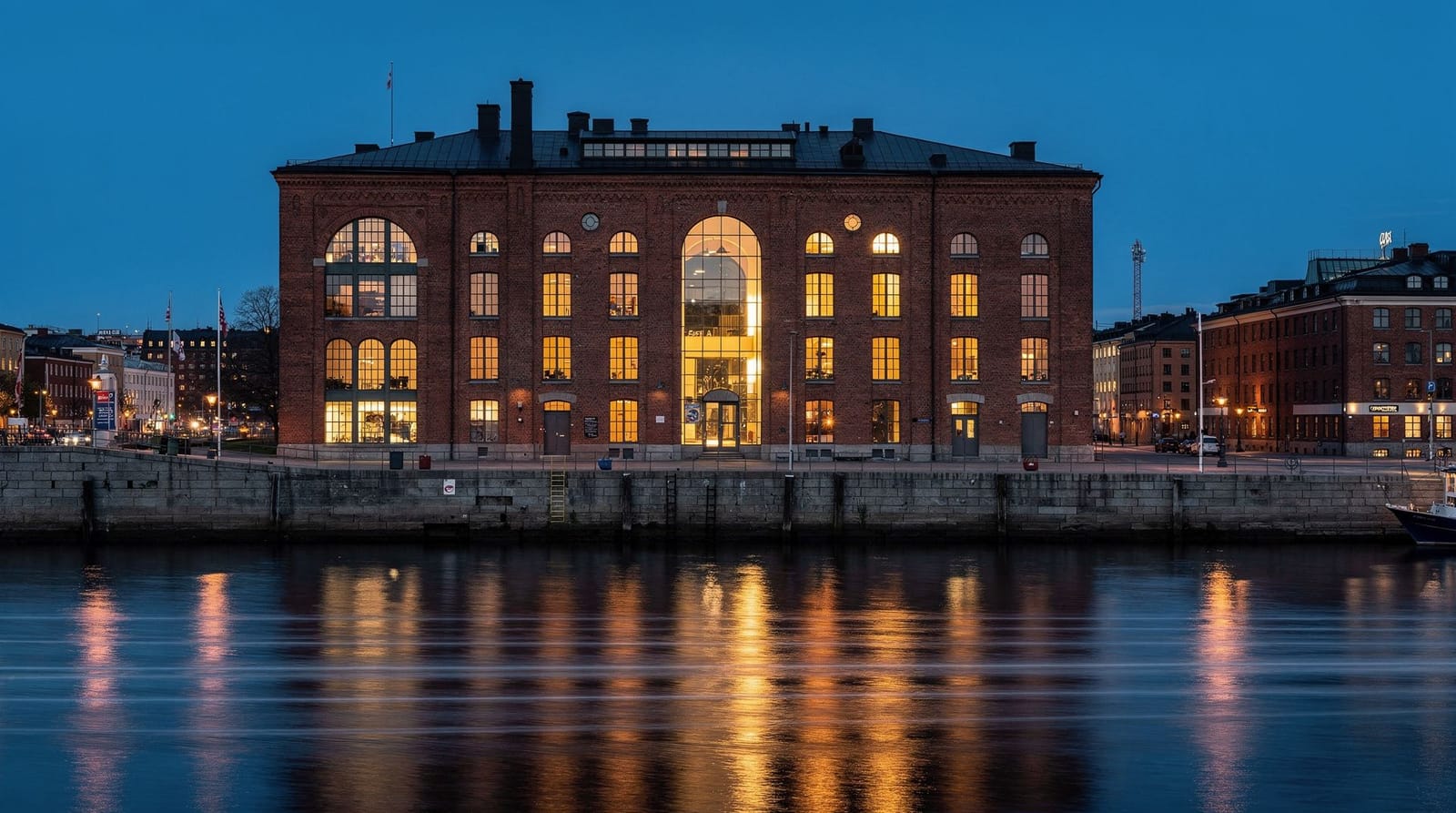
Fotografiska is one of the best photography museums in Europe and the exhibition programme changes frequently. The building itself — a converted customs warehouse on Södermalm’s waterfront — is beautiful, and the top-floor café has one of Stockholm’s best views over the water toward the Old Town.
Pre-book your Fotografiska entrance ticket online. The permanent collection is modest; the value is in the temporary exhibitions, which typically rotate three to four times a year. Check what is showing before your visit.
Allow 90 minutes to two hours. The museum stays open until 11pm, which makes it one of Stockholm’s only evening cultural options.
Cost: approximately 220 SEK adult.
Afternoon: free walk through Södermalm
4:00pm — Södermalm on foot
After Fotografiska, walk into Södermalm properly. This is Stockholm’s bohemian district — hilly, independent, less tourist-facing than Gamla Stan, and significantly more representative of how Stockholm residents actually live.
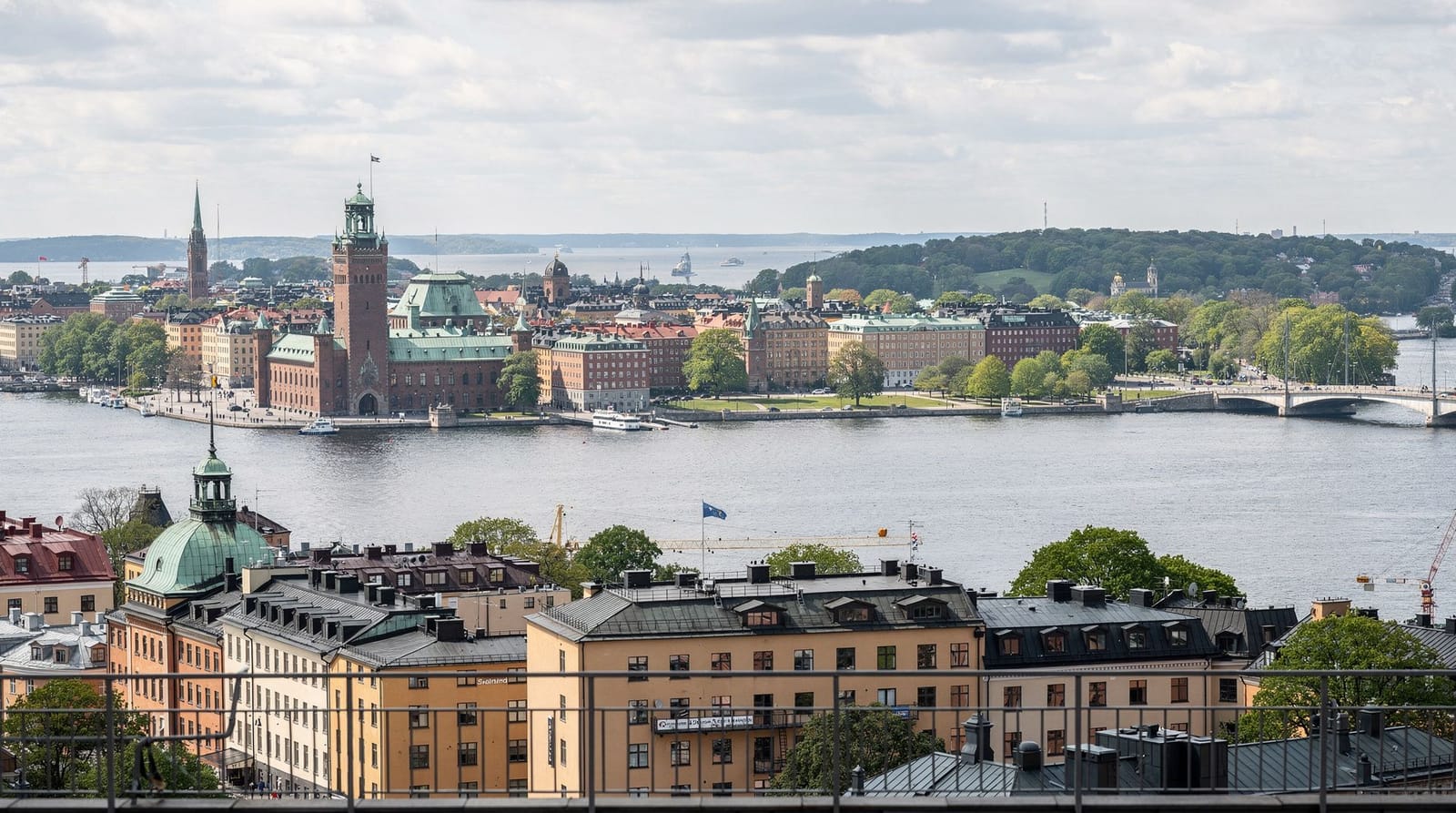
The key route: from Fotografiska, walk up Monteliusvägen along the cliff edge for views over Stockholm Old Town and the waterfront (one of the best free views in the city). Continue to Mariatorget, the neighbourhood’s central square, surrounded by cafés and independent shops.
Södermalm is also Stockholm’s fika heartland — pick a café and do it properly: coffee, a kanelbulle (cinnamon bun), and a 20-minute pause from sightseeing.
The Södermalm neighbourhood guide covers the best streets and cafés in detail.
Evening: dinner in Södermalm
7:00pm — Dinner
Södermalm has Stockholm’s best value-to-quality restaurant ratio:
- Pelikan (Blekingegatan 40): Traditional Swedish beer hall in a 1906 building. Meatballs, herring, Jansson’s temptation. Mid-range.
- Hermans (Fjällgatan 23B): Vegetarian buffet restaurant with outdoor terrace overlooking the water. Sunset views are excellent in June. Budget-friendly.
- Punk Royale (Upplandsgatan 4): Theatrical, expensive, and unlike anything else in Stockholm. Worth it for a special occasion.
For neighbourhood cafés and falafel — Stockholm’s unofficial street food — the stretch around Hornstull metro and Götgatan has the highest concentration of affordable options. Budget 150–250 SEK for a casual dinner; 350–500 SEK for a sit-down restaurant.
Getting around
This itinerary uses T-bana, tram, and ferry — no taxi needed. The SL 72-hour travel pass costs 360 SEK and covers all transit including the Djurgården ferry.
Day 1 transit: Slussen → Gamla Stan (walk) → Stadshusbron (walk or bus) → Djurgården (ferry from Slussen) → City (tram 7 or bus 69). Day 2 transit: Djurgården (tram 7 from Norrmalmstorg) → Fotografiska (tram or walk from Djurgården) → Södermalm (walk from Fotografiska).
Two-day budget summary
| Category | Budget (SEK) | Mid-range (SEK) |
|---|---|---|
| Transit (SL 48h pass) | 280 | 280 |
| Gamla Stan tour | 0 | 230 |
| Nobel Museum | 160 | 160 |
| Royal Canal boat | 230 | 230 |
| Vasa Museum | 190 | 190 |
| Skansen | 260 | 260 |
| ABBA Museum | 290 | 290 |
| Fotografiska | 220 | 220 |
| Lunch Day 1 | 100 | 200 |
| Dinner Day 1 | 200 | 400 |
| Lunch Day 2 | 100 | 200 |
| Dinner Day 2 | 150 | 350 |
| Snacks / fika | 100 | 150 |
| Total | ~2,280 | ~3,160 |
What this two-day structure gets right and where it falls short
What it gets right: This itinerary covers Stockholm’s essential character — the historical layer (Gamla Stan), the cultural layer (Djurgården museums), and the contemporary neighbourhood layer (Södermalm) — within a realistic two-day schedule. The Royal Canal boat on day one’s midday gives you the mental map of the city’s geography early enough to make the rest of the walking more coherent. Starting Djurgården with the Vasa rather than the ABBA Museum prioritises the more surprising experience (most visitors expect ABBA to be the highlight and are astonished by the Vasa).
Where it falls short: Two days does not include: the archipelago (any island requires a minimum half-day), Drottningholm Palace (the boat trip alone is 60 minutes each way), Uppsala or Sigtuna as day trips, a proper deep-dive into any single neighbourhood, or the city’s strongest views from Skinnarviksberget or Hammarbybacken. If any of these matter to you, see the three-day itinerary.
Variations on this itinerary
For couples: Day one is already suitable for a romantic weekend. Upgrade the Day 1 dinner to Operakällaren or Pontus in Gamla Stan, and add the Monteliusvägen cliff walk on Day 2 evening before Södermalm dinner. See the romantic weekend itinerary for the full premium version.
With kids: Swap Fotografiska and Södermalm (Day 2 afternoon) for Gröna Lund amusement park or Junibacken (both on Djurgården). The Vasa Museum is exceptional for children aged 7+. The ABBA Museum works best for children aged 10+ who know the music. See the kids itinerary for the full family programme.
In December: Replace Skansen (outdoor, reduced winter programme) with Nordiska Museet (folk culture museum, directly adjacent to the Vasa on Djurgården). Add the Stortorget Christmas market on Day 1 morning before the canal boat. The ABBA Museum and Fotografiska are both excellent in winter. See the winter itinerary.
On a budget: Skip the Gamla Stan guided tour (self-guided is free), eat ICA picnic lunches on both days, skip Skansen (take a free Djurgården park walk instead), and use the Fotografiska Wednesday evening discount (120 SEK vs 220 SEK standard). Savings: approximately 700 SEK across the two days.
Södermalm: the neighbourhood that makes day two
Södermalm gets only a few hours in this itinerary — the Monteliusvägen walk and the dinner — but those few hours show you a Stockholm that the museums and Gamla Stan do not. The district sits on a plateau 30 metres above the water, separated from the mainland by a strait, and has developed a distinct neighbourhood identity built around independent music venues, independent bookshops, and some of Stockholm’s most honest restaurants.
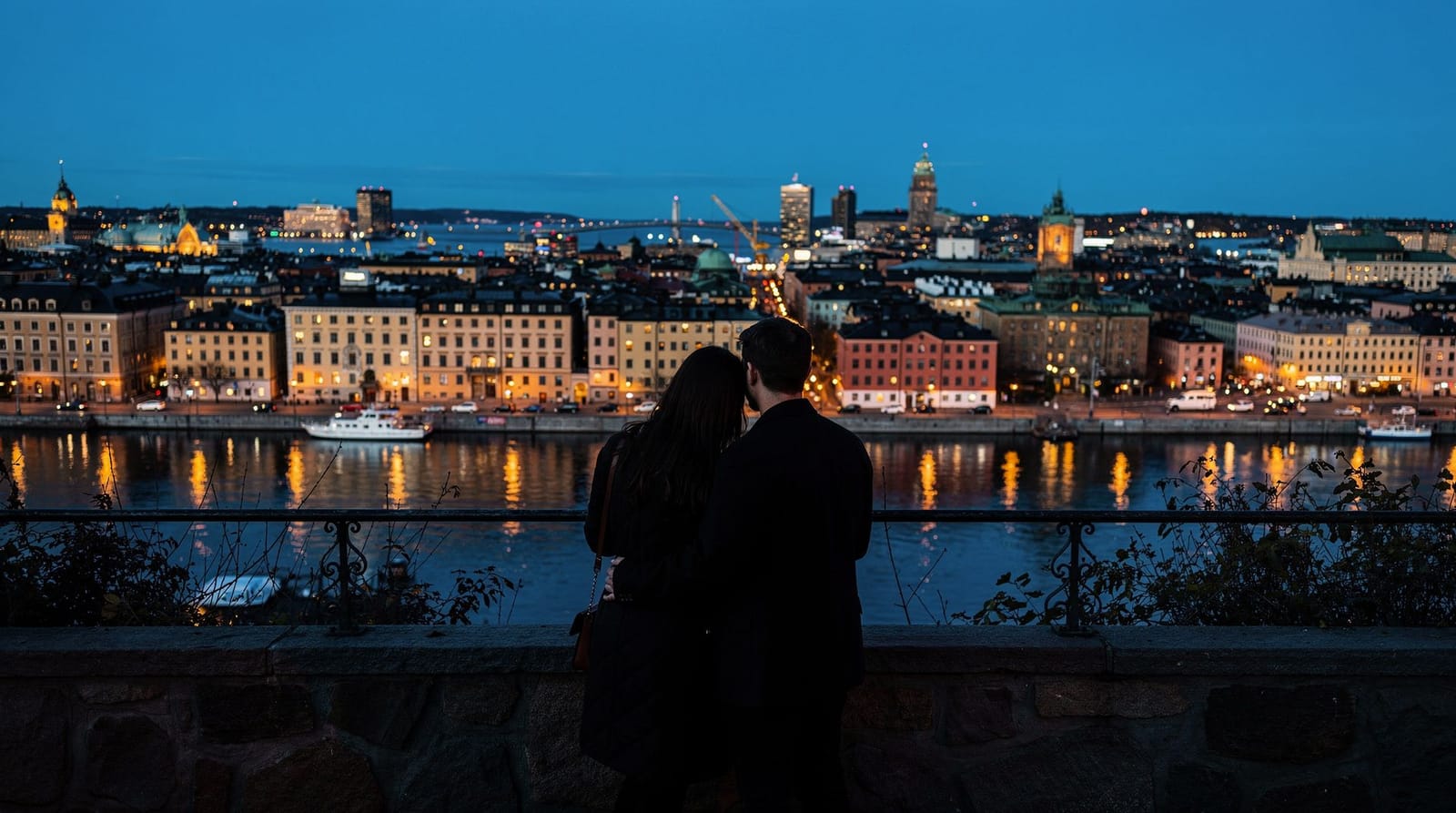
The Monteliusvägen cliff path — a 500-metre walking path along the edge of the plateau — gives a view that is specifically about the city’s geography: the water between the islands, the density of Gamla Stan’s roofline, the City Hall tower, and the forested horizon to the north. This is not a composed view from a designed viewpoint; it is just the edge of a cliff where people happen to walk.
In June, people sit on the grass along this path with wine and picnics from 8pm until 10pm. In September, the light is lower and orange. In December, it is dark and cold and the city lights are reflected on the black water. It is worth five minutes at any time of year; it is worth considerably longer when the weather is good.
The dinner neighbourhood around Mariatorget (the central Södermalm square, a 5-minute walk from Monteliusvägen) has Stockholm’s best concentration of honest restaurants at prices that do not reflect the tourist premium of Gamla Stan and Östermalm. The Södermalm guide covers the restaurant strip and the neighbourhood’s specific character in detail.
If you land later than 9am
Not every flight allows a 9am start. If you land at Arlanda mid-morning, compress day one by cutting the Nobel Museum (save it for a future visit or swap it in on day two instead of the ABBA Museum’s optional add-on) and go straight from Gamla Stan to the Royal Palace, then the canal boat. The rest of the schedule — Vasa Museum, Skansen, dinner — holds regardless of when you start, because Djurgården’s museums keep sensible afternoon and evening hours. What does not compress well is the Royal Canal boat: it runs on a fixed hourly schedule, so check departure times against your actual arrival before building the rest of day one around it.
| Arrival time | What to cut | What still fits |
|---|---|---|
| Before 9am | Nothing | Full two-day itinerary as written |
| 9am–11am | Nobel Museum | Gamla Stan walk (shortened), Royal Palace, canal boat, Vasa Museum |
| After 11am | Nobel Museum + canal boat | Gamla Stan highlights, Royal Palace exterior, Vasa Museum only |
Where to stay for a two-day itinerary
Base yourself in Norrmalm or Östermalm if walking distance to Gamla Stan and easy T-bana access to Djurgården matters more than atmosphere — both put every stop on this itinerary within a 20-minute walk or a single tram hop. Södermalm works well too, especially given the day-two dinner plan, and it is usually cheaper per night than Östermalm. Avoid booking inside Gamla Stan itself: the island is charming to walk but the hotel stock is limited, pricier per square metre, and street noise from the early tour groups can undercut a good night’s sleep. The Stockholm daily budget guide breaks down what accommodation actually costs by neighbourhood and season.
Making the SL pass work for exactly two days
This itinerary uses the ferry, the tram, and short walks — never a taxi — which is precisely what the SL transit pass is designed for. A 48-hour pass at 280 SEK covers the Djurgården ferry crossings on both days, the tram back from Djurgården each evening, and any T-bana hops between Gamla Stan and the city centre. Buy it as soon as you land, ideally through the SL app rather than a ticket machine, since the app also covers single fares if your two-day window straddles an odd number of hours. The SL pass guide and the Stockholm public transport explainer cover the zone system and the edge cases — like what happens if your flight lands mid-morning and you need coverage starting immediately.
If you are torn between the Vasa Museum and the ABBA Museum because you are worried about squeezing both into two days, they are genuinely different enough experiences that skipping either would be a mistake on a first visit — the Vasa versus ABBA Museum comparison explains why both, not one, is the right call here.
When to visit
Best: May–early June (long days, not yet peak season prices), September (Indian summer, noticeably fewer tourists than July).
Peak July: Stockholm in July is beautiful — white nights, outdoor life, festival atmosphere — but prices are highest, museums are most crowded, and the ABBA Museum books out far in advance.
December: A two-day December visit works well around the Christmas markets at Stortorget and Gamla Stan. Replace Skansen’s open-air sections with the indoor Vasa and ABBA Museums, and add Fotografiska for the darker afternoon. See the winter three-day itinerary for the full seasonal programme.
Frequently asked questions about two days in Stockholm
Is two days enough for Stockholm?
Two days covers Stockholm’s essential character — the medieval island, the major museums, and a neighbourhood walk — without feeling rushed if you plan well. It is the minimum for a meaningful visit. Three days is better if you can manage it.
Should I get the Stockholm Pass for two days?
Run the numbers first. The 48-hour Stockholm Pass costs around 1,460 SEK. The activities in this itinerary cost roughly 1,320 SEK bought individually. The pass pays off if you add one or two more expensive attractions (City Hall tour, Viking Museum). Use the transport cost comparator to calculate your specific visit.
What is the best way to get from Arlanda to Stockholm for a two-day visit?
The commuter train (Pendeltåg) from Arlanda to Stockholm Central: 183 SEK, 38–45 minutes. Significantly cheaper than the Arlanda Express (340 SEK, 18 minutes). The time saving is rarely worth the cost difference for a two-day city break where you are not on a tight layover schedule.
Can I see the Vasa Museum and ABBA Museum in one day?
Yes. The standard route is: Vasa Museum in the afternoon of day one, ABBA Museum in the morning of day two. Both are on Djurgården, which makes the transition efficient. Doing both in a single day is possible but tiring — each needs 2–3 hours to do justice.
What is the best neighbourhood for dinner in Stockholm?
Södermalm has the best range — from budget falafel to serious restaurants at honest prices. Östermalm has Stockholm’s most polished dining scene at higher prices. Gamla Stan has atmosphere but requires careful restaurant selection to avoid tourist traps on Västerlånggatan.
Is Fotografiska worth visiting in Stockholm?
Yes, if the current exhibition interests you. Check the schedule before your visit at fotografiska.com — the photography exhibitions change several times a year and the quality varies. The building itself, the view from the café, and the permanent collection justify the entry price even if the temporary show is not your particular taste.
What if it rains during my two days in Stockholm?
Stockholm’s weather does not usually derail a two-day plan because most of the itinerary’s anchors — the Vasa Museum, the Nobel Museum, ABBA Museum, and Fotografiska — are indoors. The main casualties of rain are the Gamla Stan walk (still worth doing with a waterproof layer) and Skansen’s open-air sections, which are genuinely less enjoyable when wet. The rainy-day museum guide has a fuller list of indoor alternatives if a whole day turns out wet.
Where should I stay for a two-day Stockholm visit?
Norrmalm or Östermalm for the shortest walk to Gamla Stan and the easiest tram connection to Djurgården; Södermalm if you want to be close to the day-two dinner scene and prefer a livelier, less business-district feel at a generally lower nightly rate. See the daily budget guide for what each neighbourhood actually costs to sleep in.
Top experiences
Bookable activities with verified prices and instant confirmation on GetYourGuide.