Skansen open-air museum guide: Sweden's living history park
Stockholm: Skansen open-air museum entrance ticket
What is Skansen and why should I visit?
Skansen is the world's oldest open-air museum, founded in 1891 on Djurgården. It assembles over 150 historical buildings relocated from across Sweden — farmsteads, manor houses, churches, workshops — into a living village where costumed staff demonstrate traditional crafts. It also has a Scandinavian zoo with moose, brown bears, wolves, and lynx.
The museum that invented the concept of open-air museums
In 1891, folklorist and conservationist Artur Hazelius opened a museum on Djurgården unlike anything that had existed before. Rather than displaying objects behind glass, he relocated entire buildings from across Sweden to a hilltop site and populated them with costumed interpreters demonstrating the traditional crafts and daily routines of historical Swedish life. Skansen (the name means “the redoubt” — there was once a small fortress on the hill) became the template for every open-air museum subsequently established anywhere in the world.
More than 130 years later, it still works. The site covers 30 hectares and holds over 150 relocated historical buildings — 18th-century farmsteads from Dalarna, Sami encampments from Lapland, glass-blowers from Småland, a complete early 20th-century town square with functioning shops. Alongside the buildings is a Scandinavian zoo, the Baltic Sea Science Center, and a significant programme of seasonal events. On a warm day in May or September, when the crowds are manageable and the buildings’ gardens are in flower, Skansen justifies every superlative applied to it.
Practical essentials
| Detail | Information |
|---|---|
| Address | Djurgårdsslätten 49–51, Djurgården |
| Opening hours | Daily from 10:00; closing 15:00–16:00 in winter, 17:00 in spring and autumn, 18:00 in summer (evening events later) |
| Adult ticket | Varies by season and is cheapest online — see skansen.se |
| Children 0–15 | Free (a free ticket must still be booked) |
| Children 4–15 | ~100 SEK summer, ~70 SEK off-season |
| Under 4 | Free |
| Recommended time | 3–5 hours (full day possible) |
| T-bana/tram | Bus 69, Djurgårdslinjen tram to Skansen stop |
What to see at Skansen
The historical buildings
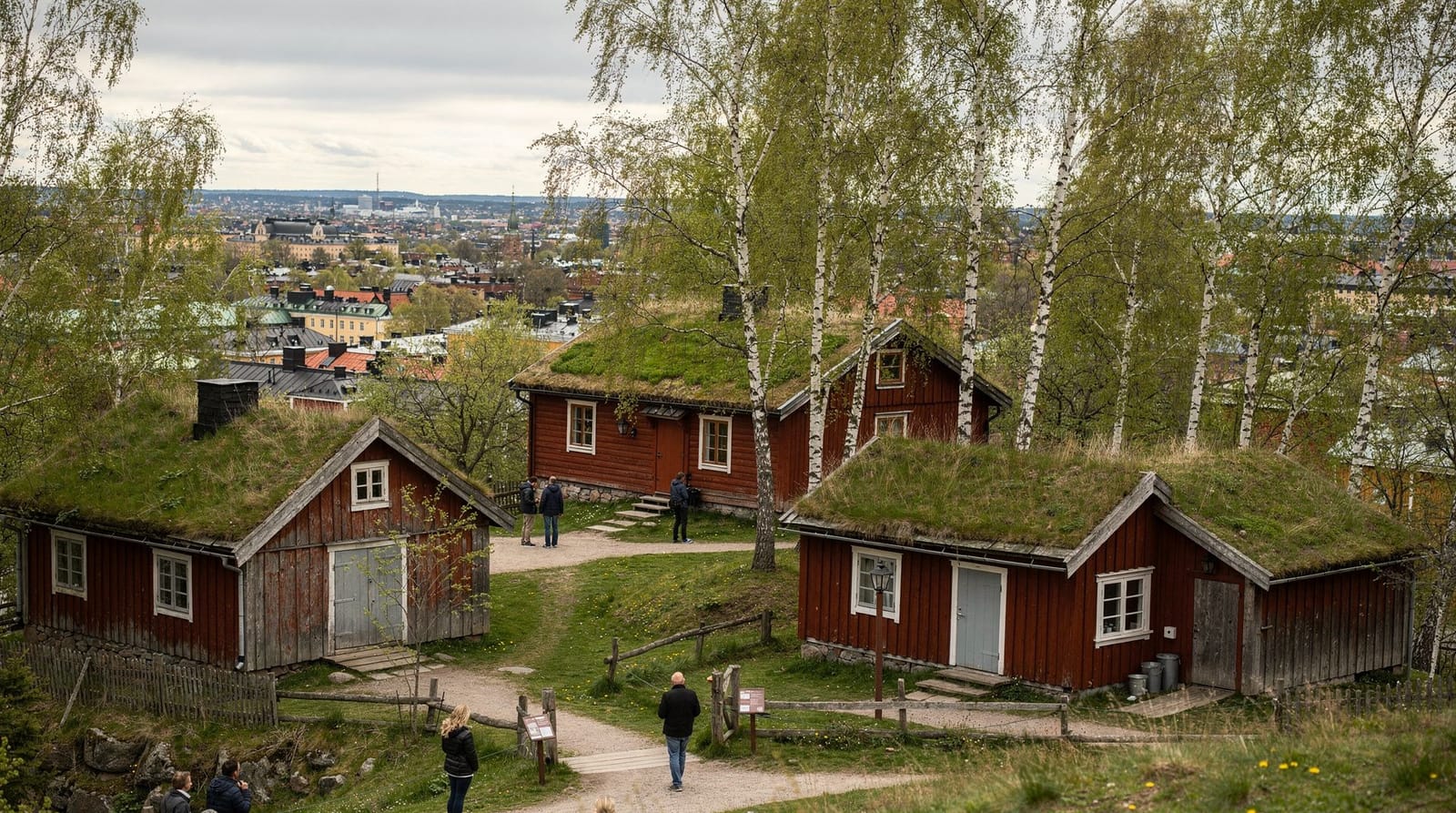
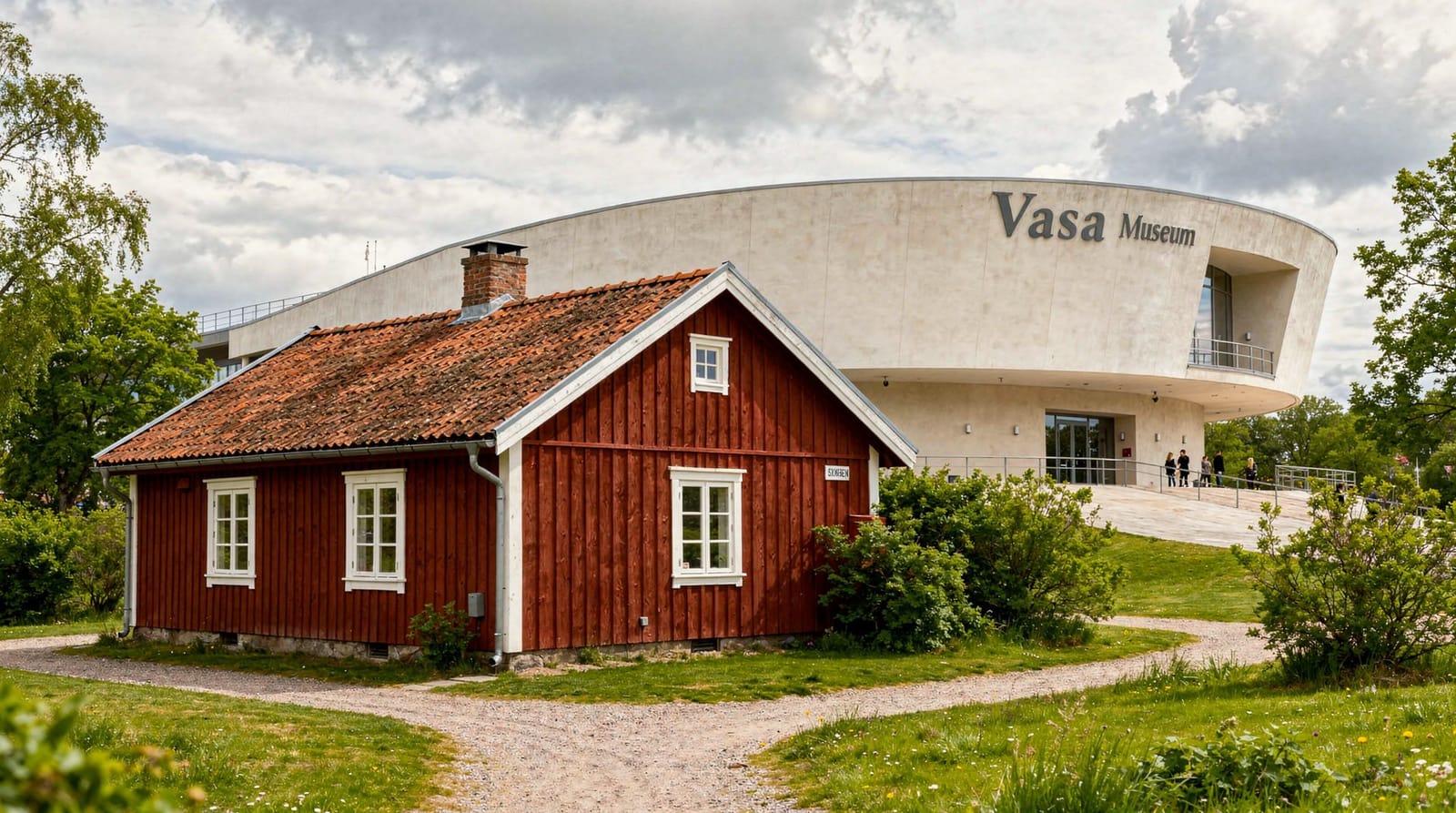
The core of Skansen is its collection of relocated buildings spanning Swedish rural life from the 16th to the early 20th century. They are not arranged chronologically but geographically, roughly mirroring Sweden’s regions — northern farmsteads near the top of the hill, southern manor houses near the entrance, a Sami settlement from Lapland in the northern section.
The buildings are not museum pieces in the frozen sense. Craftspeople work in the workshops daily — a glass-blower at the Dalarna glassworks, a baker in the historic bakery producing authentic Swedish flatbread, a blacksmith at the forge. The textile workshop demonstrates spinning and weaving on period-accurate looms. On busier days, costumed staff inhabit the houses and answer questions about historical daily life.
Key buildings to prioritise:
- The Dalecarlian farmstead (Älvrosgården): a complete 18th-century farm from Dalarna with red-painted buildings and period interior
- The Skogaholm Manor House: a complete 18th-century manor from Närke, the largest historical building in the collection
- The Seglora Church (1729): a still-consecrated wooden church where weddings and services are held seasonally
- The Nordic Museum district (near the entrance): early 20th-century townscape with pharmacy, baker, and general store
The Scandinavian zoo
Skansen’s zoo is dedicated exclusively to species native to Scandinavia. Brown bears are the headline attraction — the bears are in a large naturalistic enclosure and are most active in morning and late afternoon. The wolf pack, wolverines, and lynx are nocturnal-leaning and most visible during feeding times (posted on the daily programme).
Moose (älg in Swedish) are the largest land mammals in Sweden and the zoo has a small herd. Seeing a moose in an enclosure is considerably less satisfying than seeing one in the wild, but gives you scale — they are larger than most people expect, approaching horse dimensions at full adult size.
The petting zoo section (Lill-Skansen) has farm animals from traditional Swedish breeds — Old Swedish cattle, Gotland sheep, pigs — which young children can feed and handle.
The Baltic Sea Science Center (included)
The Baltic Sea Science Center, Skansen’s aquarium-style exhibition on Baltic marine life, is included in the one-day ticket, as is Lill-Skansen for young children. Worth a stop for families with young children; optional for adults who saw the animal section primarily as context for the cultural exhibits.
Seasonal events
Skansen’s seasonal programme is arguably as important as the permanent collection:
Midsummer (mid-June): The Midsommar celebrations at Skansen are the most famous in Stockholm — a traditional maypole (midsommarstång) raising, folk dances, and traditional music. The event draws enormous crowds; arrive very early.
Christmas market (late November to 24 December): One of Stockholm’s most atmospheric seasonal events. The historical buildings are decorated and lit with candles; traditional crafts, foods, and julbord (Christmas table) are sold throughout the site.
Valborg (30 April): The traditional Swedish spring bonfire celebration, with events at Skansen on the eve of May Day.
Lucia (13 December): Candlelit processions through the historical buildings, with Lucia crowns and traditional song.
Insider tips
Go early in the morning. The site opens at 10:00 and the first two hours are significantly quieter than the 12:00–15:00 peak. The animals are also more active in the morning, particularly bears and wolves.
Wear comfortable shoes. Skansen is hilly. The main entrance is near the bottom; the best viewpoints and many of the historical buildings are at the top. A full visit involves considerable walking on cobblestones and uneven grass paths. Flat shoes or trainers are fine; heels are not.
Download the map. The site is large enough to get genuinely disoriented. The Skansen app or the paper map at the entrance is useful. The funicular railway (Skansen Linbana) runs between the lower and upper sections and is worth the small additional fare on a hot day.
Check the daily programme. Craft demonstrations, guided tours, and animal feeding sessions are scheduled and posted at the entrance. Aligning your visit with a glass-blowing demonstration or the bear feeding adds considerably to the experience.
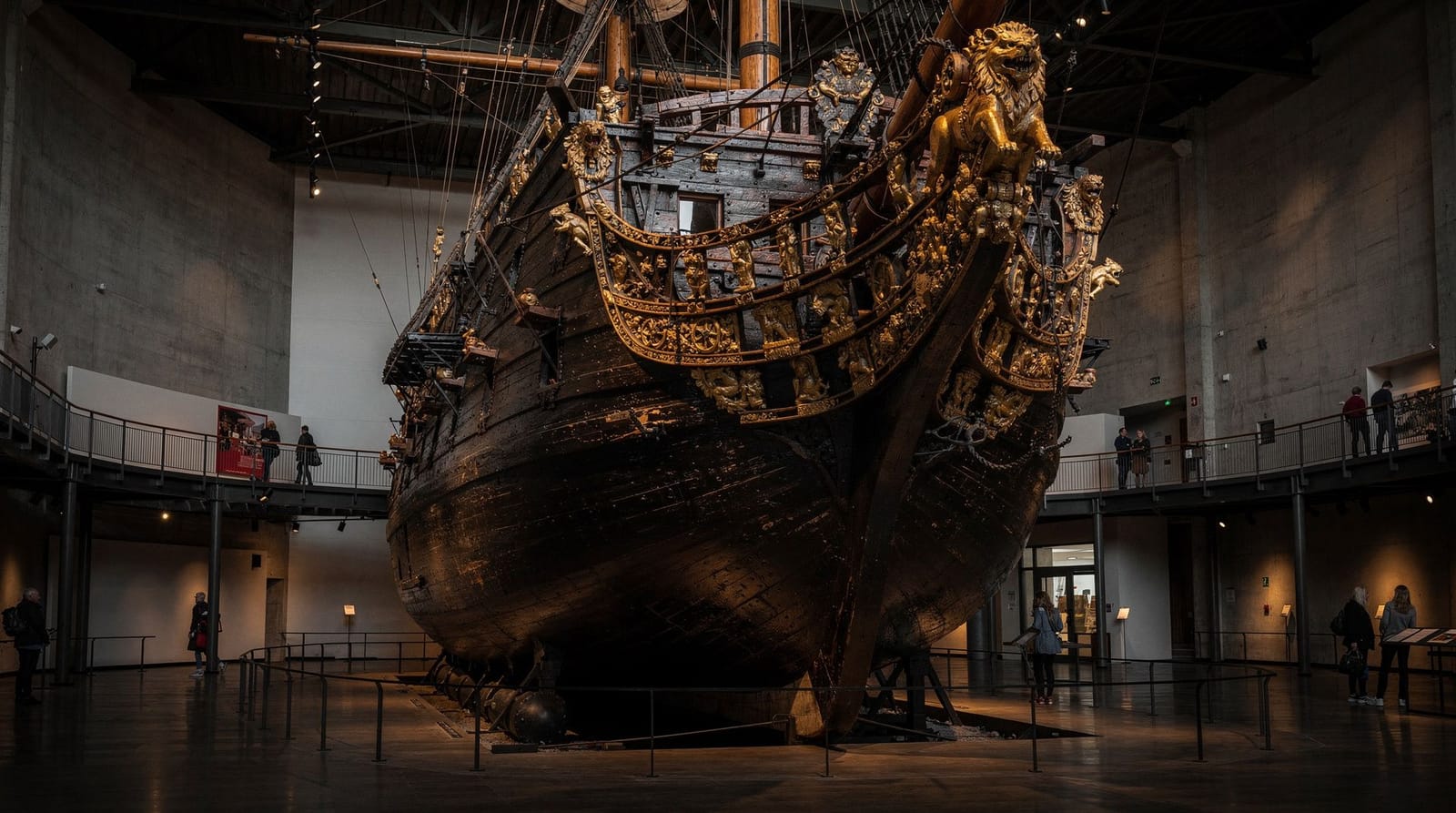
Combine with the Vasa Museum. Both are on Djurgården and the combination makes a full day. The Vasa and Skansen fast-track combo ticket simplifies logistics and may save a small amount compared to buying separately.
Summer evenings are special. Skansen is open until 18:00 in June–August, with later hours on set dates such as Midsummer Eve (until 22:00) and the Tuesday sing-along evenings (until 20:00); check the official calendar. An evening visit after 17:00, when day-tripper groups have largely departed, is one of the more pleasurable Stockholm experiences.
Best month to visit, at a glance
| Month | Weather | Crowds | Notes |
|---|---|---|---|
| May–early June | Mild, gardens flowering | Moderate | Best all-round combination of weather and crowd levels |
| July | Warm, long evening hours | Peak | Full programme but busiest; go early or in the evening |
| September | Mild, cooling | Low–moderate | Same appeal as May with autumn colour |
| December | Cold, short days | High on weekends | Christmas market is the draw; weekdays are quiet |
| January–February | Cold, short days | Low | Fewer buildings staffed, but genuinely peaceful |
What most first-time visitors miss
Many visitors treat Skansen as a quick add-on to the Vasa Museum and leave after 90 minutes having seen only the lower entrance area. The strongest parts of the site — the Dalarna farmstead, the Sami encampment, and the hilltop views near Solliden — sit at the top of the hill, a genuine 15–20 minute walk (or a funicular ride) from the entrance. Skipping the climb means skipping most of what makes Skansen distinctive rather than just another museum.
The daily craft and animal-feeding schedule, posted at the entrance and in the app, is also frequently ignored. Arriving without checking it means the glass-blowing demonstration or the bear feeding may already be over by the time you reach that part of the site — worth five minutes of planning before you start walking.
History of Skansen
Artur Hazelius (1833–1901) founded the Nordic Museum (Nordiska Museet) on Djurgården in 1873 to preserve examples of traditional Swedish material culture. He worried that industrialisation and urbanisation were erasing the crafts, buildings, and customs of rural Sweden faster than documentation could keep pace. His solution was radical: instead of bringing objects to a museum, bring the buildings themselves.
The first building relocated to Skansen was a farmhouse from Älvros in Dalarna, transported piece by piece to Djurgården and reassembled in 1891. Hazelius subsequently acquired and relocated buildings from across the country over the next decade. The concept proved enormously influential — open-air museums modelled on Skansen now exist in Denmark (Den Gamle By), Norway (Norsk Folkemuseum), Wales (St Fagans), and dozens of other countries worldwide.
After Hazelius died in 1901, the museum continued to grow under his successors, adding the zoo, the aquarium, and an increasingly ambitious programme of seasonal events. The Seglora Church was consecrated in 1916 and has been in regular use for services and weddings ever since.
Tickets and passes
Online admission: Prices vary by season and are lowest online — check skansen.se for the current price. Cheaper than buying at the gate; no timed entry required (walk in at any time during opening hours). Children aged 0–15 are free.
Stockholm Pass / Go City: Includes Skansen admission. Verify current coverage at time of booking. See the museum pass guide for full analysis.
Vasa + Skansen fast-track: The Vasa and Skansen combined fast-track ticket includes skip-the-line access to both museums — useful in peak season when Vasa queues can extend to 45 minutes for walk-in visitors.
Accessibility
The site’s hillside layout presents accessibility challenges. The funicular provides access between lower and upper sections. Most of the historical buildings have step access at entrances and are not fully wheelchair accessible internally, though the museum is working on improvements. The zoo areas and grounds are accessible. Contact Skansen’s accessibility team in advance for a current assessment of which sections work best for specific requirements.
Photography at Skansen
The hilltop views over Djurgården and the city skyline near Solliden are among the best free photo spots in Stockholm, particularly in late afternoon light. The historical buildings’ interiors are generally fine to photograph without flash, though costumed interpreters may prefer to be asked before being photographed close-up. For a very different photographic subject on the same island, the ABBA Museum offers colourful, staged photo opportunities that contrast sharply with Skansen’s documentary style.
Getting there
Bus 69: From Nybroplan or Sergels Torg, direct to Djurgårdsvägen/Skansen.
Tram (Djurgårdslinjen, line 7): Seasonal service from Norrmalmstorg. The Skansen stop is directly outside the main entrance.
On foot from Vasa Museum: A pleasant 15-minute walk east along Djurgårdsvägen through the park.
Ferry: The Djurgårdslinjen ferry from Slussen (Södermalm side) runs in summer and stops at Allmänna Gränd — a 10-minute walk from Skansen’s entrance.
Where to eat at Skansen
Solliden Restaurant: The main restaurant inside Skansen, set in a handsome early 20th-century building at the top of the hill with views across the city. Serves traditional Swedish lunch (husmanskost) and a smörgåsbord at weekends. Book ahead for the smörgåsbord.
Gubbhyllan: Mid-site café in a historic 1920s building, serving Swedish fika standards including cinnamon buns (kanelbulle), open sandwiches, and coffee. The terrace has good views.
Dahlbom’s bakery (inside Skansen): The historic bakery inside the museum produces traditional Swedish crispbread and flavoured breads throughout the day. Try the tunnbröd.
Portions and prices at Skansen’s restaurants sit in line with central Stockholm dining rather than typical theme-park markups — expect to pay around what you would at a comparable central-city café or restaurant, not a tourist-attraction premium. Bringing your own snacks is allowed and common among Stockholmers using the grounds as a park.
Combine with
Vasa Museum: The natural pairing. Both are on Djurgården and together make a comprehensive day. See the Vasa vs Skansen comparison if you are deciding between them with limited time.
ABBA Museum: Ten minutes east of Skansen on the same island, a strong counterpoint in terms of era and sensory register. See the ABBA Museum guide.
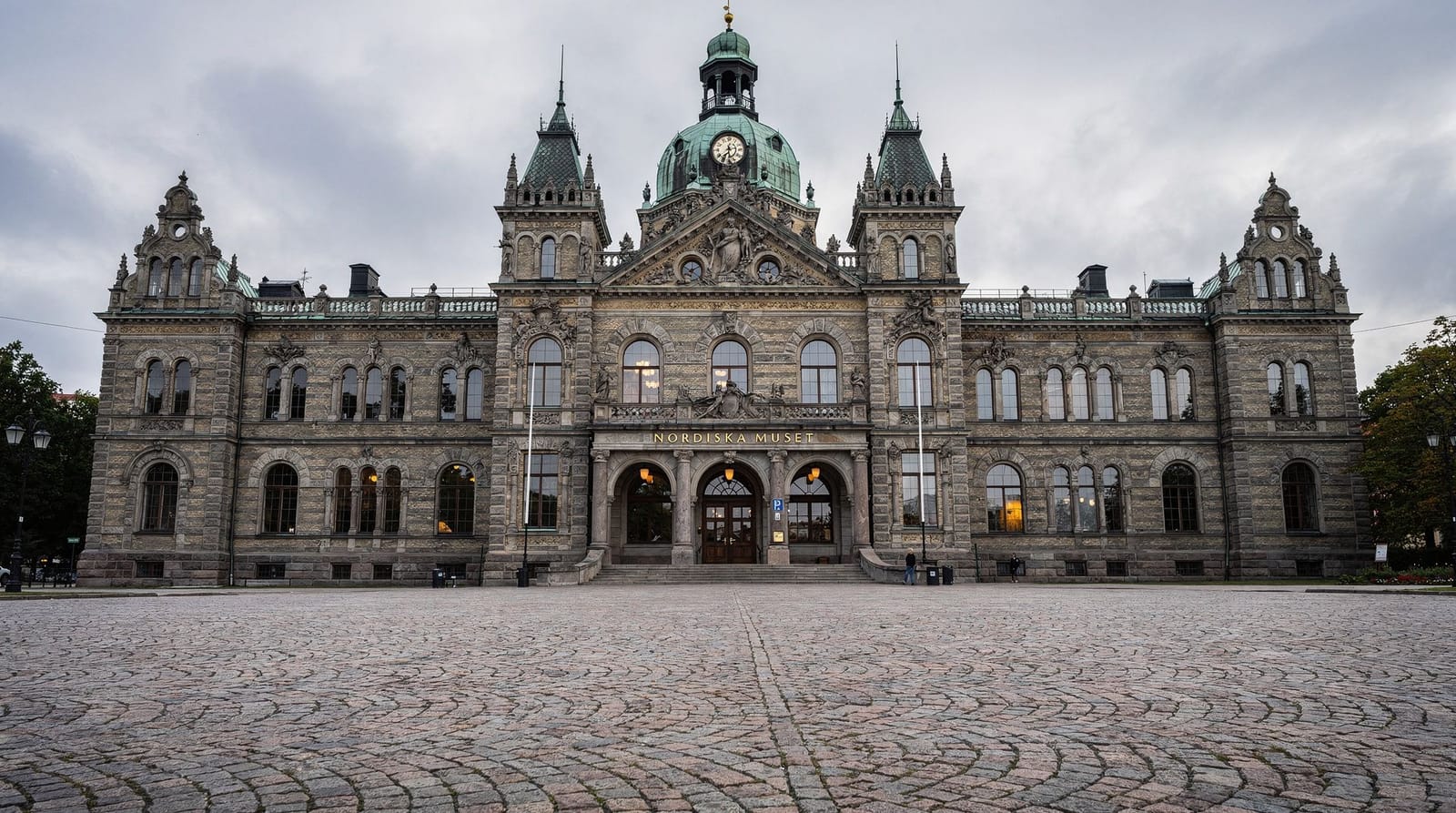
Nordiska Museet: A five-minute walk west toward the Vasa Museum, Sweden’s largest cultural history museum covers much of the same thematic territory as Skansen in indoor form. See the Nordiska Museet guide.
Frequently asked questions about Skansen
Is Skansen only for tourists?
Emphatically no. Stockholmers use Skansen as a park and cultural venue throughout the year. The Midsummer and Christmas market events are attended more by locals than tourists. On a summer evening, the hilltop restaurant (Solliden) and the views over the city attract Stockholmers for an evening out as much as sightseers.
Can I see moose at Skansen?
Yes. Skansen has a moose (älg) enclosure with a small herd. The moose are visible year-round. They are fed in the afternoon; check the daily schedule for specific times when they are most active near the viewing areas.
Is Skansen worth it in winter?
The reduced winter hours (weekdays 10:00–15:00, weekends 10:00–16:00) and fewer open buildings make winter less compelling than summer. However, the December Christmas market is exceptional and the January–February visit, while quiet, has its own austere appeal. The zoo animals are generally more visible in winter as the trees are bare. A winter visit costs less and the site is less crowded.
How does Skansen compare to a typical zoo?
The Skansen zoo is secondary to the cultural mission — it is a Scandinavian wildlife zoo, not a comprehensive world zoo. The animals are all native Swedish species; there are no elephants, giraffes, or big cats. For a family for whom the zoo is the primary draw, Djurgården’s Gröna Lund has additional entertainment options; Skansen is the right choice if you want the zoo embedded in a rich cultural experience.
What is the best time of year to visit Skansen?
Late May through early June offers the best combination of reasonable weather, full opening hours, fewer crowds than July, and the arrival of spring in the buildings’ gardens. September is excellent for the same reasons. July is peak season — full programme but maximum crowds. December for the Christmas market specifically.
Can you eat traditional Swedish food at Skansen?
Yes. The Solliden restaurant serves traditional husmanskost (home-style Swedish cooking) including meatballs with cream sauce, pickled herring, and seasonal specialties. The smörgåsbord at weekends is a genuine traditional version, not a tourist shortcut. The bakery inside produces authentic Swedish breads throughout the day.
Top experiences
Bookable activities with verified prices and instant confirmation on GetYourGuide.