Södermalm — Stockholm's creative southern island
Södermalm is Stockholm's hippest neighborhood: Fotografiska museum, Monteliusvägen viewpoint, vintage markets and the city's best coffee.
Stockholm: bohemian Södermalm island walking tour
Duration: 1.5 hours
Quick facts
- Getting there
- T-bana to Slussen or Medborgarplatsen
- Character
- Hip, residential, creative, hilly
- Best for
- Photography, food, coffee, views
- Distance from T-Centralen
- 3 min by T-bana to Slussen
The island that never quite became a tourist destination
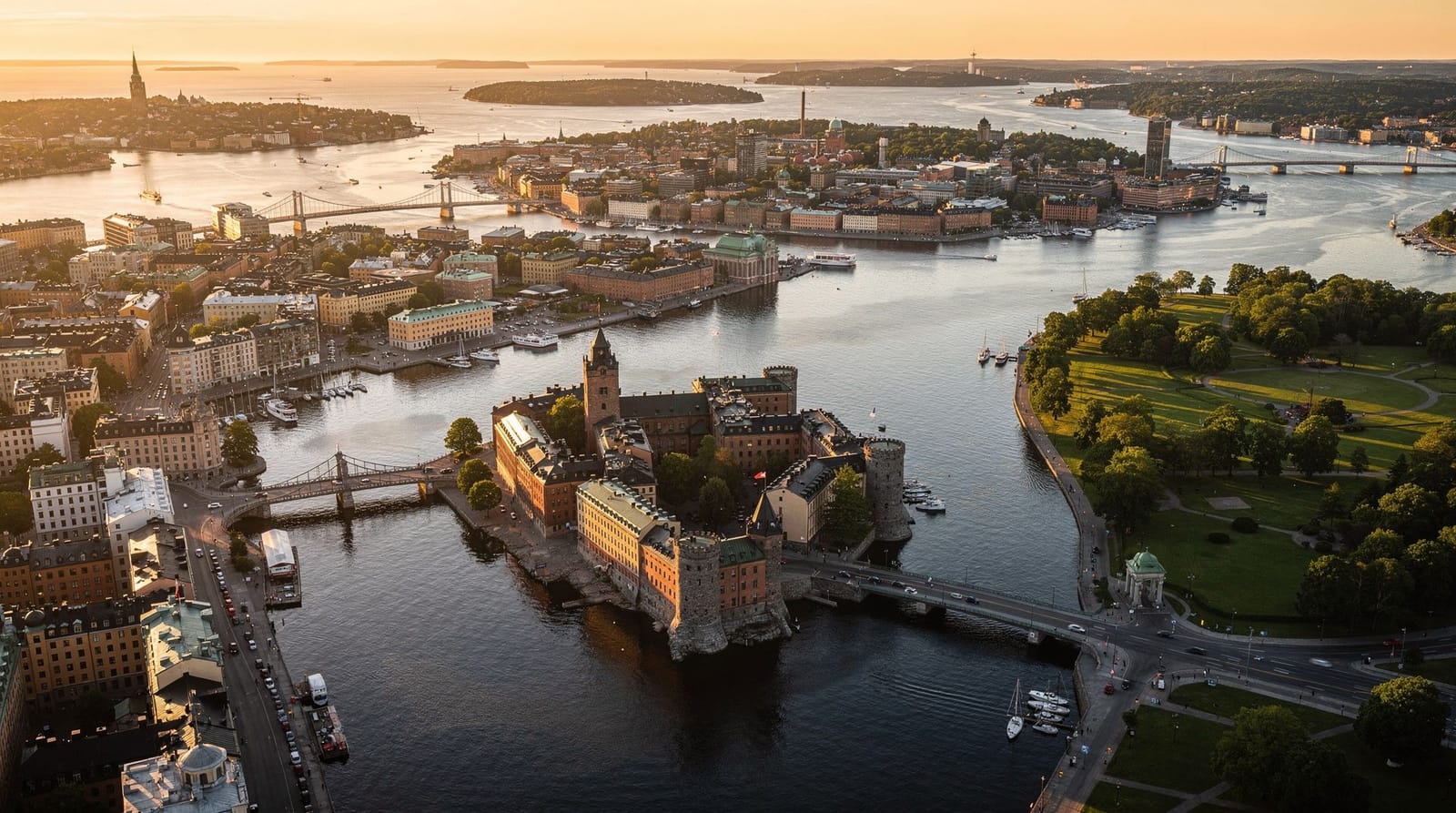
Södermalm — always shortened to “Söder” by Stockholmers — is the large island south of Gamla Stan that has been many things over its history: working-class harbour district, bohemian arts quarter, and now the undisputed center of Stockholm’s food, coffee, and creative culture. What it has never quite become, despite being home to several world-class attractions, is a primary tourist destination. That is, unexpectedly, part of what makes it so good.
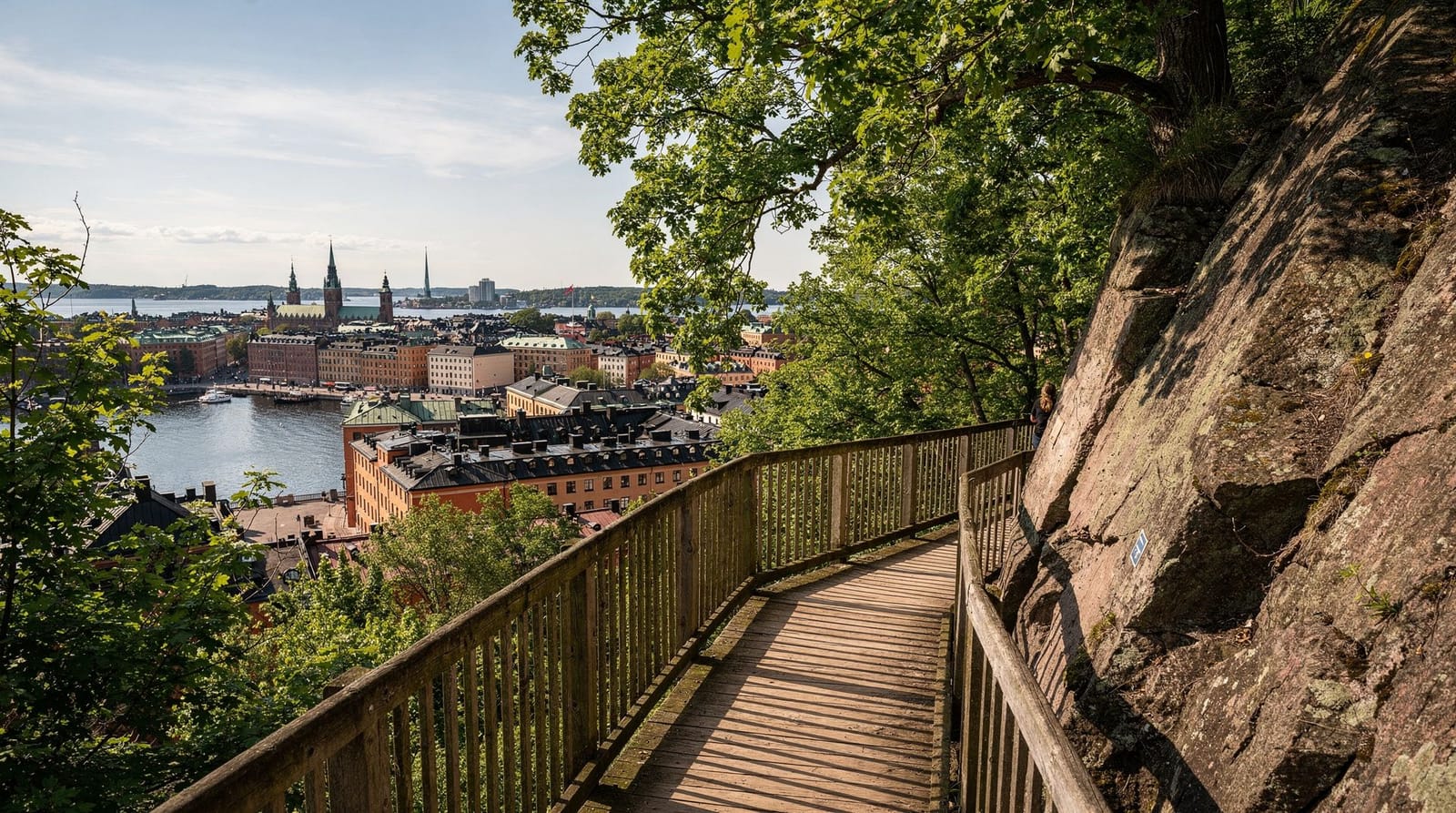
The island is roughly rectangular, about 3km west-to-east and 2km north-to-south, and it is hilly in a way that the other central Stockholm districts are not. The hills are the key to Södermalm’s best free attraction: the clifftop promenade of Monteliusvägen runs along the northern escarpment and delivers what is consistently rated among the best views in Stockholm — looking across the water at Gamla Stan, the Royal Palace, Riddarholmen, and the spires of the Old Town.
Come to Södermalm for the Fotografiska photography museum, for the coffee scene that Stockholm’s third-wave culture ultimately evolved from, for independent restaurants that are among the city’s most serious, and for the atmospheric neighbourhood streets between Mariatorget and Hornstull that feel genuinely residential without being off-limits to visitors.
| Where | Large island directly south of Gamla Stan |
| Getting there | T-bana to Slussen or Medborgarplatsen, 3 min from T-Centralen |
| Time needed | Half a day minimum; a full day for markets and dinner |
| Cost | Free to walk; Fotografiska entry separate; meals 200–500 SEK |
| Best for | Coffee, food, viewpoints, independent shopping |
Fotografiska
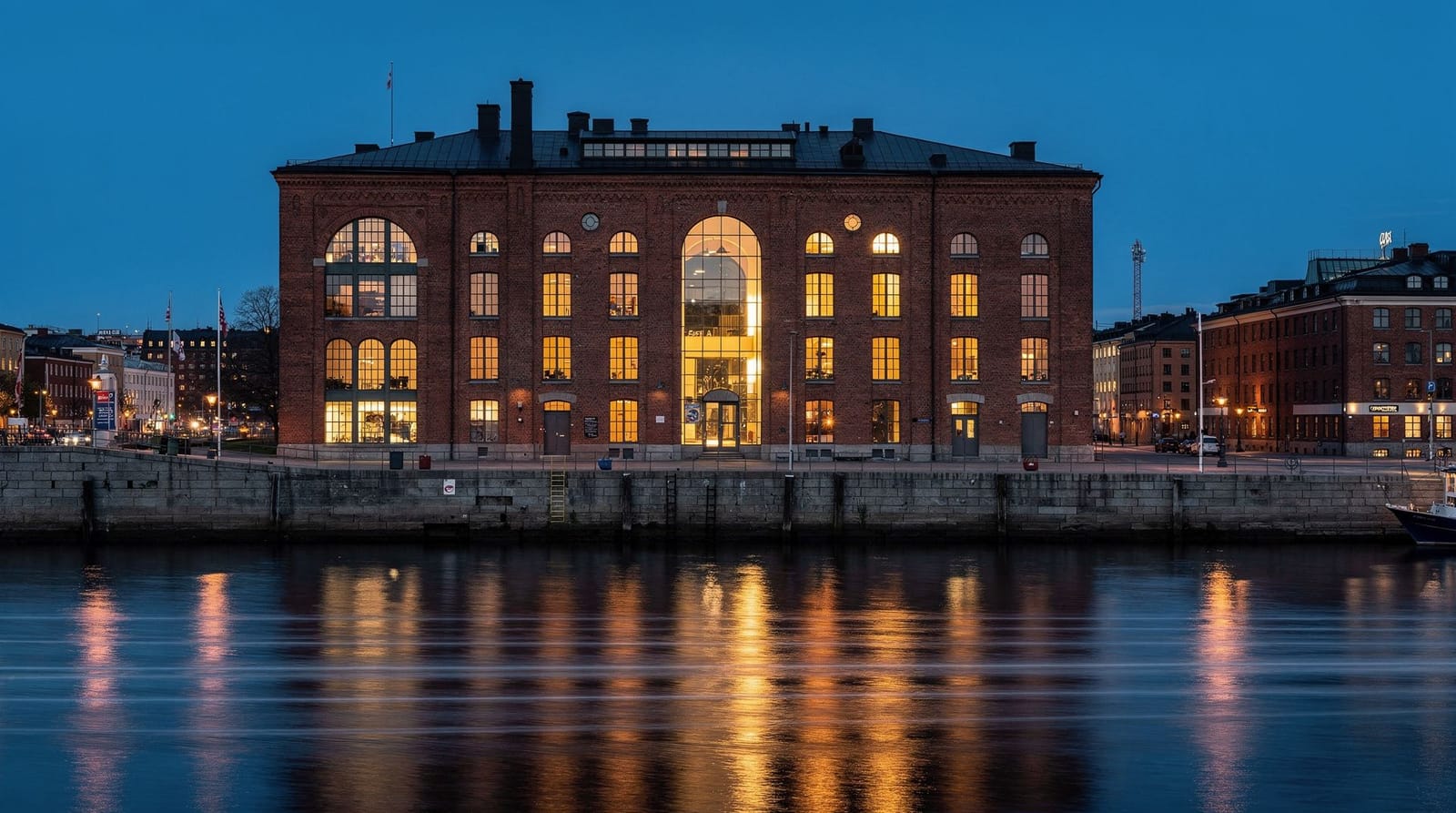
Fotografiska is Stockholm’s major photography museum, occupying a stunning 1906 art nouveau customs house on the waterfront at Stadsgårdshamnen. The building itself — with its brown brick facade and ornate ironwork — is exceptional, but Fotografiska has built its reputation on programming: large-scale solo exhibitions from photographers at the top of their form, covering documentary, fashion, portrait, and fine art photography in rotation throughout the year.
The museum has expanded internationally (New York, London, Berlin, Tallinn), but the Stockholm original remains the flagship, and the combination of building quality, programming consistency, and the rooftop café with its panoramic view over the water makes it genuinely worth planning around. Current and upcoming exhibitions are worth checking before you visit — the programming is uneven in the way that any exhibition-driven venue is, and the exceptional exhibitions justify a dedicated visit while the weaker ones might not.
The café on the top floor has arguably the best rooftop view in Södermalm and is open to non-museum visitors for the price of a coffee. Do not skip this.
For a fuller look at the building, the exhibition rhythm and how to plan a visit, the Fotografiska guide goes into more detail than this overview can.
Book Fotografiska admission — world-class photography exhibitions in a stunning waterfront buildingMonteliusvägen — the best free view in Stockholm
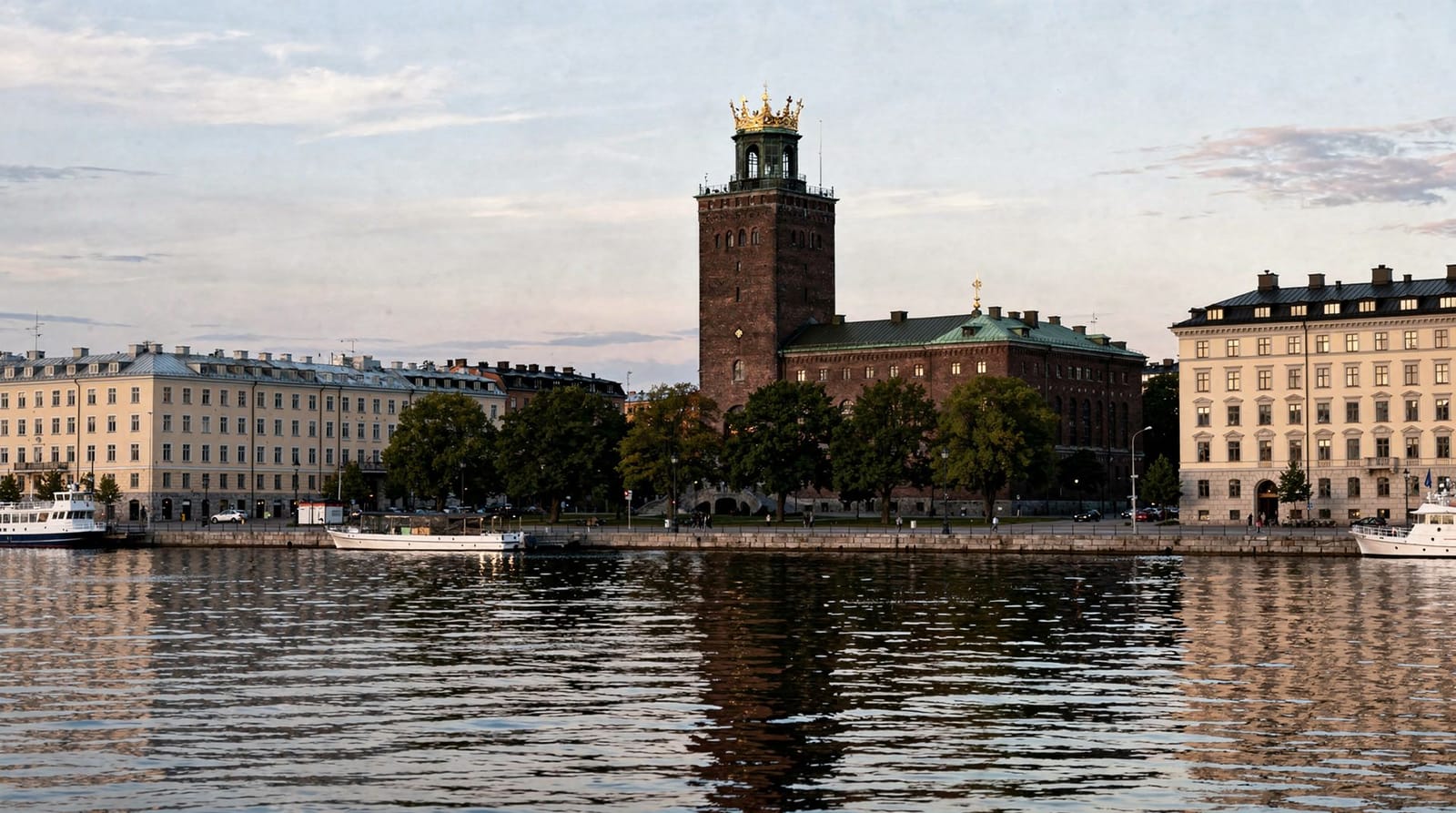
Monteliusvägen is a 500-metre wooden walkway and promenade running along the top of the Södermalm cliff, from Bastugatan in the east to Helgeandsholmen in the west. The view is south-facing from the promenade’s perspective — which means you look north across the water at Gamla Stan, the Royal Palace, Riddarholmen, and the City Hall tower on Kungsholmen, with the lake Mälaren opening up to the west.
The promenade is free, open always, and one of the most straightforward ways to understand Stockholm’s island geography. On a clear evening in June, with the light coming from the north at a low angle, the painted facades of Gamla Stan glow in a way that photographs almost but not quite capture.
The walk takes 15 minutes end-to-end. Start from the Monteliusvägen sign off Mariagränd near Slussen, or approach from the eastern end near Mariaberget. Benches along the route are usually occupied in summer evenings; arriving at 7pm rather than 5pm means fewer people and better light.
Mariatorget and the heart of Söder
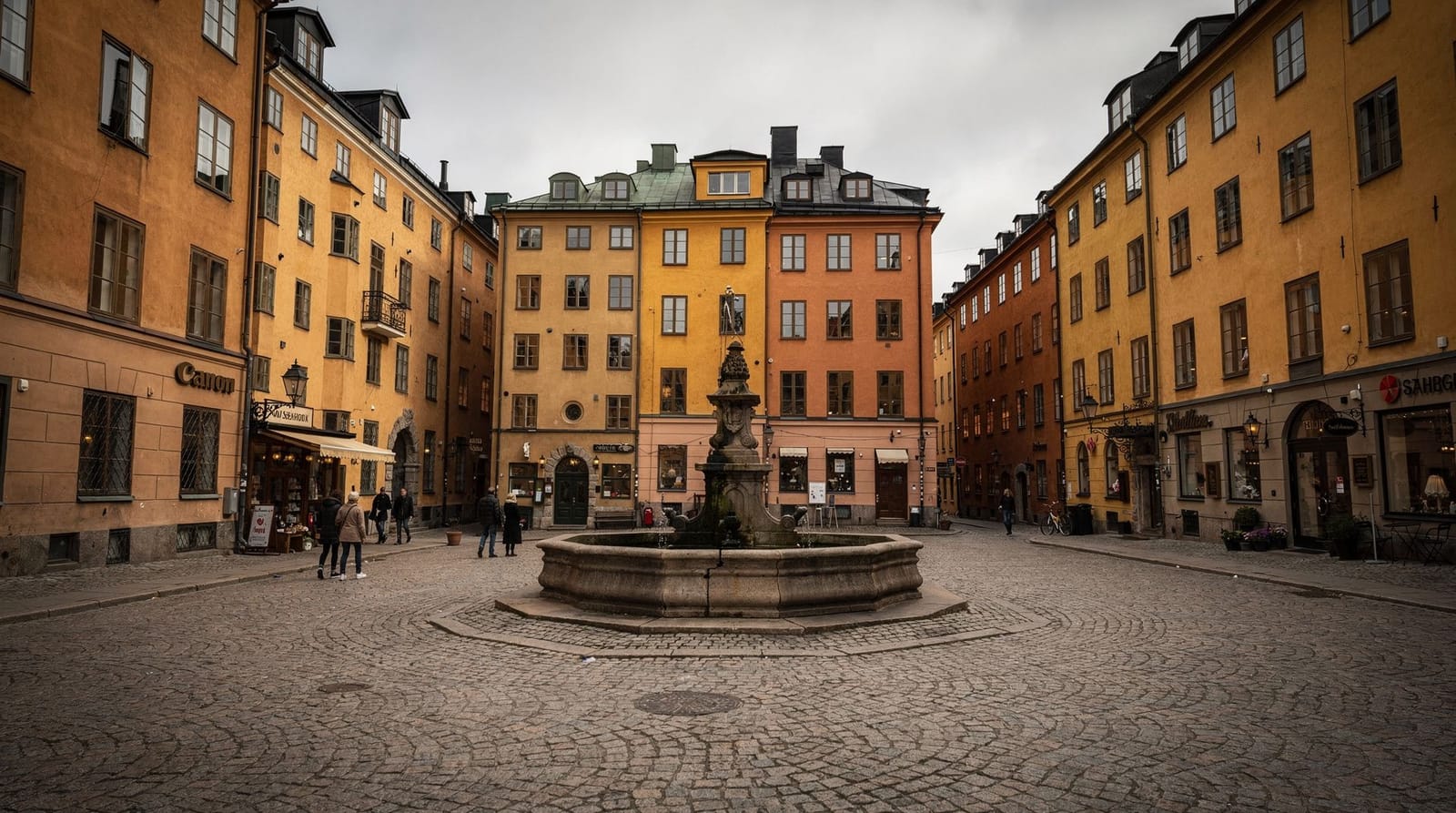
Mariatorget is the large square at the geographical and social center of Södermalm — a tree-lined park with a fountain, surrounded by cafés, bars, and the kind of neighborhood infrastructure (laundry, hardware store, dog-walking) that confirms you are in a district that actual people live in. The square is where Södermalm comes to sit on a sunny afternoon, and the café terraces around it are the best places to experience the neighborhood’s unhurried pace.
The streets radiating from Mariatorget — particularly Hornsgatan running west toward Hornstull and Bellmansgatan running north — are worth walking slowly. Bellmansgatan has some of the most photographically interesting domestic architecture in the city: wooden houses from the 18th century that survived the modernization that replaced most of old Södermalm’s building stock.
The Södermalm coffee scene
Stockholm’s third-wave coffee culture originated on Södermalm in the early 2010s, and the island still has the highest concentration of quality independent coffee shops in the city. The character of these places leans toward the spare and precise rather than the cosy: bare concrete, knowledgeable staff, seasonal single-origin filter coffee served in proper cups, and an attitude that treats coffee as an ingredient to be taken seriously.
Drop Coffee on Wollmar Yxkullsgatan is the institution most often cited as the starting point of Stockholm’s third-wave scene. Still excellent, still busy, still making some of the most consistent filter coffee in the city.
Johan and Nyström has multiple locations across Stockholm but the Södermalm original on Katarina Bangata has the best atmosphere. Their range covers espresso, filter, and cold brew with expertise.
Snickarbacken 7 — a small coffee bar and design shop on Snickarbacken that crosses the line between café and gallery space. Worth finding for the room and the coffee equally.
Café Pascal on Norrtullsgatan at the northern edge of Södermalm is technically in Vasastan territory but close enough and good enough to include here. The outdoor seating in summer is exceptional.
The Stockholm third-wave coffee guide places these shops in the wider citywide scene, useful if you want to compare Södermalm with the other districts.
Where to eat on Södermalm
Södermalm’s restaurant scene is the most concentrated and arguably the strongest in Stockholm for mid-range and independent dining. A few key recommendations below; the Södermalm food scene guide covers the neighborhood’s dining in more depth, and the guide to Swedish meatballs compares the best places to try them across the city.
Pelikan on Blekingegatan is a Stockholm institution — a working-class beer hall from 1904 that has been serving traditional Swedish food ever since. The interior is extraordinary: high ceilings, dark wood paneling, porcelain beer taps, red tablecloths, the sound of hundreds of conversations. The food is the Swedish canon executed with genuine care: meatballs (köttbullar) with lingonberry, pickled herring six ways, pyttipanna, fried Baltic herring (strömming). Lunch and dinner daily. Reservations recommended for dinner.
Meatballs for the People on Nytorgsgatan is exactly what it sounds like: a restaurant that serves Swedish meatballs in every variety imaginable — classic beef, moose, reindeer, fish, and vegetarian versions — with all the traditional accompaniments at reasonable prices (200–280 SEK per plate). No pretension, excellent quality, and a genuinely fun experience for the single-minded purpose of the menu.
Nytorget Urban Deli on Nytorget is a Stockholm-born concept that combines a food market, restaurant, and café. The quality is high and the range covers everything from morning pastries to a serious dinner menu. The courtyard terrace in summer is one of the better outdoor dining experiences in the city.
Hötorgshallen market is technically in Norrmalm, but if you are planning lunch around Södermalm’s attractions, the market hall is close enough to mention. The best option is the fish counter at the north end.
Mahalo on Swedenborgsgatan is where Södermalm locals go for a serious natural wine list with food that matches its ambition. Small, reservation-recommended, and a genuine neighborhood restaurant rather than a tourist-facing one.
Södermalm’s photography beyond Fotografiska
Fotografiska is the headline photography destination, but Södermalm’s own streets are among the most photographed in Stockholm. Bellmansgatan’s wooden houses, the Monteliusvägen view across to Gamla Stan at golden hour, and the SoFo street art along Skånegatan and Bondegatan each offer a distinct visual register — historic, panoramic, and contemporary respectively. The Stockholm Instagram spots guide maps these alongside comparable spots citywide, useful for visitors planning a photography-focused half-day rather than a museum visit.
Vintage and independent shopping
Södermalm is the best neighborhood in Stockholm for independent retail, particularly vintage clothing, design objects, and books. The main axis for this is Hornsgatan running from Mariatorget west to Hornstull — the street’s second-hand furniture shops, independent clothing stores, and small art galleries are concentrated along this stretch.
Hornstull Marknad (Hornstull market) runs on weekends at the far western end of Hornsgatan near Hornstull bridge. It is Stockholm’s best outdoor flea market — mix of vintage clothing, records, ceramics, and oddities. Best in the morning before the crowds. If vintage hunting is the point of your day, the guide to Stockholm flea markets and vintage shops lists further options beyond Södermalm.
Beyond Retro has a large Södermalm location — consistently stocked, good quality selection.
Stadsmissionen Secondhand on Götgatan is the ethical charity shop option — often surprisingly well-stocked with quality items.
Getting around Södermalm
The T-bana gives you two natural entry points: Slussen (Green Line) at the northeastern corner, connecting to Gamla Stan (2 minutes) and Norrmalm; and Medborgarplatsen (Red Line) in the center of the island, the most useful station if you are heading for Mariatorget, Pelikan, and the Hornsgatan shopping street.
The island is walkable across its full width (east-west) in 30–40 minutes, but the hills mean some routes are more demanding than they look on a flat map. The walk from Slussen to Fotografiska along the waterfront is 15 minutes and entirely flat. The walk from Fotografiska up to Monteliusvägen involves a steep staircase.
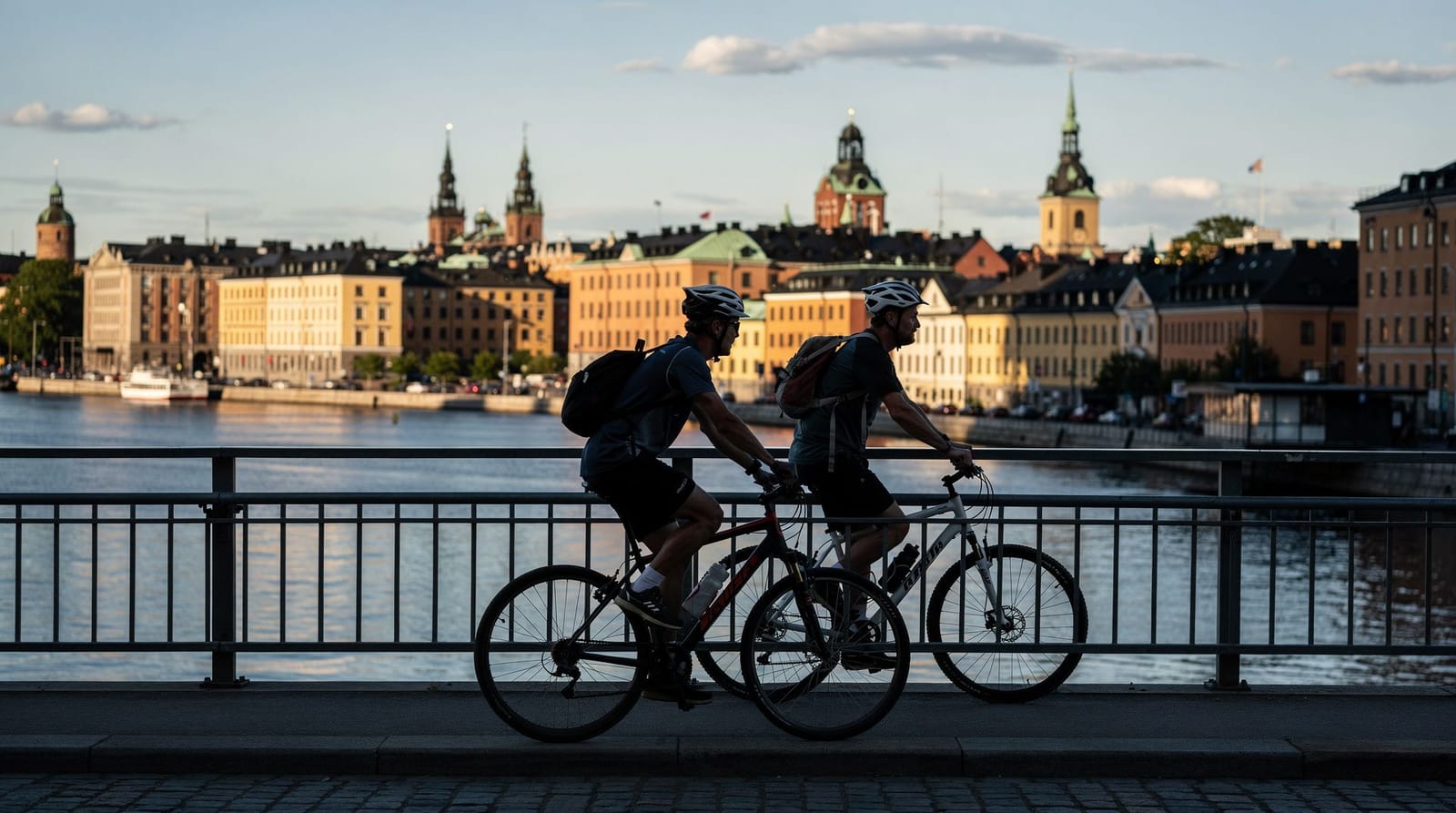
Cycling is excellent on the main east-west streets; the hills on the shorter north-south routes are more challenging. The Stockholm cycling guide covers rentals and riding conditions, and how Stockholm public transport works explains tickets and the T-bana if you are arriving by train.
Best time to visit Södermalm
Södermalm is a year-round neighborhood with no bad season. The Fotografiska has programming throughout the year. The coffee shops and restaurants are equally appealing in winter (the right weather for a two-hour fika) as in summer.
Summer advantage: Monteliusvägen at long summer evenings, the Fotografiska rooftop in warm weather, the Hornstull market on summer weekends, outdoor café terraces on Mariatorget.
Winter advantage: The neighborhood is at its most genuinely local in winter, with fewer tourists and a cosier atmosphere in the smaller cafés. The Christmas season brings temporary markets at Hornstull and around Mariatorget.
Södermalm’s walking route: from Slussen to Hornstull
The natural Södermalm walking route covers approximately 4km and takes 2–3 hours at a leisurely pace with stops:
Start at Slussen T-bana station, which is currently being rebuilt and transformed (construction ongoing through late 2020s) but still the main gateway from Gamla Stan. Walk east along the waterfront to Fotografiska on the Stadsgårdshamnen quay (15 minutes from Slussen). From Fotografiska, climb the stairs to Monteliusvägen for the panoramic view. Walk west along the clifftop promenade to the Mariaberget end (15 minutes, one of the best walks in Stockholm). Descend into Mariatorget for coffee or lunch. Continue west along Hornsgatan past independent shops and galleries toward Hornstull, taking time on the side streets south of Hornsgatan toward the water. End at the Hornstull Marknad on weekends or the Hornstull T-bana station for the return journey.
This circuit gives you Fotografiska, the best free viewpoint in the city, the neighborhood commercial life, and the waterfront without missing anything significant. Reverse the route to end at Fotografiska (useful if you want the rooftop café as your final stop). For a more detailed stop-by-stop version, see the Södermalm walking tour guide.
Seeing Södermalm by e-bike
Södermalm’s hills that make some walking routes demanding are exactly what make it a satisfying e-bike neighborhood — the electric assist flattens the climb from the waterfront up to Monteliusvägen and lets you cover the full east-west span of the island (Slussen to Hornstull and back) in a fraction of the walking time, with stops built in.
Södermalm e-bike tour — cover the island’s hills, viewpoints and neighborhood streets without the climbThis is a genuinely useful option for visitors with limited time who still want to see Monteliusvägen, Mariatorget, and the SoFo streets in a single outing rather than choosing between them.
Södermalm’s coffee shops compared
With four or five serious specialty cafés within walking distance of each other, deciding where to sit down for a fika can be its own small decision.
| Café | Best for | Vibe |
|---|---|---|
| Drop Coffee | Filter coffee purists | Spare, precise, busy |
| Johan and Nyström | Range (espresso to cold brew) | Comfortable, reliable |
| Snickarbacken 7 | Design-minded visitors | Gallery-café crossover |
| Café Pascal | Outdoor seating in summer | Södermalm-adjacent, relaxed |
If you only have time for one stop, Drop Coffee is the reference point for understanding what Stockholm’s third-wave scene is actually about; Johan and Nyström is the safer choice if you want a wider menu and a guaranteed seat.
Fika and the Södermalm ritual
The Swedish concept of fika — a daily coffee-and-pastry break that functions as both a social ritual and a genuine pause in the day — finds its most refined expression in Södermalm’s coffee shops. Understanding fika as a practice rather than just a product is part of what makes Södermalm compelling. The fika culture guide explains the ritual in more depth.
Fika is not a quick espresso at a bar. It is a sit-down pause, typically 20–40 minutes, with a properly prepared coffee (filter or espresso, not a chain-style sugar vehicle), a fresh pastry (kanelbulle being the canonical choice), and ideally someone to share it with. The coffee shops on Södermalm that do this best understand the rhythm: they are designed for sitting, the seating is comfortable enough for extended stays, and the pace of service is not rushed.
The kanelbulle (cinnamon bun) in its proper form is distinct from what most non-Swedish visitors expect: cardamom in the dough, coarse pearl sugar on top, rolled with butter and cinnamon to create distinct layers, baked to a specific slightly-underdone quality. The supermarket version is a poor imitation. Drop Coffee, Vete-Katten in Norrmalm, and the better Södermalm cafés are where you find the real thing.
4 October is Kanelbullens Dag (Cinnamon Bun Day) in Sweden — every bakery and café in Stockholm marks it, and Södermalm is the best neighborhood to observe it.
Avoiding Södermalm’s few tourist traps
Södermalm has fewer tourist traps than the central districts, precisely because it was never built around a single famous landmark. The exceptions worth knowing: some of the bars directly around Slussen cater to the after-work crowd with pricing to match, and the restaurants immediately facing Medborgarplatsen skew toward convenience over quality compared to the streets one block further in. The Stockholm tourist traps guide has the citywide list, but Södermalm’s version is milder than Gamla Stan’s or Norrmalm’s — the neighborhood’s food and coffee culture is largely locally driven, which keeps quality more consistent than in areas built primarily around tourist footfall.
For visitors specifically wanting the SoFo bar-crawl experience without an inflated bill, Kvarteret and Bar Agrikultur remain honestly priced by Stockholm standards — it is the venues immediately around Medborgarplatsen on weekend nights that carry the premium.
Nightlife on Södermalm
Södermalm has Stockholm’s most interesting bar and nightlife scene at the independent, non-club level. The concentration of bars along Folkungagatan, Bondegatan, and Skånegatan (the eastern Södermalm area known to locals as “SoFo” — South of Folkungagatan) represents the most authentic slice of Stockholm nightlife below the bottle-service tier.
Kvarteret on Tjärhovsgatan is a neighborhood bar that has been a Södermalm institution for years — no pretension, good beer list, genuinely local clientele.
Bar Agrikultur on Bondegatan is the natural wine bar with a short, excellent food menu — one of Stockholm’s best small bars at any price point.
Södermalm after midnight: The neighborhood stays busy until 2–3am at weekends, with the bars around Medborgarplatsen and SoFo maintaining atmosphere late. It is not a clubbing district (that is Östermalm and the central venues) but for extended evening drinks it is the best option in the city. The Södermalm bar scene guide goes through the venues in more detail.
Connections to other neighborhoods
Gamla Stan is immediately north, connected by the Slussen lock and bridge — a 5-minute walk. Norrmalm is accessible via T-bana (Slussen to T-Centralen, 3 minutes) or by walking across Gamla Stan. Kungsholmen is to the west, accessible by bus or a 20-minute walk along the waterfront. Djurgården is reached by ferry from Slussen (7 minutes) — the most pleasant connection.
For a recommended walk that combines Södermalm’s highlights, see the Södermalm neighborhood deep dive guide.
Where to stay on Södermalm
Budget (under 1,200 SEK): Zinkensdamm Hostel near Mariatorget is one of Stockholm’s best traditional hostels — solid rooms, good common areas, excellent location.
Mid-range (1,200–2,500 SEK): Zleep Hotel Slussen is reliable value with easy access to both Södermalm and Gamla Stan. Hotel Anno 1647 on Mariagränd is a boutique 4-star in a historic building steps from Monteliusvägen.
Luxury (2,500+ SEK): Hilton Slussen is the waterfront option with panoramic views from the upper floors, particularly good for the Gamla Stan panorama. Fotografiska Stockholm Hotel (if and when it opens as rumored) would be the obvious Södermalm luxury choice.
Frequently asked questions about Södermalm
What is Södermalm known for in Stockholm?
Södermalm is Stockholm’s creative and culinary hub — the neighborhood with the highest concentration of quality independent restaurants, the city’s best coffee shops, the Fotografiska photography museum, and the panoramic Monteliusvägen viewpoint over Gamla Stan. It has a residential, lived-in character that contrasts with the more tourist-oriented districts further north.
How long should I spend in Södermalm?
Half a day is the minimum for the main highlights (Fotografiska, Monteliusvägen, Mariatorget, lunch at Pelikan or Meatballs for the People). A full day lets you explore Hornstull, browse the markets, and have dinner at one of the neighborhood’s serious restaurants.
Is Södermalm far from the city center?
Three minutes by T-bana from T-Centralen to Slussen. By foot across Gamla Stan, it is 15–20 minutes from Stockholm Central. The distance is psychological rather than practical — Södermalm is fully integrated into the city’s transit network.
Where is the best viewpoint in Södermalm?
Monteliusvägen is the famous clifftop promenade and delivers the classic view over Gamla Stan and the water. For a different angle, the rooftop café at Fotografiska gives an elevated view looking east toward the archipelago and south over the island. The terrace bar at Slussen — operated by various venues that come and go — can also have excellent views north over the Old Town when it is open.
What is the Södermalm coffee scene?
Stockholm’s third-wave coffee culture largely began in Södermalm. Drop Coffee, Johan and Nyström, and Snickarbacken 7 are the key names. These are specialty coffee shops that treat filter coffee and espresso as distinct crafts, use high-quality single-origin beans, and have staff who can discuss brewing methods in detail if you want them to. Nothing intimidating — just excellent coffee taken seriously.
Is Södermalm walkable or should I consider an e-bike?
Södermalm is walkable across its full width in 30–40 minutes, but the hills between the waterfront and Monteliusvägen are genuinely steep. Visitors comfortable with stairs and slopes should walk; those with limited time or mobility concerns get more coverage from an e-bike tour, which flattens the climb and covers the Slussen-to-Hornstull span more efficiently.
Top experiences
Bookable activities with verified prices and instant confirmation on GetYourGuide.