Södermalm neighborhood deep dive: Stockholm's south island
Stockholm: bohemian Södermalm island walking tour
Duration: 1.5 hours
What is Södermalm like for visitors?
Södermalm ('Söder') is Stockholm's most lived-in neighbourhood — creative, hilly, with the city's best views from Monteliusvägen and Fjällgatan, excellent cafés and independent restaurants, vintage shopping, and Fotografiska museum. It is genuinely residential and less tourist-focused than Gamla Stan. Allow at least half a day.
| Where | South of Gamla Stan, across Slussen |
| Cost | Free to explore; Fotografiska 195 SEK |
| Time needed | Half a day minimum; a full day to cover viewpoints, SoFo and Hornstull |
| Getting there | T-bana to Slussen, Medborgarplatsen, Mariatorget or Hornstull |
| Best time | Golden hour for the cliff viewpoints; Saturday for Hornstull market |
Södermalm: the island Stockholm actually lives in
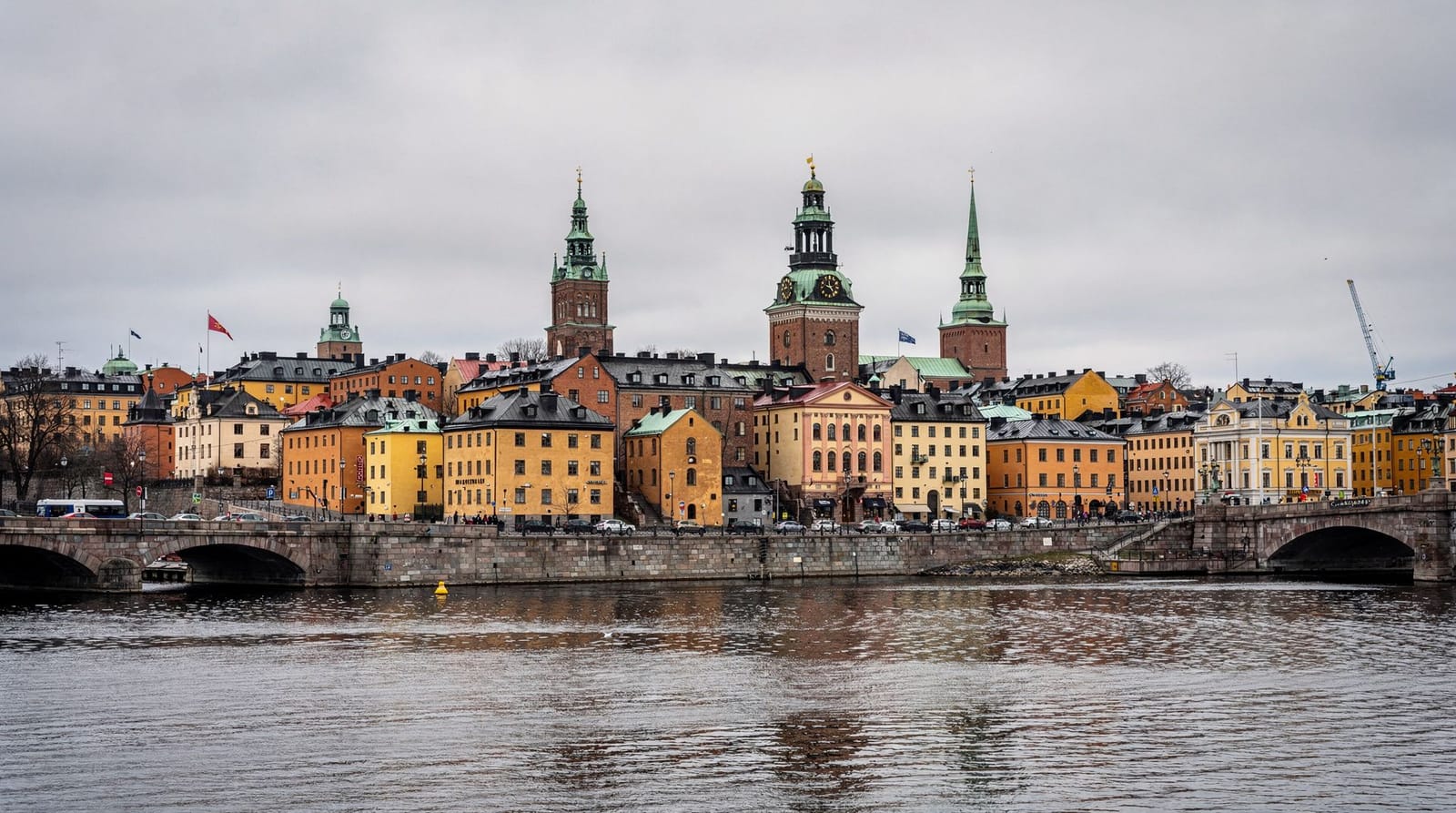
Södermalm — “Söder” to everyone who lives here — is the large island immediately south of Gamla Stan and by most measures the most interesting neighbourhood in Stockholm for the visitor who wants to understand the city rather than just photograph it. It is residential, hilly, and culturally dense in a way that Gamla Stan (tourist island) and Norrmalm (downtown) are not.
The island earned its bohemian reputation over decades. It was a working-class neighbourhood through much of the 20th century — dock workers, factory hands, and craftspeople lived in the steep-streeted blocks above Riddarfjärden. The post-industrial gentrification that followed brought creative industries, galleries, independent restaurants, and eventually a reputation as Stockholm’s most interesting place to eat, drink, and wander. That reputation is largely deserved, though the most tourist-facing parts of Söder (around Medborgarplatsen in particular) have elevated prices to match.
This guide covers geography and viewpoints; for a food-first take on the same island, see the Södermalm food scene guide, and for a structured route linking the highlights on foot, the Södermalm walking tour guide.
The geography of Södermalm
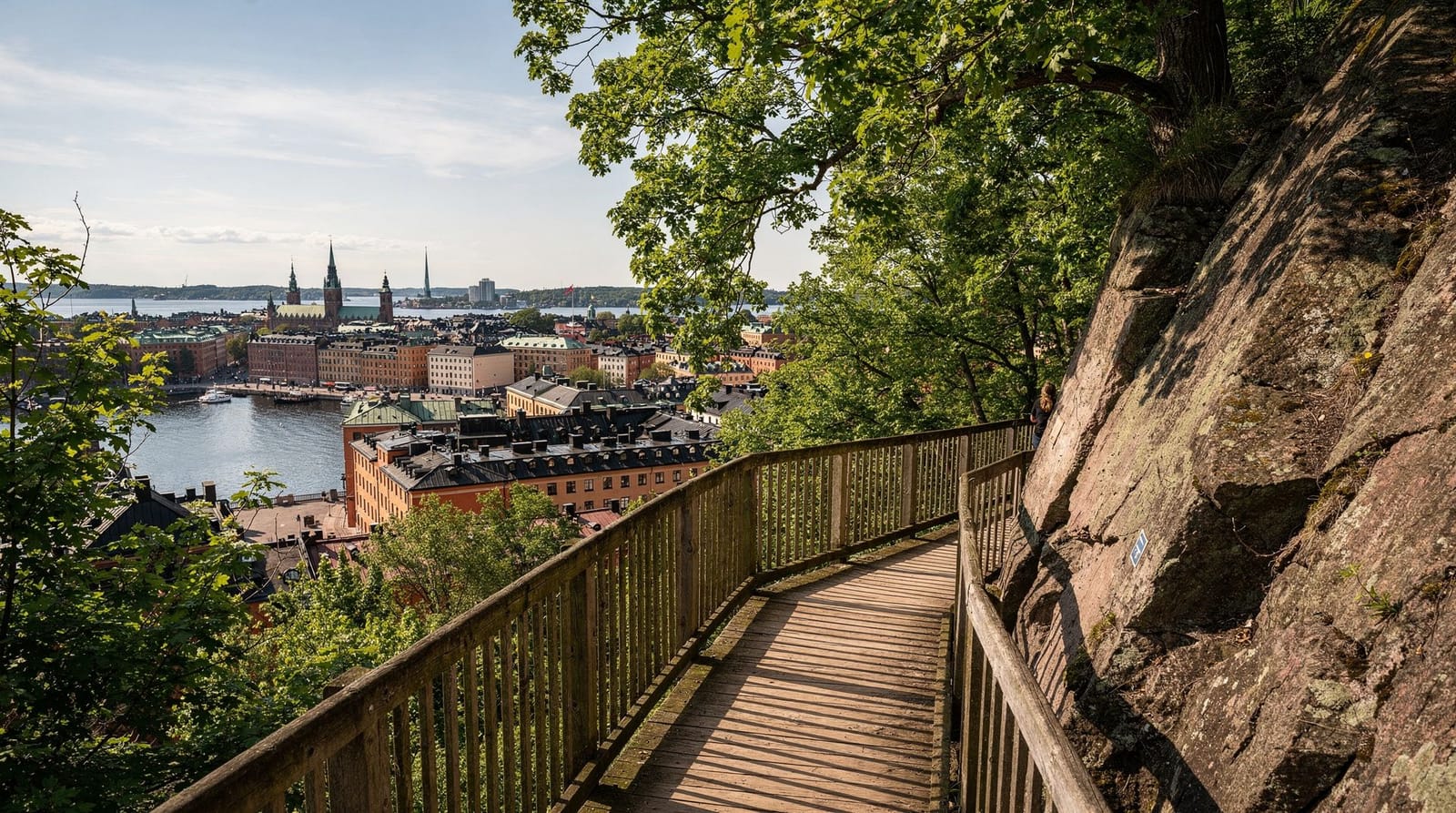
Södermalm is hilly in a way that Stockholm’s other central islands are not. The island’s northern edge is a cliff line — the Söderberg — rising 20–30 metres above Riddarfjärden. The cliff paths (Monteliusvägen, Fjällgatan) look north across the water to the City Hall and Gamla Stan from a height that transforms the views. Everything above the cliff is the main residential plateau; below the cliff is the waterfront access, which requires either a lift or stairs from most points.
Key zones:
- Western Söder (Mariatorget, Hornsbergs area): More residential, calmer, the best waterfront views from Monteliusvägen
- Central Söder (Medborgarplatsen): The main commercial hub, most touristy, best connected by T-bana
- SoFo (South of Folkungagatan): The fashionable district east of Medborgarplatsen, best for independent shops and restaurants
- Eastern Söder (Fotografiska area): The waterfront around Fotografiska, with views east towards the inner archipelago
- Hornstull (western tip): The market area, relaxed, younger crowd
The viewpoints
The cliff viewpoints are the single most compelling reason to visit Södermalm. Nothing else in the inner city gives you this perspective on Stockholm.
Monteliusvägen
The 500-metre wooden promenade along the cliff edge at Mariaberget is one of Stockholm’s most beautiful public spaces. Looking north from here across Riddarfjärden, you see: the City Hall’s tower, Gamla Stan’s church spires, Kungsholmen’s residential blocks, and on a clear day, Ekoparken’s green hills behind them.
Access: From Slussen, take the lift or stairs up to Katarinavägen, then walk west to the Bastugatan entrance. The promenade runs west to Bellmansgatan. Allow 20–30 minutes to walk its full length with stops for the best viewpoints.
Best light: Golden hour, both morning (east-facing end, facing the inner city) and evening (west-facing end, facing the City Hall). The most-photographed composition is the City Hall reflected in Riddarfjärden at sunset — achievable from the western section of the promenade in June and July.
Fjällgatan
On the eastern side of Södermalm, above Fotografiska, Fjällgatan is a cliff-edge street with a different angle — looking east and south over the Baltic inlet (Saltsjön), the inner archipelago, and the Nacka shoreline. The view is wider and more open than Monteliusvägen; the surroundings are quieter and more authentically residential.
Access: From Slussen, walk east along Katarinavägen, past Stadsmuseet, and up the steps to Fjällgatan. Or from Södermalm’s east side, walk up from the Fotografiska area.
Why it’s underrated: Most visitors go to Monteliusvägen; Fjällgatan is half as crowded with twice the open sky. For photographers, the eastern light in morning is excellent.
Skinnarviksberget
In the western part of the island, this rocky hill gives 360-degree views without restriction. It is not a designated viewpoint — it is a hill in a park where people have always climbed to look around. Popular on summer evenings for outdoor gatherings, with locals bringing beer and blankets.
For a viewpoint-by-viewpoint comparison across the city, not just Södermalm, see how these three stack up against Gamla Stan’s own high points in the Gamla Stan neighbourhood deep dive and against Djurgården’s waterside views in the Djurgården neighbourhood deep dive.
Södermalm sits right next to the districts most first-time visitors already have on their list. If you are weighing where to spend a limited day, the Norrmalm neighbourhood deep dive covers the downtown side of the water, and the Östermalm neighbourhood deep dive shows the more polished, upmarket contrast to Söder’s easygoing streets.
Mariatorget
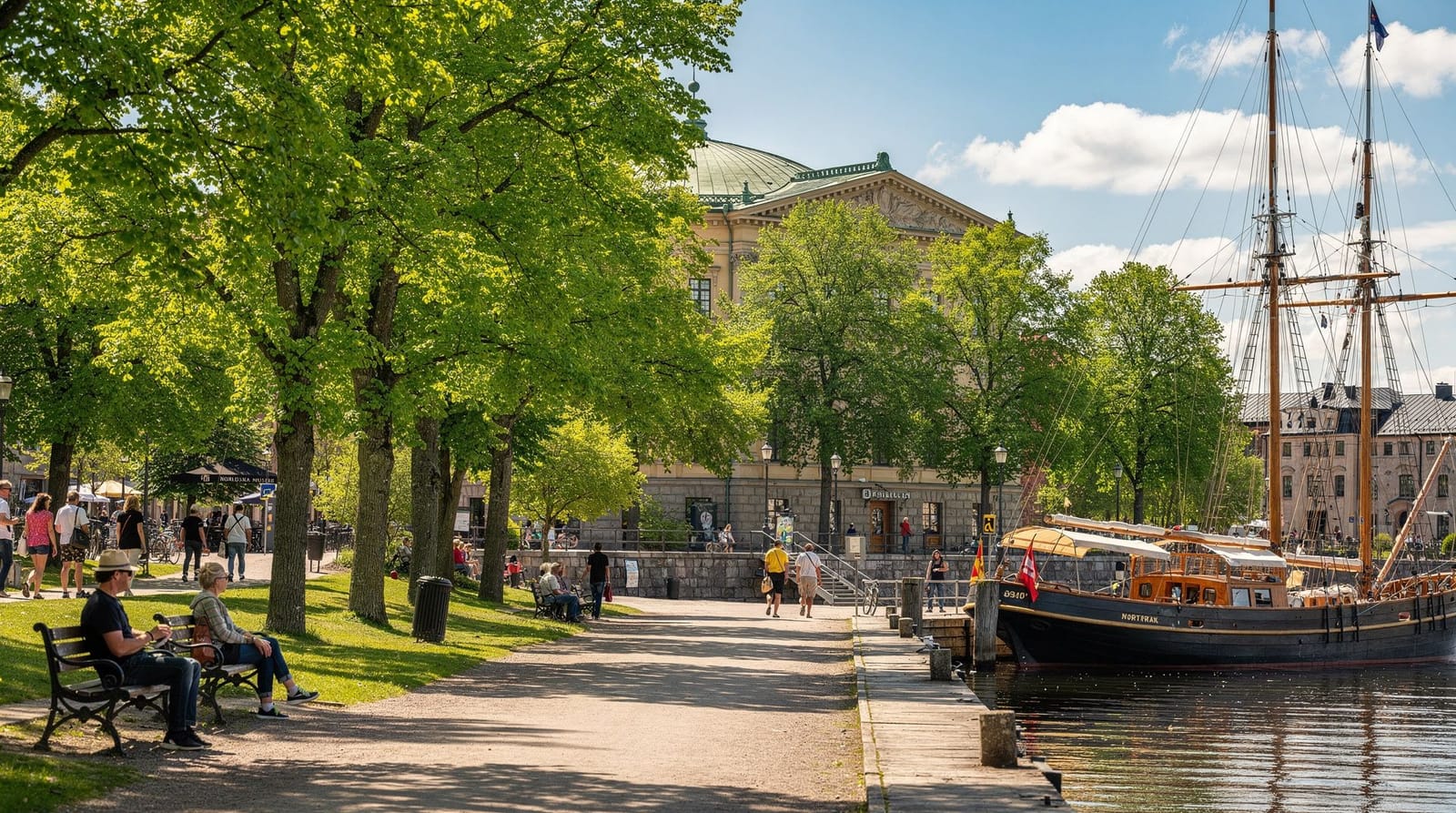
The main square of western Södermalm. Tree-lined, wide, with outdoor café terraces in summer and a farmers’ market on Saturdays. The surrounding streets (Hornsgatan, Bergsundsgatan) have Stockholm’s best concentration of vintage shops, small galleries, and neighbourhood restaurants.
The square itself is calm — no tourist coaches park here, no souvenir shops ring it. The pace of life is noticeably slower than in Gamla Stan 10 minutes’ walk north.
Café note: Café Saturnus (technically on Eriksbergsgatan, just off the square) has been making Stockholm’s largest and most celebrated cinnamon rolls for decades. They are genuinely outstanding; the queue is part of the experience on weekends.
Book a bohemian Södermalm island walking tourSoFo — South of Folkungagatan
The area roughly bounded by Folkungagatan, Götgatan, and Ringvägen is Stockholm’s most fashion-forward neighbourhood — locally and internationally recognised as the place for independent retail, interesting restaurants, and natural wine bars.
Key streets: Skånegatan and Nytorgsgatan have the highest density of independent shops. Nytorget square itself has outdoor seating that fills in warm weather — people bring their own drinks and gather around the water tower (now an events space).
Shopping in SoFo: Independent fashion boutiques, concept stores, record shops, bookshops, and several very good vintage stores. The character is genuinely independent, not a designed retail district — these are businesses that grew organically in an affordable-but-cool neighbourhood.
Eating in SoFo: Neighbourhood restaurants with short menus, seasonal ingredients, and moderate pricing (by Stockholm standards). The area has a higher quality-to-cost ratio than Gamla Stan or Östermalm. Reservations are often necessary at the better places; same-day walks-in are harder in peak summer.
Fotografiska
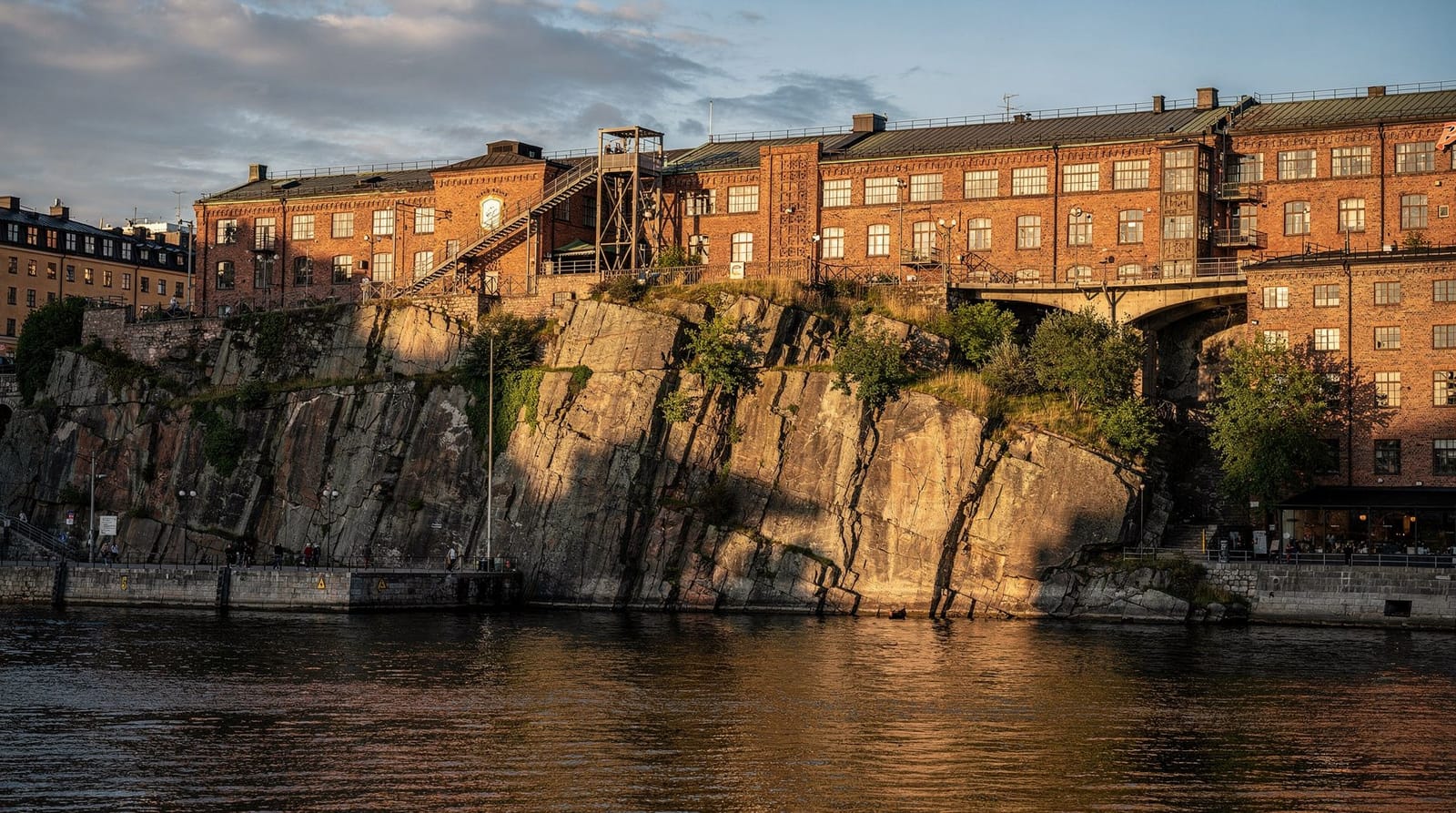
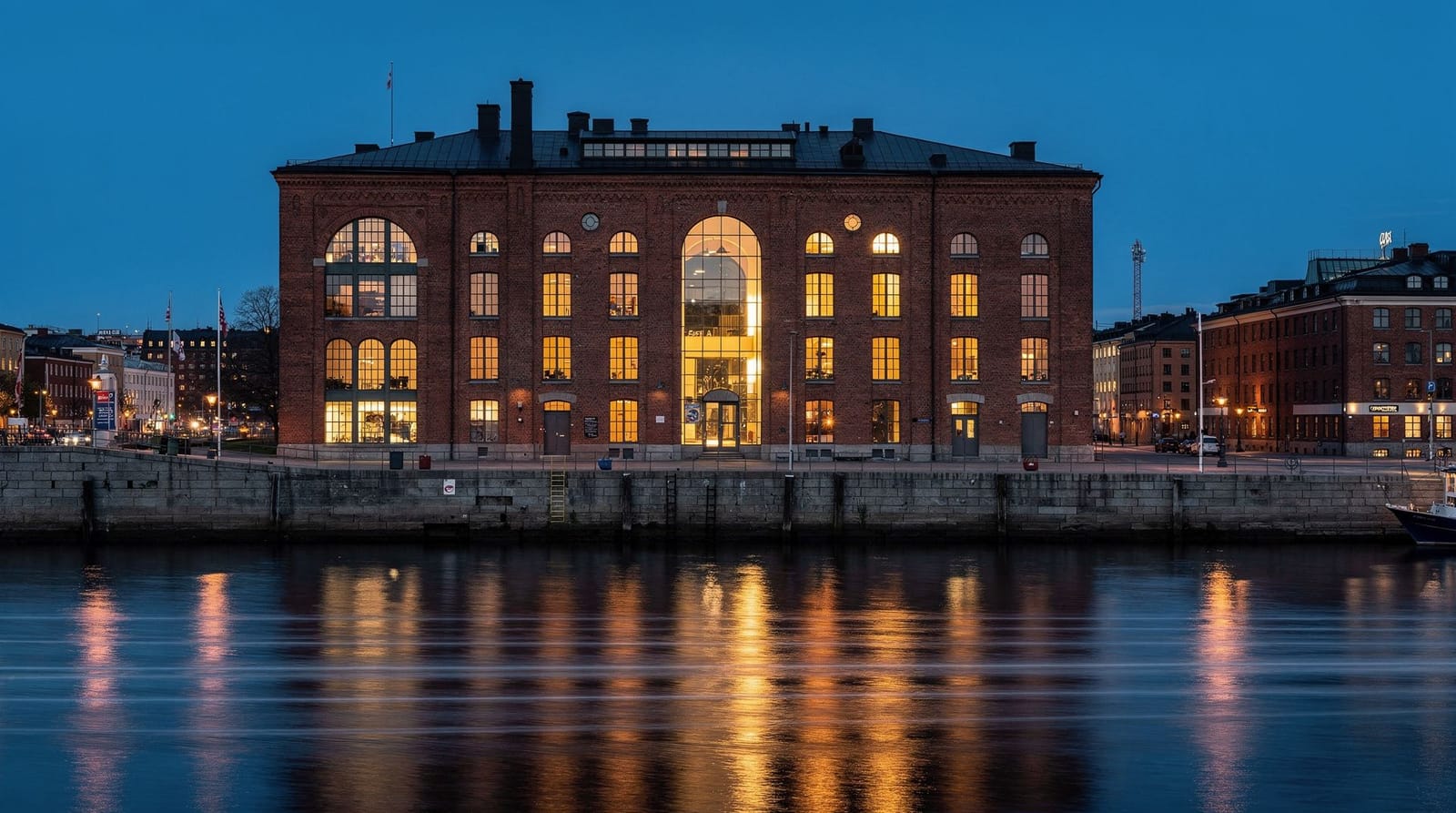
On the eastern waterfront, Fotografiska occupies a converted early-20th-century customs warehouse with lake views and a programme of international photography exhibitions. It is consistently one of Stockholm’s best-reviewed visitor attractions — the combination of building, rotating exhibitions, and excellent restaurant makes it more than just a gallery visit.
Entry is approximately 175 SEK. The restaurant and café are good enough to visit independently of the exhibition. The building has a rooftop bar in summer with views east over the archipelago.
See the full Fotografiska guide for exhibition programme and practical details.
Hornstull and the western end
Hornstull is Södermalm’s most relaxed corner — the western tip of the island, facing across the water to Liljeholmen. The area around Hornstull metro station has a cluster of bars and restaurants with a younger, local character.
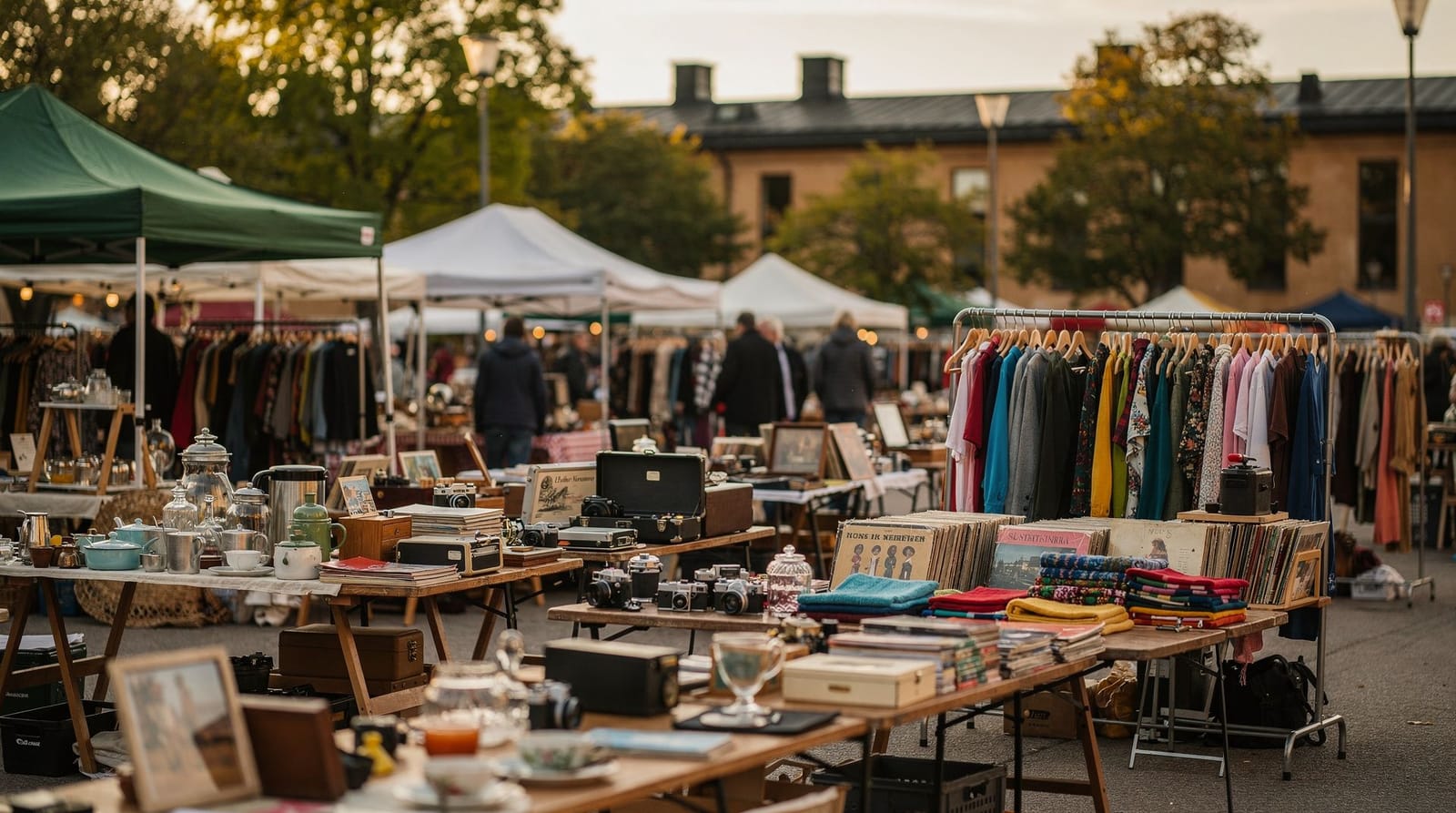
Hornstulls Marknad: Stockholm’s largest outdoor market, on the Hornstull waterfront, runs on weekends from April or May through September. It is genuinely large and genuinely varied — vintage clothing, furniture, food stalls, records, plants, and craft goods. Not a tourist market; a working neighbourhood market where Södermalm residents buy and sell things they actually use.
See the dedicated Stockholm flea markets guide for market dates and details.
Getting around Södermalm
T-bana: Slussen (red and green lines, southern entrance), Medborgarplatsen (red line), Mariatorget (red line), Hornstull (red line), and Zinkensdamm (red line) all serve different parts of the island.
On foot: Södermalm is large enough that walking its full extent in a single session is tiring. Pick a zone and explore it properly rather than trying to cover everything in one visit.
Terrain: The cliff paths (Monteliusvägen, Fjällgatan) require climbing 30–40 metres from street level. Lifts are available at Slussen and at several points on Katarinavägen. For visitors with mobility limitations, the cliff viewpoints are accessible via the lifts.
Södermalm also works well as one chapter in a longer trip. The Stockholm in 3 days overview shows where a Söder afternoon fits among the big sights, and the Södermalm destination page gathers everything on the island in one place. Because the T-bana does most of the heavy lifting here, the public transport explainer is worth a quick read before you arrive.
Where to eat and drink
Breakfast and fika:
- Café Saturnus (Eriksbergsgatan 6): The cinnamon roll benchmark
- Johan & Nyström (Swedenborgsgatan 7): Excellent specialty coffee, third-wave
- Grönan Caféet (various Söder locations): Good light breakfasts
Lunch and dinner:
- Pelikan (Blekingegatan 40): Stockholm’s classic krog, traditional Swedish food since 1904 — meatballs, herring, smörgåsbord. Reserve ahead.
- Hermans Trädgårdscafé (Fjällgatan 23b): Legendary vegetarian with a terrace view; the lunch buffet has run since 1978
- Chutney (Katarina Bangata 19): Indian-influenced vegetarian, very popular at lunch
Evening and bars:
- Bar Agrikultur (Repslagargatan 8): Natural wine focus, excellent food
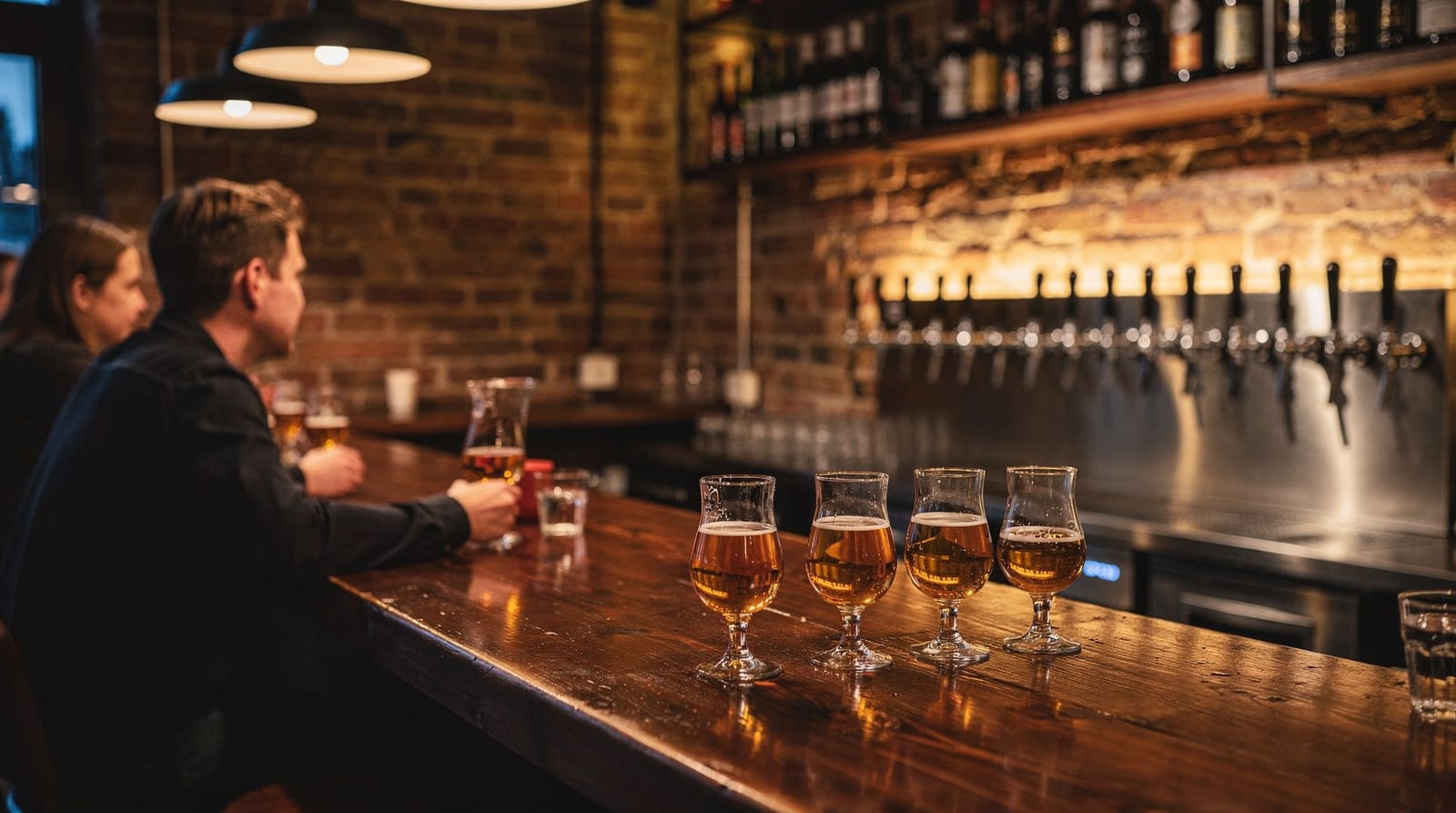
- The many craft beer bars on Götgatan and the SoFo streets
For the fuller evening picture beyond these few names, see the dedicated Södermalm bar scene guide.
If the cinnamon roll at Café Saturnus has made you curious about the wider ritual, the fika culture guide explains how the coffee break works in practice, and the third-wave coffee guide goes deeper on the specialty roasters that have settled in this part of town. For a classic sit-down meal in the spirit of Pelikan, the Swedish meatballs guide compares the traditional options across the city.
Book a Södermalm urban art and hidden gems tourFrequently asked questions about Södermalm
Is Södermalm the best neighbourhood for food in Stockholm?
It has the strongest claim. The combination of SoFo’s independent restaurant scene, the neighbourhood cafés around Mariatorget, and the craft bar culture along Götgatan gives Södermalm more good options per square kilometre than the more expensive Östermalm or the more touristy Gamla Stan. Prices are still Stockholm prices — budget around 180–250 SEK for a main course at most sit-down restaurants.
What is the best viewpoint in Södermalm?
Monteliusvägen for the classic City Hall view at golden hour. Fjällgatan for the open Baltic panorama with fewer crowds. Skinnarviksberget for the full 360-degree view and a more local experience.
How far is Södermalm from Gamla Stan?
About 5 minutes on foot across the Slussplan bridge (southern end of Gamla Stan to northern edge of Södermalm). The T-bana also connects them directly at Slussen station.
Is Södermalm hilly?
Significantly more so than Gamla Stan or Norrmalm. The northern cliff face rises 20–30 metres above Riddarfjärden, and the interior of the island has rolling terrain. The viewpoint walks involve genuine climbing. For visitors with limited mobility, the lifts at Slussen provide access to the cliff-top level, and most of the main streets on the plateau itself are flat.
When is the Hornstull market?
Hornstulls Marknad runs on weekends (typically Saturday and Sunday) from late April or early May through September. Start time is around 10–11am; the market winds down by 5–6pm. See the flea markets guide for exact dates by season.
Should I stay overnight in Södermalm instead of Gamla Stan or Norrmalm?
It’s a strong option for repeat visitors or anyone prioritising food and neighbourhood atmosphere over proximity to the biggest sights. Södermalm has good T-bana connections to central Stockholm (5–10 minutes from Slussen or Medborgarplatsen), generally better-value dining than Gamla Stan, and a genuinely residential feel in the evenings. First-time visitors focused on maximising sightseeing time may still prefer Norrmalm or Gamla Stan for walkability to the main attractions.
Is Södermalm safe to walk around at night?
Yes, by general European city standards. Södermalm is a residential, family-friendly island with steady foot traffic in the main areas (SoFo, Hornsgatan, Nytorget) well into the evening. As anywhere, stick to lit main streets late at night and use normal city awareness, but there’s no particular reason to avoid Södermalm after dark.
Top experiences
Bookable activities with verified prices and instant confirmation on GetYourGuide.