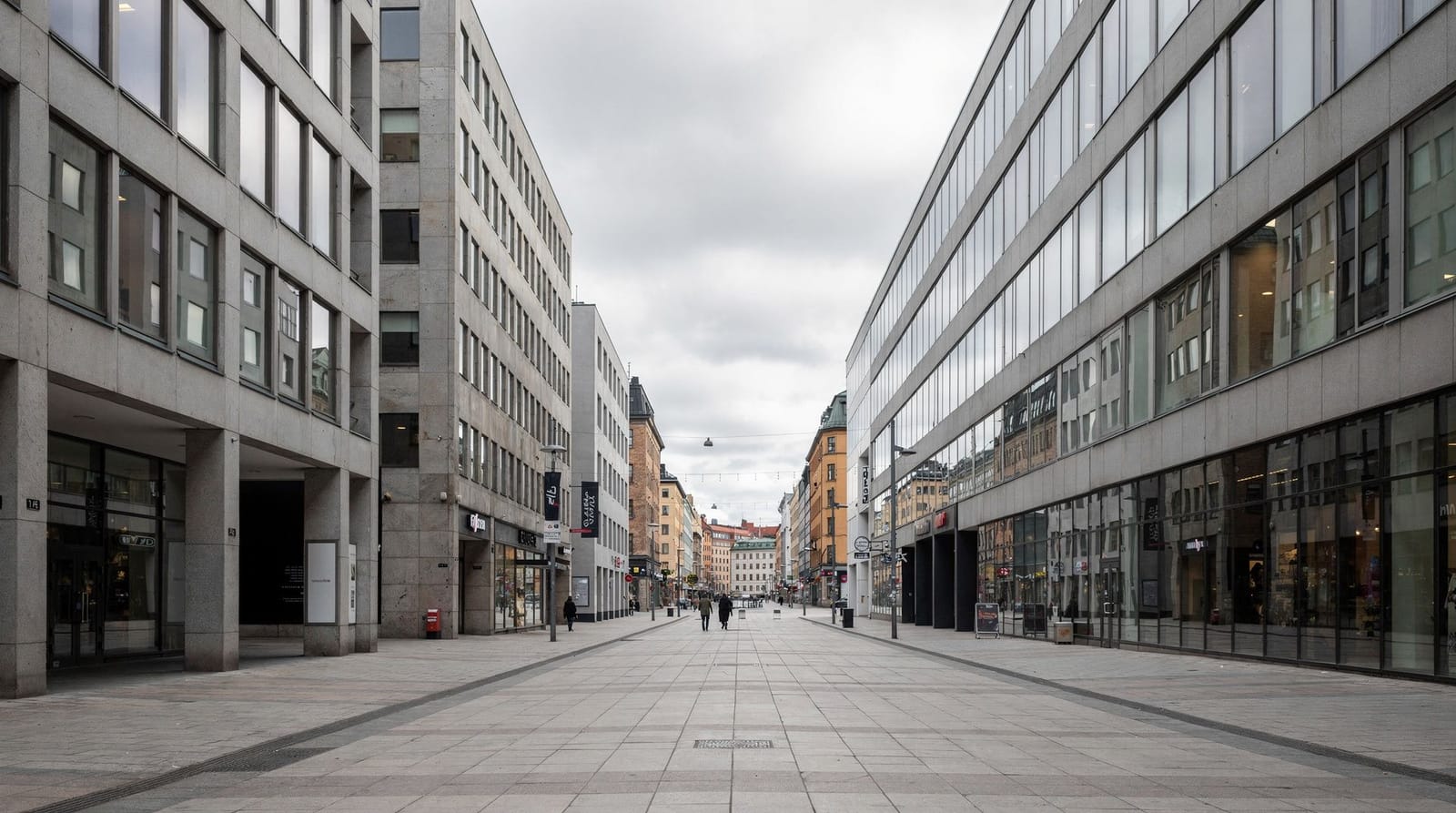
Östermalm — Stockholm's elegant eastern quarter
Östermalm is Stockholm's upscale district: the Östermalmshallen food market, Strandvägen boulevard, Michelin restaurants and embassy quarter.
Stockholm: Swedish food & walking tour
Quick facts
- Getting there
- T-bana to Östermalmstorg (Red Line)
- Character
- Upscale, residential, embassy quarter
- Best draw
- Östermalmshallen food market
- Distance from T-Centralen
- 5 min by T-bana
Stockholm’s most polished quarter
Östermalm is the district that Stockholmers point to when they want to explain the city’s understated elegance — the residential quarter where ambassadors live, where the food market is the best in Sweden, where the boulevard along the water looks designed to make visitors feel they have arrived somewhere that takes itself seriously without taking itself too seriously.
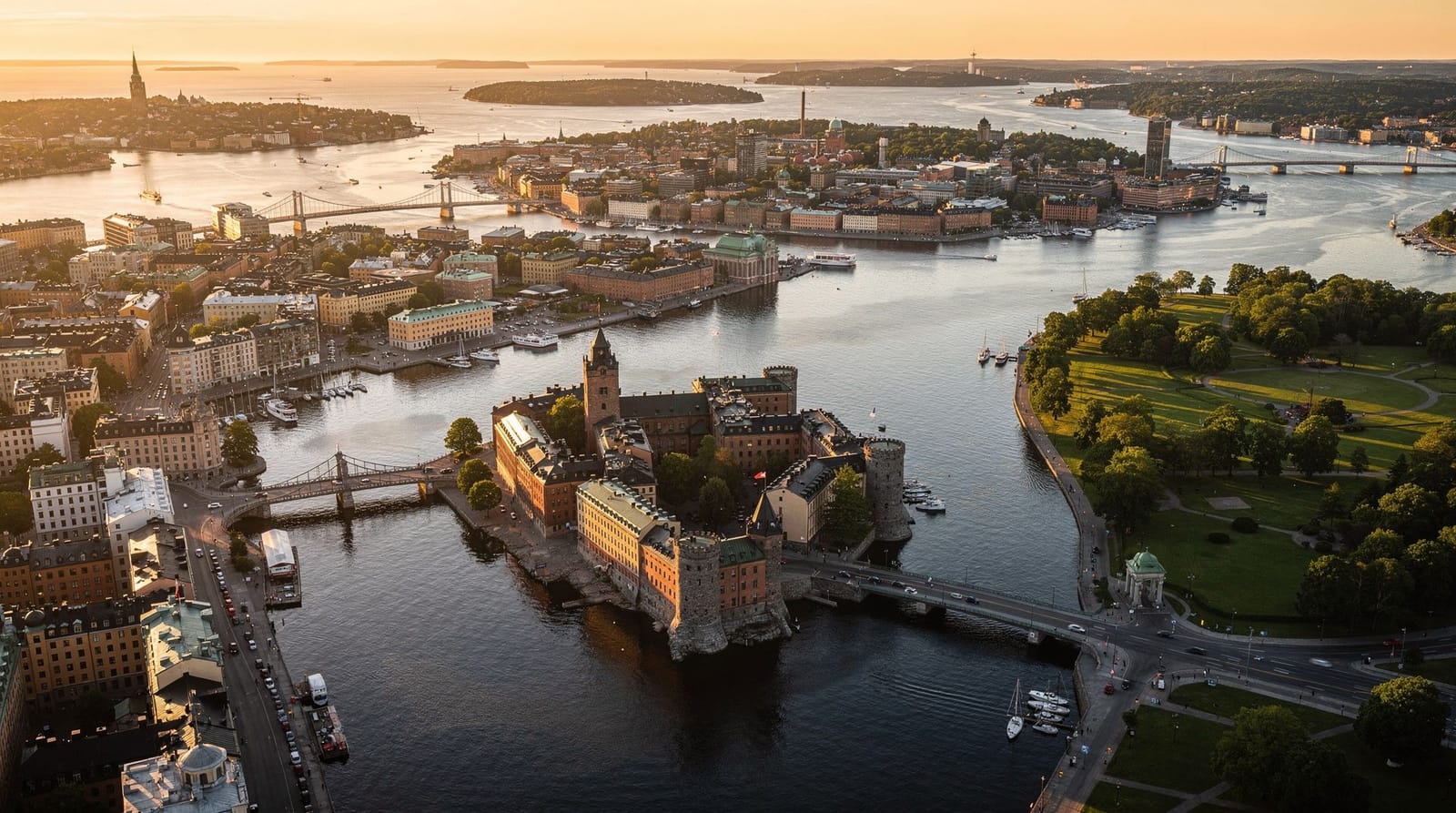
The neighborhood occupies the eastern mainland peninsula between Norrmalm and the Djurgårdsbroen bridge, roughly bounded by Karlavägen to the north and Strandvägen to the south. Unlike Södermalm’s hills or Gamla Stan’s curves, Östermalm is a planned district laid out in the 1870s–1890s on a grid of wide avenues — designed to house Stockholm’s expanding upper-middle class and diplomatic corps, and still serving that function 130 years later.
Come to Östermalm primarily for the Östermalmshallen food market, which is worth a visit on its own terms. Come secondarily for Strandvägen, for the dining scene (which punches above the neighborhood’s modest tourist footprint), and for the gateway it provides to Djurgården.
| Where | Eastern mainland peninsula, between Norrmalm and Djurgårdsbroen |
| Getting there | T-bana to Östermalmstorg (Red Line), 5 min from T-Centralen |
| Time needed | Half a day for the market and Strandvägen walk |
| Cost | Free to walk; market lunch 120–200 SEK; Michelin tasting menus 2,500–4,500 SEK |
| Best for | Food market, waterfront walk, fine dining, museum-circuit rain days |
Östermalmshallen — the food market
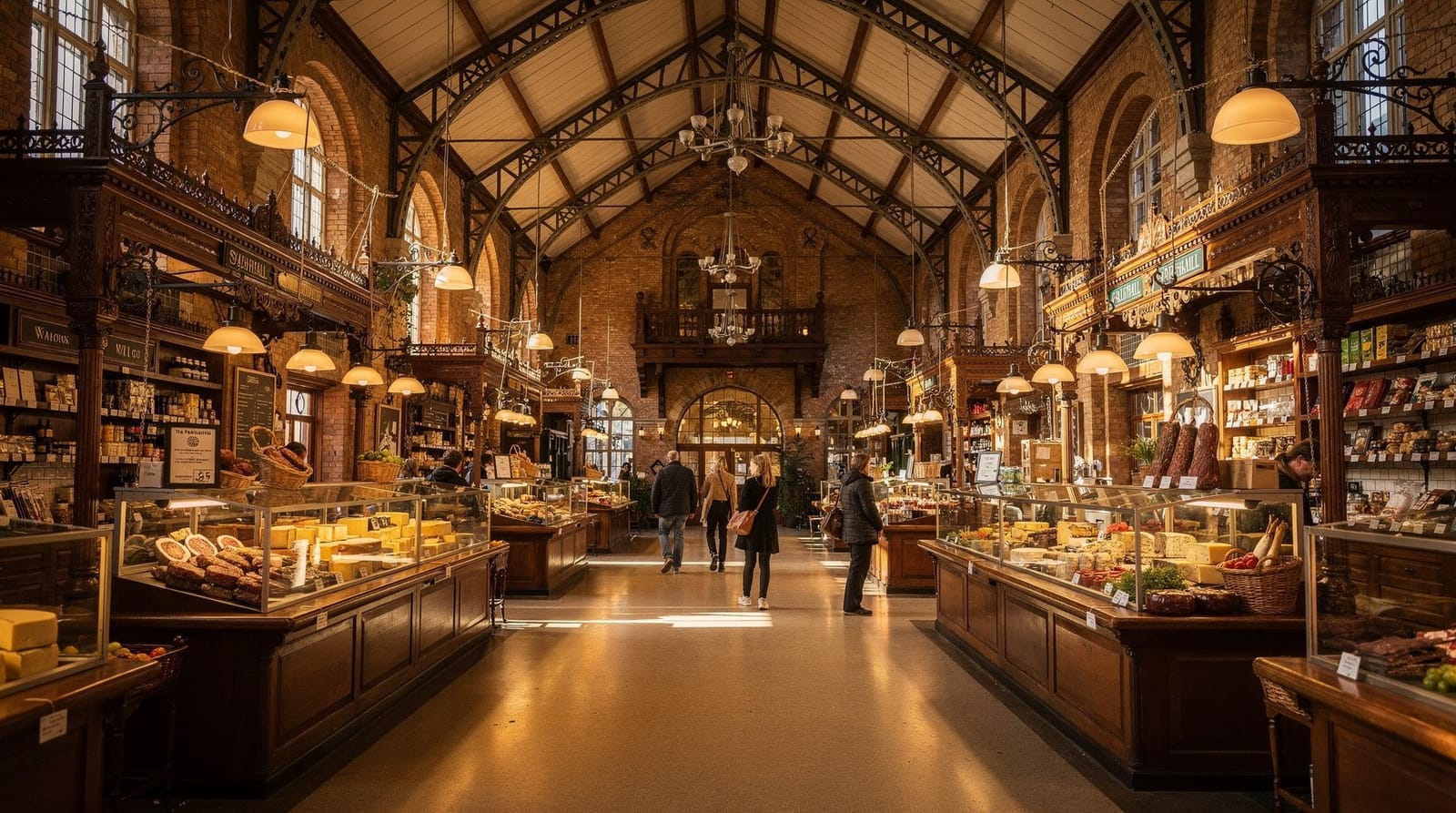
Östermalmshallen (usually called just “Saluhallen” or the market hall) is the defining institution of the neighborhood and arguably the best food market in Stockholm. The building is a 19th-century brick market hall with ornate ironwork, opened in 1888 on Östermalmstorg square, and the interior is one of the more beautiful spaces in the city: a series of stalls under a high Victorian roof, selling fish, meat, cheese, charcuterie, bread, Swedish delicacies, and prepared foods from counters that have been operating here for generations.
The market is genuinely used by local residents and professional chefs rather than existing primarily for tourists — the prices reflect this (they are not cheap, but the quality is consistent). The fish stalls at the northern end are exceptional: wild Baltic salmon, gravlax prepared on site, fresh crayfish in season (August–September), smoked eel, and the full range of Swedish preserved fish preparations.
For a quality lunch without a restaurant price tag, the prepared food counters offer open sandwiches (smörgås), soup, herring plates, and the classic räkmacka (open shrimp sandwich on white bread with mayonnaise and dill) for 120–200 SEK, which compares favorably to the sit-down equivalents.
The market hall closes for extended renovation periodically — check current opening status before building your itinerary around it. When open, it runs Monday–Saturday.
Explore Östermalm’s food culture with a guided culinary walking tour — includes market tastingsStrandvägen
Strandvägen — literally “Beach Road” — is the broad boulevard running along Östermalm’s southern waterfront from Nybroplan in the west to Djurgårdsbroen in the east. It is frequently cited as the most beautiful street in Stockholm, which is a fair assessment: the 1.5km promenade is lined on one side with late-19th century stone apartment buildings in Renaissance revival and art nouveau styles (some of the most prestigious addresses in Sweden), and on the other side by the waterfront of Djurgårdsfjärden with wooden pleasure boats moored along the quay.
Walking Strandvägen is worthwhile at any time of year, but particularly in the late evening in June when the light is extraordinary and the boat masts catch the low sun. The eastern end of the boulevard terminates at the Djurgårdsbroen bridge — and just past the bridge, the Djurgården museum island begins.
The quayside along Strandvägen is a less-known Stockholm treasure: old wooden motor launches and sailboats are moored here throughout summer, some in extremely elegant condition. In August, the quay hosts impromptu gatherings of classic boat owners who regard the opportunity to show their craft as entirely routine.
Embassy quarter and Diplomatstaden
The area just north of Strandvägen — Diplomatstaden and the surrounding streets — is where the embassies cluster. The US Embassy, the UK Embassy, and more than a dozen others occupy 19th and early 20th century mansions in streets that are immaculately maintained and almost entirely residential. There is nothing tourist-specific to do here, but the architecture is excellent and the streets are very pleasant to walk.
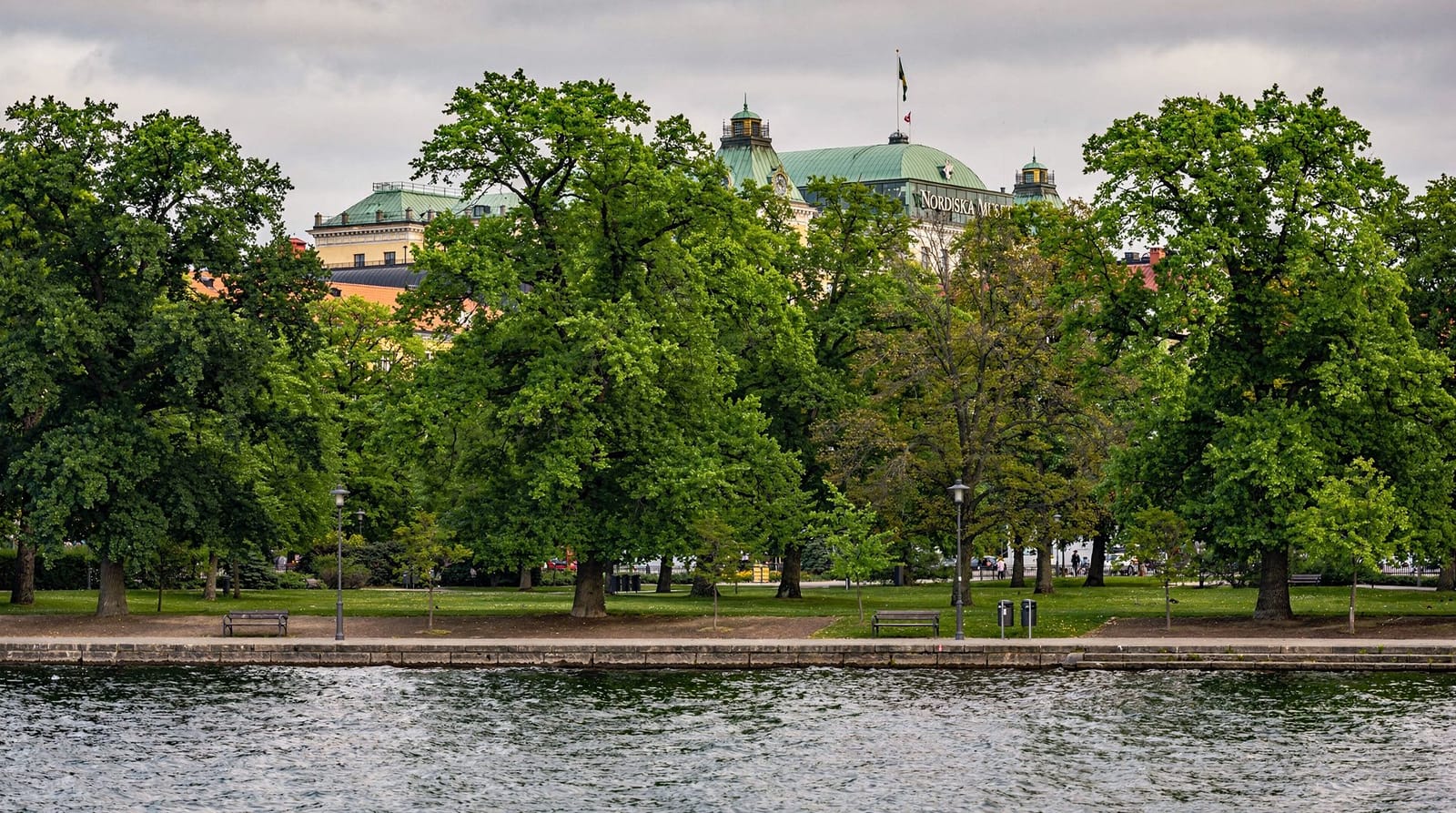
Nobelparken (Nobel Park), the small waterfront park between Strandvägen and the Djurgårdsbroen bridge, is where the Nobel Prize winner receptions have been held. The park is free, always open, and provides the best land-based view of Djurgården’s northern shore.
Humlegården
Humlegården is the large public park in northern Östermalm, set out on the site of the royal hop garden in 1869. The park contains the main building of the Royal Library of Sweden (Kungliga Biblioteket), a statue of Linnaeus, and in summer, temporary outdoor exhibitions and café seating. It is primarily used by neighborhood residents, students from the nearby Stockholm School of Economics, and families with dogs — which is to say, it functions as a proper urban park rather than a tourist attraction.
The park is pleasant to walk through on the route between the T-bana and the Musikmuseet (Museum of Music) on its eastern edge.
Stureplan and the shopping scene
Stureplan — the small circular plaza at the intersection of Birger Jarlsgatan and Sturegatan — is Östermalm’s social hub and the luxury shopping center of Stockholm. The plaza itself is marked by the famous “svampen” (mushroom), a concrete parasol installed in 1937 that became the city’s most recognized meeting point.
The streets radiating from Stureplan — Birger Jarlsgatan, Biblioteksgatan, Sturegatan — contain Östermalm’s retail proposition: Nordiska Kompaniet (NK) department store is a few minutes west at Hamngatan, Acne Studios and Filippa K have flagships here, and the international luxury brands (Burberry, Louis Vuitton) have their Stockholm locations in this area.
Sturegallerian is an upscale shopping mall below Stureplan — multi-story, design-conscious, and including a food court with a higher average quality than most urban mall equivalents.
Where to eat in Östermalm
Östermalm has Stockholm’s highest concentration of Michelin-starred restaurants, anchored by one of the most celebrated kitchens in Scandinavia.
Frantzén — three Michelin stars, Björn Frantzén’s tasting menu restaurant on Klara Norra Kyrkogata (technically just over the Norrmalm border, but Östermalm-adjacent in ethos). The 24-course menu runs approximately 4,500 SEK per person without wine. One of the ten best restaurants in the world by several measures. Reservations available online, released months in advance; the waiting list is long.
Esperanto — two Michelin stars on Kungstensgatan, focusing on Scandinavian ingredients with global technique. More accessible than Frantzén in both reservation availability and price (tasting menu approximately 2,500 SEK).
Gastrologik — one Michelin star, known for one of the most interesting vegetable-forward menus in Stockholm, sourced from specific Swedish farms. Genuinely excellent wine list.
Teatergrillen on Nybrogatan is the most accessible quality option for visitors who want serious cooking without a tasting menu commitment. The classic Swedish-French brasserie format serves honest, excellent food at 300–500 SEK for mains. Reservations recommended.
Östermalmshallen lunch counters — as described above, the market hall is the best value quality lunch in the neighborhood at 120–200 SEK.
Where to stay in Östermalm
Mid-range (1,200–2,500 SEK): Hotel Diplomat on Strandvägen is positioned perfectly for both the neighborhood’s assets and access to Djurgården — a 4-star property with waterfront rooms and a genuine sense of location. Miss Clara Hotel on Sveavägen (on the Norrmalm border) offers good value for a design hotel in this area.
Luxury (2,500+ SEK): Grand Hôtel Stockholm is technically at the Blasieholmen edge between Norrmalm and Östermalm — but its Strandvägen-facing position makes it functionally Östermalm’s premier address. The Nobel Prize laureates stay here in December. Sturegallerian-area boutique hotels like the Lydmar and the Haymarket also serve the Östermalm visitor well.
Getting there and around
T-bana: Östermalmstorg station (Red Line) is the central point — 5 minutes from T-Centralen, under the Östermalmstorg square directly adjacent to the market hall.
Walking: From T-Centralen, Östermalm is 15–20 minutes on foot via Hamngatan and Strandvägen. From Gamla Stan, 25–30 minutes via the same route.
Ferry: The Djurgårdslinjen ferry stops at Nybroplan, at the western end of Strandvägen — 4 minutes to Djurgården with a valid SL transit pass.
Best time to visit Östermalm
Östermalm is a year-round neighborhood with no weak season. The food market and Michelin-starred restaurants operate on consistent schedules throughout the year.
Summer (May–September): Strandvägen is at its best with the wooden boats moored along the quay and the evening light on the building facades. Nobelparken is in full leaf. The walk to Djurgården over the bridge is pleasant in both directions at any time of day. Tables at Teatergrillen spill onto the street.
Autumn (September–November): The horse-chestnut trees along Strandvägen turn golden and the light shifts to the warmer, lower angle that photographers consider the best Stockholm light of the year. The market hall sees its autumn specialties — crayfish season ends in September but the mushroom and game seasons begin.
Winter (December–March): The Christmas markets in Östermalmshallen are restrained and high-quality compared to the outdoor equivalents. The restaurants are at their most atmospheric in winter with proper heating and a more local clientele. Nobel Prize week in December brings a particular energy to the Grand Hôtel and the surrounding streets.
Spring (April–May): The chestnut trees along Strandvägen bloom white in May, and the transition from winter to summer light happens noticeably fast in Stockholm — by mid-May the evenings are long enough to make outdoor dinner feel normal.
Östermalm for fine dining: a practical guide
Stockholm’s Michelin scene is concentrated in Östermalm and demands some practical understanding before you book.
Booking timelines: Frantzén requires reservations months in advance — the online booking system releases tables on a rolling schedule and fills immediately. Esperanto is slightly easier but still requires two to four weeks’ advance booking for dinner. Gastrologik and Teatergrillen are more accessible on shorter notice.
Dress code: Stockholm’s fine dining is notably less formal than equivalent restaurants in Paris or London. Smart casual is the appropriate standard — no one will refuse entry for lack of a jacket, but showing some awareness of the context is appreciated. The general Stockholm aesthetic is understated quality rather than dressed-up performance.
Tasting menu economics: At Frantzén, the 24-course menu at approximately 4,500 SEK per person is one of the world’s more expensive restaurant experiences and competes on that level globally. Esperanto’s tasting menu at approximately 2,500 SEK occupies the genuinely Michelin-two-star tier. For visitors for whom these numbers represent a significant budget decision, the single-course lunch formats at some of these establishments (where offered) provide access to kitchen quality at a fraction of the full menu price.
Natural wine alternative: Östermalm also has a serious natural wine bar scene that sits below the Michelin tier. Restaurang Svartengrens on Tulegatan (technically on the Norrmalm-Östermalm border) is the reference address for natural wine with serious food at reasonable prices — a 45-minute walk or short T-bana ride from the Östermalmstorg core.
Choosing a price tier for dining in Östermalm
Östermalm’s restaurant scene spans a wider price range than its Michelin reputation suggests. Knowing which tier matches your visit helps avoid either overspending unnecessarily or missing what the neighborhood does best.
| Tier | Price per person | Example | Booking needed |
|---|---|---|---|
| Market lunch | 120–200 SEK | Östermalmshallen counters | None — walk in |
| Bistro/brasserie | 300–500 SEK | Teatergrillen | Recommended for dinner |
| Single-star tasting menu | ~2,500 SEK | Esperanto, Gastrologik | 2–4 weeks ahead |
| Three-star tasting menu | ~4,500 SEK | Frantzén | Months ahead, online release |
For most visitors, the market lunch tier plus one bistro dinner captures Östermalm’s food identity without the reservation logistics or budget of a tasting menu. The Michelin Stockholm overview covers the starred tier citywide if you are planning a splurge meal elsewhere in Stockholm as well.
Connections to other neighborhoods
Östermalm’s most natural connection is to Djurgården to the east — Strandvägen leads directly to the bridge, and the Djurgårds ferry departs from Nybroplan. Norrmalm is to the west — 15 minutes on foot or 5 minutes by T-bana. Gamla Stan is accessible via Norrmalm in 25 minutes on foot.
For visitors doing the Strandvägen-to-Djurgården walk, see the self-guided Stockholm walking tour for a route that includes Östermalm’s key points.
The Östermalm museum circuit
While Östermalm lacks the major museums of Djurgården, it has a cluster of specialized cultural institutions that reward visitors with specific interests:
Armémuseum (Army Museum) on Riddargatan covers Swedish military history from the Middle Ages to the present with more nuance and honest acknowledgment of the costs of warfare than is typical of national military museums. The permanent collection includes an extraordinary display of medieval arms and armour. Adult entry is 140 SEK (95 SEK for students and seniors), free for under-19s.
Östasiatiska museet (Museum of Far Eastern Antiquities) near Strandvägen has a specialized collection of Chinese, Japanese, and Korean art and antiquities — one of the better collections of its kind in northern Europe. The Song and Ming dynasty ceramics are exceptional.
Musikmuseet (Music Museum) on the edge of Humlegården is Stockholm’s dedicated music history museum, covering Swedish popular and classical music from the 18th century through ABBA and beyond. More entertaining than a typical history museum because the subject is inherently engaging and the interactive elements work well.
None of these matches the scale of the Vasa or Skansen, but as adjuncts to a Djurgården-heavy day or as rain-day alternatives, they offer genuine substance without tourist-level pricing or queuing.
Östermalm on a budget: what’s actually free
Östermalm’s reputation for expense is fair but incomplete — several of its best experiences cost nothing. Strandvägen is free to walk at any hour, and the late-evening light in June along the boulevard is arguably the single best free experience the neighborhood offers. Nobelparken and Humlegården are both free public parks, and the Armémuseum is free for under-19s (adults pay 140 SEK). Even the Östermalmshallen market hall costs nothing to browse — you only pay for what you buy, and a räkmacka at 120–150 SEK is not meaningfully more expensive than lunch in Norrmalm.
The Stockholm budget per day guide has a fuller breakdown of how to combine a genuinely upscale-feeling neighborhood with a moderate daily spend, and the Stockholm tourist traps guide flags the handful of Östermalm-adjacent spots — mainly Stureplan-area nightlife with cover charges pitched at tourists — worth being aware of before an evening out.
Djurgården from Östermalm: the natural pairing
Because Strandvägen leads directly to the Djurgårdsbroen bridge, Östermalm functions as the practical starting point for a Djurgården museum day rather than a separate outing. Walking the full boulevard first, then crossing into Djurgården for the Vasa Museum or Skansen, uses the morning light on Strandvägen and saves the museum island for the afternoon when the Vasa’s queues have typically thinned. The Djurgården walking route guide picks up exactly where this Östermalm route ends.
Guided walking tour combining Östermalm and Djurgården — food market, Strandvägen and the museum island in one outingFor visitors who prefer the market and food angle specifically, the Stockholm food tour guide covers Östermalmshallen alongside other tasting stops across the city, useful for comparing the guided food-tour options before booking one.
Östermalm on foot: a suggested route
A natural Östermalm half-day on foot: start at Östermalmstorg T-bana station and enter the market hall immediately (it opens 9:30am on weekdays). Spend 45 minutes browsing the stalls and have a räkmacka or herring plate at one of the counters. Walk south on Nybrogatan to Strandvägen. Turn east and walk the full length of the boulevard to the Djurgårdsbroen bridge (15 minutes). If time and tickets allow, cross into Djurgården for a museum. Return along Strandvägen in the afternoon (the light is better west-facing in the later part of the day). Stop at Humlegården for a park sit and coffee at the park café.
The full loop from Östermalmstorg to the Djurgårdsbroen bridge and back via Humlegården is approximately 4km and takes 2–3 hours at a leisurely pace.
Frequently asked questions about Östermalm
Is Östermalm worth visiting?
For the Östermalmshallen food market and the Strandvägen walk, yes — both are genuinely excellent and add specific value to a Stockholm visit. As a full half-day neighborhood exploration, Östermalm rewards the investment if you have the time. If your Stockholm schedule is tight, the food market and Strandvägen are easy to include as part of the Djurgården route.
What is Östermalmshallen?
Östermalmshallen (the Östermalm Market Hall) is a 19th-century covered food market on Östermalmstorg square, serving the neighborhood since 1888. It houses some of the best fish, meat, and cheese vendors in Stockholm alongside prepared food counters that offer quality lunch options. It is the practical food equivalent of Copenhagen’s Torvehallerne or London’s Borough Market, but smaller and more exclusive in its vendor mix.
Where do Michelin-starred restaurants cluster in Stockholm?
The highest concentration of Michelin-starred kitchens in Stockholm is in Östermalm and the immediately adjacent parts of Norrmalm: Frantzén (three stars), Esperanto (two stars), and several single-star establishments including Gastrologik. For a comprehensive overview, see the Michelin Stockholm guide.
How close is Östermalm to Djurgården?
Östermalmstorg to the Djurgårdsbroen bridge is approximately 15 minutes on foot via Strandvägen. The ferry from Nybroplan (at the western end of Strandvägen) takes 4 minutes. Most visitors find the walk along Strandvägen a pleasant way to approach the museum island.
What is Strandvägen?
Strandvägen is the 1.5km waterfront boulevard running east through Östermalm toward Djurgårdsbroen. It is lined on one side by late-19th century stone apartment buildings (some of the most prestigious addresses in Sweden) and on the other by the Djurgårdsfjärden waterfront with moored wooden boats. It is consistently cited as Stockholm’s most beautiful street, which is a debatable claim but not an unreasonable one.
Is Östermalm expensive?
By Stockholm standards, yes. The neighborhood has the city’s highest concentration of Michelin-starred restaurants, premium retail, and upscale hotels. That said, the Östermalmshallen market hall offers quality at reasonable lunch prices (120–200 SEK for a good plate), and the Strandvägen walk and Humlegården park are free. You can experience Östermalm properly on a mid-range budget by being selective about what you pay for. See the Stockholm budget per day guide for how a neighborhood-by-neighborhood spending plan works.
Can I combine Östermalm with Djurgården in one day?
Yes, and it is the most natural pairing in central Stockholm. Walk Strandvägen from Östermalmstorg to the Djurgårdsbroen bridge (about 15 minutes), then continue into Djurgården for the Vasa Museum, ABBA Museum or Skansen. Doing the market and boulevard in the morning and the museum island in the afternoon avoids the worst of the midday Vasa queues. The Djurgården walking route guide covers the museum-island half of this route in detail.
Top experiences
Bookable activities with verified prices and instant confirmation on GetYourGuide.