Stockholm with kids: a 3-day family itinerary
Stockholm: Vasa Museum entrance ticket
Stockholm is genuinely good for families
Travelling with children in Stockholm is easier than in most major European cities. The public transit is reliable and child-friendly (pushchairs and strollers on the T-bana without problem), the pedestrian culture is safe, and — critically — the concentration of genuinely good family attractions on Djurgården island means one day of focused planning can cover more good content for children than an entire week of generic European capital touring.
Djurgården alone contains the Vasa Museum (the best ship-related attraction in the world for children who understand scale), Junibacken (the Astrid Lindgren universe that Swedish children grow up in), Skansen (the open-air museum with a full zoo of Nordic animals), Gröna Lund (an amusement park with rides from toddler to teenager), and the Viking Museum. An entire day here barely scratches the surface. The Djurgården destination guide and the neighbourhood deep dive both give the fuller picture of the island beyond the attractions covered in this itinerary, including where to picnic between stops and how the ferry and tram connections fit together — useful if you want to swap the order of days.
For families who genuinely cannot decide which Djurgården attractions to prioritise, the Junibacken vs Skansen vs Gröna Lund comparison guide breaks down which is worth the money for which age group in more detail than this itinerary’s day-by-day structure covers.
The practical reality of Stockholm with children is also better than expected: strollers are common on the T-bana, café culture accommodates kids without fuss, and the Scandinavian outdoor ethic means playgrounds are excellent and parks are genuinely welcoming.
| Where | Djurgården for two of the three days, Gamla Stan for the third |
| Cost | around 3,050 SEK per adult for 3 days, plus children’s tickets |
| Time needed | 3 days, avoiding the temptation to cram Djurgården into one |
| Getting there | Tram 7 or ferry to Djurgården, T-bana elsewhere; all pram-friendly |
| Best time | Year-round; summer for outdoor rides and ferries, winter for indoor museums |
Quick notes on ages
This itinerary works for children aged approximately 4–14, with notes on specific elements that land better at different ages:
- Under 6: Junibacken and Skansen animals; ferry rides; Gröna Lund rides for smaller children. Skip ABBA Museum. The Stockholm with toddlers guide has a more toddler-specific pacing if your children are at the younger end of this range.
- 6–10: All of Djurgården works well. The Vasa Museum’s scale is genuinely impressive from this age.
- 11–14: Gröna Lund roller coasters and ABBA Museum interactive elements. Viking Museum.
Day-by-day overview
| Day | Morning | Afternoon | Evening |
|---|---|---|---|
| Day 1 | Junibacken + Vasa Museum | Aquaria or Viking Museum | Ferry back + dinner |
| Day 2 | Skansen (animals + craft demos) | Gröna Lund (afternoons have shorter queues) | Early dinner Djurgården |
| Day 3 | Gamla Stan walk + Nobel Museum | Free afternoon or Tom Tit’s option | Family dinner |
Day 1: Djurgården — Junibacken and the Vasa
Morning: Junibacken
9:30am — Junibacken (from opening)
Junibacken is the Astrid Lindgren museum on Djurgården, built around the characters and stories from Sweden’s most important children’s author: Pippi Longstocking, Emil of Lönneberga, and dozens of others. The centrepiece is the Storybook Train — a slow-moving ride through recreated scenes from Lindgren’s books, with a climactic flight over a miniaturised Stockholm.
Even children who have not read Lindgren’s books respond to the scale models, the fairy-tale house design, and the playroom in Pippi’s Villa. For Swedish children (and Swedish-origin families), this is a significant cultural experience. For international children, it works primarily as a high-quality interactive play environment.
Practical notes:
- Pre-book Junibacken tickets online — queues without tickets can be very long in summer.
- The storybook train gets a queue quickly; ride it first.
- The children’s library inside is a calm break area and worth using.
- Allow 2–2.5 hours.
Cost: approximately 220 SEK adult, 185 SEK child 3–15.
11:30am — Short break and walk
Walk through Djurgårdsvägen to the Vasa Museum, a 10-minute walk. Get ice cream from the kiosk if summer — this is Sweden, there will be a kiosk.
Late morning: Vasa Museum
12:00pm — Vasa Museum (pre-booked)
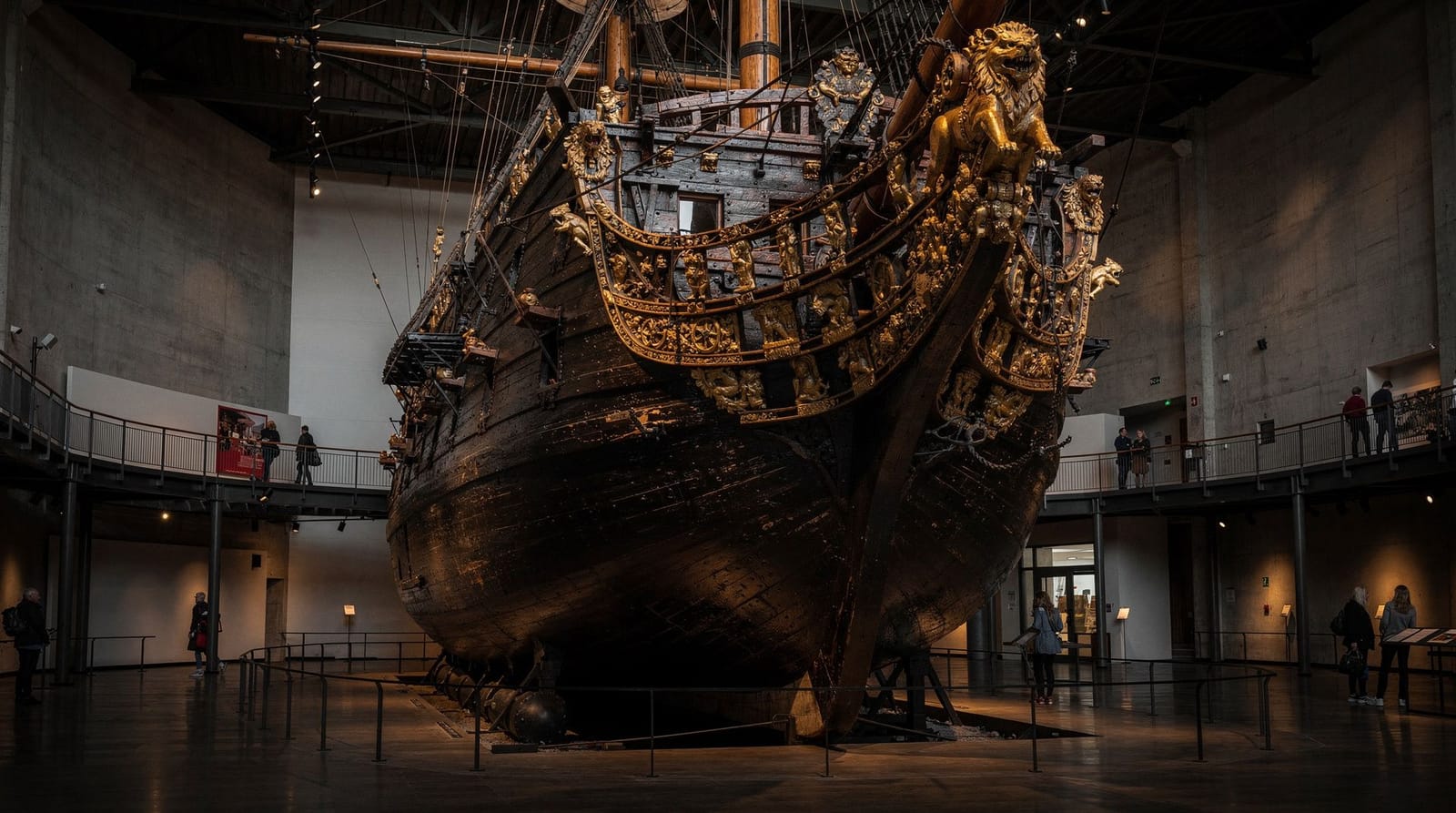
The Vasa Museum is one of the best museum experiences in the world for children old enough to process scale — from around 7 or 8 upward, the full-size preserved warship (69 metres long, seven decks, over 1,200 carved decorations) produces genuine awe. For younger children, it is still impressive but the impact is less contextually legible.
The museum is dark, slightly cool, and atmospheric — specifically good for hot summer afternoons. The children’s activity area on the lower level has hands-on models and replica rigging.
Pre-book entry online. Summer queues without pre-booking can be 30–45 minutes.
Cost: approximately 190 SEK adult. Children under 18 are free.
1:30pm — Lunch on Djurgården
The museum café or the restaurant at Nordiska Museet (adjacent) for lunch. Alternatively, bring a packed lunch and eat in the park — the green space between the Vasa Museum and Gröna Lund has picnic areas.
Afternoon: Aquaria or Viking Museum
2:30pm — Option A: Aquaria Water Museum
The Aquaria Water Museum (Djurgårdsvägen 80) focuses on Swedish and tropical water ecosystems. It has a strong family section with touch tanks and interactive displays about Baltic Sea marine life. For children interested in marine biology, this is the most underrated attraction on Djurgården. Allow 90 minutes.
2:30pm — Option B: Viking Museum
The Viking Museum has a theatrical Viking ride (a slow dark-ride through recreated Viking-age scenes with dioramas and sound effects) that works well for children aged 6–12. The ride is 30 minutes; the surrounding museum adds another hour. The Viking warrior exhibits and the battle re-enactment content are the elements that land best with school-age children.
Entry approximately 190 SEK adult, 130 SEK child.
Evening
5:00pm — Ferry from Djurgården
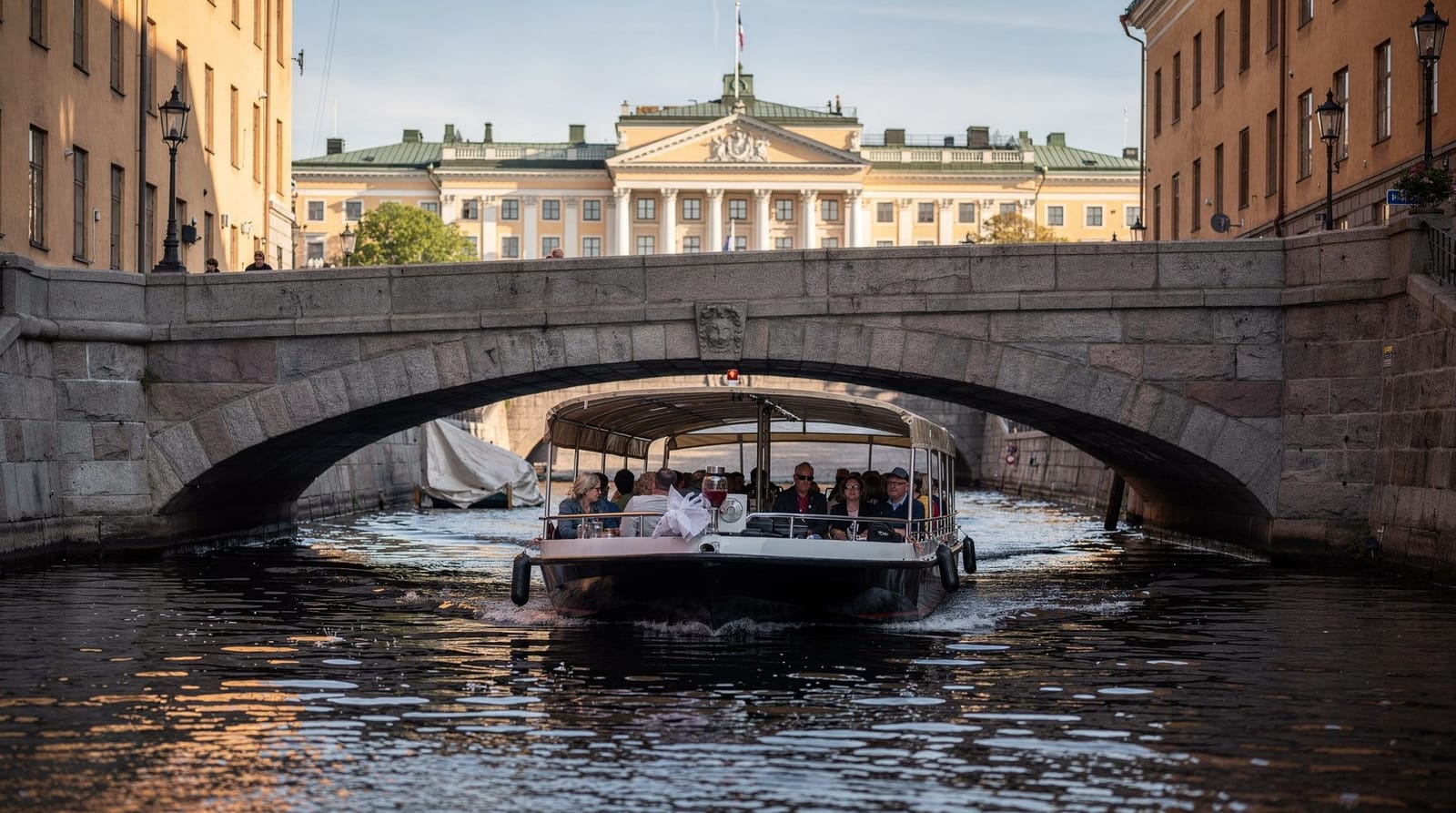
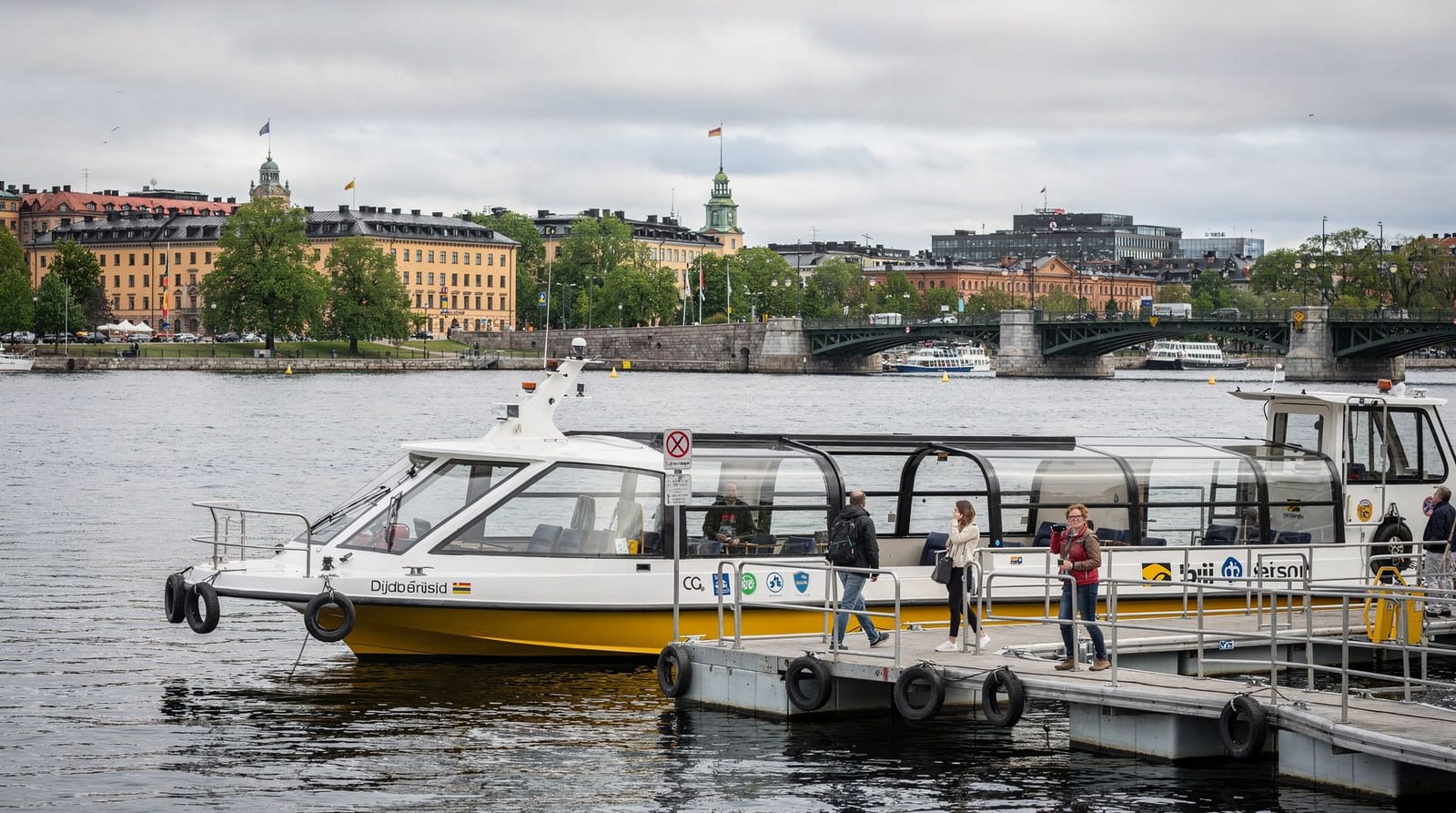
Take the Royal Djurgården island boat tour or the public ferry (SL pass) back toward central Stockholm. The ferry ride itself is a treat for children — on the water, boats visible everywhere, and the city viewed from a different angle than any bus or T-bana provides.
7:00pm — Dinner
Family-friendly dinner in Norrmalm: Hötorgshallen food court (varied options, self-service, efficient) or the outdoor restaurants around Kungsträdgården park.
Day 2: Skansen and Gröna Lund
Morning: Skansen open-air museum
9:30am — Skansen (from opening)
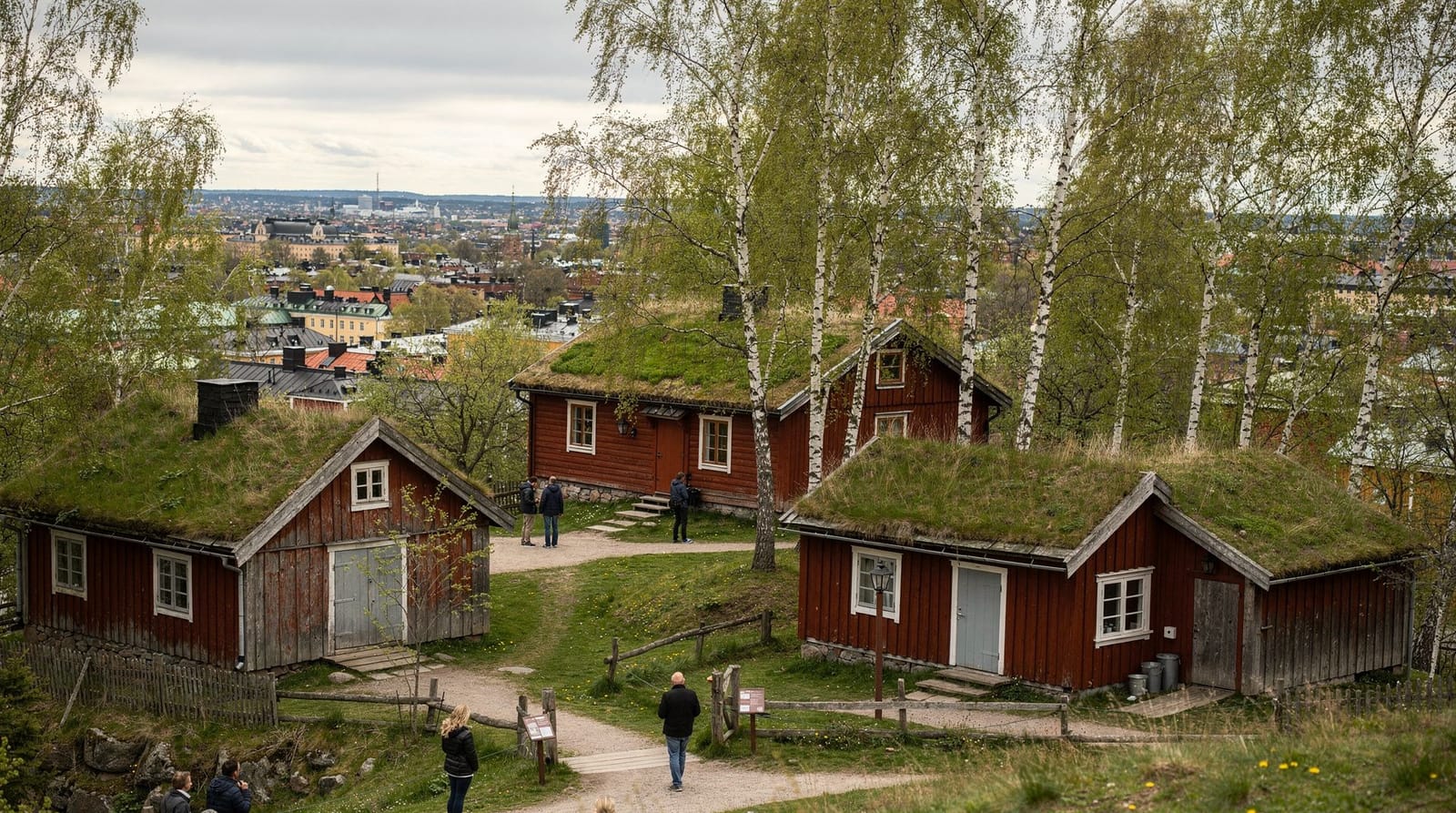
Skansen is the world’s oldest open-air museum and, for family visits, one of the best places in Stockholm. The key elements for children:
- The Nordic zoo: Approximately 90 species of Nordic animals including brown bears, wolves, wolverines, lynx, moose, and reindeer in large, naturalistic enclosures. Better than most urban zoos in terms of enclosure size and animal welfare.
- The working craftspeople: Glassblowing, bakery, printmaking, and textile workshops where visitors can watch and sometimes participate.
- The Lapp village: A Sami traditional settlement where reindeer can be viewed up close.
- The petting farm: Small animals and a farmyard section specifically for younger children.
A Skansen entrance ticket covers both the open-air museum and the zoo. Allow 3–4 hours minimum.
Cost: approximately 260 SEK adult, 140 SEK child 6–15. Under 6 free.
The Djurgården hop-on hop-off sightseeing train runs through Djurgården and stops at Skansen, Gröna Lund, and other Djurgården attractions — useful if children are tiring of walking by the afternoon.
12:30pm — Lunch at Skansen
Skansen has a restaurant in the main square area and several cafés throughout the grounds. The bakery demonstration often has fresh-baked goods for purchase. Budget 180–250 SEK per adult.
Afternoon: Gröna Lund
2:00pm — Gröna Lund amusement park
Gröna Lund (literally “Green Grove”) is a traditional amusement park that has occupied its Djurgården site since 1883 — one of the oldest amusement parks in Sweden. It is small by international theme park standards but densely packed with rides calibrated for different ages.
Key rides by age group:
- Toddlers (2–5): Kiddie areas with carousels, small ferris wheel, gentle rides.
- Primary age (6–10): Roller coasters at the lower end of intensity, bumper cars, ghost train.
- Older children and teenagers (11+): Free Fall tower, Twister coaster, Eclipse (the highest free-fall ride in Sweden at 80 metres).
Afternoons on weekdays are noticeably less crowded than mornings and weekends. Opening hours in summer extend to 11pm — afternoon arrival (2pm) gives 4–5 hours on shorter queues.
Cost: Entry approximately 140 SEK adult, ride tickets or unlimited pass additional. Check the Gröna Lund website for 2026 pass pricing.
Note: Gröna Lund is a real Stockholmer’s amusement park — locals bring children here on summer evenings and the atmosphere is genuinely local rather than tourist-facing. The food options inside are better than typical theme park food.
Evening
7:00pm — Dinner near Djurgården or return to city
If children have energy, the Gröna Lund restaurants are fine for dinner. Otherwise, take the tram (line 7) back to Norrmalm and find dinner in Östermalm or the Östermalshallen food market.
Day 3: Gamla Stan and a free afternoon
Morning: Gamla Stan family walk
9:30am — Gamla Stan
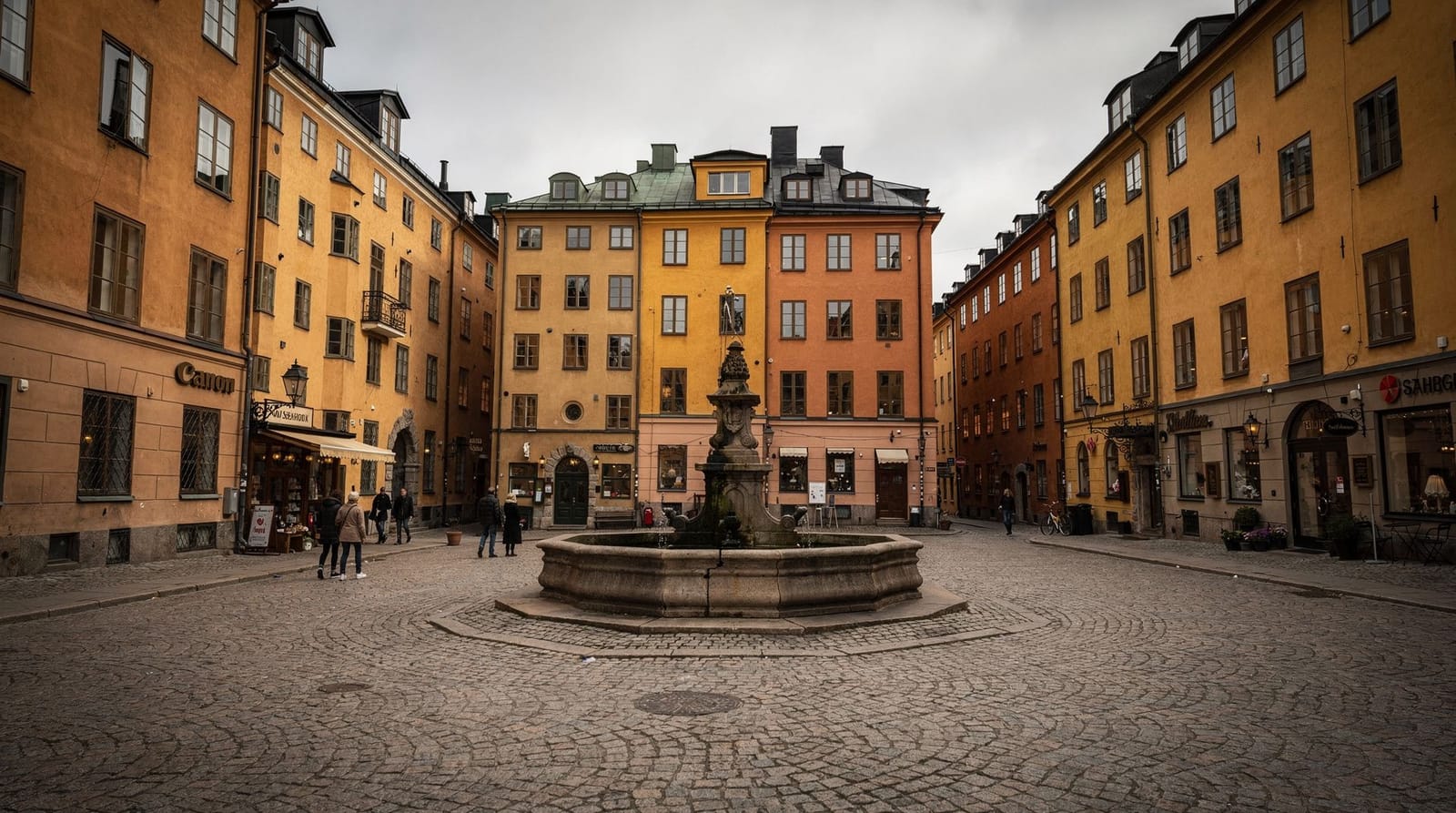
Gamla Stan works well for older children (9+) who can engage with the medieval history. The narrow alleys, the story of the Bloodbath, and the physical scale of the Royal Palace create a scene that is more legible than most adult-focused history museums.
For younger children (4–8), Gamla Stan is primarily visual — coloured houses, narrow alleys, ice cream shops — and should be kept short (90 minutes maximum before attention wanes).
Key stops for children:
- Mårten Trotzigs Gränd: The narrow alley is intrinsically interesting for children — especially the game of seeing if you can walk through without touching the walls.
- Stortorget: The bloodbath story, told in age-appropriate terms, is one of the more dramatic pieces of European medieval history and children respond to it.
- Royal Palace Changing of the Guard: Theatrical, colourful, loud — highly effective for children of all ages.
Nobel Museum: For children 12 and above with scientific or literary interests, the Nobel Museum is worth 60–90 minutes. Younger children generally find the displays less engaging.
12:00pm — Lunch in Gamla Stan or Norrmalm
Avoid the tourist restaurant drag on Västerlånggatan. Instead, walk off the island to Hötorgshallen (Norrmalm) for the food court, or find a bakery for sandwiches and eat in Kungsträdgården park.
Afternoon options: free time or Tom Tit’s
Option A: Free afternoon in Stockholm
Use day three’s afternoon for whatever the children liked best in the first two days: return to Skansen for any animals they missed, revisit Gröna Lund for a specific ride, or spend the afternoon in Kungsträdgården park (free, central, with fountain and informal play space).
Option B: Tom Tit’s Experiment (Södertälje, day trip)
Tom Tit’s Experiment is a hands-on science museum in Södertälje, 30 minutes south of Stockholm by commuter train. It is purpose-built for children and contains over 300 interactive scientific exhibits — physics demonstrations, energy experiments, building challenges, and the “outdoor” section with large-scale experiments.
For families with children aged 6–13 who have exhausted Djurgården or prefer science to history, Tom Tit’s is the best half-day add-on from Stockholm. Train from Stockholm Central to Södertälje Centrum (SL pass): 35 minutes. Museum entry approximately 210 SEK adult, 185 SEK child.
Allow 3 hours at the museum and return by 5pm.
Evening: final family dinner
Pelikan in Södermalm for traditional Swedish food in a child-tolerant environment. The beer hall setting is not precious and the portions are generous. Alternatively, Operakällaren’s café (not the restaurant) for a special treat.
Family logistics in Stockholm
Transit with children: The SL T-bana is pram-friendly with lifts at most stations. The tram 7 to Djurgården has ramps. Ferries accommodate prams. The only challenges are older stations in Gamla Stan, which have steps. The accessibility guide covers step-free routes in more detail if travelling with a pram or a child who cannot manage stairs.
If the weather turns: Stockholm summer weather can flip from sun to rain within the same afternoon. The rainy day with kids guide is the best fallback plan — Junibacken and the Vasa Museum both already sit inside this itinerary as rain-proof options, but the guide has further indoor alternatives if a rained-out day needs a full replacement rather than a tweak.
Changing facilities: All major museums have baby change facilities. Stockholm’s public toilets (approximately 20 SEK) are clean and well-distributed.
Breastfeeding: Accepted in all public spaces without comment — Swedish culture is comfortable with this.
Weather: Stockholm in summer can be hot and sunny or cold and rainy within the same week. Pack a waterproof layer for children regardless of the forecast; the Vasa Museum and Junibacken are excellent rain options.
Accommodation with families: Larger hotel rooms in Norrmalm and Östermalm. Consider apartment rentals (Airbnb/VRBO) for kitchen access — useful for preparing children’s breakfasts and snacks at lower cost.
Three-day family budget
| Item | Budget (SEK) per adult | Note |
|---|---|---|
| SL 72h transit | 360 | Kids under 7 free, 7–17 reduced |
| Junibacken | 220 | Children 3–15: 185 |
| Vasa Museum | 190 | Under 18: free |
| Viking Museum or Aquaria | 190 | Children: reduced |
| Skansen | 260 | Under 6: free |
| Gröna Lund | 140 + rides | Children: reduced |
| Tom Tit’s (optional) | 210 | |
| Lunches (×3) | 500 | Including children |
| Dinners (×3) | 700 | |
| Snacks / ice cream | 300 | Budget high with children |
| Total per adult (approx.) | ~3,050 | Plus children’s tickets |
Swimming and free outdoor time
Stockholm’s clean water means swimming is a genuine option for families in summer, not just a museum-and-attraction city. The swimming spots guide covers the city’s free public beaches, including Långholmen mentioned below, several of which have shallow, supervised areas suited to younger children. Building a free afternoon around a swim rather than a paid attraction is a good way to keep a three-day family budget from creeping up, especially on day three if the Djurgården ticket spend already feels high.
Adjusting this itinerary for a longer or shorter trip
Three days is enough to cover Djurgården’s core attractions without exhausting children, but families with only two days should choose between Gröna Lund and Skansen rather than attempting both — combined with Junibacken and the Vasa Museum on day one, either park on day two makes a full and satisfying trip. Families with four or five days can add the Stockholm archipelago; the summer archipelago itinerary is written for adults but its Vaxholm day trip works well for children too, particularly the fortress and the freedom of open-air island walking after two days of museums and queues. A day trip to Vaxholm as a fourth day is a good release valve if children are tiring of structured attractions by day three.
What genuinely disappoints children versus what parents expect to
A few honest notes from repeated family visits: the Nobel Museum, despite its central location and reputation, rarely holds younger children’s attention beyond 20–30 minutes — it is included above only as a 12+ option, and even then only for children with a specific interest. Conversely, the Djurgården ferry crossing itself — a five-minute ride most adults treat as pure transit — is consistently one of the trip’s most enjoyed moments for younger children, simply for being on the water with boats visible everywhere. Do not over-plan around the “big” attractions at the expense of these small connective moments; they add up.
Frequently asked questions about Stockholm with kids
What is the best age for Stockholm with children?
Ages 6–12 are the sweet spot. Junibacken works for all ages from 2 upward. The Vasa Museum lands best from around 7 (the scale registers meaningfully). Gröna Lund has something for all ages; the more exciting rides start at around 12. The ABBA Museum is genuinely best for parents and children who are ABBA-aware, from about 10 upward.
Is the Vasa Museum interesting for children?
Yes, very — especially for children aged 8+. The scale of a full-size preserved warship, the carved decorations, and the forensic explanation of why the ship sank (a story of royal hubris and engineers who could not say no) are all child-accessible. Children under 8 often respond more to Junibacken and Skansen’s animals.
Can I do Djurgården in one day with kids?
Technically yes, but it is ambitious. Junibacken + Vasa Museum + Skansen + Gröna Lund is a very full day that will exhaust most children by 6pm. The itinerary above spreads Djurgården across two days to avoid over-programming. If you only have one day, choose between Gröna Lund (more active) and Skansen (more educational).
Are there any free attractions in Stockholm for families?
The T-bana for under-7s is free. Kungsträdgården park in central Stockholm has free play areas and fountain. The public beach at Långholmen island (15 minutes by T-bana) is free. Moderna Museet is free for under-19s and for everyone on Fridays 18:00–20:00. The ferry rides on Waxholmsbolaget are covered by the SL pass.
Is Stockholm safe for children?
Yes — Stockholm is one of the safest European capitals. Pickpocketing in tourist areas (Gamla Stan, Arlanda) exists but is far less prevalent than in Southern European capitals. The main risk for families is traffic in central streets; otherwise the city is extremely family-friendly.
What should I pack for Stockholm with kids in summer?
Layers (temperatures vary dramatically from morning to afternoon), waterproof jackets for rain, sunscreen for the long summer daylight, good walking shoes for cobblestones in Gamla Stan. In July, insect repellent is useful in parks and the archipelago.
Is Djurgården walkable with a stroller, or is transit needed?
Djurgården itself is flat and stroller-friendly for walking between attractions, but the island is large enough that most families use the tram or the hop-on hop-off sightseeing train to move between Junibacken, the Vasa Museum, Skansen and Gröna Lund rather than walking the full length. The tram 7 and the ferries both accommodate prams without difficulty.
Top experiences
Bookable activities with verified prices and instant confirmation on GetYourGuide.