Vaxholm: gateway to the Stockholm archipelago
Vaxholm in 1 day: how to reach the archipelago's gateway town by SL ferry, what to see at the fortress, and where to eat along Hamngatan.
Stockholm: Vaxholm archipelago guided excursion & day trip
Quick facts
- Ferry from Strömkajen
- ~1 hour (Waxholmsbolaget, SL pass valid)
- Days needed
- 1 day
- Best months
- May–September (summer); Oct–Apr quieter but ferry runs
- Must-see
- Vaxholm Fortress (Vaxholms Kastell)
Where the archipelago begins
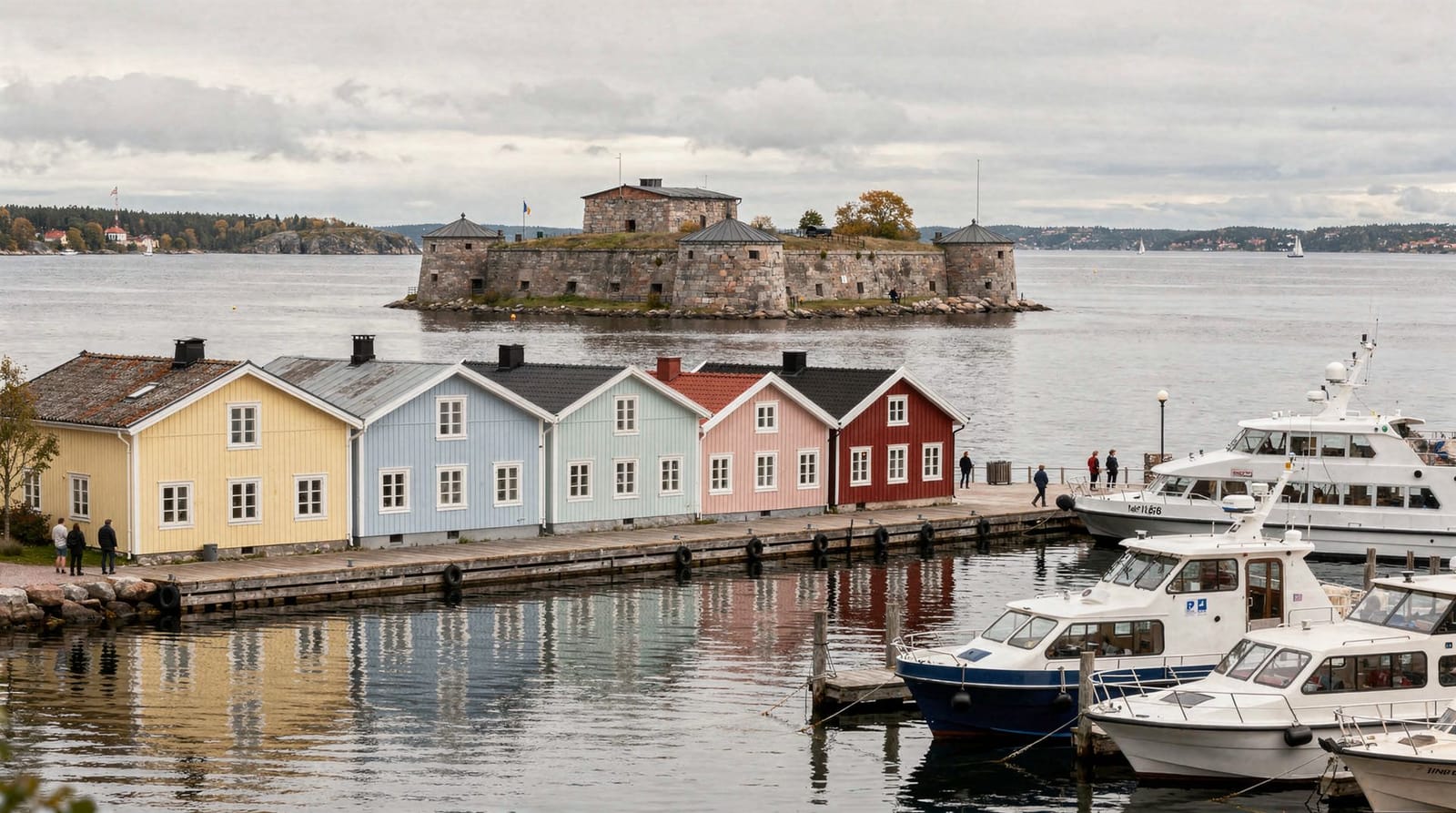
Vaxholm is not the nearest island in the Stockholm archipelago — that distinction belongs to Fjäderholmarna. But Vaxholm is the first place that feels genuinely separate from the city: a proper town with a history, a fortress, streets of 19th-century wooden houses painted in the pale yellows and greens and reds that characterise Swedish small-town architecture, and a waterfront that watches ferry traffic pass in and out of the inner archipelago.
It has been the gateway to the Stockholm archipelago in a literal military sense for centuries. The straits of Vaxholm — the Vaxholmsleden — form the main navigable channel between Stockholm and the open Baltic, and for centuries the town’s fortress controlled access to the Swedish capital by sea. Today it controls nothing more threatening than the ferry schedule, but the fortress still rises from its own rocky islet in the middle of the channel, the most dramatic object in the Vaxholm skyline.
The town sits about 37 kilometres northeast of Stockholm’s centre by road, but the ferry journey from Strömkajen takes approximately one hour — longer than the straight-line distance would suggest, because the ferry winds through channels and stops at intermediate piers. That hour is part of the attraction. By the time you arrive, you are already in the archipelago.
| Where | Vaxholm, ~37km northeast of central Stockholm, inner archipelago |
| Ferry from Strömkajen | Waxholmsbolaget, around 55–65 minutes, SL pass valid |
| Cost | Free with SL pass; otherwise a single Waxholmsbolaget ticket, plus lunch |
| Time needed | A full day trip, or a half-day if combined with another island |
| Best time | Late May–June or September (shoulder season); summer for maximum activity |
| Getting there | Ferry from Strömkajen (recommended) or bus 670 from Tekniska Högskolan |
Getting to Vaxholm from Stockholm
The most rewarding way to arrive is by Waxholmsbolaget ferry from Strömkajen (the main archipelago ferry terminal on the Stockholm waterfront, adjacent to the Grand Hotel). Services depart multiple times daily in summer, less frequently in winter. The journey takes around 55–65 minutes depending on the route and intermediate stops. This is covered by the SL 24-hour, 72-hour, and 7-day transit passes — board at the pier, tap your SL card or pass, and find a seat. No advance reservation required.
There is also a bus connection: bus 670 from Tekniska Högskolan metro station takes about 55 minutes and uses the Vaxholm road bridge. This is faster in winter when ferry frequency drops, but the ferry is unambiguously better for the experience.
Practical note: Check the Waxholmsbolaget departure schedule before leaving Stockholm. Ferry intervals in summer are every 30–60 minutes on the busiest routes; in winter they may be 2–3 hours apart. Knowing the return timetable when you arrive prevents being stranded overnight by accident.
Vaxholm Fortress (Vaxholms Kastell)
The fortress occupies its own small islet in the Vaxholmsleden strait, reached from Vaxholm by a small boat that runs in summer. Construction began in the 16th century under Gustav Vasa, who understood that controlling the Vaxholm passage meant controlling naval access to Stockholm. The current fortification dates mostly from 1833–63, built in response to the perceived Russian naval threat of the era. In 1719, Peter the Great’s fleet sailed past the unfinished fortifications and burned Norrtälje and several other towns on the coast — a disaster that led directly to the fortress’s strengthening.
The fortress never fell to an enemy. In 1719, the bombardment by Russian galleys was repelled. In the 1860s, a new threat emerged when a stronger French-designed fortress at Rindö was added to the chain of defences. By 1912 the fortress was decommissioned.
Today Vaxholms Kastell houses the Vaxholm Fortress Museum. The museum covers the military history of the straits, the life of garrison soldiers, and the role of the fortress in Stockholm’s wider coastal defence system. The island itself is worth visiting as much for the views back toward the town and up the channel as for the exhibitions.
The boat connection to the fortress island typically runs from the main Vaxholm harbour in summer. Confirm the schedule locally — it is a short crossing but not always signposted.
Hamngatan and the wooden town
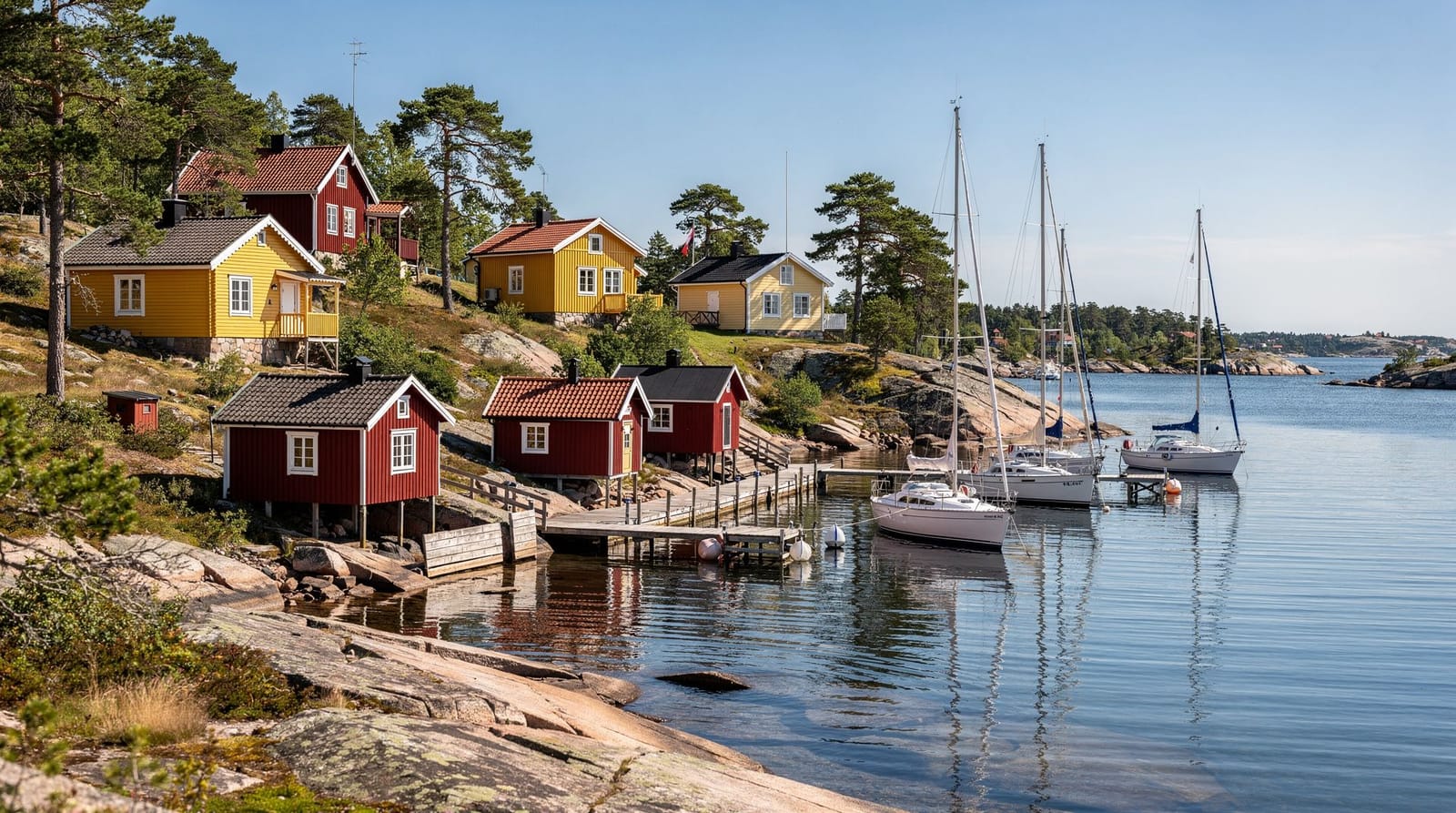
Vaxholm’s main street, Hamngatan, is the backbone of the old town. The architecture along Hamngatan and the streets leading from it represents the finest concentration of 19th-century Swedish wooden vernacular architecture in the inner archipelago: two-storey houses with broad carved eaves, painted in the ochre yellows, pale greens, and deep reds of Swedish tradition, many with picket fences and small gardens. The effect in good light — particularly on a late afternoon in June, when the sun is low and gold — is genuinely lovely.
This is not a museum town. People live here year-round, and the buildings are maintained domestic properties rather than heritage exhibits. Walking slowly along Hamngatan and the side streets toward the waterfront, noticing the variation in decorative woodwork from house to house, is one of the better slow-travel activities in the inner archipelago.
The town has a small but working harbour on the southern side, where fishing boats and private yachts tie up beside the ferries. The waterfront between the harbour and the ferry terminal has views across the strait toward the fortress and is a natural place to sit and watch the archipelago traffic.
Where to eat in Vaxholm
Hamnkrog (Harbour Restaurant) is the main waterfront option — a classic Swedish lunch restaurant with a terrace facing the strait, serving fish dishes, herring plates, and the kind of honest archipelago food that the setting demands. Expect grilled salmon, pickled herring, and fresh shrimp in season. Busy in summer; arrive early or accept a wait.
Kafe Klubbar is a smaller, more café-style option near the harbour, good for fika, sandwiches, and the essential cinnamon bun (kanelbulle) with coffee. More casual than Hamnkrog and often easier to find a table.
The Waxholms Hotell, a waterfront hotel built in the early 20th century in a style that matches the town’s wooden architecture, also has a restaurant. It is the only hotel in Vaxholm itself, with a small number of rooms — options for staying overnight are very limited and the hotel books up months in advance for summer weekends.
The wider Vaxholm area and sauna culture
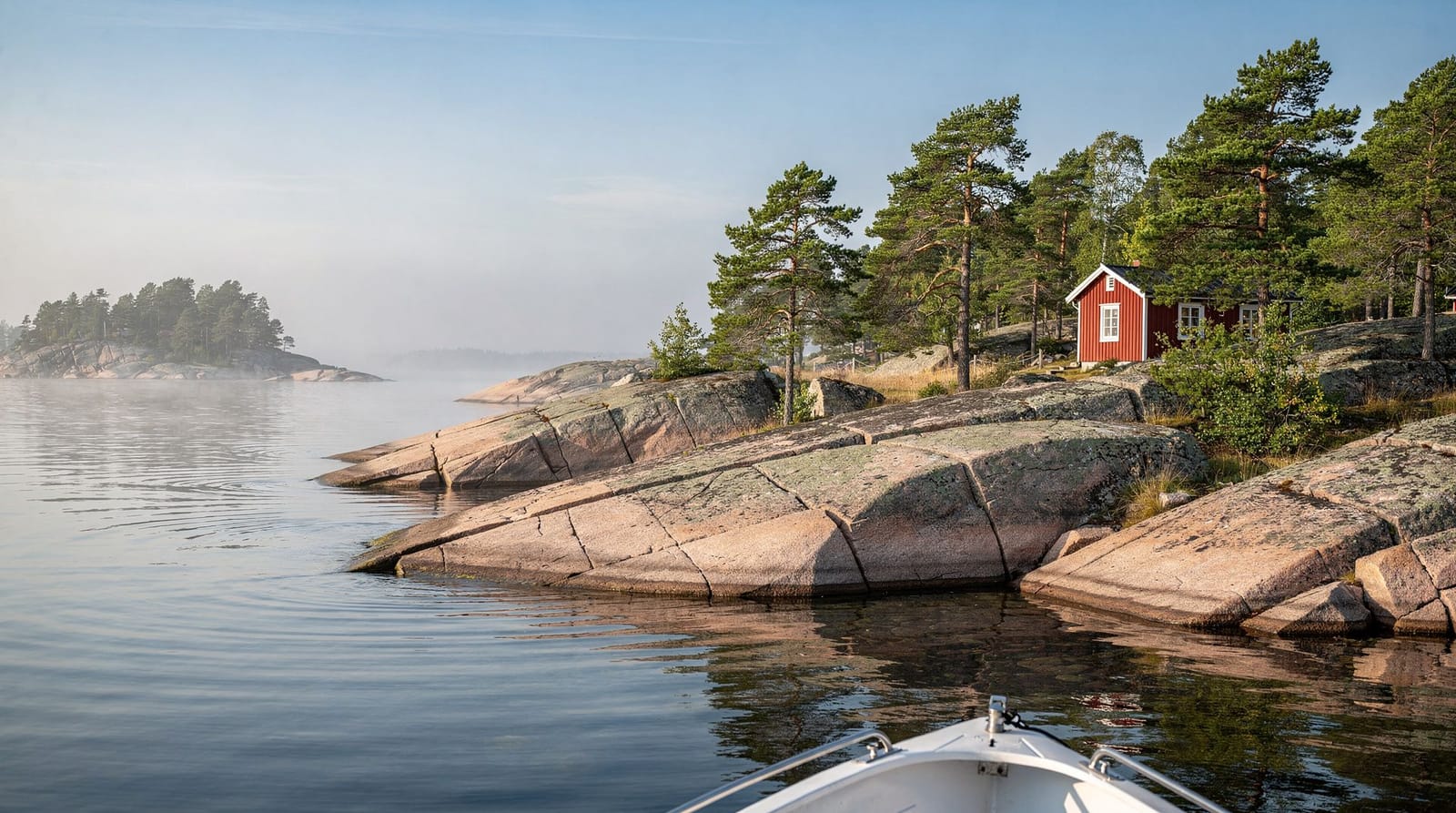
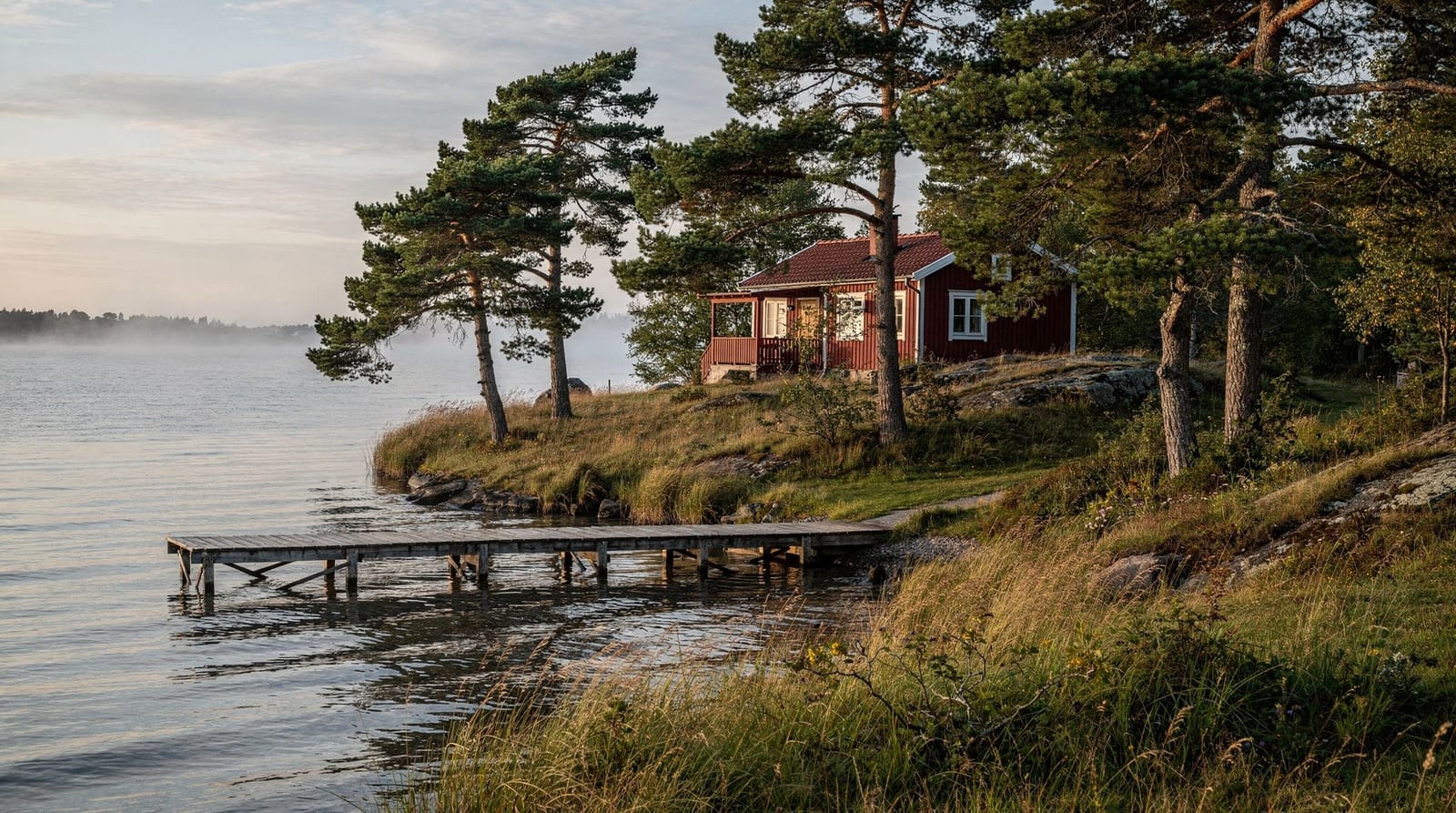
Beyond the town centre, several walking paths follow the shoreline north and south from the ferry terminal, giving access to the granite rocks and sheltered coves typical of the inner archipelago. Swimming from these rocks in summer is entirely normal and covered by allemansrätten. The water reaches 18–20°C in July–August in this zone.
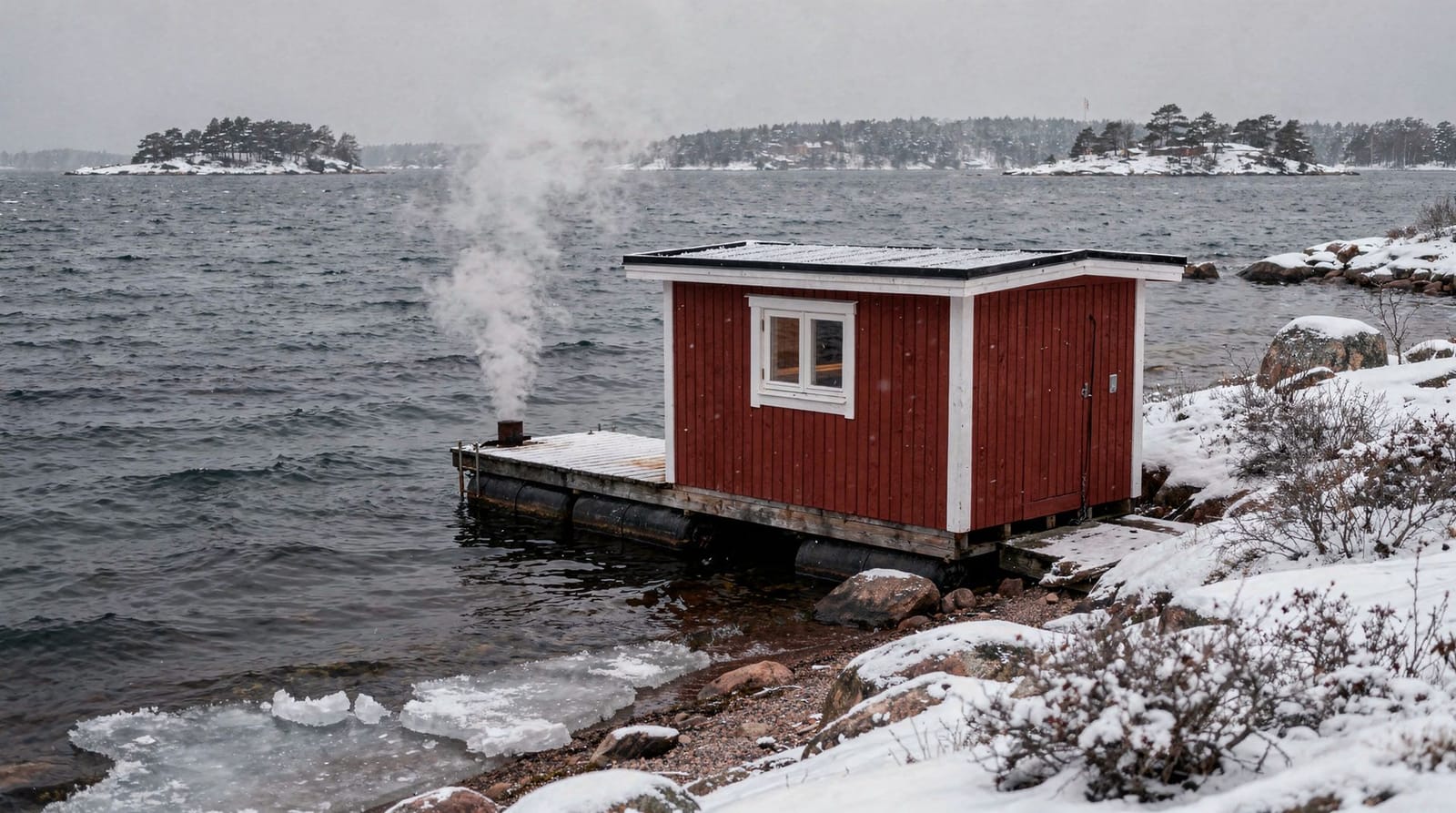
For visitors interested in Swedish sauna culture, an unusual option is the traditional sauna with Baltic polar plunge experience at Vaxholm — a genuine introduction to the Scandinavian sauna-and-cold-water cycle in an archipelago setting, a long way from the hotel spa version of the experience.
The area around Vaxholm is also popular with kayakers. Self-guided kayak and camping trips starting from Vaxholm are one of the best ways to explore the inner archipelago with full flexibility, paddling to uninhabited islands and camping under allemansrätten for as many nights as you choose.
Guided day trips to Vaxholm from Stockholm
For visitors who prefer not to manage ferry logistics independently, several guided excursions cover the Vaxholm corridor. The Vaxholm archipelago guided excursion combines the ferry journey with a walking tour of the town and time at the fortress, giving context to what you are seeing. For a similar guided day out, the Vaxholm archipelago guided excursion and day trip is a close alternative — a good option for first-time archipelago visitors who want a guide to introduce the landscape and the town. Check the booking page for the exact format and what is included.
The ferry journey as part of the experience
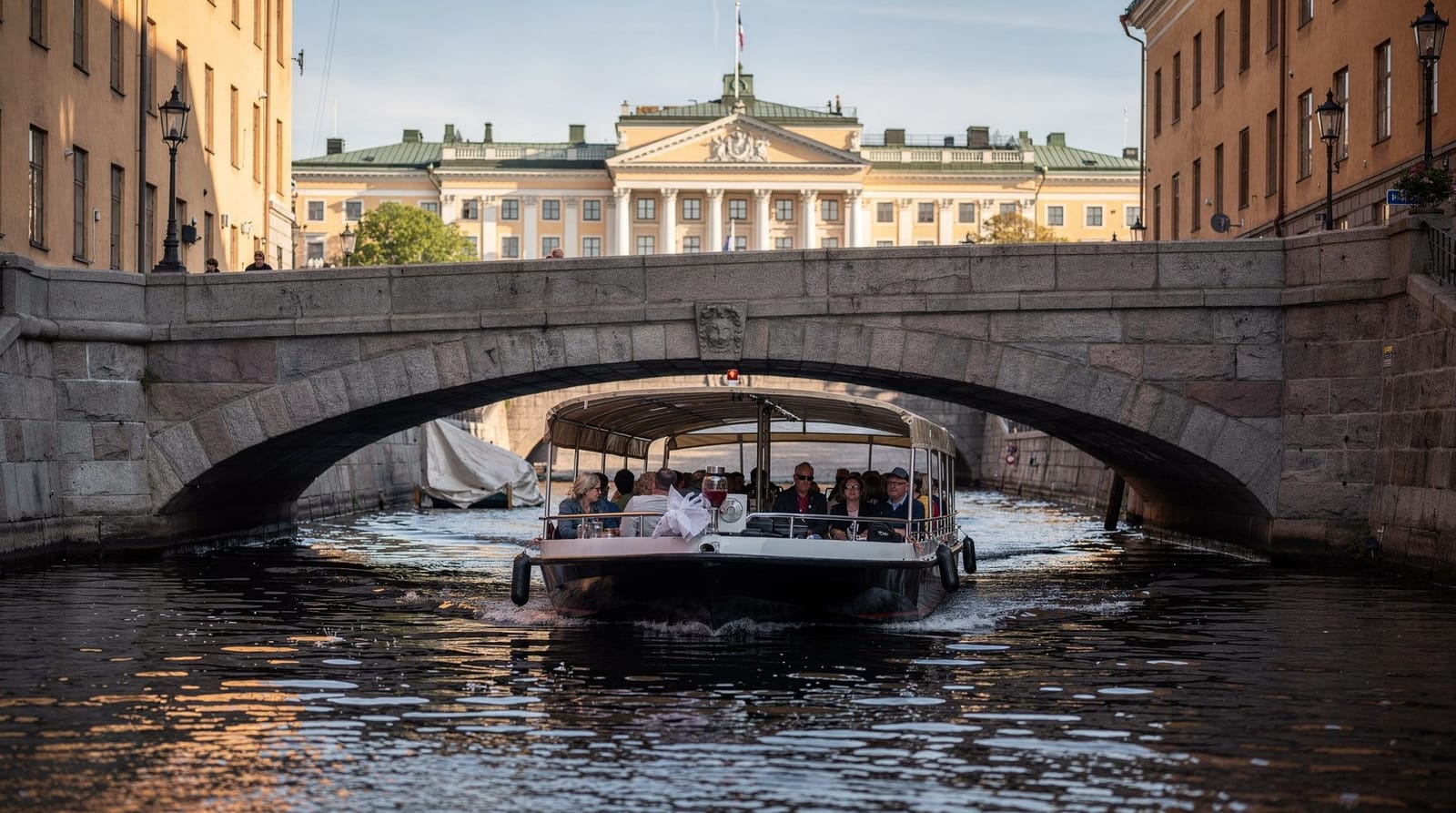
The 55–65 minute ferry journey from Strömkajen is not merely transport — it is the most convincing first demonstration of what the Stockholm archipelago means. Leaving the city waterfront, with the Grand Hotel and the Royal Palace visible on the right and the Old Town rising on the left, the boat moves into the Saltsjön and begins the winding channel route through the inner archipelago.
The landscape changes measurably every 10 minutes. The initial view is of the city receding; then the wooded island shores close in as the ferry enters the first of the archipelago channels. By the time you reach the middle of the journey, the city has disappeared behind the islands and what surrounds you is pine forest, granite, and the grey-green water of the inner skärgård. Vaxholm’s tower appears ahead as the ferry makes its final approach, rising above the island profile before the fortress becomes visible on its own islet in the strait.
For visitors who have not been to the Stockholm archipelago before, this journey is educational in a way no guide or map can replicate. The scale of the skärgård — how many islands there are, how quickly the city disappears, how different the inner-channel landscape is from open water — becomes physically legible from the deck of a ferry in a way it never does on paper.
Seasonal character of Vaxholm
Vaxholm’s character shifts significantly between seasons, and the choice of when to visit affects the experience substantially.
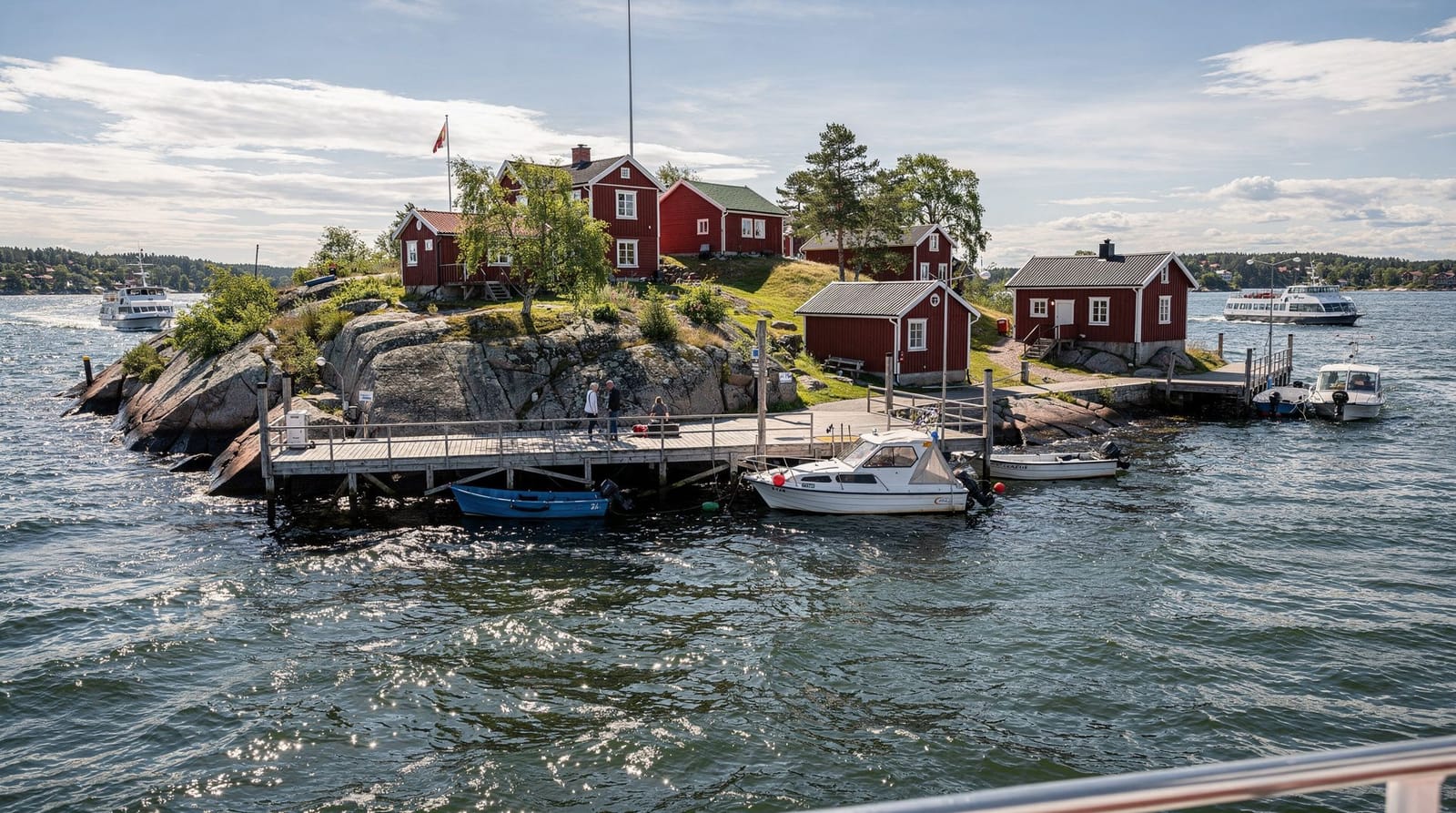
Summer (late June–August): The town is at maximum activity. The harbour receives significant yacht traffic — Vaxholm is a natural overnight stop for boats heading further into the archipelago or crossing toward the Finnish coast. Hamnkrog has its outdoor terrace fully operational. The fortress boat runs multiple times daily. The wooden streets have a lively but not overwhelmed quality — enough people to animate the space, not enough to crowd it. The light in late July extends past 10pm.
Shoulder season (May–early June and September): These are the local preferences for Vaxholm visits. The town operates normally; the restaurants are open; the ferry runs regularly; but the visitor density drops sharply. The light in late September has the particular quality of Nordic autumn — golden, low-angled, and very long in the afternoon — that makes the ochre and red wooden houses more striking than in summer. Water temperatures in September remain warm from summer heating (16–18°C in a good year).
Winter (October–April): Vaxholm is a year-round community and the ferry continues running on a reduced schedule. The fortress is closed. Hamnkrog closes or reduces hours. The harbour is empty of yachts. But the town has a genuine quiet-season life — a Swedish small town functioning without tourism — and the occasional snow or ice on the channel gives the archipelago a completely different visual character. Winter archipelago visitors who understand what they are choosing often prefer the winter version of Vaxholm to the summer version.
Practical budget notes
A Vaxholm day trip from Stockholm is among the cheapest substantial experiences available in the Stockholm region. The ferry (with SL pass) costs nothing beyond the pass price. The fortress museum is modestly priced. Food at Hamnkrog is no more expensive than a Stockholm mid-range lunch. Shopping in Vaxholm — the few craft and food shops on Hamngatan — is similarly uninflationary. The main Vaxholm costs are the same as any Swedish outing: a lunch, a coffee, and whatever you choose to buy.
This compares favourably with Drottningholm (where the ferry is a separate Strömma purchase) or Sandhamn (where everything, including the ferry, is priced at a premium for the outer-archipelago position). Vaxholm delivers real archipelago value at inner-archipelago price.
Vaxholm compared to other archipelago day trips
Vaxholm is the easiest introduction to the archipelago, but it is not the only inner-archipelago option, and knowing how it differs helps decide whether it is the right first stop.
| Island | Ferry from Strömkajen | Character | Best for |
|---|---|---|---|
| Vaxholm | ~55–65 min | Working town, fortress, wooden architecture | First-time visitors who want history plus a real town |
| Fjäderholmarna | ~25 min | Small, craft shops, restaurants, very accessible | Visitors with limited time who still want an island feel |
| Grinda | ~2 hours | Car-free nature island, hiking, swimming coves | Nature and hiking over history |
| Sandhamn | ~2.5–3 hours | Outer-archipelago sailing village, higher prices | A full day (or overnight) further from the city |
Compared with Fjäderholmarna, Vaxholm trades a shorter ferry ride for a genuine town with a fortress and centuries of history — worth the extra half hour for most first-time visitors. Compared with Grinda, Vaxholm is far more built-up and historical rather than a nature-and-swimming island. Compared with Sandhamn, Vaxholm is closer, cheaper, and easier to combine with a half-day schedule, while Sandhamn suits visitors with a full day or overnight to spend further into the archipelago. The guide comparing Vaxholm and Sandhamn goes into more detail on choosing between the two, and the archipelago day-trip comparison guide covers the wider field of options.
For a broader view of how the inner and outer archipelago differ before picking an island, the inner vs outer archipelago guide is a useful starting point, and the complete Stockholm archipelago guide lays out the full network of routes and islands.
Planning tips for a Vaxholm day trip
A little preparation makes the difference between a relaxed day and a rushed one. The Waxholmsbolaget ferries explained guide is worth reading before you go — ferry frequency drops sharply outside summer, and missing the last return sailing is the most common way a Vaxholm day trip goes wrong. Bring cash or a card for Hamnkrog and Kafe Klubbar in case card readers are slow on a busy summer day, though Sweden is overwhelmingly cashless. Comfortable shoes matter more than anything else — the appeal of Vaxholm is walking Hamngatan and the shoreline paths slowly, not rushing between two or three sights.
If archipelago swimming interests you, the water off Vaxholm’s rocks is at its warmest in late July and August, but even a September dip on a sunny afternoon is a genuine Stockholm-summer memory. Visitors combining Vaxholm with a broader archipelago exploration by kayak should also read the kayaking Stockholm archipelago guide for routes and rental options beyond the single self-guided trip listed above.
Combining Vaxholm with other archipelago islands
Vaxholm is a natural starting point for a longer archipelago trip. The Waxholmsbolaget network uses Vaxholm as an intermediate hub for routes to Grinda, Möja, and other middle-archipelago islands — ferries from Vaxholm continue outward without returning to Stockholm first. This means a dedicated archipelago day can combine Vaxholm in the morning with a further island in the afternoon, returning to Stockholm in the evening.
The Stockholm archipelago hub covers the full network, including which islands connect most naturally from Vaxholm. The Grinda guide and Sandhamn guide describe the further options in the middle and outer zones.
For visitors building a multi-day Stockholm itinerary, the 4-day Stockholm with archipelago itinerary includes Vaxholm as the natural first-day archipelago destination, with the option to extend outward on subsequent days.
Frequently asked questions about Vaxholm
How long does the ferry from Stockholm to Vaxholm take?
Around 55–65 minutes on the standard Waxholmsbolaget service from Strömkajen, depending on intermediate stops. The route winds through the inner archipelago rather than taking the direct road distance, which is one reason the ferry feels longer than expected.
Is Vaxholm covered by the SL transit pass?
Yes — Waxholmsbolaget ferries to Vaxholm fall within the SL zone, meaning they are included in SL 24-hour, 72-hour, and 7-day passes. This is one of the most valuable uses of the SL pass for visitors: a return ferry trip to Vaxholm would cost significantly more if purchased separately.
Is there accommodation in Vaxholm?
Very limited. The Waxholms Hotell is the main option in the town itself, with a small number of rooms that book up months in advance for summer weekends. A handful of private rentals are available via Airbnb. Most visitors treat Vaxholm as a day trip from Stockholm.
What is the best time to visit Vaxholm?
Late May and early June before Swedish school holidays begin, or September after they end. Both periods offer long days, open restaurants, and substantially fewer visitors than July. The fortress museum and boat connection also operate in summer months; in winter the offering narrows to the town itself and the views.
Can I visit Vaxholm Fortress without a guide?
Yes — independent entry is available in summer via the small boat connection from the harbour. A guided visit adds context to the military history and the role of the Vaxholmsleden strait in Stockholm’s defence, but is not necessary if you prefer to explore independently.
What is there to eat in Vaxholm?
Hamnkrog is the main waterfront restaurant — excellent grilled fish and herring in an archipelago setting, busy in summer. Kafe Klubbar is better for fika and a more casual lunch. The Waxholms Hotell also has a restaurant. Options are limited compared to Stockholm, but the quality of fresh seafood at the main restaurant is a highlight of the visit.
Top experiences
Bookable activities with verified prices and instant confirmation on GetYourGuide.