Sigtuna: Sweden's oldest town and a perfect half-day trip
Sigtuna half-day trip: Sweden's oldest town (980 AD), runestones on Stora Gatan, three medieval church ruins, and fika by Lake Mälaren.
Stockholm: Sigtuna — oldest town in Sweden guided day trip
Quick facts
- Getting there
- Commuter train to Märsta + bus 575, ~45 min total
- From Arlanda Airport
- ~15 km; ideal pre- or post-flight stop
- Days needed
- 0.5 day
- Founded
- circa 980 AD — Sweden's first town
A thousand years of Swedish town life
In about 980 AD, King Olof Skötkonung established a trading settlement on the western shore of Lake Mälaren at the point where it narrows before reaching Uppsala. Sigtuna — named from the Old Norse for the dwelling (tun) of the god Sigr — became Sweden’s first proper town: the first place with minted coins, the first with a bishop’s seat, the first with church buildings, and the first with a permanent commercial street that can still be walked today.
Uppsala eventually superseded it as the ecclesiastical centre. Stockholm, founded in 1252, absorbed its commercial role. Sigtuna contracted into a small lakeside town and, through a combination of poverty and geographical remoteness, failed to develop further. The result is one of the best-preserved medieval townscapes in Scandinavia — not because it was carefully conserved, but because there was nothing to replace the old buildings with.
What you walk through in Sigtuna today is essentially the footprint and atmosphere of an 11th-century Swedish town, with 18th- and 19th-century residential buildings on top of it. The medieval ruins rise from the gardens of private homes. The runestones stand in the same soil where they were raised a thousand years ago. Stora Gatan — the main street — has been the main street since the Vikings traded here.
| Where | Lake Mälaren, ~45 min from Stockholm; 15 km from Arlanda |
| Getting there | Commuter train to Märsta + bus 575, or bus 579 from Arlanda |
| Time needed | Half a day |
| Cost | Train/bus within SL pass; museum entry modest |
| Best for | Medieval history, runestones, an Arlanda-day stopover |
Getting from Stockholm to Sigtuna
The standard route is the commuter train (pendeltåg) from Stockholm Central to Märsta, then bus 575 to Sigtuna. Total travel time is approximately 45–50 minutes. This is all within the SL network and covered by SL transit passes.
Train departures from Stockholm Central are frequent (typically every 15–30 minutes). At Märsta, the bus 575 departs for Sigtuna from outside the station — the connection takes 15–20 minutes.
From Arlanda Airport: Sigtuna is only 15 kilometres from Arlanda. Bus 579 connects Arlanda to Sigtuna directly. This makes Sigtuna an unusually convenient cultural stop on the day of arrival or departure — if your flight lands in the morning and your Stockholm hotel check-in is at 3pm, Sigtuna fills the gap productively. Alternatively, a few hours in Sigtuna before an evening flight is a much better use of final Stockholm hours than sitting at the terminal.
The guided Sigtuna day trip from Stockholm handles the transport logistics and provides a guide through the medieval layers of the town — useful for visitors who want the historical context that makes Sigtuna considerably more interesting than it appears at first glance.
If you want a step-by-step plan for the day, the Sigtuna day trip guide lays out the route in order. For the ticket side of the journey, how SL passes work and the overview of public transport in Stockholm explain what you are buying before you reach the platform. Arriving by air? The options from Arlanda into the city show how a Sigtuna stop can slot in before you head into town.
Stora Gatan: the oldest street in Sweden
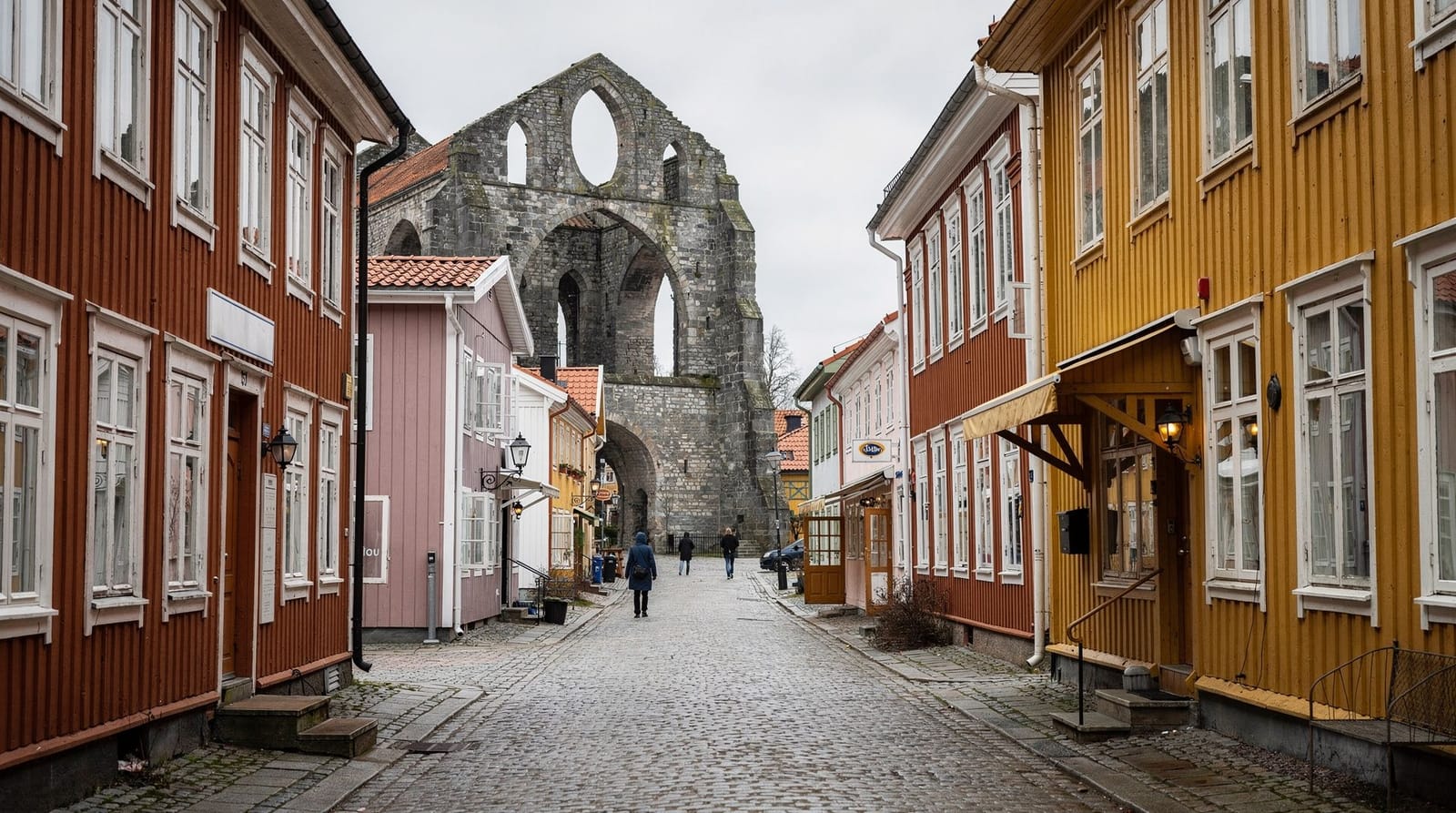
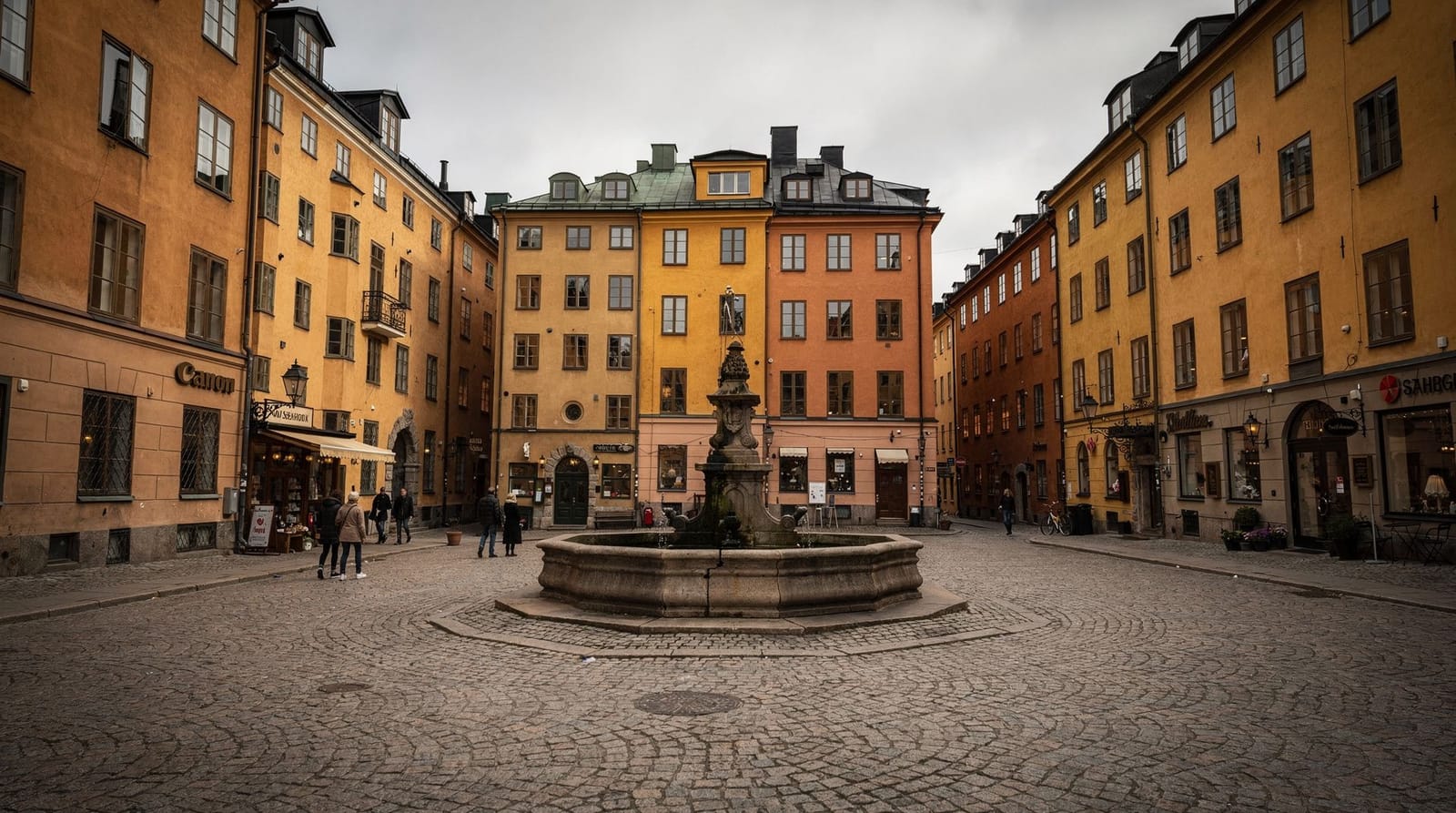
Stora Gatan (Big Street) runs roughly east–west through the centre of Sigtuna and is generally identified as the oldest surviving commercial street in Sweden. It is not a preserved-amber heritage attraction — shops, cafés, and small businesses operate along it, and people walk dogs and push prams. But the scale and alignment of the street, and the buildings along it, connect directly to the medieval layout.
Several of the buildings on Stora Gatan date from the 17th and 18th centuries, built on medieval foundations. The town hall, a diminutive pink wooden structure from 1744, is the smallest town hall in Sweden — appropriate for a town that had long since ceded its metropolitan ambitions to Stockholm and Uppsala.
Walking the length of Stora Gatan from west to east takes under 10 minutes at a stroll. The interest is in the texture — the narrow side alleys, the signs of a real small-town life continuing alongside the medieval references, the view down to the lake at the end of certain lanes.
Runestones
Sigtuna and the surrounding municipality contain a concentration of Viking Age runestones — granite or sandstone slabs carved with runic inscriptions, typically commemorating individuals who died in trade expeditions or military service. Several of the most accessible runestones are built into or adjacent to the medieval church ruins in the town, while others stand in gardens and fields nearby.
The inscriptions are in the Elder Futhark runic alphabet and typically follow the formula: “[Person A] raised this stone in memory of [Person B], who died [in some place or manner].” The language is Old Swedish, not modern Swedish, and requires specialist reading — but the runestones do not need translation to be striking objects: large, heavy slabs of stone with incised spiralling patterns and angular letters, weathered but readable after a thousand years.
The Sigtuna Museum has a collection of runestone material and can help decode specific inscriptions if you are interested in the content rather than just the objects.
Medieval church ruins: St Per, St Olof, and St Lars
Three medieval church ruins rise from the old town, all originating from the late Viking Age and early Christian period when Sigtuna was Sweden’s ecclesiastical capital.
St Per (Saint Peter) is the largest and best-preserved of the three ruins, a substantial Romanesque tower and nave wall standing in a garden setting that has been cleared and maintained for visitors. The church dates from the 11th century. The tower particularly is striking — intact to roof height, with round-headed windows and the characteristic thick masonry of early Romanesque construction in Scandinavia.
St Olof (Saint Olaf) is smaller and more fragmentary, with sections of the nave wall and some carved stonework surviving. Named for the Norwegian king who brought Christianity to Scandinavia, the church was built when Sigtuna was still the religious centre of the Swedish kingdom.
St Lars (Saint Lawrence) has the most tower surviving of the three, a square Romanesque tower that dominates its part of the old town and can be seen from the lake shore.
Walking between the three ruins — all within a few hundred metres of each other — gives a concentrated experience of 11th- and 12th-century Swedish Christian architecture, all the more affecting for being in a working residential neighbourhood rather than an open-air museum.
Back in Stockholm, the same medieval story continues in Gamla Stan: the medieval secrets of Gamla Stan pick up where Sigtuna’s ruins leave off, and the Medieval Museum guide shows how the capital that replaced Sigtuna remembers its own beginnings.
St Maria Church and the town’s continuous religious life
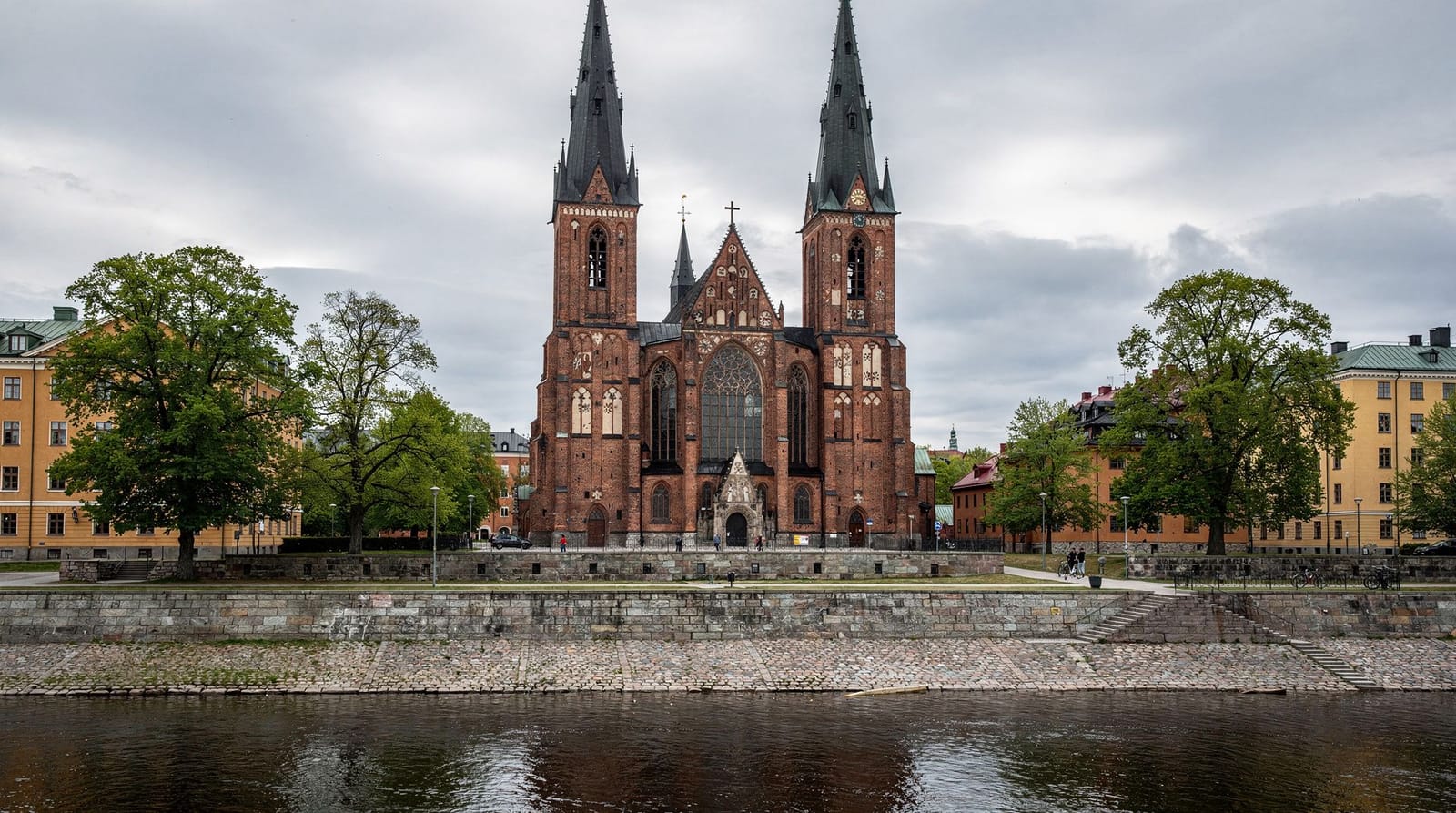
Unlike the three ruined churches, St Maria Church (Mariakyrkan) has been in continuous use since its foundation in the 13th century and remains the parish church of Sigtuna today. The tower is visible from a distance approaching the town by bus. The interior has been modified over centuries but retains medieval wall paintings and a coherent atmosphere of ongoing congregational life rather than heritage stasis.
Sigtuna Museum and the runestone context
The Sigtuna Museum, on Stora Gatan itself, is a small municipal museum that provides the archaeological context most visitors need to appreciate the runestones and ruins beyond their surface appeal. The collection includes excavated coins from Sweden’s first minting operation (established here around 995 AD under King Olof Skötkonung), pottery and everyday objects from the Viking-Age and medieval town, and interpretive material on the runic inscriptions found throughout the municipality. The museum is compact — 30 to 45 minutes is sufficient — but it meaningfully sharpens the rest of a Sigtuna visit, since the runestones themselves offer no on-site explanation of what they say or why they were raised.
Where to eat and fika in Sigtuna
Sigtuna Stadshotell is the town’s main hotel, occupying a building of genuine architectural merit near the waterfront. The hotel restaurant and café serve good quality Swedish food in a setting that feels appropriate to Sigtuna’s scale and character. The outdoor terrace on the lakeside is one of the best places for a long lunch in the town.
Several smaller cafés on and around Stora Gatan provide cinnamon buns, coffee, and sandwich lunches. The fika (coffee break) tradition is taken seriously in a town with this density of 18th- and 19th-century wooden buildings — sitting in one of these cafés with a cup of coffee and watching the limited traffic on Stora Gatan is very Swedish in a way that has nothing to do with tourist performance.
The decline of Sigtuna and the rise of Stockholm
Sigtuna’s story is also the story of what replaced it. The town’s importance peaked in the 11th century, when it was the main commercial and ecclesiastical centre of the Swedish kingdom. Over the course of the 12th century, it began losing this centrality for reasons that historians still debate: perhaps the silting of the Mälaren channels that made access harder for larger trading ships; perhaps the growth of competition from other Mälaren towns; perhaps simply the shift of power eastward as the Baltic trade grew in importance.
When Birger Jarl founded Stockholm on the narrow sound connecting Mälaren to the Baltic in 1252, he created a place that could control the entire Mälaren basin’s trade with a single fortified town. Sigtuna, lacking that geographical chokehold, lost its function as the dominant centre. It became what it still is: a small town with an extraordinary historical memory, surviving into modernity as a place of residence rather than a place of power.
The three ruined churches are the physical expression of this trajectory. They were built when Sigtuna was the most important town in Sweden; they were abandoned when it stopped being important; they have been ruins for 800 years in a town too small to have any reason to replace them. This is not decline exactly — it is the preservation of a specific moment, sustained indefinitely by the town’s subsequent irrelevance to Swedish history.
The runestone context: Viking Age literacy
The runestones around Sigtuna belong to the late Viking Age — roughly 950–1100 AD, the period when the runic tradition was most active as a memorial and commemorative practice across Scandinavia. The stones are not mysterious or encoded: they are straightforward public memorials, raised by families to commemorate relatives who died at a distance, typically in trade or military expeditions.
The runic alphabet (futhark) used on these stones is not the same as the older Germanic Elder Futhark — it is the Younger Futhark, a simplified 16-character alphabet developed for medieval Scandinavian use. The literacy implied by the stones is specific: people could read and write runes for commemorative purposes, suggesting a degree of functional literacy in Viking Age Swedish society that is sometimes underappreciated.
The typical inscription formula — “X raised this stone in memory of Y, who died [somewhere or in some manner]” — becomes more interesting when you read the destinations mentioned: Greece (the Varangian Guard in Constantinople), England (the Viking raids and settlements), Russia (the eastern trade routes through the Volga), Serkland (the Islamic world). The stones are brief but they place Sigtuna in a global network in the 10th–11th centuries — a town of a few thousand people whose inhabitants were dying in Byzantium and Baghdad.
The lake and waterfront
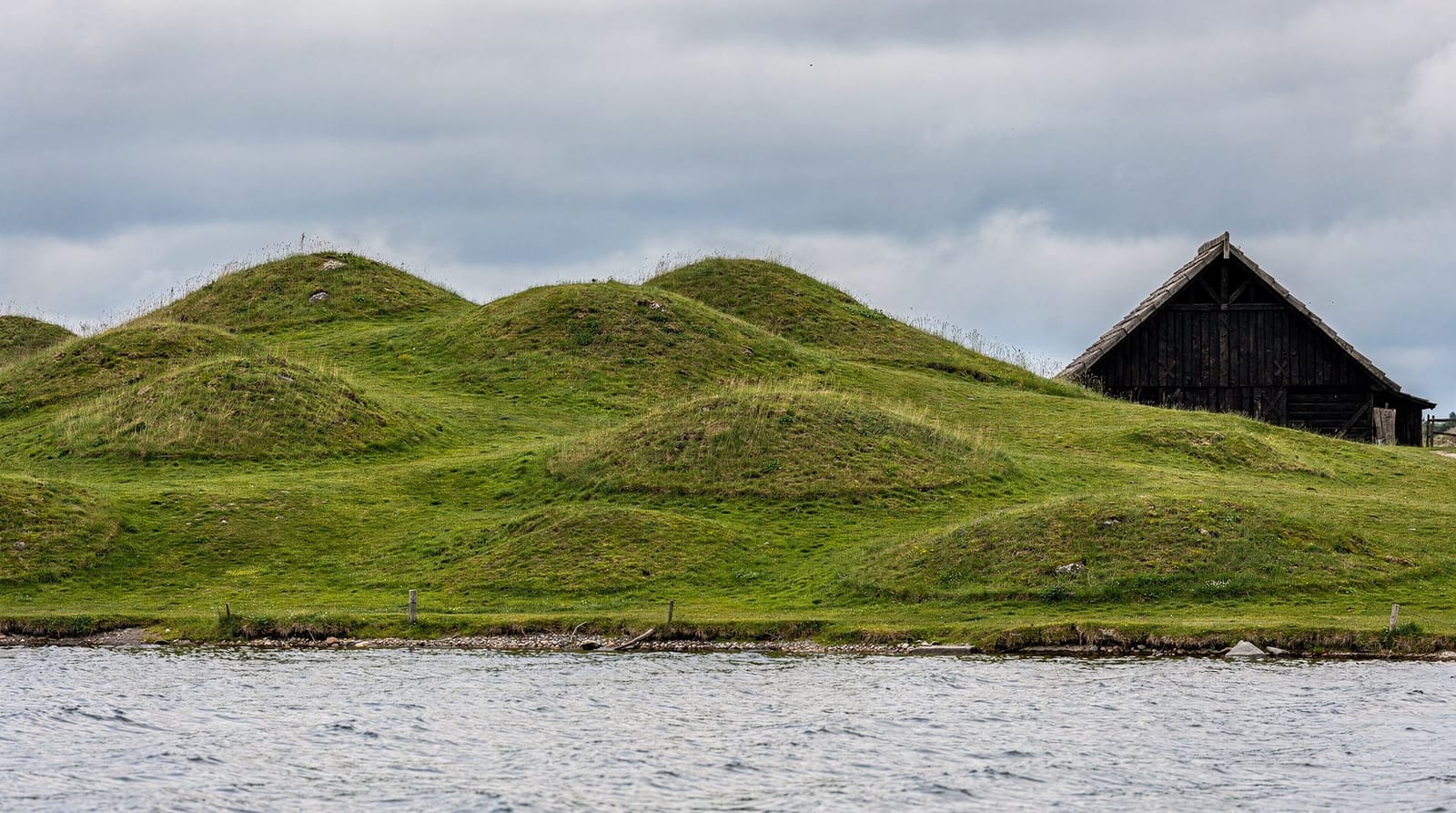
Sigtuna sits directly on Lake Mälaren (Mälaren), the same vast lake that connects Stockholm to its archipelago on the eastern side. The Sigtuna waterfront is quiet and largely residential but has walking access along the shore and views across the water toward the wooded islands and inlets typical of the western Mälaren landscape. In summer the lakeside is used for swimming and boat access.
A short walk north from the centre brings you to the water and a perspective on why Sigtuna was founded here: the natural harbour, the sheltered bay, the fertile land behind, and the navigable lake connection to Uppsala and, beyond it, the Baltic routes that connected Swedish traders to the wider Viking world.
Sigtuna vs Uppsala: which day trip fits your schedule
Sigtuna and Uppsala are frequently compared because both offer a break from Stockholm’s island geography and both connect to the Viking Age story, but they suit different amounts of time and different interests.
| Sigtuna | Uppsala | |
|---|---|---|
| Travel time from Stockholm | ~45 min (train + bus) | 38 min (direct train) |
| Time needed | Half a day | Full day |
| Main draw | Medieval streetscape, runestones, church ruins | Cathedral, university, Gamla Uppsala burial mounds |
| From Arlanda | 15 km — easy pre/post-flight stop | Not directly convenient |
| Best for | A relaxed half-day or an airport-day filler | A dedicated day with more to see |
Visitors with a tight schedule and an Arlanda flight to work around should default to Sigtuna. Visitors with a full free day and a stronger interest in Viking-Age history specifically should lean toward Uppsala for the Gamla Uppsala burial mounds, which have no equivalent in Sigtuna. The full-day Viking culture tour to Uppsala is the option for visitors who want the fuller Viking narrative in a single guided day.
Practical tips for a Sigtuna visit
Footwear: Stora Gatan and the lanes around the church ruins are cobbled and uneven in places — comfortable walking shoes matter more here than in central Stockholm’s flatter streets.
Timing around Arlanda: If using Sigtuna as a pre- or post-flight stop, build in a buffer for bus 579’s schedule, which runs less frequently than the airport’s own shuttle services. Confirm the return timing before you commit to a full loop of the town.
Photography: The three church ruins are most atmospheric in the low morning or late-afternoon light, when the Romanesque masonry catches long shadows. Midday light flattens the stonework considerably.
Combining with Stockholm sights: A morning in Sigtuna pairs naturally with an afternoon back in the city rather than with another day trip on the same day — the connection logistics through Märsta make a same-day double day-trip (Sigtuna plus Uppsala independently, rather than the combined tour) impractical for most visitors.
Viking heritage context
Sigtuna fits naturally into a Viking heritage itinerary alongside Birka — the earlier trading settlement on a Mälaren island that predates Sigtuna — and Uppsala — where the Viking kings are buried at Gamla Uppsala and where Sweden’s medieval Christian power later concentrated. The Viking culture guided tour via Sigtuna and the combined Sigtuna and Uppsala 8-hour day trip give context for both sites in a single guided day.
Two companion reads help you choose between the sites: the Uppsala day trip guide for the bigger day out, and the Birka Viking day trip guide for the island settlement. Back in the capital, the Viking Museum guide is a good rainy-day complement, and the Stockholm and Uppsala itinerary shows how to build several of these stops into one stay.
For visitors specifically interested in the Viking period, the Viking heritage guide covers Birka, Sigtuna, Uppsala, and the Viking Museum in Stockholm as a connected itinerary.
Frequently asked questions about Sigtuna
Why is Sigtuna called Sweden’s oldest town?
Sigtuna is the oldest continuously inhabited town in Sweden, founded around 980 AD as the country’s first proper urban settlement with a commercial street, minted coinage, and a church. Uppsala was established earlier as a religious site but was not a town in the same sense. Stockholm was not founded until 1252. Sigtuna’s claim to the title of Sweden’s oldest town is well-established in Swedish historiography.
Is Sigtuna worth visiting if I only have half a day?
Emphatically yes. The walk down Stora Gatan, the three church ruins, and a fika stop is a satisfying half-day that requires no special interest in medieval history to enjoy. The atmosphere of the town is its own argument — compact, quiet, genuinely old-feeling in a way that few Swedish places match.
Can I combine Sigtuna with Uppsala in one day?
Yes — the combined Uppsala and Sigtuna day trip covers both in eight hours. The towns are about 30 kilometres apart by road or an hour by bus/train. Doing both independently in one day requires careful scheduling but is possible, though it makes for a full day.
Is Sigtuna good for children?
Moderately — older children with some interest in history find the ruins and runestones genuinely interesting. The town is compact and easy to navigate. The lakeside provides outdoor space. For younger children who need physical activity rather than historical context, Grinda or Djurgården are more suitable.
What is the best Sigtuna experience for a non-historian?
The walk from Stora Gatan to the three church ruins and back to the lakeside for a fika stop, taking about two hours at an easy pace. No specialist knowledge required. The ruins speak clearly enough without guides: large, old, quietly impressive in a residential garden setting that makes them feel real rather than museal.
How close is Sigtuna to Arlanda Airport?
Approximately 15 kilometres. Bus 579 connects Arlanda Terminal 5 directly to Sigtuna in about 20 minutes. This makes Sigtuna viable as an add-on to an Arlanda flight day — a genuine cultural stop rather than airport time.
Should I visit Sigtuna or Uppsala if I only have time for one?
If your schedule is genuinely tight — a few hours around an Arlanda flight, or a half-day carved out of a busy Stockholm itinerary — choose Sigtuna. If you have a full free day and a stronger interest in Viking-Age archaeology, choose Uppsala for the Gamla Uppsala burial mounds. Doing both independently in one day is logistically tight; the combined 8-hour guided tour is the practical way to see both without the connection planning.
Top experiences
Bookable activities with verified prices and instant confirmation on GetYourGuide.