Vasa Museum vs ABBA Museum: which Stockholm museum should you visit first?
Stockholm: Vasa Museum entrance ticket
Vasa Museum or ABBA Museum — which should I visit in Stockholm?
Visit both if you can — they are 5 minutes apart on Djurgården. If you have time for only one: Vasa Museum is the stronger choice for most visitors. The 1628 warship is one of Europe's most extraordinary museum objects, visually overwhelming and historically significant. ABBA The Museum is excellent fun and great for music fans, but it is a more conventional exhibition format. Neither replaces the other — the Vasa is world-class; ABBA is a great addition.
Two museums, one island, different experiences
The Vasa Museum and ABBA The Museum are the two most internationally famous museums on Djurgården — and possibly the two most distinctive museums in Stockholm. They are approximately 5 minutes’ walk apart, both excellent, and radically different in what they offer.
This guide helps you choose between them if time is genuinely limited, and helps you plan the combination if it is not.
| Where | Djurgården, both museums ~5 min walk apart |
| Cost | Vasa and ABBA priced separately — see comparison below |
| Time needed | Half day if visiting both (4–5 hours) |
| Getting there | Bus 69/76, HOHO boat, or walk from Gamla Stan |
| Best time | Morning for Vasa, afternoon for ABBA’s interactive areas |
For a wider view of the island both museums sit on, see the Djurgården destination page.
The Vasa Museum
What it is
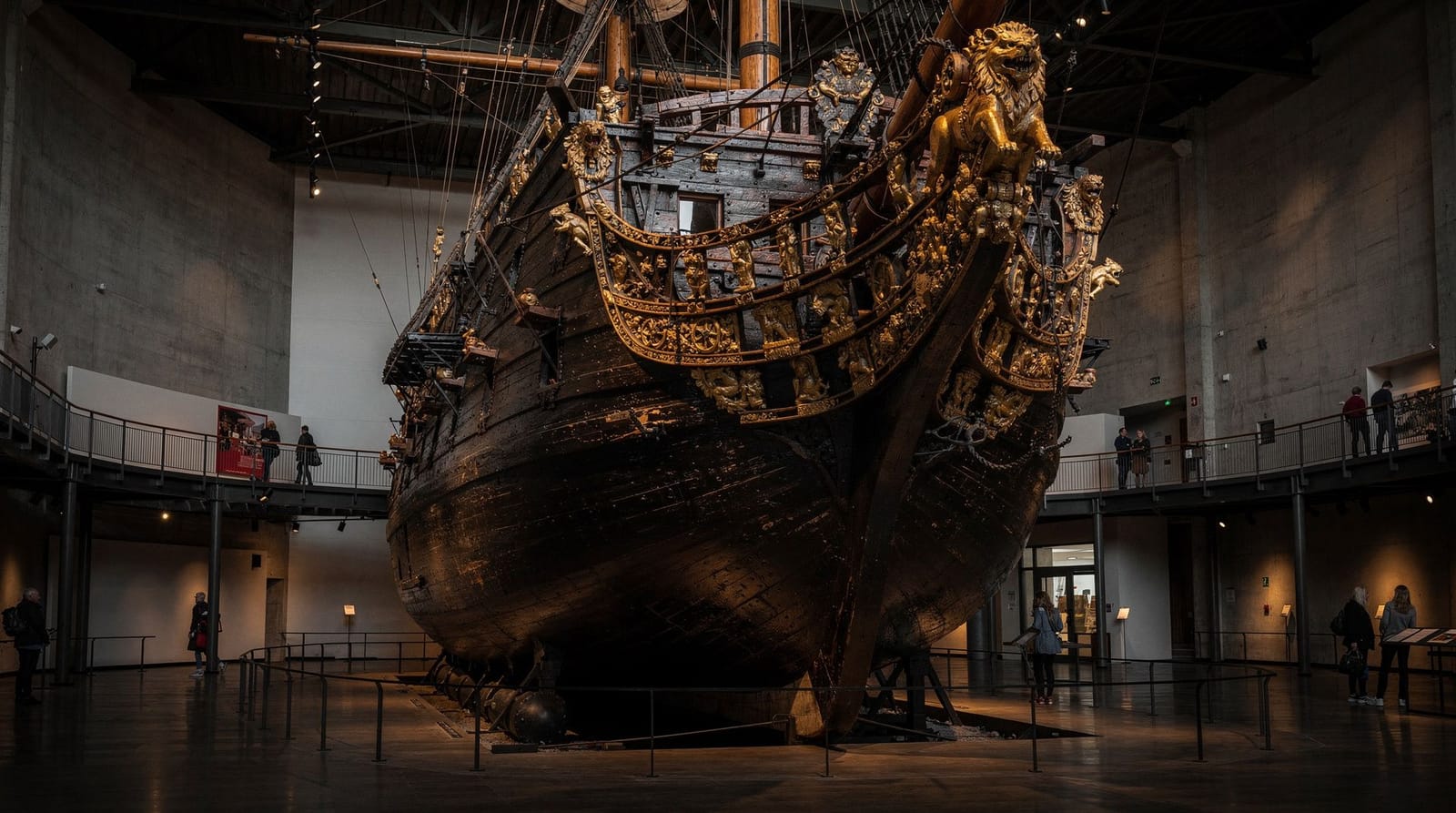
The Vasa Museum houses the Vasa, a Swedish warship built between 1626 and 1628 on the orders of King Gustav II Adolf. On 10 August 1628, the ship sailed approximately 1,300 metres from the Royal Palace before sinking in the harbour, killing approximately 30 of the 150 crew members aboard.
The ship sank in cold, low-salinity water that proved exceptionally preserving. It lay on the harbour bottom for 333 years, largely intact, before being raised in 1961. More than 95 per cent of the original ship’s structure survived. The carved decorations — approximately 700 sculptures, originally painted in vivid colours — survived in the anaerobic mud.
The museum was purpose-built around the ship. You enter a space where the hull of the Vasa, 69 metres long and 52 metres tall to the top of the mast, occupies the central volume. Multiple walkway levels circle the ship at different heights. The experience is consistently described by visitors as overwhelming in scale.
Book: Vasa Museum entrance ticketWhat makes it exceptional
The Vasa is not the oldest ship in a museum collection. It is not the largest. What makes it exceptional is the combination of completeness and scale.
Most preserved historic ships are fragments — keel sections, hull planking, artefacts. The Vasa is essentially entire. The original wood structure. The carved lion figurehead. The decorative windows of the admiral’s cabin. The hundreds of sculptures on the hull. And it is enormous — a 17th-century battleship was among the most complex manufactured objects of its era, and standing beside one at full scale is a different experience from reading about it.
The exhibition rooms adjacent to the ship cover the Vasa’s history, the recovery operation, the conservation process (the ship spent 17 years being slowly dried and stabilised), and the lives of the crew members who died. The last section is particularly humanising — archaeologists have reconstructed detailed profiles of the recovered crew based on skeletal evidence, including names and probable origins.
Book: Vasa Museum guided tour with entryPractical details
- Hours: 09:00–17:00 (18:00 June–August)
- Entry: ~150 SEK adult, children under 18 free
- Guided tours: included, English-language, run multiple times daily
- Time needed: 1.5–2.5 hours comfortable; 3+ hours for enthusiasts
ABBA The Museum
What it is
ABBA The Museum opened in 2013 on Djurgården and covers the career, music, and cultural impact of ABBA — the Swedish pop group that recorded from 1972 to 1982 (and technically never disbanded, with a new album released in 2021).
The exhibition combines physical artefacts (stage costumes, instruments, personal mementoes donated by the four members), interactive elements, and film/video. The interactive components are a defining feature: visitors can step into a virtual recording session, perform onstage with ABBA holograms, mix and remix tracks, and have the experience filmed.
Book: ABBA The Museum entrance ticketWhat makes it stand out
Among pop music museums internationally, ABBA The Museum is unusually well-executed. The physical artefacts are genuinely significant — the original stage costumes are iconic design objects, donated by the band members with full curatorial involvement. Björn Ulvaeus and Benny Andersson are periodically reachable by phone through a working telephone in the exhibition, if they happen to call.
The interactive elements are more than average museum interactivity. The studio simulation allows visitors to record themselves over an ABBA backing track, which is then uploaded and can be accessed later. The dance console teaches ABBA choreography. The stage hologram simulation is genuinely convincing.
For ABBA fans — and globally, there are very many — the museum is a best-in-class experience. For music enthusiasts more broadly, it demonstrates what a well-resourced pop music museum can achieve.
Non-fans sometimes underestimate how much the interactive elements carry the visit. Even a visitor who could not name an ABBA song beyond “Dancing Queen” tends to leave having enjoyed the recording booth and the hologram stage, simply because the production quality is high. That said, the exhibition assumes at least passing familiarity with the group’s story — the deep cuts around the four members’ personal histories land best with people who already know the outline.
Book: ABBA Museum fast-track & pop culture tourPractical details
- Hours: 09:00–17:00 (18:00 summer)
- Entry: ~280 SEK adult; children 7–16 ~190 SEK; under 7 free
- Timed entry: book in advance — essential in July, strongly recommended otherwise
- Time needed: 1.5–2 hours
How the two visits feel different
The Vasa is a contemplative visit. You circle the ship slowly, read a panel, step back, and circle again. Many people find the mood quiet and a little sombre, which suits a story about a ship that sank on its first voyage. ABBA The Museum is the opposite: you move through it, you try things, and you tend to leave with a song stuck in your head. If you pair them in one day, the contrast is part of the appeal, and neither tires out the part of your attention the other one needs.
If you are travelling with someone who is keen on only one of the two, you do not have to force a compromise. One of you can take the longer route through the Vasa’s exhibition rooms while the other heads to the ABBA studio, and you can meet at one of the cafés on the island afterwards. The Djurgården neighbourhood deep dive shows where to regroup, and the Vasa vs Skansen comparison is worth reading if the real question for your group is how to split a single day on the island.
Head-to-head comparison
| Factor | Vasa Museum | ABBA The Museum |
|---|---|---|
| Entry price (adult) | ~150 SEK | ~280 SEK |
| Children’s price | Free under 18 | Free under 7; ~190 SEK 7–16 |
| Time needed | 1.5–2.5 hours | 1.5–2 hours |
| Advance booking | Recommended July | Essential July; strong otherwise |
| Interactive elements | Good (but focused on history) | Excellent (studio, stage, dance) |
| Appeal without prior interest | Universal | ABBA fans strongest |
| Uniqueness globally | One of a kind | High (best of its type) |
| Best for children | Good (ship scale impresses) | Good (interactive) |
| Included in Stockholm Pass | Yes | Yes |
| Physical artefact quality | Extraordinary (intact warship) | High (genuine costumes, instruments) |
Recommendations by visitor type
First-time Stockholm visitor: Vasa Museum first. The ship is one of the most extraordinary objects in European museology, and you are here. ABBA second if time allows.
Music fans / pop culture enthusiasts: ABBA Museum is the priority, Vasa as a bonus.
Families with children under 10: Both work well. Vasa for the sheer scale (children respond strongly to the ship’s size); ABBA for the interactive elements and the costumes.
Time-limited visitors (half-day on Djurgården): Vasa Museum. It is shorter, included in more pass combinations, and requires less advance planning.
Budget visitors: Vasa Museum at 240 SEK versus ABBA at 280 SEK. The Vasa’s price-to-experience ratio is higher.
Passes worth checking before you buy separate tickets
Both museums are included in the Stockholm Pass (Go City), so if your Djurgården day is part of a broader multi-attraction visit, it is worth doing the maths before buying individual tickets. The SL Pass vs Stockholm Pass guide explains the difference between a transport pass and an attractions pass, since the two get confused often, and the museum pass guide covers combinations beyond just Vasa and ABBA.
Check current Stockholm Pass pricing and included attractionsIf the weather turns
Both museums are fully indoor, which makes this comparison useful on a rainy Stockholm day when outdoor Djurgården options like Skansen lose some of their appeal. The museum rainy-day guide lists other indoor options nearby if you want a third stop, or if one of Vasa or ABBA is fully booked and you need an alternative.
Combining both in one day
The recommended Djurgården combined visit:
09:00 — Arrive Djurgården (bus 69/76 from Norrmalm, or HOHO boat/bus, or walk from Gamla Stan via Djurgårdsbroen, 15 minutes).
09:00–11:30 — Vasa Museum (quieter in the morning; guided tours run at 10:30).
11:30–12:30 — Lunch on Djurgården. Rosendals Trädgård (the garden café at the Berzeliiparken end of Djurgården) is excellent in warm weather; the café near Nordiska Museet has good fika.
12:30–14:30 — ABBA The Museum (interactive elements benefit from some energy; afternoon timing means interactive areas have been tested by staff and are running smoothly).
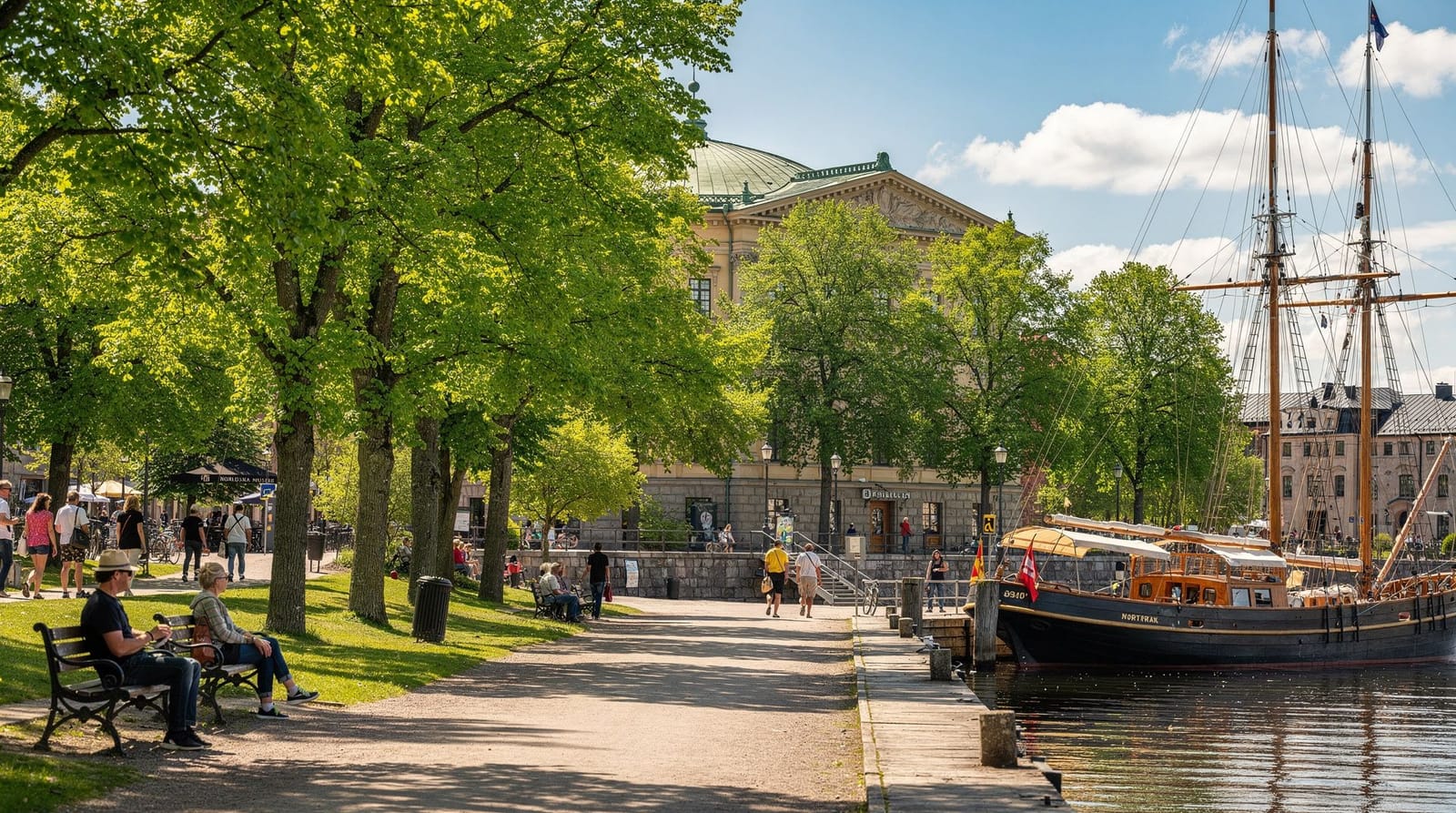
14:30 onwards — Continue on Djurgården: Skansen (another 2+ hours, open until 20:00 in summer), Nordiska Museet, or a walk along the Djurgårdsbroen waterfront. The Djurgården walking route guide covers a self-guided path linking these stops if you would rather explore on foot than plan block-by-block.
Where these museums fit in a longer trip
Neither museum needs to dominate your schedule. On a short stay, one of them usually slots into a day that also covers the old town, so the Gamla Stan neighbourhood guide pairs naturally with a Djurgården morning. If you only have a couple of days, the two-day essential itinerary and the 3-day first-timer itinerary show how visitors usually place the Vasa, and the Stockholm in 3 days overview gives the wider picture. With only a single day, the 24 hours in Stockholm itinerary is the more realistic reference, and in that case the Vasa is normally the one to keep.
Families will find more ideas in the Stockholm with kids guide, which covers how to pace museum days for younger children. For readers who like personal accounts, the honest ABBA Museum review and the blog post on visiting the Vasa twice give a first-hand view of how each museum holds up, including whether a second visit is worth the time.
Getting there and moving around
Both museums sit on the same island, so the transport question is mostly about how you reach Djurgården in the first place. The public transport explained guide breaks down the options, and the SL Pass guide helps you decide whether a travel pass makes sense for the days you plan to spend on the move. If you are weighing whether to pay for a fixed-route sightseeing ticket, the hop-on hop-off boat vs bus guide compares the two and tells you which suits a museum-focused day. Once you are on the island, everything in this comparison is within a short walk, so you rarely need transport again until you leave.
Which one deserves a full guide of its own?
If you have already decided which museum wins for your trip, the dedicated Vasa Museum guide and ABBA Museum guide go deeper into what to see inside each one, opening hours by season, and tips for avoiding queues.
Frequently asked questions about Vasa vs ABBA Museum
How much does the Vasa Museum cost?
Approximately 150 SEK adult; free for children under 18. Included in the Stockholm Pass.
How much does the ABBA Museum cost?
Approximately 280 SEK adult; 190 SEK for children 7–16; free under 7. Included in the Stockholm Pass.
How long does each museum take?
Vasa: 1.5–2.5 hours. ABBA: 1.5–2 hours. Both together: 4–5 hours with a lunch break.
Can you combine both museums in one day?
Yes — they are 5 minutes apart on Djurgården. Allow 4–5 hours total.
Is the Vasa Museum worth it for non-history enthusiasts?
Yes, almost universally — the ship’s scale and completeness command attention regardless of historical interest.
Is the ABBA Museum worth it if you are not an ABBA fan?
Probably not at full price (280 SEK). Visitors with no prior ABBA connection may find better value in other Stockholm museums at similar or lower prices.
Top experiences
Bookable activities with verified prices and instant confirmation on GetYourGuide.