Stockholm travel guide
Plan your Stockholm trip — neighborhoods, archipelago day trips, museums, food and honest tourist-trap warnings.
Stockholm: Go City Stockholm Pass — save up to 50%
Quick facts
- Country
- Sweden
- Best months
- May–June, September
- Days needed
- 3–5 days
- Currency
- SEK (Swedish Krona)
- Language
- Swedish (English widely spoken)
- Airport
- Arlanda (ARN), 42 km north
The city that floats between land and water
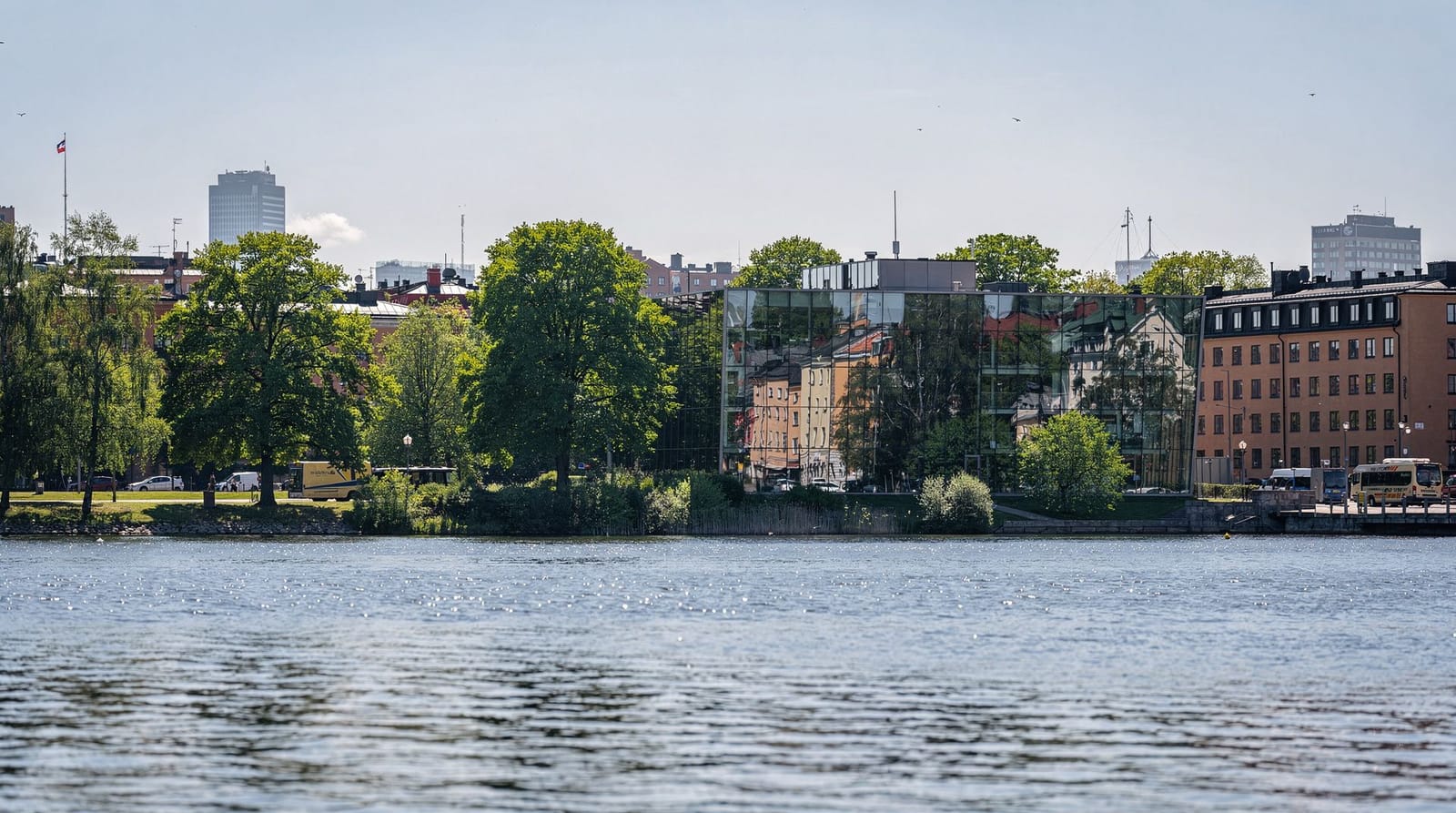
Stockholm does not announce itself loudly. It earns your attention gradually — through the light that skips off Riddarfjärden at 10pm in late June, through the smell of kanelbulle drifting from a bakery doorway on Södermalm, through the sheer visual shock of a 17th-century warship preserved almost intact inside a climate-controlled museum on an island that also hosts Sweden’s oldest open-air park. The Swedish capital is built across 14 islands where Lake Mälaren meets the Baltic, and almost everywhere you walk, water is either in front of you, behind you, or both.
Visitors expecting a straightforward Scandinavian-minimalist capital find something considerably more layered. Stockholm is simultaneously one of Europe’s most expensive cities and one of its most walkable. It has world-class museums that most people only visit once — and the Vasa is not among them (go twice; it only gets richer). It has an archipelago of 30,000 islands within day-trip distance. And it has a food scene that long ago moved past meatballs and gravlax into something genuinely worth building a trip around.
Three to five days is the sweet spot for a first visit. That gives you time to cover the medieval lanes of Gamla Stan, the museum island of Djurgården, the waterfront cool of Södermalm, and at least half a day on the archipelago without feeling rushed.
| Where | Sweden, built across 14 islands on the Baltic |
| Days needed | 3–5 days for a first visit |
| Best months | May–June, September |
| Currency | SEK (Swedish Krona) |
| Getting in | Arlanda Airport (ARN), 42 km north; Arlanda Express 18 min to T-Centralen |
Quick orientation
Stockholm’s geography is its greatest asset and occasional source of confusion. The city centre clusters around T-Centralen (Stockholm Central), the main metro and rail hub. From there, the seven main areas fanning out:
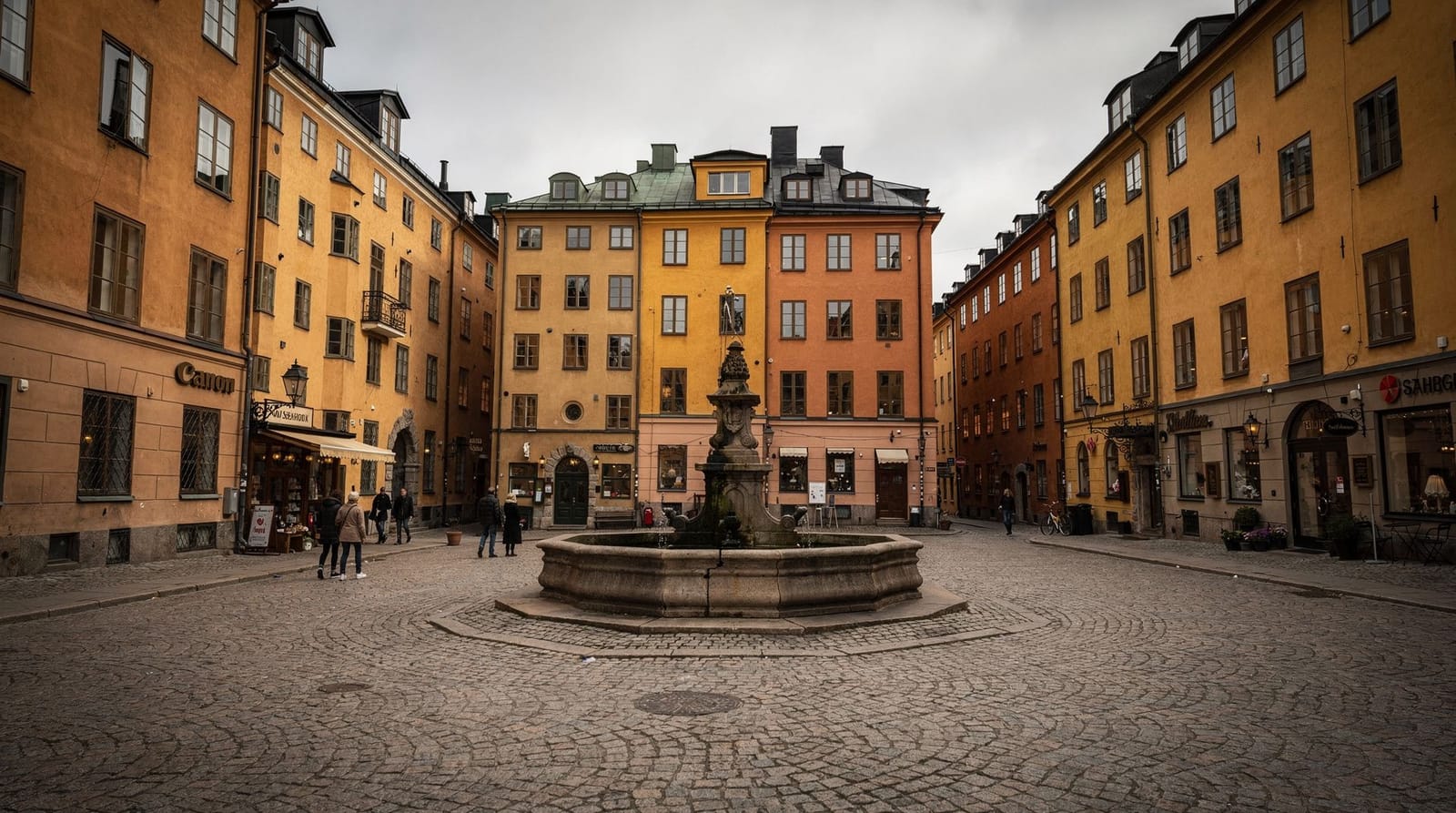
Gamla Stan — the medieval Old Town island immediately south of T-Centralen, connected by bridges. Cobblestones, ochre facades, the Royal Palace. One to two hours end-to-end on foot.
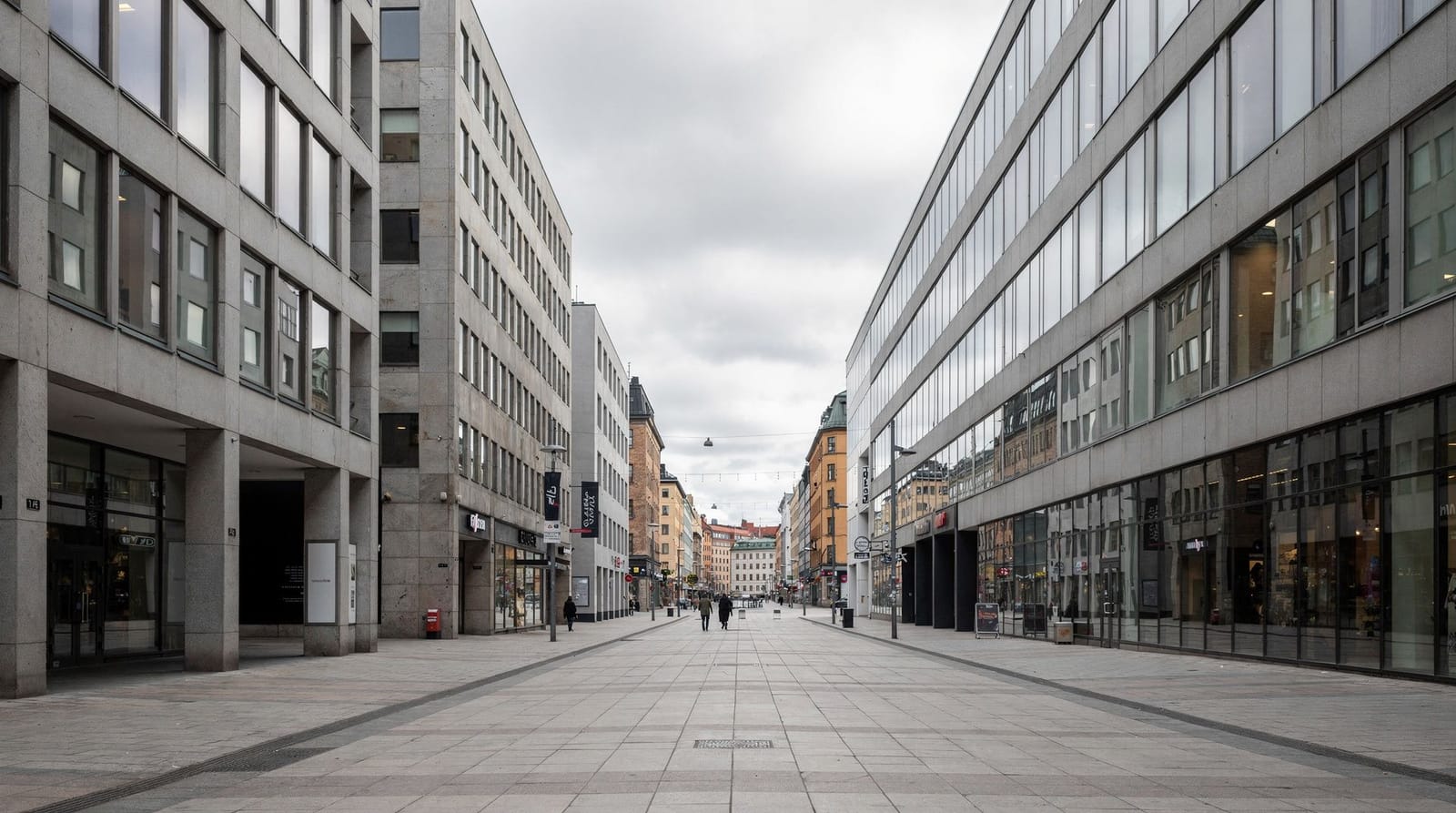
Norrmalm — the modern downtown grid directly above T-Centralen. Sergels Torg, Drottninggatan shopping street, Kulturhuset. Functional rather than atmospheric.
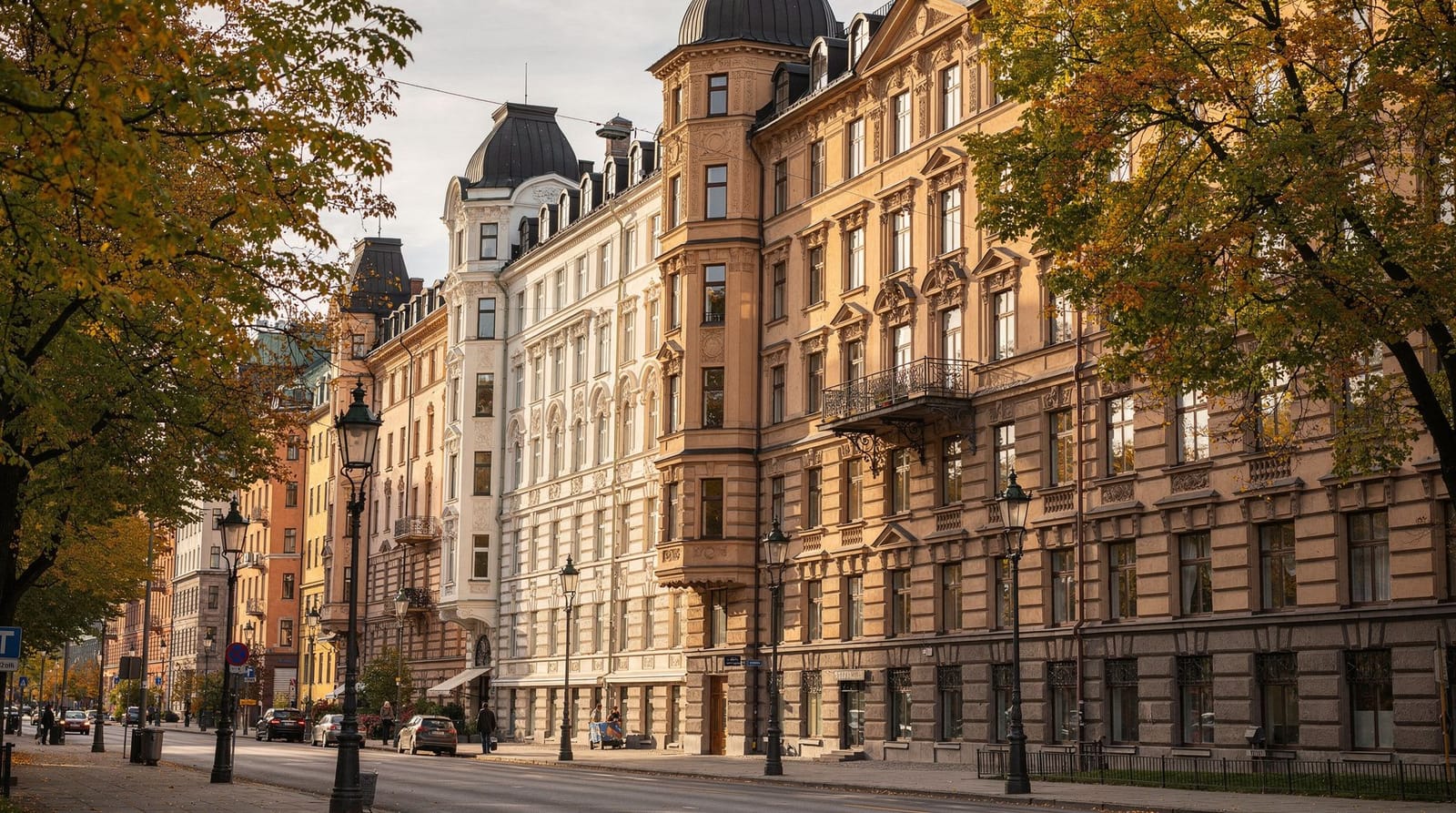
Östermalm — the upscale eastern district. Strandvägen boulevard, Östermalmstorg market hall, embassy row. Polished and expensive.
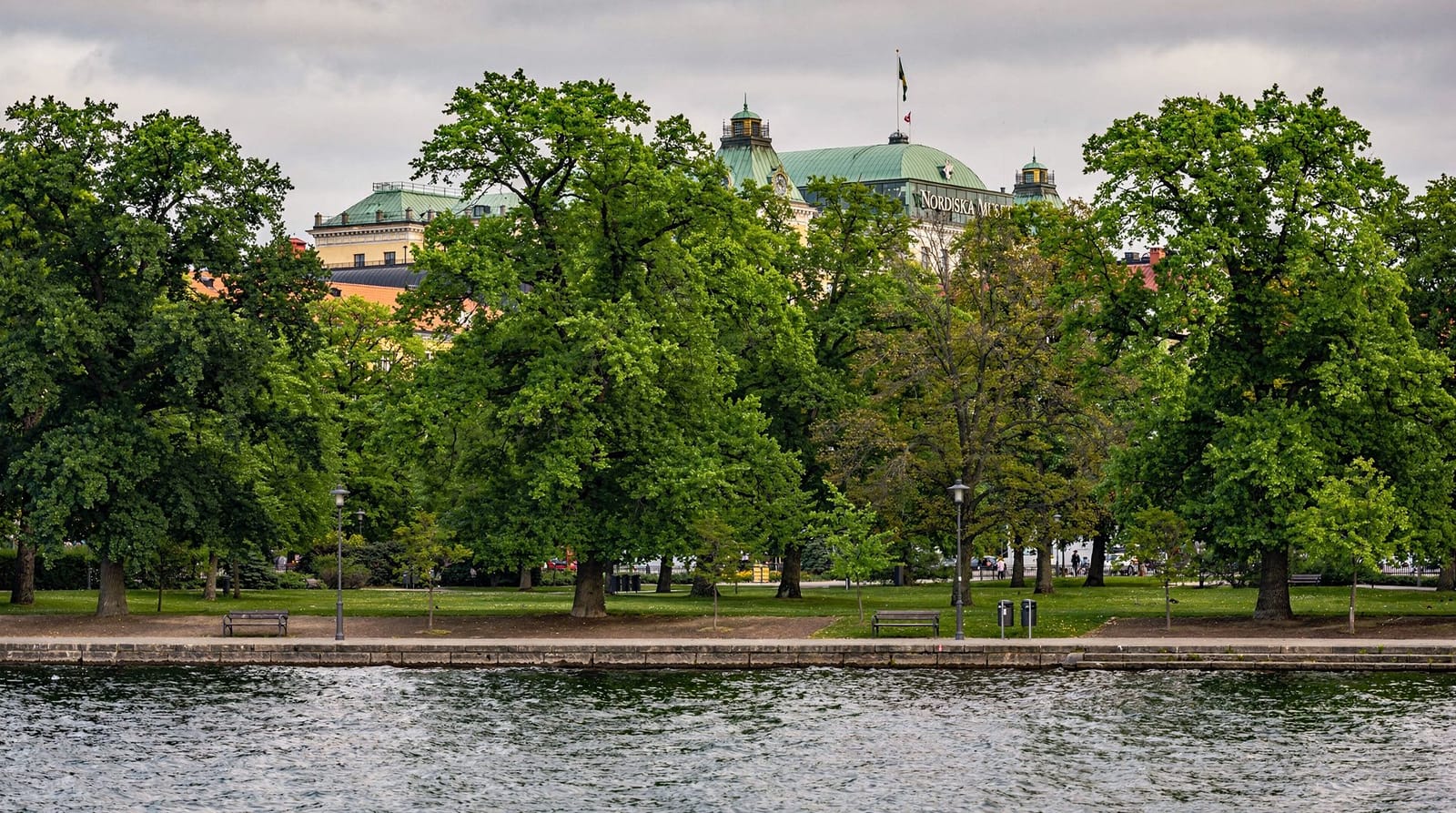
Djurgården — the museum island reached by ferry (7 minutes from Slussen) or bridge from Östermalm. Vasa, ABBA, Skansen, Nordiska Museet, Gröna Lund. Give it a full day.
Södermalm — the hip southern island. Fotografiska, viewpoints, independent coffee shops, the best restaurant-per-block ratio in the city.
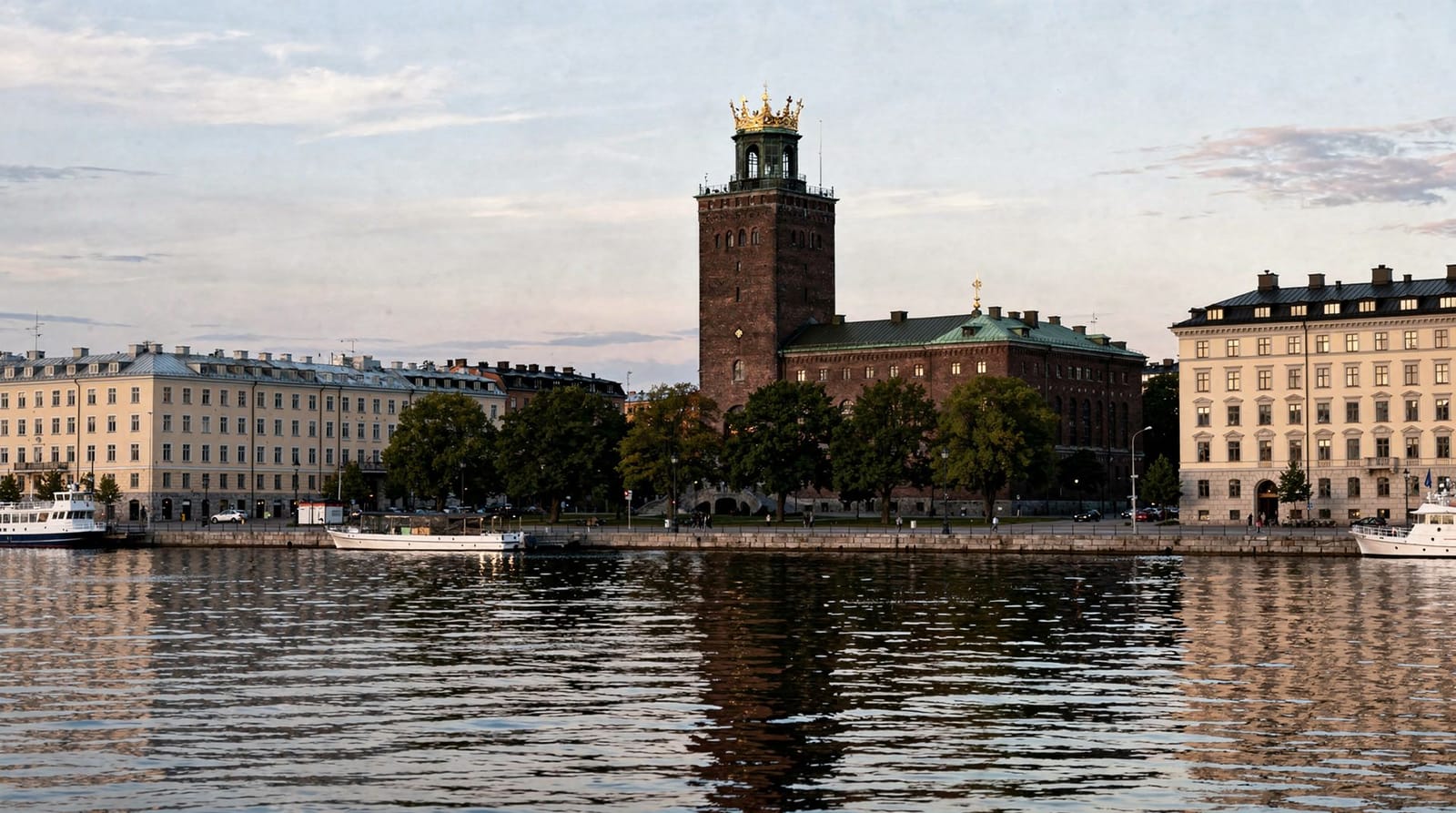
Kungsholmen — the island to the west, home to Stadshuset (City Hall) and the Nobel Prize banquet venue. Residential and relaxed.
Vasastan — the leafy northern residential district, birthplace of Stockholm’s third-wave coffee movement. Quieter, genuinely local.
The seven best things to do in Stockholm
1. Vasa Museum
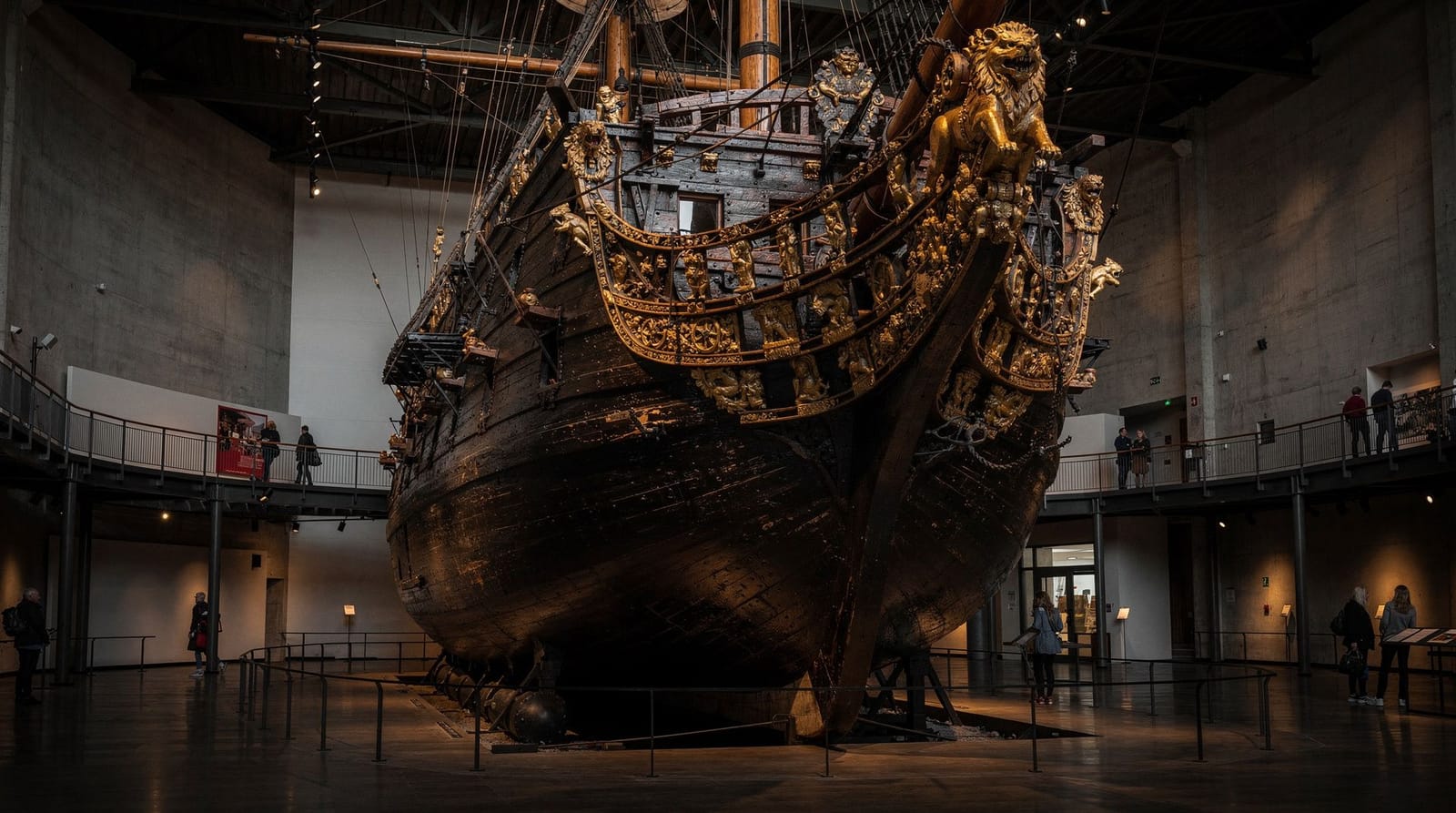
The single most unmissable attraction in Stockholm is a ship that sailed for 1,300 metres, fired its cannon twice in salute, and sank to the bottom of Stockholm harbour in 1628. The Vasa warship was raised in 1961, and today sits in its own purpose-built museum on Djurgården — a cathedral-like hall where you can walk around the hull at multiple levels and stare at the extraordinary carved figurines that once adorned the stern. No photo prepares you for the scale or the darkness of the wood after 333 years underwater.
Book tickets in advance online — queues in summer are real and skip-the-line access is worth it. Guided tours add historical context that makes the ship’s story even more affecting.
Book your Vasa Museum entrance ticket on GetYourGuide — skip the queue and go straight to the ship2. Gamla Stan and the Royal Palace
The medieval Old Town island is only 1.5km end-to-end but contains the Royal Palace (one of the largest palaces in the world still in active royal use), the Nobel Prize Museum in the old Stock Exchange on Stortorget, the 13th-century Storkyrkan cathedral, and enough photogenic alleys to fill a camera roll in an afternoon.
Be honest about Västerlånggatan, the main tourist drag: the restaurants there are significantly overpriced compared to those one or two streets away. Walk it for the atmosphere, then eat elsewhere. The guided walking tours that dive into the lanes off the main street are genuinely worthwhile for first-timers.
Explore Gamla Stan’s hidden lanes with a local guide — includes a traditional fika stop3. ABBA The Museum
Timed entry, genuinely interactive, and considerably more emotionally involving than you might expect even if you are not a committed fan. The hologram stage where you can perform with the band is the obvious headline, but the personal artefacts — costumes, letters, handwritten lyrics — carry real weight. Book weeks or months ahead in summer; the museum caps daily visitors and sells out reliably.
Reserve your ABBA The Museum ticket online — timed entry, sell out fast in summer4. Stockholm archipelago
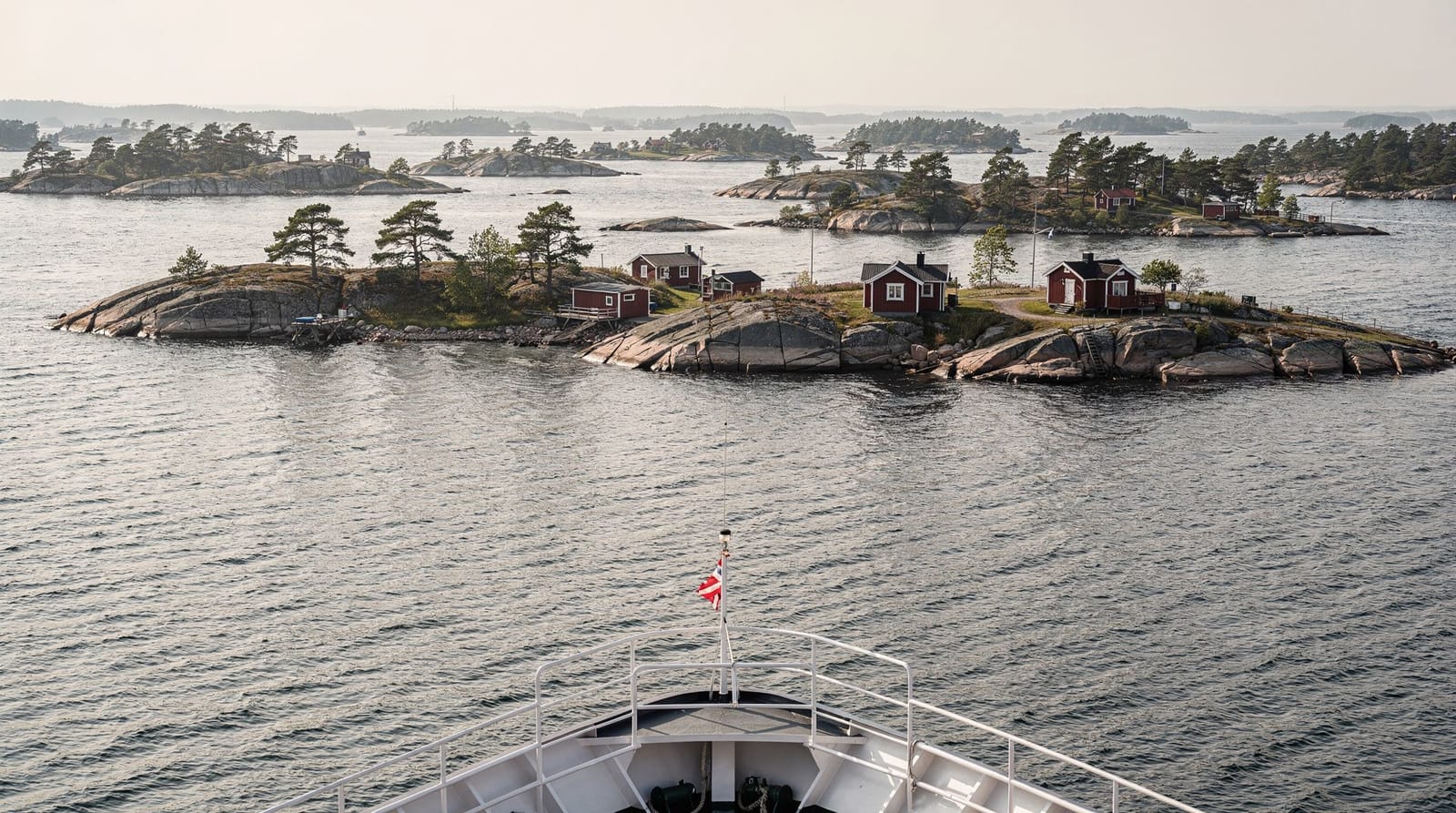
Thirty thousand islands lie between Stockholm and the open Baltic. Most visitors see the archipelago from a boat tour or ferry passing through the inner islands, but even a half-day trip to Fjäderholmarna (20 minutes from the city centre) gives you a genuine taste of the granit and water landscape that defines the Swedish summer. For more depth, Vaxholm is an hour away by public ferry and takes you into the classic red-cottage archipelago. The outer islands — Grinda, Sandhamn — require a full day each.
Take a guided archipelago sightseeing cruise from central Stockholm — 2 hours through the inner islands5. Skansen open-air museum
The world’s oldest open-air museum (opened 1891) sits atop a hill on Djurgården and spreads across 75 acres of reconstructed Swedish towns, farmsteads, and manor houses from different centuries. More than 150 historical buildings were relocated here from across Sweden. The zoo section is Nordic-focused — wolverines, reindeer, lynx — and the Christmas market in December is the most atmospheric in Stockholm. Give Skansen at least three hours; it earns a full day in good weather.
6. Drottningholm Palace
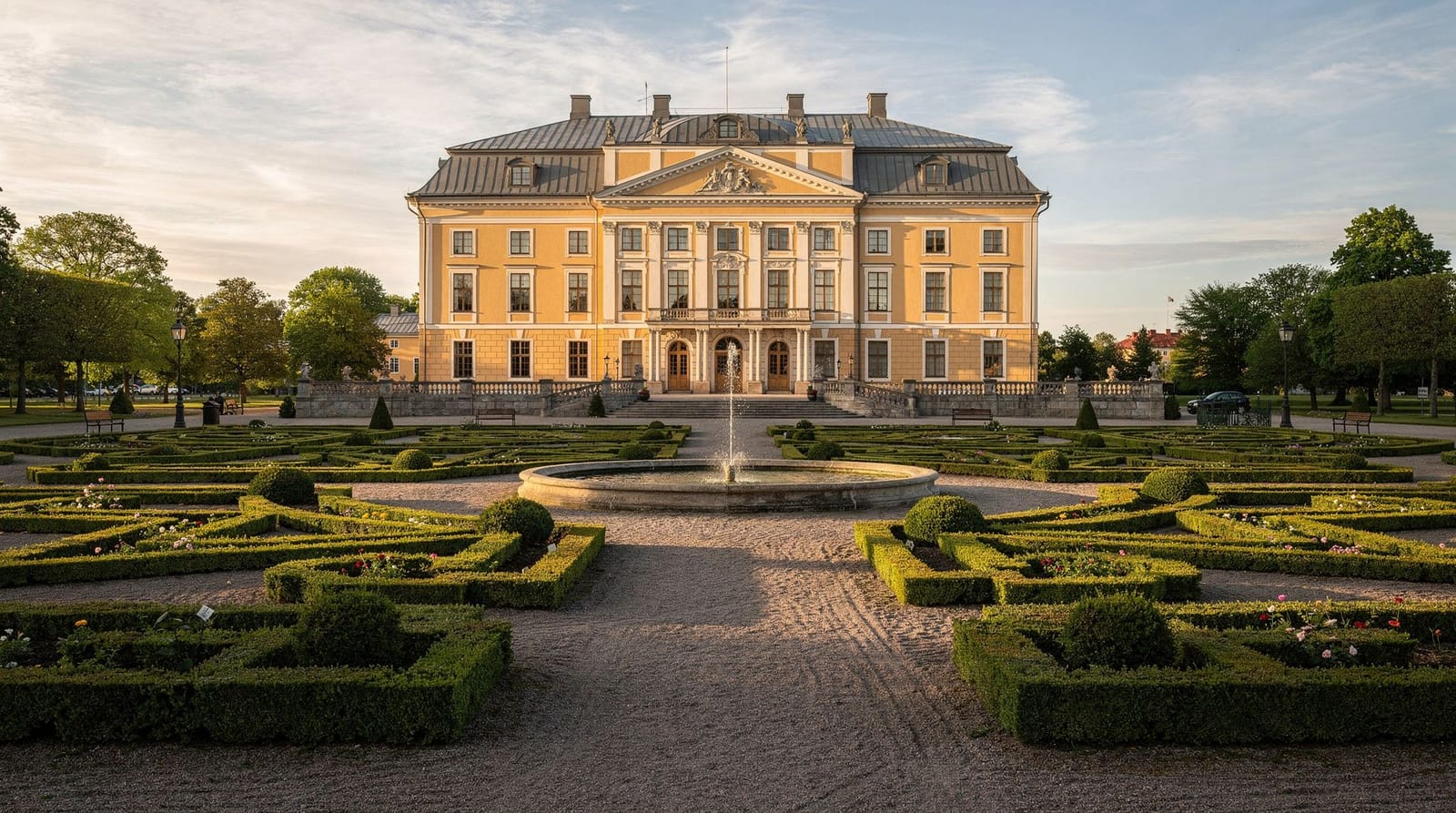
The royal family’s primary residence is a 17th-century baroque palace on Mälaren lake, 45 minutes from the city by boat or 25 minutes by metro and ferry. The palace and its formal French gardens are a UNESCO World Heritage Site. The court theatre inside is still used for period-authentic opera productions. Going by boat is significantly more scenic than going by bus.
Book the Drottningholm ferry with skip-the-line access — the most scenic way to reach the royal palace7. Canal boat tour of the Royal Canal
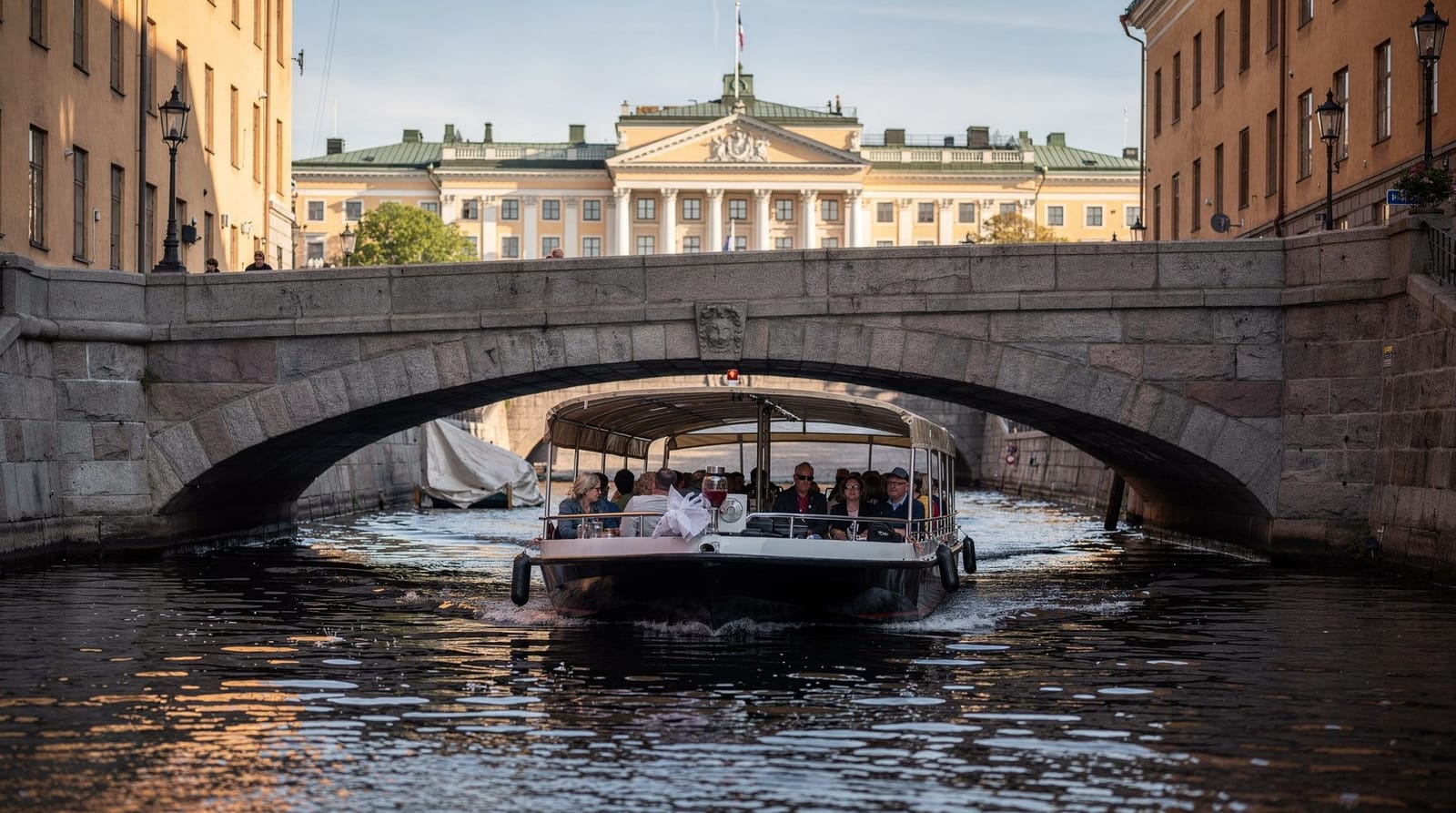
The classic two-hour boat tour under the bridges of central Stockholm gives you a perspective on the city’s island geography that no land-based map can replicate. The narration covers the Royal Palace, Stadshuset, and the points where Mälaren meets the salt water of the Baltic. Best on a clear evening in June or September.
Book the Royal Bridges canal boat tour — 2 hours through Stockholm’s waterways with audio guideNeighborhoods to explore
Beyond the main attractions, Stockholm rewards wandering through its distinct neighborhoods. Each island has a different character:
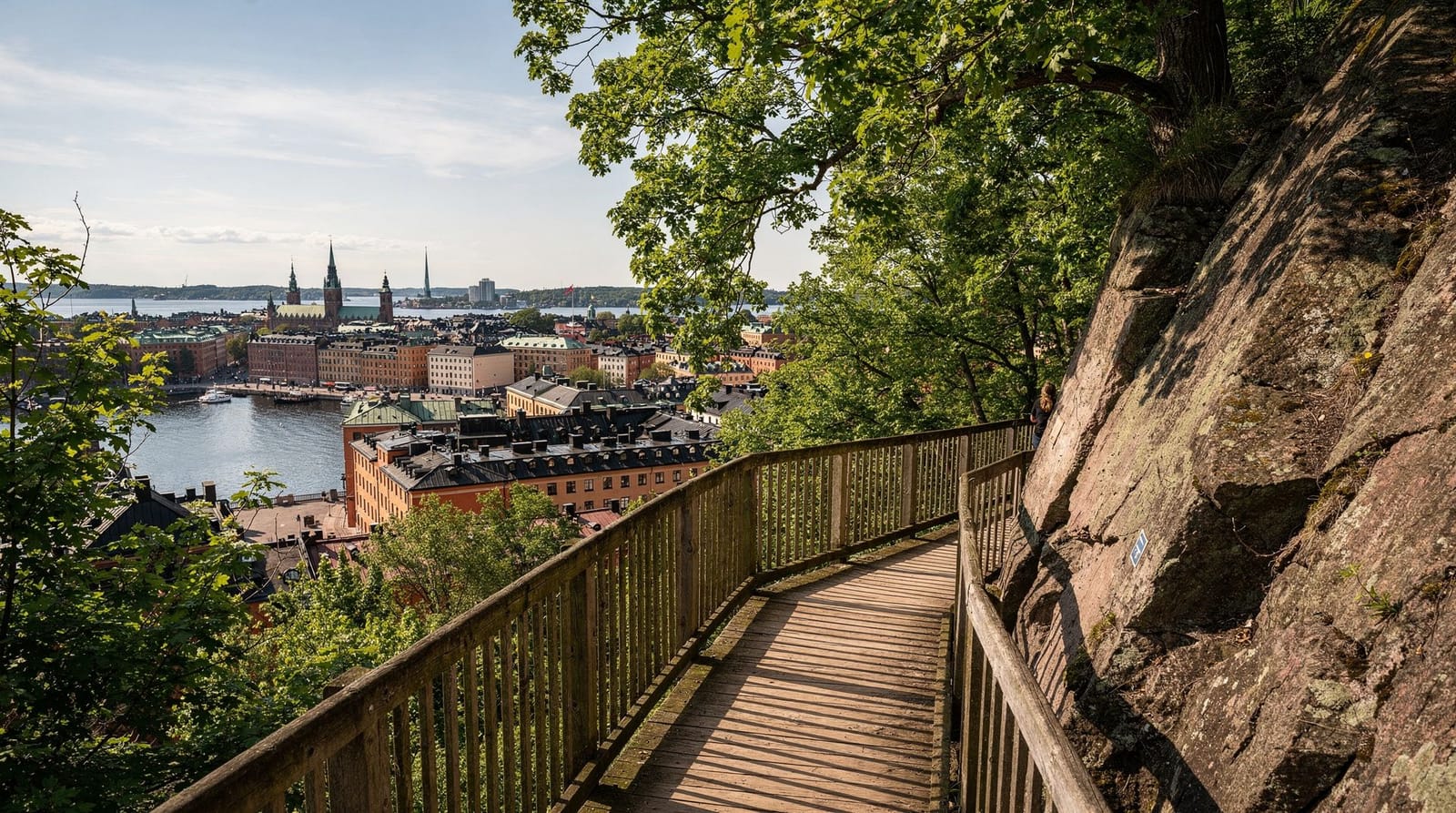
Södermalm is where the city’s food and coffee culture is strongest, and where viewpoints like Monteliusvägen give you the best free panoramas over Gamla Stan and the water. Östermalm has the Östermalmstorg food market hall — one of the best places in the city for a quality lunch at a counter without a tourist-facing price tag. Kungsholmen has Stadshuset and the lakeside promenade along Mälaren. Vasastan has the coffee shops and neighbourhood parks that locals actually use.
Stockholm vs Copenhagen vs Oslo
Visitors planning a broader Scandinavian trip often weigh Stockholm against its two nearest capital rivals. In brief: Stockholm has the strongest single attraction (the Vasa) and the most distinctive geography (the archipelago and 14 islands); Copenhagen has a more concentrated old-town walkability and arguably the best food scene of the three; Oslo has the most dramatic natural surroundings but the smallest historic core. None is objectively “better” — the choice depends on whether water-city geography, food culture, or nature access matters most to your trip. The Stockholm vs Copenhagen vs Oslo guide and the more specific Stockholm vs Copenhagen honest comparison go through the comparison in detail for visitors deciding between a Nordic multi-city trip and a single deep-dive into Stockholm.
Day trips from Stockholm
Stockholm is well-positioned for day trips in several directions:
Drottningholm Palace — 45 min by boat, 30 min by public transport. UNESCO-listed baroque palace, the royal family’s main residence, beautiful formal gardens.
Uppsala — 45 min by commuter train from T-Centralen, 43 SEK. Sweden’s oldest university town, spectacular 15th-century cathedral, medieval city centre.
Sigtuna — 45 min north by commuter train + bus. Sweden’s oldest town (founded around 980 AD), Viking-era runic stones, mediaeval church ruins.
Birka — 2 hours by boat from Stadshusbron. Viking-age trading town on Björkö island, UNESCO World Heritage Site.
Vaxholm — 1 hour by Waxholmsbolaget ferry from Strömkajen. Classic archipelago town with 16th-century fortress, red cottages, excellent local restaurants.
See the complete day trips guide for ferry schedules, costs, and seasonal tips.
Where to stay
Stockholm’s accommodation is spread across the islands, and location matters more than in flatter cities.
Budget (under 1,200 SEK/night): Generator Stockholm near T-Centralen is the best hostel in the city — private rooms available, excellent rooftop bar. Castanea Old Town Hostel puts you on Gamla Stan for a fraction of nearby hotel prices.
Mid-range (1,200–2,500 SEK/night): Freys Hotel near T-Centralen is reliably comfortable with good breakfast included. Hotel Sven Vintappare in Gamla Stan is small, atmospheric, and well-priced for its location. Zleep Hotel Slussen is a solid base for Södermalm access.
Luxury (2,500+ SEK/night): Grand Hôtel Stockholm on Blasieholmen has the best location in the city — Royal Palace views, steps from Gamla Stan and Östermalm, with the National Museum across the street. Lydmar Hotel on the waterfront is smaller, design-forward, and excellent for couples. At Six on Brunkebergstorg is the city’s most stylish urban option if you prefer Norrmalm.
Where to eat
Stockholm’s food scene has moved decisively beyond the Swedish-meatballs-and-smörgåsbord framing. The city now has more Michelin stars than any Scandinavian city except Copenhagen, and beneath the fine-dining tier lies a genuinely exciting mid-range scene.
Essential Stockholm dishes: Gravlax (cured salmon), Swedish meatballs with lingonberry and cream sauce, smörgåsbord (the full version at a good restaurant, not a hotel buffet), räkmacka (open shrimp sandwich), Toast Skagen (shrimp and bleak roe), kanelbulle (cinnamon bun — not the supermarket kind), fika (the coffee-and-pastry ritual you should participate in daily).
Reliable mid-range options across the city: Meatballs for the People on Södermalm serves the definitive meatball plate with serious variety. Pelikan on Södermalm is the classic Swedish working-class restaurant, still excellent. Vete-Katten on Kungsgatan in Norrmalm is Stockholm’s best traditional konditori (bakery-café). For smörgåsbord, Operakällaren’s Bakfickan serves the genuine article at lunch without the full dining-room price.
For Michelin-level dining, Frantzén (three stars) and Mathias Dahlgren at the Grand Hôtel occupy the pinnacle. Both require reservations months in advance.
Stockholm with kids
Stockholm is a genuinely strong family destination, built around attractions that work for a wide age range without feeling like a compromise for adults. Skansen combines the open-air museum with a Nordic zoo section that keeps children engaged for hours, and Junibacken (the Astrid Lindgren-themed attraction on Djurgården) is a specific hit with younger children familiar with Pippi Longstocking. The Vasa Museum’s scale impresses children as much as adults, and the archipelago’s swimming rocks are an easy family afternoon with zero planning. The Stockholm with kids family guide and the Junibacken, Skansen and Gröna Lund guide cover the Djurgården family cluster in detail, while the Stockholm rainy day with kids guide has indoor fallback options for the inevitable wet afternoon.
Getting around
T-bana (metro)
Stockholm’s metro system (T-bana) is efficient, clean, and covers the main areas well. T-Centralen is the hub where all three lines meet. The journey from T-Centralen to Gamla Stan takes 2 minutes; to Slussen (Södermalm junction) is 3 minutes; to Fridhemsplan (Kungsholmen) is 5 minutes. Djurgården is not on the metro — take the ferry or bus.
Single tickets cost around 43 SEK. SL passes are better value if you are making more than three journeys a day: 24-hour pass 180 SEK, 72-hour 360 SEK, 7-day 470 SEK. Passes are valid on buses, metro, trams, and Waxholmsbolaget archipelago ferries within the SL zone.
Ferries
Several ferry lines operate as part of the SL public transport network, including the Djurgårdslinjen ferry from Slussen to Djurgården (7 minutes, SL pass valid) and services to Lidingö. The Waxholmsbolaget archipelago ferries depart from Strömkajen and are SL-pass eligible for journeys within the SL zone.
Walking
The city is genuinely walkable between adjacent neighborhoods. Gamla Stan to Norrmalm is 10 minutes. Gamla Stan to Djurgården by foot via Strandvägen takes about 25 minutes. Södermalm is hilly but manageable. The longest common tourist walk — from T-Centralen through Gamla Stan, along Strandvägen, to Djurgården — is about 5km total.
Taxis and rideshare
Stockholm taxis were deregulated in 1990, which means fares are set by individual companies and vary enormously. Always use licensed taxis (Taxi Stockholm, Taxi Kurir) or Uber and check the fare before you get in. Unlicensed taxis operate from Arlanda and tourist areas; avoid them.
Getting to Stockholm from Arlanda Airport
Arlanda Airport (ARN) is 42km north of the city. You have two main options:
Arlanda Express — dedicated airport train, 18 minutes to T-Centralen, 340 SEK one-way (640 SEK return). The most comfortable option, trains run every 15 minutes.
Commuter train (Pendeltåg) — SL trains run from Arlanda North/South stations to T-Centralen in 38–45 minutes. Cost: 183 SEK one-way for the single SL + Arlanda ticket (station access fee included). Still significantly cheaper than the Express.
Bus (FlixBus/Flygbussarna) — around 120 SEK, takes 45–65 minutes depending on traffic.
The Arlanda Express is the most frequently marketed option at the airport. The commuter train is the most sensible choice for budget travelers and is nothing to be intimidated by. Our Arlanda to city centre guide has full details on all options.
Best time to visit Stockholm
May to early June is the sweet spot: long days (17–18 hours of light), temperatures 12–18°C, accommodation prices not yet at peak, and the city’s parks and waterways showing their best colours. The white nights begin properly around mid-May.
Late June is beautiful but Midsummer (19–21 June 2026) is Sweden’s biggest national holiday. The city empties as Stockholmers leave for summer cottages. Many restaurants and shops close for several days. Plan carefully around it — or lean into it with a Midsummer celebration guided tour.
July is peak season: warm (18–22°C), long days, all attractions open, maximum prices, maximum crowds. Vasa Museum and ABBA tickets sell out weeks ahead.
September is arguably the best month overall: still warm enough for the archipelago (16–18°C), dramatic light as the angle decreases, accommodation prices drop, and crowds thin.
December brings Christmas markets, Lucia on 13 December, and a very different but equally beautiful Stockholm under early snowfall. Budget hotel prices drop to their seasonal low (sometimes half the summer rate).
January–February: darkest, coldest (-2 to -5°C), 6 hours of daylight. The right mindset transforms it — ice skating, saunas, indoor museums — but it is not for everyone.
Stockholm Pass vs SL Pass: which to buy
Two different passes solve two different problems, and confusing them is a common planning mistake.
| Pass | Covers | Worth it if |
|---|---|---|
| SL Pass (24h/72h/7-day) | Metro, bus, tram, Waxholmsbolaget ferries | You’re making 3+ transit journeys a day, or planning archipelago ferry trips |
| Stockholm Pass | Entry to Vasa, ABBA, Skansen, canal tours and more | You’re visiting 4+ paid attractions in 1–3 days |
The two are not mutually exclusive — many visitors buy both, since the Stockholm Pass does not cover transport and the SL Pass does not cover museum entry. Run the math on your specific itinerary before buying either: a light sightseeing schedule with just the Vasa and a canal tour often works out cheaper on individual tickets than either pass. The Stockholm Pass vs SL Pass comparison guide and the SL pass three days vs individual tickets breakdown both work through real numbers.
Stockholm Pass — all-inclusive access to major museums and attractions, worth comparing against individual tickets firstFirst-time mistakes worth avoiding
A handful of avoidable mistakes account for a disproportionate share of Stockholm trip regrets. Eating on Västerlånggatan in Gamla Stan without walking one street further, where prices drop noticeably. Not booking Vasa or ABBA tickets in advance in July, when both sell out. Tipping a “free” walking tour guide nothing, or tipping far more than the going 10–20 EUR rate out of uncertainty — see the free walking tour tipping guide for what’s actually expected. Assuming Swish (the local P2P payment app) is usable by tourists — it requires a Swedish bank account and simply is not, despite how often it comes up; cards work everywhere instead, as the Swish and card payments guide explains. And underestimating how far Djurgården’s attractions are spread out — Vasa, ABBA and Skansen are each a genuine walk apart, not a single compact cluster.
Money and practicalities
Currency: Swedish Krona (SEK). 1 USD ≈ 10.5 SEK (2026). Budget roughly 1,500–3,000 SEK per day including accommodation depending on your style.
Cashless: Sweden operates at 90%+ cashless. Card payment is expected everywhere from street stalls to museums. Contactless is standard. Swish, the Swedish P2P payment app, requires a Swedish bank account and is not usable by tourists — ignore anyone suggesting you need it.
Tipping: Light and optional. Rounding up or adding 5–10% in restaurants for good service is appreciated but not culturally expected. No tipping obligation at cafés, takeaways, or for standard service.
VAT: 25% standard rate; 12% on hotels and restaurant meals dine-in; 6% on groceries and takeaway food (temporary reduction through December 2027, excl. alcohol).
Visa: Schengen area — US, UK, Canadian, Australian passport holders enter visa-free for 90 days in any 180-day period. ETIAS (€20 multi-entry authorization) expected to launch Q4 2026; not yet active as of May 2026.
Language: Swedish is the national language but English proficiency across Stockholm is essentially universal. You will not need Swedish at any point as a tourist.
Emergency: 112 for all emergencies. Pharmacies (Apotek) are well-distributed across the city.
Frequently asked questions about Stockholm
How many days do you need in Stockholm?
Three days covers the essential highlights: a day for Gamla Stan and the Old Town area, a day on Djurgården (Vasa, ABBA, Skansen), and a day split between Södermalm and an archipelago trip or Drottningholm. Four or five days lets you explore the outer neighborhoods properly and do a genuine day trip to Uppsala or Vaxholm.
Is Stockholm expensive?
Yes, by European standards. Budget around 1,500 SEK per day for accommodation in a hostel or budget hotel, public transport, and meals at mid-range restaurants. A mid-range trip runs 2,500–4,000 SEK per day per person including a decent hotel. The Stockholm Pass (sold as an all-inclusive card) can offer value if you plan to visit multiple paid museums in two to three days — run the math against individual entry prices first.
What is the best neighborhood to stay in Stockholm?
Gamla Stan is atmospheric but noisy and limited in hotel options. Norrmalm around T-Centralen gives maximum transit access. Södermalm is best for the food and bar scene. Östermalm is quietest and most upscale. For a first visit, anywhere within 10 minutes’ walk of T-Centralen works well — the metro makes everything accessible.
Should I buy a Stockholm Pass?
Only if you plan to visit four or more paid attractions. The Stockholm Pass includes the Vasa Museum, ABBA Museum, Skansen, and canal boat tours among its entries. Run the maths: Vasa alone is 240 SEK, ABBA is 195 SEK, Skansen is 220 SEK. The one-day pass costs around 879 SEK. The two-day pass (1,199 SEK) makes better sense if you add Drottningholm or additional museums. See our Stockholm Pass vs SL Pass comparison guide for a full breakdown.
What is the SL pass and is it worth buying?
SL (Storstockholms Lokaltrafik) runs the metro, buses, trams, and some ferries. A 24-hour pass (180 SEK) or 72-hour pass (360 SEK) makes sense if you are making more than three journeys per day or planning archipelago ferry trips within the SL zone. Single tickets at 43 SEK are fine if your trip is concentrated in one area.
How do I get from Arlanda Airport to central Stockholm?
The Arlanda Express takes 18 minutes for 340 SEK one-way — comfortable and fast. The SL commuter train (Pendeltåg) takes 38–45 minutes for approximately 183 SEK total. Both arrive at T-Centralen. See the full Arlanda transport comparison guide for current timetables and prices.
When should I avoid visiting Stockholm?
Midsummer weekend (19–21 June) is challenging for tourists: the city effectively shuts down as Swedes leave for summer cottages. Many restaurants close, transit is reduced, and attractions may have unusual hours. Either plan around it with specific Midsummer events (archipelago parties, the outdoor celebrations at Skansen) or shift your trip to avoid those three days. Late July is also peak crowds and peak prices without the holiday atmosphere to compensate.
Is Stockholm safe for tourists?
Stockholm is one of the safer major European capitals. Pickpocketing occurs around Drottninggatan, in the T-bana during busy periods, and in Gamla Stan tourist areas — standard urban precautions apply. Specific tourist trap warnings: unlicensed taxis from Arlanda, bar scams in some venues, and the tipping pressure from free walking tours (guides expect 10–20 EUR even when the tour is advertised as free). Avoid unmetered taxis entirely.
Should I buy the Stockholm Pass or just individual tickets?
Buy the Stockholm Pass only if you are visiting four or more paid attractions across one to three days — otherwise individual tickets usually work out cheaper. It is a separate decision from the SL transit pass, which covers transport rather than museum entry; many visitors need both, since neither one covers what the other does. Run the specific math for your itinerary using the Stockholm Pass vs SL Pass guide before committing to either.
Top experiences
Bookable activities with verified prices and instant confirmation on GetYourGuide.