The Stockholm Bloodbath 1520: what happened and where to see the evidence today
Stockholm: bloody Stockholm — ghosts, horror & dark folklore
Duration: 2 hours
What was the Stockholm Bloodbath?
The Stockholm Bloodbath (November 1520) was a mass execution ordered by Danish King Christian II — approximately 80–100 Swedish nobles, clergy, and citizens were beheaded or hanged over two days in Stortorget, Gamla Stan. Christian II had invited them as guests to celebrate his coronation as Swedish king, then had them arrested and executed. The event triggered Gustav Eriksson Vasa's uprising and Swedish independence in 1521.
Stortorget, November 1520
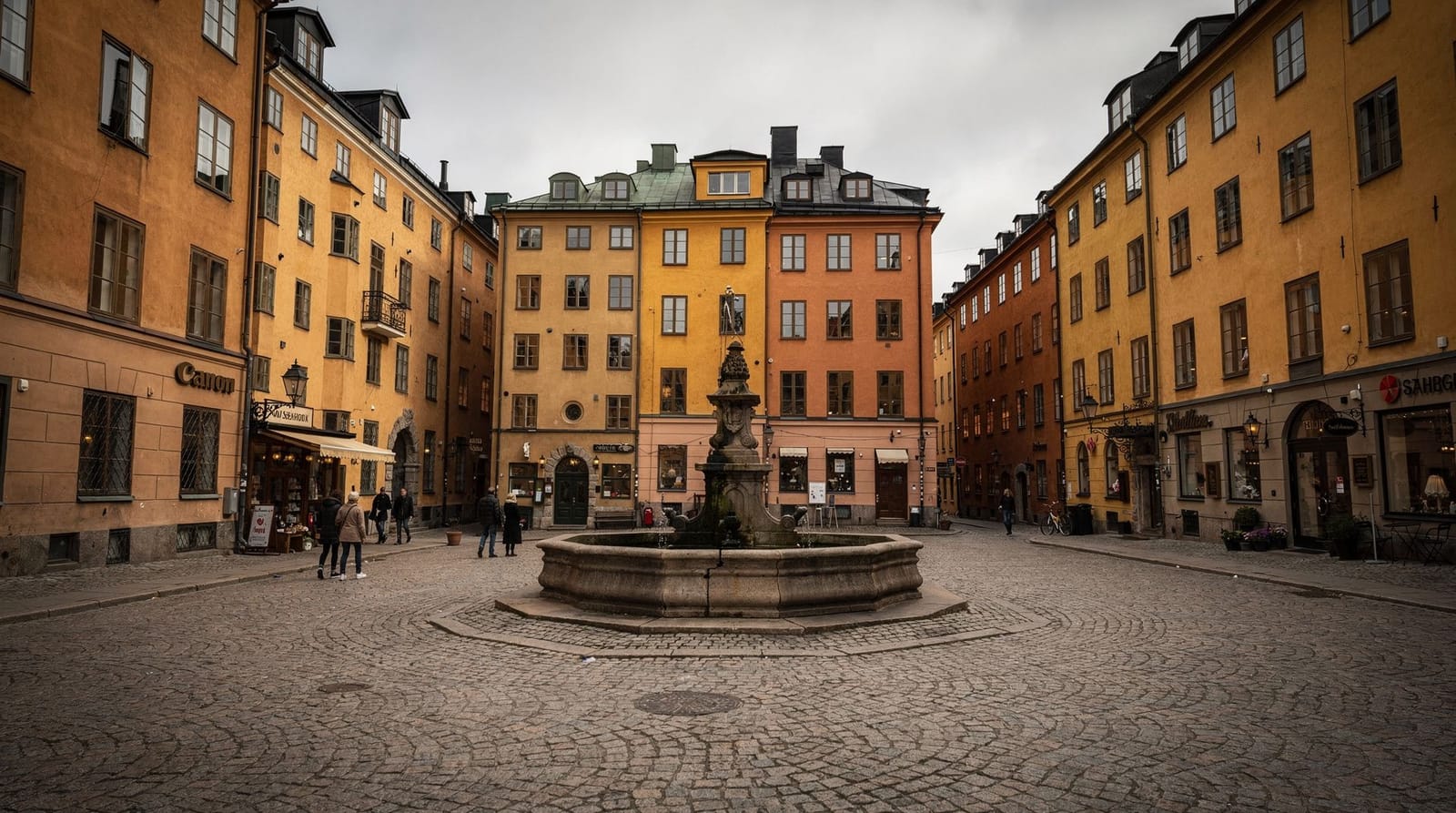
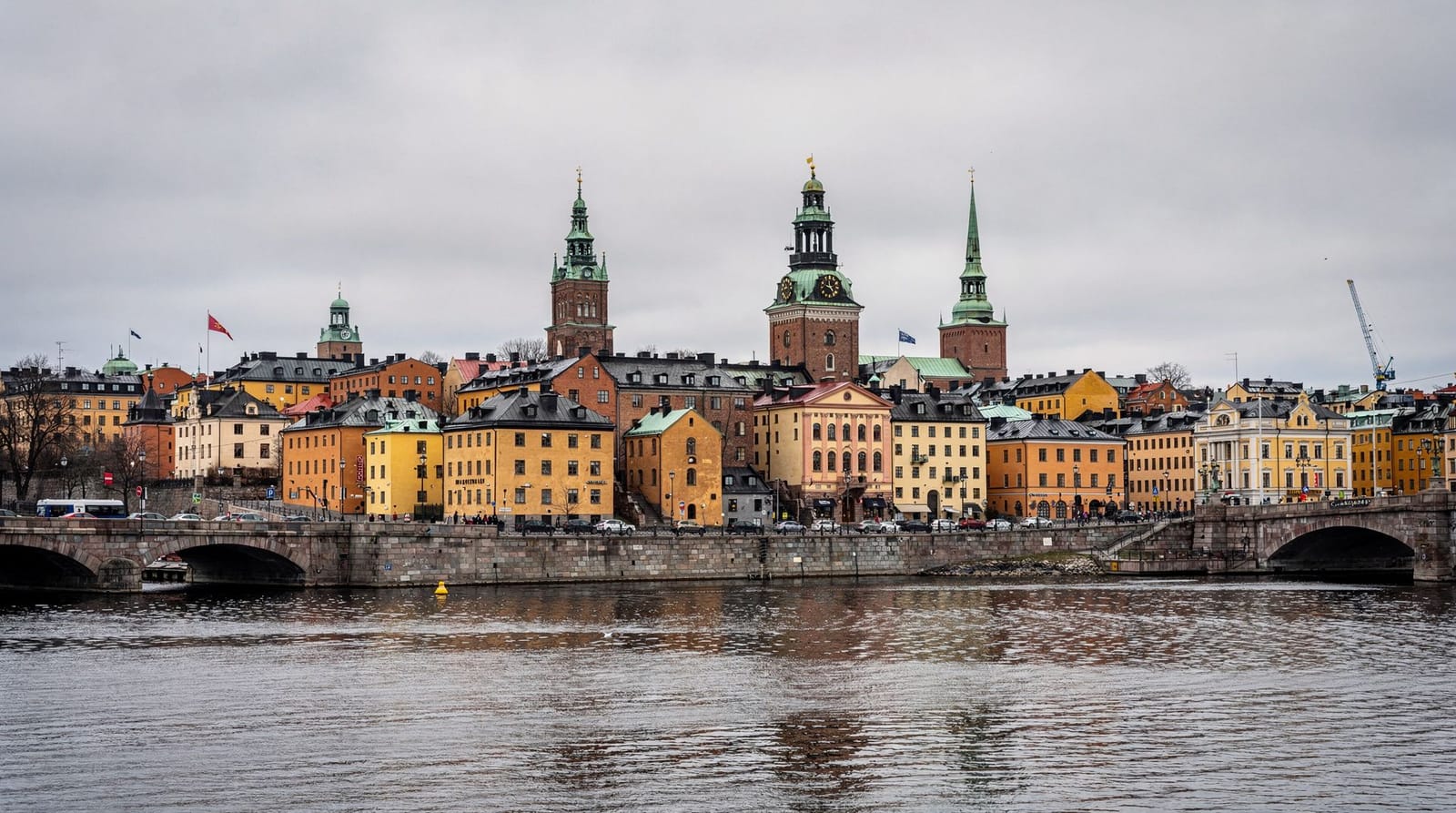
If you stand in Stortorget — the small, beautiful, cobblestoned Great Square at the heart of Gamla Stan — you are standing in one of Scandinavia’s most significant sites of historical violence. The ochre-and-red facades are largely unchanged from the 16th century. The medieval well is still there. The pavement stones are descendants of the stones that were laid when the square was young.
On 8 and 9 November 1520, approximately 80–100 people were executed here. Their names are recorded on plaques on the north side of the square. Their deaths changed the political map of Scandinavia.
| Where | Stortorget, Gamla Stan |
| When | 8–9 November 1520 |
| Cost to visit the site | Free (open square, memorial plaques) |
| Time needed | 15–20 minutes at the square; longer with a guided tour |
| Best way to engage | Ghost/dark history walking tour of Gamla Stan |
How it happened
The Kalmar Union and Swedish resistance
The Kalmar Union (1397–1523) nominally united Denmark, Norway, and Sweden under a single crown, but in practice Sweden was a semi-autonomous kingdom with its own nobility, church hierarchy, and sense of national identity that resisted Danish-dominated governance.
In the early 16th century, tension between the Swedish regent Sten Sture the Younger and the Danish king Christian II reached breaking point. Christian II invaded Sweden in 1520, and after the Battle of Bogesund (January 1520), Swedish resistance collapsed. Sten Sture the Younger died of wounds in January 1520. Stockholm held out until September 1520, when it surrendered.
The coronation and the trap
Christian II was crowned king of Sweden in Stockholm in November 1520. A three-day celebration followed, to which Swedish nobles, clergy, and leading citizens were invited. The feast was framed as a reconciliation — an opportunity for Christian to present himself as the legitimate king of a unified Scandinavian realm.
On the second day of the feast, Christian had the Swedish guests arrested. The charge: heresy. Archbishop Gustavo Trolle of Uppsala had personal grievances against the Swedish church hierarchy — specifically against the then-dead Sten Sture, who had ordered the demolition of Trolle’s castle — and he brought the charges that provided the legal pretext for the executions.
The executions
On 8 November 1520, the trials were conducted summarily. The verdict was heresy; the sentence was death. On 8 and 9 November, the executions took place in Stortorget.
Those executed included:
- Two bishops: Vincent of Skara and Mattias of Strängnäs
- Several prominent nobles, including Erik Vasa (father of the future King Gustav I)
- Burghers (leading citizens of Stockholm)
- Servants and associates of the accused
The method varied: nobles were beheaded; others were hanged. The bodies were displayed publicly for several days. At one point, the remains of Sten Sture the Younger (who had died months earlier) were exhumed and symbolically executed — Christian’s posthumous revenge on his primary opponent.
Contemporary estimates of the death toll range from 82 to 100 in Stortorget, with additional executions elsewhere in Sweden in the weeks that followed.
The consequences: Swedish independence
Erik Vasa’s son, Gustav Eriksson Vasa, was in Germany at the time of the Bloodbath. He returned to Sweden and in January 1521 arrived in the Dalarna region — the Swedish heartland, whose miners and farmers had strong reasons to oppose Danish taxation and rule. He recruited an army.
By June 1523, after two years of increasingly successful military campaigns, Stockholm fell to Swedish forces. Christian II was deposed as king of Sweden. On 6 June 1523, Gustav Vasa was elected King of Sweden by the Riksdag of the Estates.
6 June is now Sweden’s National Day — the anniversary of the founding of the independent Swedish kingdom that emerged directly from the Bloodbath’s consequences.
Gustav I ruled until 1560 and founded the Vasa dynasty, whose most famous legacy is the warship Vasa (1628) — preserved in the Vasa Museum on Djurgården. The monarchy he established governed Sweden until the present Bernadotte dynasty replaced it in 1818.
Where to see the evidence today
Stortorget
The square is essentially the same size and location as it was in 1520. The medieval well in the northeast corner of the square is contemporary with the Bloodbath. The plaques on the north side of the square (on the yellow building facades) name the victims.
Stand at the well and look south: you are looking across the space where the executions occurred. The Börshuset (now the Nobel Prize Museum) on the east side of the square is on the site of the original Stock Exchange building where the arrested guests were held.
Stortorget today functions as an ordinary, cheerful medieval square — cafés with outdoor seating, street musicians in summer, the annual Christmas market in December. This everyday normality alongside the plaques is, for many visitors, part of what makes the history land: nothing about the square’s current life signals what happened here, which is precisely why reading the plaques and knowing the story before arriving changes how the space is experienced.
Nobel Prize Museum
The Börshuset was built in 1778 on the footprint of an earlier building that dates to the Bloodbath period. The Nobel Prize Museum now occupies it. The museum’s basement has some material on the history of the building and the square. See the Nobel Prize Museum guide.
Stockholm’s Medieval Museum
The Medeltidsmuseet below Norrbron bridge, on the way to Gamla Stan from Norrmalm, used to have a dedicated section on medieval and early modern Stockholm that covered the Bloodbath in historical context, along with artefacts from a plague cemetery found during construction works. The museum has been closed since 5 November 2023 and its collections cannot currently be visited; a new museum is planned at Börshuset on Stortorget, with no opening date announced. See the Medieval Museum guide for the current situation.
The ghost tour
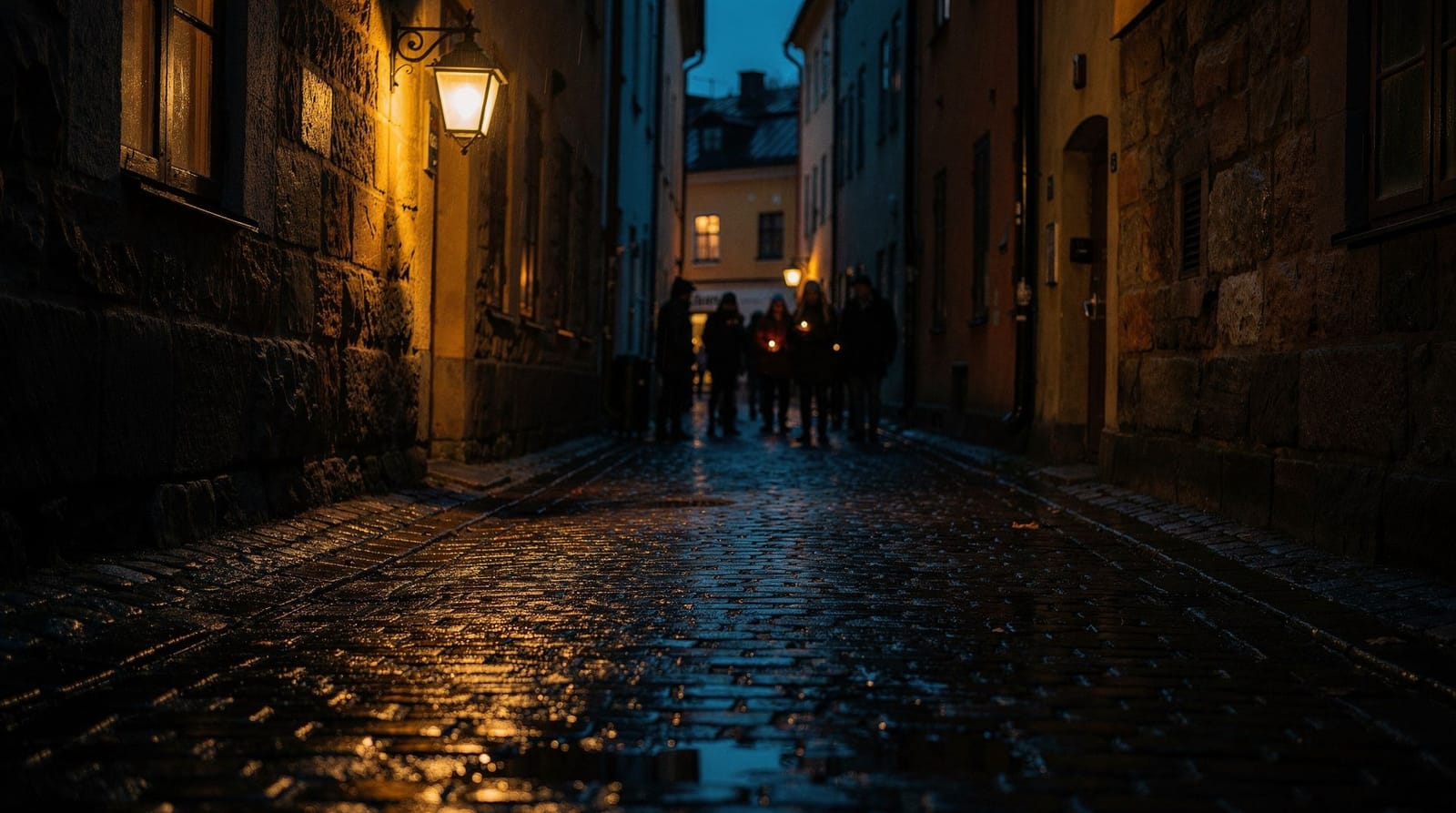
The most atmospheric way to engage with the Bloodbath history is via a ghost tour of Gamla Stan. The tours are historically grounded and deliver the Bloodbath story with appropriate drama at the exact location.
Book: Bloody Stockholm ghost and dark history tour Book: Gamla Stan ghost walk with historical contextCombine with a broader Gamla Stan visit
The Bloodbath is one thread in Gamla Stan’s dense history. Pairing it with a walk that covers the wider medieval old town gives better context — see the Gamla Stan walking tour guide and the Gamla Stan medieval secrets guide for the fuller picture, and the Royal Palace guide for the site of Swedish royal power that the Vasa dynasty went on to occupy.
Christian II: the historical record
Christian II is known in Swedish historical tradition as “Christian the Tyrant” (Kristian Tyrann). In Danish tradition, he is a more complex figure — a reformist king who tried to modernise Danish society and reduce noble power, but whose methods were brutal.
After the Swedish uprising, Christian II was also deposed in Denmark (1523), imprisoned for life (1532), and died in captivity in 1559. He never returned to power. The Bloodbath is the event for which he is primarily remembered in Scandinavian history.
Why the Kalmar Union collapsed
Understanding the Bloodbath requires some context on the political structure it destroyed. The Kalmar Union, formed in 1397, was never a straightforward merger of equals — it was dominated by Denmark, and Swedish nobles periodically rebelled against Danish oversight throughout the 15th century, producing a cycle of Danish reconquest followed by renewed Swedish resistance. Sten Sture the Elder, Sten Sture the Younger, and other Swedish regents had spent decades governing Sweden with varying degrees of practical independence from Copenhagen, even while nominally part of the union.
Christian II’s approach — a decisive, brutal reassertion of Danish control through mass execution of the Swedish elite — was intended to permanently end this cycle of rebellion by removing the people capable of leading it. It had the opposite effect. Rather than intimidating Sweden into compliance, the scale and treachery of the executions (guests killed after being invited to a celebratory feast) turned moderate Swedish opinion decisively against continued union with Denmark, providing Gustav Vasa with a cause that could unite factions that had previously been divided.
The Bloodbath in Swedish culture
The 1520 Bloodbath is a foundational event in Swedish national consciousness — the trauma that created the modern Swedish state. References to it appear throughout Swedish literature, art, and popular culture. August Strindberg wrote about it. It features in school curricula. The annual commemoration on 6 June (National Day) has the Bloodbath as a historical backdrop.
For visitors, the Bloodbath provides context for why Gamla Stan’s Stortorget is more than a pretty medieval square — it is a charged historical site where something that genuinely mattered happened. For a fuller sense of the neighbourhood around the square, see the Gamla Stan neighborhood deep dive.
Reading the square on your own
You do not need a guide to get something out of Stortorget, but a little preparation helps. Read the story of the coronation feast before you arrive, then walk the square slowly rather than crossing it on the way to somewhere else. Start at the well, find the plaques on the north side, and then turn around and look at the facades with the sequence of events in mind: the invitation, the arrests, the verdict, the executions. The scale is intimate, which is exactly what makes it unsettling.
Visit at a quiet hour if you can. Early in the day, before the cafés fill and the groups arrive, the square gives you room to stand still and take in the plaques without being moved along. In busy periods the same corner can feel like a thoroughfare, and the history gets lost in the crowd.
If you are building a wider day around the old town, the Gamla Stan destination page shows how the square fits among the lanes and landmarks nearby. The ghost walking tour guide for Gamla Stan and the Stockholm ghost tour guide compare the evening options, and the Gamla Stan restaurants guide helps you choose somewhere to sit afterwards and talk it over.
Connecting the Bloodbath to the rest of your trip
The Bloodbath is the opening act of a story that runs through several other Stockholm sites. Its consequence, the rise of the Vasa dynasty, leads directly to the royal power that built the palaces you can visit today. The Royal Palace guide for Stockholm and the royal palaces comparison show where that dynasty’s world took shape.
The same family name sits on the great warship preserved on Djurgården, so the Vasa Museum guide makes a natural second chapter. The Swedish History Museum guide widens the lens further for anyone who wants the longer arc of the country’s past, and the Stockholm in 3 days overview shows how to fit these stops into a first visit without rushing.
For a practical view on how to see the old town with a guide, the blog post on choosing an old town walking tour company lays out what to weigh before you book. If you prefer to explore alone, the self-guided walking guide gives you a way to build your own route past Stortorget.
A note on tone
This is a site of real loss, and it deserves a measured approach. Keep voices low near the plaques, avoid posing for photos in front of them, and remember that locals use the square every day. Treating it as both a living neighbourhood and a place of memory is the simplest way to visit well.
Frequently asked questions about the Stockholm Bloodbath
How many people were killed in the Stockholm Bloodbath?
Approximately 80–100 executed in Stortorget on 8–9 November 1520, including two bishops, several nobles, and leading citizens. Some sources give higher estimates.
Who ordered the Stockholm Bloodbath?
King Christian II of Denmark, based on heresy charges brought by Archbishop Gustavo Trolle of Uppsala.
What was the political consequence of the Stockholm Bloodbath?
It triggered Swedish independence. Gustav Vasa raised an army, defeated Christian II’s forces, and became King of Sweden in June 1523 — the founding of the modern Swedish kingdom.
Can you see the memorial today?
Yes — memorial plaques on the north side of Stortorget name the victims. The square’s footprint is unchanged from 1520.
Was the Stockholm Bloodbath part of a war?
It took place in the context of the contested Kalmar Union. Christian II had militarily conquered Sweden before the Bloodbath — it was a war crime within a political conflict.
Top experiences
Bookable activities with verified prices and instant confirmation on GetYourGuide.