Drottningholm: Stockholm's royal palace and UNESCO baroque garden
Drottningholm in half a day: UNESCO World Heritage royal palace, the 18th-century Court Theatre, and the Chinese Pavilion — by ferry or bus from Stockholm.
Stockholm: Drottningholm Palace skip-the-line tour by ferry
Quick facts
- SL boat from Stadshusbron
- ~50 min (Strömma, summer only)
- Bus from city
- Metro (Green Line) to Brommaplan + bus 176/177, ~35 min
- Days needed
- 0.5 day
- UNESCO
- World Heritage Site since 1991
Sweden’s working royal palace
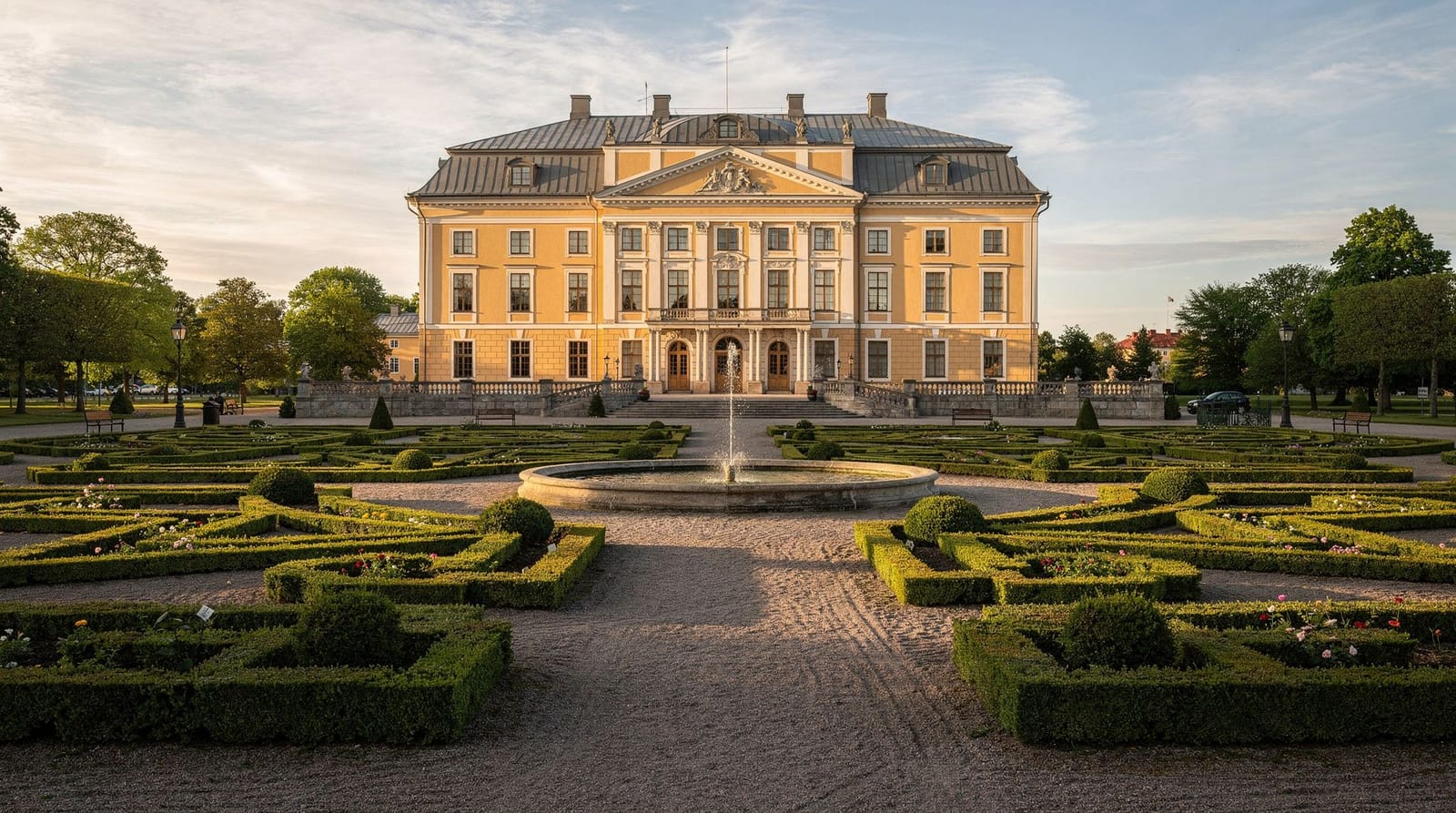
Drottningholm Palace sits on an island in Lake Mälaren, 10 kilometres west of central Stockholm, and has been the primary residence of the Swedish royal family since 1981. This distinguishes it from most European palace day trips: the palace wings occupied by King Carl XVI Gustaf and Queen Silvia are closed to visitors, but the state apartments — the baroque reception rooms, the gallery of Flemish and Dutch paintings, and the queen’s apartments — are open, alongside the extraordinary 18th-century court theatre and the formal baroque garden.
The palace received UNESCO World Heritage status in 1991. The designation covers the palace building, the court theatre, the Chinese Pavilion, and the garden ensemble — one of the best-preserved 18th-century palace landscapes in Europe.
A half-day is sufficient to see the main palace interior, the court theatre, and walk through the baroque garden to the Chinese Pavilion and back. A full day allows a more leisurely exploration, lunch at the palace café, and time in the English landscape garden that extends beyond the formal baroque section.
Getting to Drottningholm
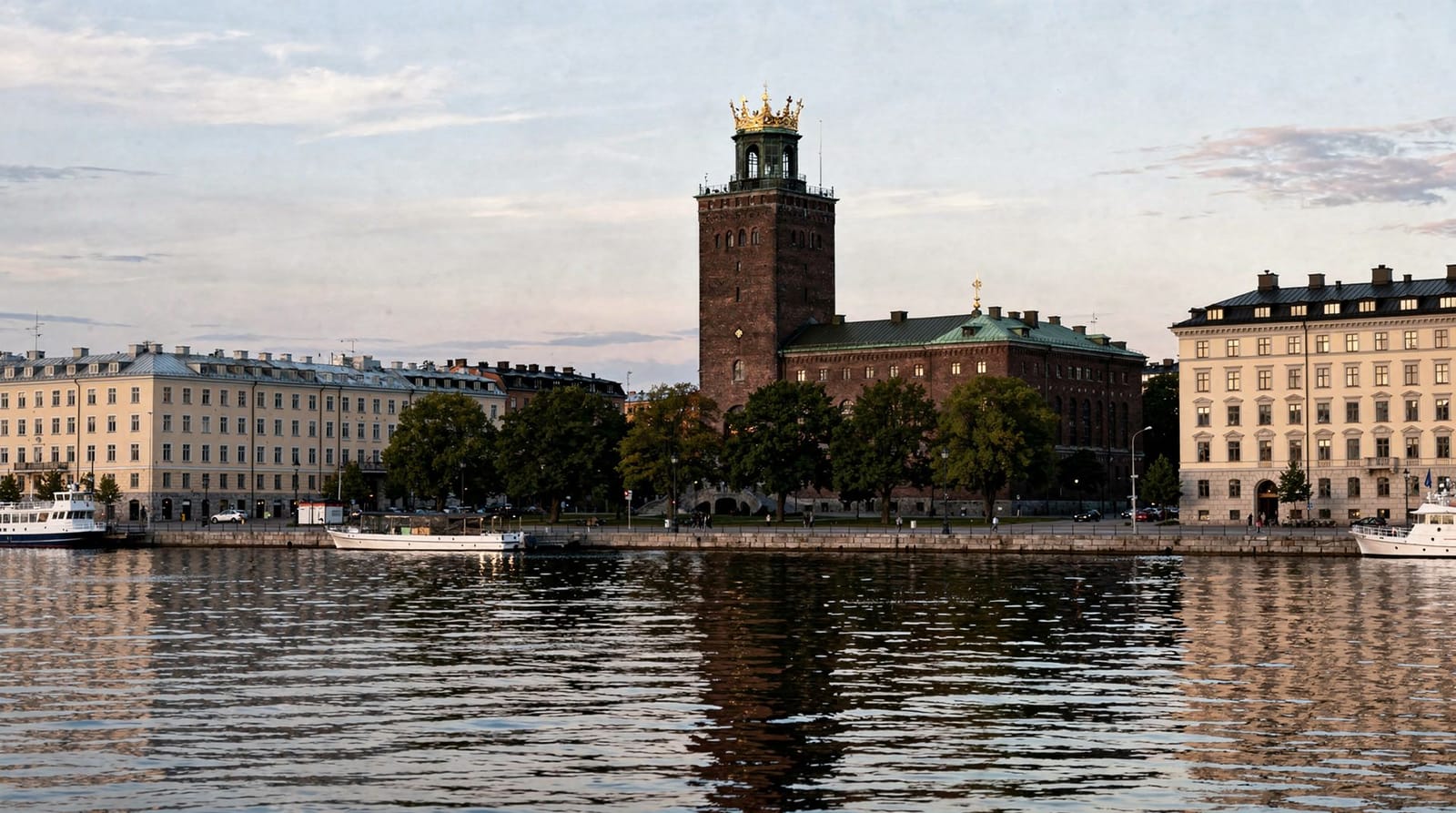
By boat (summer): In summer (approximately May–September), Strömma operates a scenic boat service from Stadshusbron — the waterfront immediately outside Stockholm City Hall (Stadshuset), the iconic red-brick tower building on Kungsholmen. The journey takes around 50 minutes each way and passes through the Lake Mälaren channels, giving views of the western approach to Stockholm’s island geography. The boat is the most atmospheric way to arrive, and the approach to the palace from the water is genuinely striking. The SL pass does not cover this Strömma service — tickets are purchased separately.
By metro and bus (year-round): Take the green metro line to Brommaplan, then bus 176 or 177 to Drottningholm. Total journey time from T-Centralen is approximately 35 minutes. This is the reliable year-round alternative, valid with the SL pass (bus portion included).
By kayak: An unusual and rewarding option in summer is the kayak tour to Drottningholm Royal Palace, which paddles from the city through the Mälaren waterways to arrive at the palace from the water — the original royal approach before roads made boat travel secondary.
The palace interior
The state apartments of Drottningholm present 17th- and 18th-century Swedish court life at its most elaborate. The building was designed by Nicodemus Tessin the Elder, begun in 1662 for Dowager Queen Hedwig Eleonora, and enlarged and refined over subsequent decades by Nicodemus Tessin the Younger — the same architect responsible for the Royal Palace in Stockholm.
The sequence of rooms moves through the Baroque reception hall, the State Bedroom (not the actual bedroom of any monarch but a ceremonial space), the gallery of paintings from the collection of Swedish monarchs, and the Queen’s apartments. The decorative programme — gilded stucco, painted ceilings, Dutch and Flemish Old Masters, French furniture — is of the highest European quality and has been well preserved.
The palace is the permanent residence of the Swedish royal family, which means that maintenance and conservation standards are actively maintained rather than being a retrospective heritage effort. The rooms are not overly interpreted — the visitor experience is relatively unmediated, more like entering a working palace environment than a museum.
The Court Theatre (Drottningholms Slottsteater)
The Court Theatre is arguably the most remarkable element of the Drottningholm ensemble. Built in 1766 under Queen Louisa Ulrica and extended in the 1790s under Gustav III — who used it for court performances and himself performed in several productions — the theatre fell out of use after the king’s assassination in 1792. It was essentially sealed, and when it was rediscovered and restored in the early 20th century, it was found to contain its entire original 18th-century stage machinery intact: forty sets of painted backdrops, the thunder machine, the wind machine, the flying machinery, the trap doors.
This makes Drottningholms Slottsteater the best-preserved 18th-century court theatre in the world. It is not a reconstruction or a replica — it is the actual machinery, still operational. During the summer festival season (approximately May–September), the theatre presents opera and ballet performances using the original sets and machinery, with productions lit by the same kinds of candles and oil lamps used in the 18th century (with modern fire suppression to compensate for the obvious risk).
Tickets for performances sell out months in advance. If you intend to attend a performance, book before your Stockholm dates. Daytime visits to the theatre space are offered by guided tour even when no performance is scheduled — the backstage machinery tour is one of the most unusual museum experiences in Sweden.
The baroque garden and the Chinese Pavilion
The formal baroque garden extends from the palace terrace toward the water in a symmetrical arrangement of parterres, water features, and avenues. The design follows the French formal garden model fashionable at European courts in the late 17th and early 18th centuries, with the Mälaren lake visible beyond the lower terraces.
Beyond the formal garden, the Chinese Pavilion (Kina Slott) stands approximately 800 metres from the main palace. The pavilion was a gift from King Adolf Fredrik to Queen Louisa Ulrica in 1753 — a surprise birthday present assembled overnight and revealed in the morning. The original wooden structure was replaced by the current permanent stone building in the 1760s. Inside, the pavilion’s rooms are decorated in the chinoiserie style fashionable at 18th-century European courts — lacquerwork furniture, painted silk wallcoverings, blue-and-white porcelain — an authentic surviving example of a decorative fashion that has almost entirely disappeared elsewhere.
The English landscape garden extends further from the palace beyond the Chinese Pavilion — a more naturalistic garden design added in the late 18th century when the French formal style was being replaced across Europe by the English informal landscape aesthetic. This section is less visited and more peaceful, good for a walk after the more crowded palace areas.
Skip-the-line and guided tour options
In peak summer, queues form for the main palace entrance. The Drottningholm Palace skip-the-line tour by ferry combines the scenic boat journey from Stockholm with skip-the-queue palace entry and a guided visit to the main state apartments — the most efficient way to combine transport and palace access for visitors who want context with their visit and don’t want to queue.
For visitors interested in the broader royal palace landscape of the Stockholm region, the 1-day royal palace and castle tour combines Drottningholm with Wenngarn and Skokloster in a single guided day — ambitious but comprehensive for anyone who specifically wants the royal architecture focus.
The palace in Swedish royal history
Drottningholm’s significance extends beyond its architectural qualities. It has been the site of some of the most dramatic episodes in Swedish royal history, and walking through the state rooms with this context adds a layer that the architecture alone does not give.
Queen Hedwig Eleonora (1636–1715), for whom the palace was originally built, was the most powerful woman in Swedish history during her regency period (1660–1672 and 1697–1702, during her son Charles XI’s minority and after his death). The palace she commissioned and the palace that her grandson Charles XII left when he marched east to fight Peter the Great was the same building — a physical continuity across one of the most turbulent periods in Swedish and European history.
Gustav III (1746–1792), who expanded the palace and made it the centre of Swedish cultural life, is the most significant figure in Drottningholm’s cultural history. He founded the Swedish Academy (which awards the Nobel Prize in Literature), established the Royal Opera in Stockholm, and turned the Court Theatre into a production facility of international standing. His assassination at a masquerade ball at the Royal Opera in 1792 — the event that ended the productive period of the theatre — has an almost operatic quality. Verdi’s Un Ballo in Maschera is based on the event.
The royal family’s return to Drottningholm as a residence in 1981 under Carl XVI Gustaf and Queen Silvia marked the first time a Swedish monarch had lived at the palace since the early 19th century. The decision was a deliberate choice for a more residential and less formal lifestyle than the Royal Palace in Gamla Stan’s ceremonial environment permitted. The private wings — the ones visitors cannot enter — have been adapted for family life with a scale and intimacy quite different from the state rooms.
Comparing Drottningholm with the Royal Palace in Gamla Stan
Visitors with time for only one royal site in Stockholm face a genuine choice between Drottningholm and the Royal Palace (Kungliga Slottet) in Gamla Stan. They serve different purposes and offer different experiences.
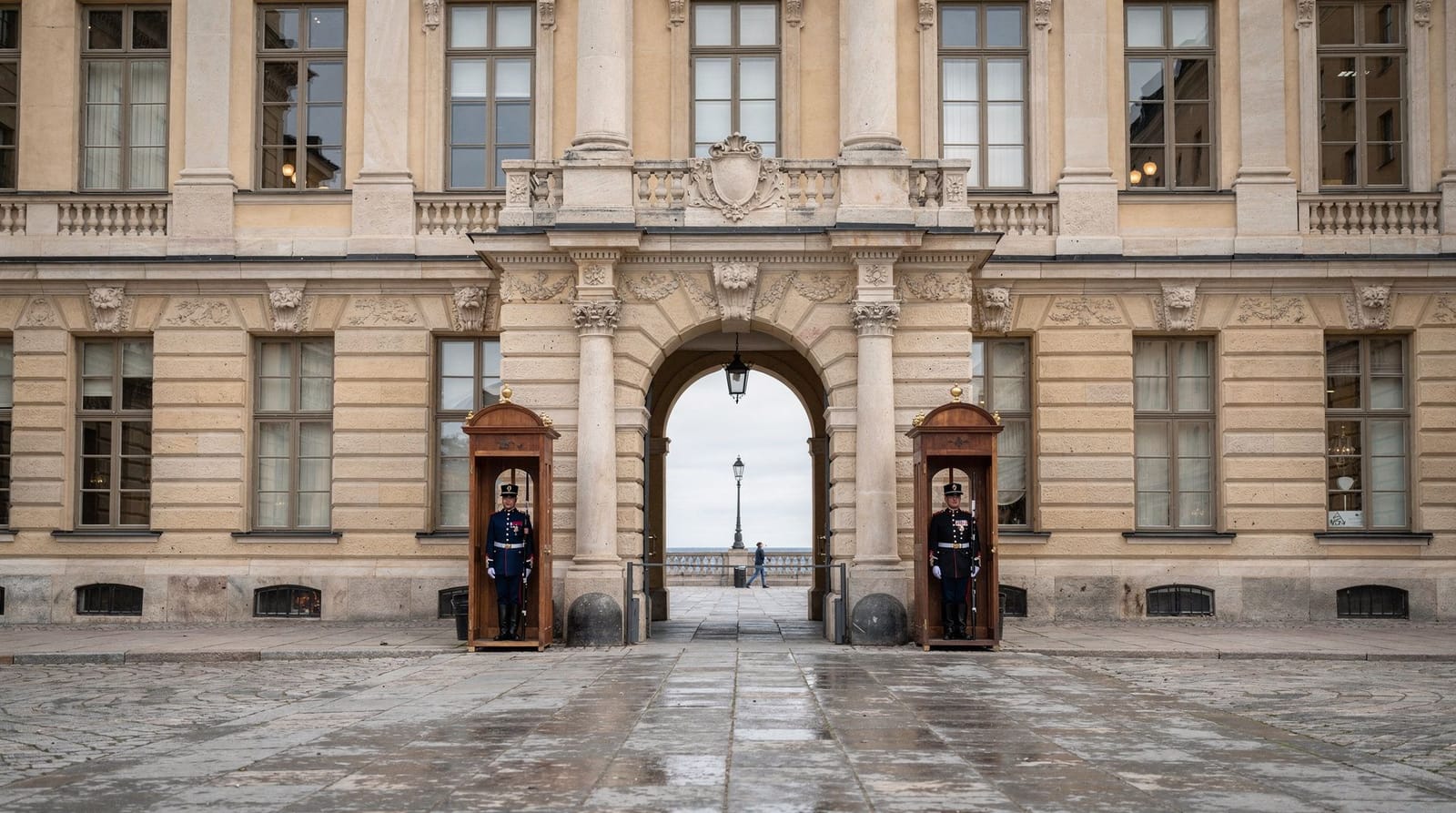
The Royal Palace in Gamla Stan is the official state palace — the setting for formal state ceremonies, diplomatic receptions, and the Changing of the Guard that draws daily crowds. Its interiors reflect this function: ceremonial, formal, designed to project power rather than provide comfort. The treasure rooms (regalia, crowns, swords) are significant objects of Swedish state history. It is easily combined with a Gamla Stan visit.
Drottningholm is larger, set in an extraordinary landscape, and has the unique Court Theatre and Chinese Pavilion as additions unavailable at the city palace. The boat journey from the city is part of the experience. The gardens alone justify the visit in good weather. The trade-off is the 50-minute journey and the Strömma boat cost.
For visitors who have three or more days in Stockholm, both are worthwhile. For a shorter visit, Drottningholm gives more per visit in good weather in summer; the Royal Palace wins on accessibility in any weather year-round.
What to eat and where to take a break
The palace grounds have a café in the orangery building near the formal garden, open in summer. The menu covers Swedish lunches and lighter options. The café occupies the 18th-century orangery, which gives the interior a specific atmosphere — vaulted white plaster, large windows, the smell of old stone.
There is no substantial restaurant at Drottningholm itself. If you want a proper lunch, eat before leaving Stockholm or bring a picnic (the gardens are an excellent picnic location — alemansrätten applies to the public park areas though not the formal garden beds).
Combining Drottningholm with City Hall
The most natural Stockholm combination is Drottningholm in the afternoon preceded by a morning visit to Stockholm City Hall (Stadshuset) — both are on Kungsholmen island and the Stadshusbron boat departure for Drottningholm is directly outside City Hall. The Kungsholmen guide covers the City Hall context, and the day-trips guide places Drottningholm within the full range of Stockholm day-trip options.
For visitors comparing the royal palace options, the royal palaces comparison guide assesses Drottningholm, the Royal Palace in Gamla Stan, and Gripsholm Castle at Mariefred — different periods, different experiences, different reasons to visit.
Drottningholm and Sweden’s other royal sites, compared
| Site | Style | Standout feature | Distance from centre |
|---|---|---|---|
| Drottningholm | Baroque, working residence | Court Theatre, Chinese Pavilion | 10 km west |
| Royal Palace, Gamla Stan | Baroque, ceremonial | Changing of the Guard, Treasury | Central |
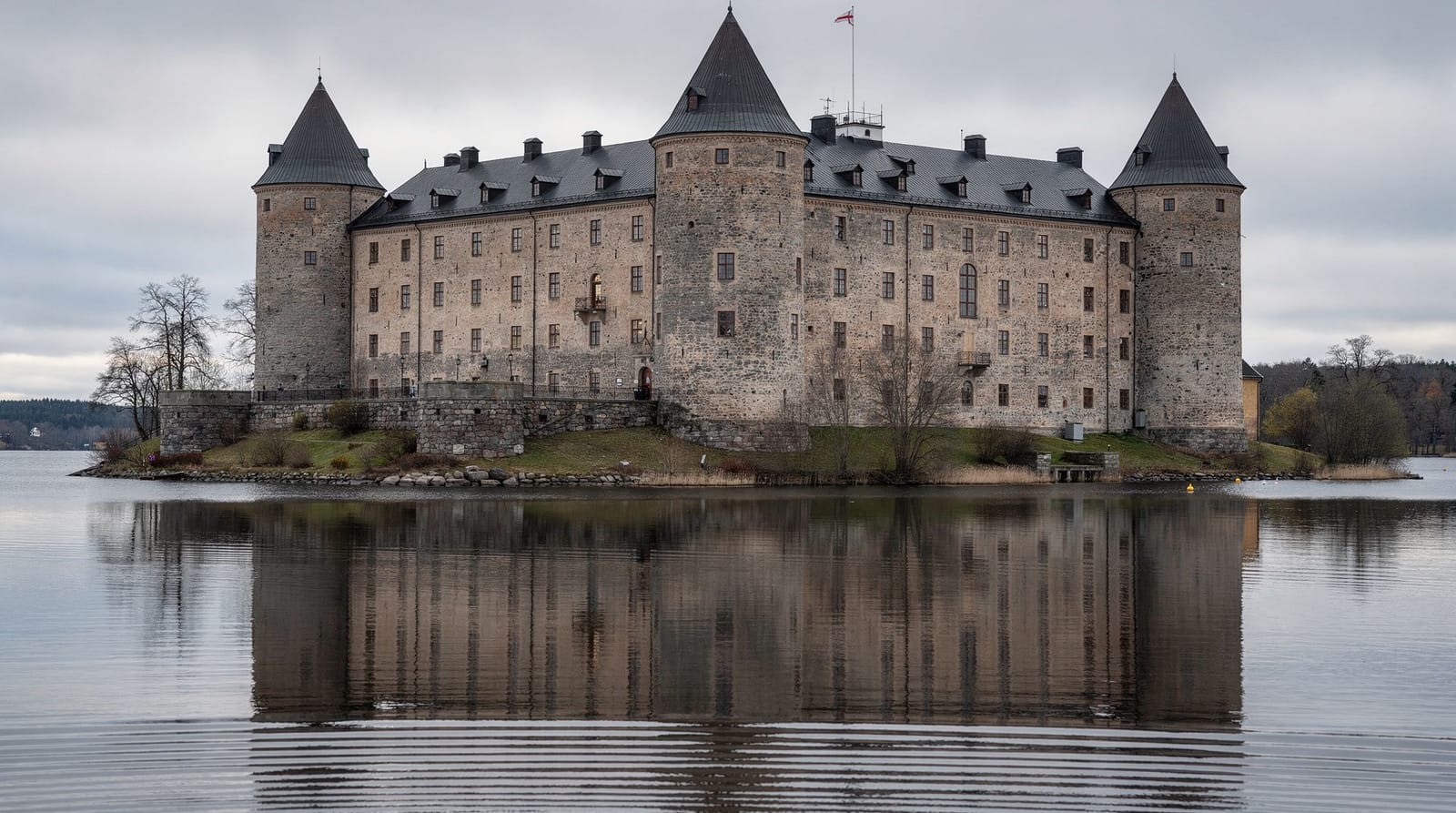
| Gripsholm Castle, Mariefred | Renaissance | National Portrait Gallery | 65 km west |
Visitors with three or more days can reasonably fit two of the three; Drottningholm and the Royal Palace pair naturally because both can be visited within a single day using the Stadshusbron boat and a short walk in Gamla Stan. See the royal palaces comparison guide for the full breakdown.
Practical tips for the Drottningholm visit
Buy palace tickets online if visiting in July, when the state apartments can have a short queue at midday — mornings are quieter. If you want to hear the Court Theatre’s original machinery explained, join the backstage tour rather than only viewing the auditorium; the guide’s explanation of the wind and thunder machines is the highlight for most visitors. Bring cash or a card for the orangery café, which does not always accept all payment types, and consider a picnic if visiting outside the café’s limited hours. The formal garden has almost no shade in the middle of the day — a hat is worth packing in summer. If arriving by bus rather than boat, allow extra walking time from the Drottningholm stop to the palace entrance, which is a few minutes further than the boat pier.
Planning Drottningholm around the rest of your trip
Drottningholm works best when it is placed deliberately rather than squeezed in. The Drottningholm palace guide goes deeper into the rooms themselves, while the half-day Drottningholm guide lays out how to order the palace, the theatre and the gardens so you are not backtracking. If the water route is what attracts you, the Drottningholm by boat guide compares the options for arriving across Lake Mälaren.
Boat-minded visitors should also read Strömma versus Waxholmsbolaget, which explains why the Drottningholm service is a commercial Strömma departure and not part of the public ferry network used for the archipelago.
Drottningholm slots naturally into a longer itinerary. The three-day first-timer itinerary leaves room for a half-day excursion, and the five-day complete itinerary has space to pair the palace with a slower morning at Stadshuset. Travellers who like the idea of a royal day out but want somewhere further afield can read about Gripsholm Castle as a separate outing.
For a visitor’s own account of choosing between excursions, the blog post on three day trips better than Drottningholm is a useful counterpoint, and it helps you decide whether the palace is the right use of your half-day at all.
Frequently asked questions about Drottningholm
Is Drottningholm worth visiting in winter?
Yes, though with significant limitations. The boat from Stadshusbron runs in summer only; year-round visitors use metro and bus. The Court Theatre tours may run reduced schedules. The baroque garden is less compelling in winter. The palace interior is open year-round (check the closing days). Worth it for royal palace enthusiasts regardless of season; less essential for visitors with limited time who should prioritise if in Stockholm in summer.
Do I need to book Drottningholm in advance?
For the palace visit itself, advance booking is useful but not usually essential outside July. For Court Theatre performances, booking months in advance is essential — performances sell out. For the skip-the-line ferry tour, booking online in advance is recommended in peak summer.
Can I attend an opera at Drottningholm Court Theatre?
Yes — the summer festival runs from approximately May through September with opera and ballet performances using the 18th-century original sets and machinery. Tickets are sold via the Drottningholm Slottsteater website. Dress code is smart-casual to semi-formal. These are among the most distinctive cultural events in Sweden and the acoustics in the intimate auditorium are exceptional.
How is Drottningholm different from the Royal Palace in Gamla Stan?
The Royal Palace (Kungliga Slottet) in Gamla Stan is the official state ceremonial palace, used for state events and with very different interiors — more formal, more directly connected to Swedish constitutional history. Drottningholm is the actual home of the royal family and has a more domestic, lived-in quality alongside its baroque grandeur. The Court Theatre and gardens at Drottningholm have no equivalent at the city palace. Both are worth visiting in a week-long Stockholm stay.
Is the Swedish royal family present at Drottningholm when visitors are there?
The Swedish royal family lives in the private wings of the palace, which are not open to visitors. The residential wings are clearly separated from the visitor areas. You will not encounter the royal family during a normal palace visit, though the palace grounds are public and the royal family is occasionally seen in the gardens.
How long should I spend at Drottningholm?
A half-day is the minimum for the main palace, the theatre tour, and the walk to the Chinese Pavilion. Allow 3–4 hours minimum. A full day is enjoyable if you linger in the gardens, have lunch at the café, and explore the English landscape garden — but there is not quite enough to fill a full day for most visitors without the pleasure of slow walking.
Top experiences
Bookable activities with verified prices and instant confirmation on GetYourGuide.