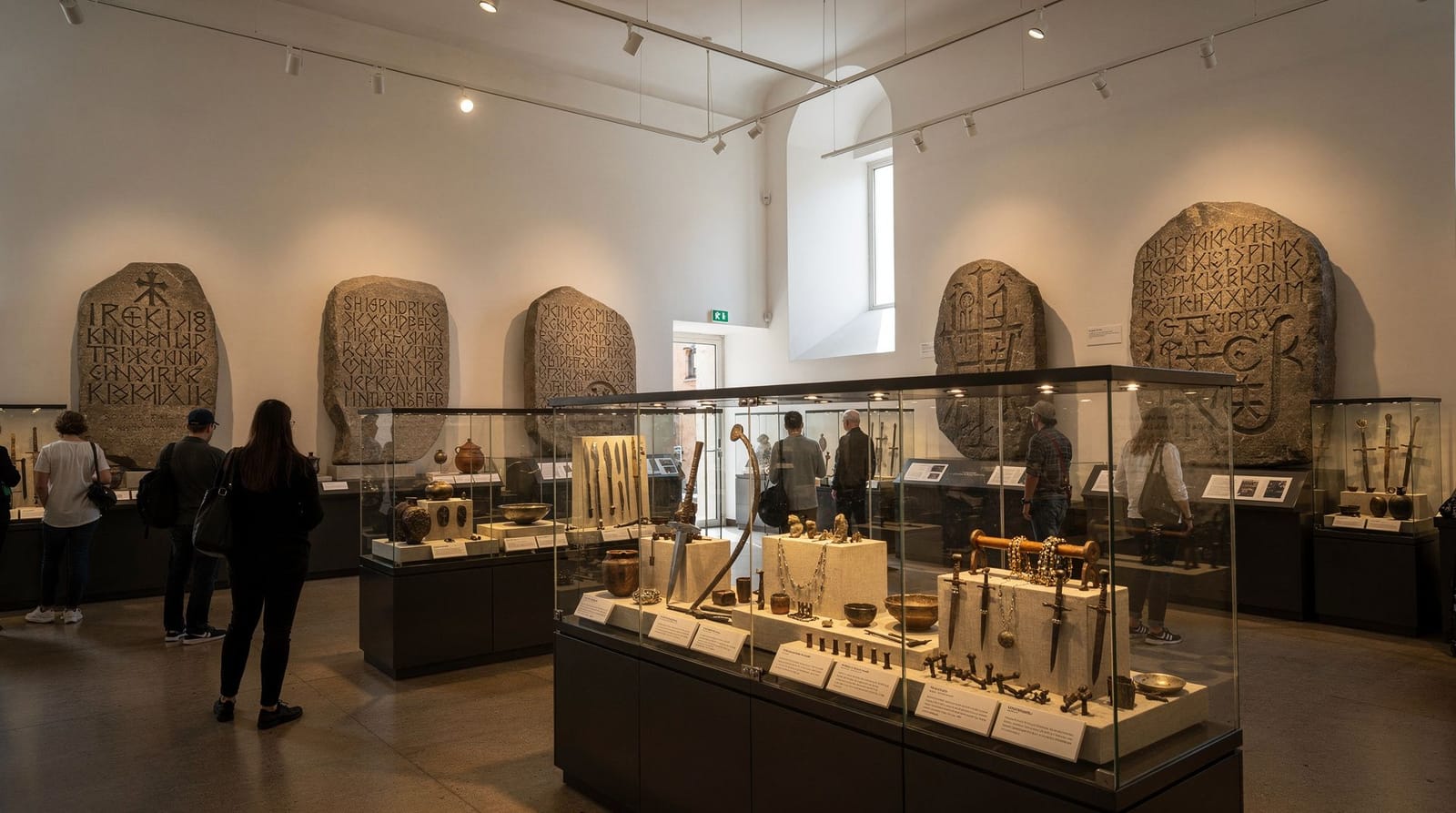
Medieval Museum Stockholm guide: underground 14th-century city beneath Norrbro
Stockholm: Vasa Museum entrance ticket
Is the Medieval Museum in Stockholm open?
No. The Medieval Museum (Medeltidsmuseet) closed its premises under Norrbro, next to the Royal Palace, to the public on 5 November 2023, because the Swedish Parliament's administration needs the space. A new museum is planned in Börshuset on Stortorget, with no opening date announced. In the meantime the Medieval Hub in Storkyrkan's courtyard (Trångsund 3) is open 3 June–29 August 2026, Wednesday–Saturday 10:00–16:00.
Medieval Stockholm, found by accident below a bridge
In 1978, construction workers deepening the foundations of the Norrbro bridge in central Stockholm uncovered a medieval settlement. The finds included the remains of a 14th-century city wall, a harbour quay, a cemetery, wells, and debris layers containing tens of thousands of everyday objects from the lives of medieval Stockholmers. The discovery halted construction and led to a three-year archaeological excavation.
Rather than rebury or relocate the finds, the city of Stockholm built a museum around them. The Medeltidsmuseet — Medieval Museum — opened in 1986 in the underground space created by the bridge works. Visitors walk through the actual archaeological site: the foundations are where they were found, the streets are original cobblestones, and the reconstructed medieval structures follow the evidence from the excavation.
The museum under Norrbro closed to the public on 5 November 2023, because the Swedish Parliament’s administration needs the space. A new Medieval Museum is planned in Börshuset on Stortorget, with no opening date announced yet. In the meantime the Medieval Hub in Storkyrkan’s courtyard (Trångsund 3) is open 3 June–29 August 2026, Wednesday–Saturday 10:00–16:00. The rest of this guide describes the museum as it was, for context. It was one of Stockholm’s most unusual experiences: an underground city beneath a bridge, a few hundred metres from the Royal Palace, showing the medieval city that preceded the grandeur above.
| Where | Medieval Hub, Trångsund 3 (Storkyrkan’s courtyard), Gamla Stan |
| Cost | Not stated by the museum; see medeltidsmuseet.stockholm |
| Getting there | T-bana to Gamla Stan |
Practical essentials
| Detail | Information |
|---|---|
| Address | Medieval Hub, Trångsund 3 (Storkyrkan’s courtyard), Gamla Stan |
| Opening hours | Medieval Hub: 3 June–29 August 2026, Wed–Sat 10:00–16:00. The museum under Norrbro is closed. |
| Permanent collection | Closed to the public since 5 November 2023 |
| T-bana | Gamla Stan (Red/Green lines) |
What to see
The city wall and the gatehouse
The most significant architectural find was a section of the 14th-century city wall that enclosed medieval Stockholm — the wall ran across the northern end of the Gamla Stan island, controlling access from the north. The remains of the wall and what appears to be a gatehouse or tower are the structural centrepiece of the museum. Walking along the base of this wall gives a direct physical connection to the medieval city that no display case or photograph can replicate.
The medieval harbour and waterfront
Stockholm in the 14th century was primarily a commercial town, controlling the trade route between Lake Mälaren and the Baltic Sea. The harbour was its reason for existence. Archaeological layers from the waterfront area showed evidence of docking structures, cargo handling, and the daily debris of a busy trading port — barrel hoops, rope fibre, tool handles, seeds from imported goods.
The reconstruction of the harbour area shows the wooden quay structure and the waterfront working environment. The demonstration of how goods moved through the port gives the dry archaeological facts a narrative context.
The cemetery
A section of the museum preserves the remains of a medieval cemetery that was discovered in the excavations. Skeletal material from the 14th–16th centuries is displayed with the kind of forensic care that modern archaeology applies — each burial is documented, the health indicators in the bones are discussed, and individual stories (where the evidence permits) are presented.
Medieval Stockholm was a rough place in health terms. Analysis of the skeletal remains shows evidence of hard physical labour, nutritional deficiency, healed fractures from accidents, and the bone changes associated with specific occupations. The section is handled with appropriate respect while delivering genuine archaeological information.
Everyday objects
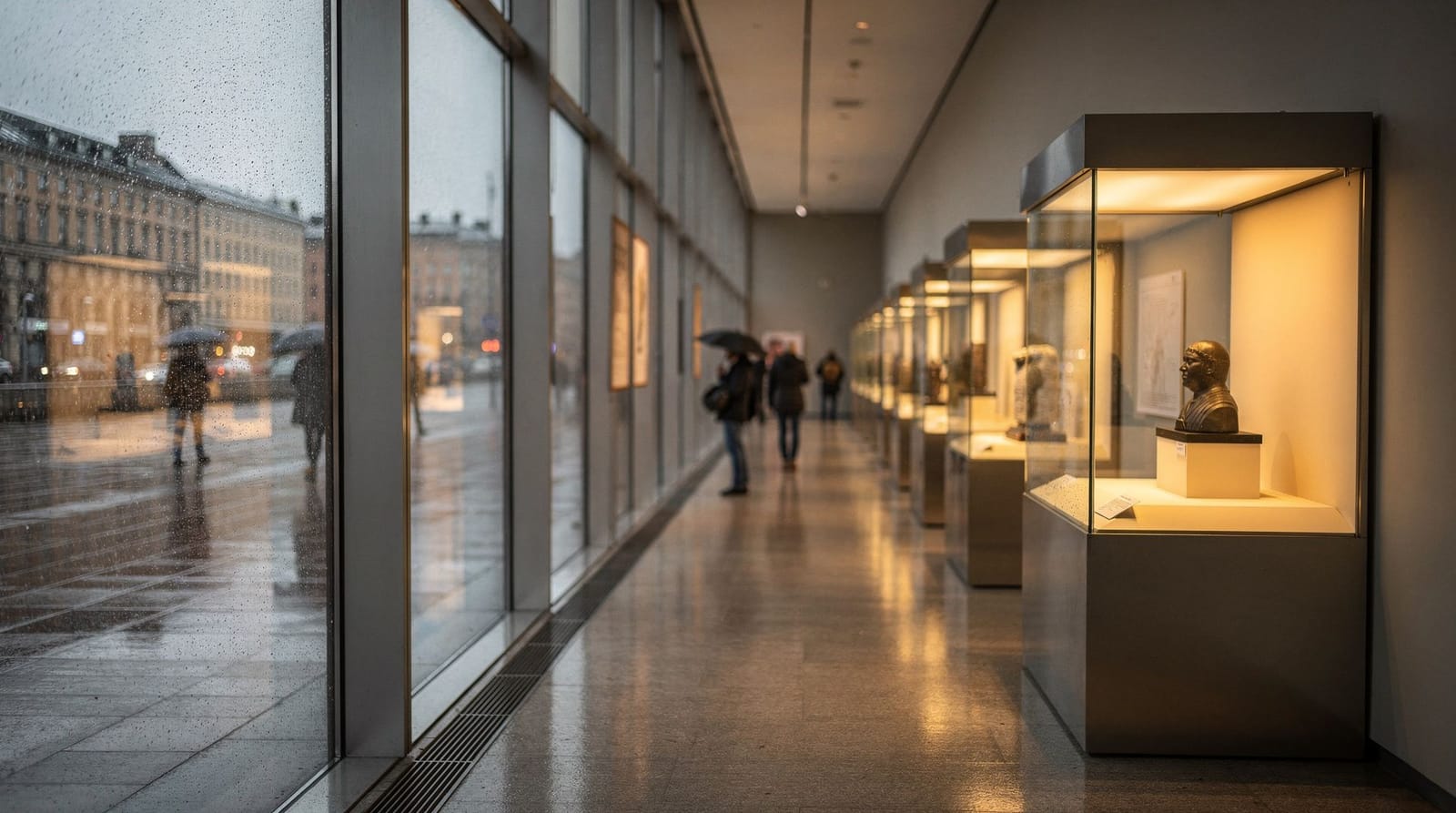
Approximately 200,000 objects were recovered from the 1978 excavation. A selection is displayed in the museum, including leather shoes, wooden tools, ceramic vessels, iron nails, coins, personal ornaments, and food remains. The shoes are particularly striking — dozens of medieval leather shoes in various states of preservation, showing the styles and repairs of everyday footwear from a city of merchants and artisans.
The accumulation of everyday objects does what grand architectural remains cannot: it suggests the texture of daily life rather than only the monumental record.
Reconstructed medieval environments
Alongside the actual archaeological material, the museum includes life-scale reconstructed environments showing specific medieval scenes — a craftsman’s workshop, a trading interaction, a domestic interior. These are based on the evidence from the excavation and from comparable medieval sites in northern Europe. The reconstructions are not the highlight (the real archaeology is far more interesting) but they help visitors who need more context than raw stones and debris layers.
Insider tips
This museum is genuinely different from other Stockholm museums. Most Stockholm museums are conventional institutions in period buildings. The Medieval Museum is an archaeological site inside a bridge. The underground location, the in situ remains, and the free admission combine to make it one of the city’s most distinctive experiences.
Combine with the Royal Palace above. The Palace is a five-minute walk from the museum entrance. The contrast between the 18th-century baroque above and the 14th-century archaeological remains below is exactly the kind of layering that makes Stockholm’s Gamla Stan area unusually rich. See the Royal Palace guide.
It is genuinely atmospheric. The underground space, the low lighting designed to protect organic material, and the genuine archaeological remains create an atmosphere that is unusual for a city-centre museum. Allow your eyes to adjust before moving through quickly.
History of the discovery
The Norrbro bridge connects the main city centre (Norrmalm side) to the Gamla Stan island. The 1978 construction work that discovered the medieval remains was routine bridge maintenance — the unexpected depth and significance of the finds halted the work immediately.
The archaeological excavation that followed, led by Stockholm City Museum, lasted from 1978 to 1981. The decision to preserve the site in place — at considerable cost to the bridge project — was taken by the Stockholm city council after significant public and academic pressure. The museum that resulted was designed by the architectural firm FFNS Arkitekter to integrate the archaeological remains into a coherent visitor experience.
Stockholm was founded in 1252, according to the traditional account, when Birger Jarl built a fortress at the point where Lake Mälaren meets the Baltic. The medieval remains in the museum date primarily from the 14th–16th centuries, showing the city during the period of its earliest significant growth as a trading centre.
Tickets and passes
Permanent museum: closed to the public since 5 November 2023. Medieval Hub: no admission information on the official site; check medeltidsmuseet.stockholm or contact the museum.
Accessibility
The Medieval Hub is not accessible to wheelchair or walker users, according to the museum.
Getting there
To the Medieval Hub: Trångsund 3, in Storkyrkan’s courtyard in Gamla Stan.
T-bana: Gamla Stan (Red lines 13/14, Green lines 17/18/19).
From Central Station: Walk south across Centralbron and into Gamla Stan, approximately 15 minutes.
Where to eat nearby
Nobel Museum café (Stortorget): A few minutes’ walk south into Gamla Stan, the museum café serves Swedish pastries and light meals.
Gamla Stan restaurant options: Multiple options in the surrounding streets — though the main Västerlånggatan drag has tourist-pricing problems; see the Gamla Stan restaurants honest guide for honest recommendations.
Grillska Huset (Stortorget 3): Run by the City Mission, reliable and fair-priced for the location.
Combine with
Royal Palace: Five minutes north, the natural Gamla Stan pairing — medieval below, baroque above. See the Royal Palace guide.
Nobel Prize Museum: Ten minutes south on Stortorget. Medieval archaeology, baroque palace, Nobel Prize science — a good thematic range in one Gamla Stan day. See the Nobel Prize Museum guide.
Swedish History Museum: Twenty minutes by bus to Östermalm, covering the deeper archaeological record that precedes the medieval period. Paid entry (180 SEK for adults). See the Swedish History Museum guide.
Building a medieval Gamla Stan day around it
The museum works best as the opening chapter of a wider look at the old island. Once you have seen the foundations of the medieval city underground, the streets above read differently: the lanes, the cellars and the layout of Gamla Stan start to make sense as the survivors of the same settlement. The Gamla Stan medieval secrets guide picks up that thread above ground, and the Gamla Stan neighbourhood deep dive explains how the island is organised.
If you prefer to follow a route rather than improvise, the Gamla Stan walking tour guide and the self-guided walking guide both slot in easily after the museum. Those drawn to the darker side of the city’s past can continue with the Stockholm Bloodbath history guide or, after dark, the ghost walking tour of Gamla Stan.
For a wider historical arc, the museum sits comfortably between the Viking era and the royal city. The Viking heritage guide covers what came before, while the Vasa Museum guide shows the 17th-century naval ambition that followed. Anyone who wants to see the ship with a guide can look at entry to the Vasa Museum in advance, since that is a paid visit and the Medieval Museum is not.
If the Nobel Prize Museum is on your list as well, entry to the Nobel Prize Museum can be arranged ahead of time, which keeps the Stortorget part of the day flexible. For readers who want the deeper archaeological story on the same trip, a combined history museum and Vasa visit is another way to link the collections.
Short on time? The Stockholm in 24 hours itinerary and the two-day essential itinerary both place the old town early in the schedule, which is where this museum fits naturally.
A rainy-day and budget-friendly pick
The Medieval Museum under Norrbro is closed to the public, so for now it is not a rainy-day option. See the museum on a rainy day guide for how it fits alongside Stockholm’s other weather-proof indoor attractions if a full day of poor weather needs covering.
If you’re planning a museum-heavy trip more broadly, check the Stockholm museum pass guide before buying anything — the Medieval Museum is currently closed, so a pass adds nothing here, but it may still be worth it for the paid museums on your list.
Why this museum rewards a slower visit
Unlike the Vasa Museum or ABBA The Museum, where a single dramatic centrepiece dominates the experience, the Medieval Museum rewards visitors who slow down and read the smaller details — the tool marks on individual leather shoes, the burial documentation in the cemetery section, the debris layers that map onto specific decades of the 14th century. Visitors expecting a quick highlight-reel museum sometimes rush through in 20 minutes and miss what makes the site distinctive.
Frequently asked questions about the Medieval Museum Stockholm
Why is the Medieval Museum underground?
Because the medieval remains were discovered underground during bridge construction. The museum was built around the finds where they were located — beneath the Norrbro bridge — rather than relocating the archaeological material to a conventional museum building. The underground location is therefore a direct consequence of the site’s discovery rather than a design choice.
Is the Medieval Museum good for children?
The museum under Norrbro is closed, so there is no visit for children at the moment. The Medieval Hub offers a small exhibition about medieval Stockholm; ask the museum what suits children.
Can I visit the Medieval Museum and the Royal Palace in the same day?
The museum under Norrbro is closed, so only the Royal Palace remains of that pair. The Medieval Hub, a small seasonal exhibition in Gamla Stan, is open Wednesday–Saturday 10:00–16:00 from 3 June to 29 August 2026.
Is the Medieval Museum a famous attraction?
Less famous than the Vasa Museum, Nobel Prize Museum, or Royal Palace, which is part of its appeal — queues are minimal or non-existent and the atmosphere is genuinely intimate compared to the larger tourist sites. It consistently appears in “underrated Stockholm museums” lists.
What language is the museum in?
The museum under Norrbro is closed, so its exhibition is not on show. For the languages of the Medieval Hub, contact the museum via medeltidsmuseet.stockholm.se.