Stockholm ghost tour guide: dark folklore, plague sites and medieval horror
Stockholm: bloody Stockholm — ghosts, horror & dark folklore
Duration: 2 hours
Are ghost tours in Stockholm worth it?
Yes — Stockholm's ghost tours are grounded in real dark history (the 1520 Bloodbath, medieval plague epidemics, witch trials) rather than manufactured spookiness. The best tours cover Gamla Stan at night, visiting Stortorget, the plague burial sites, and the medieval lanes. Tours cost 200–350 SEK per person and run 1.5–2 hours. The 'Bloody Stockholm' tour is the most comprehensive.
Ghost tours in a city with real dark history
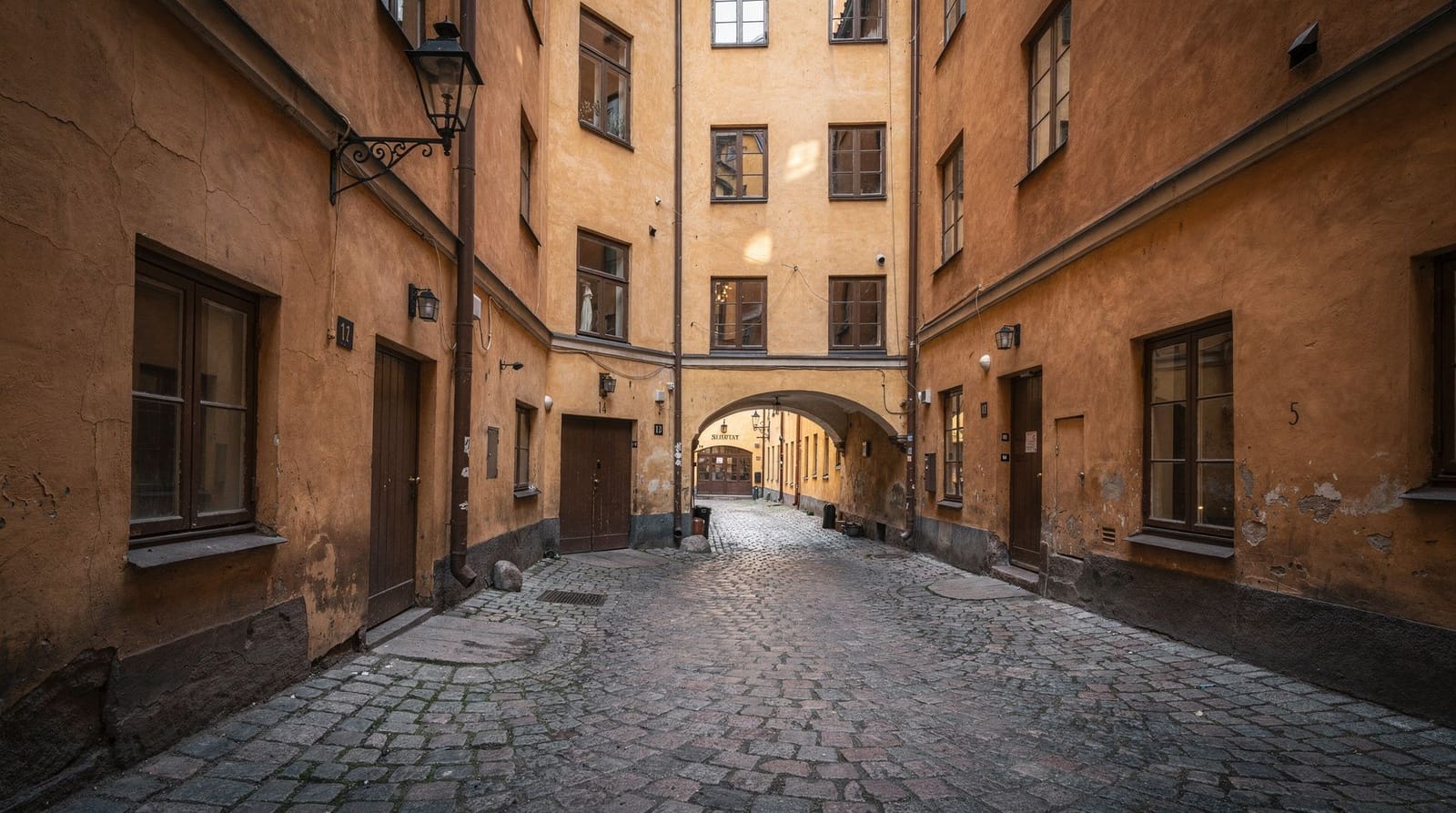
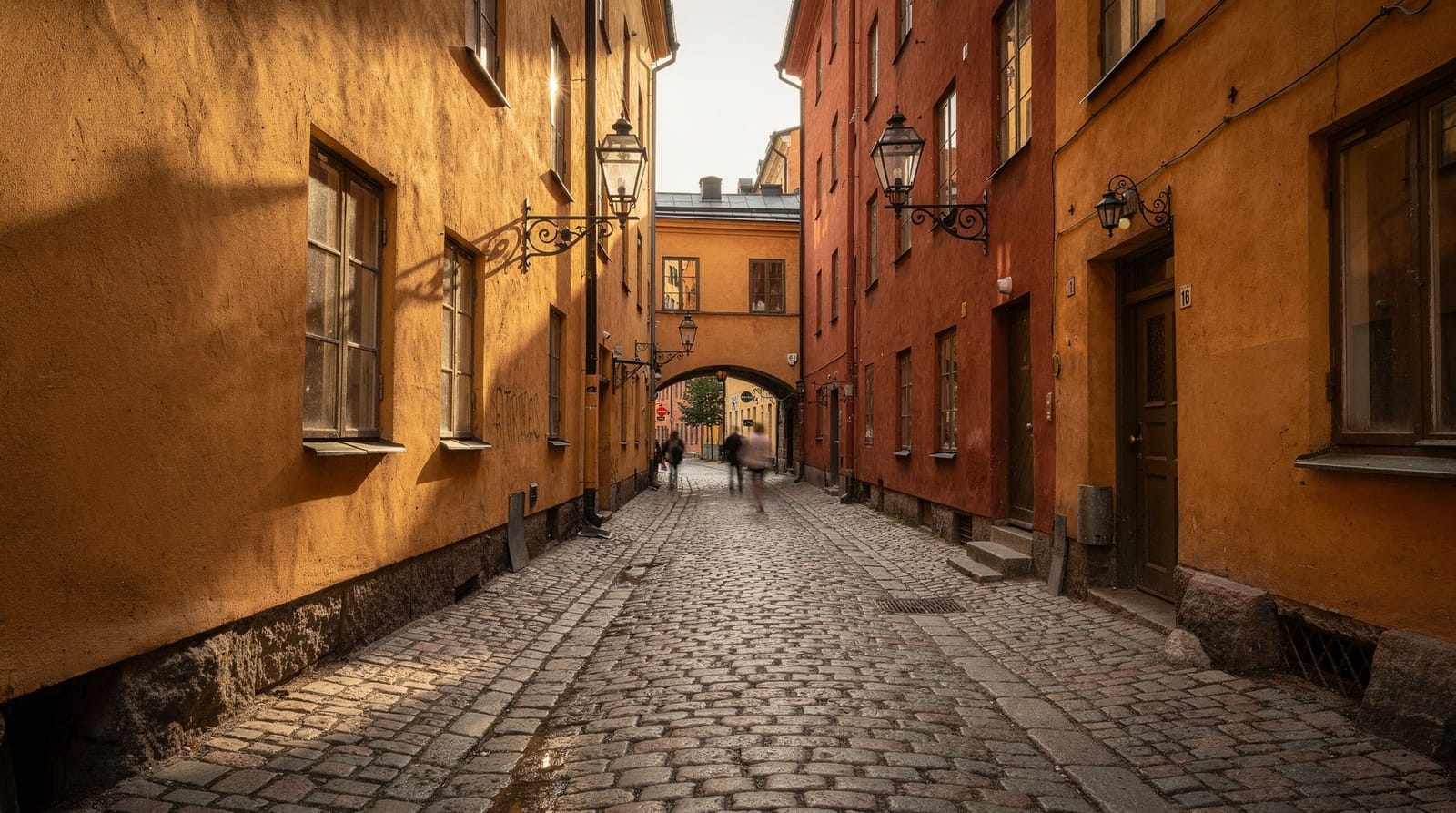
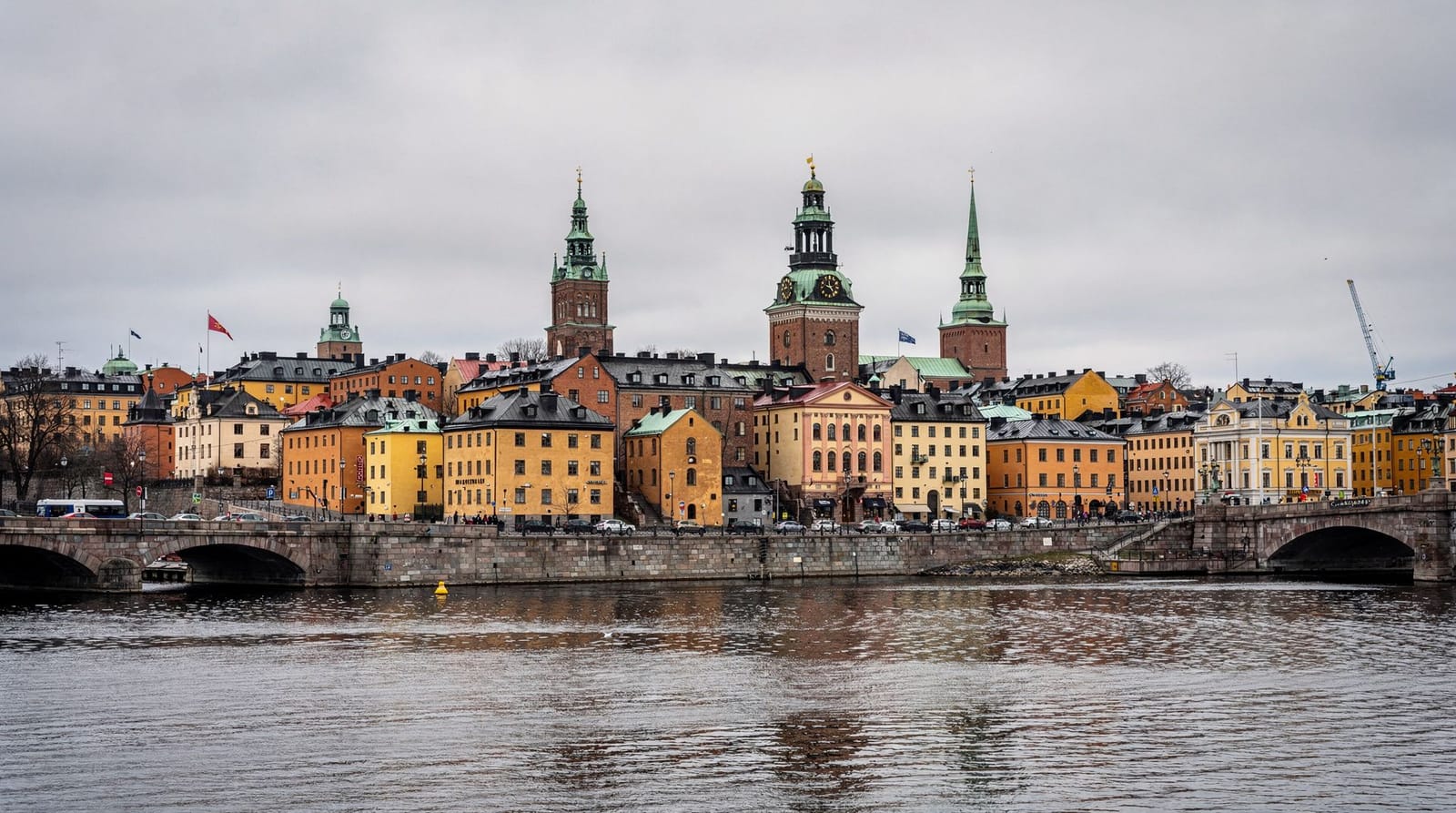
Stockholm’s ghost tours operate in unusual territory: they are set in a medieval city that experienced genuine, historically documented atrocities. The 1520 Bloodbath, the plague epidemics that devastated Gamla Stan’s population in the 14th and 17th centuries, the witch trial executions of the 17th century, the medieval practice of burial under building foundations — this is not manufactured horror. It is history that happened in the streets where you walk.
This gives Stockholm’s ghost tours a particular credibility. The best are essentially dark-history walking tours with atmospheric delivery — more compelling than a ghost tour in a city that has to invent its dark past, less sanitised than a standard historical walking tour.
| Where | Gamla Stan, meeting near Stortorget |
| Cost | Around 200–350 SEK per person |
| Time needed | 1.5–2 hours, evening departure |
| Getting there | T-bana to Gamla Stan station |
| Best time | Autumn/winter evenings for atmosphere; year-round availability |
The main ghost tour options
Bloody Stockholm — ghosts, horror and dark folklore
Duration 2 hours. Gamla Stan. Evening departure.
This is the most comprehensive of Stockholm’s ghost tours — covering the 1520 Bloodbath at Stortorget, the plague burial sites beneath Gamla Stan, the story of the medieval well (which medieval Stockholmers used as a repository for the bodies of those who died without last rites), and the folklore surrounding the city’s most notorious murder cases.
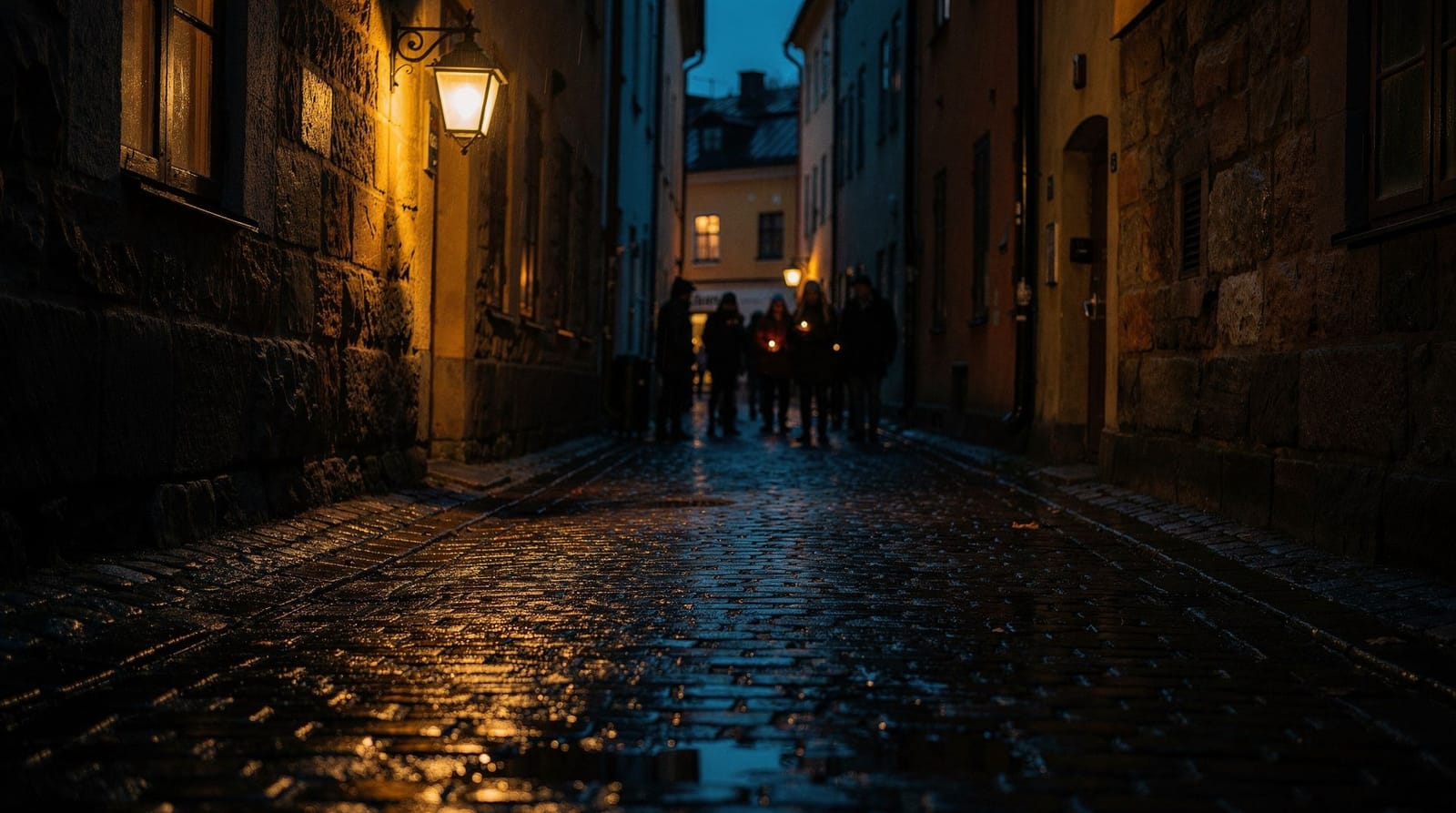
The guide delivers the content with theatrical narration calibrated for tension rather than education — this is deliberately a ghost tour, not a history lecture. But the historical detail is solid, and the atmospheric Gamla Stan setting (particularly in autumn and winter, when the streets are dark by 18:00) amplifies the content effectively.
Book: Stockholm ghost walk and historical tourStockholm ghost walk and historical tour
Duration 1.5 hours. Starting Gamla Stan.
A shorter, slightly more educational format — covering similar ground to the ‘Bloody Stockholm’ tour but with more emphasis on historical context alongside the ghost stories. Good for visitors who want the atmospheric element but also want to come away with an understanding of what actually happened historically in Gamla Stan.
What the tours cover: the dark history of Gamla Stan
The Stockholm Bloodbath (November 1520)
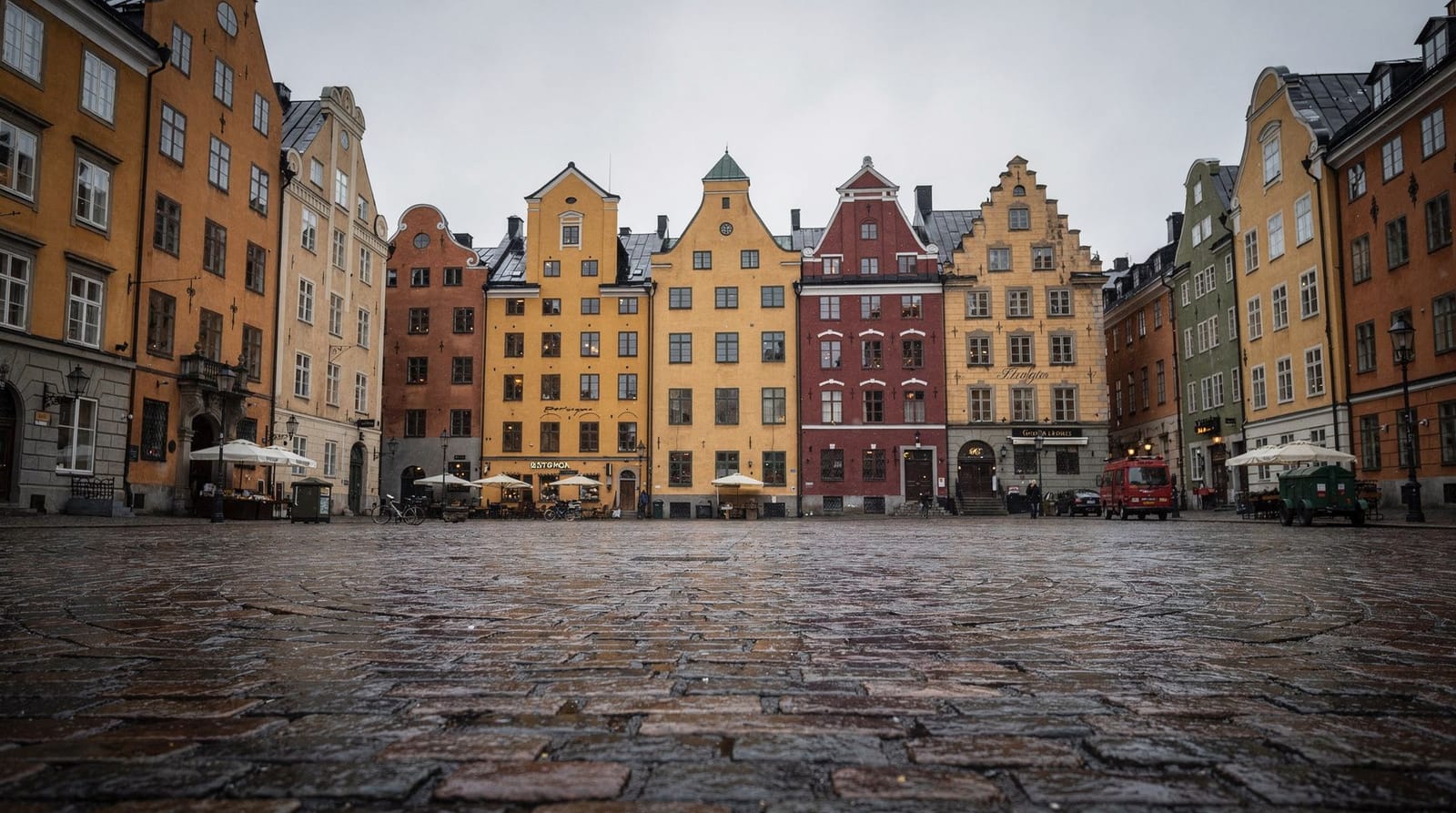
The tour’s centrepiece, usually delivered at Stortorget — the Great Square of Gamla Stan.
King Christian II of Denmark had claimed the Swedish throne after a military campaign. To consolidate power, he convened a three-day celebration in Stockholm in November 1520 and invited the Swedish nobility, clergy, and leading citizens. On the second day, the guests were arrested. Over the following two days, approximately 80–100 Swedes were executed: beheaded or hanged in the square, their bodies displayed publicly.
Among the executed was Erik Vasa — whose son Gustav Eriksson Vasa subsequently led a successful uprising against Danish rule. Sweden achieved independence in 1521, and Gustav Vasa became the first king of an independent Swedish kingdom. The Bloodbath is therefore a foundational event in Swedish national identity.
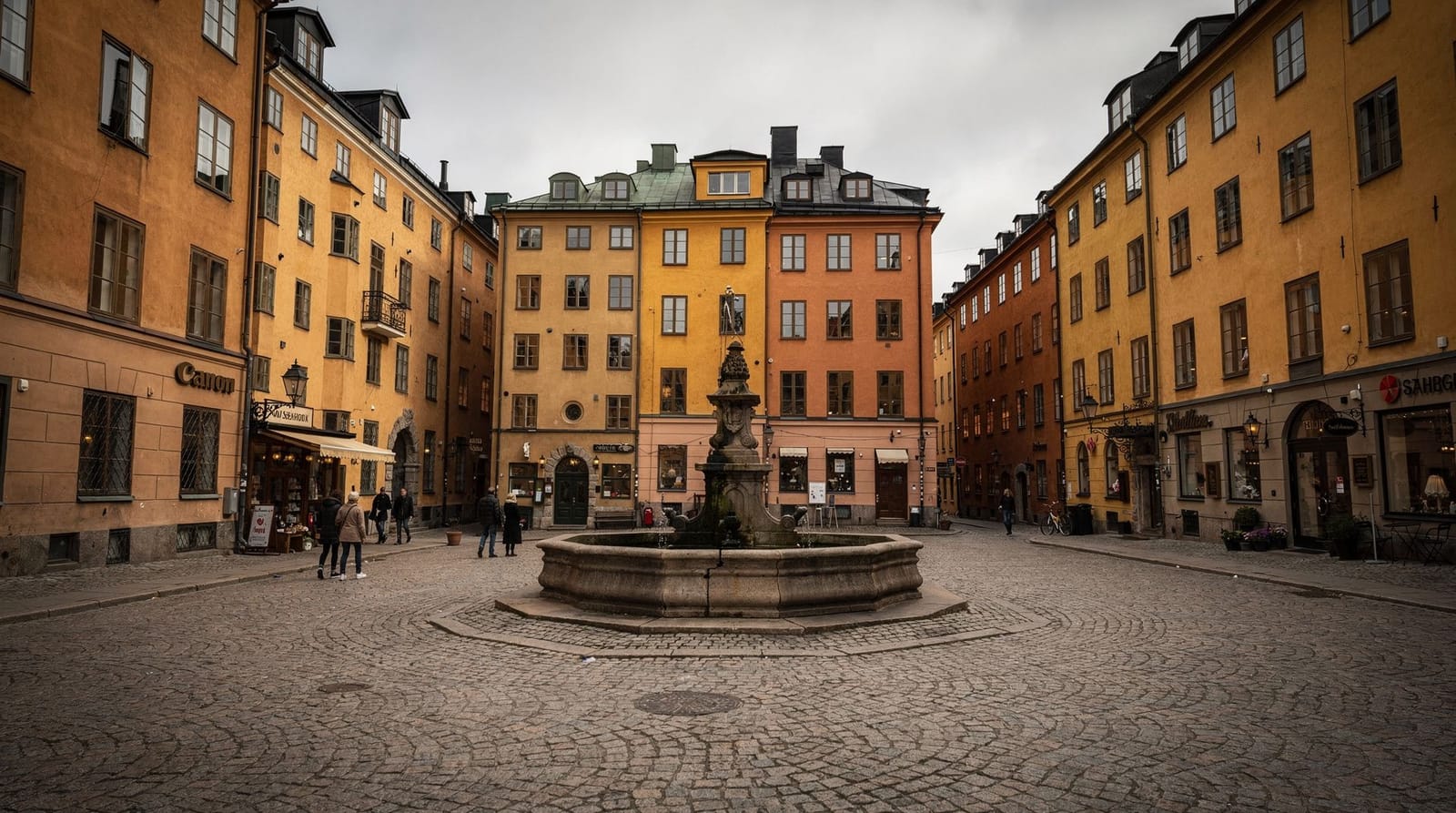
Plaques on the buildings surrounding Stortorget mark the victims. The brick-and-render facade of the Bourse Building (now housing the Swedish Academy and Nobel Museum) was the backdrop to the executions. Standing in the square at night, with this context, is genuinely affecting.
See the full historical account: The Stockholm Bloodbath: what happened in 1520.
Plague burial sites
Gamla Stan has been swept by three major plague epidemics: the Black Death in 1350 (which killed approximately one-third of Stockholm’s population), and recurrences in 1413 and 1710. The dead were buried in mass graves outside the city walls; some remain beneath the streets and buildings of what is now Gamla Stan.
Ghost tours typically include discussion of plague burial sites, often located near the current street-level without visible markers. The medieval practice of burying plague victims outside consecrated ground — which meant without last rites, in religious terms dying unshriven — contributed to the folk belief that plague victims were particularly prone to becoming restless spirits.
The witch trials
Sweden’s major witch trial episodes occurred in the 1660s and 1670s — the Dalarna witch trials (1669–1671) and the Blåkulla trials, in which hundreds of people, mostly women, were accused of consorting with the devil and conducting sabbaths. Stockholm was the administrative centre for these trials. Executions took place at Galgbacken (Gallows Hill) and other sites within the modern city limits.
The ghost tour narrative around witch trials focuses on the intersection of Protestant religious terror, social conflict, and the specific accusatory mechanism by which children’s testimony (often coerced) was used to condemn adults. A disturbing history, but an important one.
The medieval well and foundation burials
Gamla Stan has a medieval well below the current street level, accessible through a basement entrance. Tour guides discuss the well as a site where plague victims who died without family were sometimes deposited — a dark practical necessity when the city’s burial infrastructure was overwhelmed.
The practice of foundation burial — placing human remains beneath building foundations for good luck — is also discussed on some tours.
Ghost tour or standard walking tour?
If this is your first visit to Gamla Stan, consider whether a ghost tour is the right first exposure to the old town. A standard Gamla Stan walking tour covers the general history, architecture, and orientation — the Royal Palace, Stortorget’s colourful facades, the narrow medieval lanes — without the narrower dark-history focus. Many visitors do the general tour on arrival and a ghost tour on a later evening, once they already have a mental map of the streets being discussed. Either way, spending time understanding the neighbourhood itself pays off: see the Gamla Stan neighbourhood deep dive for what else the old town offers beyond its dark history, and Gamla Stan’s medieval secrets for more of the lesser-known historical detail that ghost tour guides draw on.
Choosing between the three departures
The three listed tours cover overlapping ground, so the choice comes down to tone and pace. The longer “Bloody Stockholm” format leans into theatre: the narration builds tension, pauses in the right alleys, and lets the setting do much of the work. The shorter historical ghost walk is the better pick if you tend to drift during long evening tours, or if you want more context for each story before the folklore arrives. A third option, a horror-folklore walk through the old town, is aimed at people who care most about the legends and the supernatural side of the stories rather than the political background. Whichever you pick, compare the descriptions on the booking pages, since the emphasis differs more than the route does.
If you are travelling as a group with mixed interests, the more historical format tends to suit everyone, because the stories are anchored in documented events. If everyone in your group already loves atmospheric storytelling, the theatrical version will feel more memorable.
How to get more out of the walk
A ghost tour rewards a little preparation. Reading the account of the 1520 Bloodbath beforehand means you will recognise the names and the sequence of events when the guide reaches Stortorget, and you can spend your attention on the setting rather than on keeping track of who is who. Likewise, a quick look at Gamla Stan as a whole helps you place the lanes, squares and waterfront the guide moves between.
A few habits make the evening better:
- Arrive a little early so you are not hurrying through the lanes just before the start.
- Keep your phone away once the stories begin; the best moments are quiet ones in narrow alleys.
- Ask the guide where a story comes from. Good guides will happily separate documented fact from later folklore, and that distinction is part of what makes Stockholm’s tours credible.
- Wear layers. Standing still in a stone-walled medieval lane feels colder than walking, especially on autumn and winter evenings.
Fact, legend and the space between
Every ghost tour mixes three kinds of material, and it helps to know which is which. The first is documented history: the Bloodbath, the plague epidemics and the witch trials all left written records, and the tours rest on them. The second is oral tradition, such as the idea that plague victims buried without last rites were more likely to wander as restless spirits. That belief tells you about medieval fears and religious practice rather than about anything you will see. The third is atmosphere, the part supplied by the guide, the lantern light and the narrow lanes.
None of this makes the experience less worthwhile. The folklore is a window into how people in the period explained the catastrophes around them, and the best guides are open about that. If a claim sounds too neat, ask. Guides who know their material are usually glad of the question, and the answer often turns out to be the most interesting part of the night.
Combining a ghost walk with the rest of your trip
Because the tours run in the evening, they fit naturally at the end of a day spent somewhere else. Many visitors spend the day at the Royal Palace, then walk the same streets after dark with a very different feeling. Seeing the setting by daylight first is a good way to appreciate how much the evening changes it.
If you are planning a longer stay, a ghost walk slots easily into a three-day first-timer itinerary, usually on the evening you are already based in the old town. For a shorter trip, the two-day essential itinerary leaves room for one evening activity, and a ghost walk is a strong candidate. After the tour, the surrounding lanes are a pleasant place for a warm drink; the fika culture guide explains what to expect from a traditional break.
If your interest in the darker side of the city is growing, the wider theme of the old town’s hidden past is covered in Gamla Stan’s medieval secrets, and the Stockholm tourist traps guide helps you steer clear of the overpriced and underwhelming options when choosing what to do with the rest of your evenings.
Self-guided dark history walk
For those who prefer to explore independently, Gamla Stan’s dark history is accessible without a guide:
Stortorget: Stand in the square and read the Bloodbath memorial plaques on the north side. The Nobel Museum (Börshuset) is on the site of the original bourse where participants in the 1520 feast were imprisoned.
Mårten Trotzigs Gränd (off Västerlånggatan): The narrowest alley in Stockholm. A standard ghost tour stop — the alley’s extreme narrowness and medieval atmosphere make it naturally atmospheric.
Riddarhuset (the House of Nobility): The building where the Swedish nobility gathered — and from which survivors of the Bloodbath escaped. It is visible from Gamla Stan’s northern waterfront.
Medieval Museum site (Strömparterre, below Norrbron bridge): The archaeological site under Norrbro, where excavations revealed medieval city walls, a plague cemetery, and other dark finds. The Medieval Museum itself has been closed since November 2023 and cannot currently be visited; a new museum is planned at Börshuset on Stortorget, with no opening date announced. See the Medieval Museum guide for the latest status.
What to expect on the night
Expect a small group gathered at the meeting point, a brief introduction, and then a slow walk from stop to stop. The guide will usually pause in squares and alleys long enough to tell each story properly, so the pace is gentle and suits most fitness levels, though the cobbled lanes and occasional steps mean it is not ideal for anyone who struggles with uneven ground. If accessibility matters for your group, the accessibility guide is a useful companion when planning the rest of your visit.
The mood shifts as the walk goes on. Early stops tend to set the scene with general medieval context, the middle stretch delivers the heavier material around the Bloodbath and the plague, and the final stop is often lighter, leaving you with a feeling of having seen the old town from an unfamiliar angle. Most people finish with a clearer picture of why the streets are laid out the way they are, and with a few stories worth retelling over dinner. For somewhere to eat afterwards, see the Gamla Stan restaurants guide, which separates the good tables from the tourist-facing ones.
Practical information
When to go: Autumn and winter evenings are the best atmospheric conditions — dark by 17:00 from November, misty cobblestones, fewer tourists in the streets. Summer tours are fine but start in full daylight (sunset at 22:00 in June), which reduces the atmospheric impact.
Weather: Tours run in rain. Bring a waterproof layer. The Gamla Stan cobblestones are slippery when wet; wear non-slip shoes.
Language: All listed tours are conducted in English. Swedish-language tours are sometimes available — check operator websites.
Children: Most operators recommend 10+ years. Content includes historical violence, executions, and plague descriptions.
Frequently asked questions about ghost tours in Stockholm
How scary are Stockholm ghost tours?
Minimal jump-scares — historically and storytelling-based rather than horror entertainment. Appropriate for curious adults and teenagers.
What is the Stockholm Bloodbath?
The 1520 mass execution of 80–100 Swedish nobles and clergy by King Christian II of Denmark in Stortorget. Memorial plaques remain in the square.
Are ghost tours run during winter?
Yes — year-round. Winter darkness creates the most atmospheric conditions.
Where do ghost tours meet in Stockholm?
Most meet at or near Stortorget in Gamla Stan. Check your booking confirmation for the exact point.
Can children join ghost tours?
Most operators set a minimum of 10–12 years. Content includes descriptions of historical violence, executions, and plague.
Top experiences
Bookable activities with verified prices and instant confirmation on GetYourGuide.