Gamla Stan medieval secrets: hidden history of Stockholm's Old Town
Stockholm: secrets of Gamla Stan guided tour with fika option
Duration: ~2 hours
What are the hidden secrets of Gamla Stan?
Gamla Stan's most compelling secrets: the 90 cm Mårten Trotzigs Gränd alley (narrowest in Stockholm), medieval plague burial sites beneath the current street level, the Bloodbath memorial in Stortorget (plaques with the 1520 victims' names), secret courtyards accessible through unmarked archways, and the medieval city walls that survive below the current buildings (the section once shown in the Medeltidsmuseet under Norrbron bridge has been closed since November 2023).
Walking through seven centuries
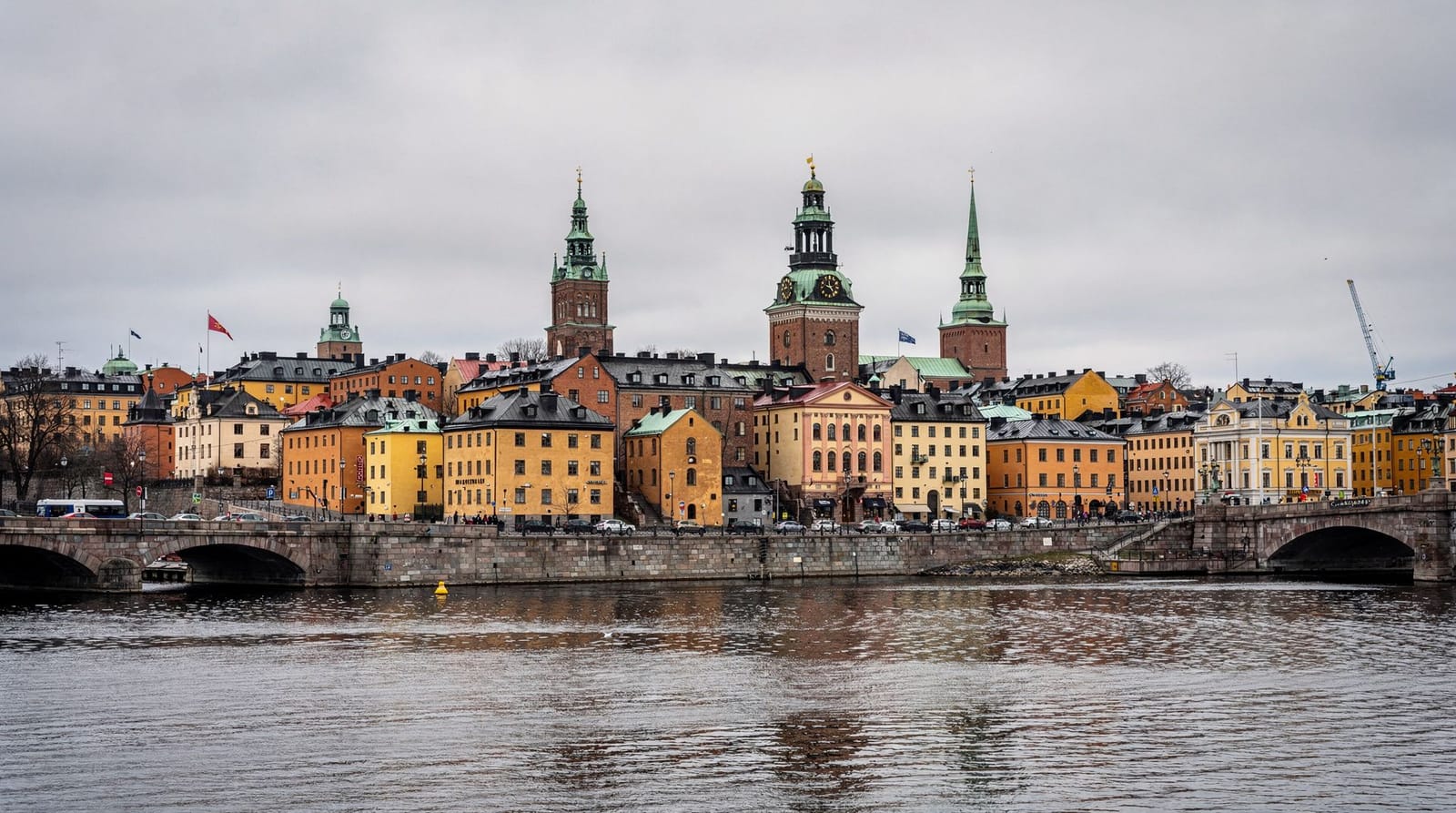
Gamla Stan’s defining quality is density — the concentration of history within a small island (approximately 1 km² in area) that has been continuously inhabited since 1252. The street plan has barely changed. The buildings you walk past incorporate medieval foundations, 17th-century facades, 18th-century renovations, and 21st-century interiors. Every layer is built on or around the one before.
The secrets of Gamla Stan are not hidden in the tourist-destination sense — they are hidden in the sense that you only find them if you are looking. Most visitors walk Västerlånggatan and Stortorget without knowing what they are standing on. For the standard sights alongside these hidden layers, the Gamla Stan walking tour guide is the companion piece to this one.
| Where | Gamla Stan island, central Stockholm |
| Cost | Free for streets and alleys |
| Time needed | 2 hours self-guided; half day with a guided tour |
| Getting there | T-bana to Gamla Stan |
| Best time | Early morning or evening to avoid crowds at Mårten Trotzigs Gränd |
If you are still shaping the wider trip, the Gamla Stan destination page places the island in the context of the rest of the city, and the 3-day first-timer itinerary shows where a half day of medieval exploring fits between the bigger sights.
The physical structure of medieval Stockholm
The island and the walls
Gamla Stan occupies Stadsholmen, an island connected to the mainland by bridges at its north and south ends. The island was chosen as a fortified city site in the 13th century because it was naturally defensible — the water channels on both sides were serious obstacles before bridge-building made them routine to cross.
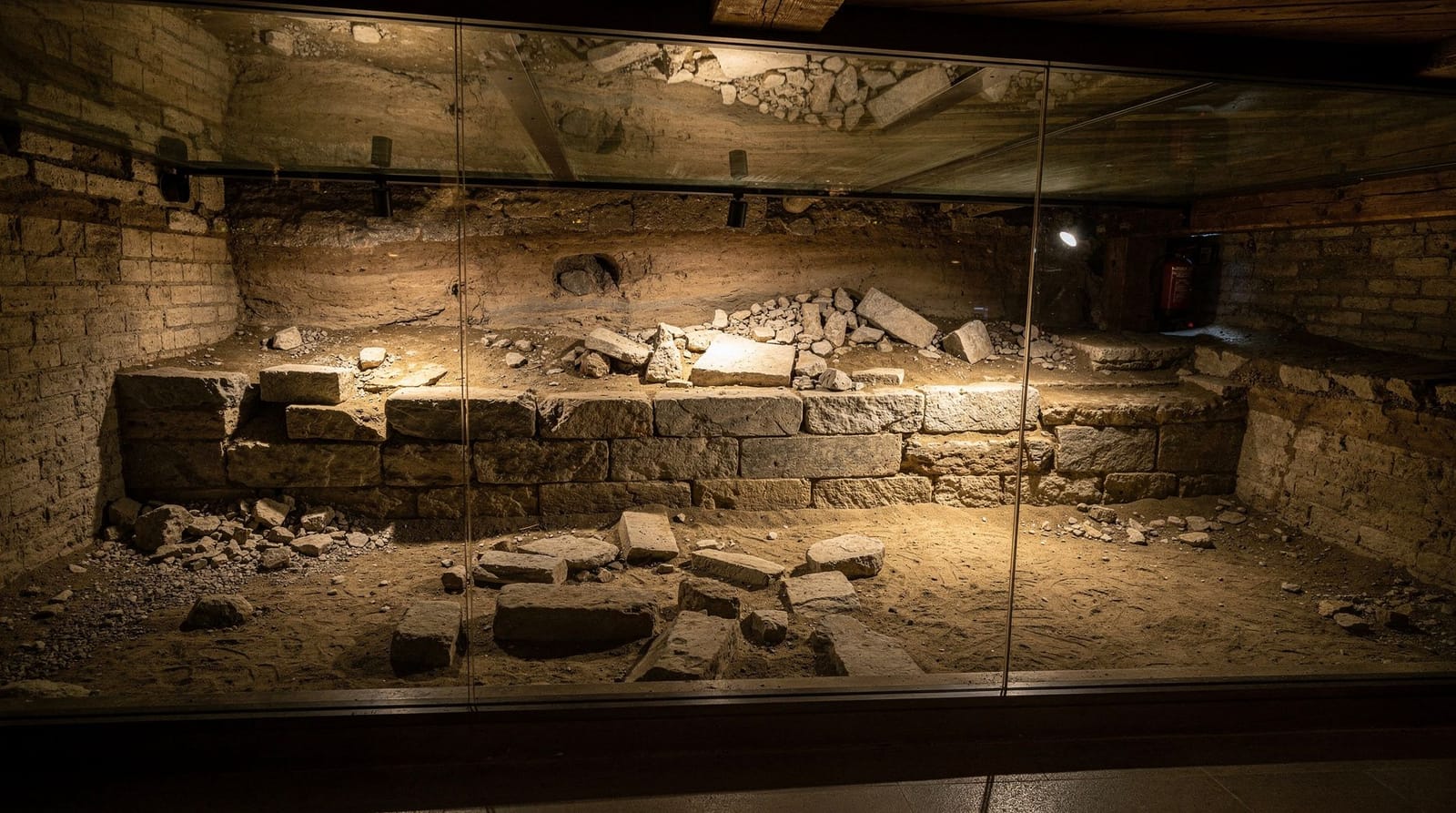
The medieval city walls ran around the island’s perimeter. Sections of these walls survive beneath current buildings and below the street level on the island’s eastern and western shores. The most accessible surviving section was in the Medeltidsmuseet (Medieval Museum) below the Norrbron bridge at Gamla Stan’s north end, where the city walls stood intact inside an excavated medieval street. That stretch is no longer visitable: the museum has been closed since 5 November 2023.
The street levels
Gamla Stan sits approximately 1–3 metres above its medieval street level. Centuries of construction, demolition, rubble deposit, and rebuilding have raised the ground level progressively. In the basements of many Gamla Stan buildings, you descend below current street level into spaces that were originally above ground.
The medieval well in Stortorget is a visible marker of this process — its top is at pavement level, but its shaft descends through several layers of historical accumulation. Several Gamla Stan restaurants and the Nobel Prize Museum basement give access to spaces where the medieval depth is visible.
The secrets: specific locations
Mårten Trotzigs Gränd
Entrance from Västerlånggatan (number 45); exit to Prästgatan via a staircase.
The narrowest street in Stockholm. At 90 cm, it is just wide enough for one adult to pass (two people need to turn sideways). The alley descends as a staircase from Västerlånggatan to the lower streets of western Gamla Stan. The narrowness is functional rather than decorative — the gap between two buildings that were built so close together that no wider passage was possible.
The name commemorates Mårten Trotzig, a German merchant who owned property adjacent to the alley and died around 1592. He had no particular historical significance beyond owning the property — the alley’s fame comes entirely from its extreme narrowness.
When to visit: early morning (08:00–09:00) or evening (after 20:00) to avoid the photographic queues that form at the Västerlånggatan entrance during tourist hours.
Stortorget and the Bloodbath memorial
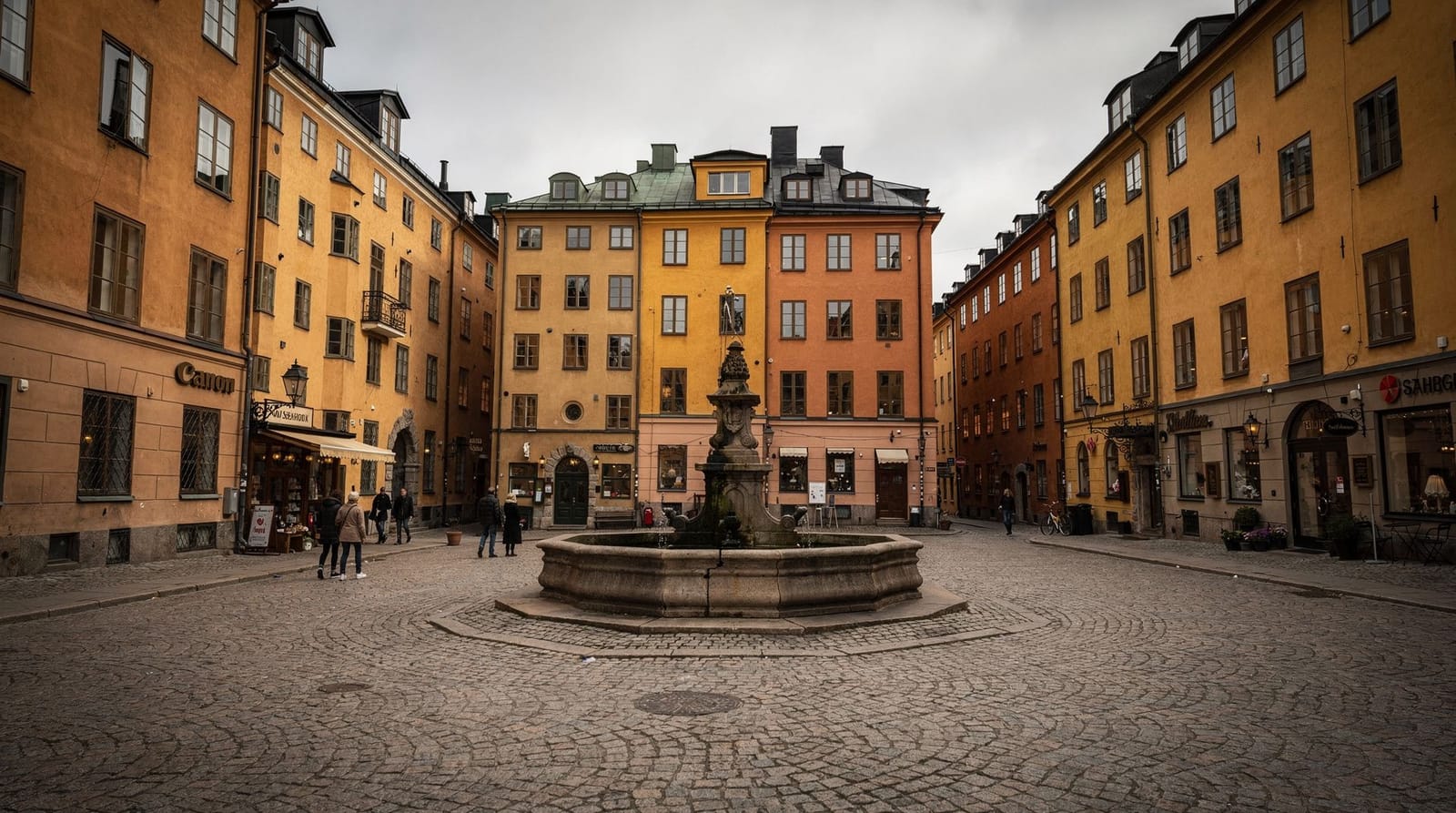
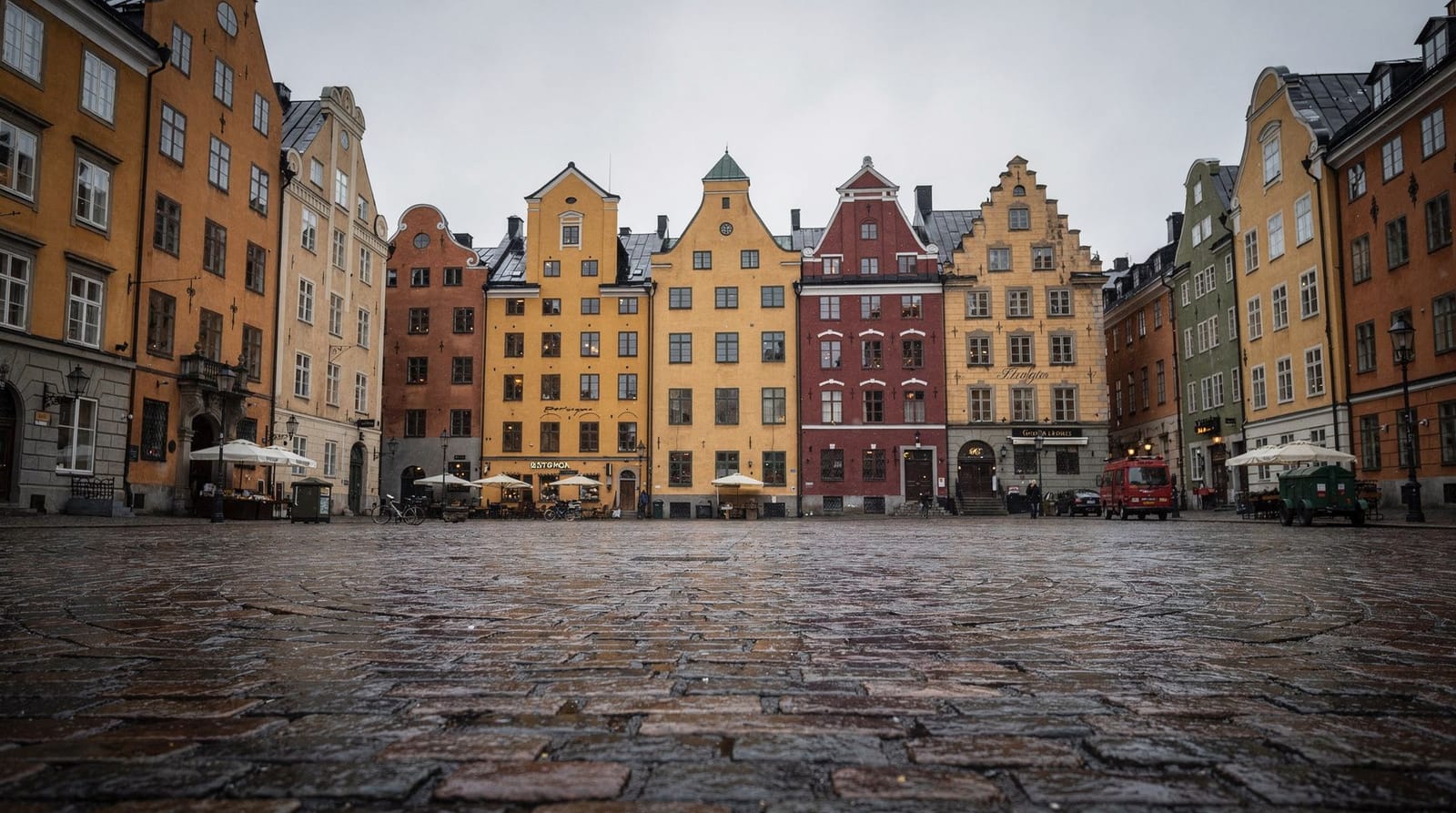
The Great Square of Gamla Stan — the oldest square in Stockholm.
The plaques on the north side of the square (yellow building facades, upper level) record the names of the victims of the 1520 Stockholm Bloodbath — the mass execution ordered by Danish King Christian II. The plaques are not prominently signposted; most visitors walk past them without noticing.
How to find them: stand in the square facing north (with the Börshuset/Nobel Museum on your left). The memorial plaques are on the yellow building directly ahead, approximately 3–4 metres above pavement level.
See the full history: The Stockholm Bloodbath 1520.
The hidden courtyards
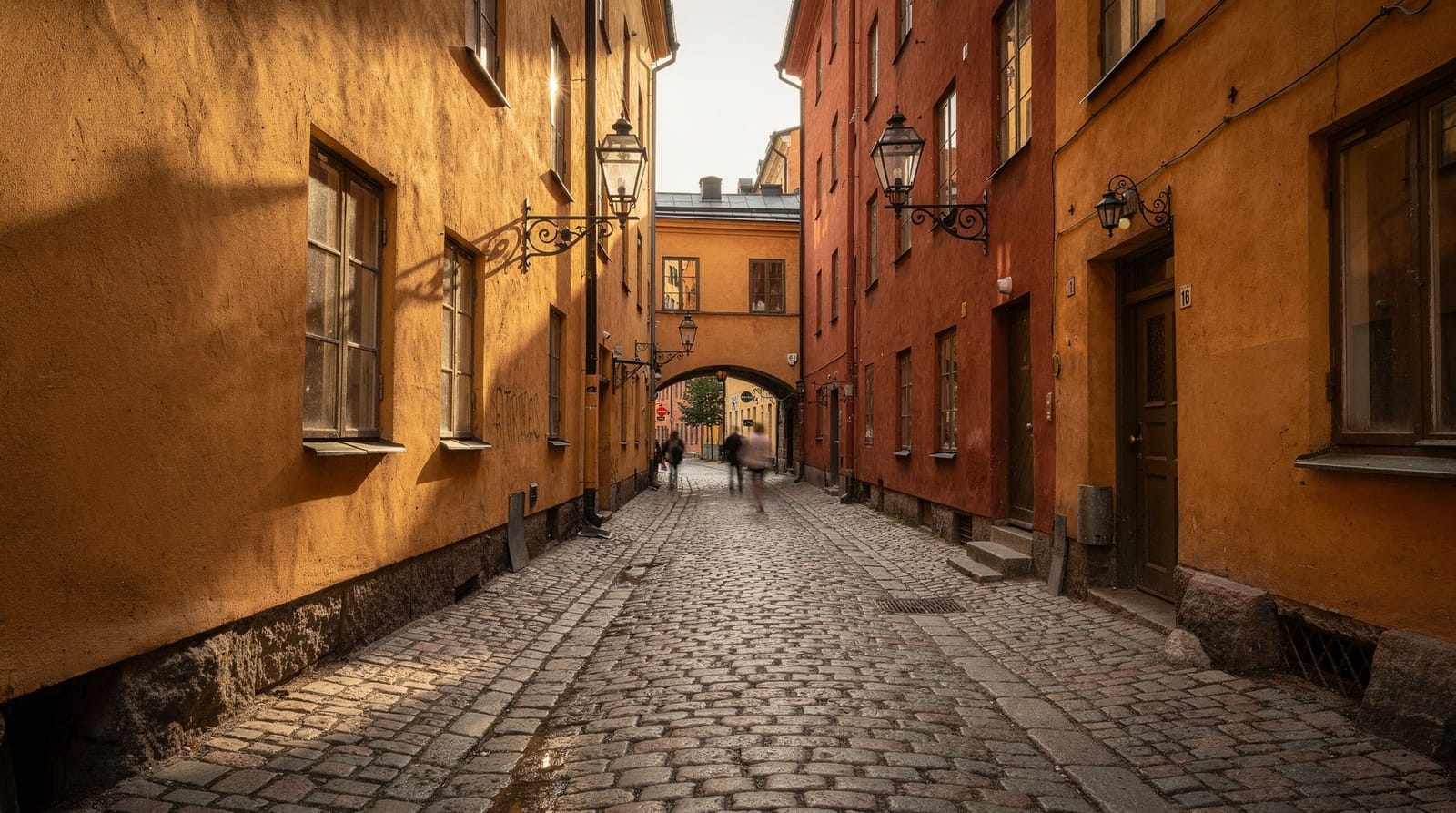
Gamla Stan has approximately 30 courtyards accessible through archways in the street-facing building blocks. Unlike the visible tourist streets, these courtyards are shared residential and commercial spaces that have barely changed in use since the medieval period. Finding them requires curiosity — looking for an archway, walking through, and seeing what opens up.
The most accessible are:
- Köpmantorget area (east of Stortorget): Several buildings in the streets around Köpmantorget have archway entrances to internal courtyards. Mostly accessible to pedestrians.
- Prästgatan (behind Västerlånggatan): The street itself runs along a lower level of Gamla Stan with connections through archways to the buildings above.
- Österlånggatan, south section: Archways lead to courtyards shared between buildings on both parallel streets.
Note: Some courtyards are private residential spaces. The archways without signs prohibiting entry are generally semi-public, but use judgment — if the courtyard has laundry or personal property, you are likely in a residential space.
Book: secrets of Gamla Stan guided tour with fika optionBelow the medieval city: the Medeltidsmuseet (closed)
Strömparterre, below Norrbron bridge at Gamla Stan’s northern edge.
The Medieval Museum was built around an archaeological excavation that was required before a car park was constructed in the 1970s. The excavation revealed a section of medieval Stockholm that had never been disturbed: the city walls, a series of medieval streets, a plague cemetery, and artefacts from everyday life in 13th–17th century Stockholm.
The excavated area, with the original medieval masonry at eye level, is not a reconstruction — it is the actual medieval structure. It is not open to visitors at present.
The museum under Norrbro has been closed since 5 November 2023; a new museum is planned at Börshuset on Stortorget, with no opening date announced. Check the official site (medeltidsmuseet.stockholm) for temporary exhibitions. See the Medieval Museum guide.
The original Tre Kronor Castle ruins
Below the current Royal Palace.
The original Tre Kronor Castle burned in a catastrophic fire on the night of 7 May 1697. The fire started in the roof timbers and swept through the medieval structure within hours. Most of the royal collection was saved; the architecture was not. King Karl XI had been attempting to modernise the castle; his son Karl XII authorised the construction of a new palace on the site.
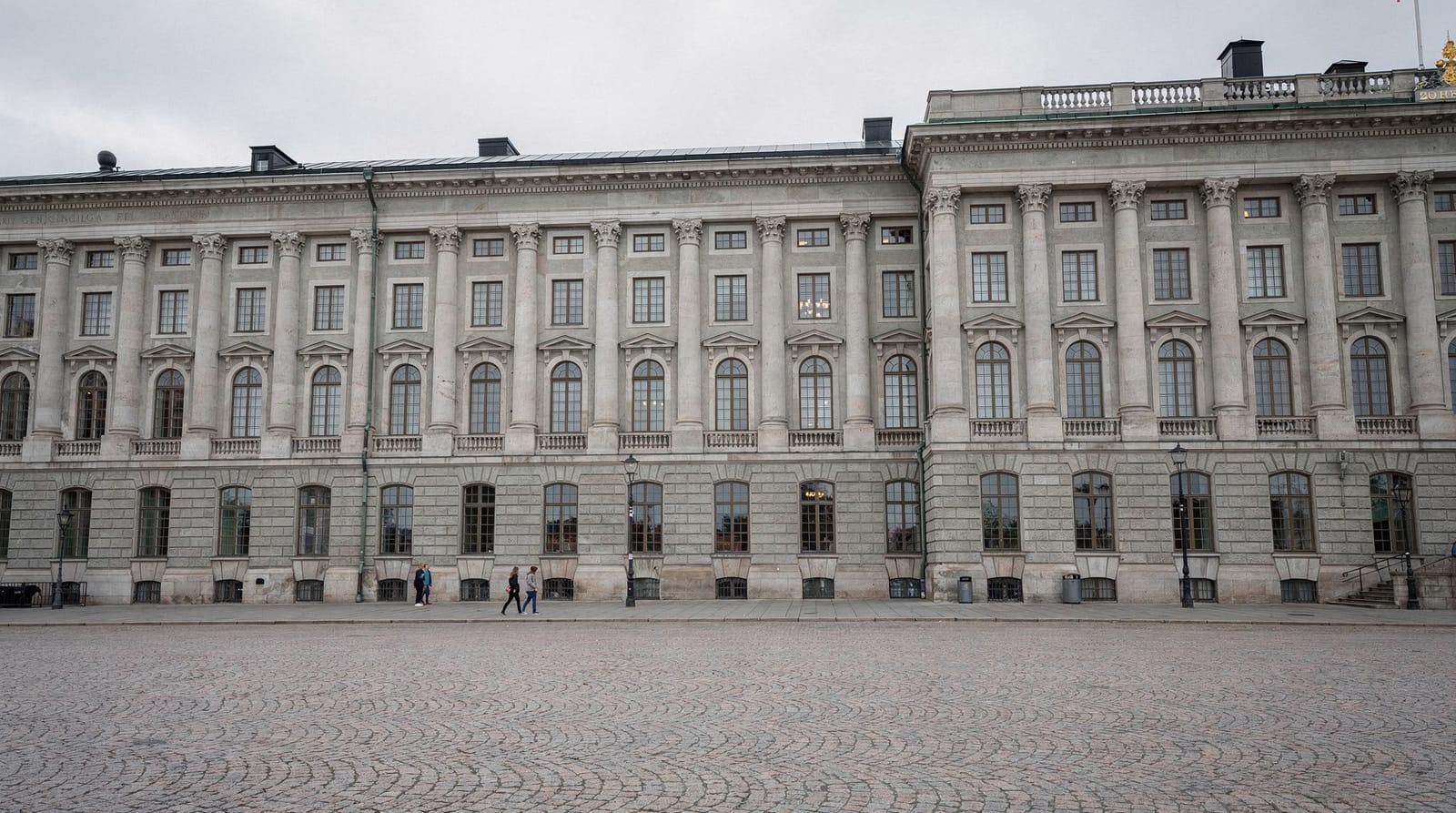
The foundations and cellars of Tre Kronor survive beneath the current Royal Palace. These are accessible on certain guided tours of the palace. The palace museum includes displays on the history of the site and the 1697 fire. See the Royal Palace guide.
The medieval church undergrounds
Gamla Stan has three medieval churches still in active use: Storkyrkan (the Cathedral), Riddarholmskyrkan (the Riddarholmen Church, burial church of Swedish monarchs since 1290), and Tyska Kyrkan (the German Church, built for Stockholm’s German merchant community).
Riddarholmskyrkan is the most historically layered — it has been a burial church since the 13th century, and the interior is a sequence of royal and noble chapels from different centuries. The church is on Riddarholmen island, accessible by a short bridge from the western part of Gamla Stan. Entry is modest.
Storkyrkan (the Cathedral) has archaeological material below the current church level — foundations from earlier structures on the site. Guided tours occasionally access the lower levels; check with the cathedral directly.
The dark legends
The blood-red facades
A persistent local legend holds that the red facades around Stortorget echo the blood spilled during the 1520 Bloodbath. This is romantic but false — the facades are painted in traditional Swedish pigments (iron oxide red, ochre) that predate and postdate the Bloodbath. The practice of painting buildings in these colours is pan-Swedish, not specific to Gamla Stan or the Bloodbath site.
The legend persists because the combination of red facades and genuine Bloodbath history is compelling, and because ghost tour guides find it useful.
The ghost of Mårten Trotzig
Several ghost tour narratives include a version of Mårten Trotzig’s spirit haunting the alley named after him. There is no historical documentation of Trotzig being a remarkable figure or meeting a notable end — he was a merchant who owned property. The ghost story is an invention.
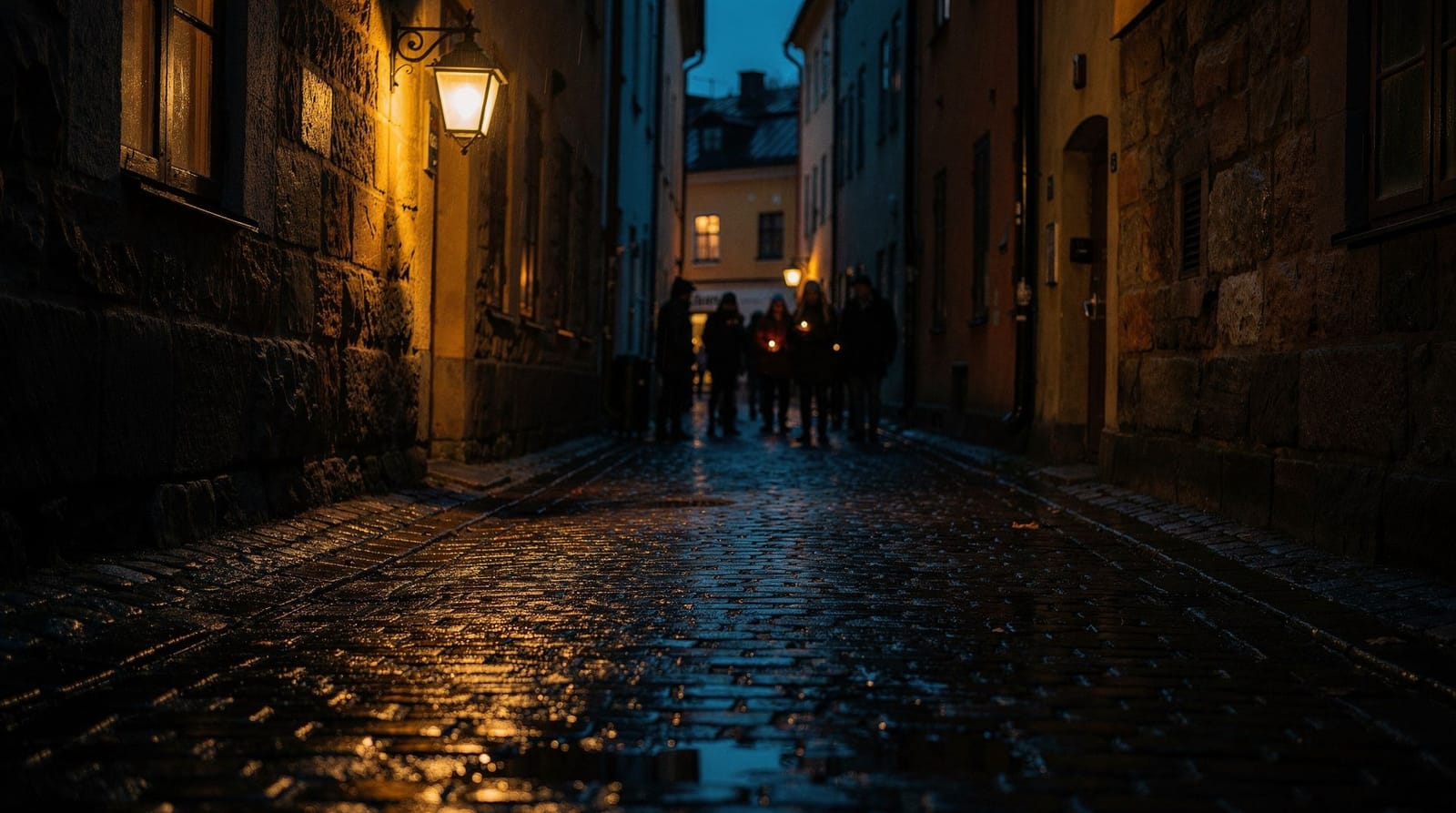
The alley’s reputation for supernatural associations predates the named connection and relates to its extreme narrowness — a physical space that genuinely feels liminal. For the fuller set of Gamla Stan’s ghost stories and folklore, the Stockholm ghost tour guide and the specialist ghost walking tour go further into the legends this guide only touches on.
Where the secrets sit within Gamla Stan’s neighbourhoods
Gamla Stan is small, but its character shifts noticeably between its western half (Västerlånggatan, the tourist spine) and its quieter eastern and southern lanes (Köpmangatan, Österlånggatan, the area around Riddarholmen). Most of the hidden courtyards and quieter medieval fragments sit away from Västerlånggatan’s crowds. The Gamla Stan neighbourhood deep dive maps the full island street by street, useful alongside this guide’s specific secret locations if you want to explore systematically rather than site by site.
Combining the secrets with other stops
The island is compact enough that the secrets pair naturally with its more conventional attractions. Visitors who want the royal side of the story alongside the medieval one can read the Royal Palace Stockholm guide, which covers the building that rose over the Tre Kronor foundations. Those who want a meal after the walk will find an honest assessment in the Gamla Stan restaurants guide, which helps you avoid the places that trade on the tourist spine’s foot traffic. If a coffee and bun suit the pace better, fika culture in Stockholm explains how to do it properly.
In winter the atmosphere of these lanes changes considerably, and the Gamla Stan Christmas market guide is worth a look if your visit falls in that season.
Guided tour options
For visitors who want a guide to Gamla Stan’s hidden layers:
Book: Old Town walking tour — stories and secretsThe secrets tour format specifically covers the hidden courtyards, the Bloodbath plaques, Mårten Trotzigs Gränd, and the medieval street layers — giving structured access to the material in this guide.
A self-guided secrets route
For visitors who prefer to explore independently, a workable sequence: start at Mårten Trotzigs Gränd early (before 09:00) for photos without queues, walk to Stortorget to find the Bloodbath plaques on the north-side facade, cut through the Köpmantorget archways to see a hidden courtyard, then finish at Riddarholmskyrkan across the bridge for the royal burial church. This covers the core secrets in roughly two to three hours at an unhurried pace, with time to actually read the plaques and look at the masonry rather than rushing between stops.
| Secret | Cost | Time |
|---|---|---|
| Mårten Trotzigs Gränd | Free | 10 min |
| Stortorget Bloodbath plaques | Free | 15 min |
| Hidden courtyards | Free | 20–30 min |
| Riddarholmskyrkan | Modest entry fee | 30–45 min |
Frequently asked questions about Gamla Stan medieval secrets
How old is Gamla Stan?
Founded as a fortified city in 1252. The street plan has not fundamentally changed since the medieval period.
What is Mårten Trotzigs Gränd?
The narrowest street in Stockholm — 90 cm wide at its narrowest. Named after a 16th-century German merchant. Located between Västerlånggatan and Prästgatan.
Are there medieval plague sites in Gamla Stan?
Yes, medieval burial sites lie beneath the current street level, but the Medeltidsmuseet under Norrbron, which showed an excavated plague cemetery, has been closed since November 2023.
Are there hidden courtyards in Gamla Stan?
Yes — approximately 30, accessible through archways in street-facing buildings. Not all are public.
What happened to the original Stockholm Castle?
The Tre Kronor Castle burned in 1697. The current Royal Palace was built on its foundations 1697–1760.
Top experiences
Bookable activities with verified prices and instant confirmation on GetYourGuide.