Fjäderholmarna: the closest archipelago island
Fjäderholmarna in half a day: 25 minutes from Slussen by ferry, smoked fish from the rökeri, a microbrewery, artisan studios, and swimming off granite
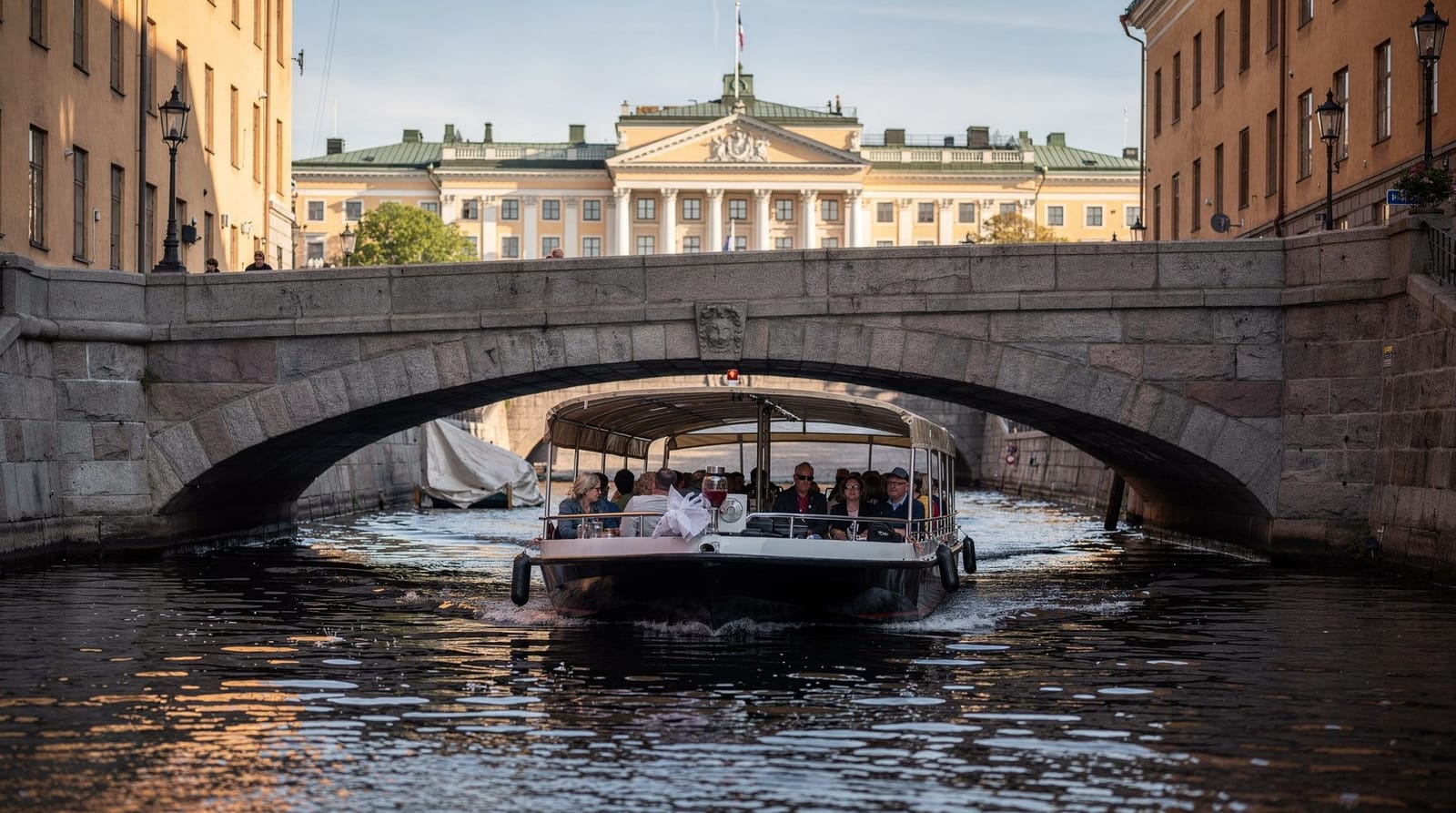
Stockholm: guided archipelago boat tour to Fjäderholmarna
Quick facts
- Ferry from Slussen
- ~25 minutes (Fjäderholmslinjen, May–September)
- Days needed
- 0.5 day
- Season
- Late April–September only
- Best for
- Families, first-time archipelago visitors
The archipelago begins twenty-five minutes from Slussen
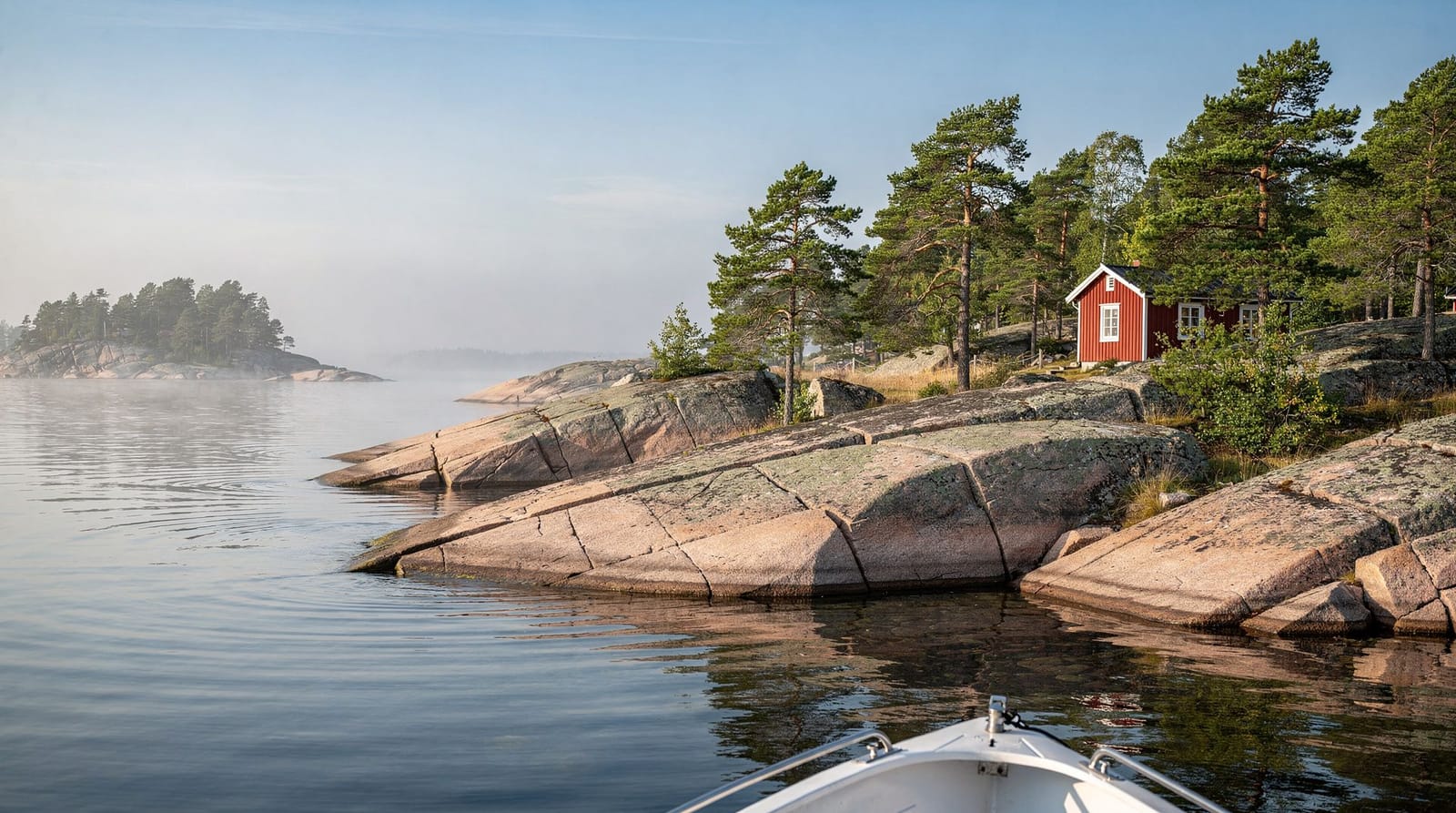
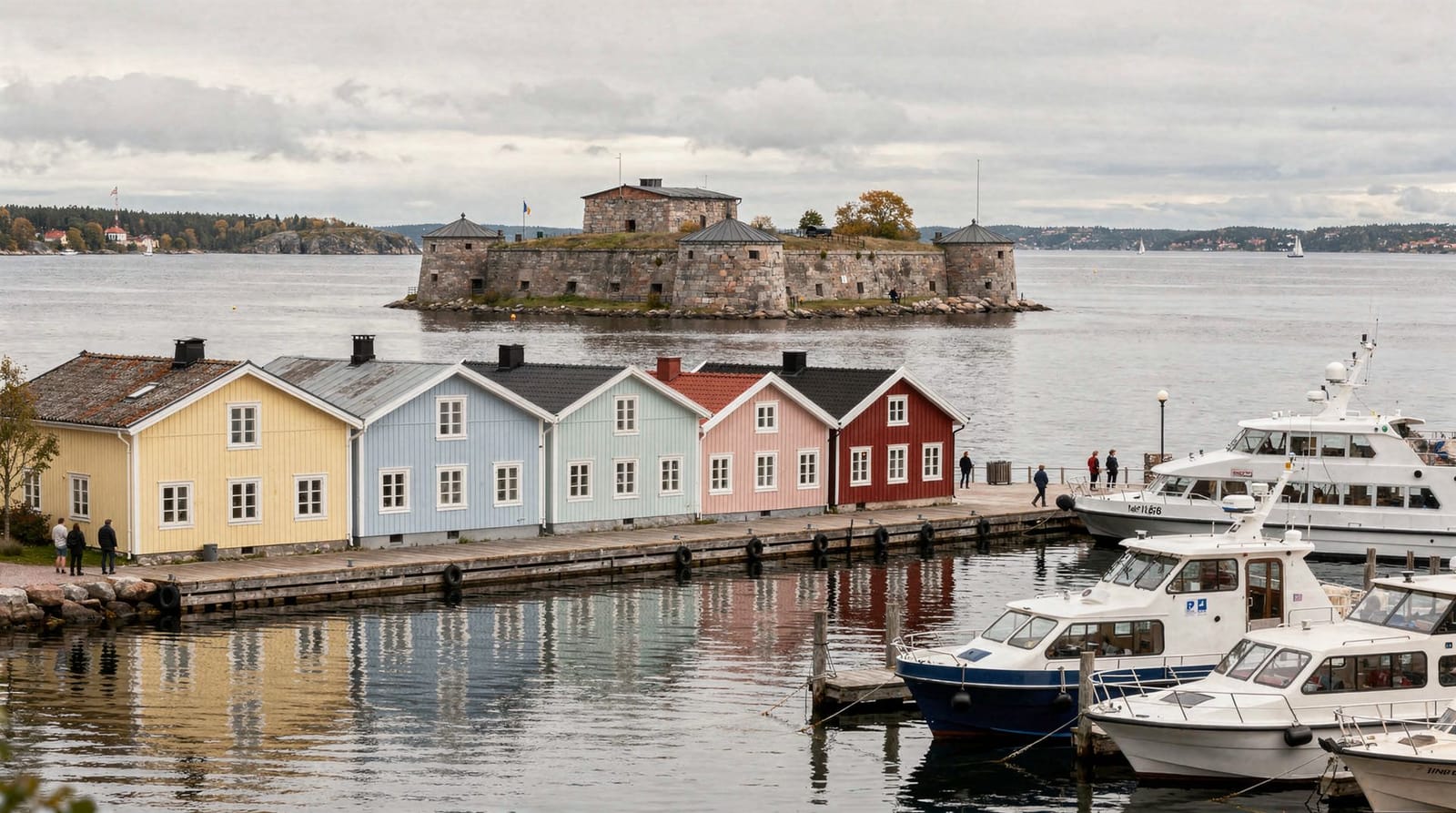
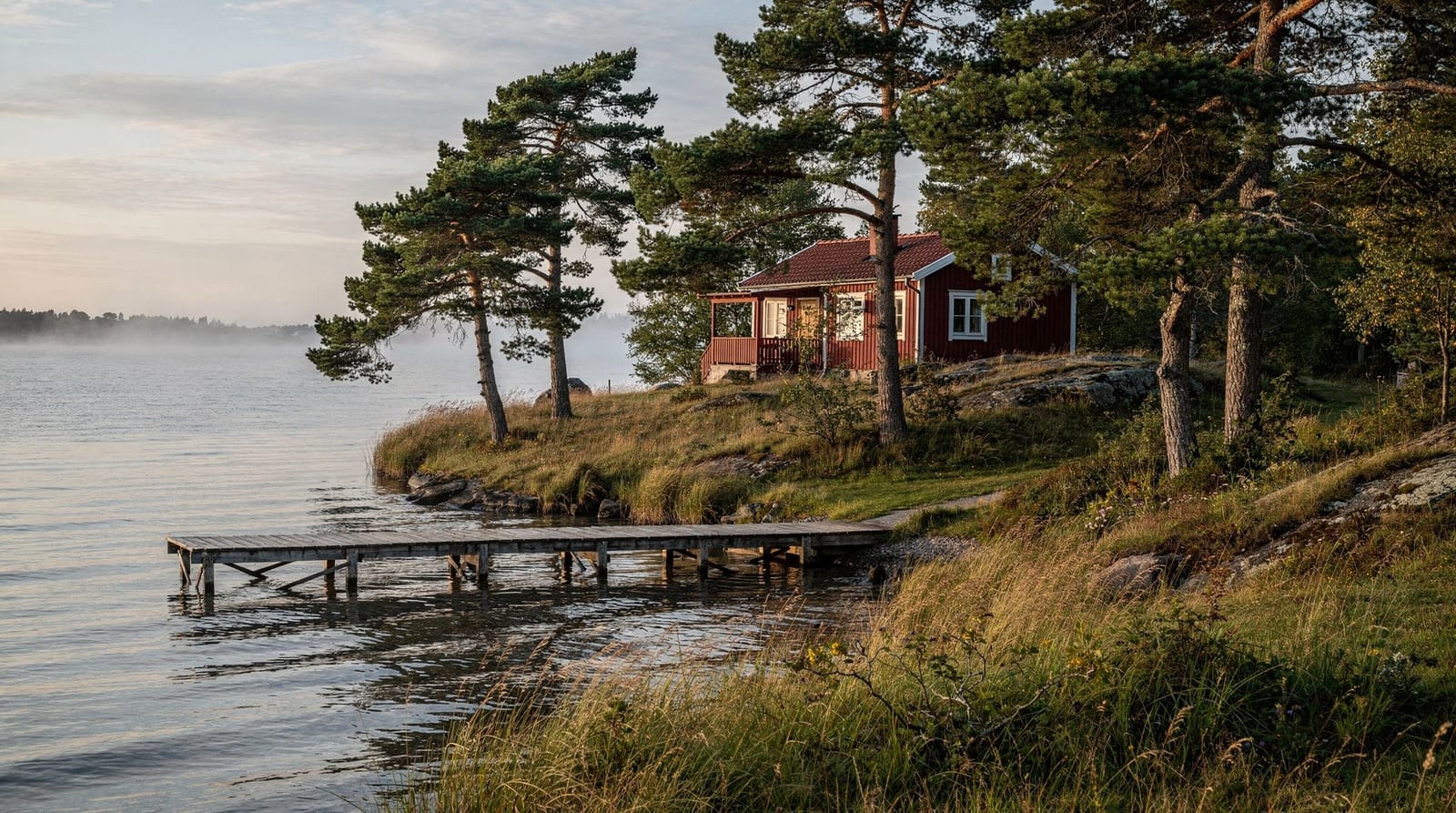
The Feather Islands — Fjäderholmarna — sit so close to Stockholm that you can see the city skyline from their eastern shore. They are not, strictly speaking, wild or remote: there is a restaurant, a smokehouse, a brewery, and a cluster of artisan workshops on the main island. But they are genuinely in the archipelago, surrounded by the flat granite-and-pine landscape that characterises the inner skärgård, and the 25-minute ferry from Slussen places them within reach of any Stockholm day even if you only have an afternoon free.
For families with children who want to see what the archipelago actually looks like without committing to a full-day expedition, Fjäderholmarna is the obvious first choice. For adults who want a quick escape from the city — a couple of hours on granite rocks with smoked fish and a cold beer — it is equally suited. For experienced archipelago travellers, it is a useful orientation before pushing further out to Grinda or Sandhamn.
The island is open to visitors from late April through September. In winter it is largely closed, accessible only to the small permanent staff population.
Getting there from Stockholm
Two operators run to Fjäderholmarna. Fjäderholmslinjen sails from Slussen (Södermalm waterfront) in about 25 minutes, from 1 May to 13 September in 2026; Strömma sails from Strandvägen, quay 13 (central waterfront near Nybroplan), in about 30 minutes. The 2026 round-trip fare is 205 SEK adult with Fjäderholmslinjen and 215 SEK with Strömma; check current prices and timetables with the operator. The SL pass does not cover either route, as neither falls under Waxholmsbolaget.
Fjäderholmslinjen sails every hour from Slussen, 10:00–22:00 Monday to Saturday (last return from the island 22:30) and 10:00–20:00 on Sundays (last return 20:30). Check the return timetable when you arrive.
There is no car access to Fjäderholmarna. Like most archipelago islands, it is reached only by boat.
The smokehouse (rökeri) and food
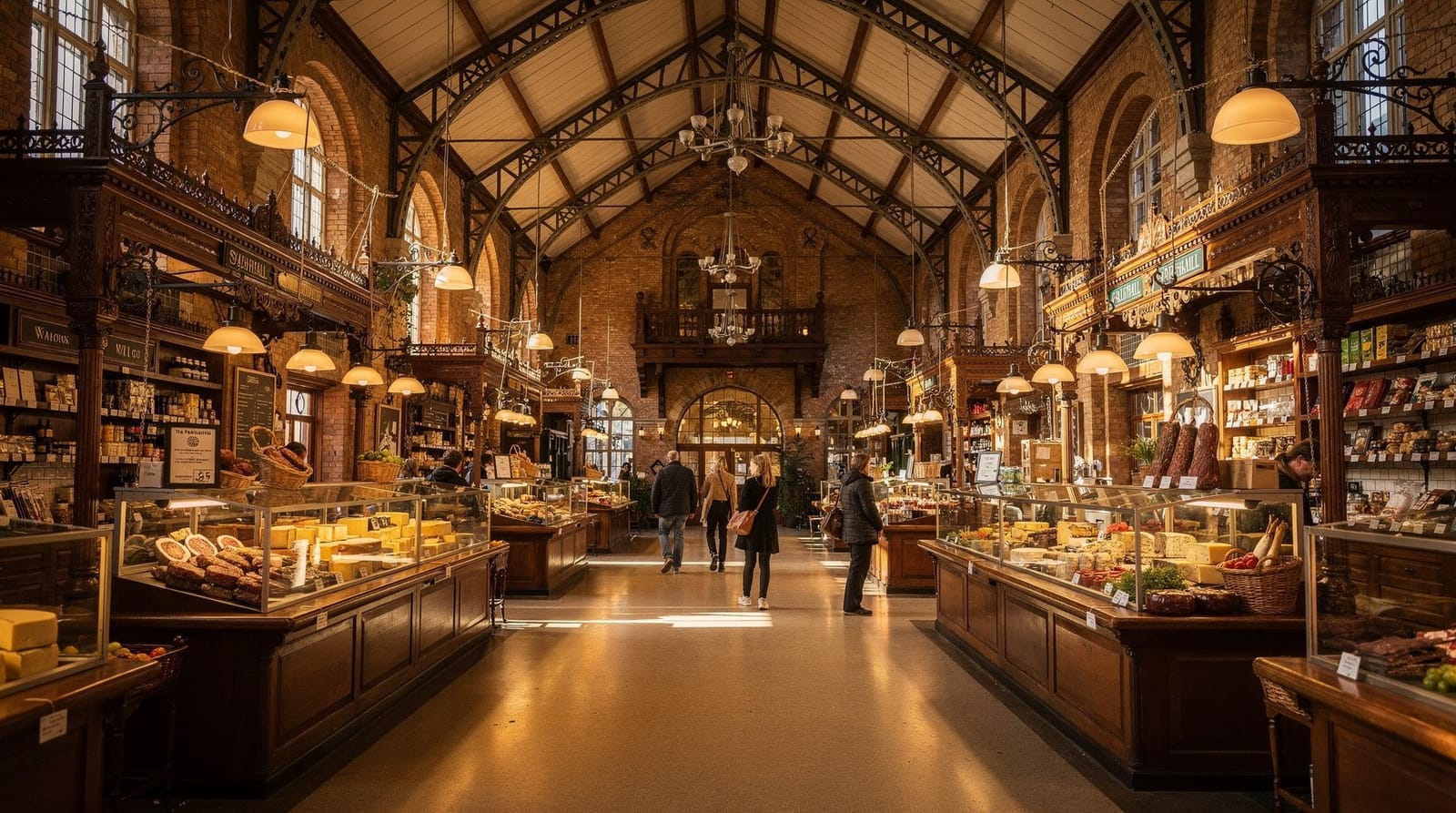
The centrepiece of a Fjäderholmarna visit for most visitors is the rökeri — the traditional smokehouse that hot-smokes herring, salmon, and other fish over alder wood in the old Swedish manner. The smoked fish is sold from the smokehouse counter and can be eaten at outdoor tables looking over the water. This is one of the most direct connections to Swedish archipelago food culture available within an hour of central Stockholm.
The island also has a restaurant, Fjäderholmarnas Krog, which operates a full lunch and dinner service in summer. The kitchen focuses on Swedish seafood — expect shrimp, salmon, herring preparations, and seasonal shellfish. The restaurant is popular and usually busy; arriving early or booking ahead (particularly for dinner) is wise in July.
A simpler café option is available for those who want coffee, cinnamon buns, and lighter snacks without the full restaurant experience.
The microbrewery
The Fjäderholmarnas Bryggeri occupies a distinctive round building on the island and produces a small range of Swedish craft beers year-round, though it’s most easily visited in summer when the island is fully staffed. Beer tastings are available, and the outdoor seating area around the brewery is one of the pleasanter places on the island to spend an hour in good weather. The brewery’s proximity to the smokehouse makes for an easy combination: smoked fish, archipelago view, cold beer from a local brewery.
Artisan workshops and studios
Several artisan studios operate on the island, including ceramics, glasswork, and textiles. These are small-scale operations with genuine craftspeople working on site — not souvenir shops, but studios where you can watch the work being made and buy directly from the maker. The quality is generally high and the island setting gives the work a particular character.
This part of Fjäderholmarna’s identity — as an artisan enclave as much as a tourist destination — dates from the island’s post-military redevelopment in the 1980s, when it was opened to the public for the first time. The original concept of combining crafts, food, and natural landscape has remained largely intact.
Swimming off the rocks
The granite ledges around the western and northern shores of the island offer good swimming access from flat rocks directly into the sea. Water temperature in this part of the inner archipelago reaches 18–20°C in July and August, and the sheltered position keeps conditions calm. Towels and swimming gear are useful to bring from the city.
Under allemansrätten, swimming from any shoreline not immediately adjacent to private buildings is a legal right. On Fjäderholmarna, the designated swimming areas are clearly marked but the spirit of Swedish outdoor life — taking your shoes off, walking to the nearest rock, swimming — is part of what the island offers. Families with children find this natural access particularly appealing compared to the managed beach environments of a typical resort.
What to do and how long to spend
A half-day is the natural allocation — three to four hours is enough to: take the ferry from Stockholm, walk around the main island (about 45 minutes for a full circuit of the paths), have lunch or smoked fish at the rökeri, look at the artisan studios, swim from the rocks, and catch a return ferry. If you want to sit quietly and read by the water rather than see everything, the half-day still works well.
An extended morning or afternoon without any particular agenda is also a perfectly valid approach. The island does not require systematic sightseeing — it rewards slow occupation of a specific rock with a view.
For visitors wanting a guided introduction to the island and its context within the wider archipelago, the guided archipelago boat tour to Fjäderholmarna provides commentary on the landscape and history of the inner skärgård during the ferry crossing, making the visit substantially more informative than arriving independently.
Fjäderholmarna for families
The island is well suited to families with young children. The ferry journey is short enough not to exhaust anyone, the island is small enough to keep easily in view, the rocks are accessible, the food is good, and there are no roads or traffic hazards. The artisan studios provide some interest for older children. The brewery is firmly for adults, but the rökeri counter and the swimming rocks work for all ages.
The Stockholm with kids guide lists Fjäderholmarna as one of the three or four most reliable family options in the archipelago. Combined with a morning at Djurgården — where Junibacken (Pippi Longstocking museum) and Skansen open-air museum are located — it makes a full family day.
The island’s history: from fortress to craft enclave
Fjäderholmarna’s history is not especially glamorous, but it explains why the island feels different from the typical tourist day-trip destination. The islands were used as a military fortification point during the 19th century — Stockholm’s harbour entrance was defended by a chain of installations, and the Feather Islands were part of that system. When the military role ended, the islands fell into a quiet agricultural and fishing use.
In the early 1980s, after Stockholm’s planners were looking for ways to make the archipelago accessible to city residents, Fjäderholmarna was identified as the obvious candidate for a public-access development — close enough to the city to be reachable without a full day’s expedition, substantial enough to have genuine island character. The current model — smokehouse, brewery, artisan studios, café, ferry access — was developed deliberately to give the island a Swedish craft-and-food identity rather than a generic tourist-attraction feel.
The result is that Fjäderholmarna occupies an unusual category: it is simultaneously a managed destination (ferry connections, ticketed attractions) and a real piece of Swedish outdoor culture (rocks, water, the right to swim anywhere, fika in a proper building rather than a tourist pavilion). Most visitors feel this as a quality distinction even if they cannot immediately explain it — the island does not feel constructed for them specifically, which is why it works.
Swedish summer culture and the archipelago
Understanding Fjäderholmarna requires understanding Swedish summer culture, which is more serious than the phrase suggests. Summer in Stockholm — the white-night weeks of June and July, the long evenings of August — is when Swedish social life moves outdoors and toward the water with an intensity that surprises visitors accustomed to more weather-dependent outdoor cultures.
Fika at a waterside café is not a tourist activity; it is the rhythm of a Stockholm summer day. Swimming from granite rocks is not an adventure sport; it is how Stockholmers spend most warm afternoons from May through September. Smoked fish eaten outdoors is not a special dining experience; it is what archipelago food is. Fjäderholmarna concentrates all three activities within 25 minutes of Slussen and does them without irony.
The island also demonstrates lagom — the Swedish concept of appropriate moderation — in its facilities. The brewery is small; the artisan studios are unpretentious; the café serves coffee rather than elaborate beverages; the rökeri uses alder wood and fresh fish rather than theatre. This is not underdevelopment — it is Swedish restraint applied to tourism, and it is one reason the island has a lasting reputation among Stockholmers rather than wearing out its welcome.
How Fjäderholmarna fits within the wider archipelago
Fjäderholmarna is the appetizer, not the main course. If you take the ferry and find that you immediately want more — more island, more space, more distance from the city skyline — then Vaxholm (1 hour) and Grinda (1h45) are the natural next steps. The Stockholm archipelago planning guide explains the full network and how to sequence island visits across multiple days.
The archipelago canal guided boat tour with Swedish fika is another option that combines the inner archipelago landscape with a fika stop — a good complement to Fjäderholmarna if you want to see more of the channel landscape without managing onward ferry logistics.
Planning the visit around the ferry and the wider archipelago
The ferry logistics are worth understanding before you go. The Fjäderholmarna ferry guide walks through the departure points, and Strömma versus Waxholmsbolaget explains why this crossing is priced separately from the public network described in Waxholmsbolaget ferries explained.
If the island whets your appetite, the Stockholm archipelago complete guide maps the whole network, while inner versus outer archipelago helps you decide how far to go next time. For a fuller day on the water, archipelago in one day shows how to string several stops together, and the archipelago day trip comparison sets the islands side by side.
Visitors who care about the fika side of the trip will enjoy the fika culture guide, and anyone swimming should skim allemansrätten in the archipelago for the etiquette that goes with the right to roam. Prefer to stay on the water rather than land? The two-hour archipelago boat tour is a gentler alternative.
Fjäderholmarna versus other close archipelago islands
| Island | Ferry time | Season | Character |
|---|---|---|---|
| Fjäderholmarna | ~25 min | Late April–September | Managed island: food, crafts, swimming |
| Vaxholm | ~1 hour | Year-round | Fortress town, more infrastructure |
| Grinda | ~1h45 | May–September (guesthouse) | Hiking, wilder middle archipelago |
For a first archipelago taste on a short schedule, Fjäderholmarna wins on convenience. For visitors who want a genuine small-town feel with year-round access, Vaxholm is the better choice. For hiking and a stronger sense of remoteness, push on to Grinda.
Best time of day to visit Fjäderholmarna
Late morning through mid-afternoon is the practical window: it gives enough daylight for swimming, lunch, and the walk around the island before the last convenient return ferry. Early evening visits (arriving around 4–5pm) are quieter and give the best light for photography, but check the return schedule carefully, since the last boat back to Slussen can be earlier than expected in shoulder season (late April, May, September). Weekday visits in July avoid the heaviest weekend crowds at the rökeri and the swimming coves, while still delivering full summer weather and open facilities.
Frequently asked questions about Fjäderholmarna
Is Fjäderholmarna open year-round?
No — the island is open to visitors from late April through September only. In winter the restaurant, brewery, and artisan studios are closed, and ferry services are suspended. The island can still be reached by private boat in winter, but there is essentially nothing open for visitors.
How do I get to Fjäderholmarna without a car?
The only access is by ferry. Fjäderholmslinjen sails from Slussen and Strömma from Strandvägen, quay 13 (near Nybroplan). In 2026 Fjäderholmslinjen runs every hour from 10:00. No SL pass: these services are priced separately.
Is Fjäderholmarna suitable for young children?
Yes, it is one of the most family-friendly archipelago destinations near Stockholm. The ferry is short, the island is small and easy to navigate, the rocks are accessible for swimming, and the food (particularly the smoked fish) is excellent for older children and adults. There is no traffic on the island.
Can I swim at Fjäderholmarna?
Yes — flat granite rocks around the shoreline provide natural swimming access. Water temperature reaches 18–20°C in July–August. Bring a towel and swimming gear from the city; there are no facilities for changing beyond basic toilets.
Does the SL pass cover the Fjäderholmarna ferry?
No — the Fjäderholmarna ferries are operated by Fjäderholmslinjen and Strömma, not Waxholmsbolaget, and are not covered by the SL pass. Tickets are purchased separately. For SL-pass-covered archipelago ferries, Waxholmsbolaget routes to Vaxholm and some other inner-archipelago stops are the alternative.
What should I eat on Fjäderholmarna?
The smoked fish from the rökeri (smokehouse) is the essential experience — hot-smoked herring or salmon eaten at outdoor tables by the water. Fjäderholmarnas Krog restaurant offers a fuller seafood menu for lunch or dinner. Kiosks and cafés provide coffee, cinnamon buns, and lighter options.
Top experiences
Bookable activities with verified prices and instant confirmation on GetYourGuide.