Birka: UNESCO Viking trading post on Lake Mälaren
Birka day trip: UNESCO Viking trading post on Björkö, by boat from Stadshusbron (May–Sep). Museum entry and guided tour included in the ferry ticket.
Stockholm: Viking island tour — Birka from Stockholm by boat
Duration: 7 hours
Quick facts
- Boat from Stadshusbron
- ~2 hours each way (May–September only)
- Days needed
- 1 day
- UNESCO
- World Heritage Site (with Hovgården) since 1993
- Museum + guided tour
- Included in ferry ticket price
Stockholm’s Viking origin story, told on an island
Before Stockholm existed, before Uppsala dominated the region, and before Sigtuna was founded, there was Birka. The Viking Age trading post on the island of Björkö in Lake Mälaren was the most important commercial centre in Scandinavia from approximately 750 to 975 AD — a place where merchants from the Frankish Empire, the Byzantine court, Islamic caliphates, and the Baltic trading routes came to exchange silver, furs, amber, and slaves. It was the economic foundation on which Swedish civilisation in this period rested.
Then it ended, abruptly. Around 975 AD, Birka was abandoned — the reasons are debated but probably involve a combination of changes in the Baltic trade routes, a silting of the harbour, and the growth of Sigtuna as an alternative centre. The island was farmed but never rebuilt into an urban settlement. The town archaeology was buried under grass and soil and left.
When archaeologists began systematic excavation in the 19th century, they found a town: the outline of the defensive rampart (Borgen), the trace of the harbour, thousands of graves containing Viking Age objects, and the stratigraphic layers of five generations of commercial life. Today Björkö is a UNESCO World Heritage Site — jointly designated with the adjacent island of Adelsö and the royal residence of Hovgården — and the most significant Viking Age archaeological site accessible from Stockholm.
The boat journey from Stadshusbron
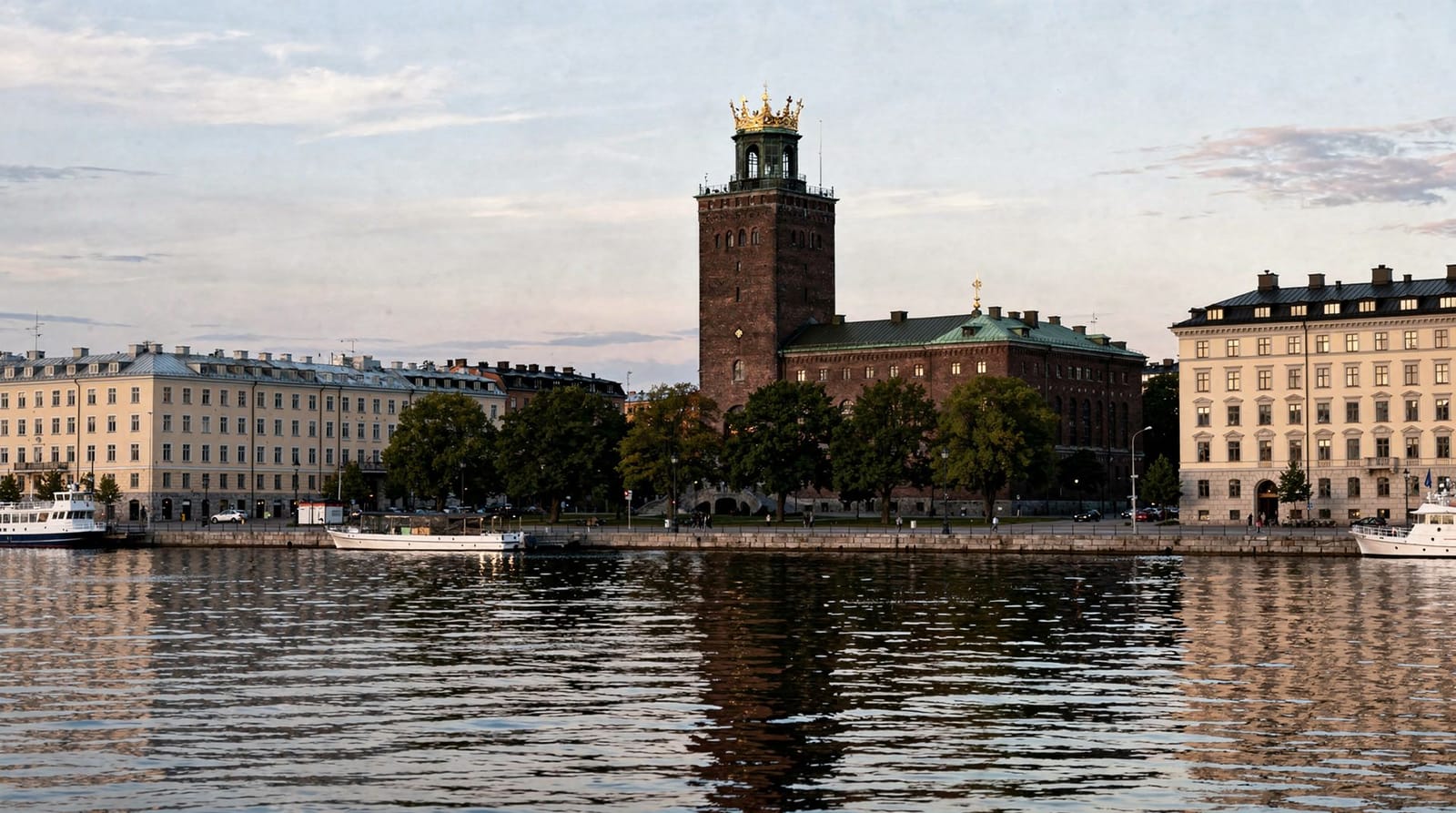
The Birka day trip departs from Stadshusbron — the pier directly outside Stockholm City Hall (Stadshuset), the red-brick tower on Kungsholmen that is one of Stockholm’s most recognisable landmarks. The journey across Lake Mälaren takes approximately 2 hours each way, passing through the island landscape of the western Mälaren — a different geography from the Baltic archipelago to the east, more enclosed and rural, with farmland visible on the larger islands.
The boat journey itself is significant: approaching Björkö from the water as Viking Age traders did, seeing the island’s profile gradually emerge, gives a physical orientation that the site needs. You understand the strategic position of Birka — at the intersection of navigable channels, visible from approaching vessels, defensible from the landward side — in a way that no map can give.
Arrival is at the small pier on the eastern shore of Björkö, with the Birka Museum a short walk inland.
The Viking island tour to Birka by boat from Stockholm is the standard way to make this journey — the ferry ticket includes the museum entry and the guided tour on the island, making this an all-inclusive day out. The tour takes approximately 8 hours total (transport plus island time).
Important: The Birka boat service runs May–September only. Outside these months, Björkö is inaccessible to casual visitors. This is a seasonal destination.
The Birka Museum
The museum on Björkö covers the archaeology of the site in depth, with original artefacts from the excavations. The collection includes:
Silver and trade goods: The material remains of Birka’s commercial life — Arabic silver coins (dirhams), Frankish glassware, Byzantine silk fragments, Baltic amber, and local Swedish metalwork — tell the story of a trading network that spanned from Scandinavia to Baghdad and from Ireland to Central Asia. The sheer range of origins represented in a single site is remarkable.
Grave goods: Birka had a large burial ground outside the town rampart. The museum displays selected objects from excavated graves: weapons, jewellery, combs, and everyday objects. The famous Birka Warrior grave (Bj 581), excavated in the 19th century and re-examined with modern methods in 2017, revealed that the individual buried with full warrior equipment — sword, shield, horse — was biologically female. The Birka Warrior is one of the most significant recent revelations in Viking Age archaeology and has been the subject of international academic and media attention.
Town reconstruction: Scale models and interpretive displays reconstruct what the town would have looked like at its peak — a population of approximately 700–1,000 people living in a planned settlement with jetties, workshops, and merchants’ halls crowded into a defended area above the harbour.
The guided tour of the site
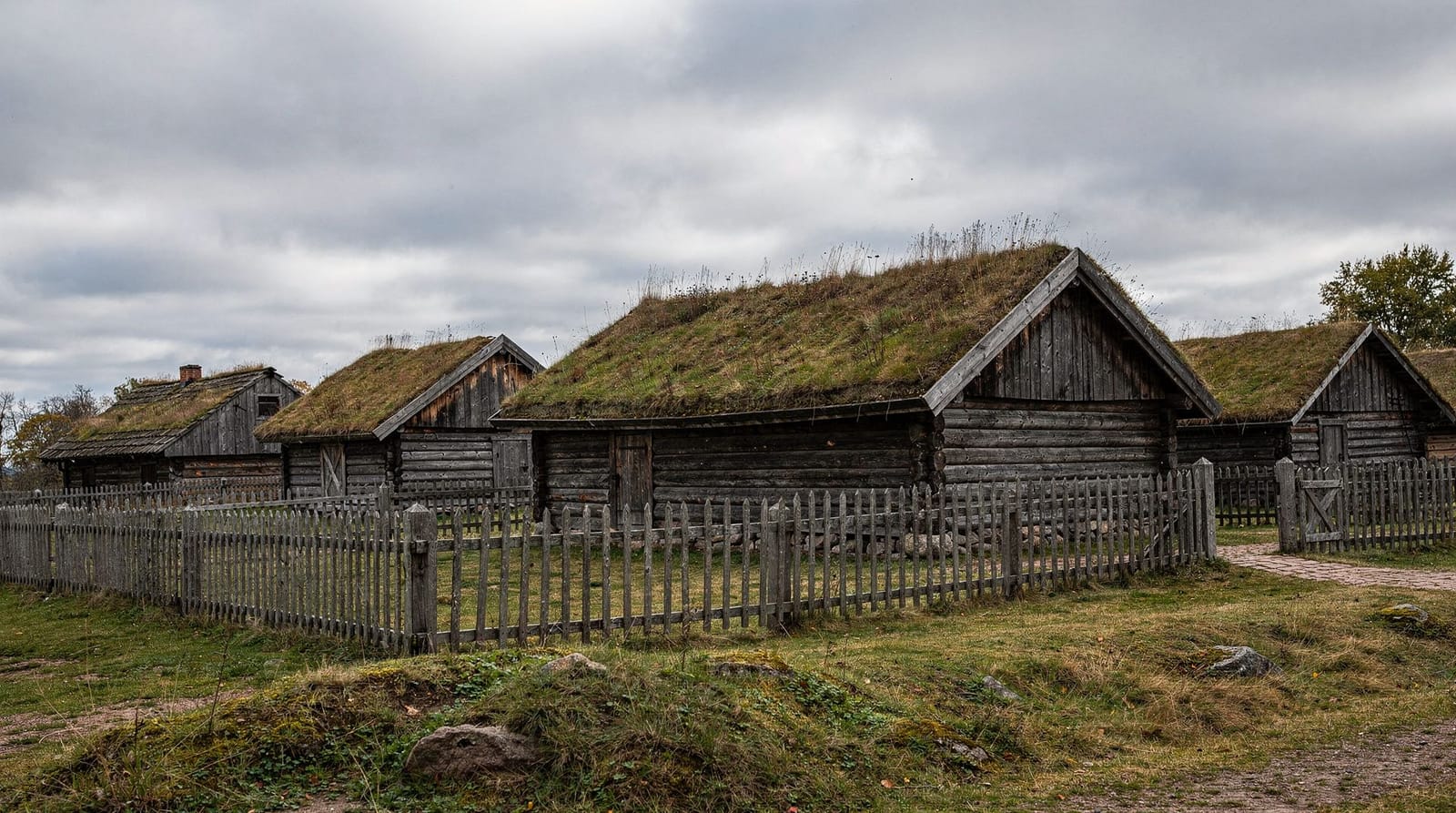
The guided tour of the earthworks and landscape is included in the boat ticket. The guide walks you through the site itself — the town rampart (Borgen, a semicircular earthwork that protected the landward approach), the harbour area (now dry land but visible as a depression), and the Black Earth (the soil layer, blackened by generations of occupation, that archaeologists use to identify the settlement extent).
The burial grounds (approximately 3,000 graves were identified in the 19th century excavations) are visible but not excavated in the visitor area — the mounds are covered in grass and wildflowers, a gentle way for the dead to be present without being disturbed. The scale of the burial field, spreading across the slope beyond the town, gives a sense of how substantial the community was.
The guide also covers the famous and controversial question of who the Birka traders were: archaeologically they were people of various origins living in a cosmopolitan trading community, but they are most easily identified with the Old Norse-speaking merchant-warriors now called Vikings — a term the people themselves did not use.
Hovgården and the Adelsö connection
Directly across the water from Björkö, on the adjacent island of Adelsö, stands Hovgården — the royal estate associated with the Swedish kings who controlled Birka’s trade. The two sites are jointly inscribed as a UNESCO World Heritage Site because the relationship between the trading town and the royal power that regulated and protected it is central to understanding how Viking Age society worked.
The Hovgården site includes large burial mounds dating from the pre-Christian period (similar in type to those at Gamla Uppsala), the remains of a royal hall, and a medieval church that was built on the royal estate site. The ferry passing between the two islands gives views of both — the town archaeology on Björkö’s slope and the royal mounds on Adelsö — that reinforce the paired nature of the UNESCO designation.
The Viking history context in Stockholm
Birka does not stand alone as a Stockholm-area Viking experience. The network of sites includes:
The Viking Museum (Historiska Vikingarna) on Djurgården, which has a more theatrical and experiential approach — the Viking Ride attraction plus reconstructed environments — useful for visitors (particularly families) who want an accessible introduction before the more demanding Birka field trip.
Sigtuna, which succeeded Birka as the main Mälaren trading centre after 975 AD — visiting both gives the sequential narrative of Viking Age to early medieval Swedish town development.
Uppsala (Gamla Uppsala), where the royal burial mounds represent the power structure that Birka’s archaeology reflects from the commercial side.
The Viking heritage guide covers all four sites and suggests the most productive sequence.
If Birka whets your appetite, the natural next step is Sigtuna, where a half-day Viking culture excursion to Sigtuna picks up the story where Birka’s decline leaves off. The Sigtuna day trip guide explains how to plan it, and the Birka day trip guide goes deeper on the logistics of the island visit itself. For a first-hand account of the journey, see the honest Birka review on the blog, and for the wider picture of how the lake trips fit around the city, the Stockholm in 3 days overview shows where a full Birka day can realistically sit.
What the excavations revealed: the material culture of Birka
The archaeology of Birka is unusually rich because the site was abandoned rather than continuously occupied — there was no medieval or modern town built on top of it to disturb the layers. This means the material from the 8th–10th centuries is relatively intact.
Trade goods: The excavations of the 19th and 20th centuries produced a collection that reads like a map of the Viking Age trading world. Arabic silver dirhams (coins minted in Abbasid caliphate mints in Iraq and Iran) appear in large numbers — the currency of the eastern trade routes through Russia. Frankish glass vessels and weapons indicate the western connection. Silk fragments from Byzantium represent the luxury trade from the south. Finnish and Sámi materials appear alongside Norwegian and Icelandic objects. The material assembly proves that Birka was not a regional market but a node in an international network.
Grave goods: Over 3,000 graves have been identified in the burial grounds outside the town. The excavated objects from these graves — weapons, jewellery, riding equipment, gaming pieces, household objects — represent a population that was prosperous, cosmopolitan, and Norse-speaking. The variation in burial richness indicates significant social stratification: some burials are simple; others, like the Birka Warrior grave (Bj 581), represent individuals of exceptional status with imported goods and prestige objects.
The town plan: The town occupied a defended area on the slope of Björkö, with the Borgen earthwork protecting the landward approach. The harbour was below, and the town filled the space between. The arrangement — defensible, water-accessible, with clear separation between the settlement and the burial grounds outside the rampart — follows a pattern seen at other Viking Age emporia (Hedeby in Denmark, Kaupang in Norway) and suggests a common planning tradition for major trading sites.
The Lake Mälaren journey: inland sea to trading hub
The boat journey from Stockholm to Birka traverses Lake Mälaren — Sweden’s third-largest lake, an inland sea of 1,100 square kilometres that connects Stockholm to the agricultural heartland of Uppland and Södermanland. In the Viking Age, Mälaren was connected to the Baltic through narrower, more navigable channels than today (the land is still rising after the last ice age, which has gradually reduced the lake’s tidal connection to the sea). Birka’s position at the point where the western Mälaren narrows was optimal for controlling access to the lake’s trading interior.
The journey today passes through channels and past islands that are largely agricultural — farmland visible on the larger islands, smaller wooded skerries in the middle of the lake. This is the western Mälaren landscape, quite different from the Baltic archipelago on the city’s eastern side. The flatness of the terrain, the agricultural character of the shores, and the sense of deep inland Sweden give the boat journey to Birka a different atmosphere from the same duration spent on the archipelago ferries east of the city.
Practical notes
Children on the Birka trip: The 2-hour boat journey each way is the main consideration for families with young children. The island tour involves walking on uneven ground. The museum content is adult-oriented though the artefacts are visually interesting. Children who enjoy history and can manage a 8-hour day will find Birka rewarding; younger children may find it long. The Viking Museum on Djurgården is the more practical Viking experience for families.
Weather: The island is exposed and the boat crossing of Mälaren can be uncomfortable in wind. The tours run regardless of weather — bring appropriate clothing for the conditions. The museum interior is fully covered.
Photography: The site prohibits flash photography in the museum (standard) but outdoor photography is unrestricted. The late afternoon light on the burial mounds is very good in summer.
Comparison with Skansen: Birka is an archaeological site with a museum; Skansen is a living open-air museum of Swedish culture. They serve different interests. Visitors specifically seeking Viking Age history should choose Birka; visitors who want a broader Swedish cultural experience should choose Skansen. They can be combined on consecutive days.
Birka versus other Mälaren and archipelago day trips
Birka competes for a slot in the Stockholm itinerary with several other full-day options, and it is worth being clear about what it offers versus the alternatives.
| Day trip | Duration | Character | Season |
|---|---|---|---|
| Birka | ~8 hours (2h boat each way) | UNESCO Viking archaeology, original site | May–September only |
| Drottningholm | 3–4 hours | Baroque royal palace, working court theatre | Year-round (boat: summer) |
| Mariefred & Gripsholm | Full day | Renaissance castle, portrait gallery | April–October |
| Uppsala | Half to full day | University city, Gamla Uppsala mounds | Year-round |
For visitors choosing a single Lake Mälaren day trip, Birka is the strongest option for genuine Viking Age history; Drottningholm wins for architecture and gardens; Mariefred for a quieter, less-visited castle experience. The day trips from Stockholm guide covers how to sequence more than one across a longer stay.
Packing and timing tips for the Birka day
Because the boat schedule anchors the whole day, plan around it rather than around the island itself. Check the departure time from Stadshusbron the evening before — morning departures vary by a half hour or more across the May–September season, and missing the boat means losing the day entirely. Bring a windproof layer even in July: Lake Mälaren’s open stretches can be considerably cooler than central Stockholm, especially on the open upper deck. Pack a light lunch or snack if you prefer not to rely entirely on the boat’s onboard café, and bring cash or a card for the small museum shop, which sells reproductions of Birka silverwork and books on Viking Age Sweden not widely available elsewhere. Sunscreen matters more than expected — the island has little shade around the excavation area, and the guided walking tour spends most of its time in open ground.
Frequently asked questions about Birka
Is Birka only accessible by boat?
Yes — the standard access is by the organised boat trip from Stadshusbron, which runs May–September. The ticket includes the museum and guided tour. Private boat access is possible but the infrastructure for independent visitors (museum entry, tour bookings) is organised around the boat schedule. There is no public road or bridge access to Björkö.
What is included in the Birka ferry ticket?
The ferry trip both ways, entry to the Birka Museum, and a guided tour of the archaeological site. This makes the total cost (approximately 495 SEK per adult in 2026) reasonably competitive for a full-day guided archaeology experience. Book in advance through the official Birka operator or via GetYourGuide.
Is the Birka Warrior story real?
Yes. Grave Bj 581, excavated in 1878 and re-examined with osteological and genomic methods in 2017 by archaeologist Anna Westin and colleagues, produced results showing the individual buried with warrior equipment (sword, spear, axes, shield, two horses, gaming pieces) was biologically female with XX chromosomes. The findings were published in American Journal of Physical Anthropology (2017) and generated significant academic and media discussion. The museum covers the story and its implications for understanding Viking Age gender and warrior identity.
How is Birka different from the Viking Museum in Stockholm?
The Viking Museum (Historiska Vikingarna) on Djurgården is a purpose-built museum experience with a theatrical Viking Ride attraction and reconstructed environments — excellent for families and accessible year-round. Birka is an actual archaeological site where the events happened, with original artefacts and landscape — a primary source rather than an interpretation. For serious Viking Age interest, Birka; for family introduction or year-round access, the Viking Museum.
Can I visit Birka without the guided tour?
No — the organised boat trip includes the guided tour as part of the ticket structure. The site is not accessible independently, and the landscape archaeology requires interpretation to make sense. The guide is a genuine asset rather than an optional add-on.
What is the physical difficulty of the Birka tour?
Moderate. The walk from the pier to the museum and around the earthworks involves some uneven ground and modest elevation changes. No significant climbing. The tour is manageable for most fitness levels including older adults. Walking shoes are recommended. The guided section takes approximately 1.5–2 hours on site.
Top experiences
Bookable activities with verified prices and instant confirmation on GetYourGuide.