Kungsholmen — Stockholm's City Hall island
Kungsholmen is where Stockholm's iconic City Hall stands. Explore Stadshuset, the Nobel banquet hall, Mälaren waterfront and the island's local life.
Stockholm: Alfred Nobel tour with City Hall and Nobel Museum
Quick facts
- Getting there
- T-bana to Fridhemsplan or Rådhuset; walk from T-Centralen
- Landmark
- Stadshuset (Stockholm City Hall)
- Character
- Residential, waterfront, relaxed
- Distance from T-Centralen
- 15 min walk; 5 min by T-bana
The island most visitors underestimate
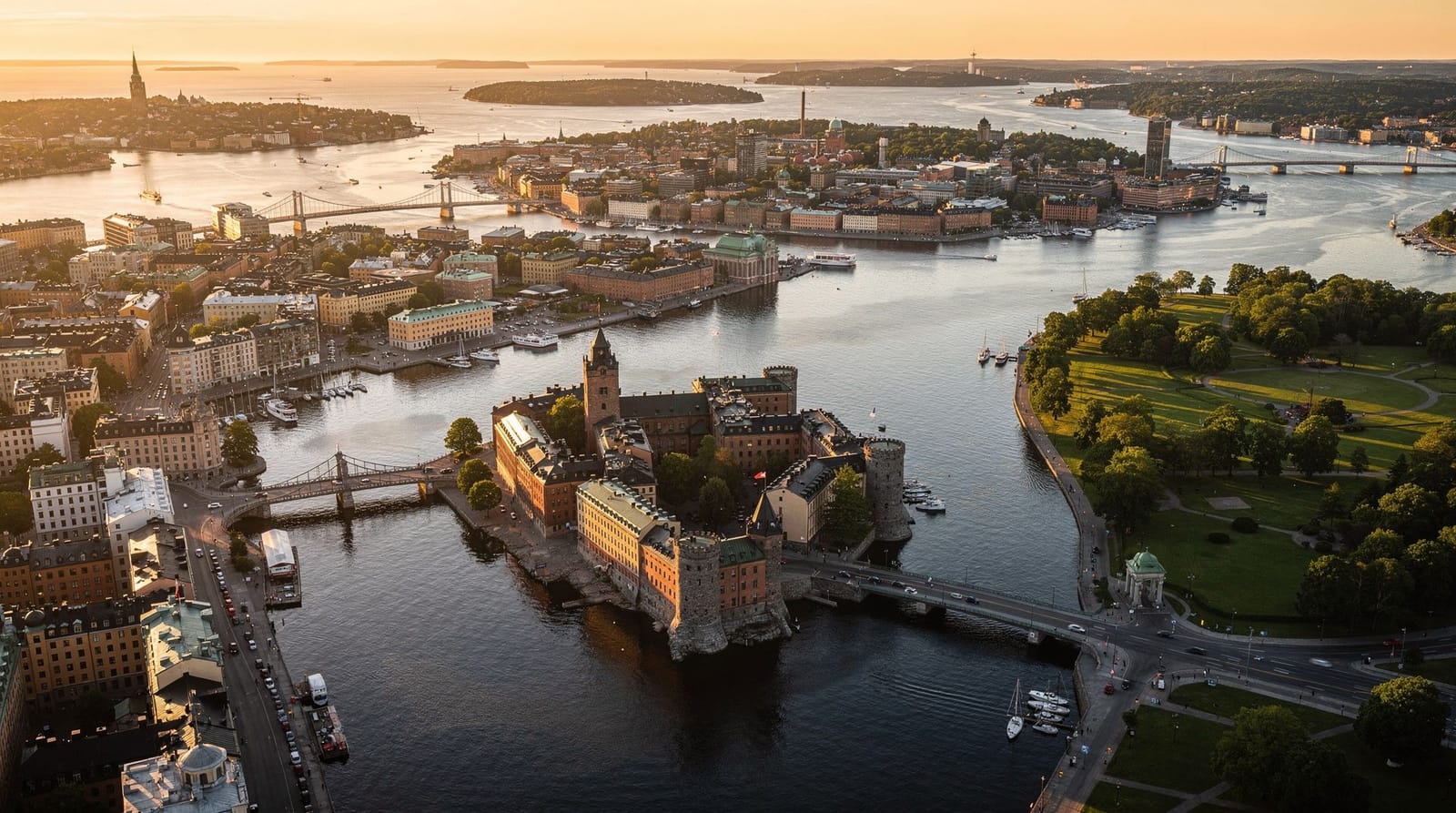
Kungsholmen sits west of Norrmalm across the Klaraström channel, a residential island that the majority of Stockholm tourists visit only for one reason: the City Hall. That is a shame, because the island has more to offer — a waterfront promenade along Lake Mälaren that provides some of the most peaceful walking in central Stockholm, a neighborhood food and café scene that is quietly excellent, and the atmosphere of a residential area that has not been overrun by tourism in the way that Gamla Stan and even Södermalm have.
The City Hall is, however, genuinely exceptional and deserves the attention. Stadshuset is not just another grand municipal building — it is a National Romantic masterpiece by Ragnar Östberg, completed in 1923, and it contains the Blue Hall where the Nobel Prize banquet takes place each December. If your interest in Stockholm’s cultural life extends to the Nobel Prizes at all, the City Hall tour is one of the highlights of a Stockholm visit.
Stadshuset — the City Hall
Stockholm’s City Hall was 12 years in construction (1911–1923) and represents the pinnacle of Swedish National Romantic architecture — a style that drew on Gothic, Byzantine, and vernacular Swedish building traditions to create something both deeply distinctive and unmistakably European. The building stands on the waterfront at the eastern tip of Kungsholmen, its 106-metre square tower topped by three golden crowns (the tre kronor that are Sweden’s national heraldic symbol) visible from much of the city.
The exterior is red brick — the particular tone of Swedish brick from Hellas, hand-laid at a slight angle to catch the light differently at different times of day. The effect in late afternoon is extraordinary: the brick glows in a way that no photograph captures accurately. The tower, with its panoramic observation platform, can be climbed for a fee (separate from the interior tour) and provides views over Gamla Stan, Djurgården, and the lake that are more intimate and varied than the higher SkyView gondola.
The interior of the building is accessible only by guided tour, which run multiple times daily in English and Swedish. This is actually an advantage rather than a constraint — the tour is 45 minutes, led by knowledgeable guides, and provides context for the decorative program that would be invisible without explanation.
The key spaces inside:
The Blue Hall — the Nobel Prize banquet room, used each December for the celebration dinner attended by the Nobel laureates, the Swedish royal family, and approximately 1,300 guests. Despite the name (Östberg originally planned to paint it blue, then decided to leave the brick exposed), the room is brick-red, vaulted, magnificent, and contains one of the more dramatic staircases in Europe — the laureates descend it to applause from the assembled guests below. The organ is one of the largest in Scandinavia.
The Golden Hall — the ballroom immediately above the Blue Hall, decorated with approximately 18 million gold mosaic tiles depicting scenes from Swedish history. The effect is Byzantine in the original sense — dense, glittering, overwhelming. The central figure over the north entrance shows Mälardrottningen (the Queen of Lake Mälaren), a mythological figure representing Stockholm’s geographical position between the lake and the sea.
The Prince’s Gallery — a long hall with views over Mälaren through tall windows, decorated with murals by Prince Eugen (the “Painter Prince,” a Swedish royal with genuine artistic credentials). The murals show the Stockholm waterfront as it appeared in the early 20th century, before the Norrmalm reconstruction changed much of the skyline.
Book the Nobel Prize Museum and City Hall combination tour — see where Sweden’s most famous ceremony happens Book a Stockholm highlights tour including City Hall, Gamla Stan, and the Vasa MuseumTower visit: The tower is currently closed to visitors for renovation. When open, the climb is 365 steps; the view from the top is one of the best in Stockholm for the specific combination of water (Mälaren to the west) and city (Gamla Stan and Djurgården to the east). Worth doing if you have not already climbed to a high viewpoint elsewhere.
The Mälaren waterfront promenade
The southern and western shores of Kungsholmen face Lake Mälaren — the freshwater lake that extends 120km west of Stockholm and historically provided the inland trade route that made the city’s location so strategically important. The promenade along the waterfront from the City Hall west to Rålambshovsparken is one of the most pleasant walking routes in central Stockholm: flat, approximately 2.5km each way, with consistent water views, benches, and (in summer) outdoor swimming areas.
Rålambshovsparken at the western end of the promenade is a large park that slopes down to the water — popular with families, picnickers, kayakers, and outdoor swimmers in summer. The outdoor pool (Smedsuddsbadet) is a classic Stockholm swimming spot in July and August.
The walk from the City Hall to the park and back is about 5km and takes 60–80 minutes at a relaxed pace. There are cafés and small restaurants along the route in summer. This is, genuinely, the activity on Kungsholmen that most visitors miss and most locals use.
Hantverkargatan and neighborhood food
Kungsholmen’s main commercial street runs east-west across the island, and the stretch between Fridhemsplan and Fleminggatan has a concentration of neighborhood restaurants, cafés, and food shops that serve a residential clientele rather than a tourist one.
Urban Deli (Kungsholmen branch) on Hantverkargatan is an outpost of the Södermalm concept — food market, café, and restaurant in one space. Reliable quality, good breakfast and lunch options.
Mälarstrand restaurants: Several restaurants and floating bars have established themselves along the Mälaren waterfront between the City Hall and Rålambshovsparken. Standards vary — the waterfront location is the primary selling point — but in summer the outdoor tables with lake views are genuinely pleasant.
Johan and Nyström has a Kungsholmen café on Kungsholmstorg — one of Stockholm’s best specialty coffee roasters and consistently good for an afternoon coffee stop.
Mathias Dahlgren’s Matbaren — strictly speaking at the Grand Hôtel on the Blasieholmen waterfront between Norrmalm and Gamla Stan, but worth mentioning in the Kungsholmen orbit because the walk from the City Hall to the Grand Hôtel along the waterfront is exactly the route where you would end up wanting a serious dinner reservation. Matbaren (one Michelin star) is more accessible than the full Matsalen (two Michelin stars) in the same hotel, with à la carte options in the 400–700 SEK range.
Scheelegatan and the interior streets
Between Fridhemsplan T-bana station and the waterfront, the interior streets of Kungsholmen (Scheelegatan, Pontonjärgatan, Pipersgatan) feel authentically residential in a way that few central Stockholm streets manage. The architecture is primarily early 20th-century apartment blocks — solid, bourgeois, maintained — and the ground-floor level has the mix of bakeries, wine shops, convenience stores, and one-room cafés that indicate a neighborhood that works as a neighborhood.
The street market at Fridhemsplan (periodic, check schedule) is a local food and craft market that attracts a Kungsholmen residential crowd rather than a tourist one.
Getting to and around Kungsholmen
T-bana: Two stations serve Kungsholmen: Rådhuset (Blue Line, 5 minutes from T-Centralen) is the closest to the City Hall — exit toward Hantverkargatan and turn left; the City Hall is 400 metres. Fridhemsplan (Blue and Green Lines) serves the western and central parts of the island, 5–6 minutes from T-Centralen.
Walking: From T-Centralen, cross the Klarastrandsleden road bridge toward the City Hall — approximately 15 minutes at a normal pace. This walk is part of the standard Stockholm walking route for visitors covering Norrmalm and the City Hall in sequence.
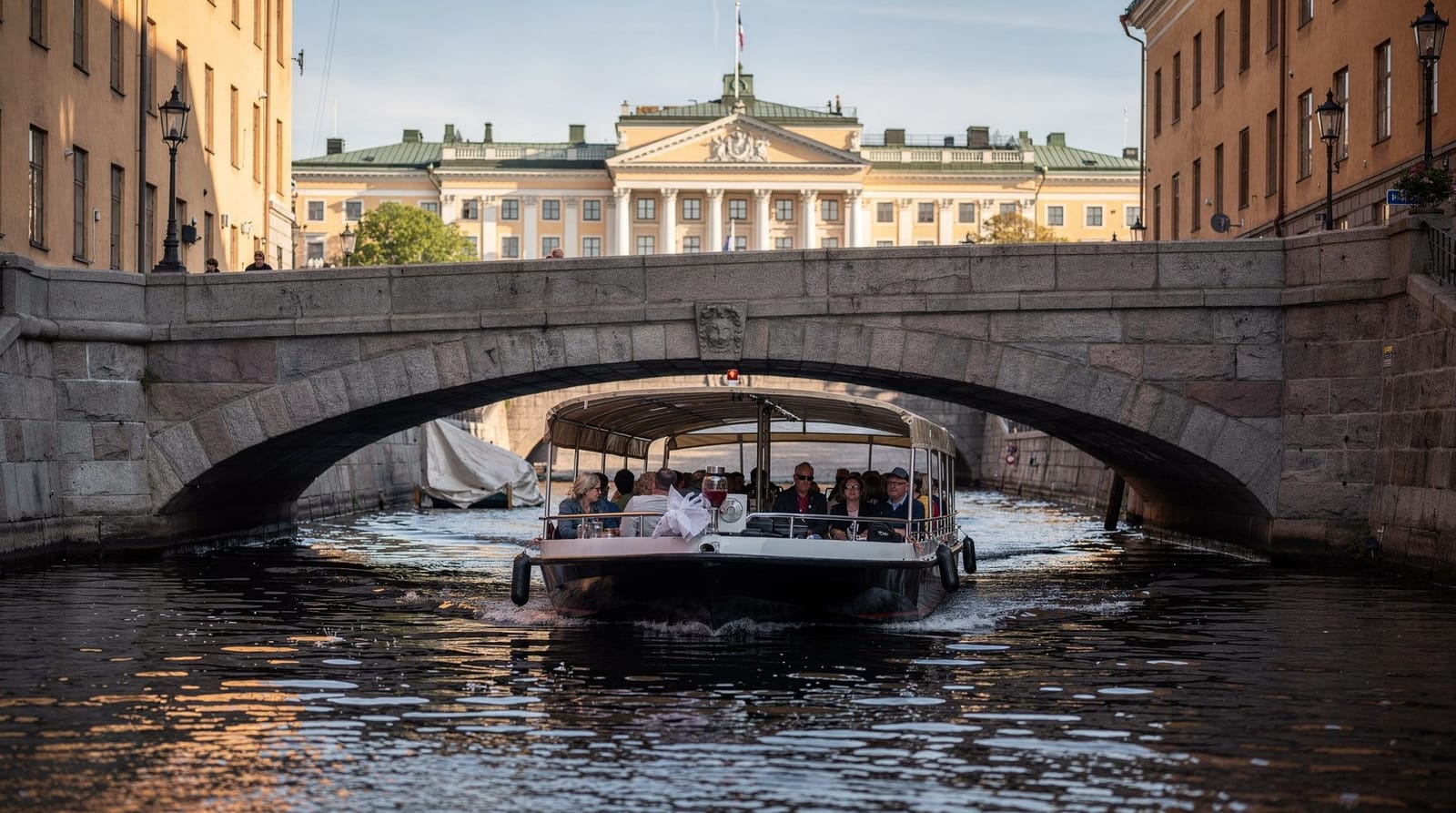
Boat: Several canal boat tours pass Stadshuset from the water — the view of the City Hall from Lake Mälaren, particularly from the canal boat route, is one of the defining Stockholm images. The canal boat tours from Nybroplan or Slussen include this view in the standard route.
See Stadshuset from the water on the Royal Bridges canal boat tour — the best angle on the City HallWhere to stay on Kungsholmen
Mid-range (1,200–2,500 SEK): Comfort Hotel Kristiansund on Kungsholmsgatan is a solid mid-range option with easy access to both the waterfront and the Fridhemsplan T-bana. Nordic Light Hotel near T-Centralen (technically Norrmalm but Kungsholmen-adjacent) is design-forward and slightly more upscale.
Budget: Most budget accommodation for Kungsholmen visitors is more practically located in Norrmalm — the T-bana connection is fast enough that there is no real disadvantage to staying a few stations away.
Best time to visit Kungsholmen
May–September for the waterfront promenade and outdoor swimming at Rålambshovsparken. The City Hall tour runs year-round.
December for the Nobel Prize banquet context — the Blue Hall is sometimes accessible for public viewings around the Nobel week (mid-December), and the building is decorated for the ceremony. Check the Stadshuset website for December public access.
Year-round for the City Hall tour — the building interior is only accessible by guided tour, which runs daily regardless of season and is one of Stockholm’s more underrated experiences.
Architecture of Stadshuset: what to look for
For visitors interested in architecture, the City Hall rewards more attention than a quick exterior photograph suggests. A few specific elements worth noting during the guided tour:
Brick craftsmanship: The 8 million bricks used in the construction were hand-selected and laid in a pattern called “monk bond” (munkförband) at a slight angle to create a surface that catches light differently throughout the day. The effect is subtle but visible — the walls shimmer faintly in morning sun in a way that modern brick facades do not.
The Blue Hall proportions: The room’s scale is designed for ceremony. The floor-to-ceiling height is 23 metres. The staircase at the north end was specifically proportioned so that two people descending side-by-side would appear at their most dignified from the floor below — the Nobel laureates’ descent is choreographed around this geometry.
The Golden Hall’s mosaic narrative: The 18 million tiles in the Golden Hall were assembled in a program that tells a coherent visual story of Swedish history from the Viking age through the early 20th century. The central figure, Mälardrottningen (the Queen of Lake Mälaren), is surrounded by historical figures on both sides — Viking warriors to the west, representatives of European civilization to the east — reflecting the geopolitical self-understanding of early 20th-century Sweden.
Prince Eugen’s murals: The paintings in the Prince’s Gallery show a panoramic view of Stockholm that is partly idealized and partly a genuine historical record. Prince Eugen (1865–1947) was a serious landscape painter with a specific feeling for Swedish light and water, and the murals reflect the same quality that made him significant in Swedish art history independent of his royal status.
Kungsholmen’s waterfront: seasonal swimming and summer life
The Mälaren waterfront along Kungsholmen’s southern and western shore becomes Stockholm’s outdoor living room in summer. A few specific notes:
Smedsuddsbadet at the western end of the island (Rålambshovsparken) is Stockholm’s most accessible central outdoor swimming spot — clean Mälaren water, changing facilities, and a population of swimmers that arrives from late June through August. The water temperature in July reaches 18–20°C.
Norr Mälarstrand: The promenade running east from Stadshuset along the Mälaren shore is officially named Norr Mälarstrand and is one of the better urban waterfront walks in the city — consistent views over the lake to the south, benches at intervals, and a low-key café or two in summer. The walk from the City Hall to Rålambshovsparken and back takes about 80 minutes at a relaxed pace.
Boat rental: Small rowboats and paddleboats are available for rental near Rålambshovsparken in summer from informal operators. The lake is calm enough for rowing without significant experience.
Where to eat on Kungsholmen: expanded options
Beyond the options mentioned above:
Pong on Fleminggatan is a Kungsholmen institution — a Chinese kitchen that has served the residential population for decades with genuine cooking rather than tourist-facing facsimile. Weekend dim sum lunches draw queues from across the neighborhood.
Lux Dag för Dag on Primusgatan near the Vinterviken waterfront area is one of Stockholm’s quietly excellent mid-range restaurants. High-quality Swedish seasonal ingredients, unpretentious approach, unusual factory-building setting near the water. Worth the 10-minute taxi ride from the City Hall.
ICA Kvantum at Fridhemsplan is one of Stockholm’s better large food stores — excellent for picnic supplies before a Mälaren waterfront walk. The cheese, smoked fish, and prepared food sections are above-average for a supermarket.
Connections to other neighborhoods
Norrmalm is immediately east across the channel — a 15-minute walk from the City Hall. Vasastan is north of Fridhemsplan, crossing Fleminggatan into a quieter residential area. Södermalm is accessible by bus or a 25-minute walk south around the island’s eastern tip.
For a recommended walking route that combines the City Hall with Gamla Stan and continues to the Vasa Museum, see the Stockholm 2-day essential itinerary, and the Stockholm City Hall guide for a deeper look at the tour and tower climb.
If the City Hall has whetted your appetite for the Nobel story, the Nobel Prize Museum guide explains how the museum in Gamla Stan complements the banquet hall you see here. Visitors who prefer to see the building from the water can read the royal canal boat tour guide, and anyone curious about the neighbourhoods on the other side of the channel will find more context in the Norrmalm neighborhood deep dive.
Kungsholmen also fits easily into a longer stay. The Stockholm in 3 days overview shows where a City Hall morning can slot in, and getting around by SL pass covers the transport side if you plan to hop between Rådhuset, Fridhemsplan and the rest of the centre. For the wider picture of the city, start from the Stockholm destination page.
Planning a Kungsholmen half-day
The most efficient sequence is: arrive at Rådhuset by T-bana, join a mid-morning City Hall guided tour (45 minutes), then walk the Mälaren waterfront promenade west toward Rålambshovsparken with a coffee stop at Johan and Nyström along the way. This structure takes 3–4 hours at a relaxed pace and covers the island’s essential sights without rushing. Visitors extending into the afternoon can add lunch at one of the Hantverkargatan restaurants or continue on to Norrmalm or Vasastan for the rest of the day.
Frequently asked questions about Kungsholmen
Can I visit the Nobel Prize banquet room?
Yes — the Blue Hall is part of the standard guided tour of Stadshuset, which runs several times daily in English. You can see the hall as it looks in its normal state (without the 1,300 banquet guests and their tables). December visitors sometimes have access during the Nobel Prize week setup; check the Stadshuset website for specific dates.
How do I book a City Hall tour?
Tours run most days (the schedule varies by date) and can be pre-booked online at the Stadshuset website or via GetYourGuide. Walk-up tickets are available when tours have remaining capacity. During summer (July–August), booking in advance is recommended. Tours last approximately 45 minutes.
What are the opening hours for the City Hall tower?
The tower is currently closed to visitors for renovation. Check the Stadshuset website for reopening; the climb is 365 steps, with no lift.
Is Kungsholmen good for swimming?
Yes — Rålambshovsparken at the western end of the Mälaren waterfront promenade has Smedsuddsbadet, an outdoor swimming area on the lake. The water is clean (the Mälaren is a drinking water reservoir for Stockholm), and summer water temperatures reach 18–20°C in July. The beach area is free and open to all.
How far is the City Hall from Gamla Stan?
From Stadshuset, Gamla Stan is approximately 15 minutes on foot — walk east along the waterfront to the Riksbron bridge. The view of the City Hall tower from the water between the two islands is one of the most recognisable in Stockholm. The combination of City Hall and Gamla Stan on the same half-day makes natural sense geographically.
Top experiences
Bookable activities with verified prices and instant confirmation on GetYourGuide.