Stockholm versus Copenhagen — an honest comparison
The question lands in our inbox more than any other. We have a week in Scandinavia — should we do Stockholm, Copenhagen, or both? The honest answer is: it depends on what you’re there for, and the two cities are more different than the tourist literature admits.
We’ve spent time in both. Here’s what we actually think.
| Best for | Stockholm: museums & archipelago. Copenhagen: ease & warmth |
| Train between them | Around 5 hours via the Øresund bridge |
| Minimum time each | 2 nights, ideally 3-4 in Stockholm |
| Currency | SEK in Stockholm, DKK in Copenhagen (both non-euro) |
| Daily budget | Roughly 100-130 EUR/person for both cities |
The case for each city in one sentence
Stockholm: More dramatic, more spread out, harder to navigate, rewarded deeply if you put in the work — especially if you add the archipelago.
Copenhagen: Easier, warmer in atmosphere, more immediately walkable, perhaps slightly shallower if you scratch its surface.
That’s unfair to both, but it’s a useful starting frame.
Transit: Stockholm wins on network, Copenhagen wins on intuition
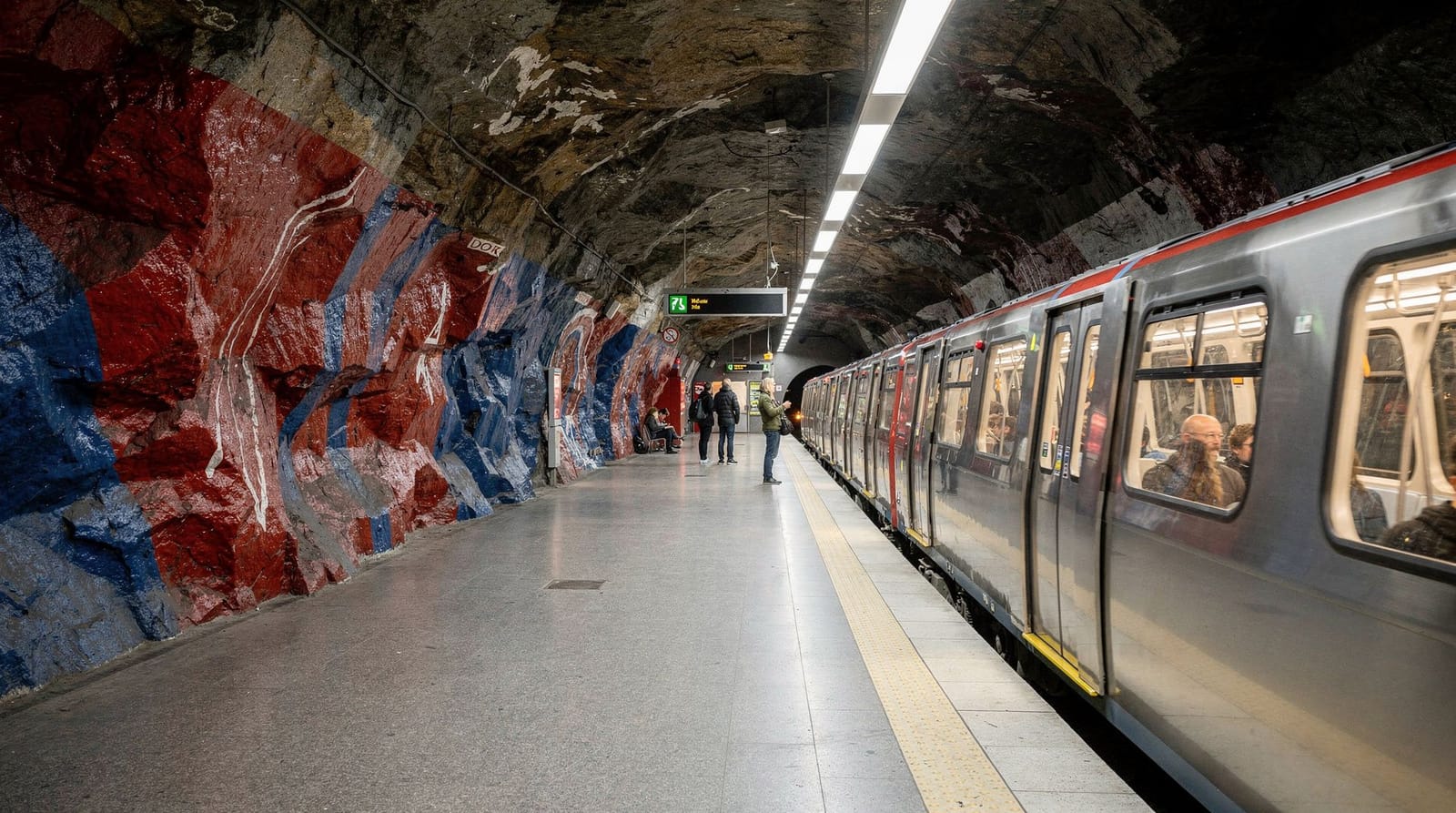
Stockholm’s SL system covers an impressive range — metro (T-bana), buses, trams, commuter rail, and crucially the Waxholmsbolaget archipelago ferries. Seven metro lines. The green Tunnelbana stations in the city centre count as an art experience in themselves; Kungsträdgården station alone is worth a stop. Multi-day passes are good value if you’re moving around.
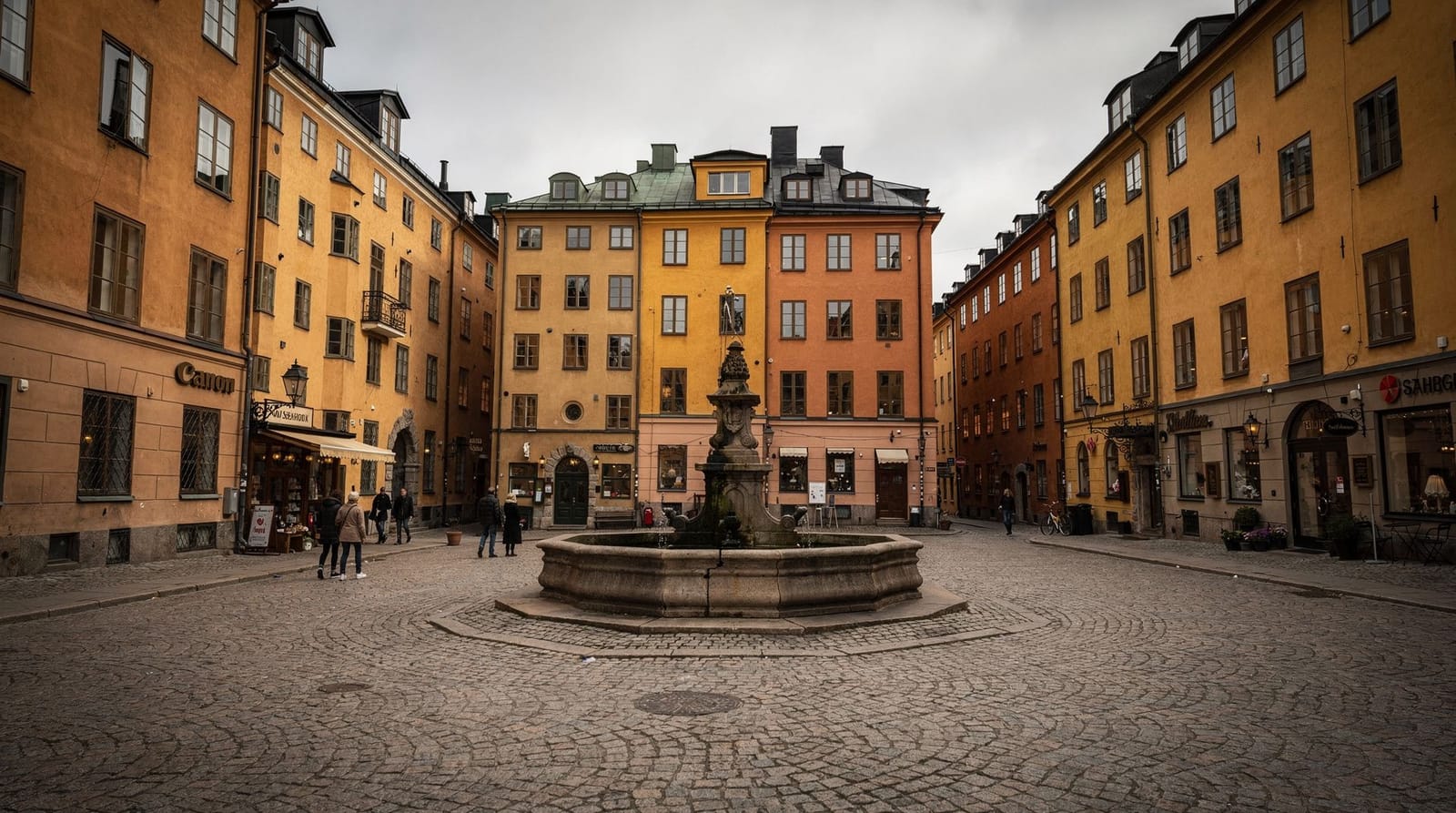
The downside: Stockholm’s geography is a collection of islands connected by bridges, and understanding where you are relative to where you’re going requires a mental map that takes a day to build. Getting from Gamla Stan to Södermalm to Djurgården to Östermalm involves more water-crossing and backtracking than it looks on a flat map.
Copenhagen’s system is smaller but the city is more compact. The Metro runs 24 hours a day, which Stockholm’s does not. And in Copenhagen you can realistically cycle everywhere — the cycling infrastructure is exceptional, the distances are short, the drivers expect cyclists. Stockholm has cycling but it’s a different proposition.
Verdict: Stockholm’s network is more comprehensive. Copenhagen is more intuitive and bike-friendly.
Food: both good, different strengths
Swedish food in Stockholm has had a quiet revolution in the last decade. The old clichés — herring, meatballs, potatoes — still exist (and the herring is genuinely worth eating), but Östermalm’s food hall Saluhallen, the rye bread culture of the morning cafés, the quality of the smörgåsbord concept when executed well, all of this has depth.
Fika — the Swedish coffee break ritual — is worth taking seriously rather than treating as a tourist activity. A good kanelbulle (cinnamon bun) in a neighbourhood café with dark coffee is a structural part of how the city actually operates.
Copenhagen’s food scene gets more international press, partly because of a certain restaurant with a waiting list and a foraging philosophy. But below that tier, the Danish smørrebrød (open sandwich) culture, the natural wine bars, the neighbourhood bakeries producing pastries that justify the stereotype — Copenhagen’s daily food is arguably more accessible and more exciting for the average visitor than Stockholm’s.
If you want the Stockholm side of this in more detail, our fika culture guide explains how the coffee break works in practice, and the Södermalm food scene guide shows where the newer kitchens are clustering. For a guided introduction, a Swedish food walking tour through the old town is an easy way to taste several classics in one outing.
Prices are roughly equivalent — both are expensive cities, Stockholm slightly more so for restaurants. Alcohol costs more in Sweden due to the Systembolaget monopoly; wine is cheaper by the glass in Copenhagen.
Verdict: Copenhagen edges it for daily eating. Stockholm has the higher ceiling for specific experiences (archipelago seafood, formal New Nordic).
Attractions: Stockholm wins clearly
This is the least debatable point. Stockholm has a denser collection of world-class museums and specific experiences that have no direct equivalent elsewhere.
| Stockholm | Copenhagen |
|---|---|
| Vasa Museum (17th-c warship, intact) | National Museum of Denmark |
| Skansen (world’s oldest open-air museum) | Louisiana Museum of Modern Art (day trip) |
| ABBA The Museum | Designmuseum Danmark |
| Fotografiska | Rosenborg Castle |
| Stockholm City Hall (Nobel Prize banquet) | Tivoli Gardens |
| Drottningholm Palace (UNESCO, ferry access) | Christiansborg Palace |
| Stockholm Archipelago (30,000 islands) | Frederiksberg Gardens |
| Royal Palace (changing of guard) | — |
The Vasa Museum is genuinely sui generis. There is nothing else on earth quite like standing in front of a complete 17th-century warship that sank in the harbour on its maiden voyage and was raised intact in 1961. Our Vasa Museum guide covers what to see and how long to allow. Skansen is more charming than it sounds in description. The archipelago has no Danish equivalent — see our Stockholm archipelago complete guide for how to fit it into a short trip.
Copenhagen’s strongest card is probably easier day trips — Helsingør (Hamlet’s castle) and Louisiana are both excellent and accessible. But for raw attraction density, Stockholm leads.
If you can’t decide between the big-name museums, our Vasa versus ABBA Museum comparison and the Vasa versus Skansen comparison help you pick when time is short. Palace fans can also check the Drottningholm Palace guide, since the boat ride out there is part of the appeal.
Verdict: Stockholm clearly.
Stockholm archipelago sightseeing cruiseAtmosphere: Copenhagen wins on warmth
Stockholm has a reputation for reserve that isn’t entirely unfair. The concept of lagom — roughly “just the right amount” — extends to social interaction. Swedes tend not to initiate conversation with strangers on public transport, and this can read as coldness. It isn’t, quite. It’s a different set of social rules.
Copenhagen feels warmer. The Danish hygge (cosiness, conviviality) isn’t just a marketing concept — it shapes how bars and cafés are designed, how people occupy shared space, how conversations start with strangers. Copenhagen is easier to be a tourist in, in an emotional sense.
Stockholm rewards the patient visitor. After a few days, once you’ve found your local café and worked out the transit and stopped being jarred by prices, it opens up considerably.
Verdict: Copenhagen, for most visitors.
Cost: roughly equivalent, Stockholm slightly higher
Both cities are expensive by Northern European standards. Accommodation in summer peaks can reach 200+ USD per night for mid-range hotels. Restaurants are comparable — a lunch menu is roughly 130-160 SEK in Stockholm, equivalent in Copenhagen. Coffee is 40-55 SEK in Stockholm, roughly the same in DKK equivalent.
For a fuller breakdown of where the money goes in Stockholm, see our daily budget guide, and our Stockholm tourist traps guide lists the places where you pay extra for little.
Where Stockholm costs more: alcohol (Systembolaget markup), some transport (Arlanda Express at 340 SEK is a specific trap), and some tourist attraction entry fees.
Where Copenhagen costs more: accommodation in peak summer can be slightly higher; the Tivoli entrance fee adds up.
Verdict: Near tie, Stockholm marginally more expensive.
Nightlife and evenings
Stockholm’s evening scene concentrates in Södermalm — bars, small clubs and a bohemian, slightly grungier feel than the rest of the city. Gamla Stan has an older-town pub crawl scene aimed squarely at visitors; it is fun for one night but not where locals drink. Our Södermalm walking tour guide covers the neighbourhood in daylight, and it doubles as a decent map for the evening too.
Copenhagen’s nightlife leans harder into late-night bars and a livelier, more consistently international crowd, particularly around Vesterbro and Nørrebro. Neither city is a party capital on the scale of Berlin or Amsterdam, but Copenhagen edges it for spontaneous evenings out, while Stockholm rewards knowing exactly where you’re going.
Weather and when to go
Both cities share a similar climate band, but Stockholm’s archipelago adds a seasonal wrinkle Copenhagen doesn’t have: many boats and island facilities scale back sharply outside May-September, so a winter Stockholm trip trades the archipelago for indoor museums and Christmas markets instead. Our best time to visit Stockholm guide breaks down month-by-month trade-offs. Copenhagen’s attractions run closer to full service year-round, which makes it a marginally easier winter city-break choice if you’re deciding between the two for a short off-season trip.
Our recommendation for a 6-day Scandinavia trip
4 nights Stockholm, 2 nights Copenhagen.
Rationale: Stockholm needs more time to do justice to the archipelago (which requires a full day), and has more anchored attractions. Copenhagen is compact enough that two focused days hit its highlights effectively. The train between the two cities (via the Øresund bridge) takes about five hours and is scenic; flying is faster but wastes a morning.
If you have fewer days and can only choose one: Stockholm for the archipelago and museum depth, Copenhagen for ease and atmosphere. There is no wrong answer.
Stockholm must-see attractions walking tour with a guideFor itinerary planning in Stockholm, see our 4-day Stockholm itinerary. Our transport guide covers SL passes and Arlanda Express in detail.
Frequently asked questions about Stockholm vs Copenhagen
Is Stockholm or Copenhagen better for families?
Stockholm edges ahead, with Skansen providing a full day’s entertainment for children of most ages, and the archipelago ferry trips being genuinely exciting. Copenhagen’s Tivoli is excellent for younger children. Both cities are extremely family-friendly in terms of logistics.
Which city is cheaper?
Both are expensive. Stockholm is marginally pricier, particularly for alcohol (state monopoly) and transport from the airport. Budget 100-130 EUR per person per day for accommodation, food and a few activities in either city.
Can you do both cities in 3 days?
Technically yes, but you’d be doing neither justice. Minimum is 2 nights each (allowing roughly 1.5 days of actual time per city). The train crossing is enjoyable; factor in half a day of transit.
Is English widely spoken in both?
Broadly yes. Swedish and Danish people have very high English proficiency as a rule. In both cities, English is effectively a working language in tourism, hospitality and most public-facing roles.
Should first-timers do Stockholm or Copenhagen first?
Either order works logistically, but we lean towards Stockholm first if you have the energy for it — the archipelago and museum-dense days benefit from being tackled while fresh, and Copenhagen’s easier pace makes a relaxed finish to the trip. If jetlag is a bigger factor, Copenhagen’s simpler layout is the gentler landing.
Is the train between the two cities worth it over flying?
For most travellers, yes. The roughly five-hour train via the Øresund bridge is comfortable, scenic in parts, and drops you in each city centre with no airport transfer at either end. Flying saves time on paper but the airport-to-centre legs on both sides typically eat most of that saving.