Swish and payments in Stockholm: what tourists actually need to know
Stockholm: Vasa Museum entrance ticket
Can tourists use Swish in Stockholm?
No. Swish requires a Swedish bank account, a Swedish personal identity number (personnummer), and Swedish BankID. Tourists cannot access Swish at all. Use your contactless Visa, Mastercard, or Amex card instead — it is accepted everywhere in Stockholm, including buses, ferries, and market stalls.
Sweden is genuinely cashless
Sweden is routinely cited as the world’s most cashless society. By 2026, over 90% of all retail transactions are made by card. Many Stockholm restaurants, shops, and transport services now refuse cash entirely — the word to know is kontantfritt (cash-free).
| What to bring | A contactless Visa/Mastercard or Apple/Google Pay |
| Cash needed | 500–1,000 SEK per person, as backup only |
| Swish | Not usable by tourists — no workaround exists |
| Currency | Swedish krona (SEK); euros not generally accepted |
| Best for | Card-first travellers — Stockholm is built for it |
For tourists, this is mostly excellent news: your contactless card from home works everywhere, and you do not need to carry local currency. The confusing part is Swish, which is ubiquitous in Swedish life but completely inaccessible to non-residents.
Swish: why tourists cannot use it
Swish is Sweden’s dominant peer-to-peer payment app, used by roughly 8 million Swedes (out of a population of 10 million). You will see “betala med Swish” signs at market stalls, restaurants, small shops, and in taxis.
To use Swish, a person needs:
- A Swedish bank account
- A Swedish personal identity number (personnummer)
- Swedish BankID (the digital authentication system linked to your personnummer)
None of these are accessible to tourists, regardless of nationality. There is no workaround, no tourist version, and no temporary registration. If a vendor only accepts Swish and you cannot pay by card, you have no option.
What this means in practice: Most larger venues accept cards as well as Swish — this is rarely a real problem. At very small market stalls or independent vendors who have set up Swish as their only payment method, you may occasionally be unable to buy. This is uncommon but it does happen, particularly at flea markets, small Saturday craft fairs, and some street-food operations.
What actually works for tourists
Contactless cards
Your Visa, Mastercard, or Amex contactless card is accepted everywhere that accepts cards in Stockholm — which is essentially everywhere. Terminals in Stockholm are uniformly modern and accept contactless up to standard limits (varies by issuing bank, often 1 000–4 000 SEK per tap without PIN for international cards, though PIN may be required for the first transaction).
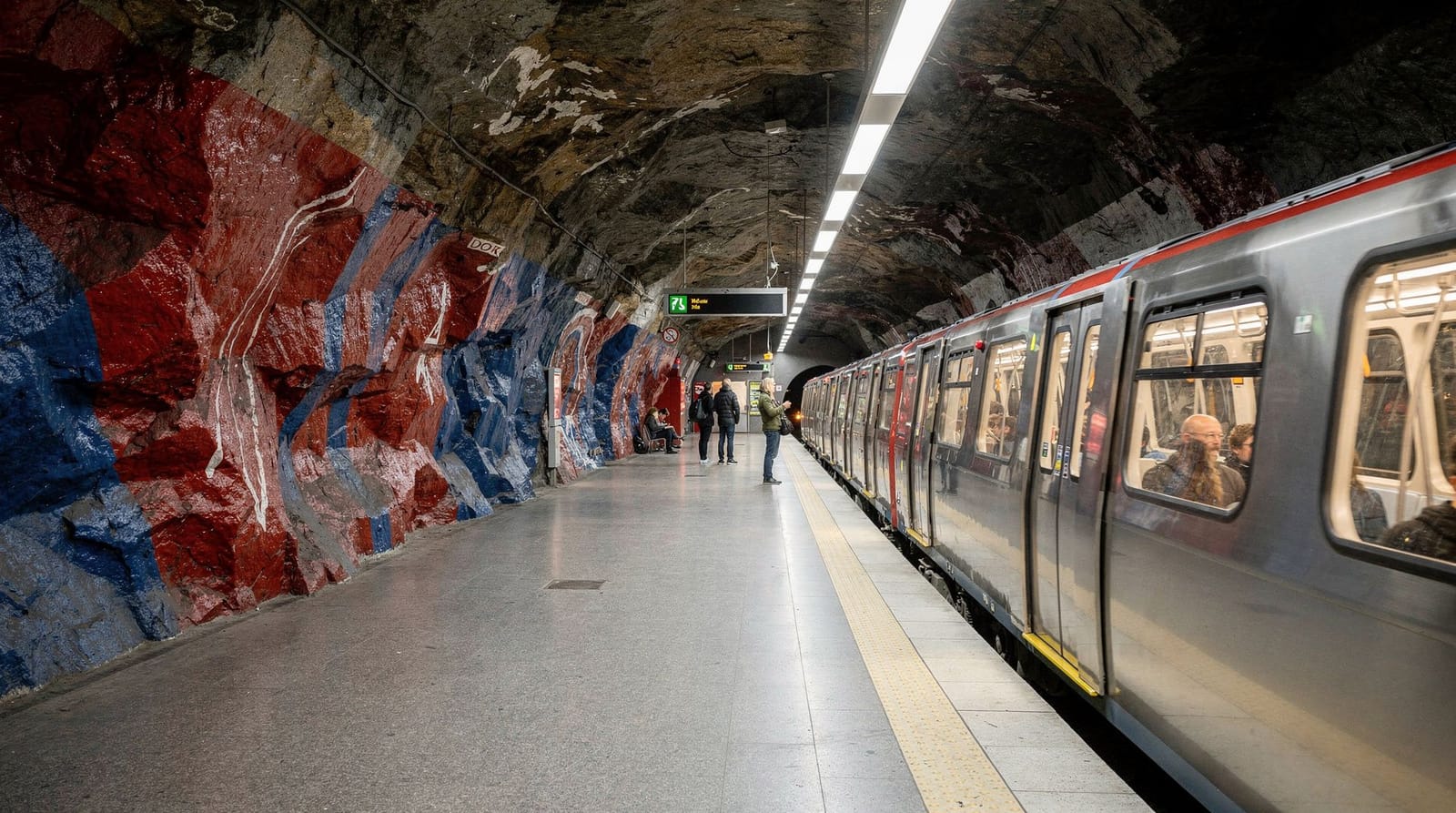
For SL public transport (T-bana, buses, trams), tap your card directly at the reader at the gate or near the bus door. You are charged the 43 SEK single-trip fare.
Apple Pay, Google Pay, Samsung Pay
NFC mobile payments work seamlessly on all modern Swedish payment terminals. This includes:
- Retail stores and restaurants
- SL transit gates and buses
- Taxi apps (Uber, Bolt)
- Museum ticket machines
- Most food trucks and market stalls with card readers
If your phone has NFC and Apple/Google Pay configured, you will rarely need your physical card.
Online payments (hotels, tickets, transfers)
Swedish e-commerce accepts international Visa, Mastercard, and Amex. Booking museum tickets, SL passes via the app, Arlanda Express, ferry tickets, or restaurants requires only a standard card. Some Swedish sites may not recognize foreign billing addresses for 3DS verification — if this happens, use your bank’s virtual card or contact your bank to whitelist the transaction.
Currency and exchange
Sweden uses the Swedish krona (SEK). Approximate 2026 rates:
- 1 USD ≈ 10.5 SEK
- 1 EUR ≈ 11 SEK
- 1 GBP ≈ 13 SEK
- 100 SEK ≈ 9.50 USD
Sweden is not in the eurozone. Do not assume euros are accepted — they generally are not, even in tourist areas. A handful of hotels near Arlanda may quote euro prices, but SEK is standard everywhere.
Currency exchange: Forex Bank has reliable rates and multiple Stockholm locations (Arlanda Airport, Central Station, several city branches). Airport exchange on arrival is convenient; rates are slightly worse than city locations but not dramatically so. Avoid exchange booths in tourist areas without checking rates first.
ATMs: Bankomat is Sweden’s main ATM network. Machines dispense SEK. Your home bank may charge international withdrawal fees; check before using. ATMs are less common than they used to be as Sweden moves fully cashless — do not rely on finding one when you need cash urgently.
Budgeting with a cashless city
Because nearly every transaction in Stockholm goes through a card, tracking spending is unusually easy — your bank statement is effectively a real-time trip budget. This is worth using deliberately: check your app daily rather than waiting until you get home to a surprising total. For a sense of what a reasonable daily spend looks like across accommodation, food, and activities, see the Stockholm budget per day guide, and pair it with the SL pass guide to work out the most cost-effective way to pay for transport across your stay.
VAT and pricing
Swedish prices include VAT (moms). The current standard VAT rate is 25% on most goods and services. Reduced rates apply:
- 12% on hotel stays and restaurant dine-in meals
- 6% on groceries and some takeaway food (a temporary reduced rate from April 2026 through December 2027; alcohol and water excluded and taxed at 25%)
Stockholm is an expensive city. Budget-conscious visitors should note that restaurant meals in central Stockholm typically run 150–250 SEK for a main course, with a beer adding 70–100 SEK. Lunches (lunch specials) are more affordable: many Stockholm restaurants offer a dagensrätt (dish of the day) for 120–160 SEK including bread, salad, and often coffee. This is one of the best-value meals in Stockholm.
Tipping culture
Restaurants: Tipping is optional. Service charges are included in restaurant prices by law in Sweden. Rounding up to a convenient number or adding 5–10% for excellent service is appropriate and appreciated. Leaving nothing is not rude.
Taxi / ride-hailing: Uber and Bolt have tip prompts in-app. You can skip these. Traditional taxis: round up or pay the displayed meter fare; no additional tip expected.
Hotels: Porters and housekeeping do not typically expect tips in Swedish hotels, though a small amount (20–50 SEK) is appreciated for significant service.
Cafés and takeaway: No tip expected. The hygge-adjacent Swedish coffee culture (fika) is casual and egalitarian — leaving coins in a tip jar is fine but not customary.
Paying at specific Stockholm venues
SL public transport
Contactless card, Apple/Google Pay, or SL app — no cash. See our public transport guide for details.
Museums
Most major museums (Vasa, ABBA, Skansen, Fotografiska, Royal Palace) sell tickets online (recommended) and at their counters via card. Cash is typically not accepted at ticket counters. Some museums use timed entry — book ahead in summer.
Restaurants and cafés
Contactless or chip-and-PIN card. Some modern restaurants use tableside card readers. In Gamla Stan, check menus for prices before sitting — some tourist-trap restaurants do not display prices prominently.
Supermarkets
ICA, Coop, Hemköp, and Lidl all accept contactless cards. Self-checkout lanes require card payment. Systembolaget (the state alcohol monopoly) accepts cards and ID checks are common for anyone who looks under 25.
Markets and street food
The main street food markets (Hötorgshallen, Östermalms Saluhall, Södermalms Saluhallen) and weekend markets have mostly shifted to card payment, though some individual stalls remain Swish-only or cash-only. If in doubt, carry one small-denomination bill (100–200 SEK) as backup.
Payments for families and seasonal visitors
Families travelling with children face no additional payment complications — children’s museum and attraction tickets follow the same card-first system as everything else. See the Stockholm with kids guide for family-specific budgeting notes. If your visit spans a season with particular costs (winter clothing rental, summer archipelago ferries), the best time to visit guide and the what to pack guide both help anticipate spending beyond the daily basics covered here.
Paying for tours and tickets before you arrive
The easiest way to sidestep every cash and Swish worry is to settle the big-ticket items online, from home, with the card you already trust. Timed-entry sights are the obvious candidates. A ticket for the Vasa Museum can be bought in advance, for example through an advance entrance ticket for the Vasa warship museum, and the same logic applies to the ABBA Museum, where booking ahead is the normal way to visit. If you are weighing the two, our Vasa vs ABBA comparison helps you decide where to spend your time.
Paying online has a practical bonus: the charge appears on your card statement immediately, in your home currency or in SEK depending on how the merchant bills, so you can see what the trip is costing as you go. If your bank offers a choice at checkout between paying in SEK or in your own currency, paying in SEK is generally the safer habit, though you should check how your own issuer handles foreign transactions.
Food experiences and small vendors
Eating is where tourists are most likely to meet a Swish-only sign. Food halls and sit-down restaurants take cards without fuss, but tiny stalls and pop-up vendors are the exception. If you would rather not gamble on it, a guided tasting booked online removes the question entirely: a tasting of Swedish food in the Old Town is paid for in advance, so nothing changes hands at the stalls along the route. For more on where to eat and what to expect, see the food tour guide, the Swedish meatballs guide and the fika culture guide.
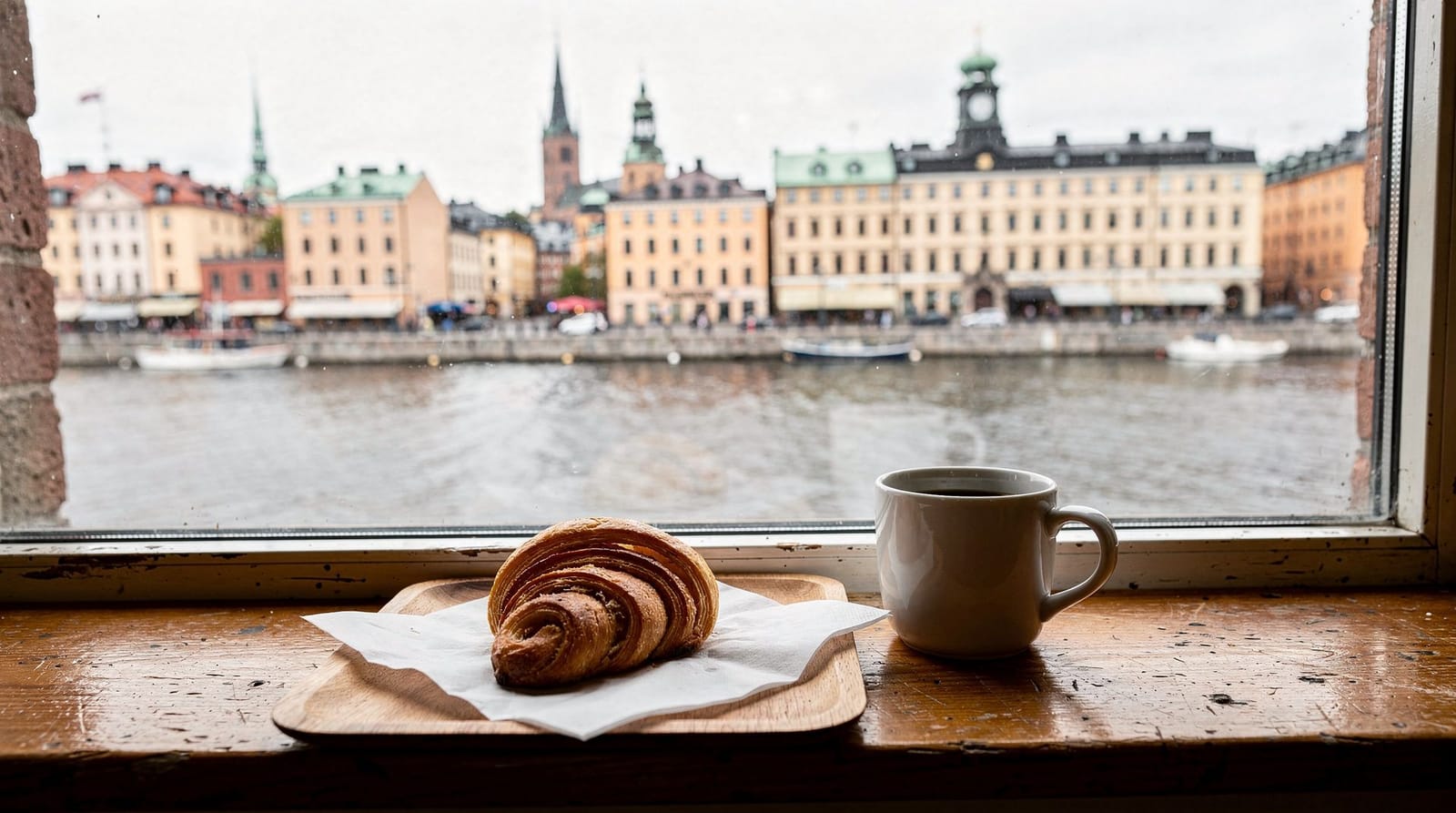
For a classic coffee-and-bun stop, the cinnamon bun guide covers the cafés where a card tap is the norm. Nobody will look twice at you for paying a small bill by card; in Sweden that is simply how it is done.
When something goes wrong
Most payment hiccups are small and fixable. A terminal that rejects your card is usually a problem with that one reader, so try another method before assuming anything is wrong with your account. Phone payments can fail when the battery is low, so keep a physical card in your wallet as well. If a card is declined online, the cause is often the bank’s own fraud check, which a quick call or in-app approval resolves. Telling your bank about your travel dates before you leave is a habit worth keeping.
Carrying two cards from different networks, stored separately, is a sensible precaution. If one is lost, blocked or swallowed by a machine, the other keeps you moving. The small cash reserve mentioned above is the third layer of backup.
Payments and getting around
Getting from the airport is usually the first payment you make. The Arlanda airport to city guide and the Arlanda Express vs commuter train comparison explain the options, and both rely on the same card-first system described here. Once in the city, the taxi vs Uber guide is worth reading before your first ride, since the way you pay and the way you are quoted a price both matter. If you also plan to leave the centre by boat, the Waxholmsbolaget ferries explained guide covers how tickets work on archipelago routes. Our tourist traps to avoid guide pulls together the pricing pitfalls that overlap with payment, and the Stockholm in 3 days overview shows how all of this fits into a realistic trip.
Practical summary
| Payment method | Works in Stockholm? |
|---|---|
| Contactless Visa/Mastercard | Yes, everywhere |
| Apple Pay / Google Pay | Yes, everywhere |
| Swish | No — Swedish residents only |
| Cash (SEK) | Sometimes, less commonly accepted each year |
| Cash (EUR, USD) | Almost never at standard shops |
| Chip-and-PIN card | Yes, with PIN required for larger amounts |
For almost all tourists, the practical answer is simple: bring a contactless Visa or Mastercard (or have Apple/Google Pay configured), and you will be able to pay for everything in Stockholm without issue. Exchange a modest amount of SEK cash (500–1 000 SEK per person) as a backup for the rare cash-only situation, and you are fully covered.
Frequently asked questions about Swish and payments in Stockholm
Do Stockholm restaurants accept cash?
Some do, but an increasing number are kontantfritt (cash-free). It is safest to assume you need a card everywhere. Larger restaurants and tourist-area places almost universally accept contactless cards. If you prefer cash as a backup, Forex Bank at Arlanda and near Central Station exchanges currency.What is tipping like in Sweden?
Tipping is optional in Sweden and culturally lighter than in the United States. Rounding up the bill or leaving 5–10% for genuinely good service is appropriate. Taxi apps (Uber, Bolt) and restaurant card readers often show tip prompts — you can tap zero with no awkwardness. Tipping is not expected at cafés or for takeaway orders.Are there ATMs in Stockholm?
Yes, though the network has shrunk significantly as Sweden has gone cashless. Bankomat ATMs still exist at Arlanda Airport, Central Station, and some larger shopping centres. Most will accept Visa and Mastercard for cash withdrawals. Check your bank's international withdrawal fees before using.Does Google Pay or Apple Pay work in Stockholm?
Yes, widely. NFC contactless payments via Apple Pay, Google Pay, and Samsung Pay work at virtually all point-of-sale terminals in Stockholm, including SL public transport gates and buses. If your phone supports contactless payment, you essentially do not need a physical card.What currency is used in Sweden?
Swedish krona (SEK, abbreviated kr). In 2026, 1 USD ≈ 10.5 SEK and 1 EUR ≈ 11 SEK approximately. Stockholm does not generally accept EUR at shops — this is Sweden, not a eurozone country. Currency exchange is available at Forex Bank (airport, Arlanda, Central Station).Are there any tourist payment scams in Stockholm to watch for?
The main payment-related tourist trap in Stockholm is unregulated taxis. Always agree on a fixed price before getting in, or use Uber/Bolt. Some bars in the Old Town (Gamla Stan) have been reported to add items to bills for solo travellers — check your receipt before paying.Should I bring any cash to Stockholm at all?
A modest amount (500–1,000 SEK per person) is sensible as backup, mainly for the rare Swish-only market stall or an unexpected card reader outage. Most visitors never actually spend it, but having it removes the small anxiety of being caught without a payment option in an edge case.Can I pay for the SL 24-hour or 72-hour transit pass with a foreign card?
Yes. SL passes can be bought with any international Visa or Mastercard through the SL app, at station ticket machines, or at Pressbyrån kiosks. No Swish or Swedish bank account is needed for any SL product.