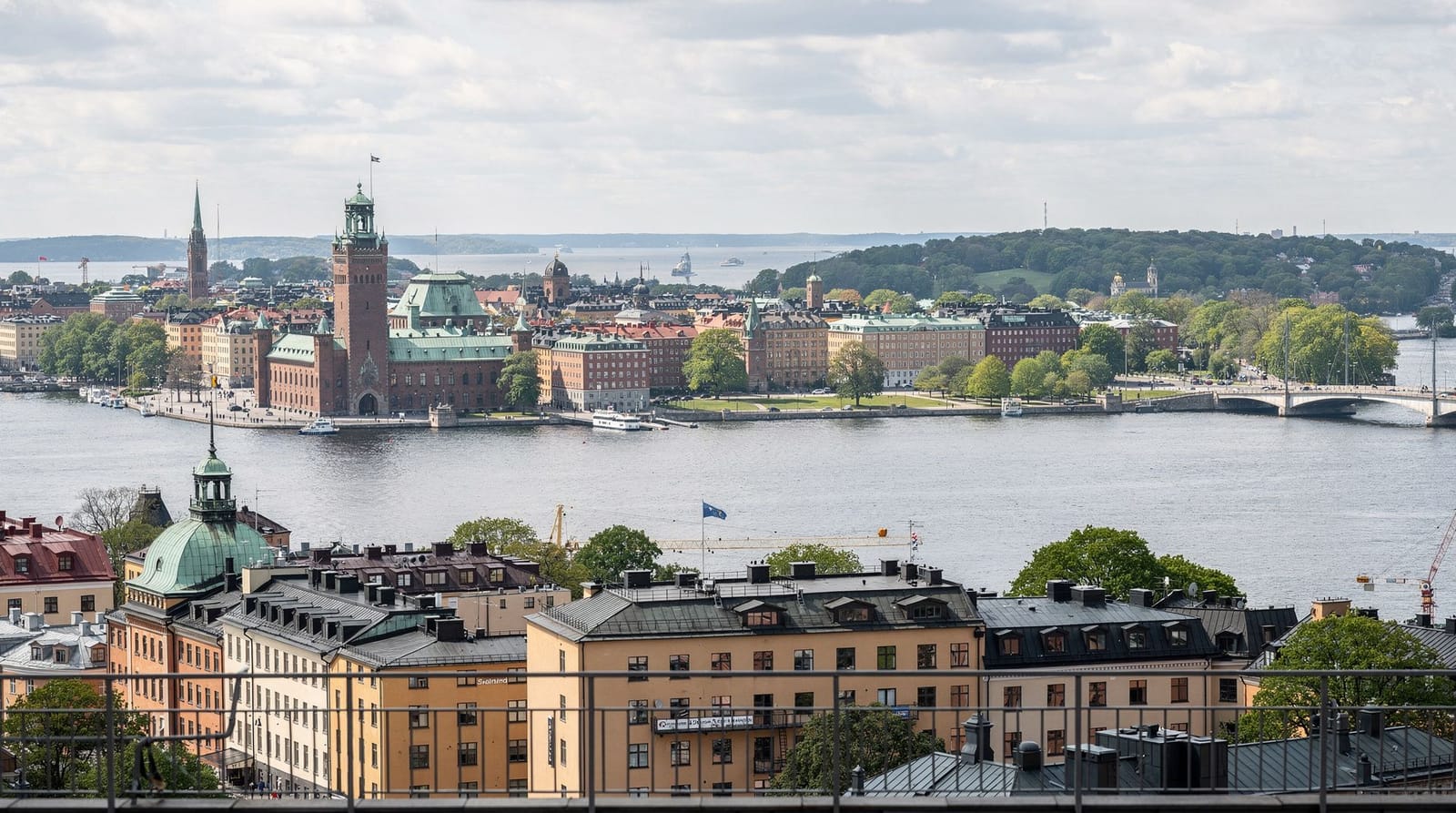
Stockholm vs Copenhagen vs Oslo: which Scandinavian capital should you visit?
Stockholm: full-day archipelago sailing tour
Duration: 8 hours
Stockholm, Copenhagen, or Oslo — which one should I visit?
For first-time Scandinavia visitors with 3–5 days: Stockholm. It has the widest museum range, the archipelago as a unique differentiator, better mid-range value than Oslo, and more neighbourhood depth than Copenhagen. For a weekend city break: Copenhagen is more compact and walkable. For a gateway to Norwegian nature: Oslo. If you want the least expensive Scandinavian capital: Stockholm by a clear margin over Oslo.
The honest framing
Comparing Scandinavian capitals is partly a question of travel style and partly a question of what you want a European city to do. All three cities are safe, expensive by European norms, and excellent in different ways. The comparison only becomes meaningful when you are specific about what you are looking for.
This guide is structured around decision-useful comparisons: cost, what each city does uniquely, how long you need, and which city wins for specific traveller types.
| Cheapest overall | Stockholm |
| Most compact / walkable | Copenhagen |
| Best nature access from downtown | Oslo (fjord) / Stockholm (archipelago) |
| Minimum time to see the highlights | 3 days each; Stockholm rewards 4–5 |
| Combine all three | 10–14 days, trains link all three capitals |
For the deeper dive on the Stockholm side of this comparison, see best time to visit Stockholm and the realistic daily budget guide.
Stockholm
What Stockholm does that the others do not
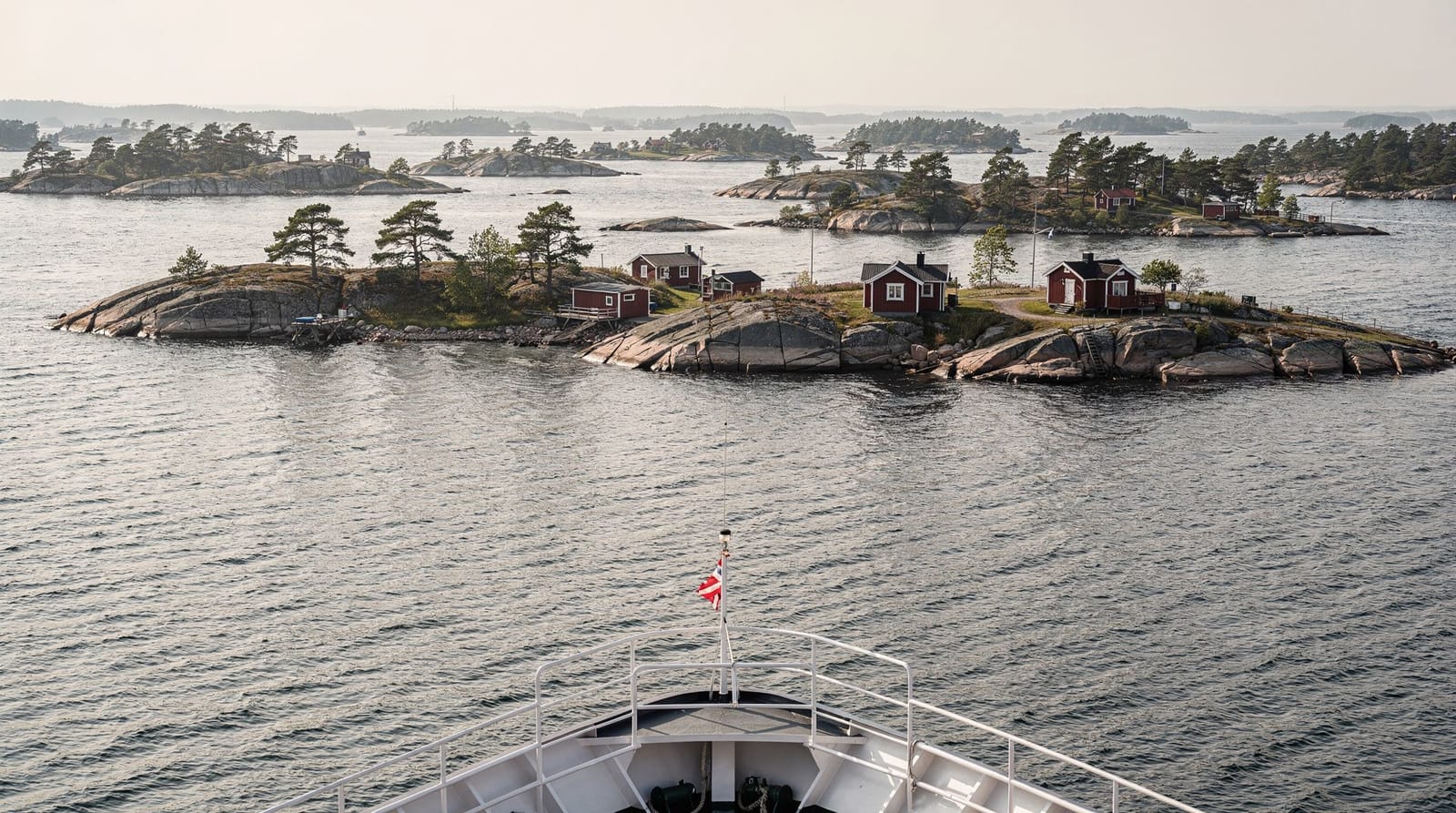
The archipelago: 30,000 islands and islets extend east of the city into the Baltic Sea. No other European capital has a comparable wilderness within its urban zone. A 1-hour ferry ride from central Stockholm takes you to islands with wooden cottages, granite outcrops, and water clear enough to swim in. Vaxholm (1 hour, accessible on the SL pass) is the easiest day trip; Sandhamn (2.5 hours, Waxholmsbolaget ferry) requires more planning but gives you a proper outer archipelago experience.
This is Stockholm’s clearest differentiator. Copenhagen is a flat island city. Oslo has the Oslofjord but it is architecturally denser and less wildly island-studded. For a full sense of what a proper archipelago day involves, see the complete archipelago guide; a full-day archipelago sailing tour is the easiest way to sample it without planning ferry connections yourself.
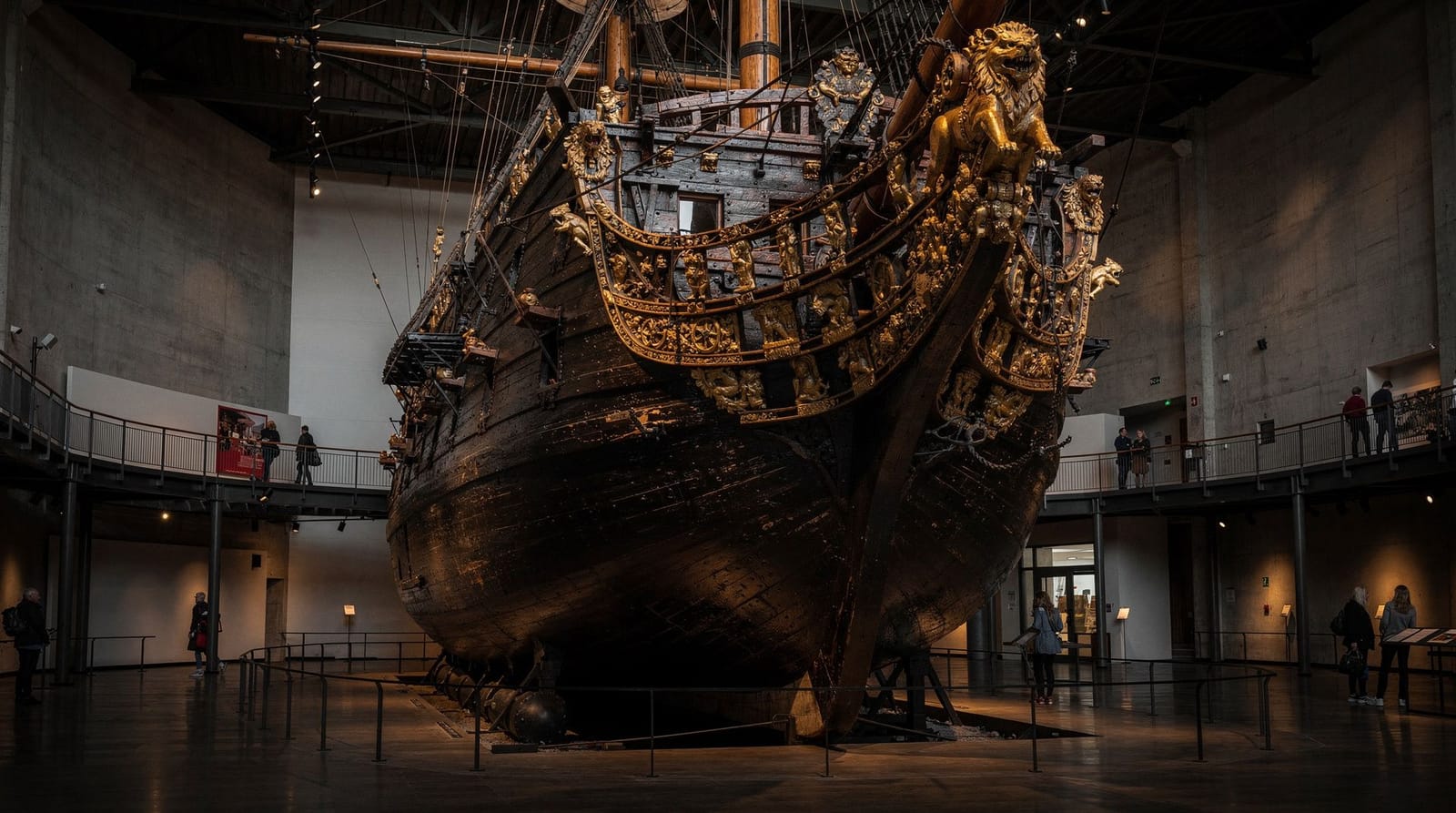
Museum depth: Stockholm has a cluster of world-class museums on Djurgården island — Vasa Museum (the preserved 1628 warship), ABBA The Museum, Skansen (open-air museum with Nordic wildlife and historical buildings), Nordiska Museet (Swedish cultural history), Moderna Museet (modern art, national collection on Skeppsholmen). No other Scandinavian capital concentrates this range in a similar footprint.
If you only have time for one of them, the Vasa versus ABBA comparison helps you choose, and the Djurgården walking route shows how to string several of these sites together on foot. For the Vasa itself, an entrance ticket to the Vasa Museum booked ahead saves you from improvising at the door. The wider Djurgården neighbourhood is worth treating as a half-day or more of its own rather than a quick stop.
Royal palatial heritage: Stockholm has the working Royal Palace (daily changing of the guard), Drottningholm Palace (UNESCO World Heritage, accessible by ferry from the city), and several castles within day-trip range. Copenhagen has Christiansborg Palace and Rosenborg Castle; Oslo has the Royal Palace and Akershus Fortress. Stockholm’s concentration is the highest. See the royal palaces comparison guide for how Stockholm’s own royal sites stack up against each other.
Gamla Stan: The medieval island city is more intact and walkable than Oslo’s Bryggen-equivalent or Copenhagen’s Christianshavn. Gamla Stan dates to 1252 and its street plan has not fundamentally changed — walking it is a genuinely time-collapsed experience rather than a reconstructed one.
Stockholm’s weaknesses
Stockholm is geographically spread across 14 islands, which means more transit between sites; the public transport explainer covers how to move between them without overthinking it. The weather is variable, with reliable good weather only from late May to mid-August. The city lacks the flat cycling convenience of Copenhagen. The nightlife and food scene are excellent but less internationally celebrated than Copenhagen’s New Nordic moment.
Stockholm budget
- Budget hotel: 800–1,200 SEK/night
- Mid-range hotel: 1,500–2,500 SEK/night
- Lunch (dagens lunch): 130–180 SEK
- Mid-range dinner main: 200–280 SEK
- Beer in a bar: 80–120 SEK
- T-bana single fare: 40 SEK
Copenhagen
What Copenhagen does uniquely
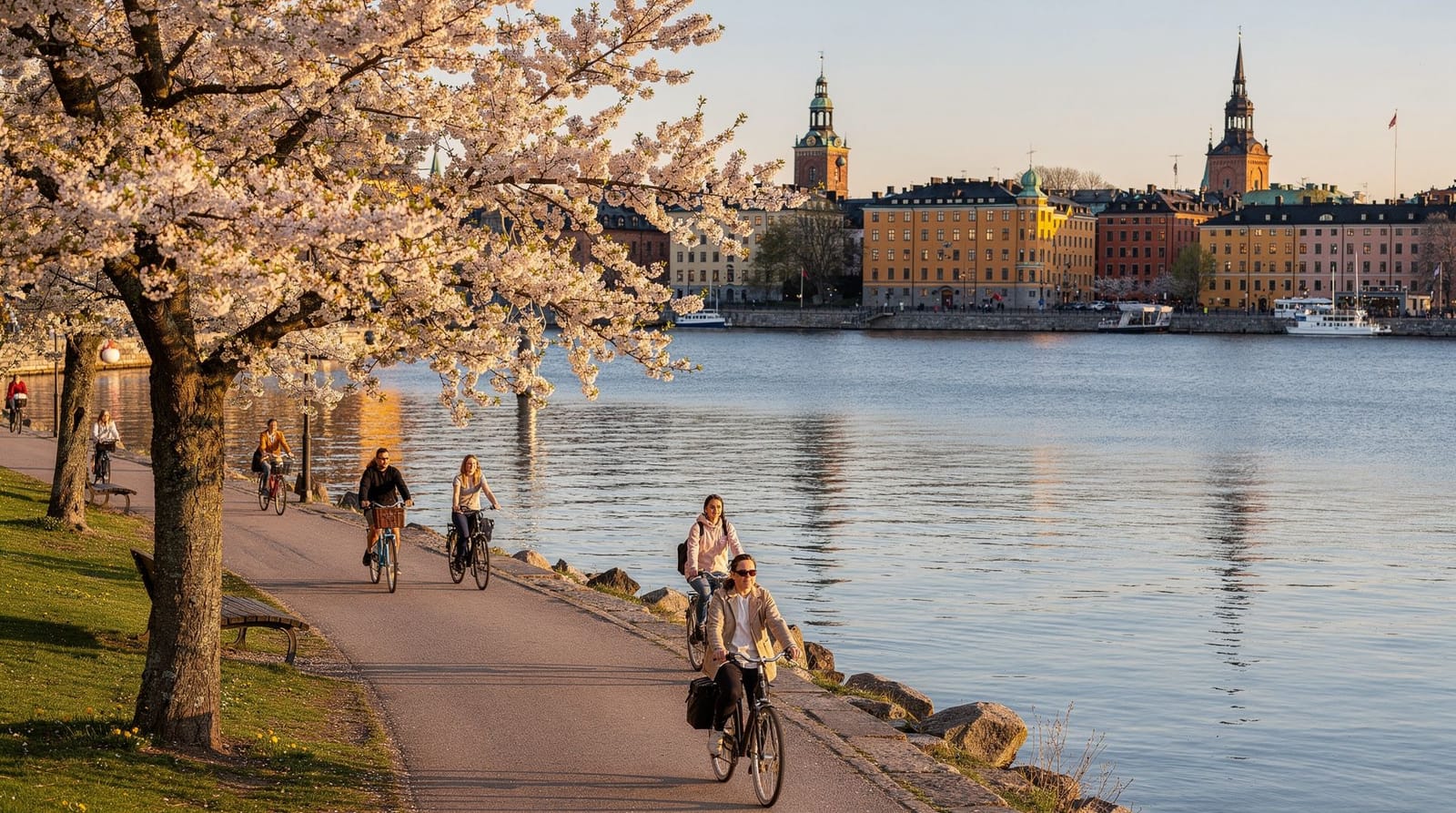
Cycling: Copenhagen has the most developed cycling infrastructure of any European capital — 390 km of dedicated bike lanes, and a culture where cycling is the genuine primary transport mode for residents (62% commute by bike). The city is flat, compact, and the bike infrastructure is almost entirely separated from car traffic. Renting a bike and cycling between the main areas (Nørrebro, Vesterbro, Frederiksberg, Christianshavn) is genuinely faster than tram and nearly as fast as metro.
New Nordic food: Copenhagen is where the New Nordic food movement (René Redzepi, Noma, the obsessive local-seasonal-foraged philosophy) developed and still has its highest concentration. There are more Michelin stars per capita in the Copenhagen metro area than in Stockholm. Even below the fine dining level, Copenhagen’s casual restaurant scene in Vesterbro and Nørrebro is exceptional — natural wine bars, fermentation-forward menus, high-quality smørrebrød (open sandwiches).
Compactness: The inner city is walkable in a way Stockholm is not. From Nørreport station you can reach Tivoli, Rosenborg Castle, Nyhavn (the colourful canal front), and the Round Tower on foot in 15 minutes each direction. For visitors who want maximum density per step, Copenhagen is more efficient.
Tivoli Gardens: The world’s second-oldest operating amusement park, founded 1843, in the centre of the city. It is both a theme park and a cultural institution — concert venue, gardens, restaurants, illuminated at night. Unlike Stockholm’s Gröna Lund (which is good but suburban in feel), Tivoli is urban and multi-layered.
Copenhagen’s weaknesses
Copenhagen is the most expensive of the three capitals for mid-range visitors. Denmark’s VAT is 25 per cent across nearly all food and drink. Eating out consistently costs more than Stockholm. The city is also flat — less visually dramatic than Stockholm’s island landscape or Oslo’s fjord setting. The harbour areas (Nyhavn, Islands Brygge) are beautiful but heavily photographed and tourist-concentrated.
Copenhagen budget
- Budget hotel: 900–1,400 DKK/night
- Mid-range hotel: 1,600–2,800 DKK/night
- Lunch (smørrebrød, casual): 120–180 DKK
- Mid-range dinner main: 200–320 DKK
- Beer in a bar: 70–100 DKK
- Metro single fare: 24 DKK
Oslo
What Oslo does uniquely
Fjord access: The Oslofjord is directly accessible from the city — the ferry from Aker Brygge (central Oslo waterfront) to the Bygdøy peninsula takes 8 minutes. The peninsula has the Viking Ship Museum (three genuine Viking longships, 9th century, the best collection in the world), the Kon-Tiki Museum, and the Fram Museum (polar exploration). No other capital has functioning Viking ships and Arctic exploration heritage at this proximity.
Vigeland Sculpture Park: Frogner Park contains 212 sculptures by Gustav Vigeland — an entire philosophical programme in bronze and granite, including the famous Monolith. Free to enter, striking in all weather, unique in Europe.
Munch Museum: The purpose-built museum housing Edvard Munch’s collection (including multiple versions of The Scream) opened in 2021 in a landmark waterfront building. It is one of the best museum buildings in Scandinavia.
Gateway to Norwegian nature: Oslo is the easiest base for accessing Norway’s dramatic landscapes. Bergen and the fjords are 6 hours by train (the Bergen Line, one of Europe’s most scenic rail routes). Flåm, Sognefjord, and the Western Fjords are accessible as 1–2 day extensions.
Oslo’s weaknesses
Oslo is the most expensive Scandinavian capital by a clear margin. A mid-range dinner for two (main courses and one drink each) can easily reach 1,200–1,600 NOK. Accommodation is expensive relative to size. The city also has less to offer the purely urban visitor — fewer museums at the Djurgården-Stockholm level, a less adventurous food scene below the fine dining level.
Oslo budget
- Budget hotel: 1,000–1,600 NOK/night
- Mid-range hotel: 1,800–3,200 NOK/night
- Lunch (café): 150–200 NOK
- Mid-range dinner main: 280–400 NOK
- Beer in a bar: 90–130 NOK
- Metro single fare: 40 NOK
Head-to-head comparison
| Factor | Stockholm | Copenhagen | Oslo |
|---|---|---|---|
| Cost | Mid (mid-Europe) | Mid-high | High |
| Natural highlight | Archipelago | Flat harbours | Fjord |
| Museum depth | Highest | Medium-high | High (focused) |
| Cycling | Good | Best in Europe | Good |
| Food scene | Excellent | World-class | Good |
| Best for 1 day | Second choice | First choice | Second choice |
| Best for 3–5 days | First choice | Good | Good |
| Viking history | Strong | Minor | Strongest (ships) |
| Compactness | Spread across islands | Very compact | Medium |
| Winter appeal | Christmas markets | Good | Limited |
Which city for which traveller
First-time Scandinavia visitor, 4–5 days: Stockholm. The breadth of experience — medieval city, world-class museums, archipelago day trip, excellent food and neighbourhoods — is greater than either alternative, and the price point is more manageable than Oslo.
Weekend city break: Copenhagen. The density and walkability make it more efficient for a short visit.
Foodies: Copenhagen. No contest below the luxury level. Stockholm still has plenty to offer, as the Södermalm food scene guide and the fika culture guide show.
History and archaeology: Oslo, for the Viking ships. Stockholm for the Vasa, medieval Gamla Stan, and Royal Palace depth.
Families with children: Stockholm (Djurgården island’s concentration) edges ahead of Copenhagen (Tivoli is excellent but singular).
Budget travellers (see also the budget weekend itinerary): Stockholm for Scandinavian cities, or consider taking the Øresund Bridge to Malmö (Sweden, cheaper than Copenhagen for accommodation) and commuting into Copenhagen for day visits.
Nature seekers within city limits: Stockholm archipelago. Nothing comparable in Copenhagen or Oslo’s immediate environs.
Getting between the three cities
If you decide to combine two or all three, the logistics are straightforward but worth planning around rather than improvising. Copenhagen to Malmö (Sweden) takes 40 minutes across the Øresund Bridge, and Malmö to Stockholm is a further 4.5 hours by direct train — a full day of travel if done in one go, or split with a night in Malmö. Stockholm to Oslo runs 5–6 hours by intercity train through pleasant but unremarkable forest scenery; flights (under an hour) are a reasonable alternative if train time isn’t part of the appeal.
A realistic 12-day split: 3 days Copenhagen, travel day, 4 days Stockholm (including an archipelago day trip), travel day, 3 days Oslo. This avoids the trap of trying to see all three properly in under 10 days, which tends to compress each city into a rushed 36–48 hours.
For the Stockholm portion specifically, a 3-day first-timer itinerary or the 4-day version with archipelago time built in both slot cleanly into a multi-city trip.
Frequently asked questions about choosing a Scandinavian capital
Which Scandinavian capital is cheapest to visit?
Stockholm is the most affordable, followed by Copenhagen, then Oslo. Oslo is notably more expensive — meals and accommodation typically run 20–30 per cent higher than Stockholm.
Can I visit all three capitals in one trip?
Yes — 10–14 days covers all three comfortably. Copenhagen to Stockholm is a direct overnight train (12 hours) or short flight. Stockholm to Oslo is 5–6 hours by train.
What is the best Scandinavian capital for families?
Stockholm, for the Djurgården island concentration of Skansen, Junibacken, Gröna Lund, and the Vasa Museum.
Which city has the best food scene?
Copenhagen at the high and mid-high end; Stockholm for consistent mid-range value. Oslo for seafood.
Is Stockholm or Copenhagen better for a short weekend?
Copenhagen for a pure weekend — more compact and walkable. Stockholm rewards 3+ days to use the archipelago and multiple islands properly.
How far in advance should I book if visiting all three cities?
Book inter-city trains 2–4 weeks ahead for the best fares, particularly the Stockholm–Oslo leg, and accommodation at least a month ahead for June–August travel.
Is public transport comparable across the three cities?
Yes — all three have reliable, safe, English-friendly systems. Compare the options for Stockholm specifically in the SL pass guide before deciding which ticket type suits your itinerary.