Drottningholm by boat: the complete guide to reaching the palace by water
Stockholm: Drottningholm Palace skip-the-line tour by ferry
How do you get to Drottningholm Palace by boat from Stockholm?
Strömma operates a seasonal boat service from Stadshusbron (City Hall quay, Kungsholmen) to Drottningholm from May through September. The journey takes approximately 50 minutes each way across Lake Mälaren. Adult tickets are approximately 240–295 SEK each way or 395 SEK return. This is the most scenic way to reach the palace — the UNESCO World Heritage site was designed to be approached from the water.
Why the boat matters at Drottningholm
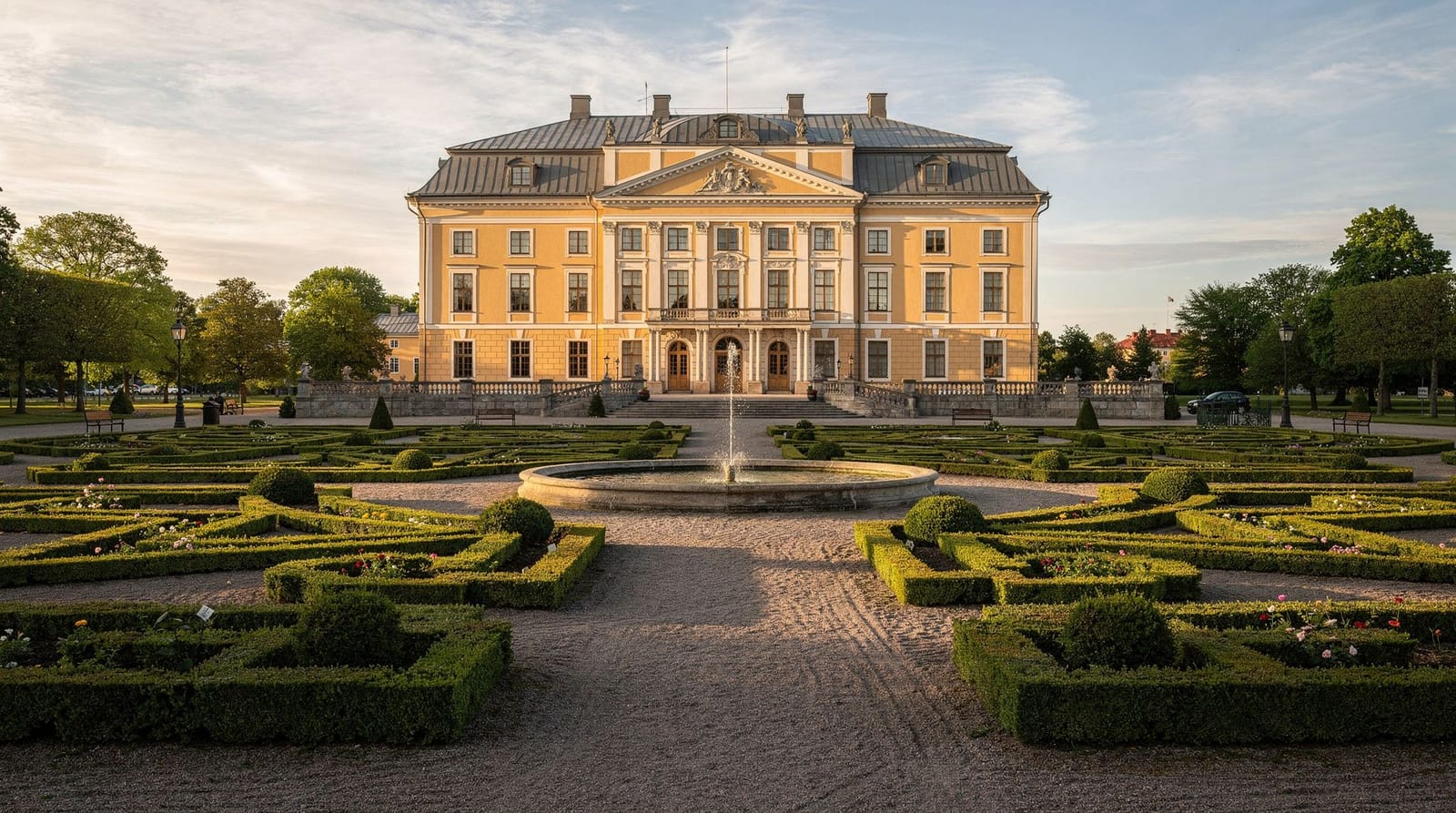
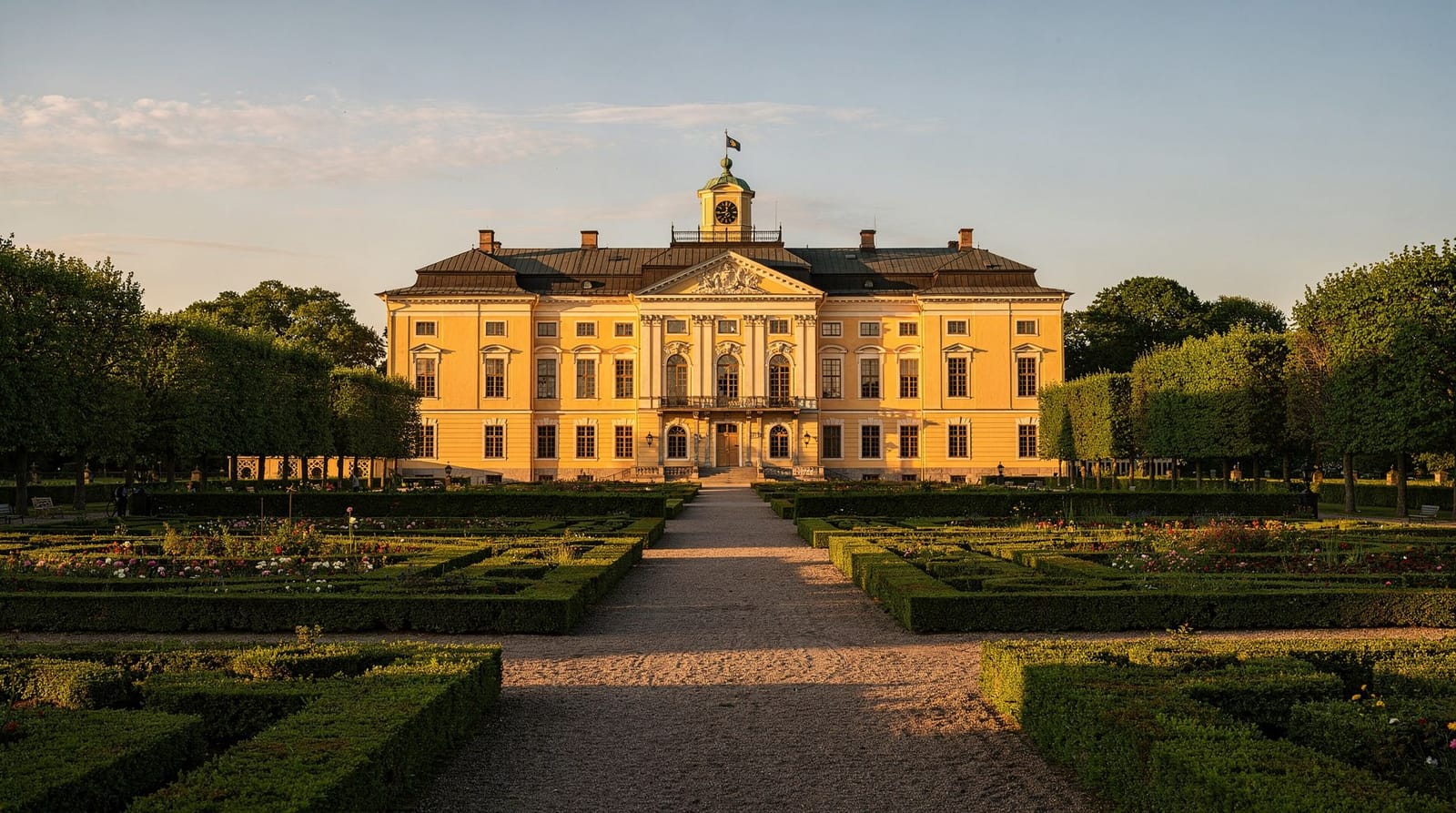
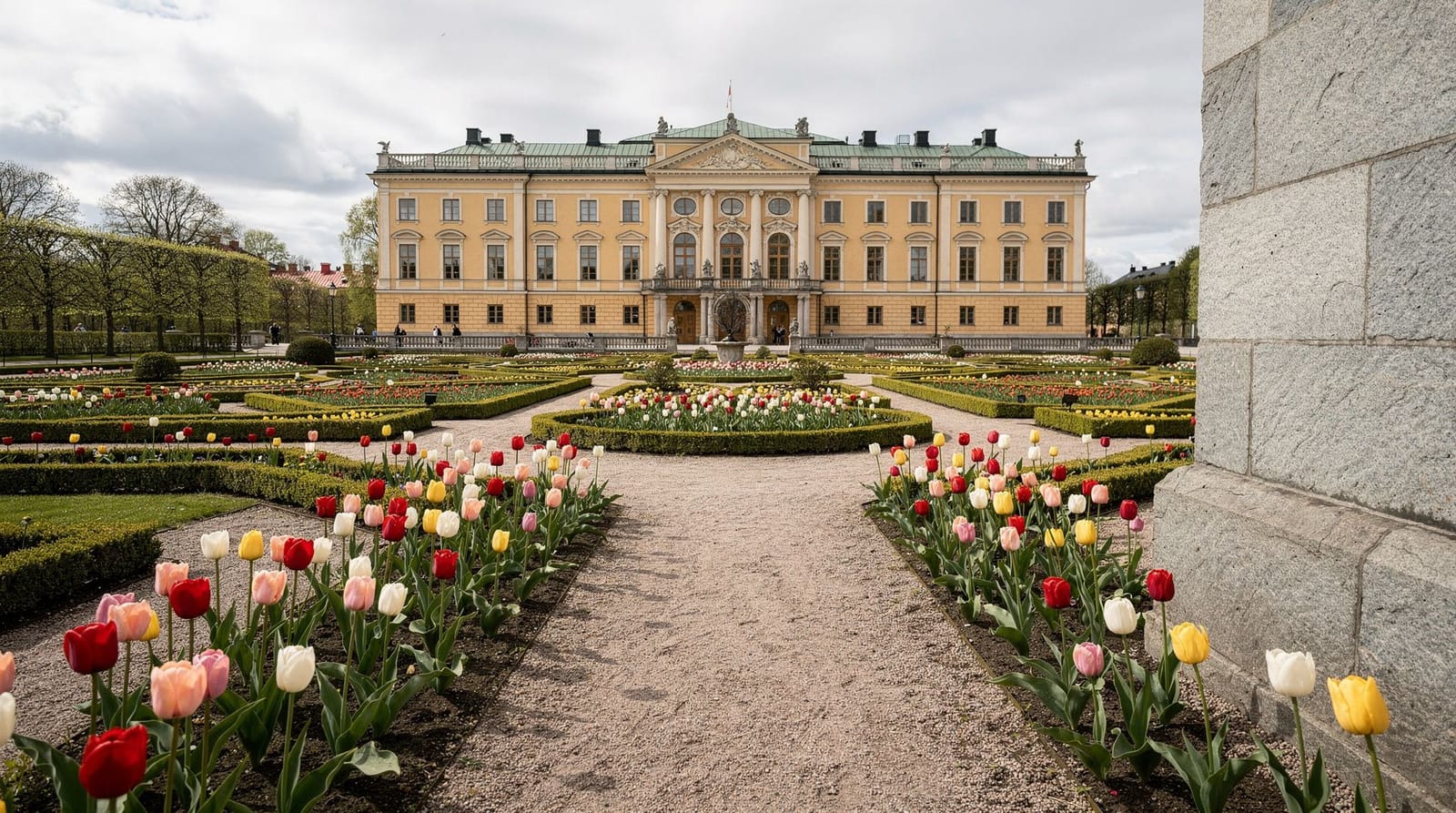
Drottningholm Palace — a UNESCO World Heritage Site on Lovön island in Lake Mälaren — was designed as a royal retreat accessible by water. The palace’s main facade faces the lake. The formal French baroque garden descends from the piano nobile to the water’s edge. The arrival by boat is the arrival the palace was built for.
This is not a metaphor or a touristic embellishment. When Queen Hedvig Eleonora commissioned the palace in 1662, and when her son-in-law’s architect Nicodemus Tessin the Elder began construction, the assumption was that royalty and their guests would arrive by boat across Lake Mälaren. The overland approach — by carriage or, much later, by bus from Brommaplan T-bana — is a rear entrance. The water-facing facade is the front.
Arriving overland by bus from Brommaplan is perfectly functional. It gets you to the palace in approximately the same time, at lower cost, year-round. But it means arriving at the side entrance, missing the grand approach for which the palace’s principal elevation was designed, and losing the experience of the 50-minute crossing of Lake Mälaren that places the palace in its landscape context.
The Strömma summer boat service recreates this correct arrival. The crossing, beginning from Stadshusbron (City Hall quay on Kungsholmen), takes 50 minutes and constitutes a significant part of the Drottningholm experience. Arriving by water at a baroque palace that faces the water — with its formal gardens visible as the boat approaches and the building’s symmetry revealing itself from the lake — is one of the better arrivals in Scandinavian day-trip tourism.
| Where | Departs Stadshusbron (City Hall quay, Kungsholmen) |
| Cost | Around 240–295 SEK one-way, 395 SEK return |
| Time needed | 50 min each way; 4.5–6 hours for the full day |
| Getting there | 15–20 min walk from T-Centralen, or bus 3/62/65 |
| Best time | May–September only; book ahead in July |
Getting to Stadshusbron: the departure point
The Drottningholm boat does not depart from Strömkajen (the Norrmalm quay used by the canal tours and archipelago boats). It departs from Stadshusbron — the quay immediately alongside Stockholm City Hall (Stadshuset) on Kungsholmen, on the western side of the city.
From T-Centralen (Stockholm Central Station): Walk west on Drottninggatan or Hantverkargatan. Cross Kungsholmen to Stadshuset. Approximately 15–20 minutes on foot, or take bus 3, 62, or 65 to the Stadshuset stop.
From Strömkajen/Gamla Stan area: Take T-bana from Gamla Stan station (one stop to T-Centralen), then walk or bus west to Stadshuset. 15–20 minutes total.
On foot from central Norrmalm: Walk west across the Stadshusbron bridge from Tegelbacken. The City Hall is visible from central Norrmalm; following the tower leads you to the quay.
The route across Lake Mälaren
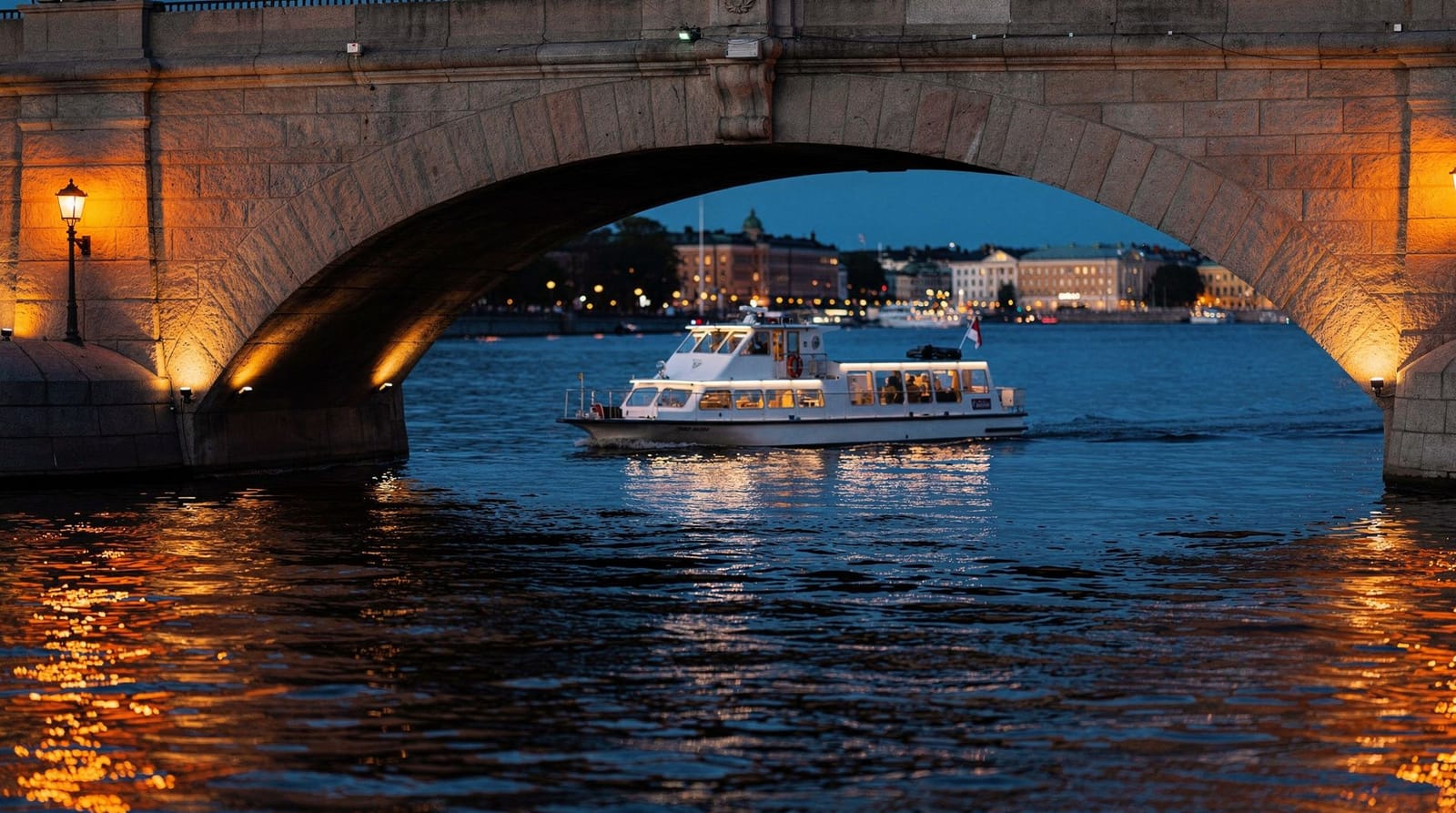
Departing Stadshusbron, the boat passes west under the bridges of central Kungsholmen and moves through the narrow channels between Kungsholmen and Lilla Essingen. Within 20 minutes of departure, the built urban environment gives way to the open water of Lake Mälaren.
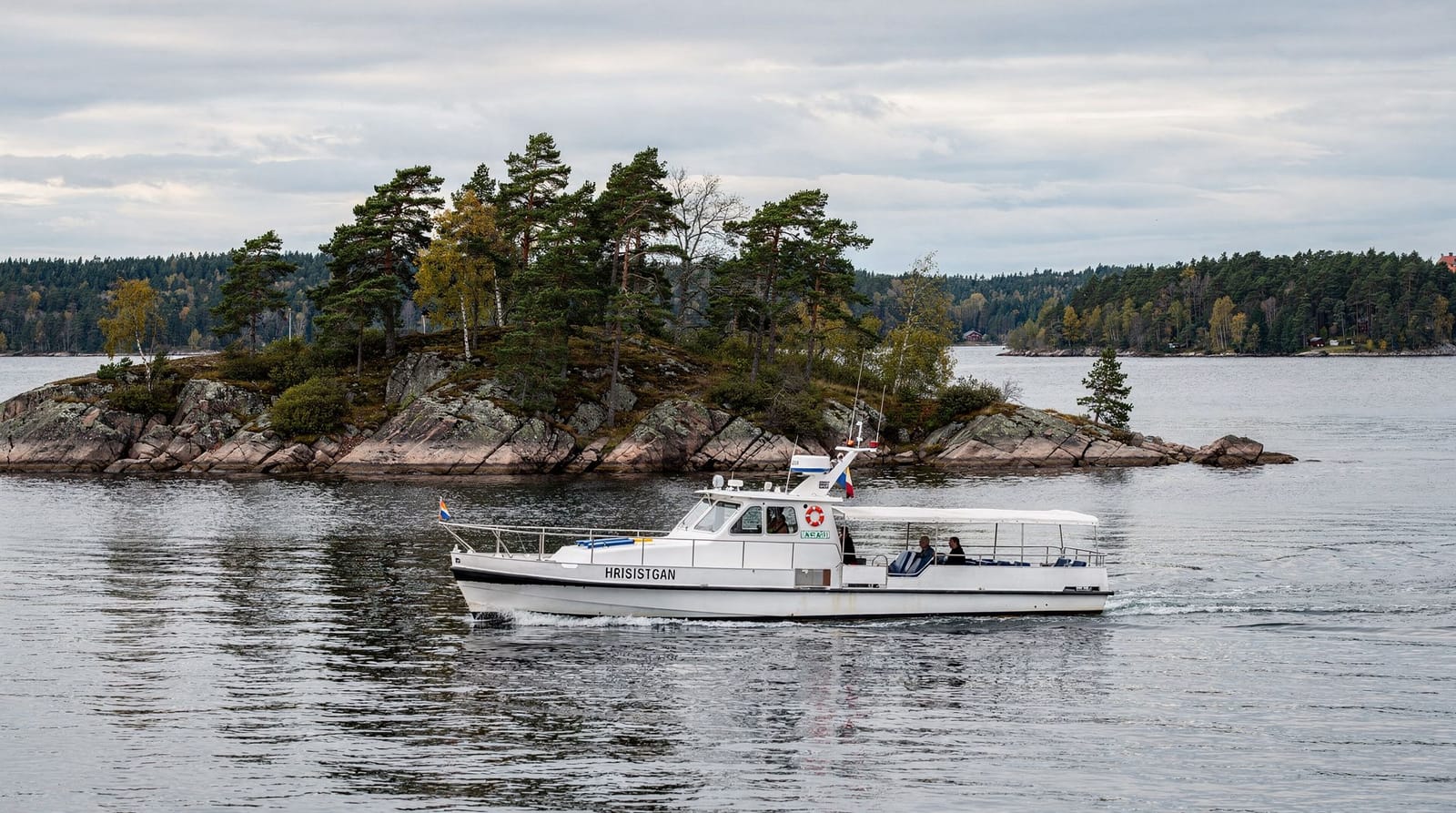
Lake Mälaren is a vast glacially carved freshwater lake — Sweden’s third largest, at 1,140 square kilometres. Its water quality is remarkable for a lake so close to a large city; the lake supports active recreational fishing and summer swimming along its shores. The crossing to Drottningholm passes through channels between several small Ekerö municipality islands, including Kärsön, Ekerön, and the western approach to Lovön.
The approach to Drottningholm: The palace becomes visible approximately 10–15 minutes before arrival. The formal French garden’s geometry is visible from the water first — the rectangular parterre beds, the central fountain axis, and the canal line extending the visual perspective out toward the lake. Then the palace itself: the central white-and-yellow baroque facade, the octagonal towers at each end of the main building, the two flanking wings creating the main courtyard. The separately positioned Drottningholm Court Theatre building is visible to the north.
For visitors who have read about Drottningholm before visiting, this approach creates a recognition moment — the palace assembles itself from memory as the boat closes the distance. For visitors arriving without preparation, the scale and formal elegance is simply imposing.
The boat schedule and timing
Season: May–September (exact dates vary with spring/autumn conditions; check the Strömma website for current season dates).
Departures from Stadshusbron: Multiple daily departures in peak summer (June–August), typically 10:00, 12:00, and 14:00. Earlier-season service (May, September) may run once or twice daily.
Return boats from Drottningholm: The return schedule mirrors the departures. The last boat back typically departs around 16:30–17:00 in peak season. Missing the last boat means returning overland — a good reason to check the return schedule carefully before leaving Stockholm.
Booking: Online booking through Strömma is recommended, particularly in July. The combined Drottningholm ferry plus skip-the-line palace entry ticket (available via GetYourGuide) bundles convenience with the advantage of timed entry.
Prices: Approximately 240–295 SEK one-way adult; 395 SEK return adult. Children’s rates available. The combined ferry plus palace ticket packages the transport and admission for a fixed price.
The full Drottningholm day: logistics and schedule
Allow 4.5–6 hours total for a comfortable Drottningholm day by boat:
| Time | Activity |
|---|---|
| 09:30 | Leave hotel or T-Centralen toward Stadshusbron |
| 10:00 | Board boat at Stadshusbron |
| 10:50 | Arrive Drottningholm landing stage |
| 11:00–12:30 | Palace state apartments + Treasury |
| 12:30–13:15 | Lunch at palace café, or picnic in the formal gardens |
| 13:15–14:00 | Chinese Pavilion (Kina Slott) |
| 14:00–14:45 | Court Theatre guided tour (separate ticket) |
| 14:45–15:10 | Gardens walk — English landscape park |
| 15:15 | Board return boat |
| 16:05 | Arrive Stadshusbron, return to city |
The gardens are free to walk and can be accessed even without palace interior admission — a significant advantage for budget visitors or those who arrive when the palace interior is at maximum capacity.
What to see at Drottningholm
The full Drottningholm Palace guide covers the palace comprehensively. Key elements for the boat-day visitor:
State apartments: The formal royal reception rooms, including the baroque Great Hall and the 18th-century Bernadotte Apartments. The most important interiors for understanding Swedish 18th-century court life.
The Court Theatre (Drottningholms Slottsteater): The best-preserved 18th-century theatre in the world, completed in 1766 and still equipped with its original stage machinery — counterweights, trapdoors, wind machines, and wave machines. Guided tours run daily in summer (separate ticket, approximately 130 SEK). The living machinery demonstration is the single most memorable experience at Drottningholm.
The Chinese Pavilion (Kina Slott): Built as a birthday surprise for Queen Lovisa Ulrika in 1753, rebuilt in 1763–69, the pavilion’s rococo chinoiserie interior is one of the best-preserved examples of this European 18th-century style. Open May–September, separately ticketed at approximately 110 SEK.
The formal gardens: Free to walk. The French baroque parterre descending from the palace toward the lake is among the most complete examples in Scandinavia. The English landscape park behind provides a naturalistic contrast.
The kayak alternative for active visitors
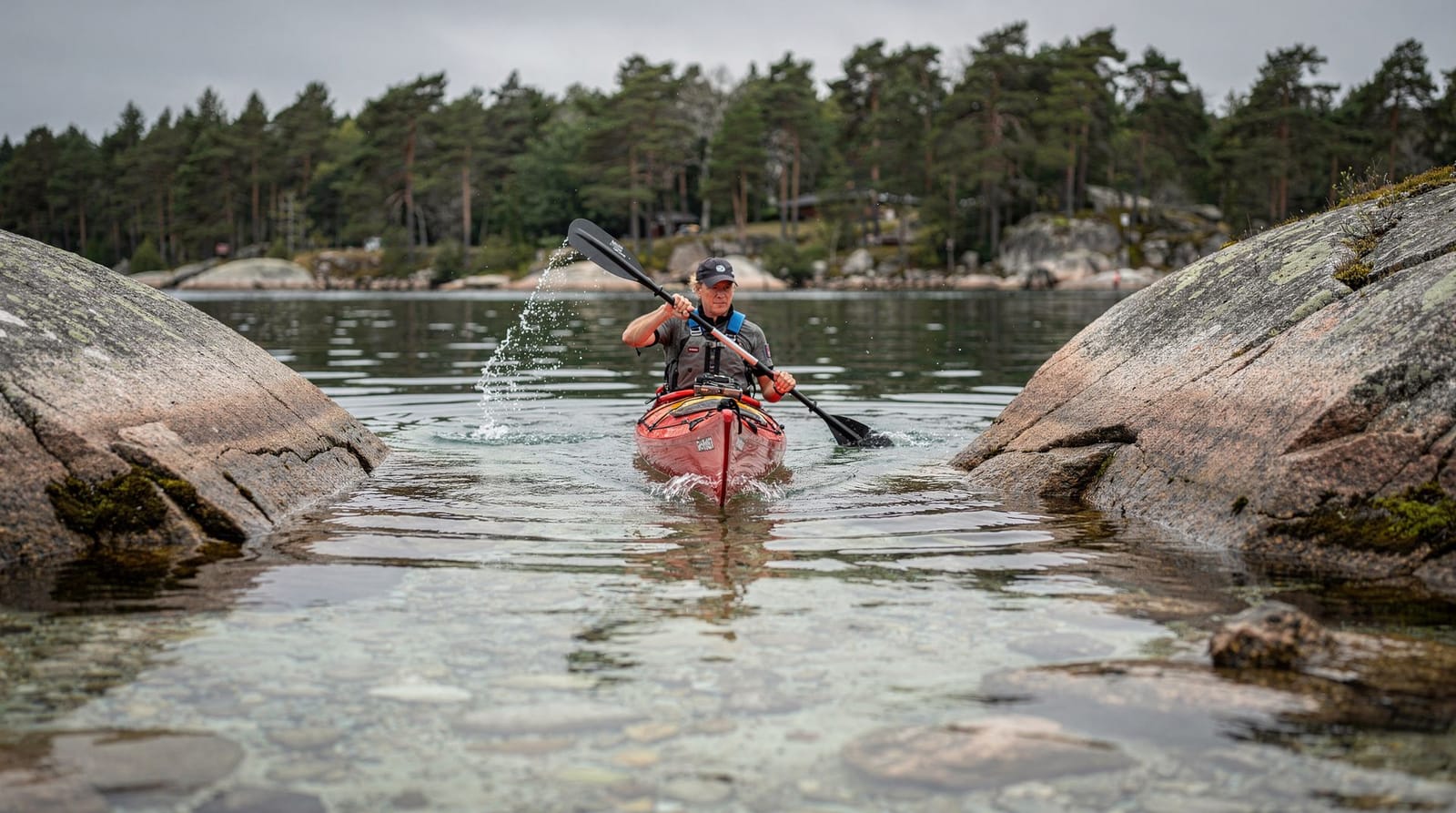
Guided kayak tours from Stockholm to Drottningholm are available through several operators, covering approximately 14–18 kilometres through the Lake Mälaren waterways. Journey time is 3–5 hours of paddling each way, making it a full-day active alternative to the ferry. No previous kayaking experience is required for the calmer route options. The Stockholm kayaking guide covers the full paddling options.
Book a guided kayak tour to Drottningholm PalaceHow the Drottningholm boat compares to Stockholm’s other water routes
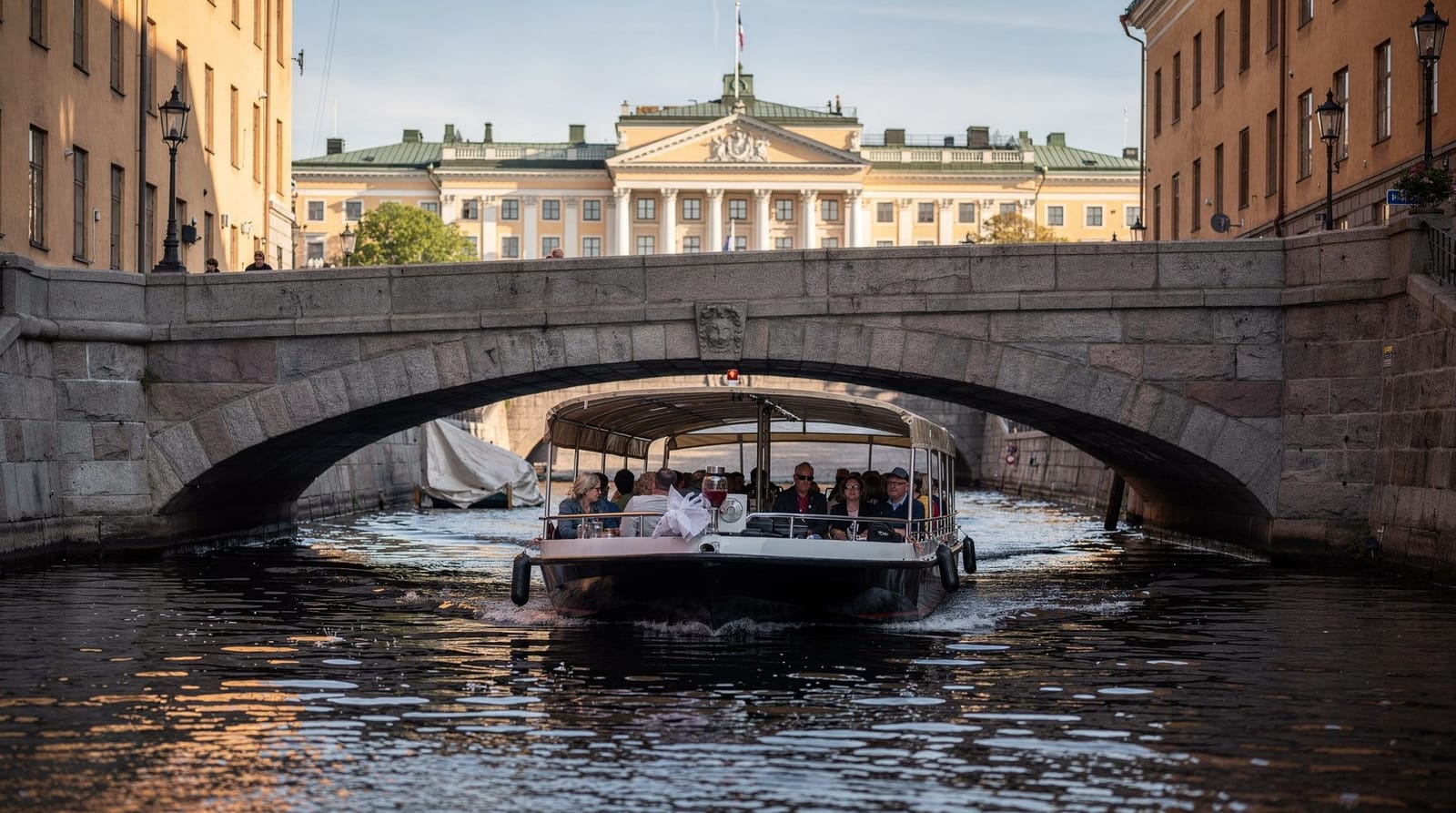
Stockholm has several distinct categories of boat experience, and it is worth placing the Drottningholm crossing among them. The standard canal boat tour stays inside central Stockholm’s channels for about an hour and returns to the same quay — a sightseeing loop rather than transport to anywhere. Shorter 2-hour archipelago boat tours head the opposite direction, east into the Baltic archipelago rather than west across Lake Mälaren. The Drottningholm boat is unusual among these in being genuine point-to-point transport with a destination at the far end — closer in character to the boats that serve Gripsholm Castle at Mariefred than to a Stockholm sightseeing cruise.
For visitors deciding among Stockholm’s several royal palace options, the royal palaces comparison guide sets Drottningholm against the Royal Palace in Gamla Stan and explains why the two serve different purposes rather than competing directly.
Combining Drottningholm with other Stockholm day trips
Because the boat and palace visit together fill most of a day, Drottningholm generally works best as a standalone day trip rather than combined with another destination on the same day. The day trips from Stockholm complete guide sets Drottningholm alongside Uppsala, Birka, Sigtuna, and Vaxholm for visitors planning which day trips to prioritise across a longer stay — Drottningholm and Uppsala together make a strong pairing across two separate days for visitors with a UNESCO-heritage focus, since both are among Stockholm’s most rewarding excursions but neither should be rushed to fit alongside the other.
What to do if the season or weather does not cooperate
The boat only runs May–September, and even within that window, a rainy or unusually cold day changes the calculus. If the crossing looks unpleasant, the overland T-bana plus bus route (detailed below) delivers the same palace and gardens without exposure to open-deck weather, at the cost of the water arrival. For visitors travelling outside the boat season entirely, the Drottningholm Palace guide and the Drottningholm half-day guide both cover the palace visit itself in full, independent of which transport option gets you there.
Overland return as a backup
If you miss the last boat or arrive outside the summer season, the overland return is straightforward:
Bus + T-bana: Bus 177 or 301 from Drottningholm → Brommaplan T-bana station → T-bana to T-Centralen. Journey approximately 45 minutes. Covered by SL pass. This option is available year-round and is the standard route in the off-season when the boat does not operate.
The boat in the context of Drottningholm’s history
The water connection between Stockholm and Drottningholm was not purely scenic — it was functional. Throughout the 17th and 18th centuries, when the palace was at the centre of Swedish court life under Queens Hedvig Eleonora and Lovisa Ulrika and King Gustav III, the lake was the primary transport artery. Court musicians, opera troupes, foreign diplomats, and the royal household itself moved between Stockholm and Drottningholm by boat. The lakeside theatre (now the Court Theatre) was designed with this water-based access in mind — performers arrived by boat, the audience arrived by boat.
Gustav III, whose assassination at a masquerade ball at the Stockholm opera in 1792 ended Drottningholm’s golden age as a centre of Swedish culture, made the Court Theatre famous throughout Europe. He entertained lavishly, staging operas and ballets with the original machinery that is still visible today. His court guests — arriving by lake from Stockholm — would have seen the same approach that today’s ferry passengers see, though under considerably more ceremonial circumstances.
Seasonal notes for the boat journey
May–June: Tulips and spring flowers in the formal gardens. The lake in spring, with its clear low-angled light, gives excellent photographic conditions for the approach. Passenger numbers lower than July.
July: Peak season and peak crowds. The boat is popular; book in advance. The palace interiors require timed-entry management in July; the combined skip-the-line ticket is most useful in this period.
August: High season but beginning to ease. Water temperature at its warmest (17–20°C on the lake surface).
September: Last full month of the boat service. Autumn colour begins in Drottningholm’s English landscape park around late September, and the atmosphere shifts from summer holiday to reflective autumn. The best month for adults: light, setting, and near-absence of crowds combine well.
The boat as part of the Drottningholm experience: practical photography
The boat journey to Drottningholm provides several distinct photography opportunities that the overland approach does not:
Departure from Stadshusbron: City Hall (Stadshuset) is directly adjacent to the boat quay — the best close-range view of the building’s east face is from the water as the boat departs. This angle, showing the tower against the sky with the Kungsholmen waterfront behind, is different from the standard Riddarfjärden view that canal boat tours provide.
Lake Mälaren crossing: The open lake, the island-dotted horizon, and — in morning light — the reflections of pine forest on the water give the kind of images specific to Swedish lake country rather than Stockholm’s urban channels. A 50–85mm equivalent captures the lake-and-island distance well.
The palace approach: The formal garden and palace appearing from across the water at approximately 10–15 minutes before arrival is the defining Drottningholm image. Shoot from the bow with a 70–135mm equivalent for the facade-and-garden composition; wider for the landscape context. The early morning light (10:00 arrival) catches the palace facade from the east with good directional quality.
The landing stage: As the boat docks at the palace landing, the view looking up the garden axis — the central fountain, the parterre beds, and the palace — is briefly available before passengers begin moving. Position yourself to the side of the disembarking crowd for an unobstructed shot.
Frequently asked questions about Drottningholm by boat
Should you buy a combined ticket or book separately?
The combined skip-the-line ferry and palace ticket purchased through GetYourGuide bundles convenience with timed entry — most useful in July when palace queues extend 20–30 minutes. In May, June, early July, and September, separate tickets are usually faster and cheaper.
Is the boat ride child-friendly?
Yes. The 50-minute crossing of Lake Mälaren is calm (sheltered from Baltic conditions). Life jackets are available for children; the boat has indoor sections. The journey is engaging for children aged 5+ given the changing lake scenery and the palace approach with its visible formal gardens.
What is the palace admission price?
As of 2026, Drottningholm Palace state apartments are 170 SEK adult (children 7–17: 85 SEK; under 7 free). The Chinese Pavilion is separately ticketed at 140 SEK, and the palace + pavilion ticket costs 250 SEK. Court Theatre guided tours are separately priced at approximately 130 SEK. Check current prices on kungligaslotten.se before visiting.
Can you visit Drottningholm without the boat?
Yes. The T-bana to Brommaplan (green line) plus bus 301, 323, or 177 gives year-round access. Journey time approximately 45–60 minutes from T-Centralen. SL pass covers the full journey. In April, October, and winter, this is the only practical option for most visitors.
Does the boat operate in the evening for the summer opera season?
During the Drottningholm Court Theatre’s summer opera season (late June through mid-August), some evening return sailings are coordinated with performance schedules, though this varies by year and should be checked directly with Strömma before booking opera tickets. Visitors specifically planning an evening at the theatre should confirm the last return boat on the performance date rather than assuming the standard daytime schedule applies.
Is the boat accessible for visitors with mobility limitations?
The boats used on the Drottningholm route generally have step-free boarding at both quays, though conditions can vary by vessel and weather. Contact Strömma directly to confirm accessibility for a specific sailing if mobility is a concern, and note that the palace itself has some interior stairs without lift access.
The Lake Mälaren crossing: what to watch for
The 50-minute Lake Mälaren crossing is not neutral transit — it is the beginning of the Drottningholm experience. Useful observation points during the journey:
The first 15 minutes (Stockholm → Kungsholmen outer shore): The boat moves westward through the built urban fringe of Stockholm. The industrial quays and residential waterfront of western Kungsholmen are visible; the Essinge bridges (motorway) cross the water ahead. This urban-to-lake transition prepares the eye for what follows.
Middle section (Ekerö municipality islands): As the boat moves through the channels between Kärsön and Ekerön, the landscape shifts. The islands of Ekerö are more rural than the Stockholm archipelago — agricultural fields, older farm buildings, and the occasional manor house visible across the water. This is the Mälaren valley that supplied Stockholm with food through the medieval period, a landscape of ancient settlement and waterborne commerce.
The final approach (Lovön and Drottningholm): The palace grounds appear first as a geometric garden geometry visible from the water — the parterre beds are designed to be seen from the lake. Then the palace itself, its white-and-yellow baroque facade advancing toward the water’s edge. The boat reduces speed for the landing approach; this is the moment to position yourself at the bow for the unobstructed front-on view.
Wildlife on the lake: Lake Mälaren supports a significant waterfowl population. Great crested grebes (skäggdopping), mute swans, and various duck species are common. The ospreys and white-tailed eagles that nest in the surrounding landscape occasionally pass over the lake. In winter (when the boat does not run), Mälaren’s shallower bays freeze and attract ice-fishing enthusiasts from Stockholm.
How the boat changes the experience of Drottningholm
Visitors who arrive by bus from Brommaplan and visitors who arrive by boat have genuinely different experiences of the palace, and it is worth explaining why.
The bus approach brings you from the north — from the road side of the palace complex, through the car park, past the service buildings, to the side entrance courtyard. This is functional but architecturally unintended. You arrive at the utility face of a building designed for a different entrance.
The boat approach brings you from the south, across the lake, to the palace’s formal waterfront. You see the French baroque garden descending to the landing stage, the central fountain axis perpendicular to the water, and the palace rising behind it. This is the arrival the architecture was designed for — the arrival that would have been experienced by 17th and 18th-century royal guests.
The practical difference between the two arrivals, beyond the logistics, is that the water arrival activates a spatial logic that the building contains but which the land arrival bypasses. You understand why the palace faces south (toward the water, toward the light, toward the approaching guest) rather than north (toward the road). You understand that the garden was designed to be seen from boats approaching across the lake, not from inside the garden looking out. This understanding changes how you read the architecture once you enter it.
Top experiences
Bookable activities with verified prices and instant confirmation on GetYourGuide.