Stockholm archipelago 2-hour boat tour: complete guide
Stockholm: archipelago guided boat tour
Duration: 2 hours
Is the 2-hour Stockholm archipelago boat tour worth it?
Yes, especially for visitors with limited time. The 2-hour guided tour departs from central Stockholm, passes through the inner and mid-archipelago channels, and returns — giving a realistic impression of the 30,000-island archipelago without requiring a full-day commitment. Tickets start around 350–450 SEK. Not a substitute for island-hopping, but an excellent introduction.
Understanding the Stockholm archipelago from a boat
The Stockholm archipelago — 30,000 islands, skerries, and rocks stretching 150 kilometres east of the city into the Baltic Sea — is one of the most complex island landscapes in the world. From Strömkajen, looking east across Strömmen, you see the channel opening toward the archipelago but cannot grasp the scale of what lies beyond. Most of it is invisible from the city: the archipelago reveals itself only when you move into it.
The 2-hour guided boat tour is designed precisely to solve this problem for visitors who cannot commit a full day to the water. In two hours departing from central Stockholm, you can move through the urban waterfront, enter the inner archipelago channels, experience the transition from dense development to granite-and-pine island scenery, and return — with enough geographical impression to either satisfy a brief curiosity or to plan a more ambitious subsequent trip.
This is not an island-hopping excursion. The tour does not land anywhere; it is a circuit. The value is in seeing the geography from the water — understanding the transitions between urban waterfront, inner archipelago, and the greener, rockier outer zones, all within a duration that fits comfortably into a single afternoon.
What the Stockholm archipelago actually is
Before describing the tour, it is worth establishing what the archipelago is. The 30,000 number is real — geologists count every rock that protrudes above high water as a skerry or island. The habitable islands are a much smaller number: perhaps 1,000 have permanent or seasonal residents. The Waxholmsbolaget public ferry network serves approximately 200 inhabited islands. The rest are accessible only by private boat.
The archipelago is not a coastal fringe; it extends 150 kilometres from the city’s eastern edge into the open Baltic. The inner archipelago (closest to Stockholm) is densely wooded — protected from the Baltic by the outer islands, the inner zone supports pine and deciduous forest on its larger islands. Moving east, the islands become lower, more exposed, and less wooded. The outermost islands — the yttre skärgård — are bare granite, wave-smoothed and often treeless, exposed to the full force of the Baltic Sea.
This geographical progression — from wooded inner islands to bare outer skerries — is what the 2-hour tour shows in abbreviated form. In two hours, you experience the beginning of this transition.
What the 2-hour route covers
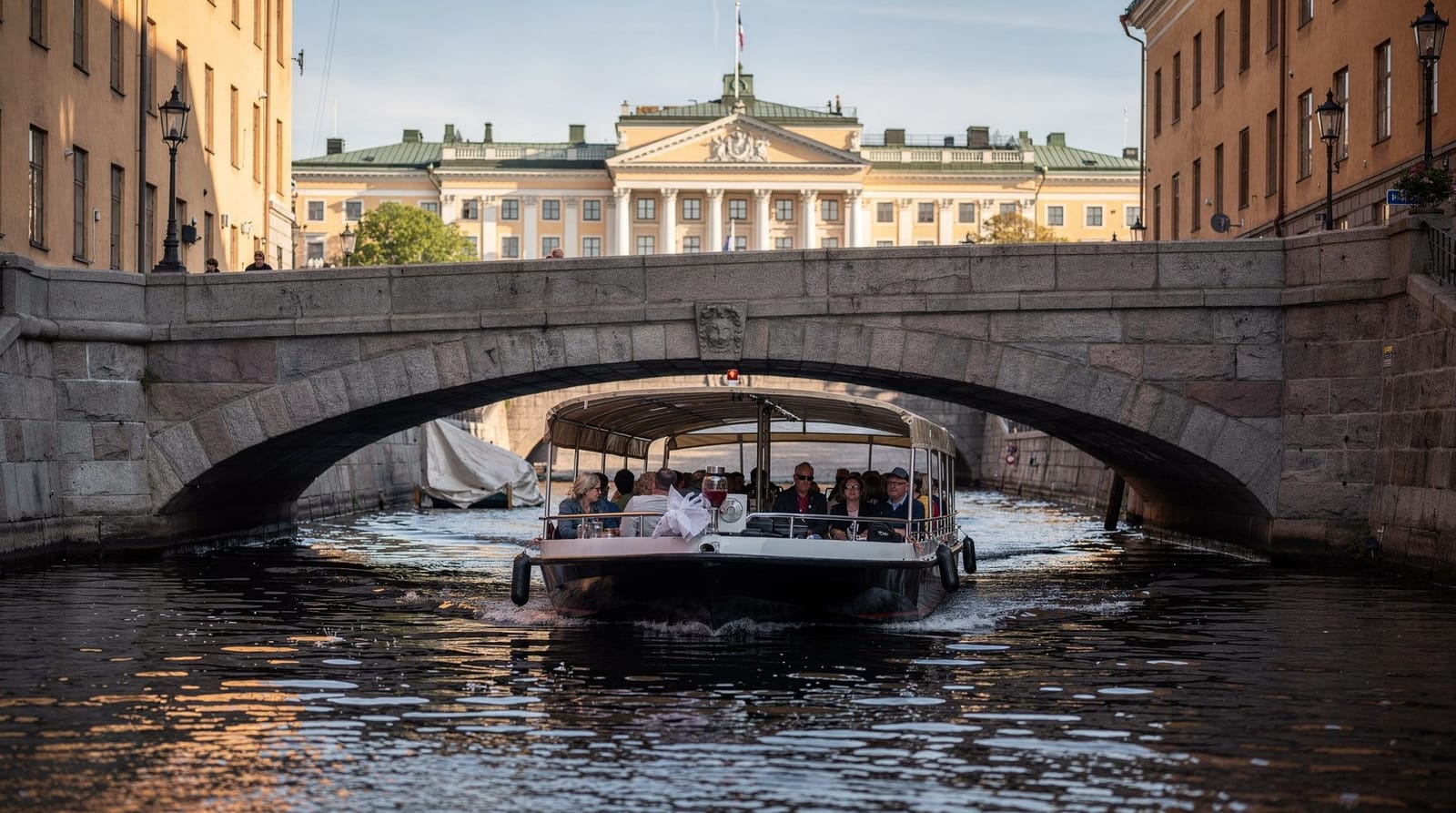
Departing from Strömkajen or Strandvägen on Norrmalm’s waterfront, the boat heads east through the approaches to the archipelago. The urban density thins within 20–30 minutes as the channel widens.
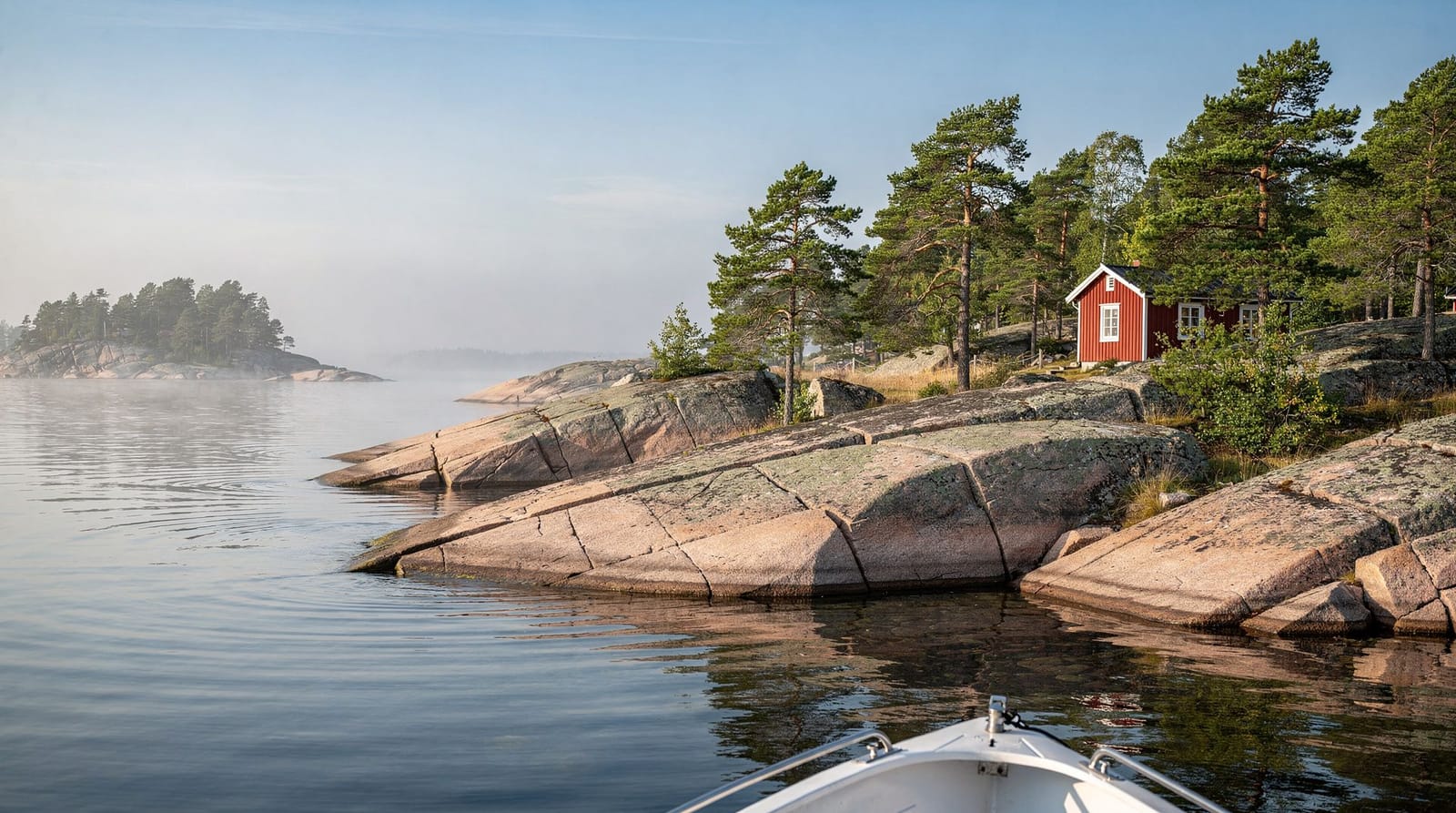
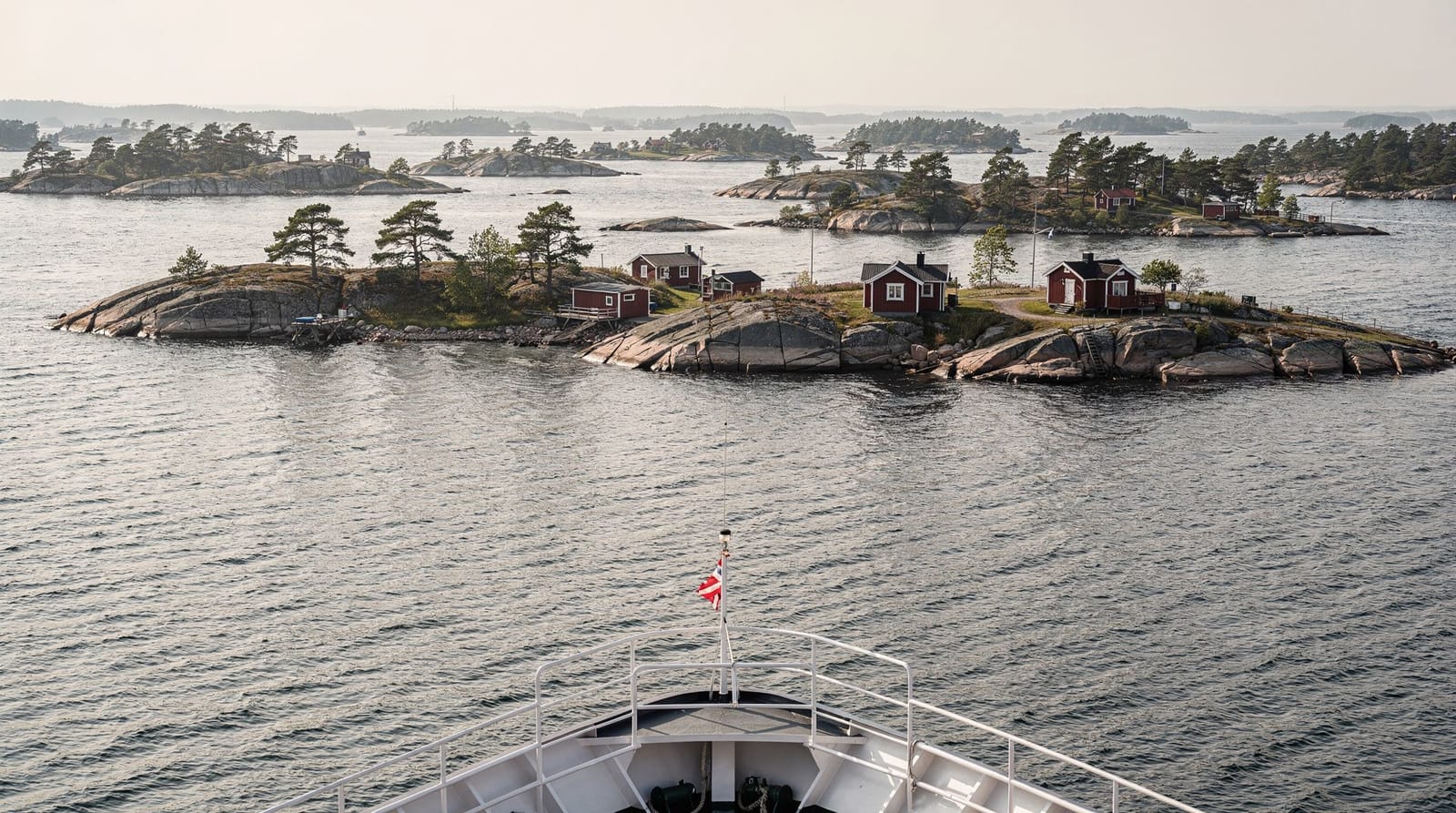
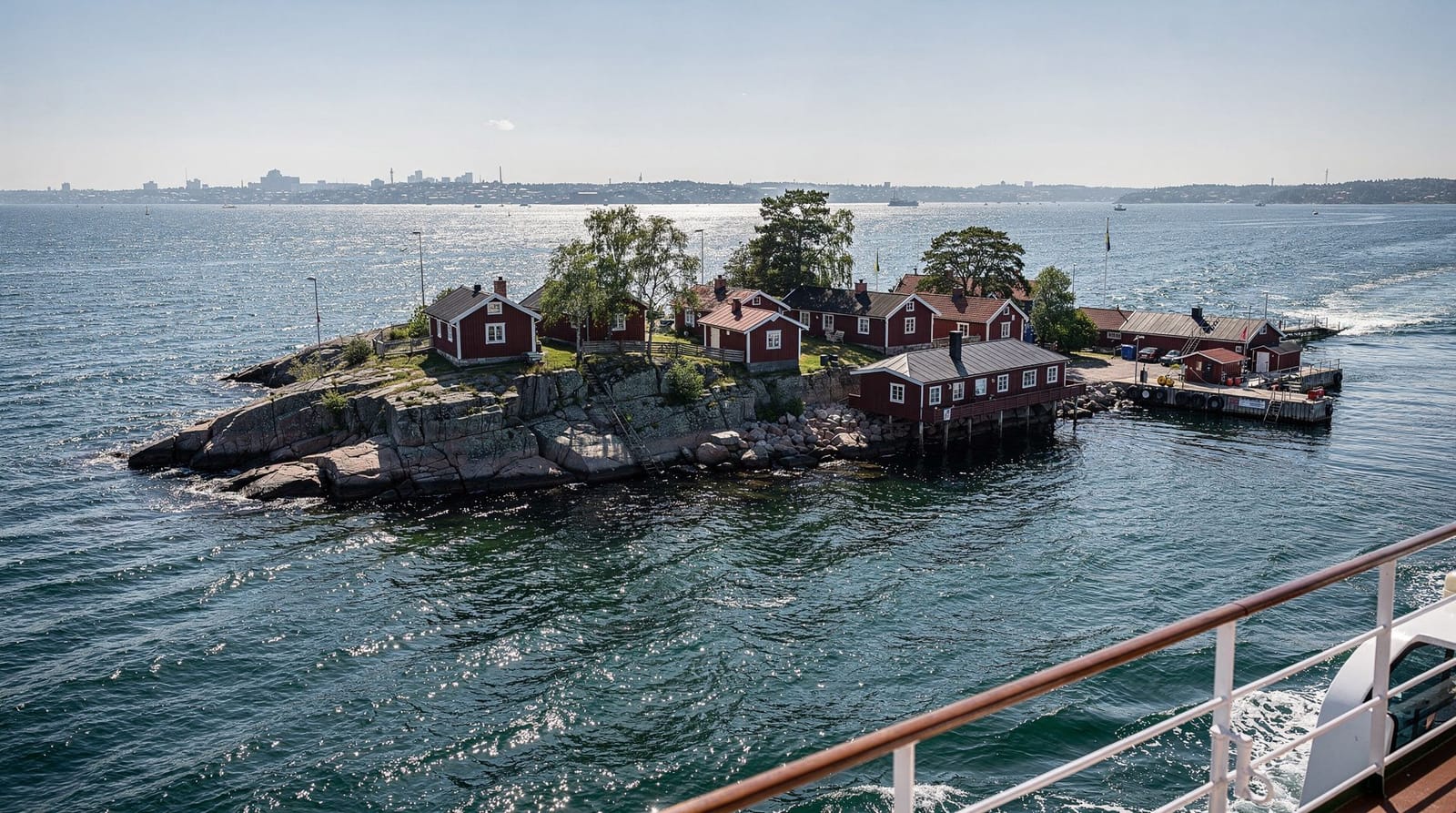
Inner archipelago channels: The first hour covers the waterways between Djurgården, Lidingö, and the near-shore archipelago. These channels are characterised by a mix of permanent residential islands and islands with summer houses — the traditional Swedish sommarstuga (summer cottage), typically painted in the deep Falun red (röd Falufärg) that is ubiquitous in the Swedish countryside. The sight of these houses — a red cottage, a small jetty, a rowing boat, pine trees growing to the water’s edge — is the quintessential Swedish summer image.
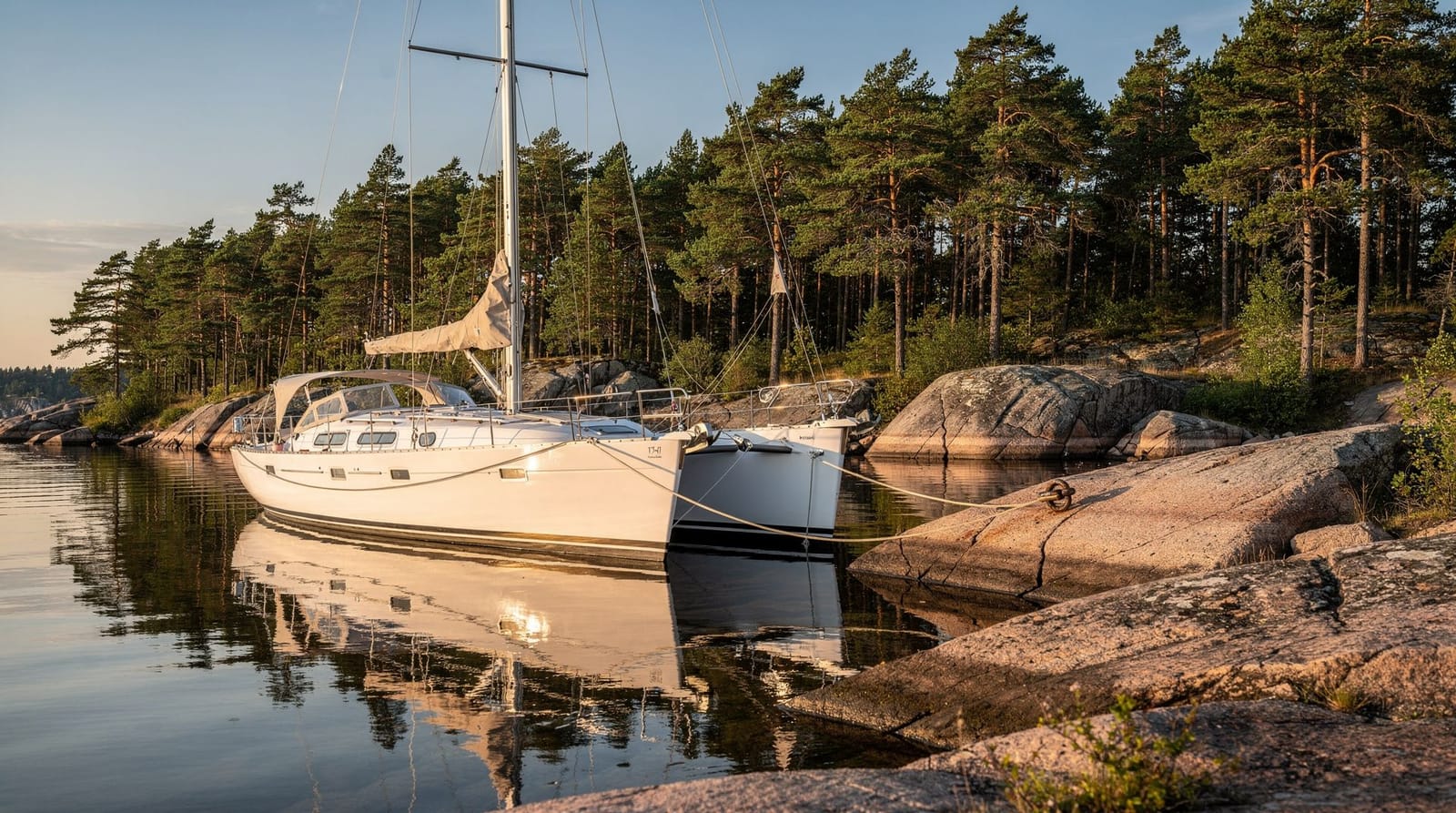
The rocky skerries transition: As the boat moves east, the vegetation changes. The inner archipelago is relatively sheltered — wooded islands with pine forest and birch. The transitional zone shows the change to lower, more exposed granite skerries — wave-smoothed rock rising just a few metres above the water, sometimes with a single wind-bent pine and a boat mooring ring bolted into the stone. This visual shift, from wooded island to bare rock, is the archipelago’s central landscape drama.
Wildlife: The Stockholm archipelago supports a recovering marine ecosystem. Grey seals (Halichoerus grypus) are present in the outer archipelago and occasionally visible from boats in the mid-zone. Ospreys (Pandion haliaetus) nest on the outer islands. White-tailed eagles (Haliaeetus albicilla) — Europe’s largest eagle, and a Swedish conservation success story — are increasingly visible in the archipelago year-round. In May and September, migratory seabirds use the outer islands as staging posts.
Live commentary: A good guided tour contextualises what you see — the Allemansrätten (right of public access), the ecology of the Baltic archipelago, the history of archipelago settlement, the distinctive boat culture, and the current challenges of summer tourism pressure on the islands.
Return: The boat typically turns at a point giving maximum visual variety and returns to Stockholm, showing the city’s silhouette from the east — an orientation visitors rarely get from land.
Practical essentials
| Detail | Information |
|---|---|
| Departure | Strömkajen or Strandvägen, Norrmalm |
| Duration | ~2 hours |
| Typical price | From 375 SEK adult (Strömma archipelago tours, 1.5–3 h) |
| Children | Typically discounted; under 6 free on most services |
| Season | May–September (peak); limited off-season |
| Capacity | Varies: small RIB boats to large covered cruisers |
Guided tour options compared
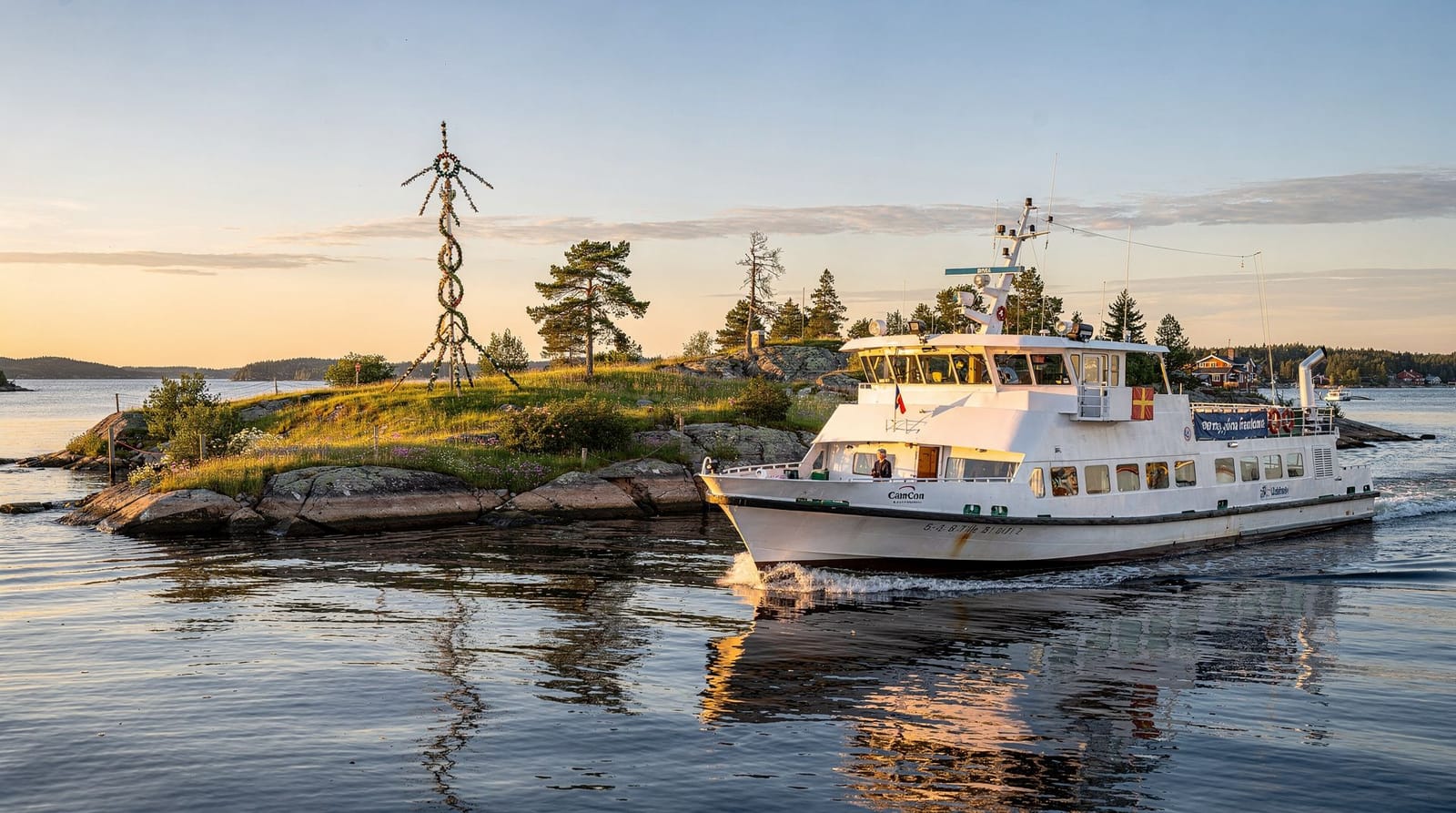
Standard guided cruise (50–200 passengers): Covered vessels with large windows and onboard bar. Live commentary in English and Swedish. More comfortable in rain; less intimate feel. Suitable for families and those who want shelter from variable weather.
RIB speedboat (2-hour): Open rigid inflatable boat, 8–12 passengers, much faster route through the same zone. More physically involving — wet-weather gear provided. Better for the visceral experience of speed through channels. Best suited to adults and older children confident with open-water conditions.
Classic wooden boat with fika: Some operators run 2-hour tours on traditional Swedish wooden archipelago vessels. The pace is slower, the commentary more unhurried, and Swedish fika (coffee and pastry) is typically included. The most authentically Swedish version of the 2-hour tour.
Stockholm: archipelago boat tour with Swedish fika2-hour tour vs longer excursions: which is right for you?
The 2-hour tour is the right choice if:
- You have 1–2 days in Stockholm total and want an impression of the archipelago without sacrificing museum or old-town time.
- You are travelling with children who may not sustain a full 6–8 hour day trip.
- Weather is uncertain and you prefer a shorter commitment with the option to cancel.
- You want to understand the geography before deciding whether to commit to a longer island-hopping trip.
The full-day Fjäderholmarna or Vaxholm excursion is better if:
- You have 2+ days in Stockholm and want to actually land on an island and explore.
- You want to swim, walk, eat on an island, or experience the archipelago beyond passing scenery.
- It is midsummer or peak July: the islands are at their most vivid in full summer; a landing day trip makes more sense than a boat-only tour.
For the complete comparison of island options, see the Stockholm archipelago complete guide.
Allemansrätten: the right of access that defines archipelago culture
The Swedish concept of Allemansrätten (the right of public access) is fundamental to understanding the archipelago. This legal right allows anyone — citizen or tourist — to land on and walk across essentially any land in Sweden, including privately owned archipelago islands, for short periods without needing the landowner’s permission.
In the archipelago, this means: you can anchor a boat off a private island, land on the shore, walk across the island, and picnic on the rocks, provided you stay away from the immediate vicinity of any house (around 50–70 metres), leave no trace, and do not stay more than one or two nights. You cannot drive across private land or pick cultivated plants, but wild berries and mushrooms are freely available to anyone.
This right fundamentally shapes archipelago culture. The notion of private islands inaccessible to outsiders — common in Mediterranean coastal culture — is alien to the Swedish archipelago tradition. The summer cottage on a private island is private; the surrounding rocks and forests are everyone’s.
The guided tour commentary typically explains Allemansrätten and its practical implications. Understanding it makes the archipelago landscape more legible — the apparent randomness of who uses which island and which rocks are for swimming makes sense once you grasp that access is universal by law.
Archipelago ecology
The Stockholm archipelago is part of the Baltic Sea biosphere region. The inner zone supports:
Vegetation: Pine (Pinus sylvestris) dominates the forested islands. Birch (Betula) and alder (Alnus) appear in sheltered valleys. The characteristic Swedish archipelago plant is the common juniper — low, spreading, and ubiquitous on the rockier outer islands.
Marine life: The Baltic Sea is a brackish water sea — lower salinity than the North Sea, higher than Lake Mälaren. The specific conditions support pike, perch, sea trout, and a recovering Baltic cod population. In calmer inner areas, the water is often clear to 3–4 metres depth; the bottom is visible, covered in bladder wrack (Fucus vesiculosus) and common stonewort.
Birds: The archipelago is an important breeding and migration area. Eider ducks nest on many islands; common gulls and black guillemots are visible year-round; common terns (Sterna hirundo) are seasonal visitors. The recovering white-tailed eagle population makes this one of the best places in Sweden to observe this species from a boat.
Seals: The Stockholm archipelago grey seal population has recovered significantly since the 1990s. The population breeds on outer islands and haul-out rocks; individuals occasionally venture into the mid-archipelago. A seal sighting is not guaranteed on a 2-hour tour but is not unusual, particularly in autumn.
Combining the 2-hour tour with Stockholm’s other offerings
Morning orientation: Take the 2-hour boat tour on the first morning in Stockholm. Departures start around 10:00 in peak season. This gives archipelago orientation before deciding whether to add a Fjäderholmarna ferry day or Vaxholm trip.
After Gamla Stan: The Strömkajen departure point is a 10-minute walk from Gamla Stan’s main entrance. After 2–3 hours walking the old town, an afternoon boat tour makes a logical continuation — the boat then gives a view of Gamla Stan’s waterfront that you have just been standing inside, revealing the island’s geography from the water.
With the archipelago kayak tours: For active visitors, the 2-hour cruise provides a visual survey of areas suitable for kayaking before committing to a half-day or full-day paddling tour. See the archipelago kayaking guide for the paddling options.
Evening timing in summer: An 18:30 or 19:00 departure in June or July gives the best light for archipelago photography. The long Swedish summer evenings mean the boat returns to Stockholm in full golden-hour illumination — see the evening cruise guide for the specific summer-evening water experience.
Getting to the departure point
From Stockholm Central Station: Walk southeast through Norrmalm to the waterfront. Follow Hamngatan east to Norrmalmstorg, then south down Hovslagargatan to the quay. Approximately 15 minutes on foot.
T-bana: Kungsträdgården station (lines 10/11) is a 5-minute walk from the quay via Karl XII’s torg.
From Gamla Stan: Cross Strömbron (the bridge linking Gamla Stan to Norrmalm) and walk north along Strömkajen — 5 minutes.
Stromma vs Waxholmsbolaget: the two systems explained
Two distinct boat systems serve the Stockholm archipelago, and understanding which is which prevents the most common logistical confusion.
Strömma Kanalbolaget (commercial sightseeing): Operates the guided 2-hour archipelago tours, the Royal Bridges canal tour, the Drottningholm summer ferry, and the hop-on hop-off boat network. These are commercial sightseeing products with ticket prices, timed departures, and English commentary. Not covered by the SL transit pass.
Waxholmsbolaget (public transport): The state-subsidised archipelago ferry network, serving approximately 200 inhabited islands on regular scheduled routes. Waxholmsbolaget operates year-round on its core routes and seasonally on outer-island routes. SL travel passes are valid within SL zone (inner islands including Fjäderholmarna, Vaxholm, and many others). Waxholmsbolaget does not provide guided commentary or return-loop tours — you buy a ticket, board a ferry, land on an island, and make your own way back on the next scheduled service.
The 2-hour guided archipelago tour is a Strömma product. The Waxholmsbolaget public ferries are the archipelago’s public transport. For the guided, round-trip, no-planning-required experience: Strömma. For the flexibility to land wherever you want and return when you choose: Waxholmsbolaget. The Waxholmsbolaget ferries guide covers the public system in detail.
Planning around the tour: the optimal Stockholm day
The 2-hour archipelago boat tour works best as part of a structured Stockholm day rather than as a standalone activity.
For a culture-and-water day:
- 09:00–11:30: Vasa Museum (buy timed tickets online the night before; book for 09:30 to beat groups)
- 12:00: Lunch on Djurgårdsvägen or at Blå Porten café
- 13:30: Walk to Strömkajen or Strandvägen (30 min, pleasant route via Djurgårdsbroen and Strandvägen waterfront)
- 14:00: Board the 2-hour archipelago boat tour
- 16:00: Return to Strömkajen; walk back to hotel or continue to Gamla Stan
For a first-day orientation:
- Morning: Royal Palace Treasury + Gamla Stan (including the 12:15 Changing of the Guard on weekdays)
- 13:30: Walk to Strömkajen (10 min from Gamla Stan)
- 14:00: Board the 2-hour archipelago tour
- 16:00: Return; rest at hotel before evening dinner
- 19:00: Evening canal boat tour (the same 50-minute loop in golden light, different operator)
The combination of Gamla Stan, the archipelago tour, and an evening canal cruise gives three distinct water experiences — inner urban channels, open archipelago, and the dusk city — in a single day.
Photography from the 2-hour archipelago tour
The archipelago offers photography opportunities distinct from the canal tour:
Summer houses: The red-painted wooden cottages at water level, with small jetties and rowing boats, are the signature Swedish summer image. These appear within the first 30–40 minutes of the route. A 50–85mm equivalent captures the cottage-scale detail without the wide-angle distortion that makes them look toy-like.
Granite skerries: The transition from wooded islands to bare rock is a landscape photographer’s opportunity: flat grey granite, clear Baltic water, the sky above, and nothing else. The simplicity is the point. Shoot from the bow when the boat slows for channel navigation.
Wildlife: Birds and seals from a moving boat require fast shutter speeds (1/1000 or faster) and long reach (300mm+ equivalent). For casual wildlife photography, a 200mm telephoto gives adequate coverage of the harbour seals or osprey that may be visible.
Reflections: In calm inner-channel conditions (common in the morning), the water surface mirrors the island vegetation with high colour fidelity. A polarising filter removes the glare; shoot from the side of the boat rather than the bow to avoid engine wash distortion.
Choosing a departure time
Morning departures (09:00–11:00) tend to have calmer water and softer light, and slightly smaller crowds than the midday slots most tour groups favour. Midday departures (12:00–15:00) are the busiest but offer the widest choice of return connections for an afternoon plan elsewhere in the city. Evening departures (17:00 onward, and 18:30–19:00 specifically in June and July) capture the long Nordic summer light at its most photogenic and are noticeably quieter, since day-trippers heading further into the archipelago have already left and city sightseers have not yet shifted to evening plans. For a first visit with no strong preference, an afternoon slot balances comfort, light, and crowd levels reasonably well; photographers and repeat visitors tend to prefer the evening departures specifically for the light.
Booking tips and what to expect on the day
Book online rather than at the quay in peak season — popular departures, particularly the 14:00 and 18:30 slots in July, can sell out a day or two ahead. Cancellation policies vary by operator; most commercial Strömma-style products allow free cancellation up to 24 hours before departure, but confirm this at booking since weather-related cancellations (initiated by the operator for high wind or storm conditions) are handled differently from passenger cancellations. Arrive 15–20 minutes before departure to allow for boarding and, on the covered vessels, to claim a window seat — the difference between a window and an interior seat matters more on this route than on the calmer canal tours, since the archipelago scenery is the entire point.
Toilets and refreshments: Covered vessels have onboard toilets; RIB speedboats generally do not, so use facilities before boarding. Most vessels sell coffee, snacks, and sometimes beer or wine; the wooden-boat fika tours include refreshments in the ticket price.
A note on sustainability
The Stockholm archipelago’s popularity brings real environmental pressure — erosion on heavily trafficked landing points, disturbance to nesting birds, and wake damage to fragile shorelines from fast-moving boats. Reputable operators follow speed restrictions in sensitive channels and avoid close approaches to nesting islands during the June–July breeding season. As a passenger, the most useful thing you can do is choose an operator that publicly states these practices and avoid pressuring guides to get closer to wildlife than they are willing to go. The archipelago’s continued accessibility under Allemansrätten depends on both operators and visitors treating it with genuine care rather than as a scenery backdrop.
Frequently asked questions about Stockholm archipelago 2-hour boat tours
Is the 2-hour boat tour child-friendly?
Yes. The covered vessels are accessible and stable; toilets are available on board. Children aged 6 and above generally find the commentary accessible. The RIB speedboat version is best suited to adults and children 12+.
Can you see Fjäderholmarna on the 2-hour tour?
Some routes pass close to Fjäderholmarna, the nearest inhabited island. Whether the 2-hour tour includes a close pass depends on the operator and route. For Fjäderholmarna specifically, the dedicated public ferry from Slussen or Nybroplan is the better option — see the Fjäderholmarna ferry guide.
What should you wear for the 2-hour archipelago tour?
On a covered vessel: standard city clothing; bring a layer for the open deck. On the RIB speedboat: the operator provides full waterproof overalls. Even in summer, the water temperature in the archipelago is cold (14–18°C in July), and spray is frequent at RIB speeds. Follow operator instructions on dress code.
How does the Waxholmsbolaget public ferry compare to the 2-hour guided tour?
The Waxholmsbolaget public ferry is transport — it takes you to an island and you return on another service. There is no guide, no fixed loop, and you must plan your own time on the island. The 2-hour guided tour is structured sightseeing — a loop with commentary, no disembarkation. For seeing the archipelago from the water with context: guided tour. For actually spending time on an island: Waxholmsbolaget.
Top experiences
Bookable activities with verified prices and instant confirmation on GetYourGuide.