Drottningholm Palace half-day guide: UNESCO royal palace by boat
Stockholm: Drottningholm Palace skip-the-line tour by ferry
How do I visit Drottningholm Palace and how long does it take?
Drottningholm is a comfortable half-day from Stockholm: 1 hour by SL boat from Stadshusbron (May–September, most scenic approach) or 45 minutes via T-bana to Brommaplan + bus 301-323 (year-round). Palace entry is 170 SEK, Chinese Pavilion 140 SEK (250 SEK for both), gardens free. Allow 3–4 hours on site. The boat approach is strongly recommended if visiting in summer — the palace seen from Lake Mälaren is one of Stockholm's best views.
Drottningholm: the genuine royal palace experience
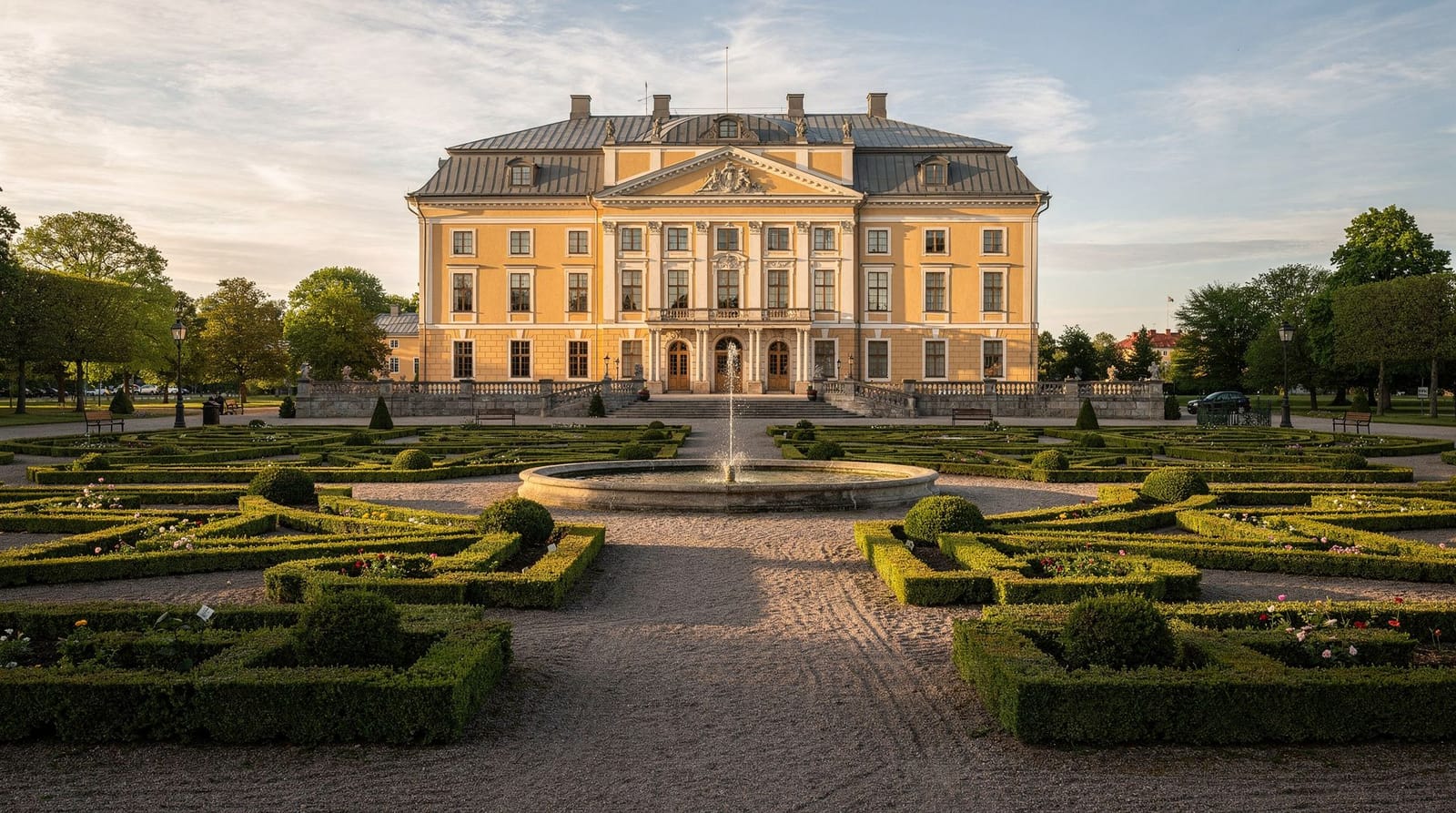
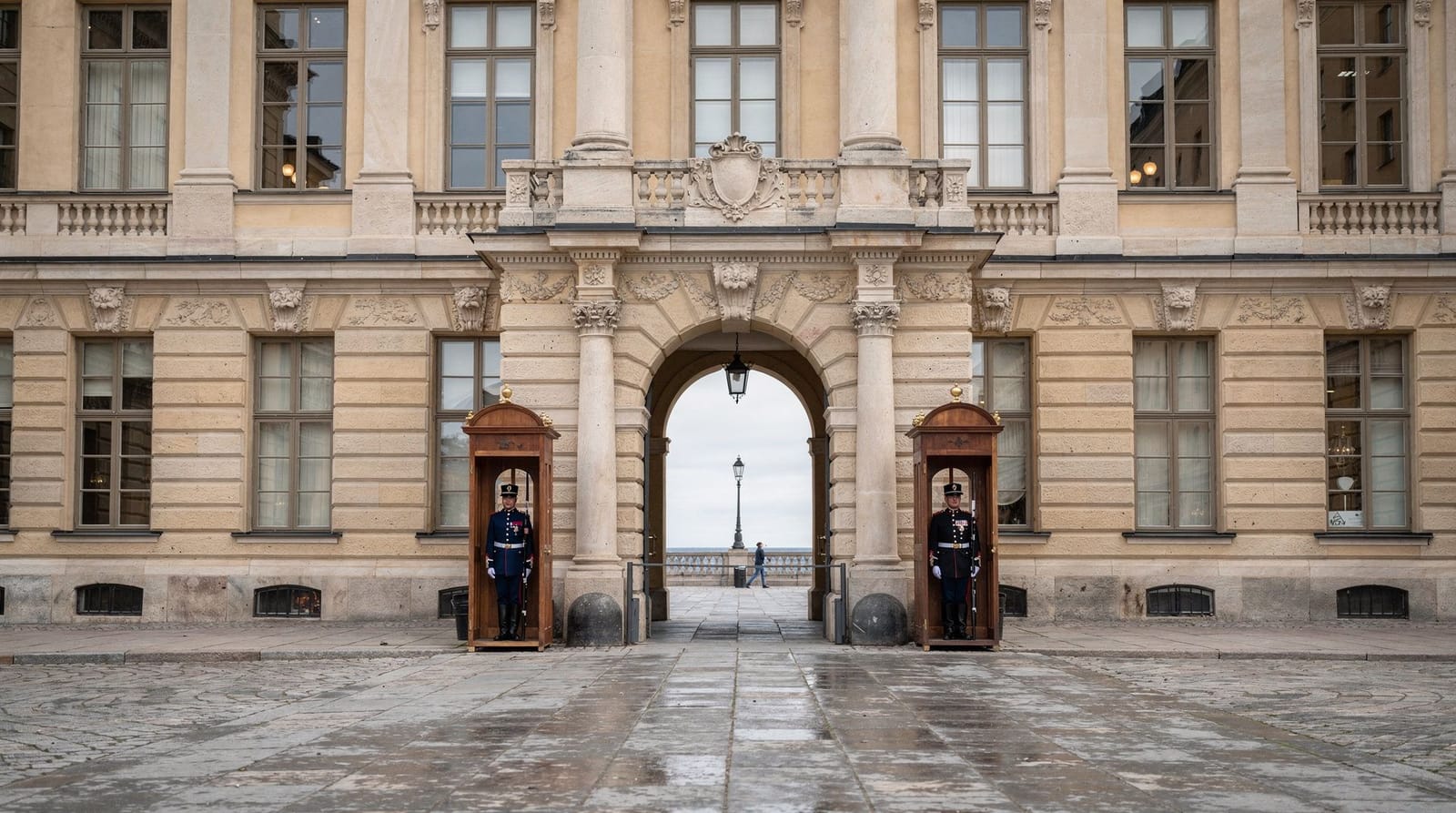
Stockholm’s Royal Palace in Gamla Stan is Stockholm’s most prominent royal building, but Drottningholm is the palace that matters more in practice: it is where the Swedish royal family actually lives, it holds some of the most extraordinary 18th-century European palace architecture in existence, and its UNESCO World Heritage designation is based on the extraordinary completeness of the ensemble — palace, gardens, Chinese Pavilion, and Court Theatre all survived largely intact.
For visitors with one day trip allocation, Drottningholm is in competition with Uppsala and Birka for that day. This guide makes the case for Drottningholm while being honest about what it is and what it is not. See the day trips from Stockholm complete guide for how it stacks up against the full range of options.
| Where | 12 km west of central Stockholm, Lovön island |
| Cost | Palace 200 SEK + Pavilion 100 SEK, or ~140 SEK boat return |
| Time needed | 3–4 hours on site |
| Getting there | SL boat from Stadshusbron (summer) or T-bana + bus (year-round) |
| Best time | May–September for full access; May/September for fewer crowds |
Getting there
By SL boat (May–September, recommended)
The SL boat departs from Stadshusbron — the pier directly adjacent to Stockholm City Hall — and crosses Lake Mälaren to a pier at the foot of the palace gardens. Journey time: approximately 1 hour each way.
The boat is covered by an SL pass (24/72-hour or 7-day). Without a pass, purchase a standard SL ticket at the pier. The route is operated as regular public transport, not a tourist boat — it departs and returns on a fixed schedule (approximately every 1–2 hours in summer; check current timetable).
The approach by water is the best argument for taking the boat: the palace, visible from the lake in the final 15 minutes of the approach, is framed by the gardens and the surrounding landscape in a way that the bus approach cannot replicate.
Book the Drottningholm skip-the-line ferry tourBy T-bana + bus (year-round)
T-bana green line to Brommaplan, then bus 301, 302, 311, or 323 to the Drottningholm stop. Total journey time: approximately 45 minutes from T-Centralen.
This route runs year-round including winter, operates on a regular schedule, and is covered by an SL pass. The bus deposits you at the palace gates rather than the boat pier.
By kayak
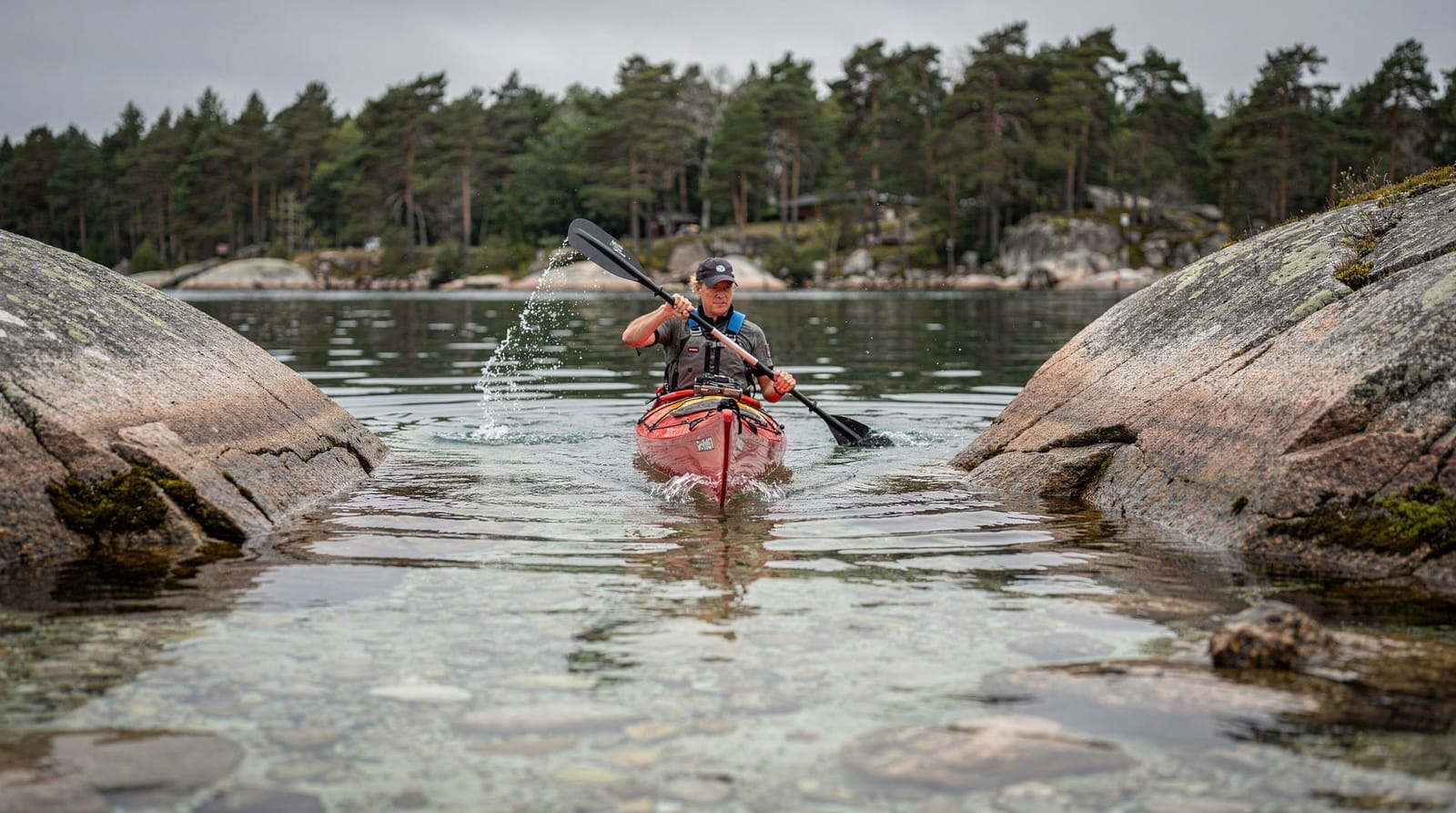
Stockholm kayak operators run guided kayak tours to Drottningholm — a full-day paddling trip across the lake, arriving at the palace pier, and returning. Unusual, beautiful, and physically demanding.
Book a kayak tour to Drottningholm PalaceThe State Apartments
The main palace building houses the State Apartments — the formal ceremonial rooms used for official occasions. The highlights:
The Karl X Gustav Gallery: A Baroque gallery running the full length of the upper floor, with 17th-century ceiling paintings celebrating the Thirty Years War victories of Karl X Gustav. This is the room that establishes the scale and ambition of the whole palace.
The Baroque staircase: The palace’s central staircase, decorated with trompe-l’oeil painted architecture, creates an illusion of additional height and architectural complexity that was specifically designed to impress.
Queen Ulrika Eleonora’s bedchamber: The royal bedchamber preserved in its 17th-century arrangement — not primarily a sleeping room but the formal reception room where the queen held morning ceremonies.
The library (Lovisa Ulrika’s library): A private library of the 18th century containing original volumes and furnishings.
The State Apartments take approximately 1–1.5 hours at a thorough pace.
The Chinese Pavilion (Kina Slott)
This is Drottningholm’s most extraordinary feature and one of the most unusual buildings in Sweden.
Queen Louisa Ulrika received the Chinese Pavilion as a birthday surprise from her husband King Adolf Fredrik in 1753. The original was a timber summer pavilion; the current structure, built in stone in the 1760s, is a full-scale Chinoiserie palace in the European 18th-century imagining of China — elaborate pagoda-like rooflines, lacquered interiors, painted Chinese scenes on every surface, and collections of Chinese export porcelain.
Crucially, the interior is exceptional: the rooms are furnished with original 18th-century Chinese and Japanese objects alongside Swedish court furniture, creating an atmosphere entirely unlike any other building in the country. The lacquered room is particularly remarkable.
Entry: 100 SEK. Seasonal (closed November–April). Allow 45–60 minutes.
The Baroque garden
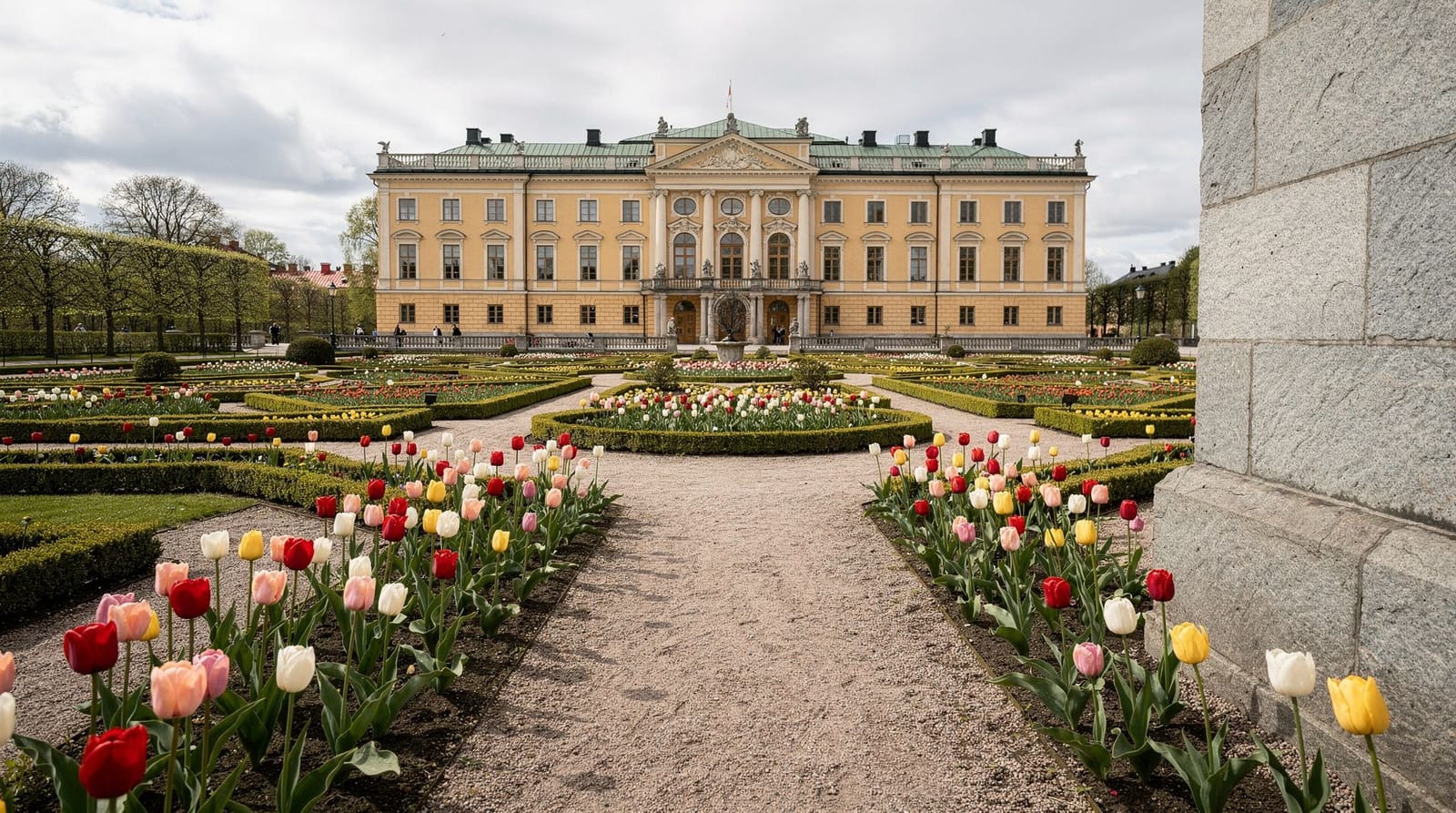
The formal garden immediately in front of the palace is the largest Baroque garden in Sweden and among the best-preserved in Scandinavia. The design was created in the 17th century following the formal French garden style: geometrically arranged beds, clipped hedges, a central water channel, and fountains fed by the Lake Mälaren.
The garden is free and open year-round. In summer, the parterres are in flower and the fountains run on certain days. In autumn, the clipped yew hedges and the colour of deciduous trees create a different beauty.
The English garden
Behind the Baroque garden, a later 18th-century addition in the English landscape style — irregular paths, artificial hills, woodland, and follies. Less formally structured than the front garden, better for a relaxed walk. The Chinese Pavilion sits within this section.
The Court Theatre
Drottningholm’s 18th-century court theatre (Drottningholms Slottsteater) is one of the best-preserved 18th-century theatres in the world. The stage machinery — ropes, counterweights, and fly systems — dates from the 1780s and still functions. The theatre was effectively abandoned in the 1790s, sealed, and rediscovered in the 1920s, which is why it survived: no 19th-century modernisation.
Guided tours of the theatre are available separately (approximately 120 SEK). The theatre stages summer opera performances — booking these in advance is worthwhile if you are visiting in July or August.
Suggested itinerary
Arrival by boat (June–August):
| Time | Activity |
|---|---|
| 10:00 | Depart Stadshusbron by SL boat |
| 11:00 | Arrive Drottningholm pier |
| 11:00–12:30 | State Apartments |
| 12:30–13:30 | Lunch at palace café |
| 13:30–14:30 | Chinese Pavilion |
| 14:30–15:30 | Baroque garden walk |
| 15:30–16:00 | English garden walk |
| 16:00–17:00 | Return boat to Stockholm |
Comparing Drottningholm to the Stockholm Royal Palace
The Royal Palace in Gamla Stan is the official royal palace — ceremonial, highly visible, in the centre of the city. Drottningholm is the actual residential palace — lived in, UNESCO-listed, architecturally more extraordinary, and requiring more planning to visit. If you only visit one, Drottningholm is the better experience; it requires the half-day commitment but delivers more in return.
See the royal palaces comparison guide for the full breakdown.
The boat journey in more detail
The 50–60 minute crossing of Lake Mälaren is a meaningful part of the Drottningholm visit, not just transport. Departing Stadshusbron, the boat moves through Kungsholmen’s channels before opening onto the lake proper, with the palace becoming visible 10–15 minutes before arrival. The full logistics — departure points, schedule, pricing, and the kayak alternative for active visitors — are covered in the Drottningholm by boat guide, which is worth reading in full if the boat crossing is a priority rather than just a means to an end.
Drottningholm alongside other Lake Mälaren destinations
Drottningholm sits within a cluster of Lake Mälaren day-trip options that share a similar water-access character. Gripsholm Castle at Mariefred is further out (65 km) and makes a fuller day; Vaxholm sits in the opposite direction on the Baltic archipelago side rather than the lake, giving a genuinely different, more maritime character. For visitors with several days to allocate across day trips, Drottningholm’s relatively short distance from the city (12 km) makes it the easiest half-day to schedule alongside a fuller day elsewhere, without the same all-day commitment that Birka or Gripsholm require.
Planning the day around the weather and the crowds
Drottningholm rewards a little forethought. The itinerary above assumes a dry day in summer, but the site works in other conditions if you reshuffle the order. On a grey or rainy day, put the State Apartments and the Chinese Pavilion first and treat the gardens as a bonus if the sky clears; on a bright day, do the reverse and save the interiors for the hours when the light gets flat. Stockholm weather changes quickly, so it helps to carry a layer and to read the what to pack for Stockholm guide before you set out. In high summer the long evenings make a late return feel unhurried, which is covered in more detail in the Stockholm summer and white nights guide.
Crowds are mostly a matter of timing. Groups tend to arrive together off the same boat, so a short pause at the start, a coffee or a first walk through the garden before you head indoors, lets the first wave move ahead of you through the rooms. Likewise, the Chinese Pavilion is a small building, and it feels very different with a handful of visitors than with a full group; if a crowd has just gone in, walk the English garden for a while and come back.
Choosing between the boat and the bus
The honest answer is that both routes work, and the right one depends on what you want from the day. The boat is slower and tied to a timetable, but it turns the journey into part of the experience and delivers you at the garden end of the grounds. The bus route is more flexible, runs when the boat does not, and suits anyone who prefers to leave when they like rather than when a departure dictates. Either way, the practical side of tickets and zones is explained in the SL pass guide, and the wider picture of how the network fits together is in the guide to Stockholm public transport.
One useful habit: decide your return transport before you arrive. If you take the boat out, check the time of the last departure back to town when you step off, and plan the end of your afternoon around it rather than discovering it at the last minute. Nothing about the palace or its gardens needs rushing, and it is far more pleasant to finish the garden walk at your own pace than to hurry to a pier.
Going deeper on the palace itself
This half-day guide is designed to help you plan the visit as a whole. If the palace interiors are the main draw for you, the Drottningholm Palace guide goes further into the rooms, the history and what to look for inside, and the Drottningholm destination page places the island in its wider setting. Readers who want to understand how the palace compares with the city’s other royal residence will find the Royal Palace Stockholm guide a useful companion, since the two buildings serve very different roles.
Who this half-day suits, and who it does not
Drottningholm is a good fit for travellers who like architecture, gardens and a slower rhythm. It pairs well with a short stay: on a tight schedule, the Stockholm in 24 hours itinerary will leave little room for it, whereas the two-day essential itinerary can absorb a half-day here without strain. Families should think about the attention span of younger children, since much of the visit involves looking rather than doing; the Stockholm with kids family guide suggests alternatives for days when the palace might be too formal. Visitors with mobility needs should check the accessibility guide for Stockholm before choosing a route, because gravel paths, steps and older buildings affect what is comfortable on site.
For active travellers, paddling to the palace is a memorable alternative to the ferry, and the kayaking guide explains what to expect from a day on the water. Those who would rather see more of the city from the water first can look at the royal canal boat tour guide, which makes a gentle companion to a palace day. And if Drottningholm leaves you wanting another royal residence, Gripsholm Castle is the natural next step on a later day.
Making the most of your time on site
A few small choices make the afternoon better. Eat at a sensible moment rather than at the busiest one, since the café fills when the boats land. Keep your phone for photographs of the palace from the garden side, where the symmetry of the front is easiest to appreciate, and take time to look back at the building from the far end of the Baroque garden. Resist the urge to tick off every room; the State Apartments reward attention to a few details, such as the painted ceilings and the staircase, more than a march through every door. Finally, leave a little slack at the end of the day. Drottningholm is one of the few Stockholm excursions where the quiet is part of the appeal, and a slow final walk by the water is a fitting way to close the visit.
Practical information
| Detail | Information |
|---|---|
| Distance from Stockholm | 12 km west |
| Transport (summer) | SL boat from Stadshusbron (1h) |
| Transport (year-round) | T-bana to Brommaplan + bus (45 min) |
| Palace entry | 200 SEK (adult) |
| Chinese Pavilion | 100 SEK (adult) |
| Gardens | Free |
| Recommended time | 3–4 hours on site |
| Season (boat) | May–September |
| Season (palace) | Year-round (limited winter hours) |
| Chinese Pavilion season | May–October |
Frequently asked questions about Drottningholm Palace
Is Drottningholm Palace open to visitors even though the royal family lives there?
Yes — the Swedish royal family lives in a private wing while State Apartments and the grounds are open to the public. Same arrangement as Buckingham Palace.
What is the best way to reach Drottningholm?
Summer: SL boat from Stadshusbron (1 hour, most scenic). Year-round: T-bana to Brommaplan + bus 301-323 (45 minutes).
What should I prioritise at Drottningholm?
The Chinese Pavilion is the unmissable highlight — extraordinary Chinoiserie architecture. The State Apartments and Baroque garden are also significant.
How much does Drottningholm cost?
Palace: 170 SEK. Chinese Pavilion: 140 SEK. Gardens: free. Palace + Pavilion ticket: 250 SEK.
Can I visit Drottningholm in winter?
Palace State Apartments are open limited hours (Friday–Sunday). Chinese Pavilion is closed November–April. Gardens are open year-round.
Top experiences
Bookable activities with verified prices and instant confirmation on GetYourGuide.