Drottningholm Palace guide: Stockholm's UNESCO royal residence
Stockholm: Drottningholm Palace skip-the-line tour by ferry
What is the best way to visit Drottningholm Palace and is it worth it?
Drottningholm is one of the best-preserved 18th-century royal palaces in Europe and a UNESCO World Heritage Site. The state apartments, the extraordinary Court Theatre (with original 1766 stage machinery), the Chinese Pavilion, and the formal gardens together constitute a full half-day or day visit. The summer boat from Stadshusbron (50 min) is the most atmospheric arrival. Allow 3–4 hours minimum. Adult palace ticket ~160–185 SEK.
Drottningholm: the palace that escaped fashion
Most great royal palaces have been continuously updated — redecorated to follow fashion, extended by each generation of monarchs, or altered beyond recognition by restoration efforts. Drottningholm is an exception. The 18th-century palace fell out of active royal use after the mid-19th century and was largely left alone for decades, preserved in a condition that later generations came to recognise as extraordinary.
The Court Theatre, in particular, represents a survival that has no equivalent in the world. Built in 1766, abandoned after 1792 when the theatre lost its royal patronage, and then essentially forgotten in the palace’s west wing, it emerged in the 1920s with its original stage machinery, painted backdrops, and technical systems almost entirely intact. The counterweights still move. The wind machine — a rotating barrel of wooden slats — still makes the sound of Baltic storms. The wave machine still undulates. Nothing was replaced because nothing was used for 130 years.
UNESCO inscribed the entire Drottningholm estate in 1991 as a World Heritage Site. The Palace, the Court Theatre, the Chinese Pavilion, and the gardens together represent what the inscription committee described as an “exceptionally well-preserved” example of 17th and 18th-century European court culture.
| Where | Lovön island, Lake Mälaren, 12 km west of Stockholm |
| Cost | 170 SEK palace, 140 SEK Pavilion (250 SEK for both), ~130 SEK Court Theatre |
| Time needed | 4–5 hours for a thorough visit |
| Getting there | Summer boat from Stadshusbron, or T-bana + bus year-round |
| Best time | May and September for full access with fewer crowds |
The palace architecture
Drottningholm’s main palace building was designed by Nicodemus Tessin the Elder, begun in 1662 for Dowager Queen Hedvig Eleonora. After the Elder Tessin’s death in 1681, construction was completed by his son Nicodemus Tessin the Younger, who later designed the Royal Palace in Gamla Stan.
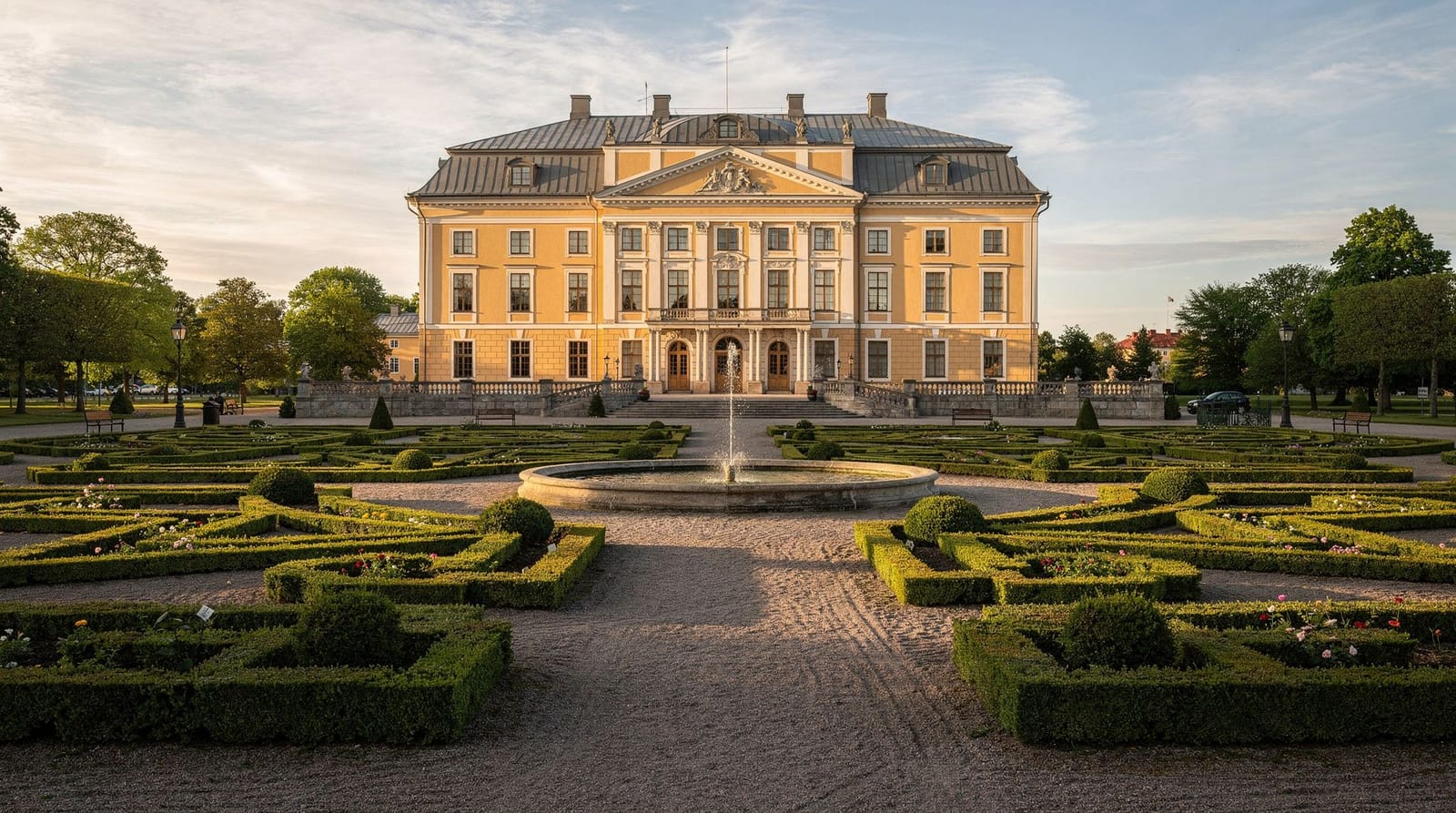
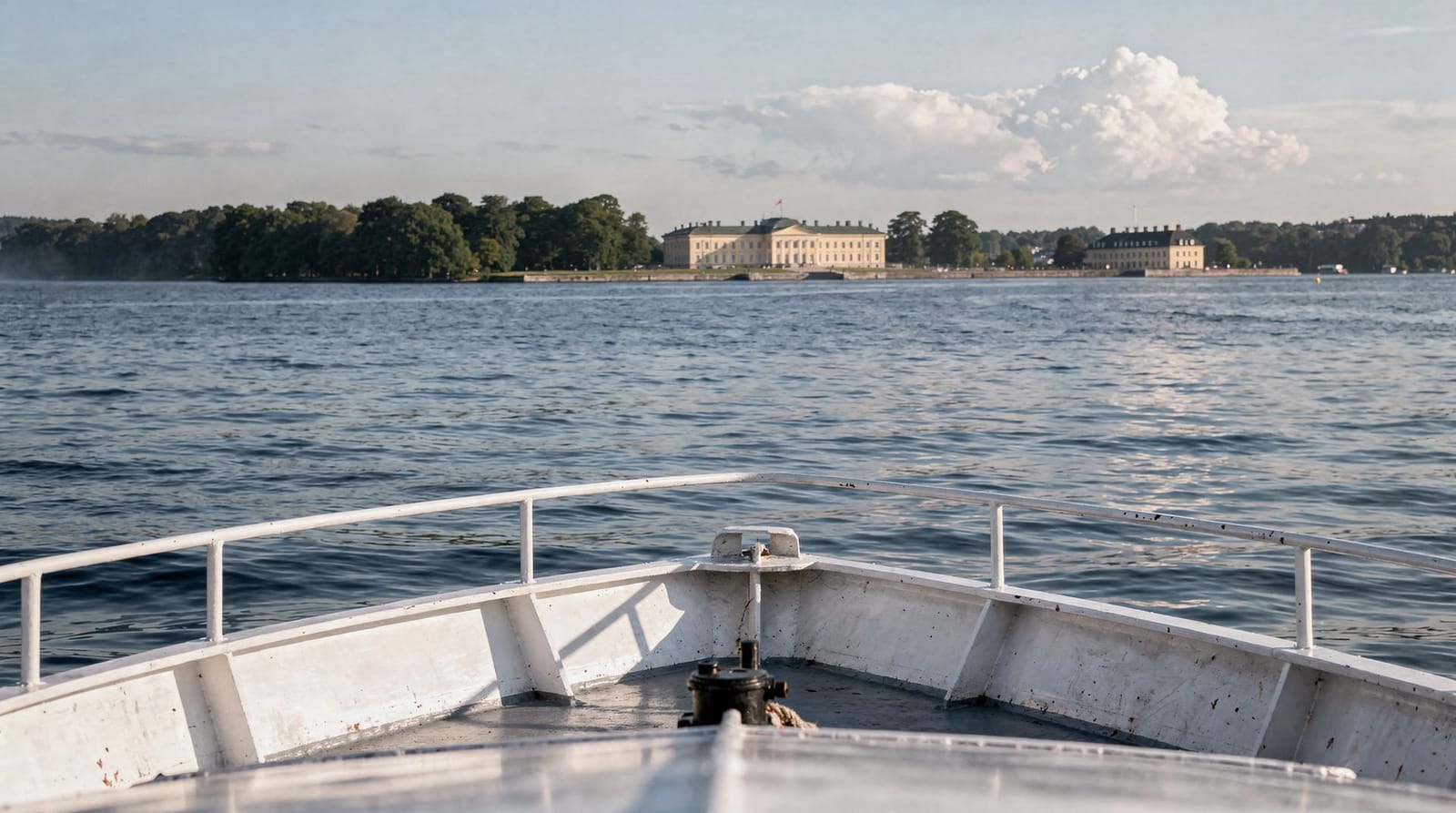
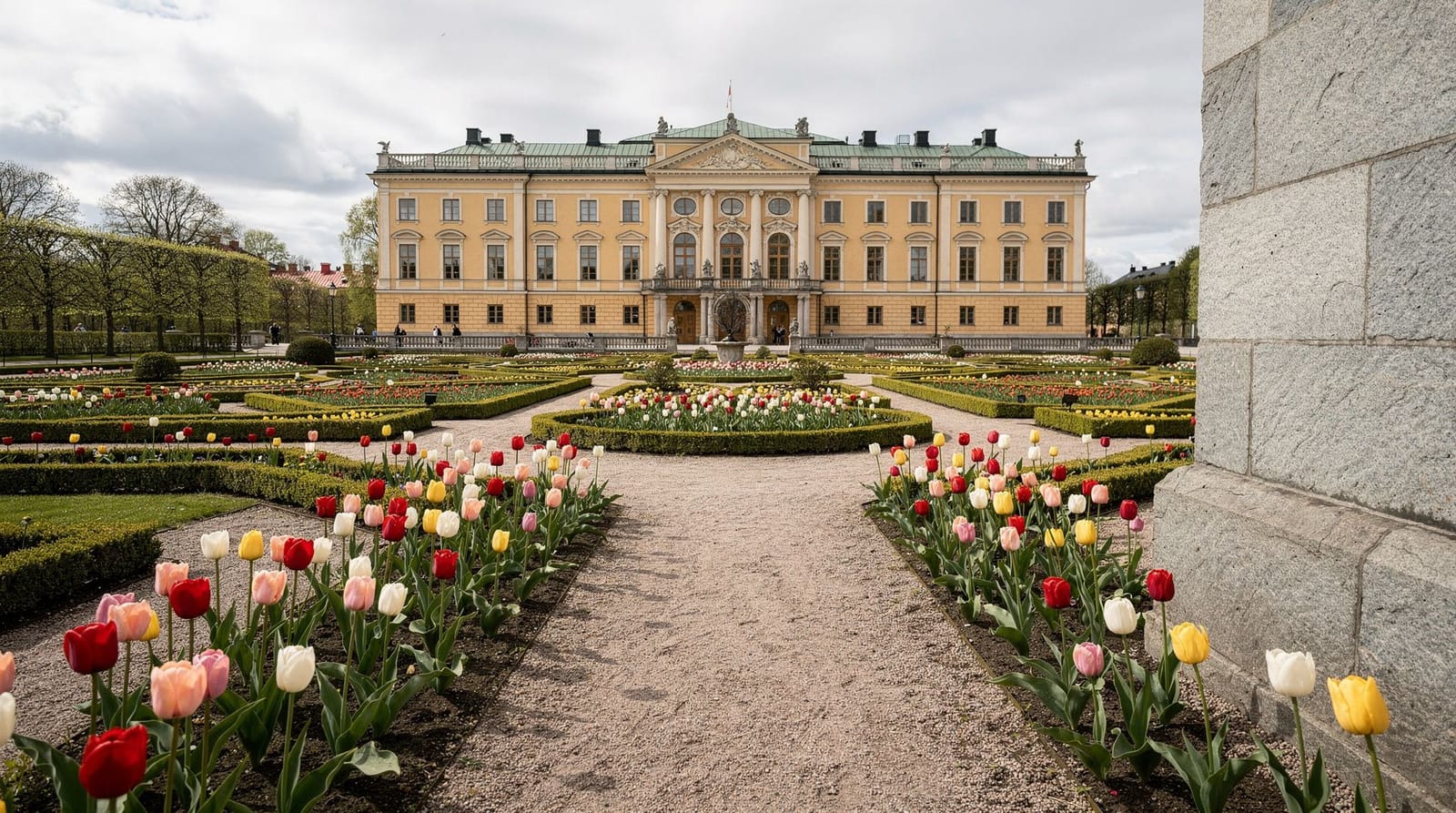
The result is a late baroque structure combining the French royal palace model (Versailles was a direct influence) with the Swedish baroque tradition — stone-coloured rendering, copper roofs turning green, the characteristic Swedish preference for restraint within grandeur. The main facade faces the formal gardens and Lake Mälaren beyond; the approach by water from Stockholm gives the intended first impression.
The interior underwent significant modification in the 18th century under Lovisa Ulrika (who acquired the palace in 1744) and her son Gustav III (who made Drottningholm a centre of Swedish court culture in the 1770s–90s). The result is a layered interior: 17th-century baroque in the King’s suite, 18th-century rococo in the Queen’s apartments, and Gustavian neoclassicism in the rooms created for Gustav III.
The state apartments
Open to visitors, the state apartments offer a sequence of royal rooms representing 250 years of Swedish court taste.
The Queen’s Antechamber: The formal reception sequence begins here. The painted ceiling is among the finest early baroque interiors in Sweden.
The Painting Gallery (Galleri): A long corridor with 17th-century Dutch and Flemish paintings collected by Swedish monarchs — the plunder of the Thirty Years’ War and subsequent purchases represent one of the largest concentrations of 17th-century Northern European painting in Scandinavia.
The Lower North Corps de Logis: The apartment created for Lovisa Ulrika in the 1740s–50s. The rococo decoration — carved and gilded panelling, silk furnishings, intricate parquet floors — is the most complete and best-preserved 18th-century Swedish royal interior.
Gustav III’s State Bedchamber: The ceremonial bedroom used for the formal morning and evening “lever” and “coucher” — the ritualised rising and retiring ceremonies of 18th-century court life. The bed and furnishings date from Gustav III’s period of residence.
The Court Theatre
The single most remarkable element of Drottningholm. The theatre was built in 1766 to designs by Carl Fredrik Adelcrantz, replacing an earlier theatre destroyed by fire. It operated brilliantly under Gustav III (who was passionately interested in theatre and used it extensively from 1771 to his assassination in 1792), then fell silent after his death.
When researchers rediscovered the theatre in the early 20th century, they found:
- 30 complete painted backdrops from the 18th century
- The fly system with counterweights operating on their original principles
- The trap-door system for disappearances and appearances
- The wing system for quick scene changes
- The lighting system (candles and oil lamps, replaced with electric equivalents that recreate the original light quality)
- The wind machine and wave machine still operational
Guided tours of the theatre run daily in summer (separate ticket, approximately 130 SEK). The guide operates the machinery live — demonstrating the wave machine, showing how a 1766 stage transformation worked mechanically. This is the essential Drottningholm experience; the theatrical machinery tour is more memorable than the state apartments.
Summer opera season: From late June through mid-August, the Royal Drottningholm Court Theatre opera and ballet season presents performances in the theatre using the original stage technology. Tickets (typically 300–800 SEK) sell out months in advance. The programme mixes baroque opera (Handel, Vivaldi, Rameau) with classical works for which the 1766 staging is appropriate. Booking opens in January for the summer season; check the Drottningholm Theatre’s website.
The Chinese Pavilion (Kina Slott)
Kina Slott was built in 1753 as a surprise birthday present for Queen Lovisa Ulrika — assembled in sections off-site and erected in the palace garden overnight, to be discovered on the morning of her birthday. The original wooden structure was replaced by the current permanent pavilion between 1763 and 1769 to a design reflecting the chinoiserie fashion then sweeping European court culture.
The interior is remarkable: Swedish craftsmen interpreting Chinese and East Asian decorative motifs through the lens of 18th-century European exoticism. The result is distinctly Scandinavian-chinoiserie — cool Swedish colouring applied to dragons, pagodas, and figures that bear only a conceptual relationship to actual Chinese decoration. It is one of the most complete surviving examples of this style.
Season: The Chinese Pavilion is open May–September. Separate admission 140 SEK (250 SEK with the palace). Included in some combined Drottningholm ticket packages.
The formal gardens
French baroque garden (in front of palace): The parterre garden descending from the palace’s main facade to the lake’s edge is laid out in the formal French baroque style — geometric beds, clipped hedges, central fountain axis, and the canal line extending the visual axis out to the water. The garden is free to walk; the geometry is best appreciated from the upper terraces behind the palace.
English landscape park (behind palace): Behind the formal garden, a large naturalistic English-style park was created in the late 18th century. The contrast between the formal geometry and the naturalistic woodland is intentional — a standard 18th-century taste. The Hercules sculptures (copies of the originals now in the Museum of National Antiquities) are the main highlights along the park’s central path.
Guard’s tent: The Chinese Pavilion’s garden contains a series of painted wooden “tent” structures built for the Swiss Guards. These are charming pieces of 18th-century military-garden architecture.
Seasonal garden character: The formal garden changes noticeably across the season. May brings the first tulip displays and the fountains’ seasonal start-up; June and July show the parterres at full bloom with the longest daylight for a leisurely walk; August retains the summer planting but with thinning crowds after the July peak; September introduces the first autumn colour in the English landscape park’s deciduous trees, particularly around the Hercules sculpture walk, while the formal beds are typically replanted for a second, more muted late-season display.
Photography at Drottningholm
The palace and grounds offer several distinct photographic opportunities worth planning around. The formal French garden’s geometric parterre beds photograph best from the upper terrace immediately behind the palace, where the full axis toward the lake is visible in one frame. The Chinese Pavilion’s interior does not permit photography in most sections, so the exterior — with its distinctive rooflines against the surrounding parkland — is the better subject. The Court Theatre’s auditorium, when the guided tour allows a pause, gives a rare opportunity to photograph functioning 18th-century stage machinery, though flash photography is typically prohibited to protect the original materials. Morning light (10:00–11:00 arrival) catches the palace’s south-facing facade directly; a summer boat arrival timed for this window gives the best combination of light and low visitor density.
Getting there
By boat (May–September): The Strömma summer ferry from Stadshusbron (City Hall quay), 50 minutes, most atmospheric arrival. See the Drottningholm by boat guide for full logistics.
By T-bana + bus (year-round): T-bana to Brommaplan (green line), then bus 301, 323, or 177. Total approximately 45–60 minutes from T-Centralen. Covered by SL pass.
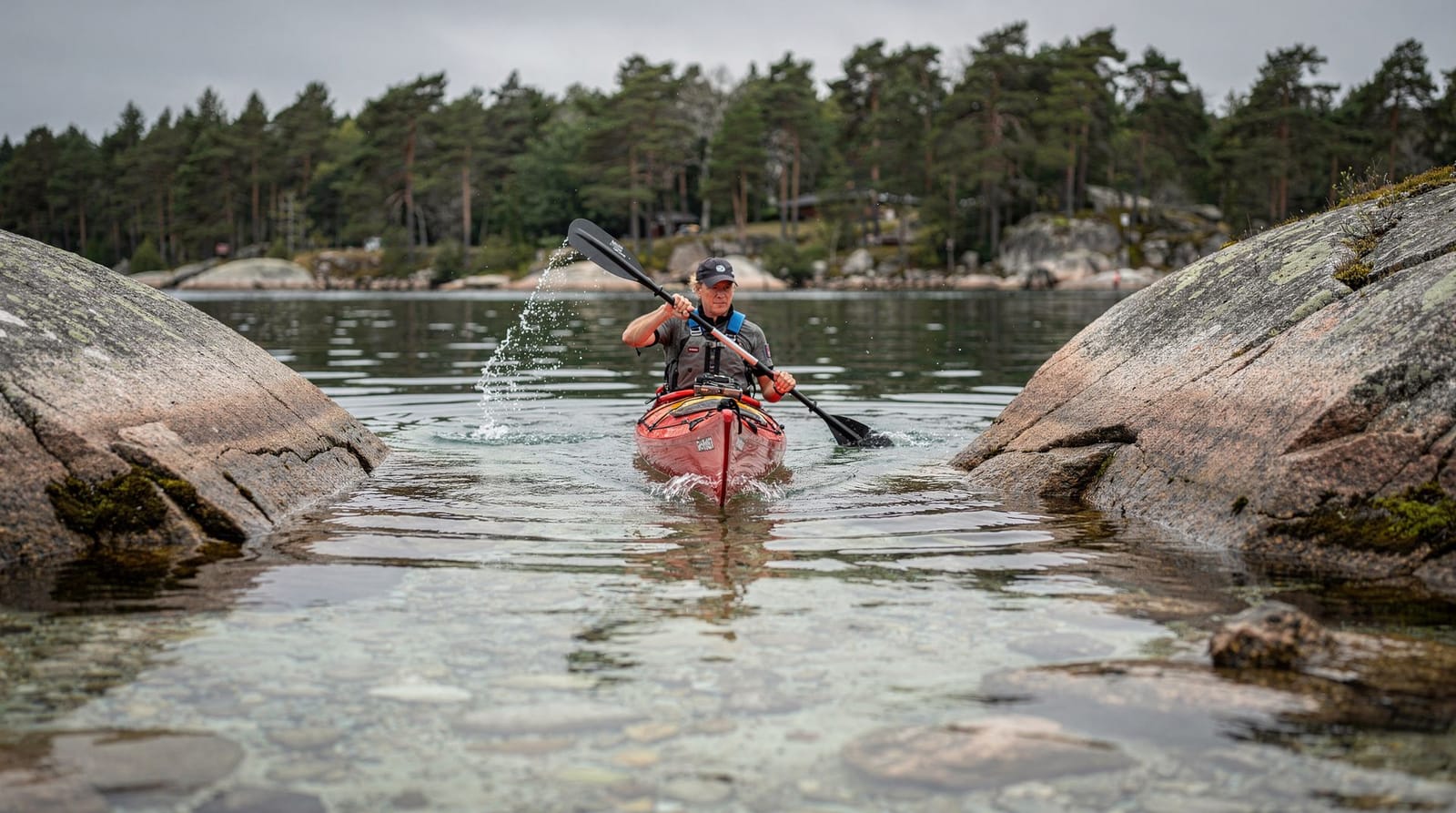
By kayak: Guided kayak tours from Stockholm cover the Lake Mälaren route to Drottningholm — 3–5 hours paddling each way. The kayaking Stockholm guide has details.
Practical essentials
| Detail | Information |
|---|---|
| Palace state apartments | 170 SEK adult |
| Court Theatre guided tour | ~130 SEK adult |
| Chinese Pavilion | 140 SEK adult |
| Opening hours (summer) | Daily 10:00–16:30 (extended hours June–Aug) |
| Opening hours (winter) | Sat–Sun only, 12:00–15:30 |
| Best time to visit | May–September; summer opera season July |
Frequently asked questions about Drottningholm Palace
Gustav III and the golden age of Drottningholm
The most significant period in Drottningholm’s history as a cultural site was the reign of Gustav III (1771–1792). Gustav was the most culturally engaged Swedish monarch — a passionate theatre-maker, opera patron, playwright, and actor who made Drottningholm the centre of Swedish cultural life in the late 18th century.
Gustav commissioned a new theatre building for Drottningholm in 1766 (the current Court Theatre). He patronised Swedish composers, brought Italian opera companies to perform, and participated directly in theatrical productions — sometimes performing himself. The Drottningholm Court Theatre under Gustav became one of the most active opera venues in northern Europe.
In 1771, Gustav staged a coup that restored royal power after a period of parliamentary dominance (a period the Swedes call Frihetstiden, the Age of Liberty). His subsequent reign balanced enlightened cultural patronage with authoritarian political practice. He was a complex figure: genuinely progressive on religious tolerance and serfdom, but repressive toward political opposition.
His assassination on 16 March 1792 — shot at a masquerade ball at the Stockholm Royal Opera by a disgruntled nobleman — ended Drottningholm’s golden age. Verdi later made the event the basis of his opera Un Ballo in Maschera (1859), changing the setting to Massachusetts for censorship reasons but preserving the essential drama. The assassination brought the theatrical culture of Drottningholm to an abrupt end; the Court Theatre fell silent and stayed silent for 130 years, preserving its 18th-century machinery intact.
The Chinese Pavilion in detail
Kina Slott deserves more attention than it typically receives on Drottningholm visits. The original 1753 pavilion — assembled in sections and erected overnight as a birthday surprise for Queen Lovisa Ulrika — no longer survives. The current building, constructed 1763–69 to designs by the architect Carl Fredrik Adelcrantz, replaced it in permanent materials.
The interior decoration is extraordinary in its completeness and strangeness. Swedish craftsmen in the 1760s were interpreting Chinese visual culture through several layers of mediation: Chinese export porcelain brought to Europe, Dutch and French prints of Chinese scenes, and the general European “chinoiserie” aesthetic that was a fashionable fantasy rather than an ethnographic description of East Asian culture.
The result is unmistakably Scandinavian-rococo with Chinese motifs: cool Swedish colouring (greys, blue-greens, pale yellows) applied to pagodas, dragons, and Chinese-costumed figures that have no direct relationship to anything actually found in China. It is one of the finest and most intact examples of this style in existence — more complete than comparable interiors in England, France, or Germany that have been altered or deteriorated.
The Pavilion is separately ticketed (140 SEK) and open May–September only. In a full Drottningholm day, this is the element most often skipped due to time pressure. It should not be.
Practical guide to the full Drottningholm day
Allow 4–5 hours for a thorough visit. The following sequence gives the most efficient coverage:
-
Arrive by the 10:00 boat from Stadshusbron (May–September). The 10:50 arrival gives you the first entry of the day to the state apartments before large tour groups arrive.
-
State apartments (11:00–12:00): Begin at the top of the ticket, covering the Hall of Karl XI’s Gallery, the Johan III rooms, the Bernadotte apartments. The sequence roughly follows the chronological history of the palace.
-
Court Theatre guided tour (12:00 or 12:30 depending on the day’s schedule): This 45-minute tour is the essential Drottningholm experience. The guide demonstrates the stage machinery — the wave machine, the counterweights, the wind machine — live. The theatre’s atmosphere, the painted backdrops, the rake of the stage, the candlelight-simulating electrical system: this is the closest experience available in the 21st century to an 18th-century theatrical performance space.
-
Lunch at the palace café (13:15–14:00): Simple but adequate food. Alternatively, picnic in the formal gardens, which is both cheaper and more pleasant in good weather.
-
Chinese Pavilion (14:00–14:45): Separately ticketed. The interior tour requires a timed slot; book at the main palace ticket desk on arrival.
-
Gardens walk (14:45–15:30): The formal French parterre, the baroque fountain axis, the English landscape park. The garden is the correct conclusion to the day — it synthesises all the architectural and landscape elements in a single view from the main terrace.
-
Return boat (15:45 or 16:15 from Drottningholm landing stage).
Can you visit Drottningholm in winter?
Yes, partially. The state apartments are open on Saturdays and Sundays in reduced hours (approximately 12:00–15:30) October–April. The Chinese Pavilion and full Court Theatre guided tours are closed. The formal gardens are accessible year-round. Winter visit gives a much quieter palace with atmospheric low-light conditions and fewer tour groups.
Is Drottningholm better than the Royal Palace in Gamla Stan?
They serve different purposes: the Royal Palace in Gamla Stan is the ceremonial state palace — it holds the Treasury (crown jewels) and the grand Hall of State. Drottningholm is the lived-in royal residence with arguably more interesting architectural history, the extraordinary Court Theatre, and the landscape setting. For regalia and formal state history: Royal Palace. For architectural completeness and the theatre: Drottningholm. The royal palaces comparison covers both in detail.
How do you attend an opera at the Drottningholm Court Theatre?
Book directly on the theatre’s website (dtm.se) from January when the summer season programme is announced. Tickets sell quickly for the most popular productions. Pre-theatre dinners are available at the palace café; the boats include a special late-evening return service for opera evenings.
What is the best month to visit Drottningholm?
May and September are optimal: full access to all sections (including Chinese Pavilion and Court Theatre), without July’s peak tourist pressure. June is excellent for the formal gardens in full bloom and the best daylight conditions. July has the highest crowd density and the most frequent boat departures — good if you book in advance. The summer opera season (late June through mid-August) makes July–August valuable for visitors specifically interested in the Court Theatre performances.
Is Drottningholm suitable for children?
Yes, with caveats by age. The Court Theatre machinery demonstration (live counterweights, wave machines) is effective for children aged 8+. The Chinese Pavilion’s whimsical interior works for imaginative children aged 6+. The formal gardens offer outdoor space and the lake view. The state apartments are less compelling for young children (under 8) unless supported by a guide who contextualises the rooms. The 50-minute boat journey is manageable for children 5+ if they have calm water and indoor sections available.
Can you eat inside the palace grounds?
Yes. The Drottningholm Palace Café (Slottscaféet) serves lunches, fika (coffee and cakes), and light meals. Picnicking is possible in the formal gardens and the English landscape park — bring your own food from Stockholm; Systembolaget and grocery stores are closed after 20:00 on most days, so plan food purchases in advance if you intend to picnic.
How do you book the Drottningholm Court Theatre opera season?
Book via the Drottningholm Theatre website (dtm.se) from January onwards. The summer programme (late June through mid-August) is announced in late autumn/early winter. Popular productions sell out within weeks of announcement. If you are planning a Stockholm trip specifically for the opera: check the programme before booking travel, confirm availability, purchase tickets immediately when booking opens. The post-opera last boat service from Drottningholm is coordinated with the theatre schedule; check Strömma’s website for the specific return service times on performance nights.
Is Drottningholm accessible for visitors with limited mobility?
The main palace building is partially accessible — ground floor sections are reachable. Some interior staircases are steep and have no lift alternatives. The formal gardens are flat and accessible by wheelchair via the main gravel paths. The Chinese Pavilion has steps at the entrance that may be challenging. Contact the Royal Court (kungahuset.se/kontakt) before your visit to confirm specific accessibility provisions and any assistance available.
Drottningholm within a longer Stockholm day-trip plan
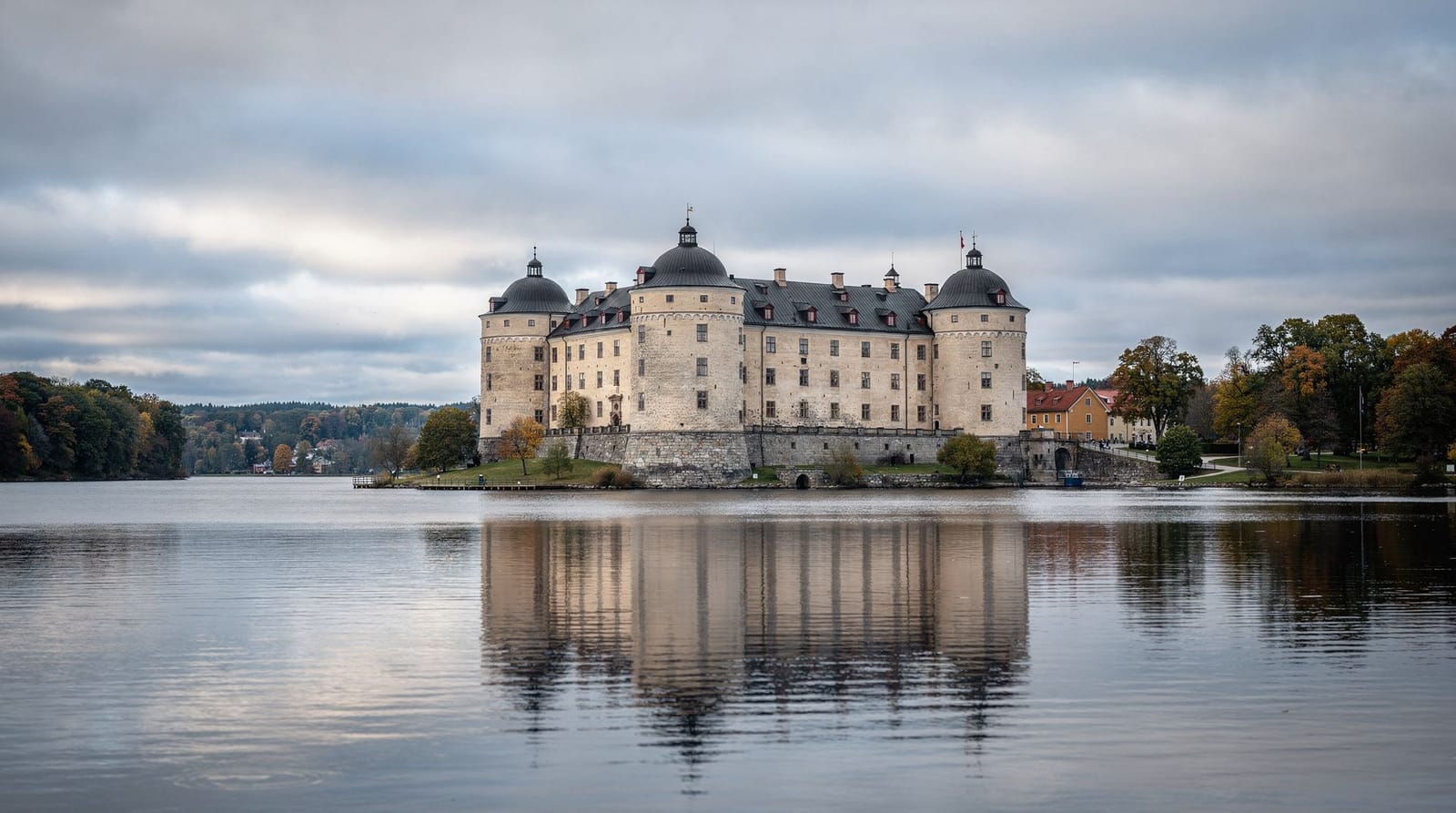
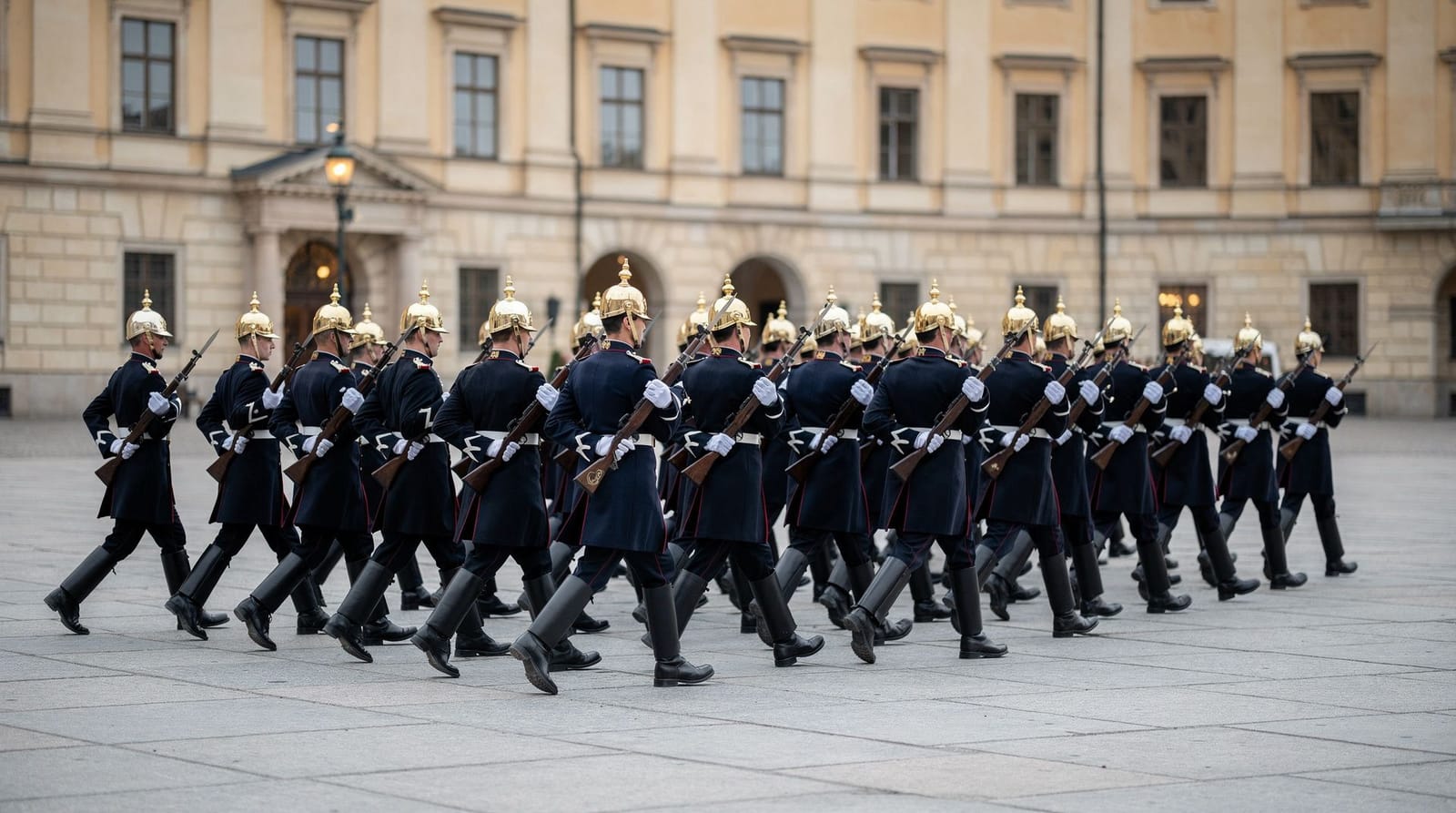
Drottningholm is one of several UNESCO or near-UNESCO destinations reachable from Stockholm, and it is worth situating alongside the others. The day trips from Stockholm complete guide compares Drottningholm against Uppsala, Birka, Sigtuna, and Gripsholm Castle at Mariefred on travel time, cost, and what each delivers. For visitors also interested in Sweden’s other royal buildings, the Royal Palace guide and the changing of the guard guide cover the ceremonial city-centre palace that complements rather than duplicates a Drottningholm visit.
Pairing Drottningholm with the rest of your Stockholm days
Drottningholm sits comfortably inside a wider plan. If the Mälaren shore appeals, the Drottningholm half-day guide shows how to fit the palace into a shorter window, and the Drottningholm destination page gives the wider context of the estate. Travellers who like royal history can follow it with Gripsholm Castle in Mariefred, another lakeside royal residence with a very different character.
For the days before or after, the Stockholm in 3 days overview and the three-day first-timer itinerary show where a Drottningholm morning fits alongside the museums and Gamla Stan. If your budget matters, the Stockholm budget per day guide helps you weigh the separate tickets, and the SL pass guide explains the public-transport route. Wet weather does not have to cancel the plan either: the palace interiors and theatre tour are indoor, and the rainy day museum guide offers backups for the rest of the day.
Getting the most from a single Drottningholm visit
Visitors who can only allocate one visit to Drottningholm should prioritise ruthlessly rather than attempt full coverage. The Court Theatre guided tour is, by a clear margin, the single most memorable element — the live demonstration of 1766 stage machinery has no equivalent anywhere else in the world, and skipping it to save 45 minutes is a mistake most visitors regret afterward. The Chinese Pavilion runs a close second for sheer visual distinctiveness. The State Apartments, while historically important, are the most “generic” element in the sense that grand European palace interiors of this kind exist elsewhere; they can be trimmed to 45 minutes rather than the full 1–1.5 hours if time is tight, without losing the essential Drottningholm experience.
Book a kayak tour to Drottningholm for an active alternativeTop experiences
Bookable activities with verified prices and instant confirmation on GetYourGuide.