Royal canal boat tour Stockholm: the complete guide
Stockholm: Royal Bridges canal boat tour
Duration: ~1 hour
What is the Royal Canal boat tour in Stockholm and is it worth it?
The Royal Bridges canal boat tour departs from Strömkajen, lasts approximately 50–60 minutes, and loops through central Stockholm's waterways past the Royal Palace, Gamla Stan, Djurgården, and City Hall. Adult tickets are around 280 SEK. For a first visit, it is one of the best ways to understand Stockholm's island geography quickly.
Stockholm from the water: why the canal boat makes sense
Stockholm is built across 14 islands where Lake Mälaren meets the Baltic Sea. From street level, this geography is easy to lose — you cross bridges without registering the scale of what lies beneath, and the city’s waterways reveal themselves only partially from any given bank. Walk through Gamla Stan and you see narrow cobbled streets and colourful facades; the fact that you are on an island is not self-evident unless you have already looked at a map. The canal boat tour corrects this. In 50–60 minutes, the route traces the channels that separate these islands, putting the city’s famous silhouette into context and identifying landmarks that can otherwise seem disconnected when approached overland.
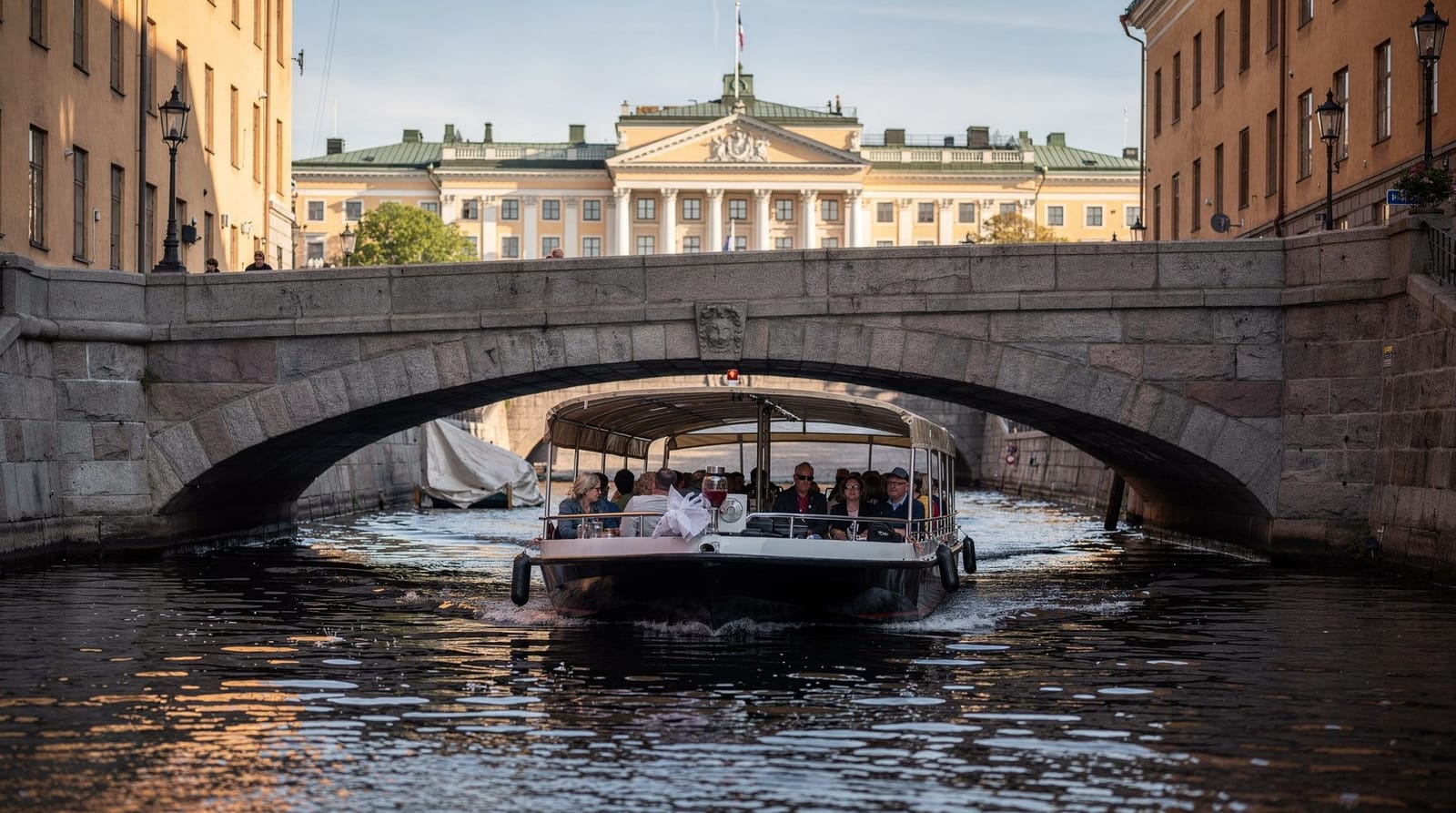
The Royal Bridges canal tour is the standard sightseeing cruise — the entry-level product in Stockholm’s boat tour ecosystem, operating from May through October with some operators running year-round winter services. It does not cover the archipelago; it covers the urban waterways between Gamla Stan, Norrmalm, Djurgården, and Kungsholmen. The name “Royal Bridges” refers to the sequence of bridges the boat passes beneath — many of them connecting the islands on which the royal palace district, the parliament building, and Stockholm’s oldest institutions sit.
For first-time visitors, this tour is frequently the single most useful hour of their entire trip. Not because of the commentary (which varies considerably between operators) but because of what the water view reveals: the relationship between the city’s major landmarks and the waterways they were built beside.
The geography Stockholm’s streets don’t explain
To appreciate why the canal tour matters, it helps to understand the specific problem it solves. Most European capital cities are built on a single river — London on the Thames, Paris on the Seine, Vienna on the Danube. The visitor instinctively grasps the geography: north bank, south bank, a bridge to cross.
Stockholm is different. The city’s 14 islands mean that the “north” and “south” distinction is insufficient — there are east-facing waterfronts, west-facing harbours, and inner channels that disappear between buildings and reappear in unexpected places. Gamla Stan sits surrounded by water on three sides, not visibly. Kungsholmen (home of City Hall) requires a deliberate western traverse to reach from the tourist centre; many visitors never reach it at all. Djurgården is technically an island but appears attached to the eastern shore of Östermalm from most vantage points.
The canal boat resolves this confusion in a single hour. Seeing Stockholm from the water makes the island structure legible: you see that Gamla Stan is surrounded by water, that City Hall stands at the water’s edge on a separate island, and that the museum strip on Djurgården is accessible by boat as well as by land. The city’s geography clicks into place, and subsequent navigation on foot becomes noticeably easier.
The route in detail
Departures leave from Strömkajen — the quay along Norrmalm’s southern waterfront, directly in front of the Grand Hôtel. This is one of Stockholm’s most distinctive addresses: the Grand Hôtel’s Belle Epoque facade on one side, the Royal Palace across the water on the other, and the Nobel Prize ceremonies held at the hotel every December. The location immediately establishes the tour’s social and historical register.
Strömmen and the Royal Palace: Within minutes of leaving the dock, the boat enters Strömmen — the narrow channel separating Norrmalm from Gamla Stan — with the Royal Palace on its rocky bluff directly ahead. This approach, from the water, gives the most complete view of Kungliga Slottet. The massive baroque structure fills the view from the eastern tip of Gamla Stan island; its scale becomes clear only from the water, where no surrounding building competes for attention. This single perspective, not achievable from any land-based viewpoint, is alone worth the price of the tour.
The Royal Palace was built between 1697 and 1760 on the site of the medieval Tre Kronor castle, which burned in 1697. The architect Nicodemus Tessin the Younger designed a structure with 600 rooms — today one of the largest functioning royal palaces in the world. The King’s offices are here; state ceremonies take place in the Hall of State; the gold treasury includes Erik XIV’s crown from 1561. The canal boat passes close enough to see the baroque detailing of the facade and the windows of the state apartments.
Riddarfjärden: The boat rounds the western shore of Gamla Stan into Riddarfjärden — the bay on which Stockholm City Hall (Stadshuset) stands. The red-brick tower with its three golden crowns (the Tre Kronor symbol of Swedish sovereignty) is most photogenic from this water-level approach. The three crowns at the tower’s summit — 106 metres above the water — are visible from considerable distance. City Hall was completed in 1923; it contains the Blue Hall where the Nobel Prize banquet takes place every December.
From Riddarfjärden, the view also takes in Riddarholmen — a small island attached to Gamla Stan’s western end — with its medieval church spire (Riddarholmskyrkan). This church, dating from the 13th century, is the burial place of Swedish monarchs from the 17th to the 19th century. Seeing it from the water is particularly effective: the Gothic spire rising directly from the waterfront gives a genuine sense of Stockholm’s medieval origin.
Södermalm cliffs: Turning east, the boat reveals Södermalm’s dramatic geography — the high rocky ridge on which Stockholm’s southernmost borough sits, its waterfront facades seemingly growing directly from the granite rock. Slussen, the lock complex connecting Mälaren to the Baltic, controls the water level differential between the lake and the sea. This engineering junction, currently being modernised after decades of deferred maintenance, has been the hydraulic heart of Stockholm’s water geography since the 13th century.
Djurgårdskanalen: The route then enters the narrow Djurgårdskanalen — the canal separating Djurgården from the Östermalm mainland. This section is visually distinct from the rest of the tour: lined with embassy buildings, private gardens, and the back approaches of Djurgården’s institutions, it feels more intimate than the wide bays of Riddarfjärden. The ornate ironwork bridge at Djurgårdsbroen, with its art nouveau figurines of fish and mythological animals, marks the transition between Östermalm and Djurgården.
Passing through Djurgårdskanalen, the boat is in direct view of the waterfront terrace of the Nordiska Museet and, further along, the glass roof of the Vasa Museum. Both are visible from the water; the proximity explains the museum strip’s logic — these institutions were built on an island that was accessible by boat from central Stockholm and provided separate, less crowded land for buildings that could not fit on the more densely built main islands.
Return to Strömkajen: The loop is completed via the northern channel, passing under Djurgårdsbroen and back to the departure quay. Depending on timing and operator, the total route takes 50–60 minutes at a pace that allows comfortable viewing and photography from the upper deck.
Practical essentials
| Detail | Information |
|---|---|
| Departure point | Strömkajen, Norrmalm (near Grand Hôtel) |
| Duration | ~50–60 minutes |
| Adult ticket | ~280 SEK |
| Children | Typically half price; free under 6 |
| Season | Year-round (peak: May–September) |
| Frequency | Every 30–60 min in peak season |
| Primary operator | Strömma Kanalbolaget |
Operators and vessels
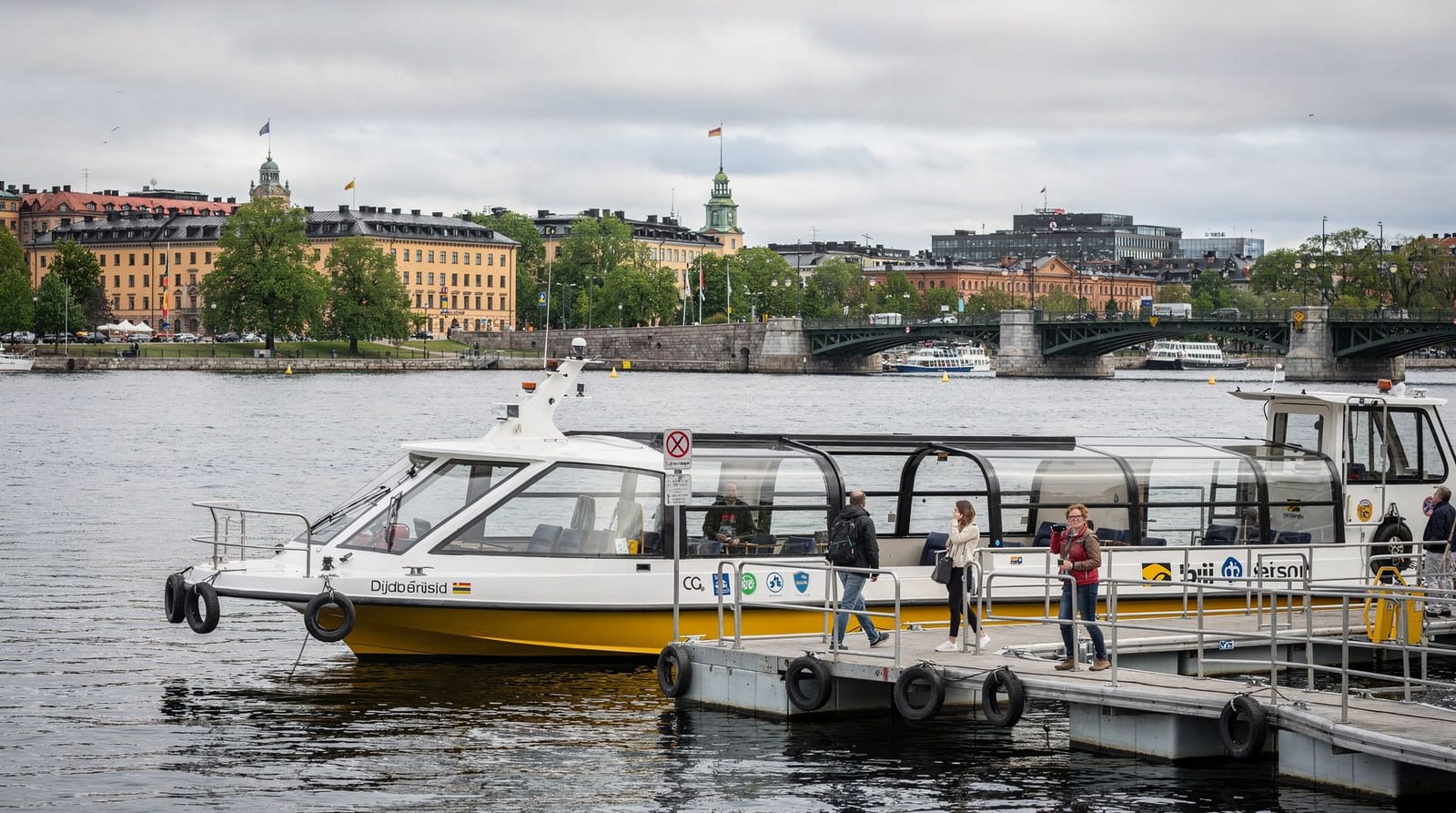
Strömma Kanalbolaget is the dominant operator for Stockholm city cruises and runs the classic Royal Bridges tour with live English commentary. Their fleet includes traditional wooden vessels and modern covered boats. Advance online booking saves queuing at the dock in peak summer. Strömma is also the operator for the Djurgården public ferry and the Drottningholm summer boat — meaning a single app can cover multiple Stockholm water journeys.
City Sightseeing electric boat: A smaller-scale operator using quiet electric boats for groups of 10–20 passengers. The intimate scale gives a different feel from Strömma’s larger vessels — particularly effective for photography as the boat sits lower in the water, closer to canal-level. The slower pace and reduced engine noise make overheard commentary clearer.
Combination tickets: Strömma offers bus-and-boat passes combining the canal boat with the hop-on hop-off bus network. For visitors who want to cover multiple Stockholm districts efficiently on a single day, the hop-on hop-off boat vs bus comparison breaks down whether combined passes represent value.
The commentary question
Commentary quality varies significantly between operators, vessel types, and individual guides. On Strömma’s flagship canal boats, live English commentary is the standard — a guide narrates the key landmarks, provides historical context, and answers questions. On smaller operators or pre-recorded audio systems, the commentary is less responsive to what is actually in view from any given position on the boat.
The most useful commentary covers: the Royal Palace’s history and current royal functions, the story of the Tre Kronor fire in 1697 that prompted the current building, the significance of Riddarholmskyrkan as a royal burial church, and the industrial logic of the lock at Slussen. Commentary that goes no further than “and on your left is the city hall” is less valuable.
If the commentary quality matters to you, look specifically for the Strömma Royal Bridges tour with live guide rather than the audio-guide-only products.
Classic Strömma vessel vs the electric boat: which to choose
The choice between Strömma’s traditional canal boats and the smaller electric-boat operators is not simply about price — the two experiences differ enough in character that the right choice depends on what you are trying to get out of the hour.
Choose the classic Strömma vessel if: you want reliable live English commentary, a larger covered deck for changeable weather, and the reassurance of the most-established operator on the route. This is the default recommendation for most first-time visitors, and it is the version most easily combined with hop-on hop-off passes.
Choose the electric boat if: photography is a priority, you are travelling in a smaller group that prefers a more intimate setting, or you specifically want to avoid engine noise and diesel fumes. Sitting closer to the waterline changes the framing of every shot — the Royal Palace and City Hall both photograph differently from a lower vantage point than from Strömma’s higher-decked boats. The trade-off is a smaller covered area, which matters more in poor weather, and a schedule that runs less frequently than the flagship Strömma departures.
Neither is a wrong choice. Both cover essentially the same Royal Bridges route and both include a form of guide commentary. The practical deciding factor for most visitors is simply which departure time fits the rest of the day’s plans — checking both operators’ schedules before committing to one is worth the extra two minutes.
Canal boat vs walking the same route
Stockholm’s major landmarks are within walking distance of each other. The Royal Palace to City Hall on foot takes approximately 20 minutes. The canal boat covers the same distance in 50 minutes, more slowly. The argument for the boat is not efficiency but perspective.
Seen from street level, the Royal Palace is a large building on a corner. Seen from the water, it is a baroque mass occupying an entire rocky island tip, with water on three sides — a very different proposition. City Hall from Hamngatan is a brick building in a park; from Riddarfjärden, it is an architectural statement positioned to be seen from water, with its tower and three crowns composing against the sky. The water reveals the buildings’ intentions.
For first-time visitors, the canal boat is often the single most useful 60 minutes of their trip — a geographical orientation that makes subsequent walks and museum visits more legible. It is not a substitute for time on foot in Gamla Stan or on Djurgården; it is a frame for understanding why Stockholm is organised the way it is.
This is worth stating plainly because it is easy to under-rate the value of orientation when planning a trip. Visitors who skip the canal boat in favour of “getting straight to the sights” often spend their first day or two mentally reassembling a map of the city from fragments — a bridge here, a waterfront there — without ever seeing the whole picture at once. An hour spent early in the trip on the water avoids that friction entirely, and the cost (roughly the price of two coffees and a pastry) is trivial against the time it saves in subsequent navigation.
How to combine the canal tour
Morning arrival strategy: If arriving in Stockholm by train or early flight, an afternoon canal boat tour before attempting any museums or street-level exploration gives useful orientation. Strömkajen is walkable from Stockholm Central Station — exit the station south toward Riddarfjärden, walk east along the waterfront approximately 15 minutes.
With Gamla Stan: After the boat tour, walking into Gamla Stan for 2–3 hours is the natural continuation. The boat has shown the island from outside; walking its streets gives the interior detail. See the self-guided Stockholm walking guide for a route through the old town.
With Djurgården museums: The canal boat passes Djurgårdskanalen with the museums visible from the water. Taking the boat in the morning and a separate Djurgårdslinjen tram or public ferry in the afternoon for Vasa Museum and Skansen makes a strong full-day combination. The Djurgården walking route covers the land-side sequence.
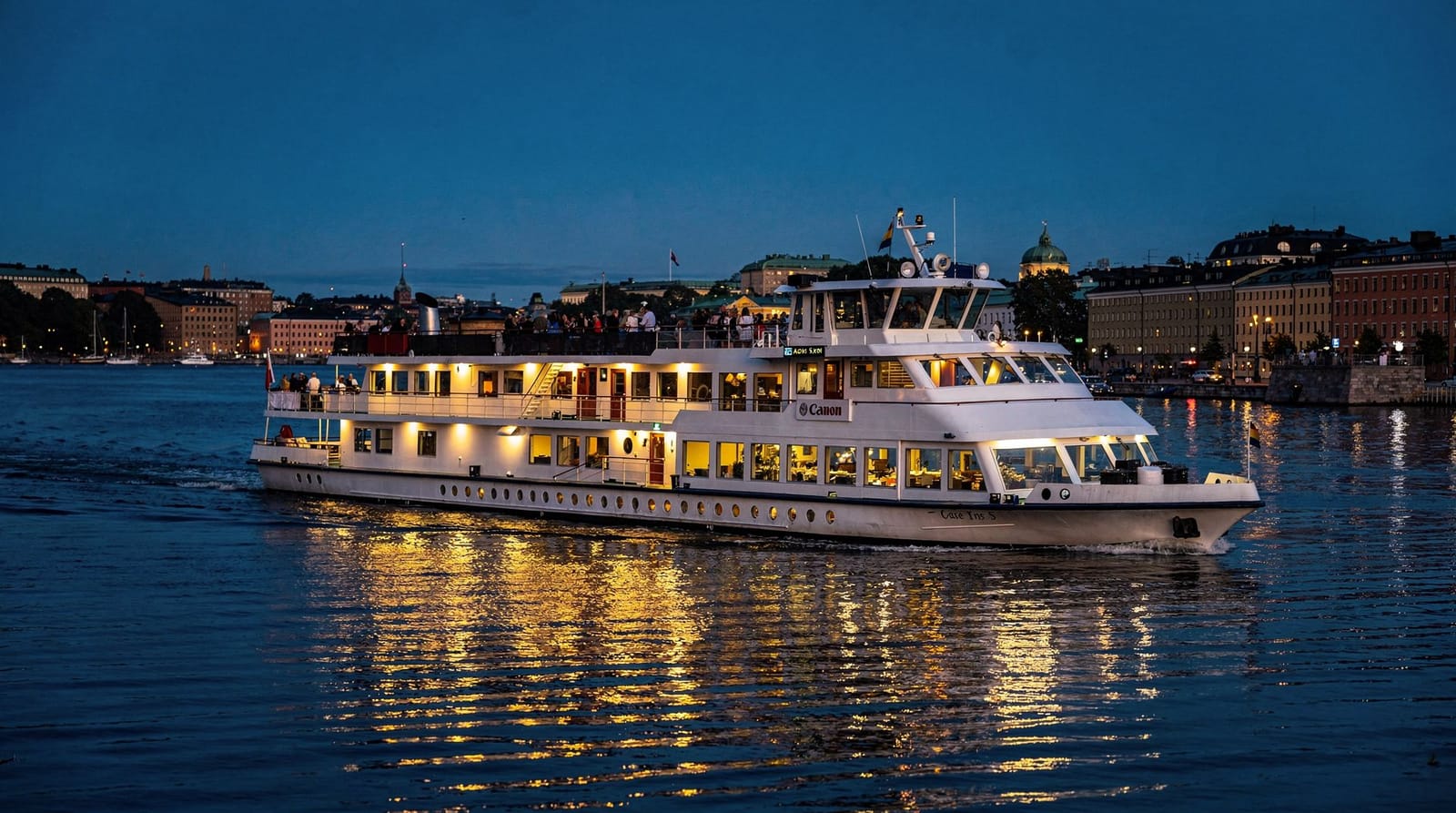
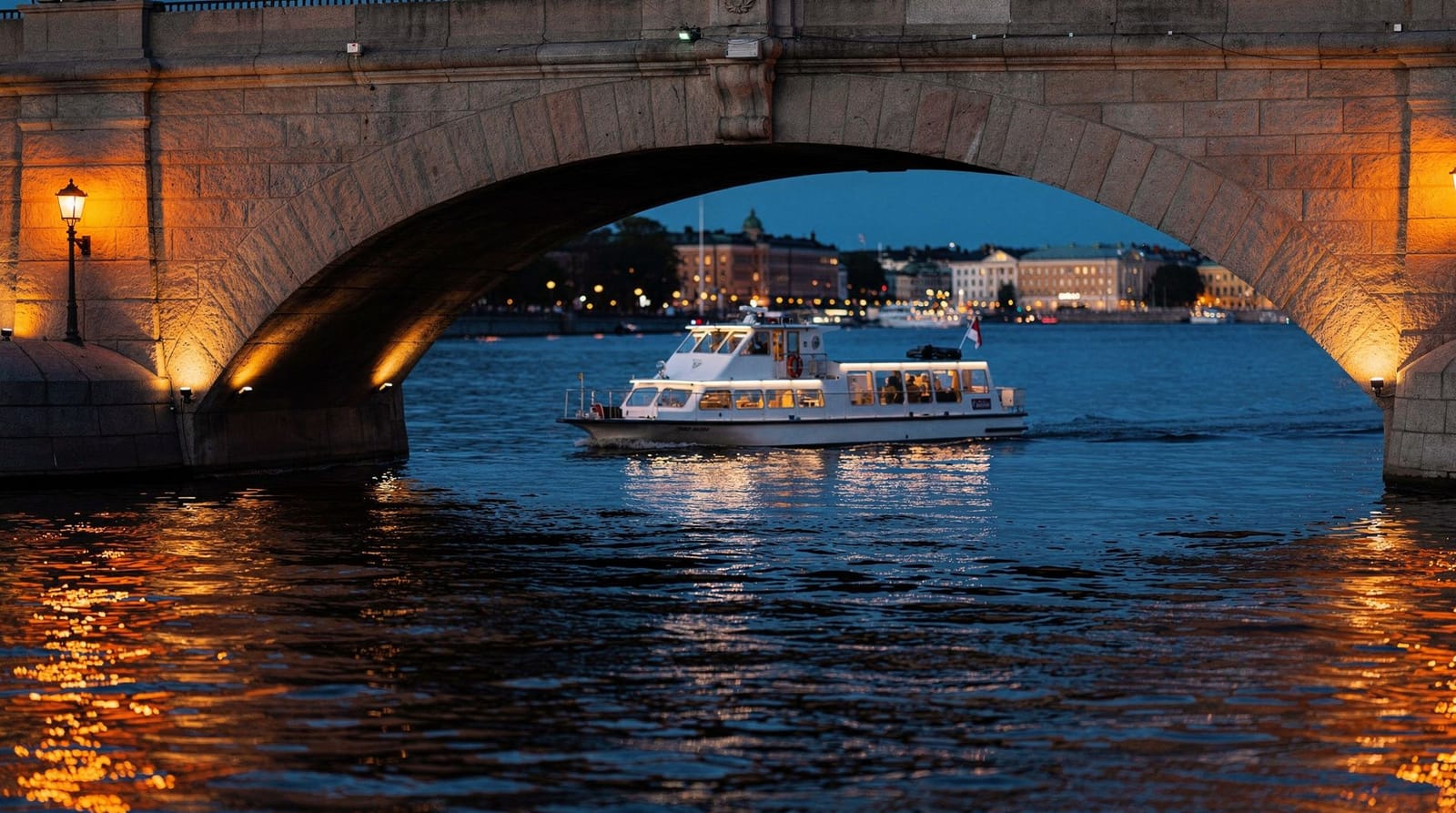
With the evening experience: In June and July, sunset in Stockholm occurs after 22:00. Taking the canal tour at 18:30 or 19:00 means spending the full duration in the extraordinary golden-hour light specific to Stockholm’s latitude. City Hall at 19:30 in mid-June — the horizontal light turning the red brick amber, the three golden crowns catching the last direct sun — is one of the city’s signature visual experiences. The evening cruise guide covers the summer evening boat options.
With the hop-on hop-off network: The 24-hour combined pass at ~330 SEK adds the hop-on hop-off boat circuit, which includes additional stops like Slussen and the City Hall quay. The hop-on hop-off comparison guide compares the options.
Choosing the right departure by traveller type
Solo travellers: Any departure works, but a late-afternoon or evening slot gives the best light without requiring you to fit around anyone else’s schedule. The 50–60 minute duration is short enough to slot in between other plans on the same day, making it an efficient use of a solo traveller’s time.
Couples: An evening departure in June or July, timed for the golden-hour window described above, is consistently rated as one of Stockholm’s most romantic hours — the light on City Hall’s crowns, the quieter deck as day-trippers have gone home, and the option to follow the boat with dinner nearby. Booking a specific evening slot in advance is worth doing rather than leaving it to chance.
Families with children: Late morning or early afternoon departures work best — children are more engaged when alert, and the shorter attention span of younger passengers is better matched to a lively midday atmosphere than a quiet late-evening cruise. The commentary’s focus on the Royal Palace and the “three golden crowns” story genuinely holds children’s attention when a live guide delivers it.
Budget-conscious travellers: The standard Strömma Royal Bridges ticket at ~280 SEK is already the most economical way to see Stockholm’s core landmarks from the water. Avoid the combined hop-on hop-off bus-and-boat pass unless you will genuinely use the bus network too — for the boat alone, it is not the cheaper option. Booking directly rather than through a third-party reseller also avoids unnecessary booking fees.
Photography tips from the boat
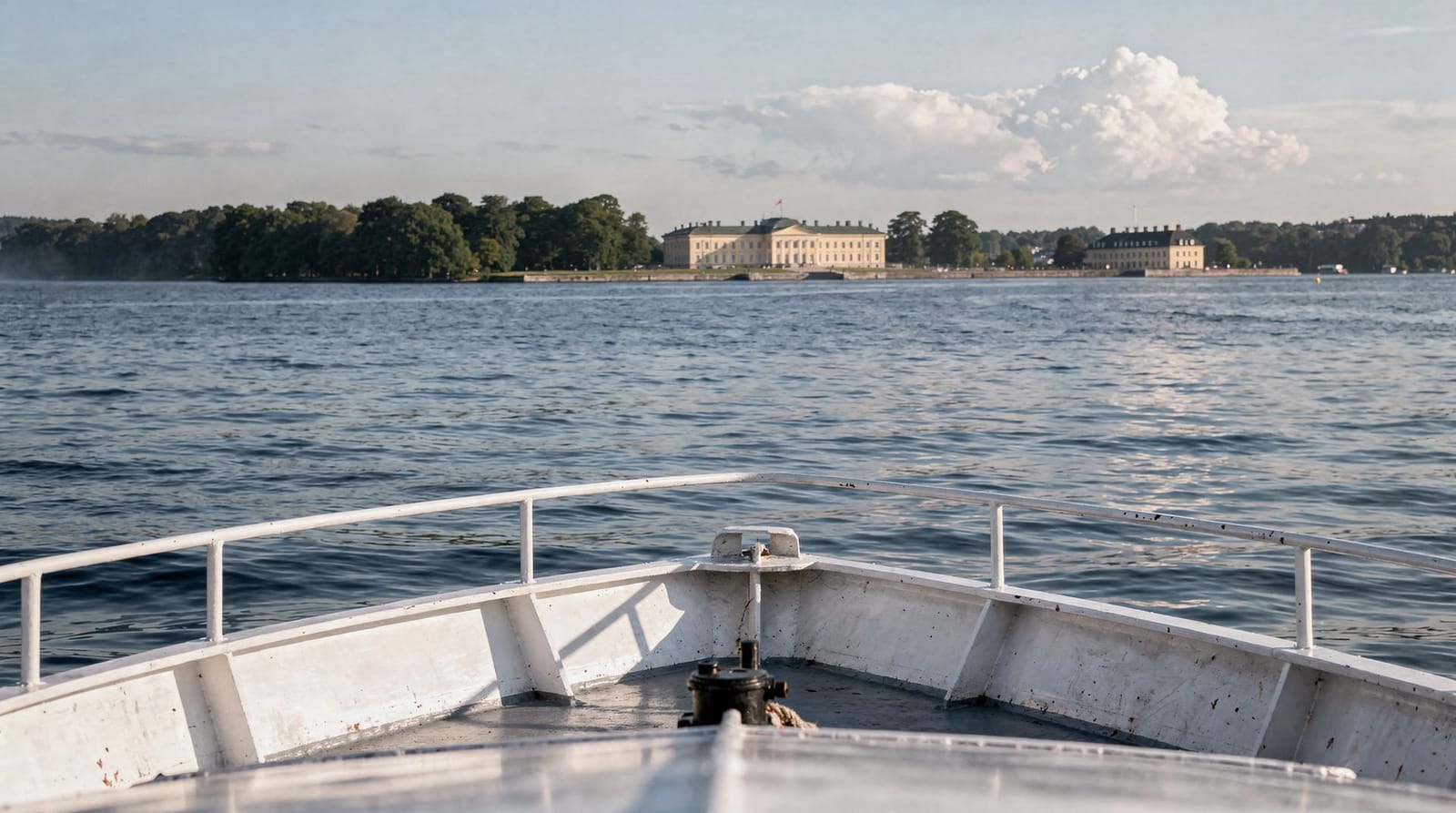
Royal Palace shot: Best from the eastern approach when the boat enters Strömmen. Shoot from the bow before the vessel turns; the full facade is visible for approximately three minutes. A 70–135mm equivalent gives good compression against the sky without distortion.
City Hall shot: Best from Riddarfjärden, mid-channel. The three golden crowns catch afternoon and late-afternoon light particularly well. The building’s positioning was designed for exactly this view; it photographs well from almost any position in the bay.
Gamla Stan and Riddarholmen: As the boat rounds the western end of Gamla Stan, the combined view of Riddarholmskyrkan’s spire and the old town’s rooflines gives the most authentically medieval Stockholm image available from the water. Overcast light softens the contrast in this shot; bright midday sun creates harsh shadows in the narrow channels.
Djurgårdskanalen: The narrow canal section offers intimate shots that other water tours do not: stone walls, ornamental ironwork, private gardens dropping to the waterline, and the blue-grey reflections of a late-autumn sky in still water.
Camera logistics: A standard 24–70mm equivalent is adequate for most shots. Bring a polarising filter for canal reflections (effective in removing surface glare when the light angle is right). On overcast summer days, the diffuse light is often superior to harsh midday sun for architectural photography.
Seasonal considerations
May–June: Daylight extends to 10 pm; afternoon departures get exceptional light. The city is green and uncrowded in May; June builds toward peak season crowds. Book ahead for July departures.
July: Peak season and peak crowds. Strömkajen can be congested on sunny afternoons. Early morning (10:00) or evening (18:30) departures are significantly less crowded than midday. Book 2–3 days in advance for specific time slots.
August–September: Crowds ease from mid-August. September’s Indian summer conditions give rich autumn light on the water. The best single month for a canal boat tour if the schedule is flexible.
October–November: Service frequency reduces. The autumn colours of Djurgårdens trees are visible from the canal. Temperatures drop to 5–10°C; bring layers for the open deck.
Winter (November–March): Year-round operators maintain 1–2 daily departures. Stockholm’s stone-and-copper architecture is striking in low winter light — see the winter canal cruise guide for the specific cold-season experience.
Seasonality at a glance
| Season | Light quality | Crowds | Departures |
|---|---|---|---|
| May–June | Long daylight, green city | Building toward peak | Frequent, book July ahead |
| July | Bright but hazy midday | Peak — busiest month | Every 30–60 min |
| Aug–Sep | Rich autumn light | Easing from mid-Aug | Frequent, best value |
| Oct–Nov | Autumn colour, cooler | Low | Reduced frequency |
| Winter | Low, atmospheric light | Lowest | 1–2 daily |
Accessibility
Most Strömma vessels include covered interior sections accessible by wheelchair via gangway. Confirm with the operator at booking — vessel accessibility varies, particularly on the smaller wooden boats. Priority seating for passengers with mobility needs is available on request on all mainstream Strömma products. Assistance dogs are welcomed on board.
Tickets and booking
Tickets at the Strömkajen dock or online. Online booking is recommended from June through August — the dock is walkable from central accommodation but queues for popular departure times can extend 30+ minutes on busy days.
The canal boat is not included in the SL travel pass (which covers public transit only). The Stockholm Pass includes a version of the canal boat tour — check current coverage before purchasing, as inclusions change seasonally.
Stockholm highlights boat tour under the bridgesWhat the water reveals about Stockholm’s history
Stockholm’s origin story is a water story. The city was founded in the 13th century specifically to control the lock between Lake Mälaren and the Baltic Sea — the same lock that the canal boat passes today at Slussen. The city’s founder, Birger Jarl, built a fortification at the point where incoming ships could be taxed and controlled. The commercial logic was identical to Venice’s: whoever controls the water passage controls the trade.
The medieval city that grew on Stadsholmen (the Gamla Stan island) was organised entirely around the harbour. Merchants arrived by boat; goods were stored in the warehouses along Skeppsbron; the Stockholm that visitors see today on foot was originally navigated by water. The canals the tour boat uses were not built for sightseers — they were the economic arteries of a pre-industrial trading city.
Understanding this history transforms what the canal boat tour shows. The warehouses along Gamla Stan’s eastern waterfront (Skeppsbron) are not decorative; they are the remnants of Stockholm’s pre-industrial commercial district. The lock at Slussen is not a curiosity; it is the hydraulic mechanism that made Stockholm possible. The Royal Palace’s water-facing facade is not incidental; it was the arrival facade for ships bringing kings and ambassadors from across the Baltic world.
The canal boat as introduction to Stockholm’s water culture
Sweden has approximately 100,000 lakes and a coastline of over 3,000 kilometres. Water is not incidental to Swedish culture but central to it. The summer archipelago tradition — Swedes leaving the city by boat every weekend to their island cottages, swimming in the Baltic, fika beside the water — is as Swedish as Midsummer and cinnamon buns. Stockholm is the city where this culture is most concentrated and most visible.
The canal boat tour is the visitor’s introduction to this culture: the city seen from the water, the sense that Stockholm is more navigable by boat than by car or T-bana, the awareness that the archipelago begins immediately east of the city’s last bridge. After the canal tour, the impulse to continue onto the water — a ferry to Fjäderholmarna, a day trip to Vaxholm, a summer evening cruise — makes natural sense. The city has established its relationship to the water clearly enough that the next step is to follow it.
Frequently asked questions about Stockholm’s Royal Canal boat tour
Is the canal boat suitable for children?
Yes — the 50–60 minute duration is appropriate for children aged 5 and above. The boat is stable and not exposed to open-water conditions. Life jackets are available for children; ask crew when boarding. The live commentary engages children effectively with the Royal Palace and Gamla Stan visuals.
What is the difference between the Royal Bridges canal tour and the 2-hour archipelago boat tour?
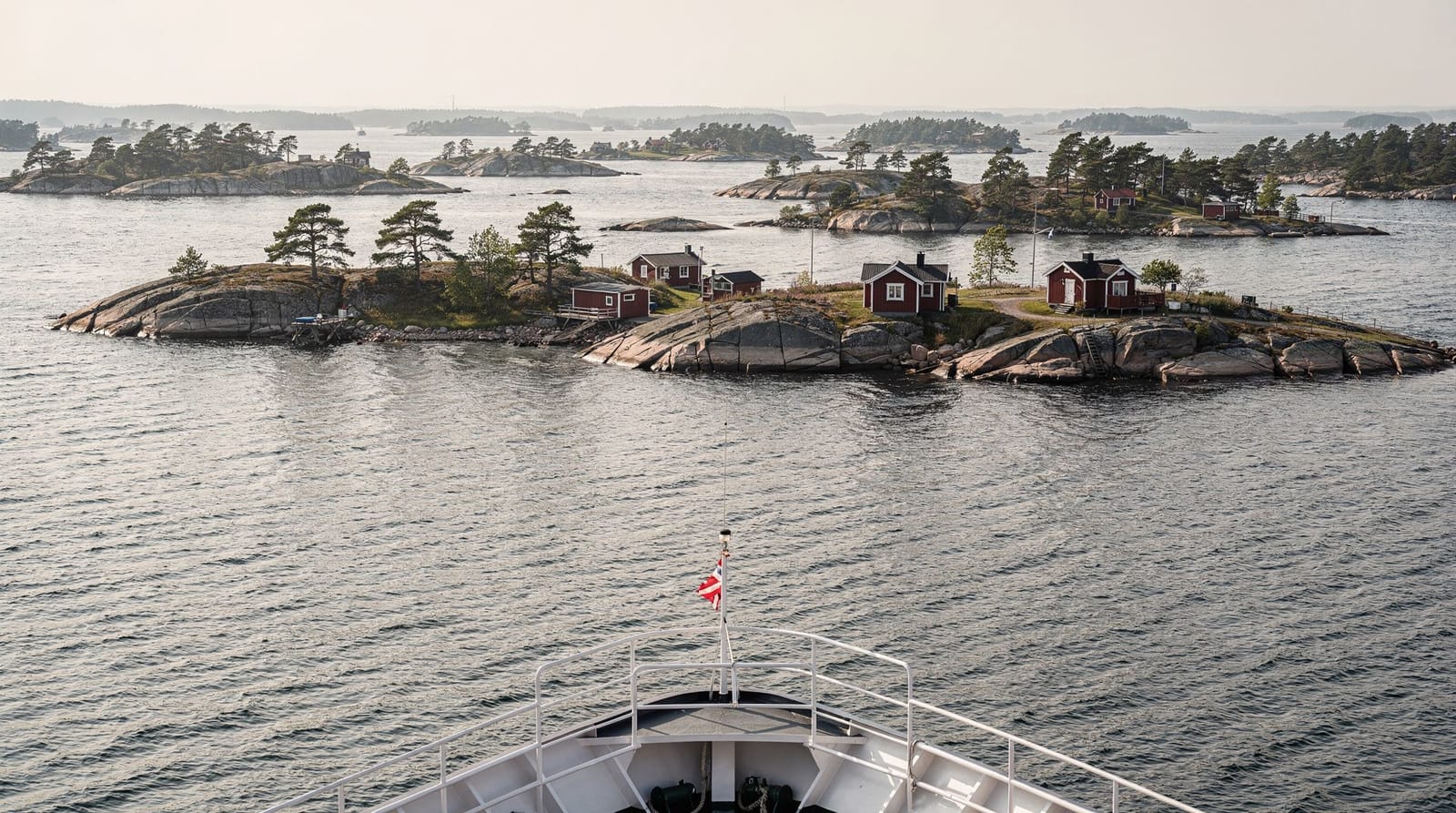
The Royal Bridges tour covers the urban waterways through the city centre — enclosed, calm water between central Stockholm’s islands. The 2-hour archipelago tour ventures beyond the city into the outer channels approaching the 30,000-island Stockholm archipelago. For urban sightseeing and geographical orientation, the canal tour is better. For a taste of the open archipelago, the archipelago boat tour guide covers the longer option.
Can you eat or drink on the canal boat?
Most commercial canal tours offer a bar service — typically beer, wine, and soft drinks. Full meals are not served on the standard city canal tour. For a dining experience on the water, see the Stockholm dinner cruise guide.
How far in advance should you book?
For May, June, September, and October: a day in advance is usually sufficient. For July and peak August: book 2–3 days ahead, particularly for specific departure times. Same-day tickets are usually available at the dock outside peak summer.
Is the canal boat better than the hop-on hop-off boat for first-time visitors?
For pure orientation value: the canal boat. It tells a coherent story of Stockholm’s geography in a single loop. The hop-on hop-off boat is better if you want to use it as actual transport between multiple stops. For the highest-value single purchase: Royal Bridges canal tour (~280 SEK) plus SL pass (~180 SEK) gives both orientation and transport coverage at lower total cost than the combined hop-on hop-off pass (~330 SEK).
Top experiences
Bookable activities with verified prices and instant confirmation on GetYourGuide.