Djurgården walking route: museums, parkland and waterfront
Stockholm: Djurgården private walking tour
Duration: ~1.5 hours
How long does it take to walk around Djurgården?
A comfortable walk from Djurgårdsbroen bridge to Waldemarsudde and back through the park interior takes 3–4 hours, excluding museum time. Including the Vasa Museum (2 hours) and a lunch stop, plan a full day of 5–7 hours. The island is large but flat and well-signposted.
The island that holds Stockholm’s best museums and its best park
Djurgården — “the Royal Park” — is Stockholm’s museum island and the city’s green lung simultaneously. The western end is dense with world-class museums: the Vasa Museum, Nordiska Museet, the ABBA Museum, the Viking Museum. The eastern two-thirds of the island is the Djurgården royal park, an extraordinary nature reserve of old oaks, meadows, and water views that feels entirely remote from the city despite being within 20 minutes of T-Centralen.
This combination makes Djurgården one of the most satisfying half-days or full days available in Stockholm. You can anchor a visit around a specific museum and explore the park in the margins, or you can take a longer loop that uses the park as the main event and the museums as punctuation.
Practical essentials
| Detail | Information |
|---|---|
| Walk duration | 3–4 hours (full loop without museum time) |
| Access | On foot via Djurgårdsbroen bridge from Strandvägen; bus 69; tram 7 (seasonal) |
| Best time | May–September for park (wildflowers, long evenings) |
| Museum focus day | Allow 5–7 hours |
| Terrain | Flat paved roads and unpaved park trails |
Getting to Djurgården
On foot: The most pleasant approach. From Strandvägen in Östermalm, cross Djurgårdsbroen bridge — approximately 25 minutes from Kungsträdgården.
Tram (seasonal): Djurgårdslinjen (tram line 7) runs from Norrmalmstorg/Hamngatan and stops at several points on the island including outside the Vasa Museum and Skansen. Operates spring through autumn.
Bus: Route 69 from Nybroplan or Sergels Torg. Year-round, stops at the main museums.
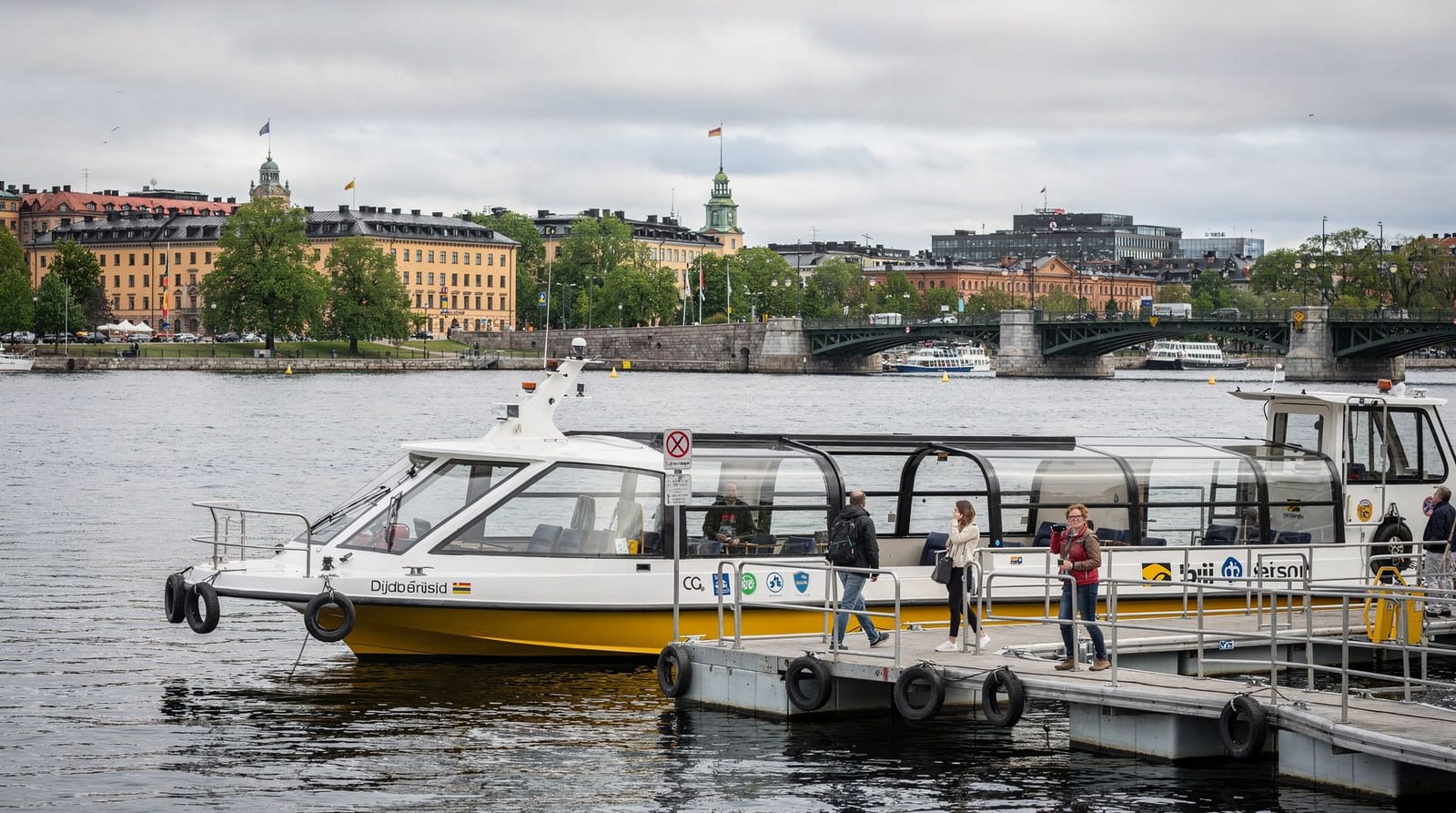
Ferry: The Djurgårdslinjen ferry (seasonal) connects Allmänna gränd/Slussen on Södermalm to Djurgården in 10 minutes — one of Stockholm’s best short ferry rides.
Hop-on hop-off boat: The hop-on hop-off boat circuit includes a Djurgården stop.
The walking route
Segment 1: The museum strip (western end)
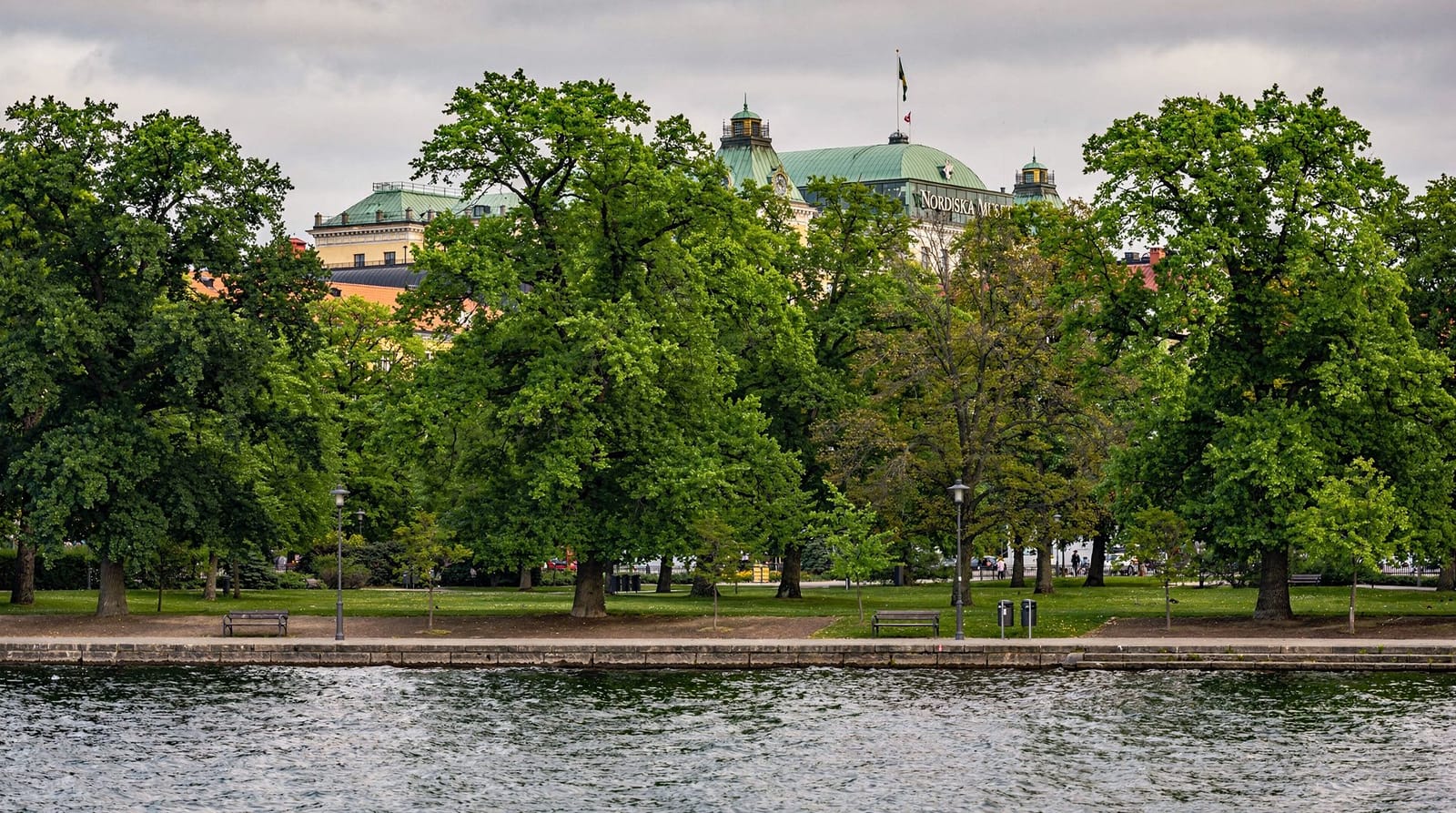
Cross Djurgårdsbroen bridge and bear right (east) along Djurgårdsvägen. The first major building is the Nordiska Museet on your left — a massive neo-Renaissance castle dating from 1907, Sweden’s largest cultural history museum. Entry is 170 SEK. See the Nordiska Museet guide.
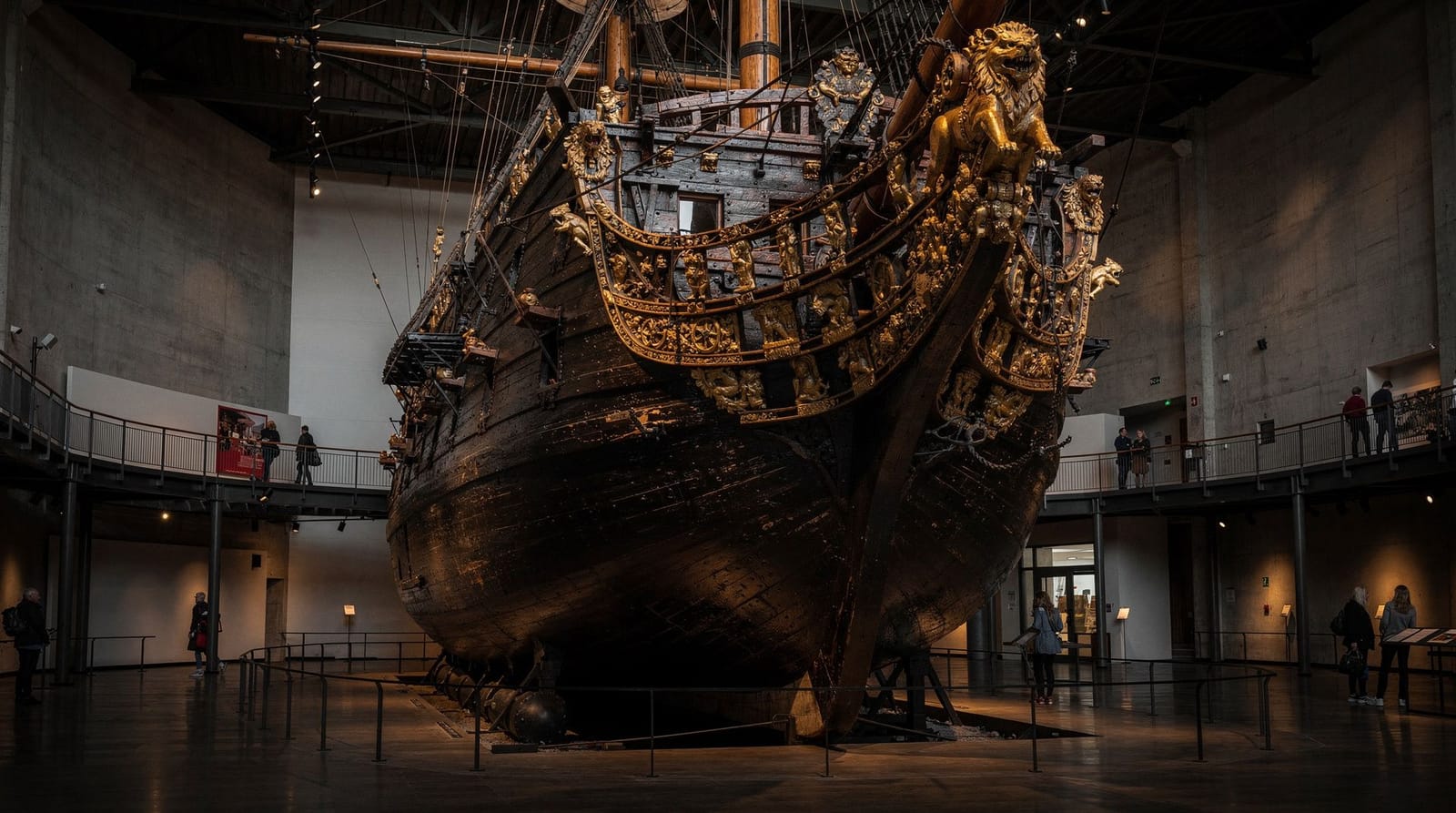
Two hundred metres further is the Vasa Museum, set back from the road. This is the essential stop for almost all visitors. Allow a minimum of 2 hours. See the Vasa Museum guide for full details.
Continuing east along Djurgårdsvägen, you pass the Viking Museum on your right — a smaller museum covering Viking history with an experiential ride format. Entry approximately 170 SEK. See the Viking Museum guide.
Further east on the same road is the ABBA Museum, the second most popular museum on the island. Entry 280 SEK; timed entry required, book well in advance in summer. See the ABBA Museum guide.
At the end of the museum strip, Djurgårdsvägen reaches Liljevalchs Art Gallery and Gröna Lund — Stockholm’s city amusement park, open seasonally (May–September, adult entry approximately 200 SEK).
Segment 2: The park interior
From Gröna Lund, turn north into the park interior along the marked trail towards Rosendals Trädgård. This section of the walk takes you off the road and into a landscape of old oaks, meadow openings, and water glimpses that feels genuinely wild. The trees here include 300–400-year-old oaks that predate the city’s modern expansion.
Rosendals Trädgård (approximately 20 minutes from Gröna Lund on foot through the park) is a working biodynamic garden with a café and garden shop. The café serves lunch using produce grown on site — salads, open sandwiches, soups, and excellent coffee. It is consistently one of the best outdoor eating experiences in Stockholm in summer. Arrive before noon on weekends to avoid queues; seating is on the terrace among the garden beds.
The garden also sells seeds, plants, and produce. The nursery section is worth a browse even if you are not gardening-inclined.
Segment 3: Prins Eugens Waldemarsudde
From Rosendals, continue east along the park path to the southern point of the island. Prins Eugens Waldemarsudde is a former royal villa (Prins Eugen was Prince of Sweden and a painter of significant talent), now an arts museum set in landscaped gardens on the waterfront. Entry approximately 100 SEK.
The building and gardens are as much the draw as the art collection — the views from the terrace over the Baltic inlet are among the best on the island, and the Old Villa section has kept much of its original early 20th-century interior.
Segment 4: The southern waterfront return
From Waldemarsudde, the coastal path runs back west along the island’s southern shore, passing a series of small jetties, bathing spots, and the occasional moored boat. The path is unpaved in parts but clear. It returns eventually to the Djurgårdsfärjan ferry point (the seasonal Södermalm ferry) or continues to the bridge.
This southern return takes approximately 30–40 minutes at a relaxed pace and provides a completely different perspective on the island from the northern road walk.
Museum summary
| Museum | Price | Recommended time |
|---|---|---|
| Vasa Museum | 240 SEK | 2–2.5 hours |
| Nordiska Museet | 170 SEK | 1.5 hours |
| ABBA Museum | 280 SEK | 1.5–2 hours |
| Viking Museum | 170 SEK | 1 hour |
| Waldemarsudde | 100 SEK | 1 hour |
| Skansen | 220 SEK (summer) | 3–4 hours |
See the museum pass guide to determine whether the Stockholm Pass covers your planned combination and saves money overall.
The hop-on hop-off sightseeing train
For visitors who want to cover the island without walking the full distance, the Djurgårdslinjen sightseeing train does a loop circuit of the main sites with recorded commentary.
Book a Djurgården hop-on hop-off sightseeing train day passThis is particularly useful for visitors with mobility limitations, families with young children, or anyone who wants a quick orientation before deciding where to spend time.
Combining Djurgården with other areas
Djurgården + Gamla Stan: Cross back over Djurgårdsbroen and walk west via Strandvägen to Gamla Stan. Total walk approximately 4–5 hours including one museum.
Djurgården + Södermalm: Take the seasonal ferry from Allmänna gränd/Djurgårdslinjen to Slussen. 10-minute crossing, one of Stockholm’s most pleasant short journeys. See the Södermalm walking tour.
Djurgården + Östermalm: Walk back west along Strandvägen, which runs through Östermalm. Add the Östermalm Saluhall for lunch or the History Museum for the free gold collection.
Planning the rest of your trip around the island
Djurgården works best when it is placed deliberately in the wider trip rather than squeezed in. If you are still building the overall shape of your days, the Stockholm in 3 days overview and the 3-day first-timer itinerary show where a Djurgården day sits comfortably next to Gamla Stan and the city centre. For a shorter stay, the 2-day essential itinerary fits the museum strip in without the full park loop.
Anyone who wants the history before the walk can read the Vasa vs Skansen comparison, which helps decide where to spend limited hours on the island. For a broader look at the area as a whole, see the Djurgården destination page, and if you prefer to cover ground more quickly, the guide to cycling in Stockholm explains how bikes fit into the city.
On a wet day, the park section loses much of its charm, so keep the rainy day museum guide in mind as a fallback and swap the walk for an indoor day.
Skansen: the open-air museum
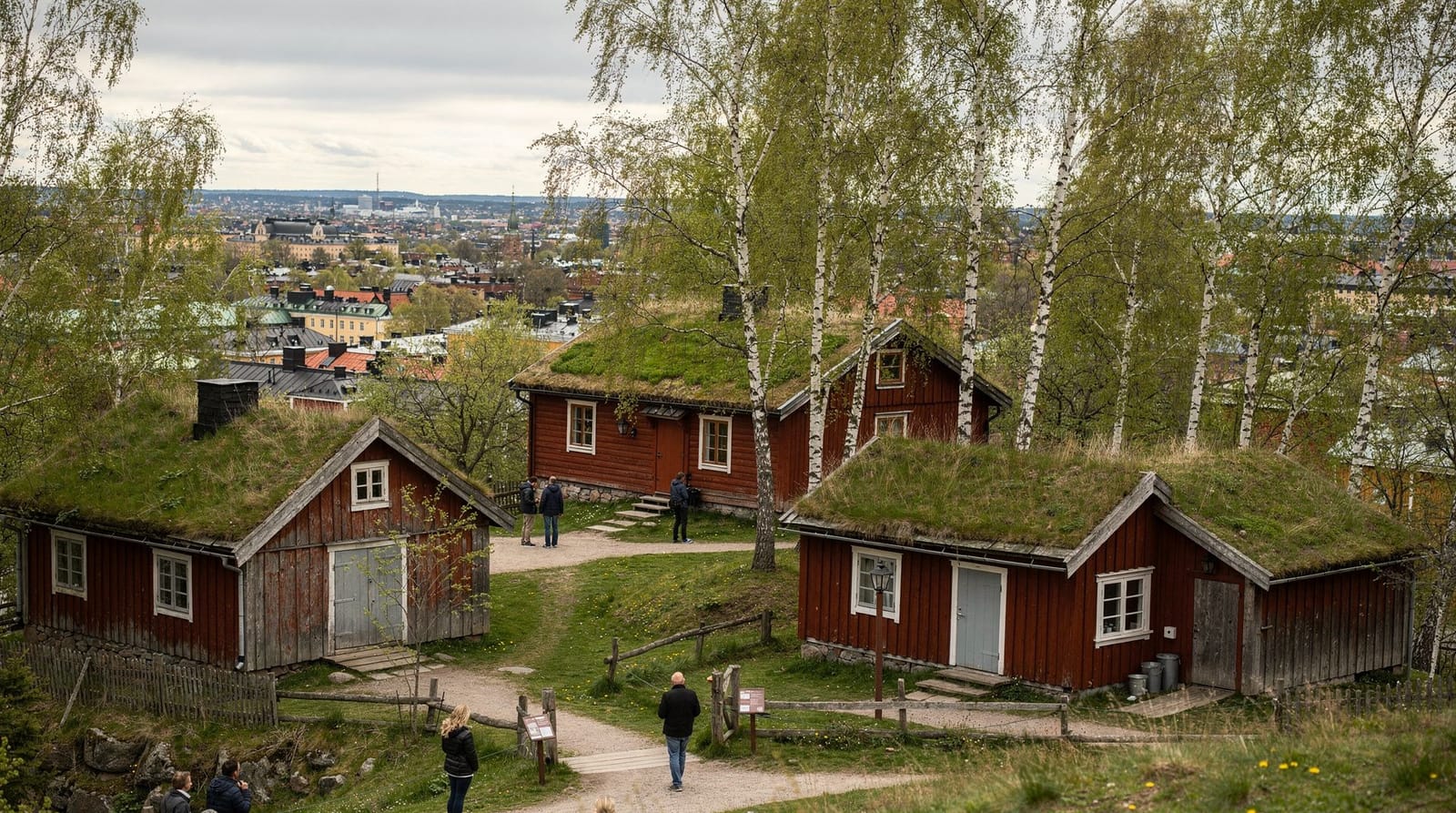
A significant omission from any Djurgården guide would be Skansen, the world’s oldest open-air museum, located on the south slope of the island. Founded in 1891, Skansen consists of 160+ historic buildings moved from across Sweden — farmsteads, manor houses, town quarters, workshops, windmills — and relocated to recreate historical Swedish environments from different eras and regions.
Unlike conventional museums, Skansen is a landscape you walk through. The buildings are arranged across a hillside; between them, traditional craftspeople demonstrate glassblowing, baking, printing, and weaving as they would have been done in past centuries. In the lower section, Skansen’s zoo focuses on Nordic animals — brown bear, wolf, lynx, moose (älg), wolverine, bison, and reindeer. Entry to the zoo is included in the standard ticket.
Skansen requires most of a day to do properly. Entry costs approximately 220 SEK in summer (reduced in winter). Summer brings additional programming: folk dancing, traditional music, and seasonal celebrations. The Midsummer celebrations at Skansen are the most publicly attended in Sweden.
Skansen is connected by the Djurgårdslinjen tram from the city, and the sightseeing train stops here.
Liljevalchs art gallery and Gröna Lund
At the eastern end of the museum strip, two very different institutions face each other across Djurgårdsvägen:
Liljevalchs Konsthall is one of Stockholm’s oldest dedicated art galleries (founded 1916), housing temporary exhibitions of contemporary and modern art. The building itself is a Stockholm landmark — a beautiful National Romantic red-brick structure. The Spring Exhibition (Vårsalongen) is the most-attended recurring show.
Gröna Lund is Stockholm’s city amusement park, with rollercoasters, fairground rides, and a large concert venue that has hosted international acts since the 1970s (ABBA performed here early in their career). Open from late April through September; adult entry approximately 200 SEK. The concert programme attracts major international artists June–August.
The contrast between the art gallery and the rollercoaster on the same small stretch of road is quintessentially Djurgården — a place where serious cultural institutions and popular entertainment coexist on a small island without apparent friction.
Eating and drinking on Djurgården
Djurgården’s dining options vary from excellent to expensive-and-mediocre, depending on whether you stay near the main tourist strip or venture into the park:
Rosendals Trädgård (Rosendalsterrassen 12): The best food on the island and one of the best café experiences in Stockholm. Biodynamic garden café serving lunch using produce from its own garden. Arrive before noon in summer to avoid queues; take a tray and sit among the flowerbeds.
Museibaren (inside Vasa Museum): Decent café at fair prices by museum standards. Good for a quick coffee and sandwich between exhibitions.
Oaxen Slip (Beckholmsvägen 26): Casual restaurant attached to the Michelin-starred Oaxen Krog. Smörgåsbord-style Swedish food, considerably more affordable than the main restaurant. Book ahead.
Djurgårdsskansen (inside Skansen): Several options including traditional Swedish food. Convenient if you are spending the day at Skansen.
Wärdshuset Ulla Winbladh (Rosendalsvägen 8): A classic Swedish inn inside the park, serving traditional husmanskost. Good for lingonberry meatballs.
Walking pace: how to budget your time realistically
The route as described — museum strip, park interior, Waldemarsudde, southern return — covers approximately 8–10 km at a leisurely pace with stops. Visitors consistently underestimate how long the park section takes, because it looks short on a map but the unpaved trails and the temptation to linger among the old oaks slow the pace considerably compared with the museum-strip road walking. A realistic budget: 45 minutes for the museum strip walk alone (excluding any museum visits), 30–40 minutes through the park interior to Rosendals, 20–30 minutes at Waldemarsudde’s grounds even without entering the museum, and 30–40 minutes for the southern return. Add any museum entries on top of this walking time.
Book a 2-hour Djurgården sightseeing tour if time is limitedComparing this route to a Djurgården museum day
This walking route treats Djurgården primarily as a landscape to move through, with museums as stops along the way rather than the main event. For visitors who want the opposite emphasis — a museum-focused day with minimal walking — the Djurgården neighbourhood deep dive covers the same island with the priorities reversed: which museums matter most, how to sequence them, and how to avoid queues. Both approaches are valid; the walking route rewards visitors on a second or third Stockholm trip who have already covered the headline museums and want to see the island itself, while the museum-focused approach suits first-timers.
Djurgården in different seasons
Spring (April–May): The park is at its most peaceful. The wildflowers arrive in May; the Djurgårdslinjen tram resumes spring service. Most museums have normal hours. Fewer visitors than summer; the park feels genuinely green and calm.
Summer (June–August): Maximum activity — all facilities open, longest days, warmest weather. The park is crowded on weekends but still spacious enough to find quiet corners. Evening walks along the canal or waterfront are particularly pleasant in the long light.
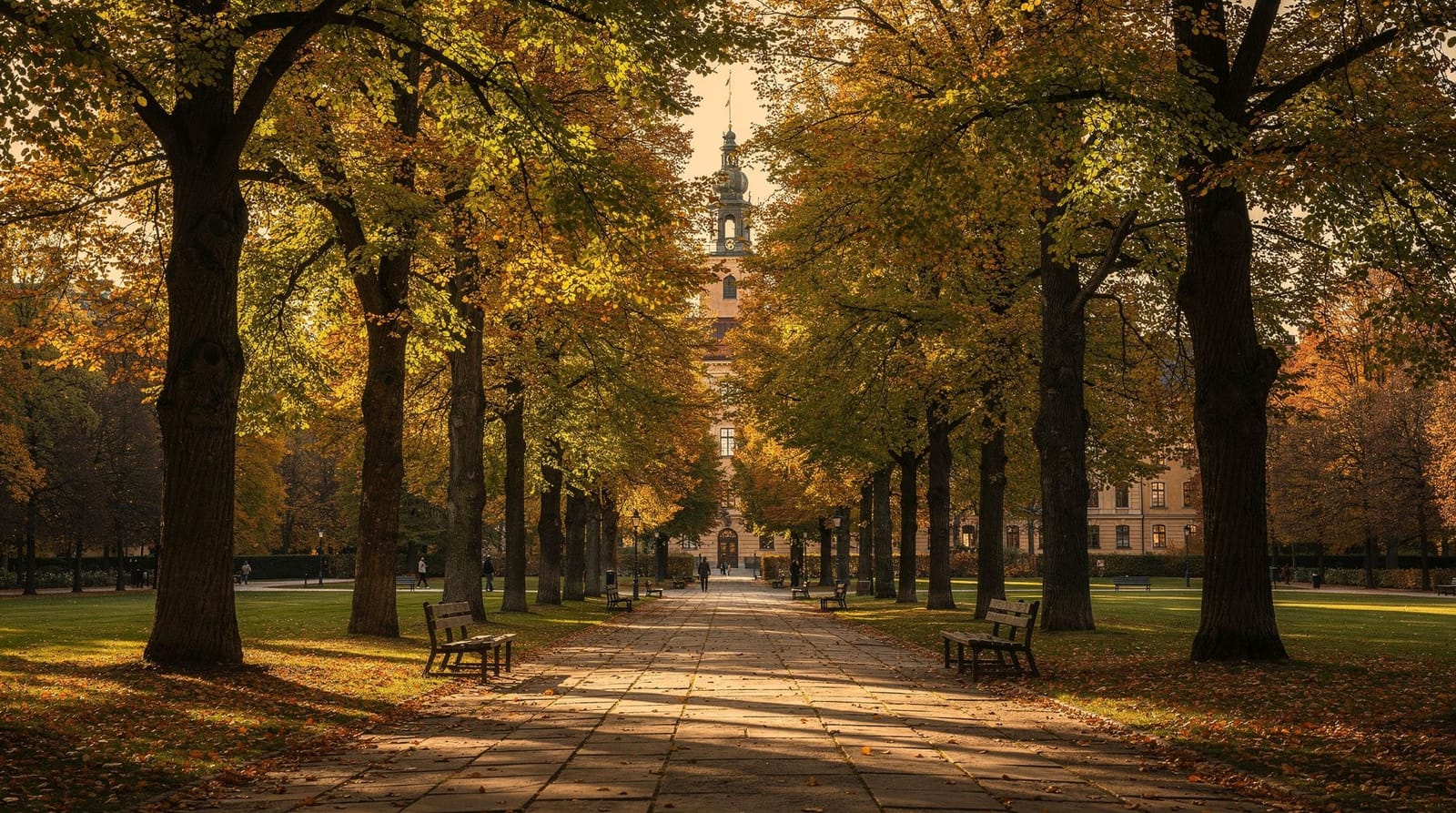
Autumn (September–October): The park’s woodland turns orange and gold; the oak forests are particularly beautiful. Crowds drop sharply after August. Some outdoor facilities close.
Winter (November–March): Skansen and the museums remain open (reduced hours at Skansen). The park itself is quiet and atmospheric in snow or frost. Djurgårdslinjen tram does not run; bus 69 operates year-round.
Frequently asked questions about Djurgården
Is Djurgården good for children?
Djurgården is excellent for families. The park has picnic areas and open meadows for running around; Skansen has a children’s zoo section; Gröna Lund is a full amusement park; the Vasa Museum is visually spectacular for all ages. Many children visit Djurgården as a full day and consider it the highlight of Stockholm.
Can I swim in Djurgården?
The island has several traditional bathing spots — Friluftsbad on the northern shore and Biskopsudden on the southern waterfront. Water quality is good (Lake Mälaren meets the Baltic here). Swimming is free and popular on hot summer days.
Is Djurgården open at night?
The park itself is accessible 24 hours. Museums have standard opening hours (10:00–17:00 generally; Vasa Museum 08:30–18:00 in summer). Rosendals Trädgård closes around 17:00.
How do I get from Djurgården to Gamla Stan?
The most direct route is on foot via Djurgårdsbroen bridge and then west along Strandvägen into central Stockholm, then south to Gamla Stan. About 35 minutes walking. Alternatively, bus 69 runs from Djurgårdsvägen to Nybroplan and the centre.
Can I bring a bicycle to Djurgården?
Yes. Cycling is permitted on the park paths and main road. Rentals are available near the bridge entrance. The island loop by bicycle takes about 45 minutes at a relaxed pace.
Is the full walking route better on foot or by bike?
Both work well, and the choice depends on priorities. Walking the full route takes 3–4 hours and allows time to properly explore Waldemarsudde’s grounds and Rosendals Trädgård; cycling covers the same distance in under an hour but makes stopping at each point feel more like an interruption than part of the flow. For a first visit that includes museum stops, walking is more natural; for a repeat visit focused purely on covering the island, cycling is more efficient.
Do I need to book anything in advance for this route?
No advance booking is required for the walking route itself. Individual museums along the way — particularly the ABBA Museum and, in peak summer, the Vasa Museum — benefit from advance timed-entry booking if you plan to enter them as part of the walk.
Top experiences
Bookable activities with verified prices and instant confirmation on GetYourGuide.