Viking Museum Stockholm guide: the interactive Norse experience
Stockholm: Viking Museum exhibition and Viking Ride
What is the Viking Museum in Stockholm and is it worth visiting?
The Viking Museum (Vikingaliv) on Djurgården is a modern interactive museum centred on a motion-ride experience (the Ragnfrid Viking Saga) that takes visitors through scenes from a Viking merchant's life. Check the current ticket price on the museum's official site. It is more experiential than academic — a good introduction for families and casual visitors rather than specialist archaeology.
Vikings on Djurgården: experiential history at the water’s edge
The Viking Museum — officially Vikingaliv — opened on Djurgårdsvägen in 2017, occupying a location on Djurgårdsstranden (the waterfront path) that puts it within easy walking distance of both the Vasa Museum and the Nordiska Museet. The museum was designed explicitly for a broad audience rather than Viking Age specialists, building its experience around a central motion-ride attraction and surrounding it with hands-on exhibitions, archaeological reconstructions, and displays of replica and genuine Norse material culture.
It fills a specific gap in Stockholm’s museum landscape. The Swedish History Museum (Historiska museet) in Östermalm holds the most important academic Viking Age collection in Stockholm, including the extraordinary Gold Room; the Viking Museum on Djurgården offers something different: an accessible, family-friendly, experientially designed introduction to the Viking Age that does not require prior knowledge. The two museums serve different purposes and both are worth visiting, depending on what you are looking for.
Practical essentials
| Detail | Information |
|---|---|
| Address | Djurgårdsstranden 15, Djurgården |
| Opening hours | Mon–Fri 11:00–17:00, Sat–Sun 10:00–17:00 |
| Adult ticket | See official site |
| Children 5–15 | See official site |
| Under 5 | Free |
| Recommended time | 1.5–2 hours |
| T-bana/tram | Bus 69 or Djurgårdslinjen tram, Djurgårdsvägen stop |
What to see
The Ragnfrid Viking Saga (the Viking Ride)
The centrepiece of the museum is the Ragnfrid Viking Saga — a motion-ride experience in which visitors sit in a vessel shaped like a Viking longship that moves through a series of theatrical sets. The narrative follows Ragnfrid, a female Viking merchant, through scenes depicting a Norse market town, a voyage by sea, a storm, and encounters with other cultures. The production values are high for this type of attraction; the combination of motion, sound, and physical sets creates a genuinely immersive atmosphere.
The ride is appropriate for children aged 5 and above; younger children may find it frightening in parts (there is a storm sequence with significant noise and movement). Height restrictions apply; check the website for current specifications.
Practical note: The ride runs on a timed schedule throughout the day. Check the daily schedule at the entrance to plan your visit around a specific departure time.
The exhibition: Norse life and material culture
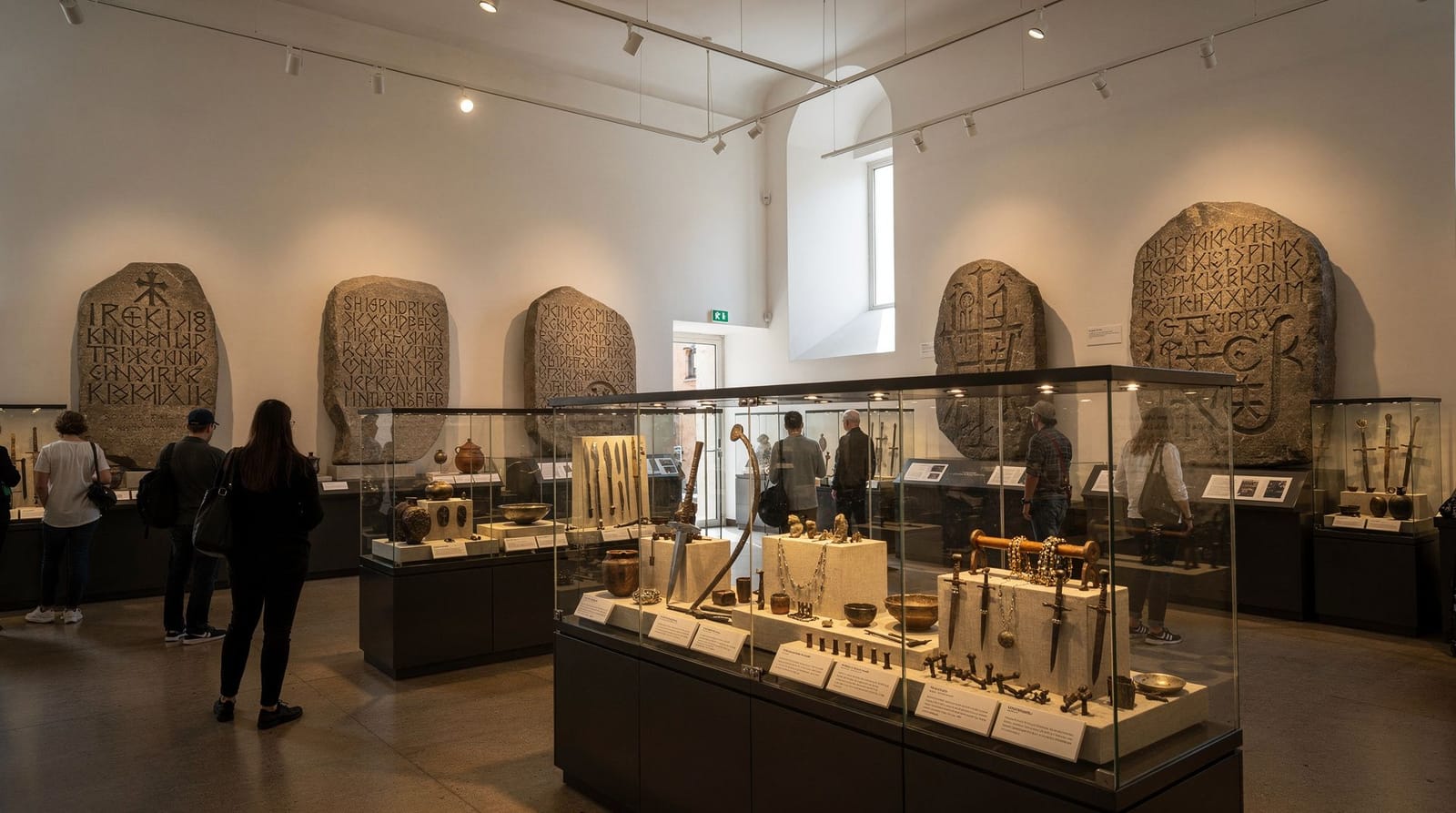
The permanent exhibition surrounding the ride covers Viking Age society in more depth. Sections address:
Longship technology: Scale models and partial reconstructions showing Norse shipbuilding methods — the clinker-built hull technique that gave Viking ships their distinctive flexibility in heavy seas, and the shallow draft that allowed river navigation into interior Europe.
Trade networks: The Viking Age is frequently reduced to raiding in popular imagination; the museum is explicit about the commercial dimension — the Norsemen were traders as much as raiders, operating routes from Britain to Byzantium (Miklagarðr in Old Norse) and as far as the Caspian Sea. The exhibition covers the goods traded, the currencies used, and the cultural exchanges that resulted.
Everyday life: Domestic tools, clothing, food preservation techniques, and household objects from archaeological contexts. This section is less spectacular than the ships and weapons but arguably more informative about what Viking society actually looked like day-to-day.
Women in the Viking Age: Building on the narrative of the Ragnfrid character, a section addresses the historical role of women in Norse society — more complex and active than popular culture suggests. Female traders, ship owners, and figures with social status appear in the archaeological record, and the museum uses this evidence thoughtfully.
Weapons and combat: The section on Viking weapons — swords, axes, shields, chain mail — is typically popular with children and adults who came primarily for the warrior imagery. The weapons are presented in combat context rather than as isolated artefacts; the explanations of shield-wall tactics and the reality of early medieval combat are genuinely informative.
Interactive elements
Throughout the exhibition, hands-on stations allow visitors to handle replicas of Viking tools, try on elements of period clothing, and attempt activities like rope-making. These are particularly effective for children and younger visitors.
Insider tips
Check the ride schedule immediately on arrival. The Viking Ride runs on fixed departure times throughout the day. Checking the schedule at the entrance allows you to plan whether to see the exhibitions first or head directly to the ride.
Combine with the Vasa Museum next door. The museums are very close on Djurgårdsvägen. A logical Djurgården combination: Viking Museum in the morning (good for the ride before crowds peak) and Vasa Museum in the afternoon.
For serious Viking history, also visit the Swedish History Museum. The Viking Museum on Djurgården is excellent for accessibility and entertainment value but lighter on primary archaeological material. The Swedish History Museum in Östermalm holds genuine Viking Age artefacts including the extraordinary Gold Room — the most important collection of Norse gold in Sweden.
Consider the Birka day trip for the full picture. Birka, the Viking Age trading town on Lake Mälaren, is accessible by boat tour from Stockholm and offers outdoor archaeology, reconstructed longhouses, and a museum of the actual excavated site. The Birka day trip guide covers the logistics.
Shaping the visit around your group
How you approach the museum depends on who is with you. With children, the natural rhythm is ride first, while attention is fresh, then the hands-on stations, then the weapons section, which tends to hold interest longest. With adults only, many people reverse it: start with the exhibition panels on trade, everyday life and women in the Viking Age, then finish with the ride as a theatrical reward. Neither order is wrong, but the ride schedule should anchor whichever you choose.
If you are travelling with very small children, the Stockholm with toddlers guide and the broader Stockholm with kids family guide help you decide how much to pack into a Djurgården day. A single museum plus a long park break is often better than three museums back to back, and the Djurgården walking route shows how to build in that breathing space.
For visitors who prefer a gentler pace, the exhibition is perfectly satisfying without rushing. Read the panels on shipbuilding and trade slowly, and the museum rewards you with a clearer picture of how Norse society actually worked than the popular horned-helmet image ever could.
Making the most of a Djurgården day
The Viking Museum works best as one stop in a wider island itinerary rather than a standalone trip. Djurgården is Stockholm’s green museum island, and the Djurgården neighbourhood deep dive and the Djurgården destination page cover everything within walking distance. Families often pair the museum with Junibacken, Skansen and Gröna Lund, while history-minded visitors tend to prefer the Skansen open-air museum for its reconstructed farmsteads, which echo the everyday-life section you see inside the Viking Museum.
If you are weighing which big Djurgården museum deserves your limited time, the Vasa versus ABBA museum comparison and the Vasa versus Skansen comparison lay out the trade-offs honestly. The Viking Museum sits comfortably alongside either choice, since its ride and exhibition do not overlap with them.
Anyone planning several museums in a short stay should also read the museum pass guide and the Stockholm Pass versus Go City versus SL comparison before buying tickets one by one. If a pass is on your list, the all-inclusive Stockholm Pass is worth checking against the museums you actually intend to visit, rather than assuming it saves money automatically.
History of the Viking Age in the Stockholm region
Stockholm as a city did not exist during the Viking Age (approximately 793–1066 CE) — the city’s founding is traditionally dated to the 13th century. But the surrounding region was at the centre of the Norse world. Lake Mälaren, which Stockholm straddles, connected the Scandinavian interior to the Baltic Sea and the trade routes beyond. The island of Birka in Lake Mälaren was one of the major trading towns of the Viking Age, with archaeological evidence of trade goods from as far away as central Asia.
The Norsemen who gave the Viking Age its name were specifically the raiders who attacked coastal communities from the British Isles to the Mediterranean. But the majority of the population in what is now Sweden and Norway were farmers, craftspeople, and traders rather than raiders — and the Stockholm region’s contribution to the Viking Age was primarily commercial. The trade routes connecting Scandinavia to Byzantium and the Arab world passed through Lake Mälaren; the goods traded included furs, amber, silver, and slaves. The name “Rus” — the origin of “Russia” — comes from Norse traders operating the eastern routes.
Tickets and passes
Standard ticket (includes Viking Ride and exhibitions): Check the current adult and child prices on the museum’s official site.
Stockholm Pass: Check current coverage at time of purchase.
Combination with Vasa Museum: No combined discount available — purchase separately or through the Stockholm Pass.
Accessibility
The exhibition is fully accessible by wheelchair. The Viking Ride has limitations — contact the museum in advance for details of accessibility provisions for the ride itself. Wheelchair-accessible toilets available.
Getting there
Bus 69: Direct from Nybroplan or Sergels Torg.
Tram (Djurgårdslinjen): Seasonal service from Norrmalmstorg.
On foot from Nordiska Museet: A 5-minute walk east along Djurgårdsvägen.
Where to eat nearby
Viking Museum café (on-site): Light lunches and fika available.
Blå Porten Café (Djurgårdsvägen 64): A short walk west, one of Djurgårdens best-regarded cafés. See the ABBA Museum guide for the full description.
Combine with
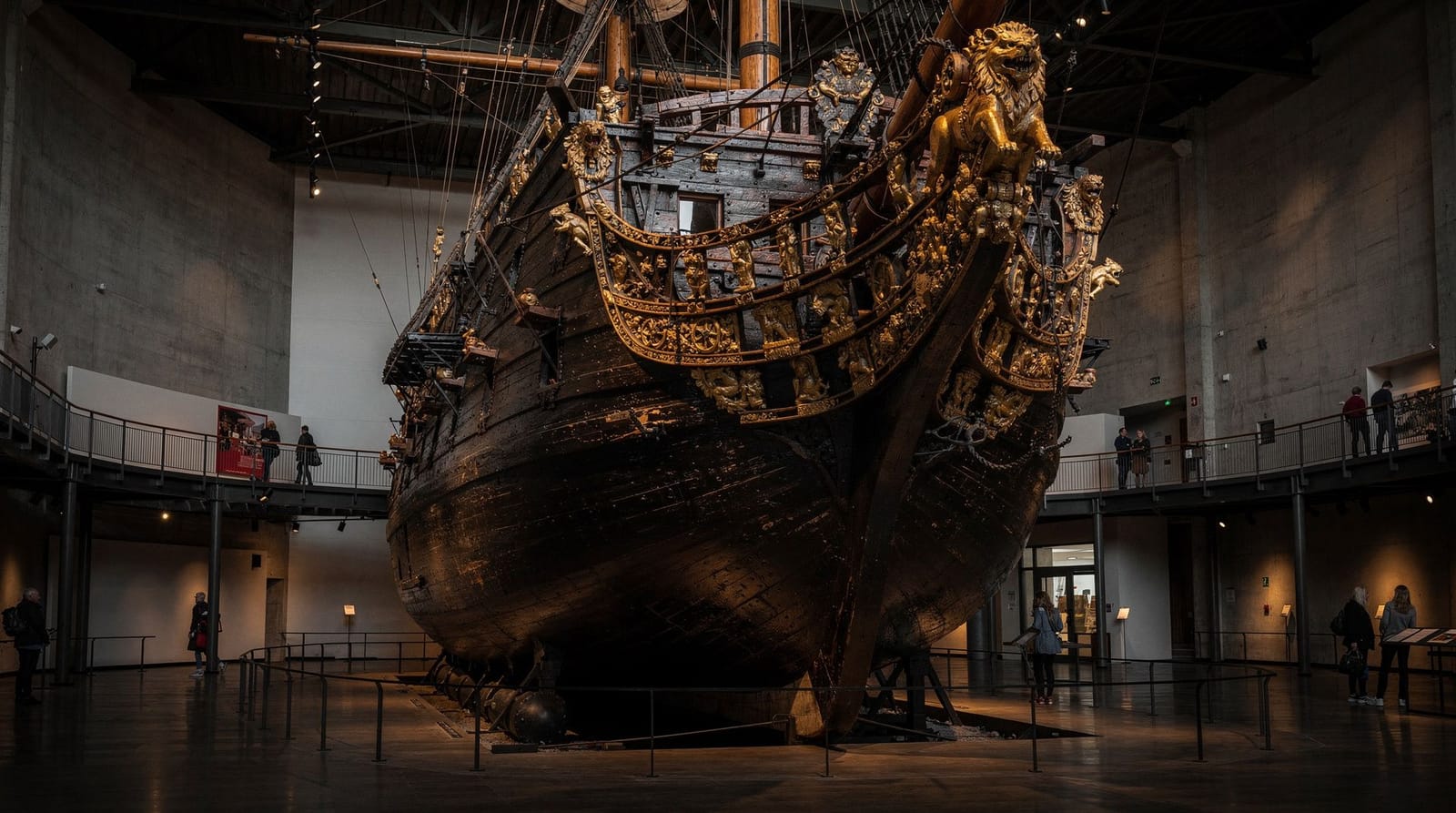
Vasa Museum: The most logical pairing — both are on Djurgårdsvägen within 5 minutes’ walk of each other. A maritime Viking journey in one museum, a 17th-century warship in the other. See the Vasa Museum guide.
Swedish History Museum: For the serious Viking Age collections including the Gold Room. Twenty minutes by bus to Östermalm. See the Swedish History Museum guide.
Birka day trip: The actual Viking Age archaeological site on Lake Mälaren, accessible by boat tour. The natural extension for anyone who leaves the Viking Museum wanting more. See the Birka day trip guide, the Birka village guide and the Birka destination page; if you would rather have the transport arranged, there is a boat trip to the Viking trading town of Birka that handles the crossing for you.
Sigtuna and Uppsala: Two more places where the Viking Age left its mark, both reachable on a day out of the city. See the Sigtuna day trip guide, the Uppsala day trip guide and the wider Viking heritage in the Stockholm region overview.
Frequently asked questions about the Viking Museum Stockholm
Is the Viking Museum in Stockholm real archaeology?
The museum presents a mix of genuine archaeological reproduction and theatrical experience. The artefact displays and exhibition panels are based on archaeological evidence; the Viking Ride is a theatrical production. The museum is honest about this distinction. For the primary archaeological collection, the Swedish History Museum is the appropriate destination.
How does the Viking Museum compare to the Swedish History Museum?
Very different experiences. The Viking Museum is entertainment-focused, experiential, and family-oriented. The Swedish History Museum (Historiska museet) holds the primary archaeological collection including genuine Norse artefacts and the spectacular Gold Room with its Viking Age gold. The Viking Museum is better for families with children and casual visitors; the Swedish History Museum is better for those with deeper interest in archaeological history.
Is the Viking Ride suitable for very young children?
Children aged 5 and above generally manage the ride well. There is a storm sequence with significant sound and movement that may frighten children under 5. Parental judgment applies — the museum recommends checking the age guidance when booking.
Can you visit the Viking Museum without doing the Viking Ride?
Yes. The exhibition is accessible independently of the ride, and the ride ticket is included in the standard admission. Some visitors who find motion-ride attractions unpleasant or physically unsuitable can visit the exhibition areas only — contact the museum for reduced-rate options if the ride is not possible.
Rainy-day and off-season value
Because the whole visit is indoors — the ride, the exhibition, the café — the Viking Museum is one of Stockholm’s most reliable rainy-day options. It also runs on the same schedule year-round, unlike Birka (May–September boats only) or outdoor archipelago activities. On a wet January afternoon, a Djurgården day of Viking Museum plus Vasa Museum plus Nordiska Museet covers three major indoor sights within a few minutes’ walk of each other. See the museum rainy-day guide for the fuller list of Stockholm’s best bad-weather options.
Ticket value at a glance
| Ticket type | Price | Includes |
|---|---|---|
| Adult standard | See official site | Viking Ride + full exhibition |
| Child 5–15 | See official site | Viking Ride + full exhibition |
| Under 5 | Free | Full exhibition (ride subject to height limits) |
| GYG combined booking | See official site | Guaranteed ride time slot, skip ticket-desk queue |
Top experiences
Bookable activities with verified prices and instant confirmation on GetYourGuide.