Djurgården neighborhood deep dive: Stockholm's royal park island
Stockholm: 2-hour Djurgården sightseeing tour
Duration: 2 hours
How much time do I need on Djurgården?
A full day easily. Djurgården has 6 major museums plus Gröna Lund amusement park, and the parkland walking circuit is 90 minutes without entering anything. Budget 2–3 hours minimum for Vasa Museum or Skansen alone. Most visitors who try to do Djurgården in half a day feel rushed.
Djurgården: the island that holds Stockholm’s treasures
Djurgården — literally “Animal Garden,” from its original function as royal hunting grounds — is Stockholm’s museum island and its most valuable recreational space. It sits immediately east of the city centre, accessible by ferry, bus, bike, or on foot across the Djurgårdsbroen bridge from Strandvägen.
The island is royal park, museum cluster, amusement park, and nature reserve simultaneously — a combination that should not work but does. The western section, where the museums are concentrated, feels managed and purposeful. Walk 20 minutes east and you are in forest and open meadows where the nearest building is out of sight.
For a first-time visitor to Stockholm, Djurgården is probably the single most important destination — it has the Vasa Museum (world-class), Skansen (genuinely unique), and ABBA The Museum (impossible to dislike), all within a 1-kilometre stretch. The question is not whether to come to Djurgården but how to organise the day to get the most from it.
| Where | East of the city centre, across Djurgårdsbroen bridge from Strandvägen |
| Cost | Around 180–280 SEK per museum; walking and park are free |
| Time needed | Full day for a proper visit; half-day minimum for one museum |
| Getting there | Ferry from Slussen, bus 67, or 15-min walk from T-Centralen |
| Best time | Museums open 8:30am (Vasa, summer); arrive early to avoid queues |
The museums: what’s here
Vasa Museum (Vasamuseet)
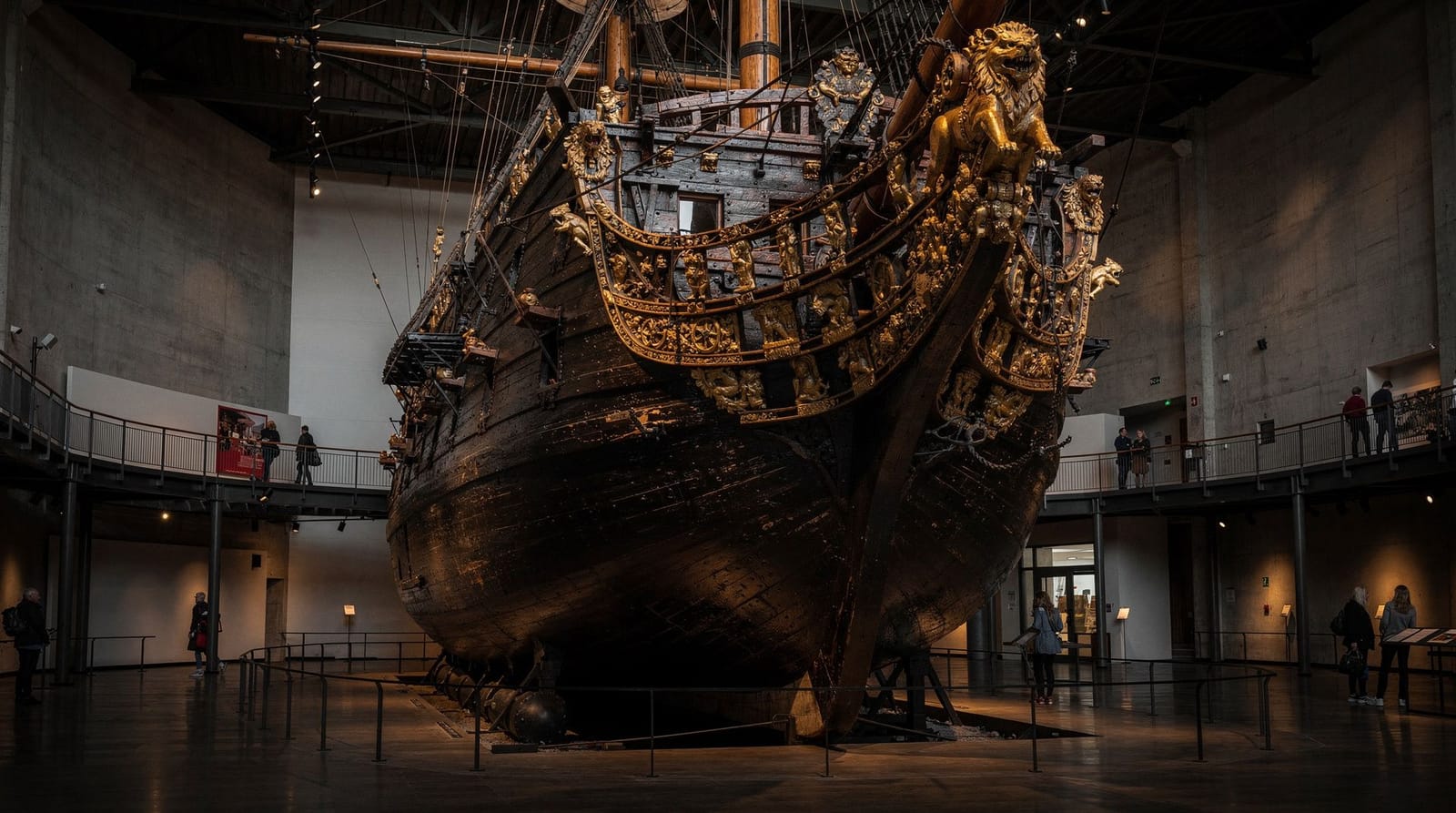
The centrepiece. The Vasa is a 17th-century Swedish warship that sank on its maiden voyage in 1628, lay on the Stockholm harbour floor for 333 years, and was recovered almost intact in 1961. It is the best-preserved 17th-century vessel anywhere in the world.
The museum was built around the ship after recovery. Standing below the stern and looking up at 69 metres of decorated oak warship is an experience that has no equivalent in European museum-going. The detail visible on the carved sculptures — and there are hundreds of them, painted in original colours where paint survives — gives an immediate, visceral sense of early modern Scandinavian culture.
Plan: Allow 2–3 hours. Book skip-the-line tickets in advance for summer visits — the queues in July and August can be 45–60 minutes. See the full Vasa Museum guide for the complete visit breakdown.
ABBA The Museum
A music experience built around the cultural phenomenon of ABBA. It is more interactive than a standard museum — you can sing with a hologram of Agnetha and Björn, try on replicas of the famous costumes, and watch performance footage on multiple screens. It is unapologetically celebratory and makes no pretence at being neutral.
Who it’s for: ABBA fans (obviously), but also visitors who want to understand Swedish popular culture at its global peak. The museum’s design is genuinely good and the experience works even if you are not a dedicated fan.
Plan: 1.5–2 hours. Timed entry is mandatory; book well in advance for summer visits (often sold out weeks ahead in July).
See the ABBA Museum guide for entry and booking details.
Skansen
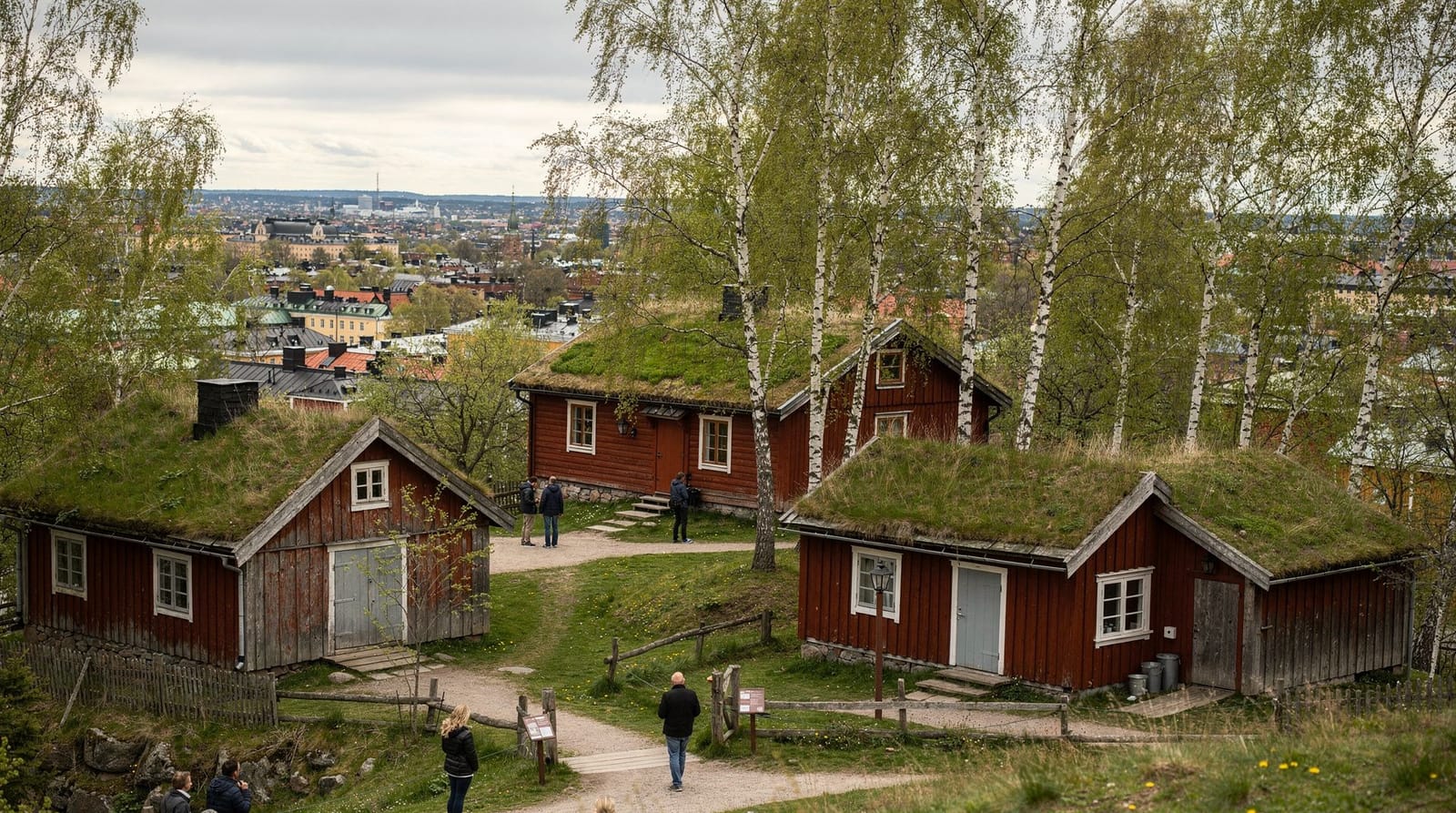
Skansen is the world’s oldest open-air museum (founded 1891) — a 75-hectare hillside park containing over 150 historic Swedish buildings relocated from across the country, a zoo with Nordic animals (brown bears, moose, wolves, lynx), craft demonstrations, and a series of annual cultural events that are genuinely embedded in Swedish cultural life.
How it works: You walk through historical farms, town buildings, and industrial workshops staffed by costumed guides who demonstrate traditional crafts. The zoo is good for children; the panoramic views from the hilltop are good for everyone.
Season matters at Skansen: Winter (December) brings the Christmas market, one of Stockholm’s best. Summer brings Midsummer celebrations, folk music, and traditional games. The regular visitor programme changes by season in a way that makes repeat visits worthwhile.
Plan: Half a day minimum; a full day if you have children. See the Skansen guide.
Nordiska Museet
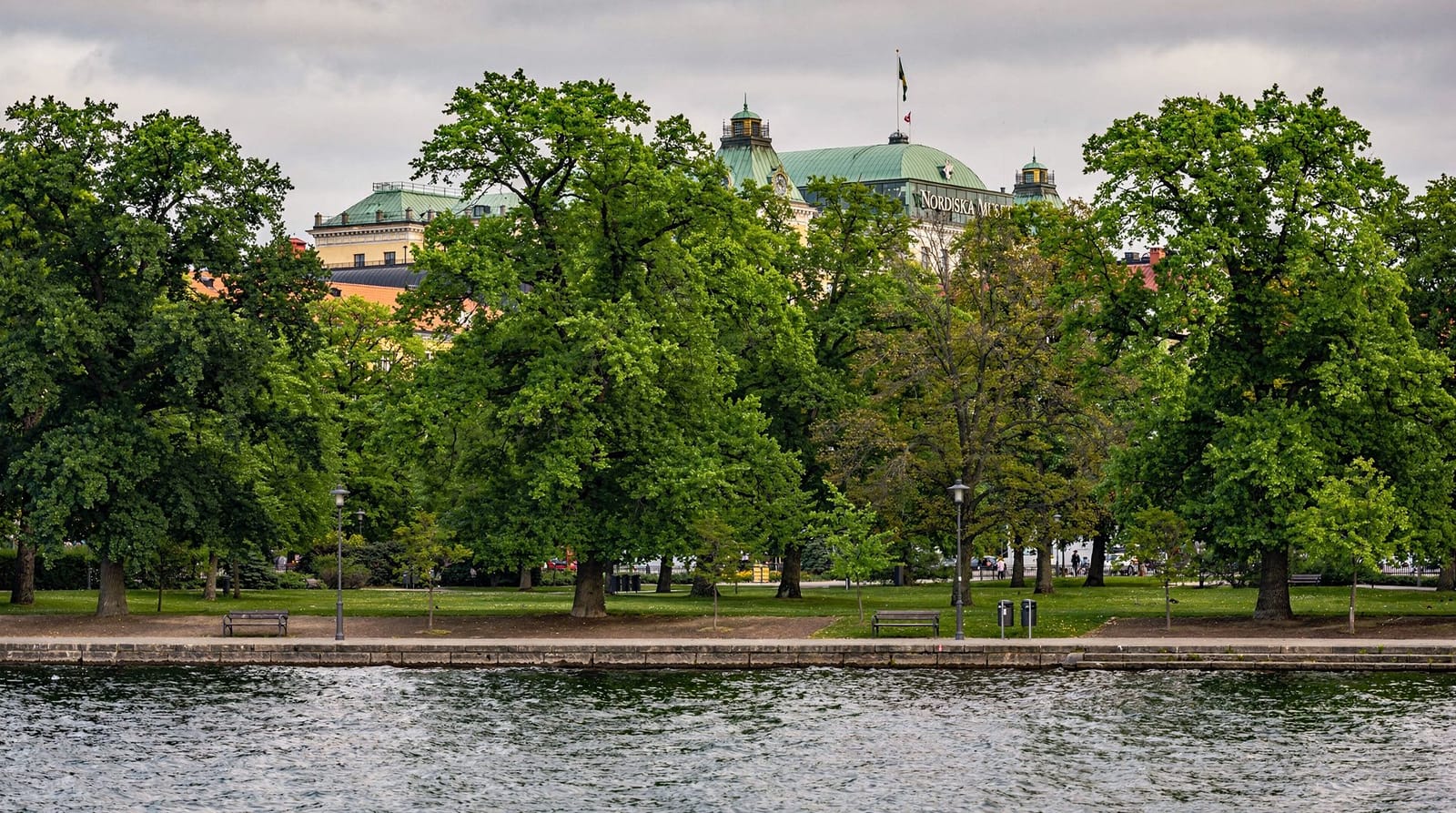
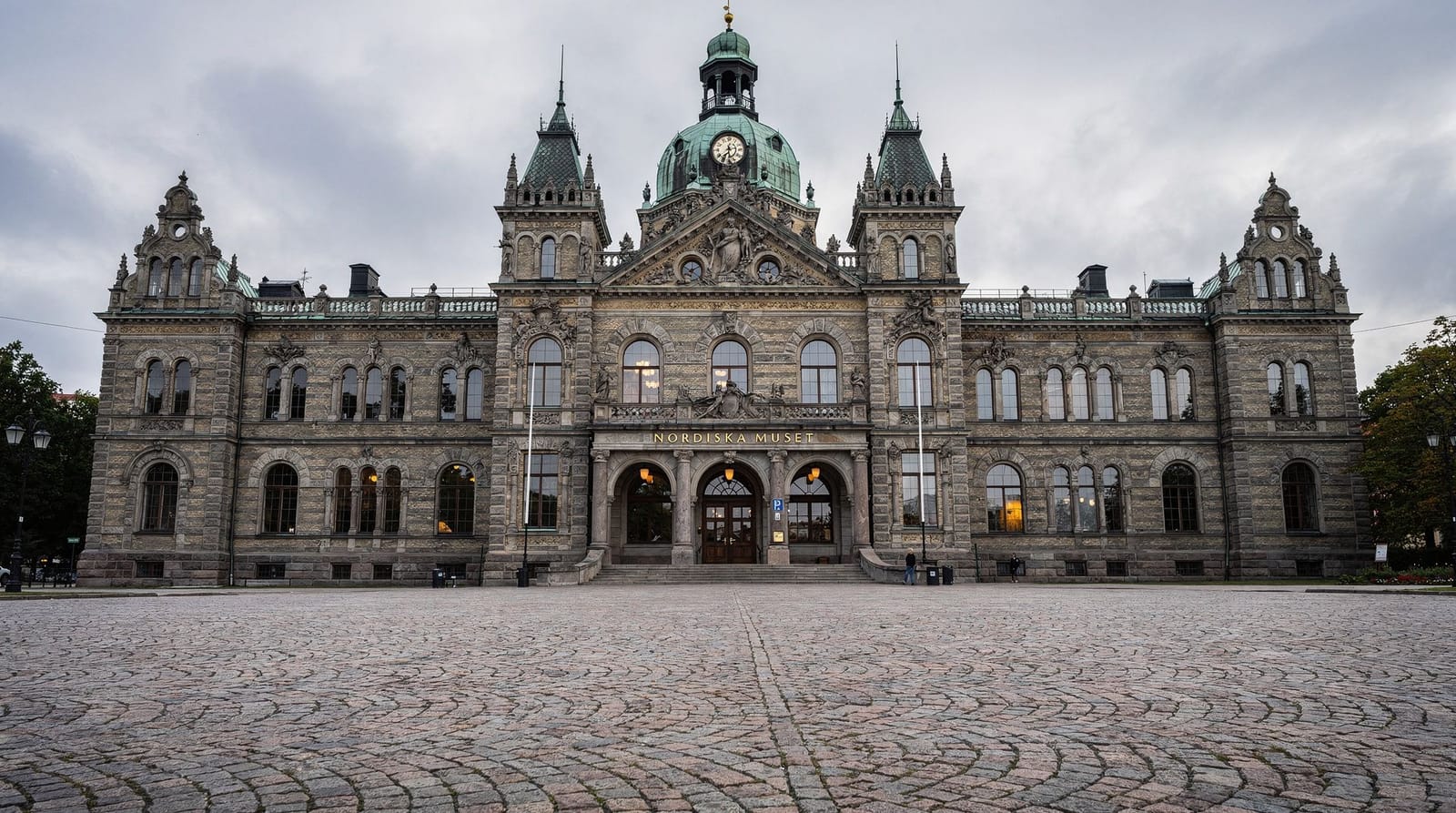
The museum of Swedish cultural history — not history in the political sense but in the sense of how Swedes have lived, dressed, eaten, farmed, and designed their homes across five centuries. The building itself (a neo-Renaissance palace on the waterfront) is impressive; the permanent collection inside is outstanding for visitors interested in Scandinavian design and social history.
Standouts: The August Strindberg collection, the textile gallery, the permanent exhibition on Swedish folk art, and the furniture collection covering 500 years of Scandinavian domestic design.
Plan: 1.5–2 hours. Often less crowded than Vasa or Skansen, making it a good option for a later afternoon when the queues elsewhere have formed. See the Nordiska Museet guide.
Junibacken
A children’s literary theme park built around the works of Astrid Lindgren (Pippi Longstocking, Emil of Lönneberga, Karlsson-on-the-Roof). Genuinely excellent for children aged 2–10; confusing and slightly overwhelming for adults without children. The Storybook Train ride through illustrated scenes from Lindgren’s books is the highlight.
Plan: 2–3 hours for families; not worth visiting without children.
Gröna Lund
Stockholm’s traditional amusement park, occupying the southern tip of Djurgården’s western section. It has rollercoasters, carnival rides, concerts (major acts perform here in summer), and outdoor food options. The setting — squeezed between the water and the hill — is remarkable for an amusement park.
Who it’s for: Families with older children; anyone who wants a thrill ride with a waterfront view; concert-goers (check the summer programme).
Note: Gröna Lund is in a long-term planning dispute over its footprint — expansions proposed, contested by residents and heritage groups. The park continues to operate while the debate continues.
Book a 2-hour Djurgården sightseeing tourThe 90-minute walking loop
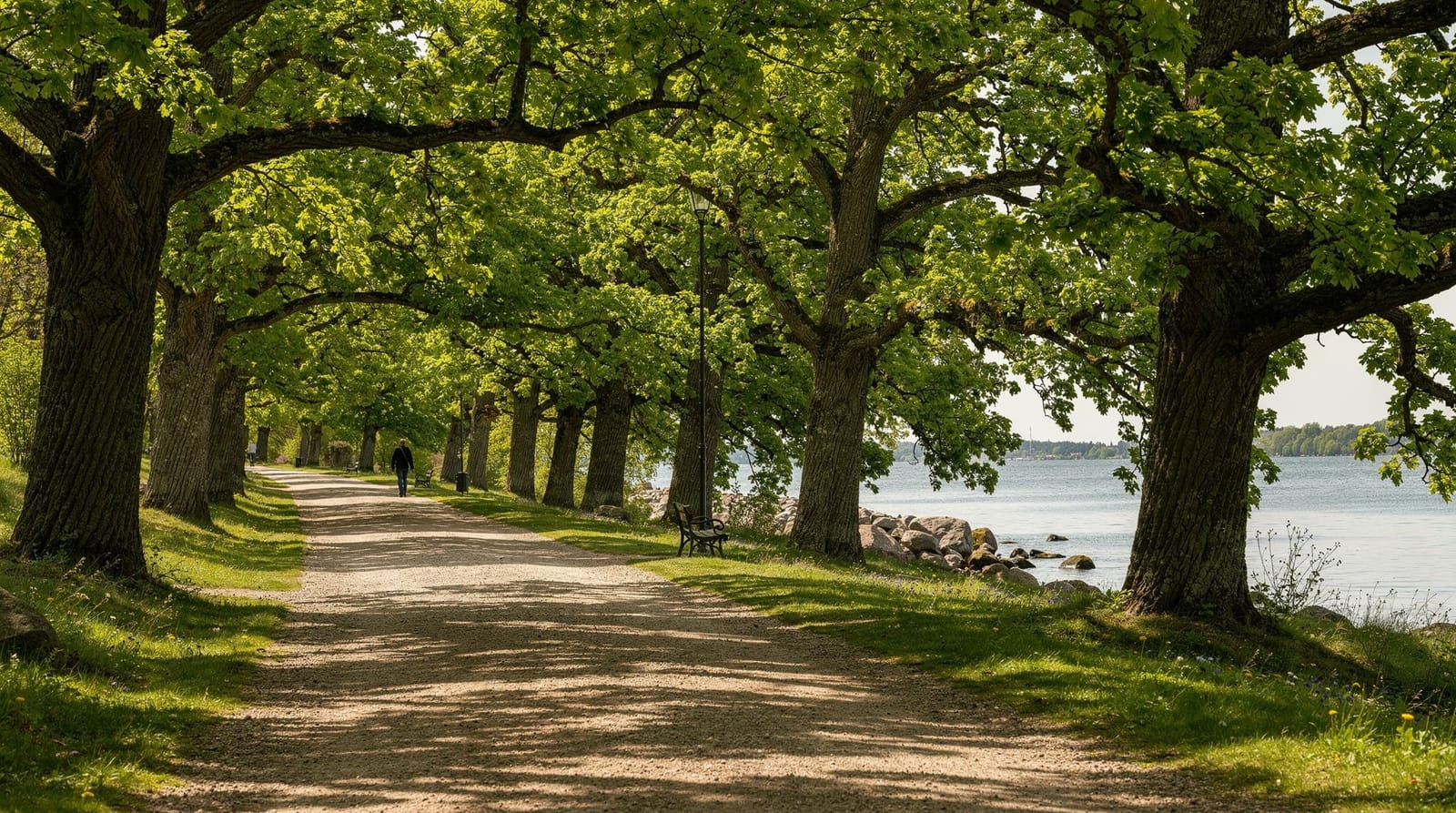
Djurgården’s perimeter can be walked in approximately 90 minutes without entering any museums. This is a useful circuit to know for orientation, for running (see the urban running routes guide), or for a quiet walk when the museums are closed.
Route: Enter via Djurgårdsbroen bridge → walk east along the northern waterfront past the museum buildings → continue east and north around the island’s wider section through park and forest → south along the quieter forest path → back west along the southern waterfront (Rosendal side) → return to the bridge.
Highlights on the loop:
- Northern waterfront: museum exteriors, Djurgårdskanalen canal
- Eastern fields: open meadows, views north towards Ekoparken
- Rose garden at Rosendals Trädgård (good café, open April–October)
- Southern canal bank: quiet, tree-lined, popular with cyclists
Terrain: Flat throughout, paved or compacted gravel, suitable for all. The tram runs through the main northern path — give it right of way at crossings.
Getting to and around Djurgården
Ferry: Djurgårdslinjen ferry runs from Slussen (year-round) and Nybroplan (summer) — 10 minutes, scenic, worth doing at least one way.
Bus 67: From T-Centralen or Nybroplan, running along Djurgården’s main road year-round. Not as scenic as the ferry but faster.
Djurgården sightseeing train: A hop-on hop-off tourist train running along the main road in summer, stopping at all the major museum entrances. Useful for combining multiple museums without walking between them.
On foot from Strandvägen: Cross the Djurgårdsbroen bridge (15-minute walk from T-Centralen via Strandvägen). The bridge gives the first good view of the island’s museum cluster.
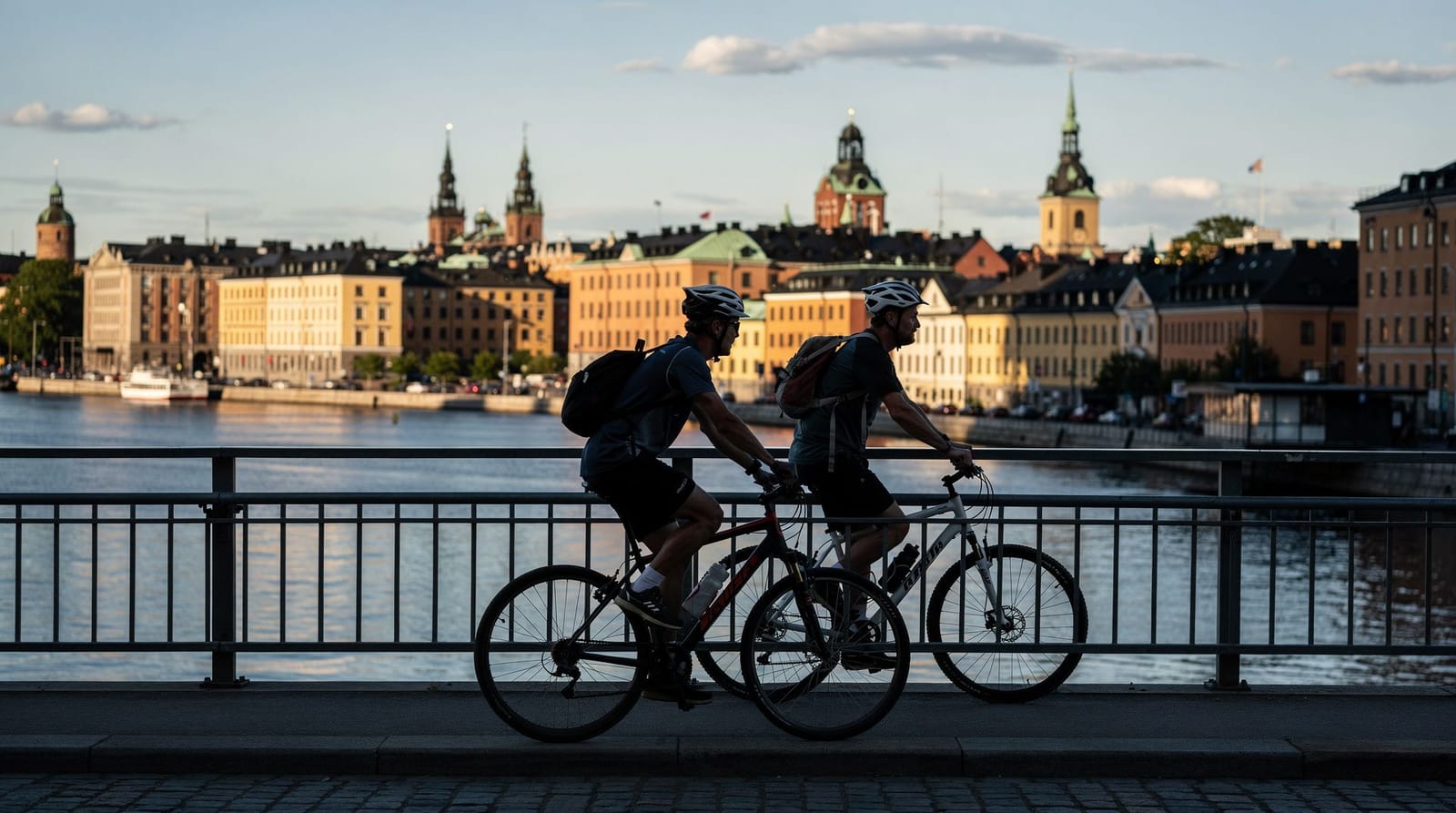
Bike: The Djurgården loop is one of Stockholm’s best cycling routes. See the Stockholm bike tour guide.
Planning a day on Djurgården
Morning priority
Vasa Museum opens at 8:30am (June–August). Arriving in the first 30 minutes means almost no queues and a genuine sense of solitude standing below the ship. This is the best time to be there.
Mid-morning
ABBA The Museum, Nordiska Museet, or the start of the Skansen circuit. ABBA and Nordiska can be combined in a morning (each 1.5–2 hours). Skansen requires a separate half-day.
Lunch
Rosendals Trädgård café (organic, excellent, popular — arrive by noon to avoid queues) or the various food options at the museum entrances. The Vasa Museum has a reasonable museum café.
Afternoon
Continue with museums not covered in the morning, or take the eastern walking loop. Gröna Lund in late afternoon/evening for those with children or concert tickets.
Evening
The ferry back from Djurgårdslinjen to Slussen at sunset, with the city visible across the water, is one of Stockholm’s better free experiences.
Book a Vasa Museum and Skansen tour with fast-track ticketWhat costs money and what is free
Paid: Vasa Museum (~240 SEK), ABBA The Museum (~280 SEK), Skansen (~250 SEK adults), Nordiska Museet (~170 SEK), Junibacken (~185 SEK), Gröna Lund (entry + rides).
Free: Walking the island, the loop circuit, Rosendal gardens, all exterior views of museums, the parks and meadows.
Stockholm Pass: All the major Djurgården museums are included in the Go City Stockholm Pass. If you are planning to visit Vasa + Skansen + ABBA in a single day, the pass pays for itself by the third entry. See the Stockholm Pass comparison guide.
Book a combined Djurgården and Östermalm island tourDjurgården for repeat visitors and longer stays
First-time visitors rightly focus on Vasa, Skansen, and ABBA, but Djurgården rewards a second visit differently. The Viking Museum and Junibacken sit slightly off the main strip and are often skipped on a first pass; the eastern parkland beyond Rosendal — genuinely quiet even in August — is worth a slow walk on a second or third Stockholm trip when the big-name museums have already been ticked off. Cycling the full island loop, covered in the Stockholm bike tour guide, is a good way to see the parts most day-one visitors miss.
Djurgården also connects naturally to the rest of eastern Stockholm. Kayaking from the Djurgårdskanalen waterway around the island’s edge, detailed in the kayaking Stockholm guide, gives a water-level view of the museum buildings that no land route replicates, and it is a genuinely different way to experience a district otherwise defined by queues and footpaths.
Djurgården with limited time
If you only have 3–4 hours rather than a full day, prioritise ruthlessly rather than trying to skim everything. The Vasa Museum alone justifies a Djurgården visit and should not be rushed below 90 minutes; pairing it with either Skansen or ABBA (not both) keeps the visit realistic. Skipping Junibacken and Gröna Lund entirely is the right call for visitors without children, freeing time for the Vasa plus one museum plus a walk through at least part of the eastern parkland — the contrast between the museum cluster and the open meadows is a meaningful part of what makes Djurgården distinctive, and skipping it entirely for a museum-only visit misses that.
Frequently asked questions about Djurgården
What is the best museum on Djurgården?
The Vasa Museum is objectively exceptional — there is nothing comparable anywhere else. Skansen is uniquely Swedish and requires more time but rewards it. ABBA The Museum is the most immediately fun. For a first visit, Vasa + one other (ABBA or Skansen) is the right combination.
How do I get from the Vasa Museum to Skansen?
They are about 500 metres apart on the main road. Walk east along the main path past Nordiska Museet; Skansen’s entrance is about 10 minutes from the Vasa. Alternatively, the Djurgården sightseeing train stops at both.
Is Djurgården suitable for a full-day visit?
Yes. Most visitors underestimate the time required and rush it. A genuinely satisfying Djurgården day (Vasa in the morning, Skansen in the afternoon, evening ferry home) fills 10 hours easily.
Can I cycle around Djurgården?
Absolutely — the perimeter loop is 12 kilometres, mostly flat, and one of Stockholm’s best cycling routes. See the Stockholm bike tour guide.
Is Djurgården open in winter?
Most of the year, though some attractions have reduced hours or seasonal closure. Vasa Museum is open year-round. Skansen runs a Christmas market in December (one of Stockholm’s best). Gröna Lund is closed October–April. The park itself is open and walkable year-round.
Is the Djurgården ferry worth taking instead of the bus?
Yes, if time allows. The Djurgårdslinjen ferry from Slussen takes about 10 minutes and gives a genuinely scenic short crossing, arriving directly at the museum strip. Bus 67 is slightly faster from central points but has no view. For a first Djurgården visit, take the ferry at least one way.
Can Djurgården be combined with Södermalm in one day?
Yes, via the seasonal ferry connection between Djurgården and Slussen, which sits at Södermalm’s northern edge. A morning at Vasa or Skansen followed by an afternoon exploring Södermalm’s SoFo district and walking routes is a realistic and well-balanced single-day combination.
Top experiences
Bookable activities with verified prices and instant confirmation on GetYourGuide.