Vasa Museum guide: Stockholm's greatest warship
Stockholm: Vasa Museum entrance ticket
Is the Vasa Museum worth visiting in Stockholm?
Yes — the Vasa Museum is Sweden's most-visited museum and one of the world's great maritime experiences. The 17th-century warship Vasa is almost entirely intact, a spectacle you will not find anywhere else. Allow two hours minimum and book tickets online to avoid queues.
A warship that sank on its maiden voyage — and survived 333 years underwater
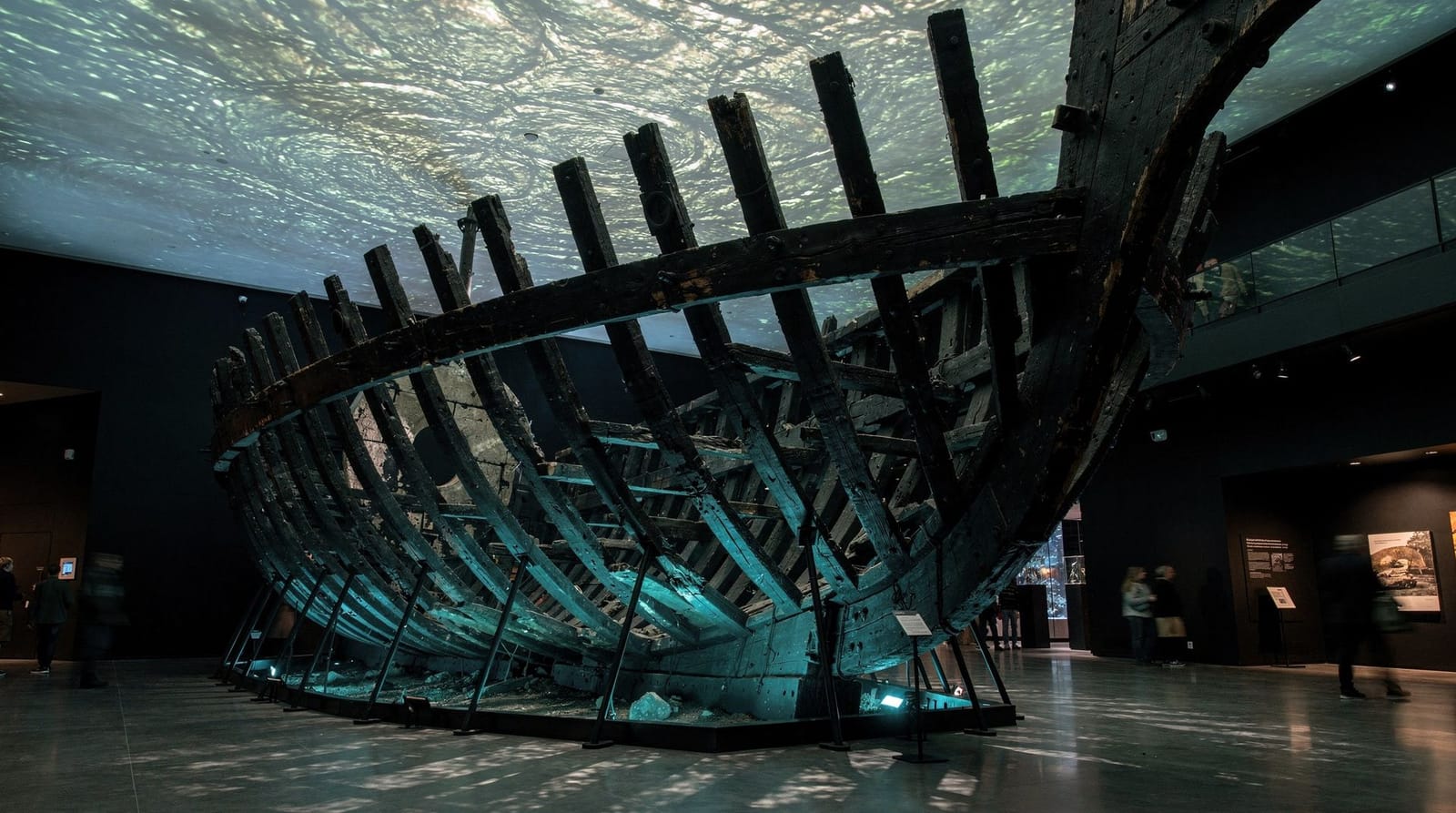
On 10 August 1628, the warship Vasa sailed out of Stockholm harbour on its maiden voyage. Within twenty minutes it had capsized and sunk in the harbour channel, taking at least 30 of its crew to the bottom with it. The ship sat in the mud for 333 years. When salvage teams raised it in 1961, they found a 17th-century warship in extraordinary condition — approximately 95 percent of the original structure preserved by the cold, low-salinity waters of the Baltic.
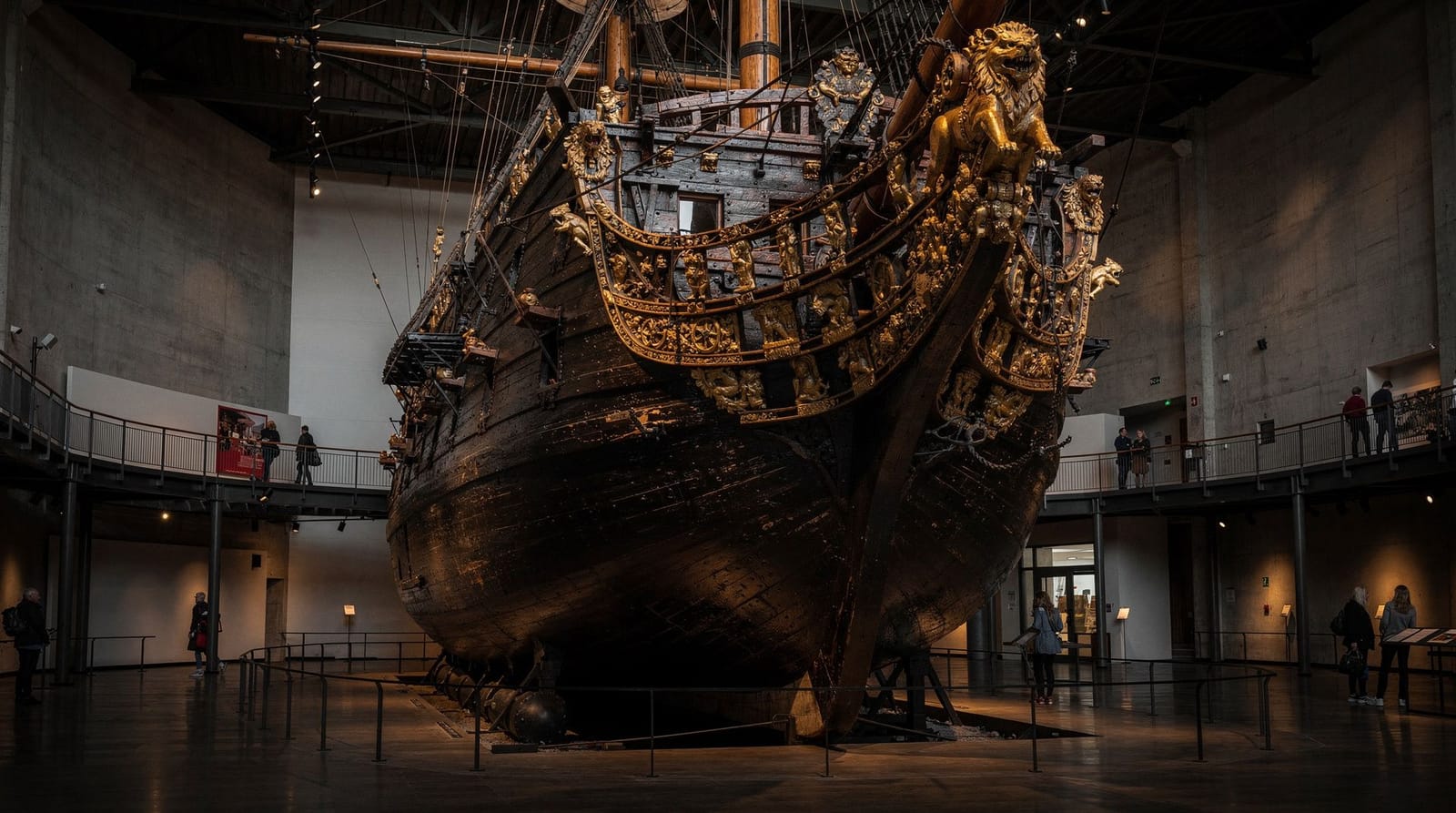
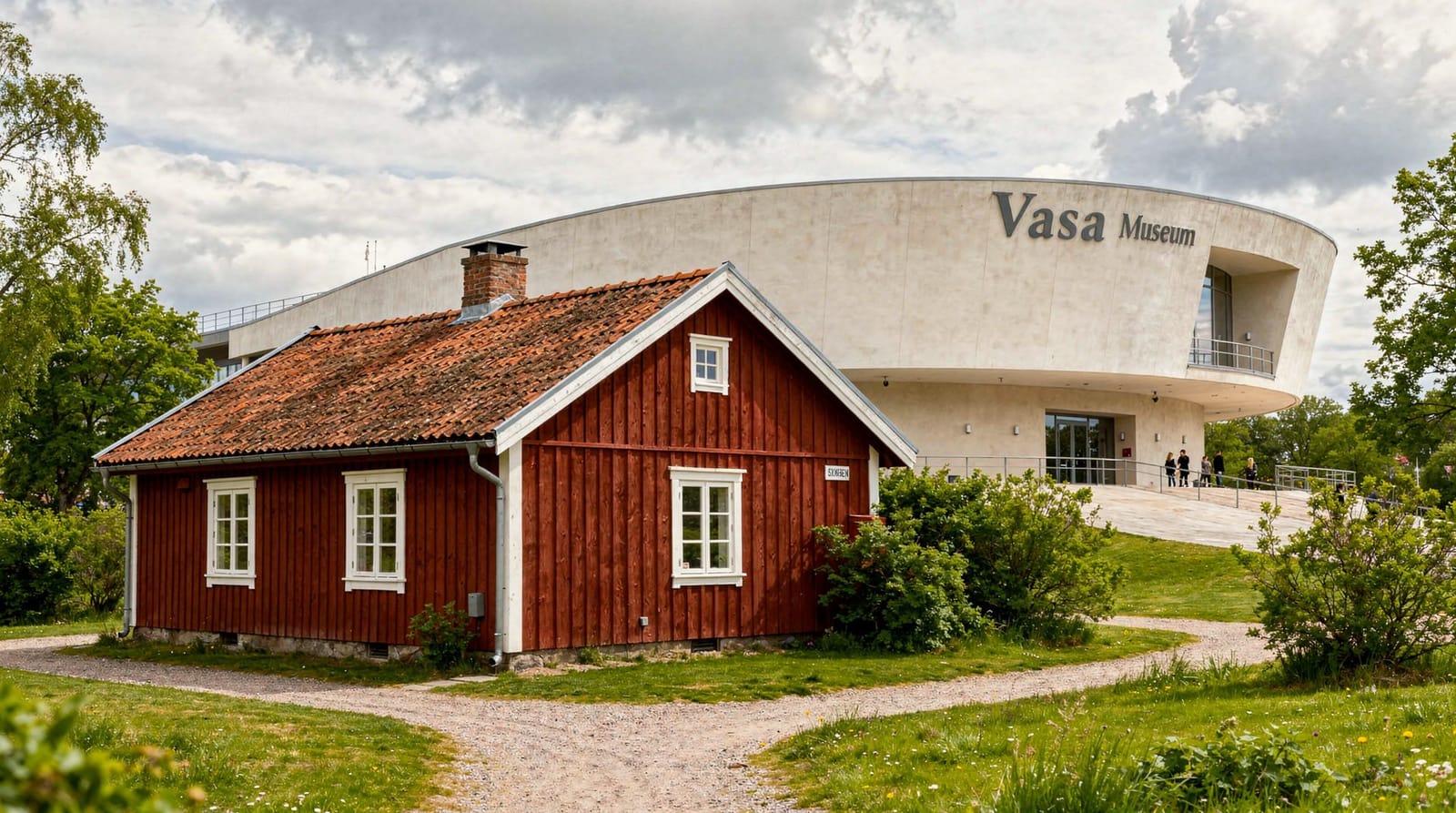
Today the Vasa Museum on Djurgården holds that ship, almost exactly as it came out of the water. There is nothing else like it in the world. To stand in the main hall and look up at a seven-deck warship, its stern decorated with hundreds of carved figures still bearing faint traces of their original paint, is one of the genuinely arresting experiences that travel occasionally produces. The museum consistently ranks as Sweden’s most-visited, and it has earned the title.
Practical essentials
| Detail | Information |
|---|---|
| Address | Galärvarvsvägen 14, Djurgården |
| Opening hours | Daily 10:00–17:00, Wednesdays until 20:00 (Sep–May); Jun–Aug 08:30–18:00; closed 24–25 Dec |
| Adult ticket | 240 SEK May–Sep, 195 SEK Oct–Apr (~22 USD in summer) |
| Children under 18 | Free |
| Recommended time | 1.5–2.5 hours |
| T-bana | Line 7 (Djurgårdslinjen, seasonal tram) or bus 69 |
| Walk from city | 25–30 min from Kungsträdgården via Strandvägen |
Book your entry window online before you travel. In summer, the museum sells out regularly.
Book your Vasa Museum entrance ticket onlineWhat to see inside
The ship itself
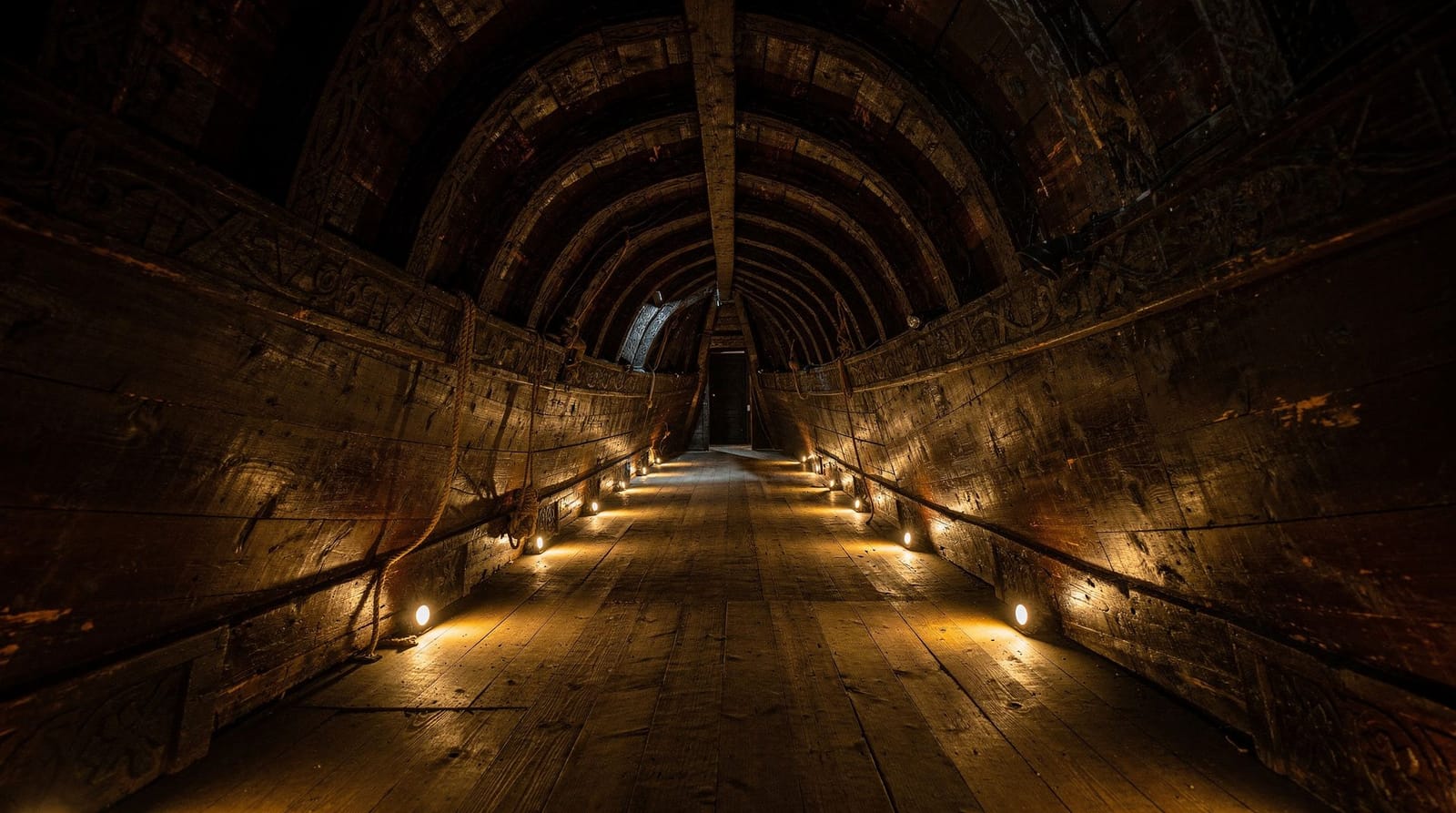
The Vasa dominates the main hall from the moment you enter. The structure rises through seven internal levels of viewing platforms, each giving a different perspective on the hull. From ground level you look up at the keel and the enormous carved lion figurehead. From the upper galleries you look directly across at the gun ports, the elaborate stern carvings, and the rows of cannon that never fired in anger.
Take time to walk the complete circuit on each level rather than rushing straight to the top. The craftsmanship in the carvings — biblical scenes, royal portraits, mythological figures — rewards close attention. Approximately 700 sculptures were recovered from the wreck; most are on display here.
The stern carvings and their original colour
One of the museum’s best-kept secrets is the reconstruction showing what the stern would have looked like in 1628: a riot of red, blue, gold, and black paint on every carved surface. The Vasa was essentially a floating propaganda statement for King Gustav II Adolf, designed to awe foreign navies with the might of the Swedish crown. The muted grey-brown of the preserved wood understates its original visual impact considerably. The reconstruction panels near the stern make this clear.
The crew exhibition
An entire section of the museum is devoted to the approximately 30 people who died when the Vasa sank. Forensic analysis of the skeletal remains recovered from the wreck has produced detailed profiles of individual crew members — their ages, occupations, probable origin, health conditions, and diet. The exhibition includes facial reconstructions that give genuine human weight to what might otherwise be an abstract historical event. Some of the reconstructed faces are strikingly modern.
The salvage exhibition
The 1961 salvage is one of the great engineering stories of 20th-century archaeology. The team used a combination of water jetting, pontoon lifting, and underwater surveying to raise the ship without breaking it apart — a task that took five years of preparation. The salvage exhibition explains the technical challenges and includes original film footage of the raising.
The conservation laboratory (visible from above)
A viewing window above the conservation laboratory lets you watch ongoing preservation work. The Vasa’s wood is still actively stabilised decades after raising; it must be kept at controlled humidity and temperature indefinitely, which is why the museum building itself is designed around the ship’s environmental requirements.
The armament and why it mattered
The Vasa was designed to carry 64 bronze cannon across two full gun decks — an unusually heavy armament for a ship of its size in 1628, and the direct cause of its instability. Several of the original cannon were salvaged separately from the harbour bed in the decades after the sinking (17th-century divers using primitive diving bells recovered many of the valuable bronze guns, though the ship itself was never raised at the time). Examples of the recovered cannon are on display, alongside explanations of period naval gunnery and why doubling the gun deck was, at the time, seen as the height of naval ambition rather than a design flaw.
Life aboard: the everyday objects
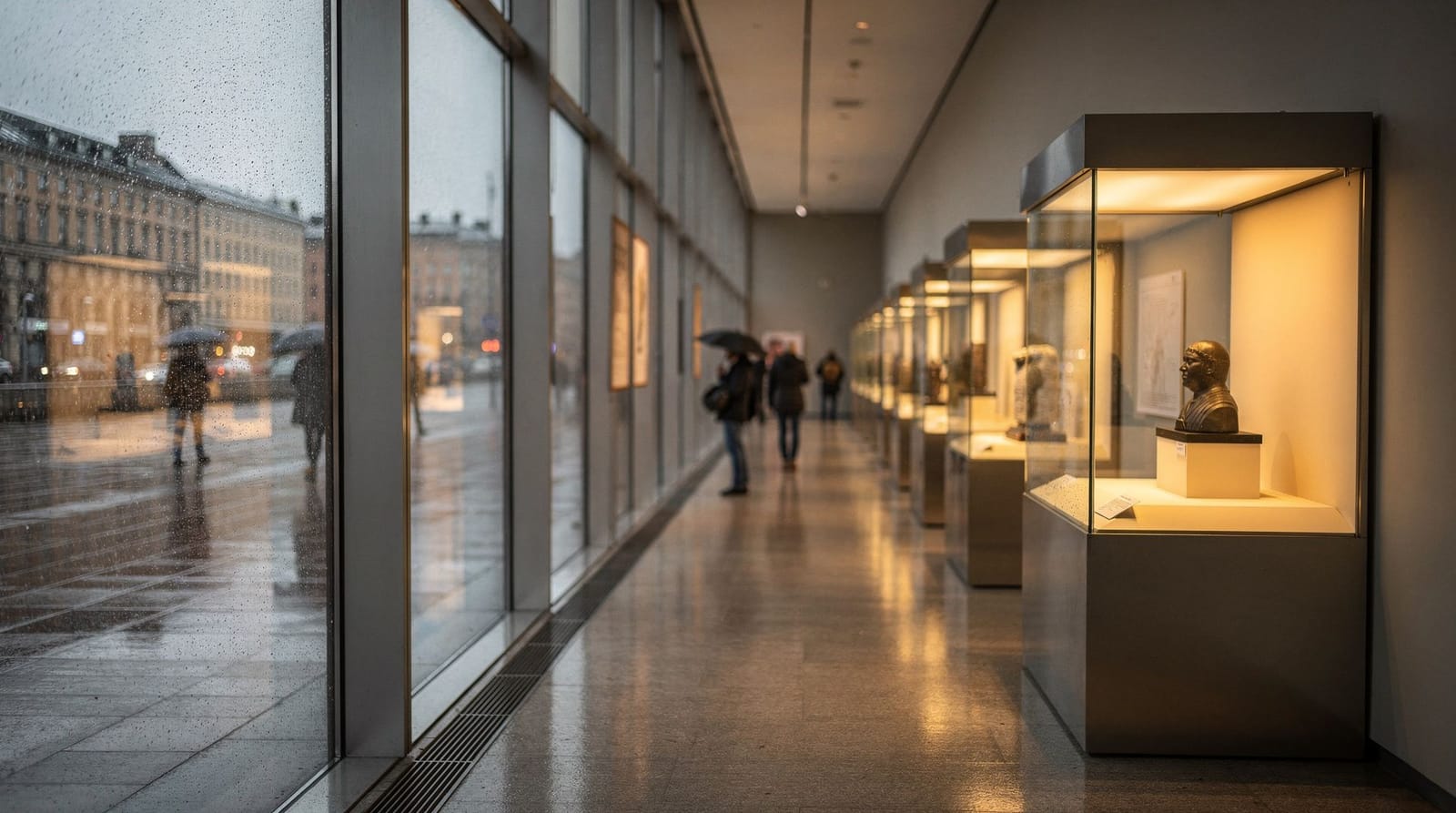
Alongside the crew exhibition, a separate section of the museum displays everyday items recovered from the wreck: sea chests, clothing, tools, tankards, and gaming pieces, remarkably preserved by the same cold, low-oxygen water that saved the hull. These objects do more than the grand carvings to convey what daily life on a 17th-century warship actually involved — cramped, damp, and organised around rigid naval hierarchy. Look for the reconstructed sailor’s bunk and mess area, which gives a genuine sense of scale.
Insider tips
Arrive at opening time. The museum gets crowded between 11:00 and 14:00, particularly in summer. Arriving at 08:30 when the doors open in June through August, or at 10:00 off-season, gives you 45 minutes with the ship in relative quiet before the groups arrive.
Book a guided tour for context. The ship without context is spectacular; the ship with a good guide is transformative. The guided tours run 60 minutes and include details about the sinking (embarrassingly, it was a combination of poor design, royal interference in the specifications, and a gust of wind) that add considerable texture to what you are looking at.
Photography is best from the upper galleries. The ground-level view is dramatic but the upper platforms give you eye-level perspective on the gun ports and carvings that photographs best. The second or third level up is usually ideal depending on light conditions.
Combine with Vrak Museum. The Vrak Museum of Wrecks (a 10-minute walk along Galärvarvsvägen) opened in 2021 and covers Baltic shipwrecks from a completely different angle. The Vasa and Vrak Museum combo ticket saves money and makes for a logical day on Djurgården.
Café is good. The museum café serves decent lunches and Swedish fika standards. It is notably less overpriced than many Stockholm tourist-area cafés.
Crowd levels by month
The Vasa Museum is popular year-round, but the intensity varies considerably:
| Period | Crowd level | Notes |
|---|---|---|
| June–August | Very high | Extended hours (08:30–18:00) help; arrive at opening |
| May, September | Moderate | Good balance of weather and manageable queues |
| October, April | Low–moderate | Shorter days but easy to walk straight in |
| November–March | Low | Quietest months; standard 10:00–17:00 hours |
| School holidays (any season) | Spike | Check the Swedish school calendar before booking |
The history of the Vasa disaster
The Vasa was ordered by King Gustav II Adolf in 1626 as part of his massive military expansion programme. Sweden was at the height of its period as a Baltic superpower — the empire (Stormaktstiden) stretched from Finland across much of the southern Baltic coast — and the king wanted warships that would project that power visually as well as militarily.
The ship was built at a yard in Stockholm and designed with an unprecedented two gun decks, allowing it to carry 64 bronze cannon. This was the problem. The hull was not wide enough to provide stability for the weight of armament on the upper gun deck. Tests conducted before launch — in which 30 sailors ran back and forth across the deck to test the ship’s rocking motion — were stopped halfway through because the ship was rocking too violently. The results were reported to the admiral, but no changes were made. Nobody wanted to be the person who told the king his flagship was unstable.
The disaster was swift. The Vasa left Stockholm harbour on a Sunday afternoon watched by crowds on the shore. A gust of wind heeled it over; water poured in through the open gun ports; the ship rolled again and sank in less than 30 minutes. The wreck lay in the harbour channel, a public embarrassment, for over a century before the depth and cold water rendered it effectively invisible and forgotten.
The rediscovery came in the 1950s when amateur maritime historian Anders Franzén located the wreck after years of searching historical records. The salvage effort that followed, led by the Swedish Navy and a team of divers, is now considered a landmark in underwater archaeology.
Tickets and passes
Admission: 240 SEK adult from May to September, 195 SEK from October to April; 18 and under free. You can always buy at the door (card only). Tickets bought online do not give queue priority, so arrive at opening time in peak season.
Guided tour with entry: Available through GetYourGuide, approximately 350–400 SEK. Includes a 60-minute English-language guided tour of the ship.
Book a guided Vasa Museum tour including entryStockholm Pass / Go City: Includes Vasa Museum entry. The 1-day pass costs approximately 107 USD; factor in which other attractions you plan to visit to determine whether the pass saves money overall. See the museum pass guide for the maths.
Vasa + Skansen fast-track: If you plan to visit both on the same day — which is logical given they are both on Djurgården — the Vasa and Skansen combined fast-track ticket simplifies logistics.
Accessibility
The Vasa Museum is fully accessible. Lifts serve all exhibition levels; the ship viewing platforms are wheelchair accessible. Stroller parking is available at the entrance. Audio guides are available in multiple languages including versions for hearing-impaired visitors. The museum has dedicated family facilities including changing rooms and a children’s corner.
Visiting with children
The Vasa Museum is one of Stockholm’s most reliably successful family outings — the sheer scale of the ship tends to hold children’s attention in a way many history museums do not. A dedicated children’s area on the ground floor has activities themed around the ship and its era, and family-oriented guided tours run on a separate schedule from the standard adult tours, pitched at a level that keeps younger visitors engaged. Strollers are welcome throughout, though the viewing platforms can get busy at peak times, so a carrier is worth considering for toddlers. Combine the visit with Skansen next door for an outdoor break afterwards — the two together make a full and well-balanced family day on Djurgården.
Getting there
Bus: Route 69 from Nybroplan or Sergels Torg stops at Djurgårdsvägen/Vasamuseet — the museum is a two-minute walk from the stop.
Tram: The Djurgårdslinjen (line 7, seasonal tram, runs spring through autumn) departs from Norrmalmstorg/Hamngatan and stops directly outside the museum.
On foot from Kungsträdgården: A flat 25-minute walk east along Strandvägen, across Djurgårdsbroen bridge, and along the waterfront path.
Hop-on hop-off: The boat and bus hop-on hop-off circuits both stop at Djurgården, making the museum easy to combine with a waterway tour of the city.
Where to eat nearby
Museibaren (inside the museum): Open during museum hours, offers good Swedish lunches and fika. Recommended for convenience and quality-to-price ratio.
Oaxen Slip (Beckholmsvägen 26): Five minutes’ walk from the museum, this casual restaurant attached to the Michelin-starred Oaxen Krog offers smörgåsbord-style Swedish food at more reasonable prices. Book ahead.
Rosendals Trädgård (Rosendalsterrassen 12): A 15-minute walk through Djurgården’s park, this garden café serves lunch using produce from its own biodynamic garden. Extremely popular on sunny days — arrive early.
Djurgårdsbrons Sjöcafé (near the bridge): A waterfront kiosk and café right by Djurgårdsbroen, useful for a quick coffee or ice cream between the Vasa Museum and a walk back toward the city centre — no reservation needed, just seasonal opening hours.
Combine with
Vrak Museum: A 10-minute walk along the waterfront, the Vrak Museum of Wrecks covers Baltic shipwrecks from the Viking Age to the 20th century. Logical companion to the Vasa. See the Vrak Museum guide.
Nordiska Museet: Directly opposite the Vasa Museum, Sweden’s largest museum of cultural history. Combined mornings are easy — see the Nordiska Museet guide.
ABBA Museum: A 10-minute walk east on Djurgårdsvägen, the ABBA Museum makes an entertaining contrast to the maritime history. See the ABBA Museum guide.
Deciding between Djurgården’s museums
If you are trying to prioritise between Vasa and the other big Djurgården draws, two dedicated comparisons help: Vasa vs Skansen if you are weighing the ship against the open-air museum, and Vasa vs ABBA Museum if you are choosing between maritime history and pop culture. On a wet day, the museum rainy-day guide puts Vasa in context alongside Stockholm’s other indoor options.
Frequently asked questions about the Vasa Museum
How much does the Vasa Museum cost?
Adult tickets cost 240 SEK from May to September and 195 SEK from October to April (approximately 22 USD in summer). Visitors aged 18 and under enter free. The museum is included in the Stockholm Pass / Go City card. There is no student or senior discount on the standard ticket, but group rates apply for groups of 10 or more booked in advance.
How long should I plan for the Vasa Museum?
Most visitors spend 90 minutes to 2.5 hours. The ship itself takes around an hour to walk around on all viewing levels. The surrounding exhibitions on the crew, the salvage, and the conservation add another 45–90 minutes for interested visitors. A rushed visit of one hour is possible but leaves you feeling you have not done it justice.
Do I need to book in advance?
In summer (June–August) and on weekends year-round, yes. The museum allocates timed entry windows and popular slots sell out. Book at least a week ahead during peak season; a day or two ahead is usually sufficient in shoulder season.
Is photography allowed inside?
Yes, for personal use. Flash photography is not permitted near the ship because repeated flash can accelerate degradation of the treated wood. Tripods require advance permission. Smartphone photos are fine throughout.
Can I visit the Vasa Museum for free?
No — like most Stockholm museums (Moderna Museet, Swedish History Museum and Army Museum also charge adults), the Vasa Museum charges admission. Visitors aged 18 and under enter free. The Stockholm Pass includes entry. There is no free day or evening equivalent to Moderna Museet’s Free Friday (18:00–20:00).
What language are the tours in?
Guided tours are offered in Swedish and English daily. The audio guide streams on your own phone in over 15 languages, so bring headphones. The permanent exhibition has bilingual (Swedish/English) signage throughout.
Is the Vasa Museum worth it if you only have one day in Stockholm?
Yes, unhesitatingly. If you have only one day in Stockholm and care about seeing something genuinely unique rather than generically touristic, the Vasa Museum is the single best use of two hours in the city. Combine it with a walk through Gamla Stan in the afternoon for a complete first day.
Top experiences
Bookable activities with verified prices and instant confirmation on GetYourGuide.