Östermalm walking guide: Stockholm's upscale embassy quarter
Stockholm: Djurgården & Östermalm island tour
Duration: 2 hours
What is Östermalm known for in Stockholm?
Östermalm is Stockholm's most affluent neighbourhood — the embassy district, home to Strandvägen (the city's most prestigious boulevard), the historic Östermalm Saluhall food market, several excellent museums, and a concentration of high-end boutiques and restaurants. It is also one of the most pleasant neighbourhoods to walk in.
Stockholm’s most elegant neighbourhood
Östermalm occupies the eastern part of central Stockholm — the district immediately north of Djurgården, east of Norrmalm, and bordered to the south by Strandvägen and the water. It is the city’s wealthiest and most architecturally coherent neighbourhood, developed predominantly in the late 19th century when the city expanded out of Gamla Stan’s medieval footprint.
The architecture is primarily 1880s–1910s — wide streets, five-storey neoclassical and Art Nouveau apartment buildings, large embassies set in walled gardens, and the kind of urban calm that money and planning produce. Walking through Östermalm gives a distinctly different sense of Stockholm from the medieval tangle of Gamla Stan or the hilly bohemian character of Södermalm.
If you want the wider picture of the district before you set out, the Östermalm neighbourhood deep dive and the Östermalm destination page go further into its history and character. For how this walk fits into a first visit, the Stockholm in 3 days overview helps you decide where it belongs.
Practical essentials
| Detail | Information |
|---|---|
| Walk duration | 2–3 hours |
| T-bana | Östermalmstorg (red line) or Stadion (red line) |
| Best time | Morning for the food market; afternoon for Strandvägen light |
| Start | Östermalmstorg |
The recommended walking route
Östermalmstorg and Östermalm Saluhall
Start at Östermalmstorg, the main square of the neighbourhood. The dominant building on the square’s south side is the Östermalm Saluhall — a large red-brick covered market hall dating from 1888, renovated comprehensively in 2020.
The Saluhall is one of Stockholm’s most satisfying food experiences. The interior is a cathedral of Swedish gastronomy: stalls selling smoked reindeer, traditional herring preparations (matjes, mustard, dill), Swedish cheeses, artisan bread, fresh fish, game, and the kind of charcuterie that has been refined over generations. Several of the vendors have been in the same family for three or four generations.
Even if you don’t buy anything, walking the length of the hall is worth doing. Several of the stalls have counters where you can order lunch (particularly excellent for fish and shellfish). Prices are high by Swedish standards — this is Östermalm — but the quality justifies it for a splurge meal.
Strandvägen
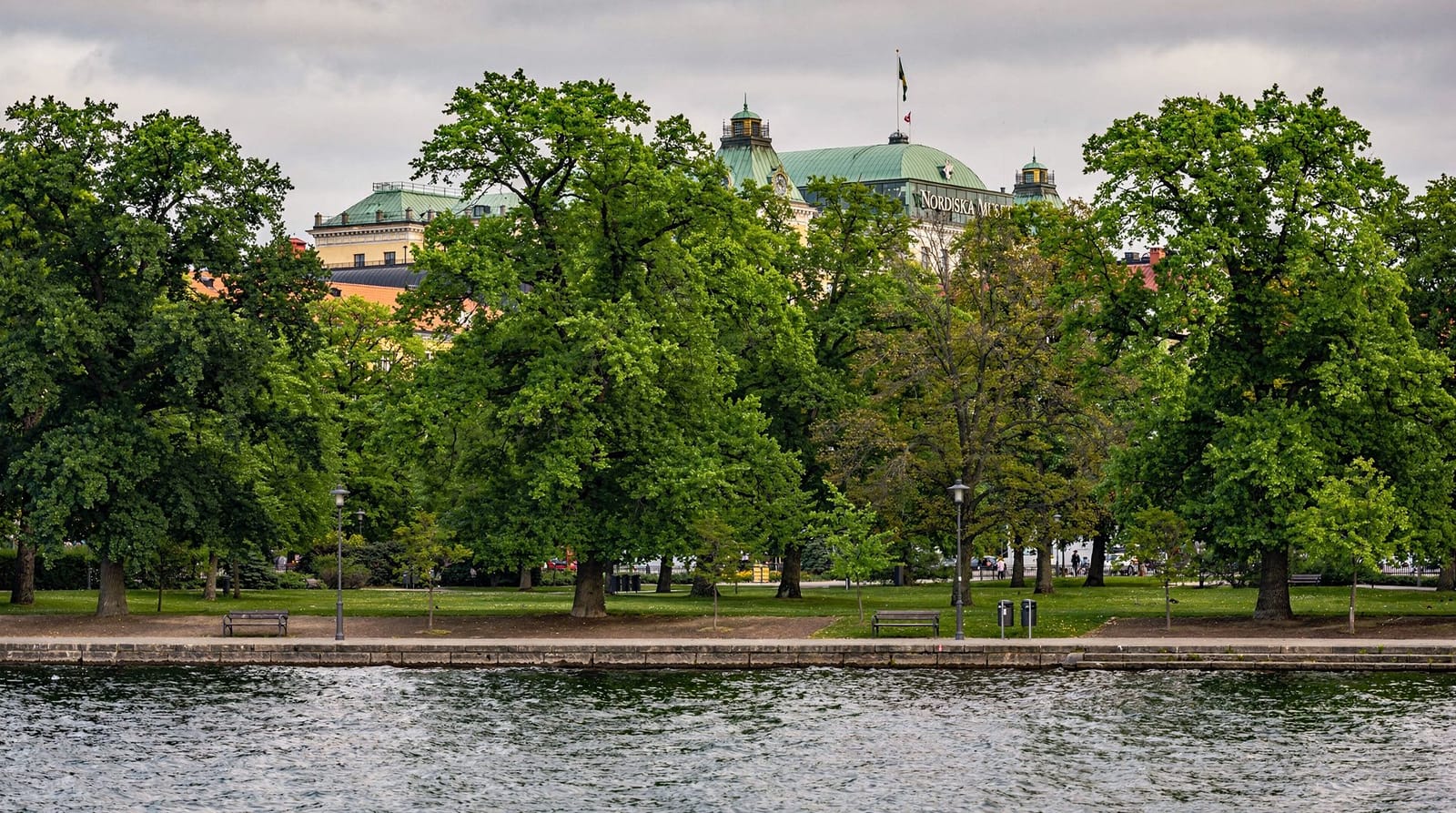
From the Saluhall, walk south to Strandvägen — Stockholm’s most prestigious boulevard and one of the most visually impressive streets in northern Europe. The street runs for approximately one kilometre along the waterfront, lined on the landward side by seven-storey Art Nouveau and Renaissance Revival apartment buildings from the 1900s–1910s.
The buildings were constructed as part of a deliberate urban display project for the 1897 Stockholm Exhibition — the city wanted to demonstrate its status as a modern European capital. The buildings are technically remarkable (granite and sandstone facades with elaborate carved ornamentation) and collectively create an effect that is genuinely impressive without being oppressive.
On the waterside of Strandvägen, a row of old wooden boats is moored as permanent fixtures — some are residential, some are clubhouses or restaurants. The sight of these aging wooden vessels against the Art Nouveau backdrop is one of Stockholm’s characteristic images.
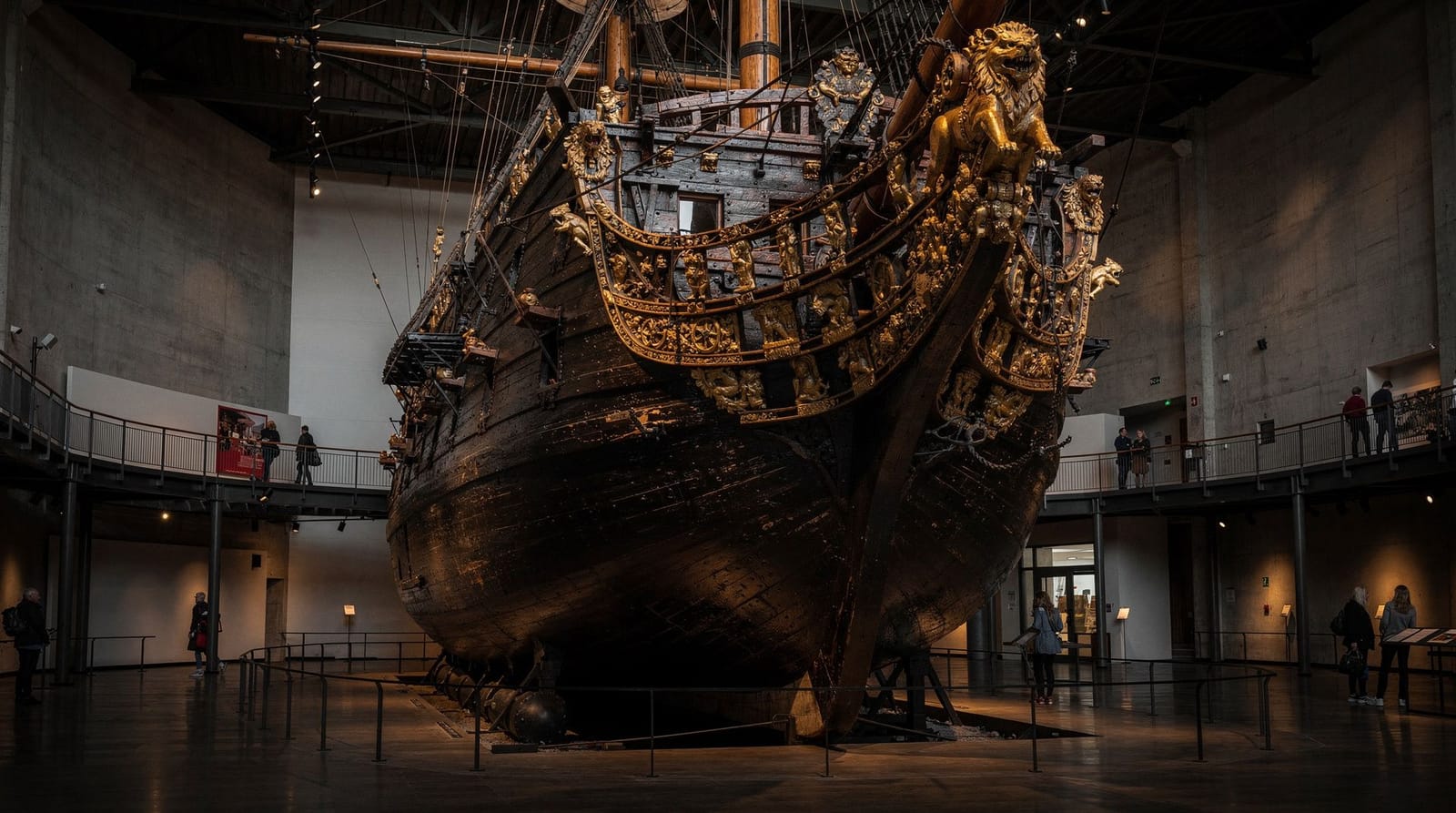
Strandvägen connects directly at its eastern end to the Djurgårdsbroen bridge and Djurgården. It is the natural pedestrian route from the city centre to the Vasa Museum.
Humlegården park
North of Östermalmstorg, Humlegården is a large and elegant park originally used as a royal hop garden (humle = hops), hence the name. It was opened to the public in the 19th century and now contains the Royal Library (Kungliga biblioteket) on its eastern edge.
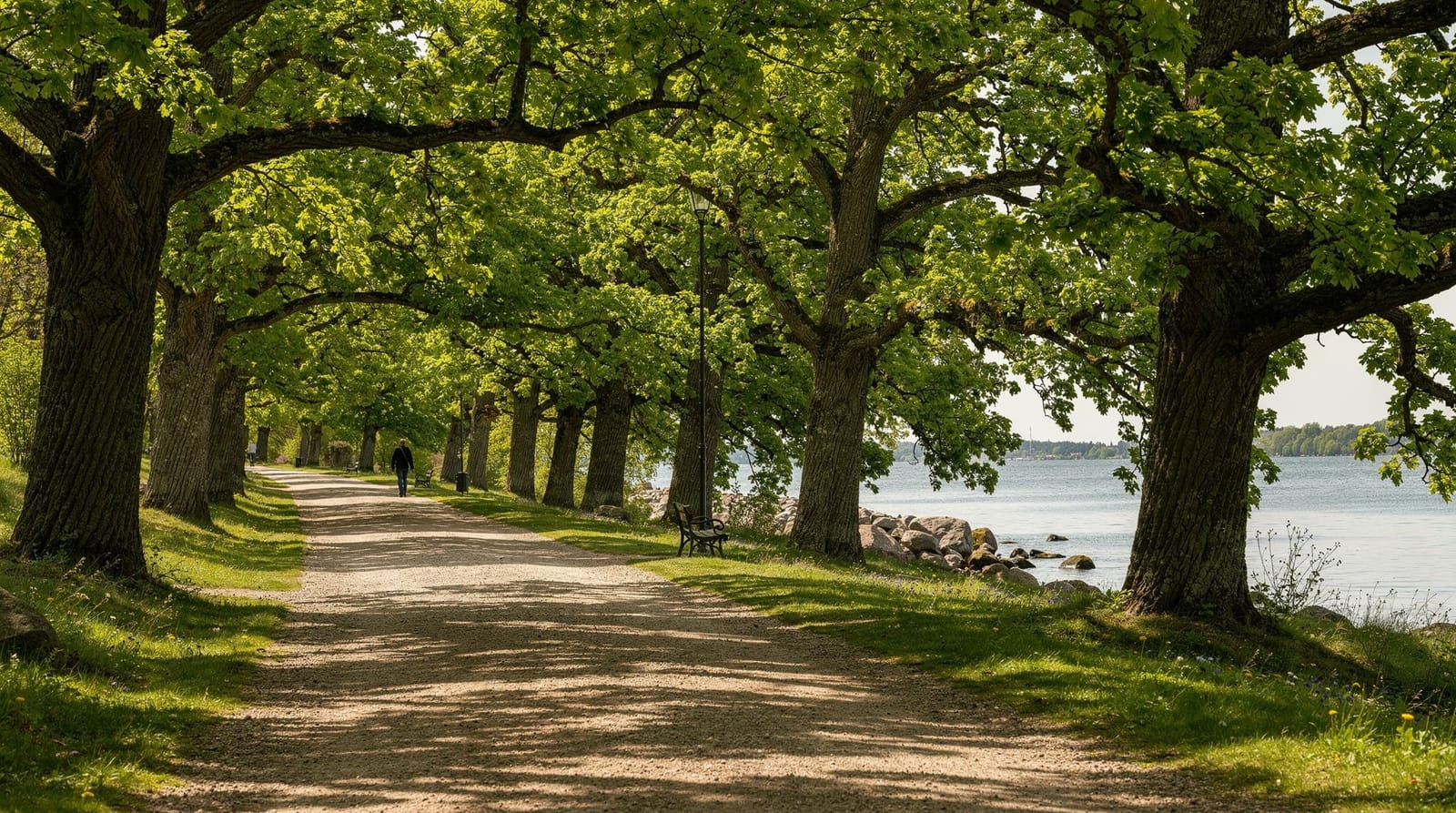
The park is one of the best places in Stockholm for a fika-break on a bench under elm trees. In summer, it fills with picnicking Stockholmers and outdoor exercise classes. In winter, it is quiet, tree-lined, and slightly melancholy in a Nordic way.
The statue of Carl Linnaeus in the middle of the park is Stockholm’s most visited statue. Linnaeus, the 18th-century botanist who systematised plant taxonomy and gave the natural world its binomial naming system, was Swedish — born in Småland, educated at Uppsala, where the Uppsala day trip can reveal more of his legacy.
The embassy district
The streets north of Strandvägen between Linnégatan and Djurgårdsvägen contain some of Stockholm’s most imposing embassy buildings and private villas. The American Embassy is here; so are those of several other major powers. The streets have a quiet, tree-lined character — private, slightly reserved — that contrasts with the commercial energy of Norrmalm to the west.
Walking the streets of Karlavägen, Narvavägen, and Storgatan gives a sense of the neighbourhood’s character without any specific landmark to target — it is primarily an architectural and atmospheric walk.
The Swedish History Museum
On Narvavägen, the Swedish History Museum (Historiska Museet) is one of Stockholm’s most underrated attractions. Entry is 180 SEK (free for under-19s). The permanent collection covers Swedish prehistory through the medieval period with exceptional depth, including an extraordinary gold room (Guldrummet) containing Bronze Age, Iron Age, and Viking gold artefacts that ranks as one of Europe’s finest prehistoric gold collections.
For visitors who have been to the Viking Museum on Djurgården or are interested in archaeology, the Swedish History Museum is a logical complement — and free entry for under-19s is a genuine bonus for families. See the Swedish History Museum guide.
Historiska Museet to Djurgårdsbroen
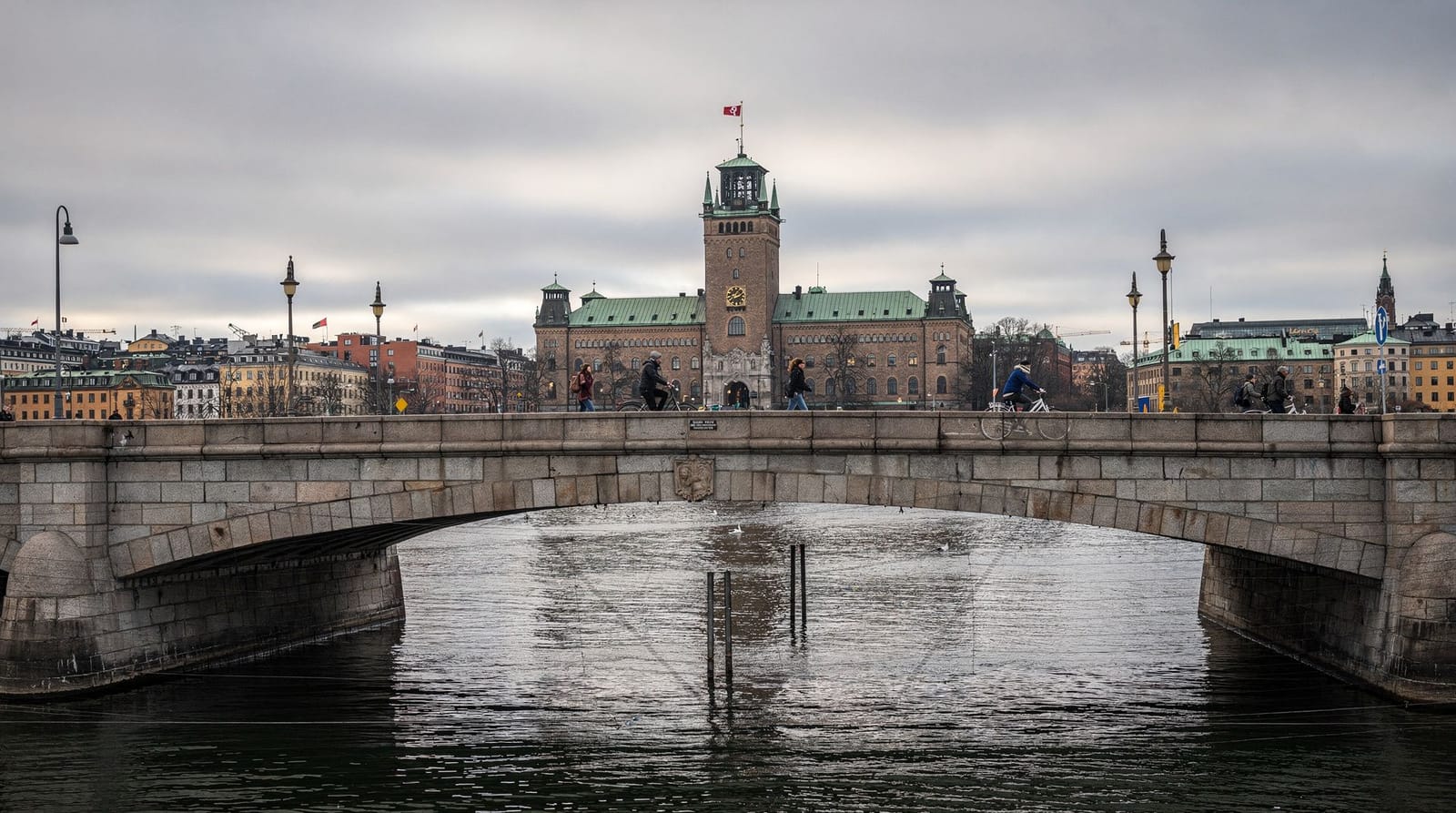
From the History Museum, a pleasant walk south along Djurgårdsvägen leads to Djurgårdsbroen bridge — the natural connection point between Östermalm and Djurgården. This section of the walk passes through a quiet transition zone between the embassy district and the park island, with good views over the water.
What to eat and drink in Östermalm
Östermalm has Stockholm’s highest concentration of upscale restaurants, but also excellent mid-range options. If the neighbourhood whets your appetite for the wider Swedish table, the fika culture guide, the Swedish meatballs guide and the Swedish fine dining overview show where to continue. Travellers watching their budget will find the budget per day guide useful for deciding where to splurge and where to save.
Östermalm Saluhall counters: Eat at the market hall counters for top-quality Swedish lunch at elevated but not extreme prices. Best: fish stalls and the smörgåsbord counter.
Sturehof (Stureplan 2): Stockholm’s most famous institution for traditional Swedish seafood. The oysters and grilled fish are excellent; the attached bar is one of the city’s better places for a pre-dinner drink.
Teatern (Östermalmsgallerian): A beautiful café inside the Stureplan shopping complex. The building interior is worth seeing regardless.
Gateau (multiple Östermalm locations): Stockholm’s best bakery chain — excellent cardamom rolls, sourdough, and coffee.
Shopping in Östermalm
Östermalm is the address for Swedish luxury brands and international designers:
Stureplan and Sturegallerian: The upmarket shopping hub — NK department store is a short walk west; Stureplan itself has boutiques and patisseries.
Biblioteksgatan: Lined with high-end international boutiques (Acne Studios, Filippa K, etc.).
Design Torget (inside Kulturhuset across the canal): Swedish design objects at mid-range prices.
The Stureplan square and its significance
Stureplan is Östermalm’s commercial and social hub — a round square at the intersection of Birger Jarlsgatan and Stureplan itself, immediately north of Östermalmstorg. It is famous in Swedish culture as the territory of the glossy socialite culture that columnists have been writing about since the 1980s: expensive bars, fashion people, the queue outside the right club on Friday night.
For visitors, Stureplan is interesting as a social observation point rather than a nightlife destination. The Sturegallerian shopping complex on the square is worth walking through for the architecture (a 1980s atrium interior with fountains and natural light). The square itself is busy from lunch through late evening.
Sturehof, on the square’s edge, is the best pub in the area and the most democratic of Östermalm’s establishments — the clientele ranges from business lunchers to after-work drinkers to tourists. Good Swedish beer on draft.
Architecture details to notice
For those interested in architectural detail, Östermalm’s building stock from the 1880s–1910s rewards careful looking:
Sandstone and granite facades: The buildings along Strandvägen and Narvavägen use different stone varieties with different textures — the smooth-cut limestone versus the rough-hewn granite of individual floor bands.
Window proportions: The tall, narrow windows of the older Gustavian period give way in the 1900s buildings to the wider, more horizontal windows influenced by Art Nouveau. The transition is visible building by building along any Östermalm street.
Corner towers and turrets: Many Östermalm buildings use corner pavilions — bay windows extended through several floors with copper or slate roofing — that give the streetscape its characteristic punctuation marks.
Carved ornamentation: The 1890s–1910s buildings on Strandvägen have elaborate carved decorative programmes around entrance portals, above windows, and at the roofline. Grotesque masks, floral swags, and heraldic devices are common. Slow down and look up.
Östermalm compared to Norrmalm
Östermalm and Norrmalm (the central commercial district immediately west) are often lumped together as “central Stockholm” but have quite different characters:
Norrmalm is the grid of the 1950s–1970s urban renewal — wider streets, larger blocks, the T-Centralen hub, the department stores, the commercial anonymity of any major Scandinavian city centre.
Östermalm is largely intact 1890s urban fabric — narrower streets (by Stockholm standards), more varied building heights, less commercial at the street level, and with the embassy/residential character that gives it its particular stillness.
Walking west from Östermalm into Norrmalm, the shift is immediate. The quietness of the embassy district contrasts with the commercial density of Hamngatan and Sergels Torg. The Norrmalm neighbourhood deep dive and the Norrmalm destination page cover that side of the contrast in more detail.
Combining Östermalm with Djurgården
The natural extension of an Östermalm walk is east across Djurgårdsbroen to Djurgården for the Vasa Museum and ABBA Museum. Combined, this makes a full 4–5 hour day. The walk from Östermalmstorg to the Vasa Museum is approximately 30–35 minutes at a comfortable pace.
See the Djurgården walking route and Vasa Museum guide for what to see once you cross the bridge.
Stockholm must-see attractions guided walking tour covers Östermalm’s edges alongside the wider city centre if you’d rather have a guide narrate the architecture and history than walk this route solo.
Best time of day to walk Östermalm
| Time | What works | What to skip |
|---|---|---|
| Morning (9:00–11:00) | Saluhall at its freshest, quiet Strandvägen | Sturehof not yet open |
| Midday (11:00–14:00) | Saluhall lunch counters, Humlegården picnickers | Strandvägen light is flat |
| Afternoon (14:00–17:00) | Best light for Strandvägen photography | Saluhall stalls start closing |
| Evening (17:00+) | Sturehof and Stureplan come alive | Museums closed; embassy streets go quiet |
A morning-to-midday walk suits most first-time visitors: fresh market, then lunch, then Strandvägen with the sun still reasonably high before continuing on to Djurgården.
If you are still deciding between a guided and a self-led day, the walking tour versus bus comparison and the self-guided walking guide lay out the trade-offs. Those with only a short stay can slot this walk into the Stockholm in 24 hours itinerary or the 2-day essential itinerary. Pairing it with the Gamla Stan walking tour guide gives the medieval counterpoint to Östermalm’s 19th-century order.
Frequently asked questions about walking in Östermalm
Is Östermalm worth visiting for tourists?
Yes, particularly for visitors who enjoy architecture, food markets, and neighbourhood atmosphere. It is less specifically “touristy” than Gamla Stan but offers Strandvägen, the Saluhall, and the History Museum as compelling destinations.
What is Östermalm’s character compared to Södermalm?
Östermalm and Södermalm are the two poles of Stockholm’s residential character. Östermalm is the establishment district — wealthy, conservative, classically designed, home to embassies and old money. Södermalm is creative, hilly, eclectic, and associated with artists, musicians, and the city’s bohemian tradition. The two neighbourhoods represent different aspects of Stockholm’s personality. Neither is “better” — they are complementary. See the Södermalm walking tour for the contrasting experience.
What is Strandvägen famous for?
Strandvägen is Stockholm’s most prestigious address — a wide, tree-lined boulevard with elaborate late 19th-century apartment buildings on one side and the waterfront on the other. It is famous for its architecture, its concentration of wealth, and its role as the pedestrian route between the city centre and Djurgården.
Is the Östermalm Saluhall worth visiting?
Yes, for food lovers particularly. The renovated 2020 interior is architecturally beautiful, and the vendors are among the best specialists in Swedish food in the city. Plan at least 30–45 minutes to walk the stalls. Lunch at one of the counters is a good (if pricey) Stockholm experience.
How far is Östermalm from Gamla Stan?
Östermalmstorg is about 1.5 km north-east of Gamla Stan’s northern end (the Royal Palace). The walk takes approximately 20 minutes via Hamngatan. The T-bana connects them via T-Centralen in one change.
Is Östermalm safe to walk in?
Yes — it is one of Stockholm’s safest neighbourhoods, with low street crime. As with all city areas, standard precautions apply.
Can I do the Östermalm walk with young children?
Yes, though the pace and interest level differ from a museum-heavy day. The Saluhallen’s variety of stalls and smells tends to hold children’s attention better than the architecture-focused stretches of Strandvägen. Humlegården park is a genuinely good stop for children to run around after the market, with the Linnaeus statue as a mild point of interest. Most families find 1.5–2 hours plenty before energy for architectural appreciation runs out, shorter than the 2–3 hours an adult-paced walk takes.
What should I skip if I only have one hour in Östermalm?
Prioritise the Saluhallen and a short stretch of Strandvägen — together they take about an hour and cover the neighbourhood’s two most distinctive features. The embassy quarter streets, Humlegården, and the architectural detail walk are worth cutting first if time is genuinely tight; they reward slower, unhurried attention that an hour-long visit can’t accommodate.
Is it worth visiting Östermalm more than once on a longer trip?
For repeat visitors with a week or more in Stockholm, yes — the Saluhallen changes with the seasons (game and mushrooms in autumn, fresh berries in summer), and a second visit at a different time of day, particularly a Stureplan evening, shows a genuinely different side of the neighbourhood than the market-and-boulevard daytime walk.
Top experiences
Bookable activities with verified prices and instant confirmation on GetYourGuide.