Winter canal cruise Stockholm: a guide to cold-season boat tours
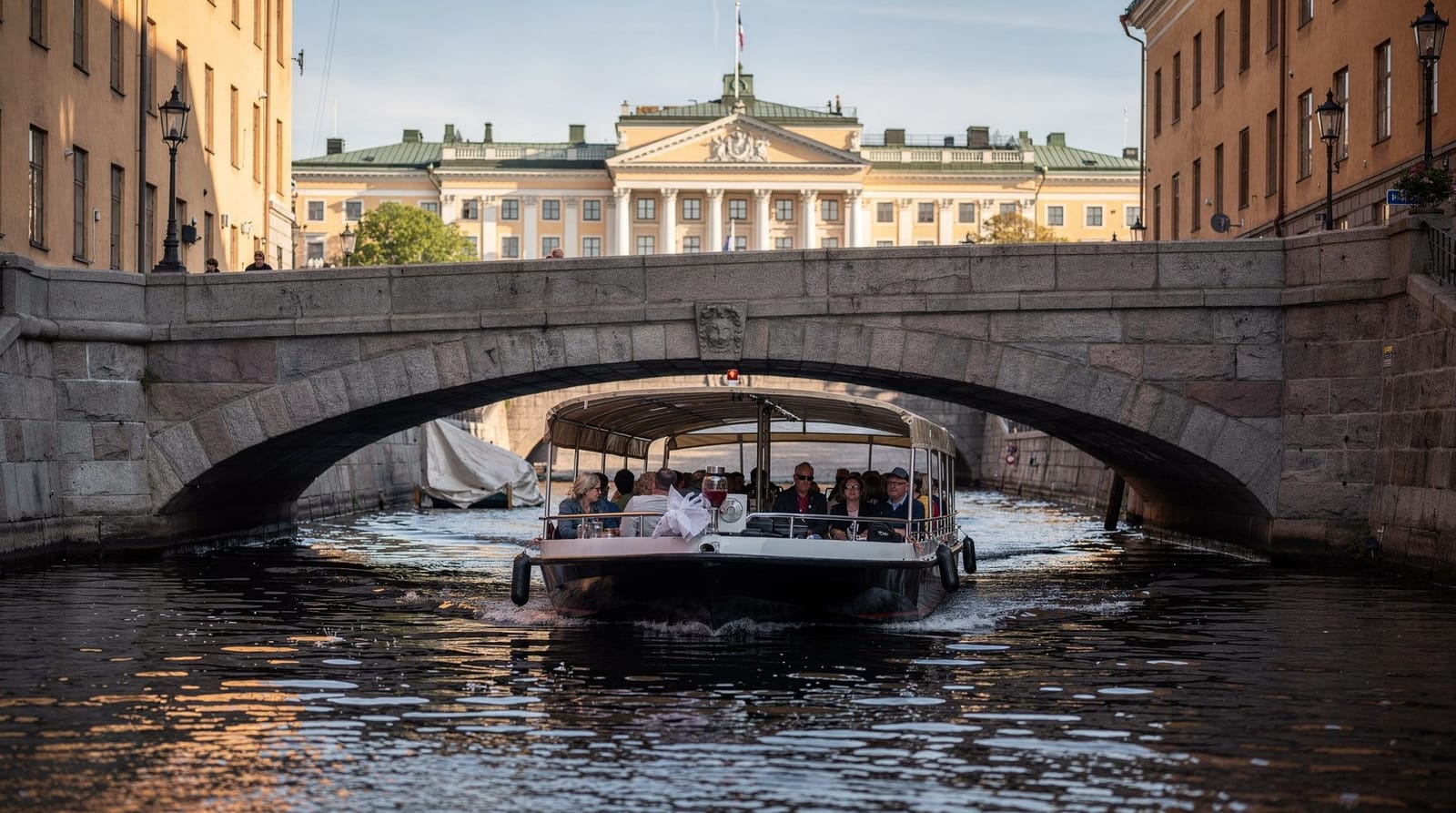
Stockholm: winter boat tour with guide
Can you take a canal boat tour in Stockholm in winter?
Yes. Strömma and other operators run winter boat tours with guides year-round, though departures are less frequent (typically 1–3 daily rather than every 30 minutes). The winter canal cruise has a distinct character — low light, the city's brick and copper facades in snow or frost, dramatically smaller crowds. Adult tickets are similar to summer (~280 SEK). Dress extremely warmly; open-deck time is brief and cold.
Stockholm in winter from the water
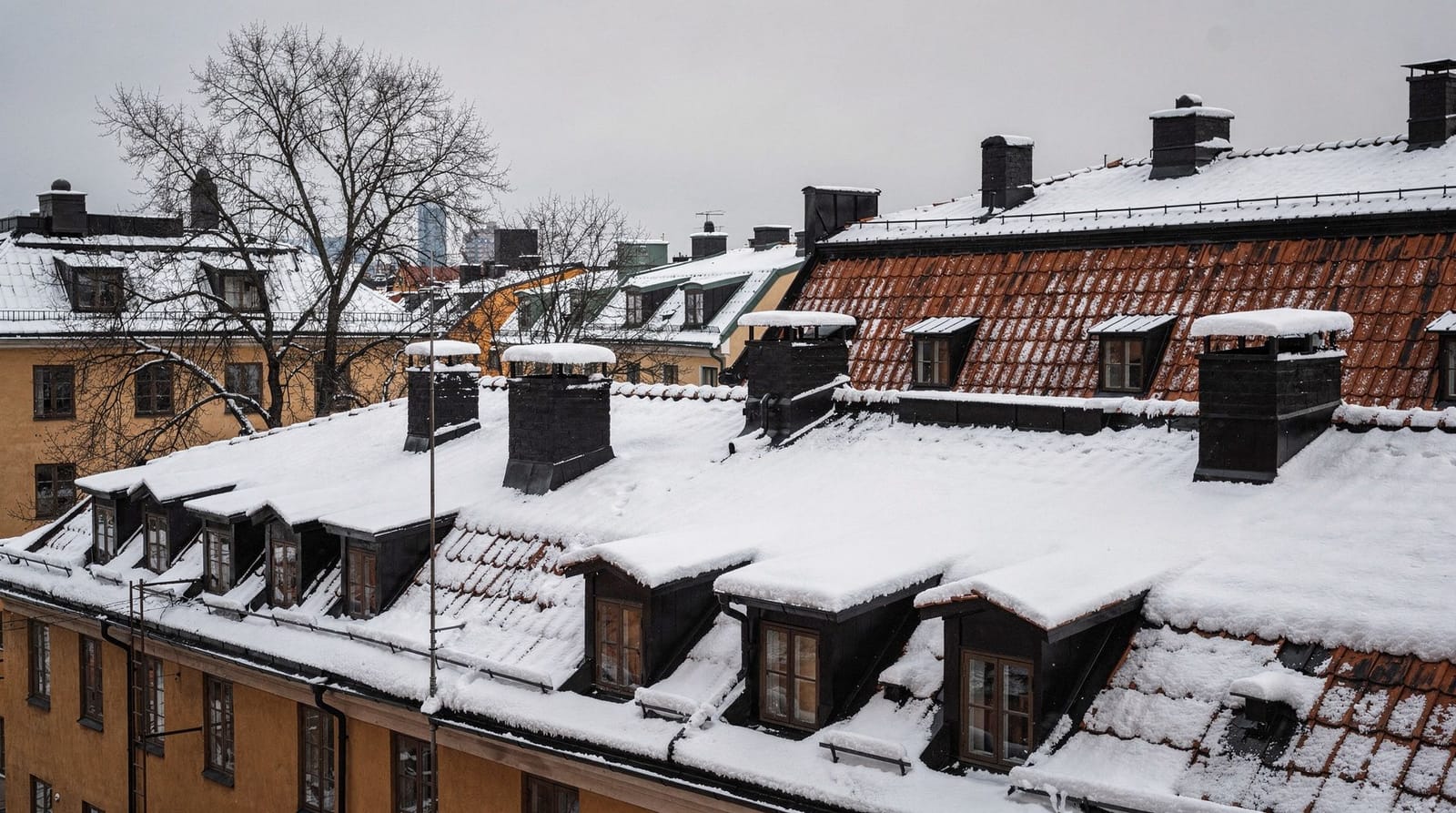
Stockholm in January or February is a different city from its summer counterpart. The daylight window is 6–7 hours — sunrise around 08:30, sunset around 15:30. The city’s brick, copper, and stone facades take on different colours in the flat diffuse light of Nordic winter. Gamla Stan in snow is genuinely striking; the Royal Palace’s baroque bulk is more severe and more impressive in cold grey light than under summer blue sky.
Taking the canal boat in winter is a niche activity — few tourists are on the water in January — but it is one of the more unusual things you can do in Stockholm. The experience is short (the cold limits appetite for prolonged open-deck time), the boat is nearly empty, and the city seen from the water in winter conditions looks nothing like its promotional photography. That is precisely the appeal for some visitors.
This guide covers what to expect, how to prepare, and whether the winter canal tour is worth adding to a cold-season Stockholm visit.
Book Stockholm winter boat tour with guideWhat the winter canal tour is like
The route is nominally the same as the summer Royal Bridges tour — the loop through Strömmen, Riddarfjärden, and Djurgårdskanalen. The experience is substantially different.
Light: In mid-January, the tour departs and returns in partial or full darkness depending on timing. A 10:00 departure means arriving back at Strömkajen around 11:00 — roughly the period of maximum daylight (Stockholm sunrise is around 08:30–09:00, sunset around 15:00–15:30 in January). The light is low and soft, unlike any summer condition.
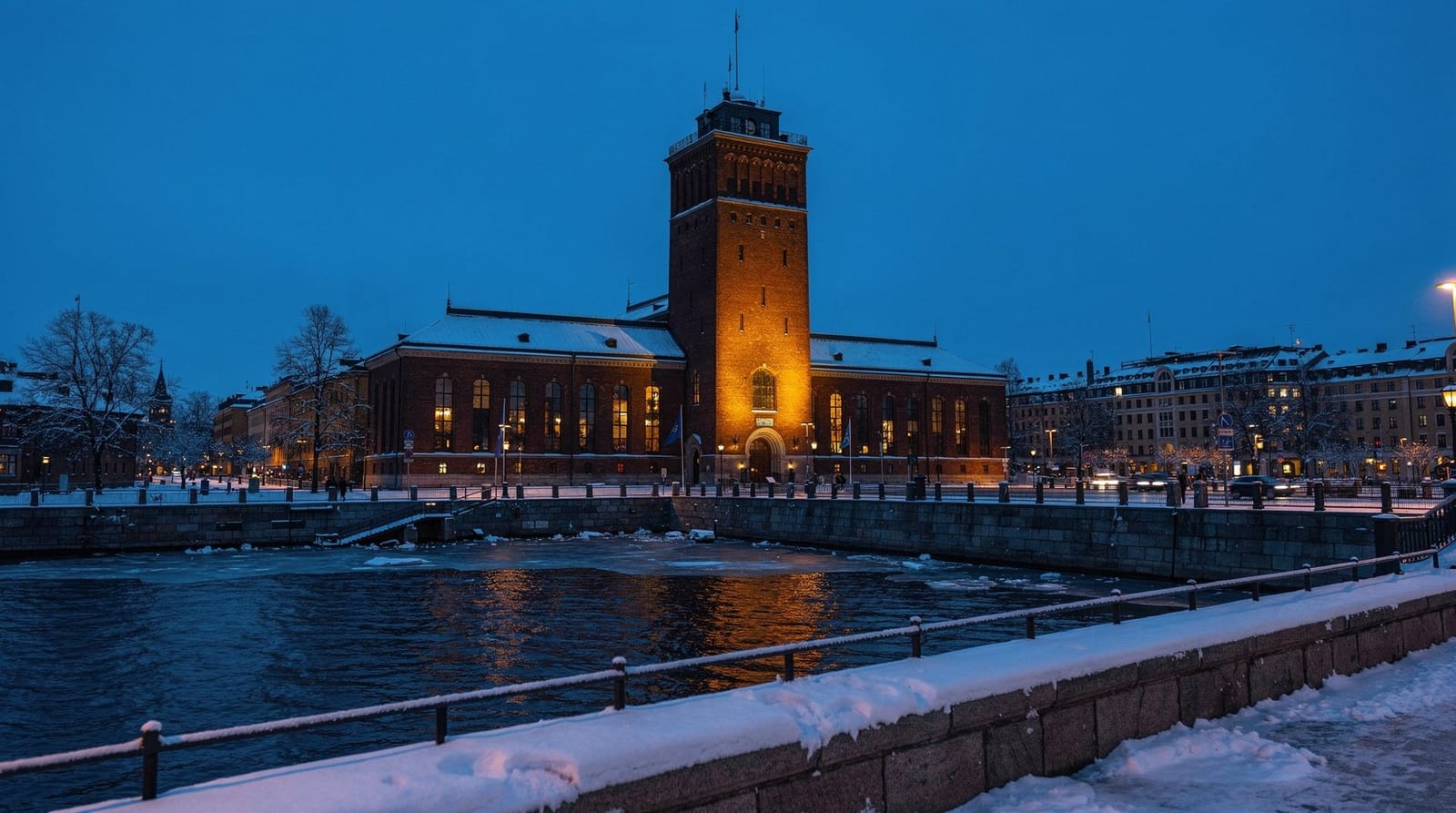
Ice: The central Stockholm channels (Strömmen, Riddarfjärden) are kept open by the current flow from Lake Mälaren. In a typical Stockholm winter, there will be thin ice formations on still-water edges — beside stone embankments, in corners of basins — but not in the main channels. The city’s winter atmosphere is best conveyed not by frozen waterways but by the grey-blue colour of open water against snow-dusted embankments.
Crowds: None, essentially. Winter canal boat departures carry a fraction of the summer passenger load. A 40-seat vessel may have 6–12 passengers. This allows genuinely unrestricted views from any position, including the bow.
Commentary: The guide’s winter commentary typically addresses Stockholm’s winter culture, the specific history of cold-season life in the city (Swedish homes were historically underheated; the development of Nordic winter architecture; the relationship between darkness and Swedish cultural inwardness — Lagom, hygge’s Swedish cousin), and practical information about the city’s winter offers. The content is different from the summer version and often more interesting for culturally curious visitors.
Temperatures and physical preparation
Stockholm in January averages -2°C to -5°C. Wind chill on the water adds 3–5°C of effective cold. In February and March, temperatures moderate slightly (-1°C to +3°C typical).
The boat has covered and heated interior sections. The open deck is brief — most winter passengers spend 5–10 minutes on the deck for photography at the Royal Palace approach and City Hall views, then return inside. The rest of the tour can be experienced from the heated interior through large windows.
What to wear for a winter canal boat tour:
- Base layer (thermal underwear)
- Mid-layer (fleece or wool sweater)
- Insulated outer layer (down jacket or heavy wool coat)
- Waterproof overtrousers if temperatures are below -5°C and you plan deck time
- Wool or synthetic hat covering ears
- Wool gloves
- Waterproof boots with warm lining
Overdressing is better than underdressing. It is much easier to remove a layer inside the heated cabin than to endure 50 minutes cold.
Best times for a winter tour
Morning (10:00–11:00): Maximum daylight potential, though winter light in Stockholm is diffuse from early morning. If there has been overnight snow, morning departures see the freshest conditions on the embankments and bridges.
Early afternoon (12:00–13:00): The midday light is at maximum angle and slightly warmer in tone than morning. Best option for photography.
Avoid late afternoon in January: After 14:00, the light deteriorates quickly toward sunset conditions. Adequate for atmosphere, poor for photography.
December: Christmas markets and winter light
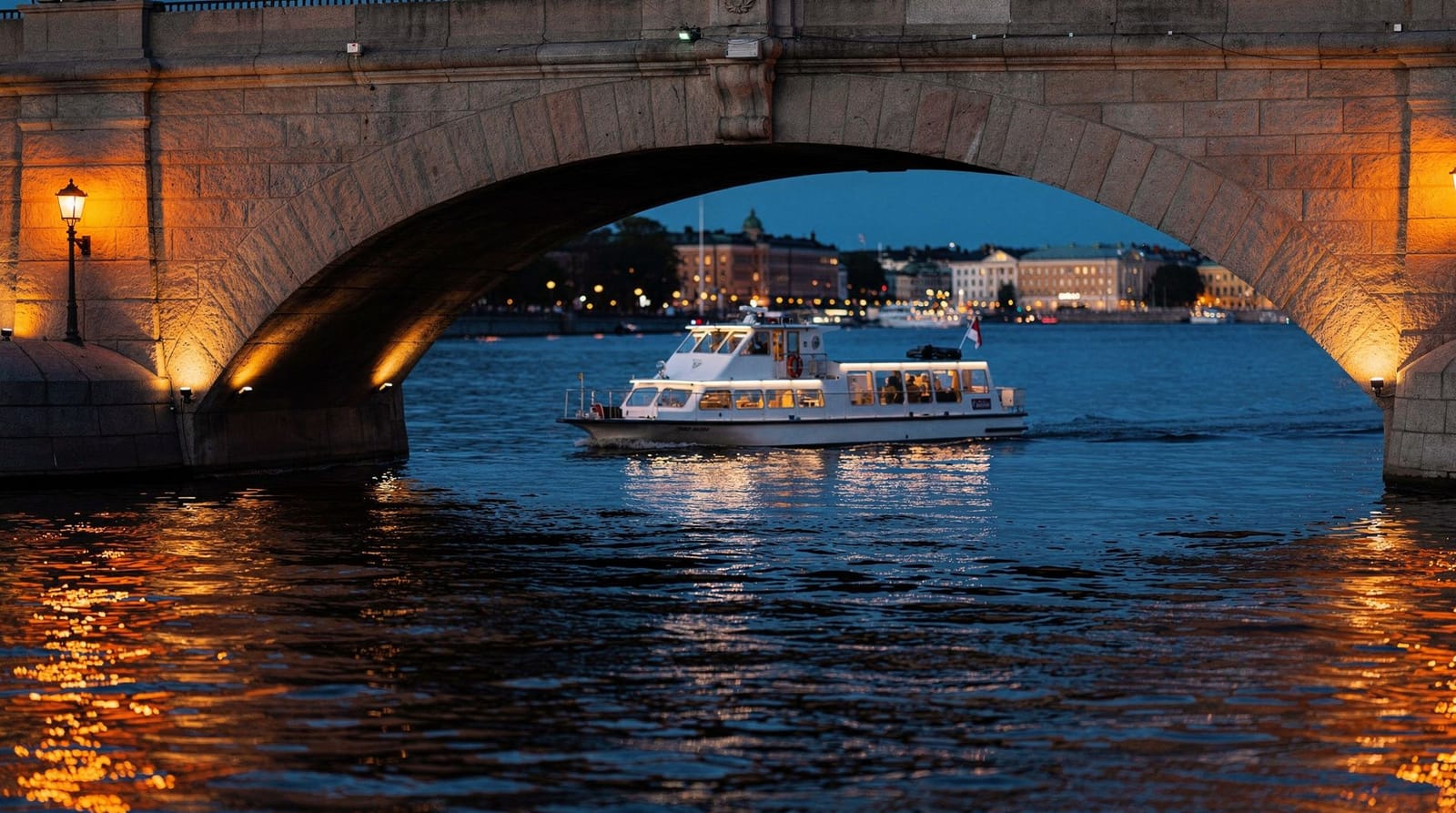
December is the most visited winter month in Stockholm, combining the city’s Christmas markets (Skansen, Gamla Stan/Stortorget, Djurgården) with Lucia (13 December) and the lead-up to Christmas. The canal boat tour in December offers a specific experience: passing under bridges lit with Christmas lights, seeing the old town’s coloured facades in festive illumination, and the City Hall lit against winter darkness.
The Stockholm Christmas markets guide covers the land-side experience. Adding a 17:00 canal boat departure on an early December evening — after the Christmas market visit at Stortorget — gives the city from the water in full winter evening illumination.
What else to do with a winter Stockholm canal boat trip
Combine with the ice bar (ICEHOTEL’s Stockholm outpost): After the canal tour, the permanent Icebar Stockholm near Kungsträdgården offers a very different cold experience indoors. The contrast between the open-water cold and the designed artificial cold of the ice bar is a consciously absurd Stockholm winter hour. See the Icebar Stockholm review.
Combine with the Nordiska Museet: The indoor warmth of Nordiska Museet on Djurgården, combined with a morning canal tour (visible from the boat as you pass Djurgårdskanalen), makes a logical two-part winter day.
Combine with Swedish sauna: The boat returns to central Stockholm mid-morning; a Swedish sauna session in the afternoon (several public bath-houses in Stockholm offer sauna — Sturebadet, and Centralbadet once it reopens after its 2026 renovation) completes the temperature contrast experience. See the Swedish sauna Stockholm guide.
Ice skating on the waterways
In cold winters (January–February in certain years), some bays around the inner archipelago freeze sufficiently for ice skating. The Stockholm canal tour sometimes passes areas where natural ice skating is visible — a particularly atmospheric Stockholm winter sight. The ice skating Stockholm guide covers where to skate and how to assess ice safety.
What makes Stockholm compelling in winter
Stockholm’s winter argument is a specific one. The city does not pretend to be warm or summery; it leans into its northern character rather than apologising for it. The Swedish concept of mys (a close relation of the Danish hygge, but with a more inward, self-sufficient character) describes the pleasure of warmth, candlelight, and good company when the weather outside is genuinely hostile. Stockholm’s cafés and restaurants in winter are among the most comfortable spaces in Europe: wood-burning stoves, thick-pile rugs, warm lighting, and the particular satisfaction of thawing out with a cup of coffee after cold outdoor time.
Seen from a canal boat in January, Stockholm’s streets are largely empty by 15:30. The T-bana platforms fill with people heading home from work; the outdoor spaces — Gamla Stan’s Stortorget, the park outside City Hall — are quiet. The light, when it comes, is horizontal and blue-white, giving the city’s stone facades and copper roofs a texture that summer’s high sun flattens. The water reflects this light differently from summer — darker, more metallic, more still.
For photographers, Stockholm in winter offers conditions that summer cannot: the empty streets, the long blue-hour before sunrise and after sunset (Stockholm’s winter blue hour can last 45 minutes on each side of the brief noon sun), and the possibility of snow or frost on the architectural surfaces that summer visitors never see.
The Nordic winter experience around the canal boat
A winter canal tour in Stockholm fits most naturally into a specific kind of winter travel programme — one that engages deliberately with the season rather than trying to minimise its effects.
Before the boat: Breakfast fika at a warm café in Norrmalm or Gamla Stan. The Swedes take morning coffee seriously; the kanelbulle (cinnamon bun) is at its best fresh. The combination of warm café and cold outdoor air — transitioning between the two — is the quintessential Stockholm winter rhythm.
The boat itself: 50–60 minutes on the water. The covered interior is heated; the deck is available for photography and the experience of the cold. Most winter passengers spend 15–20 minutes on the open deck and the rest of the journey inside.
After the boat: The options depend on what kind of winter visitor you are:
- Museums: Vasa Museum (indoor, extraordinary), Nordiska Museet, Modern Art Museum (Moderna Museet — 170 SEK, free Fridays 18:00–20:00) all work well as post-boat activities.
- Sauna: Stockholm has several public bath-houses with sauna facilities. Centralbadet near Hötorget is the most historically significant but is closed for renovation throughout 2026; Sturebadet in Östermalm is the most luxurious.
- Food: Stockholm’s winter restaurant scene is excellent. Seasonal menus in January and February focus on root vegetables, game, cured fish, and the specific Swedish winter table.
The Lucia connection
13 December is Lucia Day — one of Sweden’s most distinctive annual events. Lucia (St Lucy) is commemorated with candlelit processions in schools, churches, and public spaces throughout Sweden. The Lucia “bride” — traditionally a girl in white with a crown of candles (now more commonly an electric crown for safety reasons) — leads a procession of singers performing traditional songs.
Stockholm on Lucia evening is particularly atmospheric. The Christmas market at Stortorget in Gamla Stan is at its most beautiful; Skansen holds a large Lucia celebration. A canal boat tour on the late afternoon of 13 December — at dusk, with Stockholm’s festive illuminations on — gives the city from the water at its most characteristically Swedish.
Runestones and Viking Age sites in winter
Winter in Stockholm is a counterintuitively good time to visit the city’s historical museums. The Swedish History Museum (with its Gold Room of Viking Age gold) has no summer queues in January; the collections can be examined at pace rather than through crowds. Connecting the indoor historical experience to the outdoor canal tour — which passes the site of Stockholm’s medieval founding at Slussen, and along the waterfront where Viking Age Birka’s trade goods once arrived — creates a historical layering that summer’s more entertainment-focused tourism doesn’t suggest.
Planning a winter canal boat trip practically
Book in advance but not far in advance — winter schedules change based on conditions. Check Strömma’s website within a week of your visit for current departure times. The standard booking recommendation (2–4 weeks ahead for summer) does not apply; winter tours rarely sell out.
If the standard loop does not suit your plans, other boat formats exist. A canal boat tour under the royal bridges follows the same waterways with a different operator and timetable, so it is worth comparing departure times for your dates. For a longer, more detailed look at the route itself, the Royal Canal boat tour guide describes each stretch of water.
Other ways to see the city in the cold season
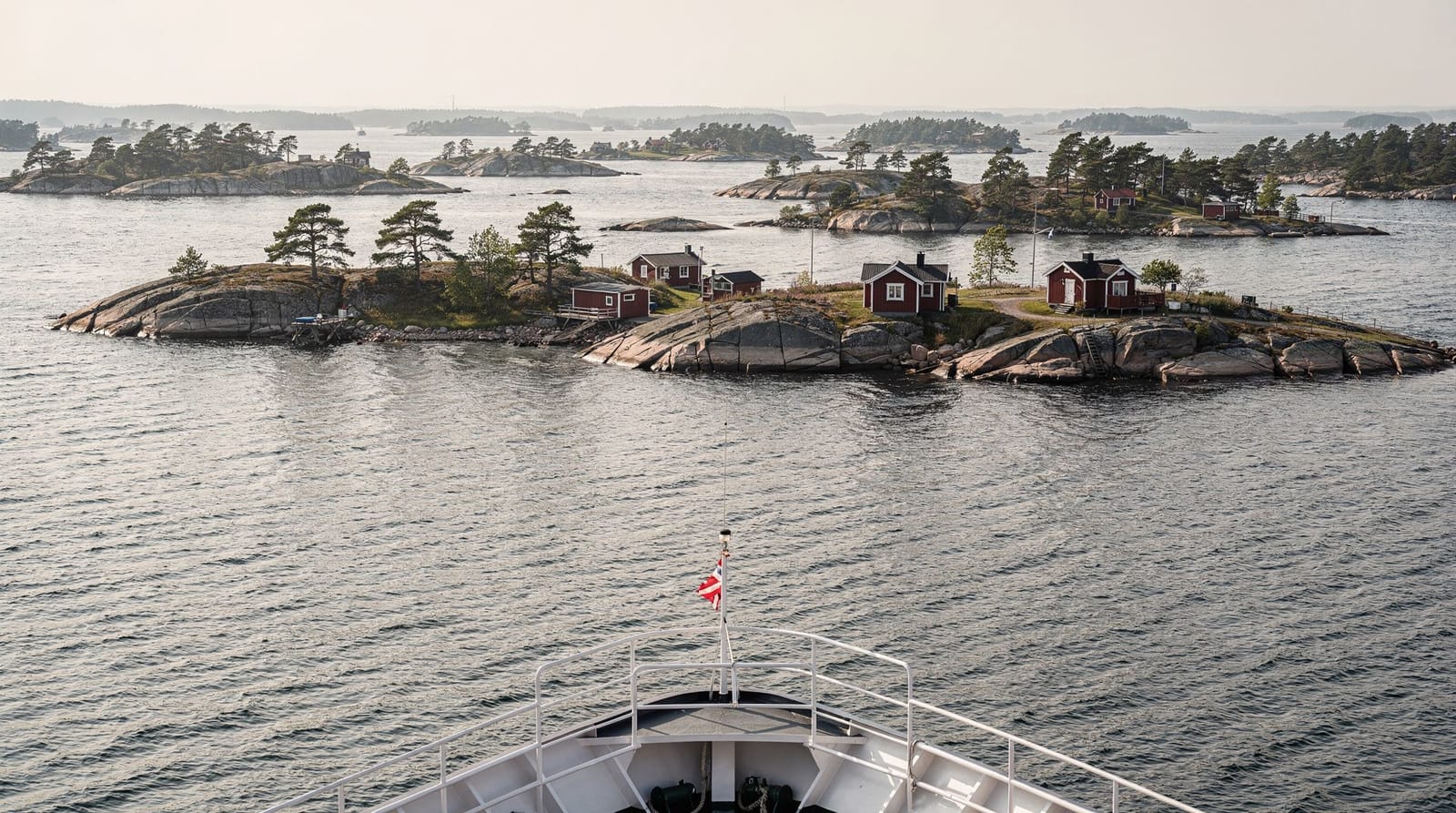
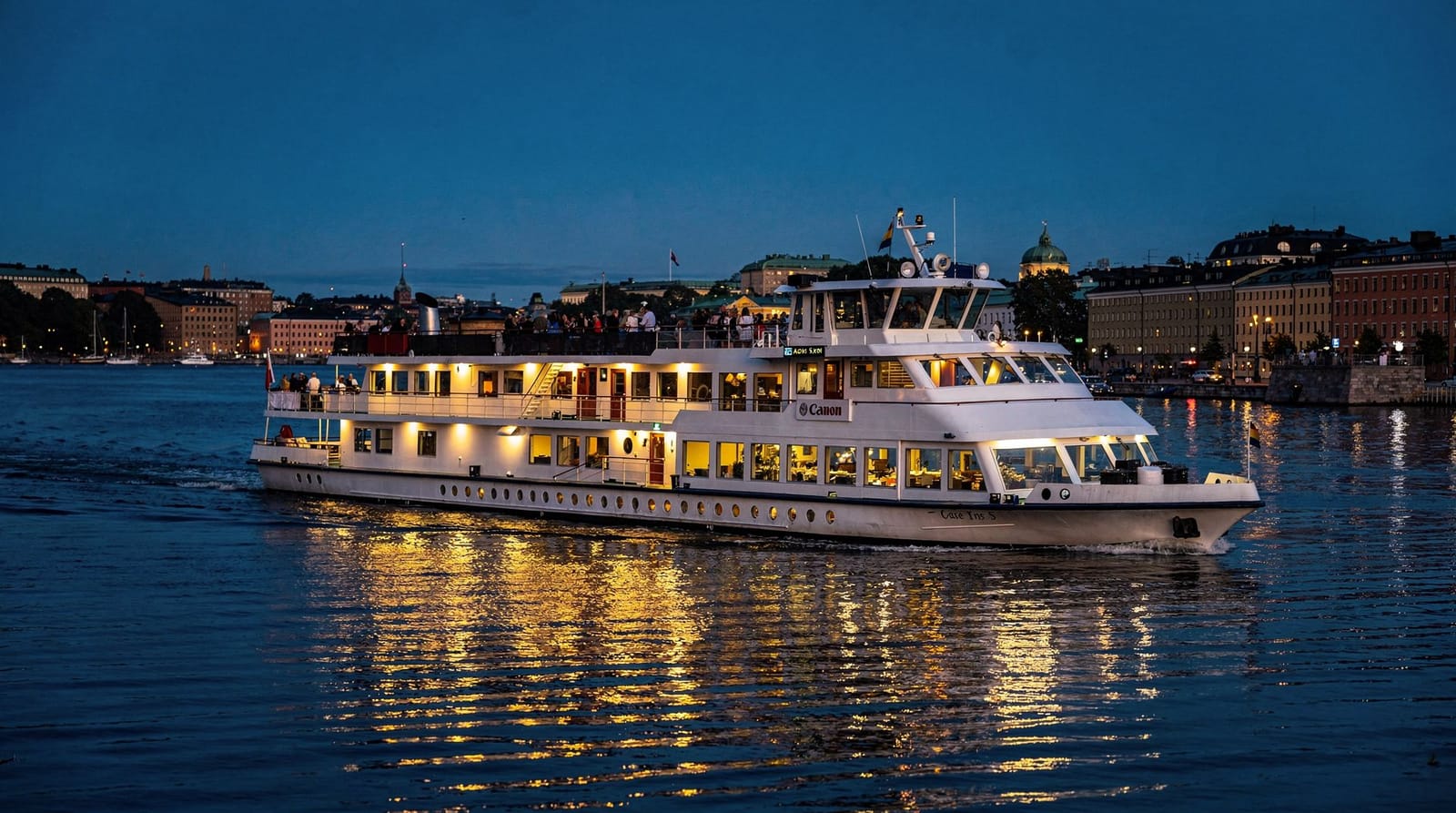
The canal loop is only one option. The evening cruise guide explains how a boat trip changes once the city lights come on, which matters in winter when darkness arrives early. Anyone wondering whether a longer outing is realistic should read winter in the archipelago and the comparison of archipelago winter versus summer, which set out what is and is not available beyond the inner city.
The wider planning pages help fit the boat into a full trip: the Stockholm winter guide covers the season as a whole, the January and February guide deals with the quietest weeks, and the winter clothing rental guide is useful if you would rather not pack bulky gear. For packing in general, see what to pack for Stockholm.
If you want a compact itinerary around the boat, the three-day winter itinerary shows how to slot a short cruise between indoor visits. Rain or slush can change plans quickly, and the museum rainy day guide lists indoor alternatives. The Vasa Museum guide is the obvious companion for the stretch of water around Djurgården, and the Stockholm destination page gives the wider context for the city.
Visitors who want a tour that mixes the harbour with the Vasa side of the city can look at a canal boat tour combined with a museum visit, which keeps most of the day under a roof.
Winter vs summer canal tour at a glance
| Winter (Nov–Mar) | Summer (May–Sep) | |
|---|---|---|
| Departures | 1–2 daily | Every 30 minutes |
| Passengers | 6–12 on a 40-seat boat | Often full |
| Price | ~280–320 SEK | ~280 SEK |
| Booking lead time | A day or two | 2–4 weeks for peak dates |
| Best for | Solitude, specific light, culturally curious visitors | Full daylight, greenery, first-time visitors |
What you cannot do in winter that you can in summer:
- The Drottningholm ferry (boat to Drottningholm Palace) does not run November through April.
- Fjäderholmarna island is closed for the season.
- The Djurgårdslinjen tram runs on a reduced schedule.
- Most archipelago island excursions are not available.
What you can do that you cannot do in summer:
- Natural ice skating on frozen lakes and bays (when conditions allow — see the ice skating guide).
- Ice fishing on Lake Mälaren (organised tours available).
- Christmas markets from late November through December.
- Lucia celebrations (13 December only).
- The specific experience of Stockholm in genuine winter darkness.
Practical essentials
| Detail | Information |
|---|---|
| Winter season | Typically November–March |
| Daily departures | 1–2 per day; check specific dates |
| Duration | ~50–60 minutes |
| Adult ticket | ~280–320 SEK |
| Departure point | Strömkajen, Norrmalm |
| Interior heating | Yes — covered section with large windows |
Frequently asked questions about winter canal cruises in Stockholm
Is the winter canal boat tour as good as the summer tour?
Different, not lesser. Summer offers full daylight, greenery on Djurgården’s banks, and maximum visual variety. Winter offers intimate emptiness, specific Nordic winter light, and — in good conditions — frost and snow on Stockholm’s stone city. They are complementary experiences of the same geography.
Are children suitable for the winter canal tour?
Children aged 5 and above are typically fine with the 50-minute duration if warmly dressed. The heated interior is adequate for keeping children comfortable. Younger children may struggle with the cold on the brief deck exposures. The tour is not recommended with infants or toddlers.
Can you see the Northern Lights on a Stockholm canal boat tour?
Occasionally in January–February during periods of strong solar activity, aurora borealis can be seen from Stockholm — typically on clear nights from areas with reduced city light interference. The canal boat runs in daylight hours and does not offer a specific Northern Lights experience. For Northern Lights viewing from Stockholm, see the Northern Lights from Stockholm guide.
What is the best way to warm up after the winter canal cruise?
Several options within 10 minutes of Strömkajen: fika at a Norrmalm café is the standard approach — Vete-Katten on Kungsgatan is one of Stockholm’s most atmospheric traditional bakeries, a 10-minute walk north. Centralbadet (on Drottninggatan) is closed for renovation throughout 2026. For a single immediate warming option: the café in the Grand Hôtel lobby (Vinterträdgården) is directly at Strömkajen and provides an immediate warm environment with coffee and pastries.
Does the winter canal boat route differ from the summer route?
The route is nominally the same — Strömkajen, through Strömmen past the Royal Palace, into Riddarfjärden, through Djurgårdskanalen, and back. Some winter departures may be slightly shorter or may adjust to daylight conditions, but the core route remains. The experience of the route is substantially different in winter — the embankments that are green and busy in summer are bare and quiet in January, giving the waterways a more austere character. This is not a limitation but a feature for visitors who prefer the city’s Nordic winter face.
Should you sit inside or outside on the winter canal boat?
Both, strategically. The heated interior gives comfortable viewing through large windows for most of the journey. The open deck is most valuable for photography at the key viewpoints — the Royal Palace approach (approximately 5 minutes into the journey) and the City Hall from Riddarfjärden (approximately 20 minutes). Position yourself on the open deck for these two points, then return inside. In genuinely cold conditions (below -5°C), limiting open-deck time to 10–15 minutes per exposure protects against serious chilling.
Is the winter canal tour better value than the summer tour?
The price is typically the same (~280 SEK). The value depends on what you want: summer provides daylight, greenery, and the full visual variety of Stockholm in its season; winter provides the solitude, the specific light, and the experience of seeing the city as Swedes actually live in it (i.e., cold, dark, and beautiful in its own way). Neither is better value — they are different products at the same price. Winter has the practical advantage that you never need to book far in advance and will almost certainly get your choice of seat on an uncrowded boat.
Top experiences
Bookable activities with verified prices and instant confirmation on GetYourGuide.