Northern lights from Stockholm: honest odds and where to go
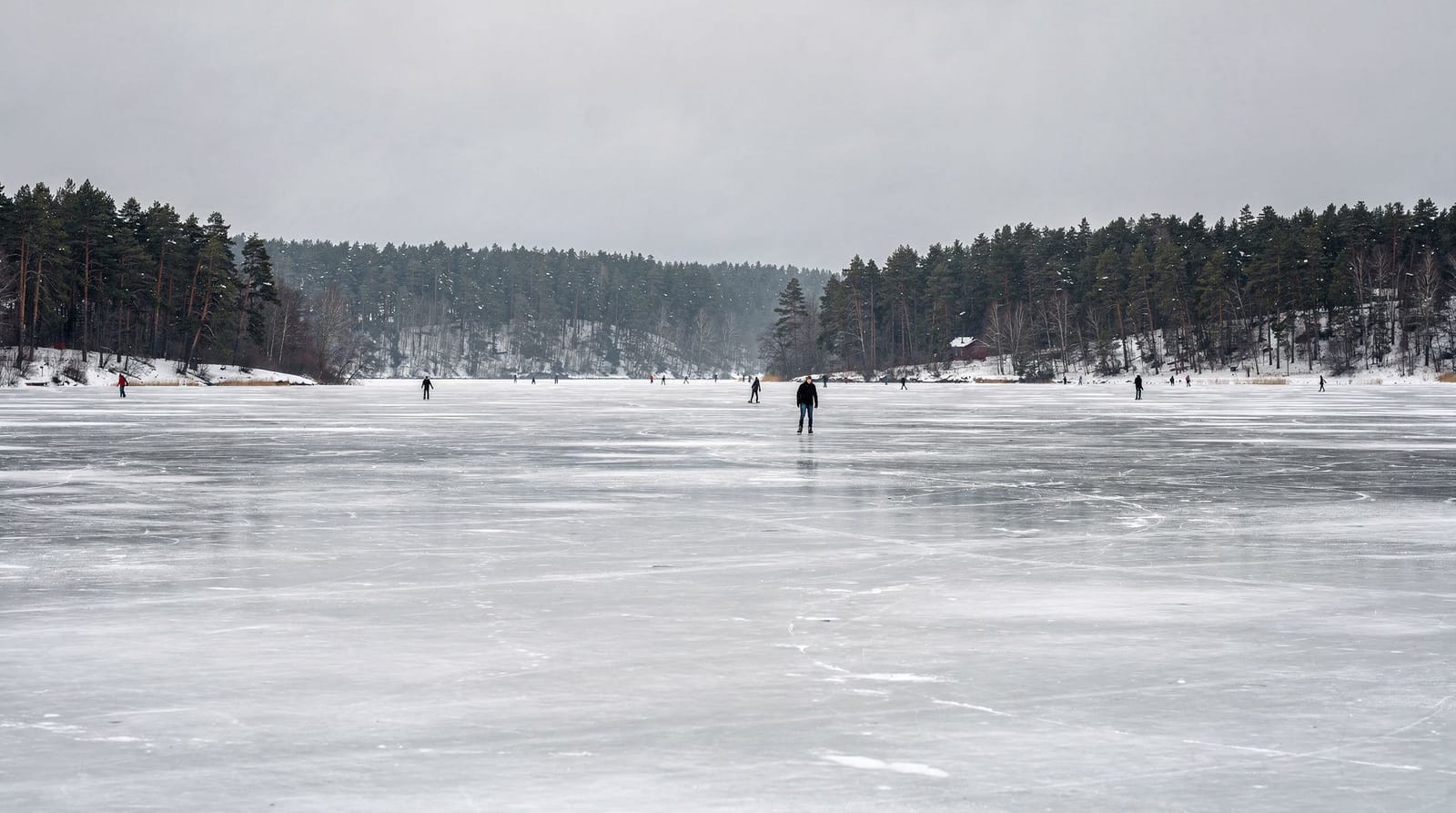
Stockholm: ice skating with fire & chance of Northern Lights
Can you see the northern lights from Stockholm?
Occasionally — but the honest probability is low. Stockholm sits at 59°N latitude, which is borderline for aurora visibility. On nights of significant solar activity (Kp index ≥ 5), the northern lights can appear over dark outer districts like Brevik in Tyresö. For reliable aurora viewing, plan a 2–3 hour drive north of the city or a separate trip to Lapland. Don't build your Stockholm itinerary around expecting to see them.
The honest probability
Stockholm sits at 59° north latitude. Tromsø, Norway — where aurora tourism is built on high reliability — sits at 70°N. That 11-degree difference is significant.
At Stockholm’s latitude, the northern lights appear during periods of elevated geomagnetic activity (solar storms). These events are measured by the Kp index, a 0–9 scale of geomagnetic disturbance. Under normal conditions (Kp 1–3), aurora is visible only from latitudes 65°N and above. At Kp 5, the aurora may reach 60°N. At Kp 7 and above — classified as geomagnetic storms — aurora can appear across most of Scandinavia, including Stockholm.
How often does this happen? Kp 5+ events occur on roughly 20–30 nights per year globally, but they are distributed across all seasons. In the winter months (when darkness enables viewing), you might expect 8–12 nights per season when conditions theoretically allow aurora viewing from Stockholm’s latitude. From inside the city, with its light pollution, you’d see it only on the strongest of those nights.
Honest odds for seeing aurora during a typical 3–5 day Stockholm winter visit: somewhere between 5 and 15%, assuming you monitor forecasts and are prepared to move quickly to dark locations.
| Realistic odds | 5–15% over a 3–5 night winter stay |
| Season | September–March; darkest months (Dec–Feb) give the longest window |
| Best spots near the city | Brevik (Tyresö), Tyresta National Park |
| What you need | Kp index ≥ 5, clear skies, dark location, a car |
| If serious about aurora | Consider a separate Swedish Lapland trip instead |
| Cost | Free if self-driving; guided evening tours vary by operator |
What makes a sighting possible
Three conditions must align simultaneously:
- Solar activity: Kp index ≥ 5, ideally ≥ 7
- Clear skies: Cloud cover blocks aurora completely
- Darkness: You need to be away from significant light pollution
Monitoring apps (My Aurora Forecast, SpaceWeatherLive) will alert you when Kp is rising. Cloud cover is the variable you can’t control. During clear winter nights, Stockholm’s weather tends toward high pressure and good visibility — those are your opportunity windows.
What the aurora actually looks like at this latitude
Expectations matter more than anything else here. The vivid, swirling curtains in tour-company photographs are long-exposure images taken far to the north under strong activity. At Stockholm’s latitude, a sighting is usually much humbler: a pale, greenish-grey glow low on the northern horizon that can easily be mistaken for cloud or distant light pollution. To the naked eye it often looks colourless, and the colour only shows up properly in a camera or phone image taken with a long exposure.
A useful test is to look for something that changes. Cloud drifts and stays roughly the same shape, while an aurora brightens, fades and sometimes sends faint vertical rays upward. Give your eyes a good while to adapt to the dark before deciding there is nothing there, and keep your phone screen dimmed or turned off, because one glance at a bright display resets your night vision.
Best locations near Stockholm
In the city
From inside Stockholm’s urban core, aurora is visible only during extreme events (Kp ≥ 8). If an unusual storm hits while you’re in the city, the waterfront at Djurgården or the elevated park at Skinnarviksberget in Södermalm offer north-facing dark horizons away from the brightest lighting. Neither location is optimised for aurora — they’re what’s available without a car. If you’re already out on the ice, the fireside ice-skating and northern lights evening pairs a guaranteed good time with a real, if modest, chance of a sighting.
Brevik, Tyresö (20 km southeast)
The southern shore of Tyresö municipality, facing north across the archipelago, provides a dark foreground and clear northern horizon. Light pollution from Stockholm is to the north-west rather than directly north. On Kp 5–6 nights with clear skies, the aurora may appear as a faint green band above the horizon.
Getting there: Car only (no direct public transport). About 25–30 minutes from central Stockholm.
Tyresta National Park (30 km south)
One of Sweden’s largest national parks begins less than 30 km from Stockholm. The park’s dark interior, away from roads and settlements, provides among the best natural dark-sky conditions accessible from the city. In winter the park is accessible by car; some trails are lit only by starlight after sunset. See the Tyresta day hike guide for trail details if you’re combining aurora-hunting with a proper walk.
Getting there: Car recommended. The main Tyresta village entrance is about 35–40 minutes from central Stockholm.
Tyresta sunset hike with dinner gets you into the park’s dark interior for the golden hour and evening — useful groundwork even on nights the aurora doesn’t cooperate.
60–80 km north of Stockholm
The area around Norrtälje (70 km north, accessible by road or commuter bus) provides substantially darker skies than anything within the city region. The northern shores of Lake Mälaren and Norrtälje archipelago offer clear northern horizons. For a dedicated aurora night, driving this distance increases your effective probability significantly.
Leaving Stockholm altogether
For a genuinely high-probability aurora experience, the Swedish Lapland region (Abisko, Jukkasjärvi) at 68°N has the latitude, the documented clear-sky statistics, and the infrastructure specifically built around aurora tourism. It is a full day’s travel from Stockholm (flight to Kiruna + transfer), but represents a qualitatively different trip from trying to catch aurora at the margin from Stockholm.
Reading forecasts and acting fast
Aurora forecasting has a short window. The NOAA 3-day forecast gives broad probability, but reliable same-night predictions only become accurate 30–60 minutes before a strong event.
Recommended tools:
- My Aurora Forecast: Best app for location-based predictions and clear visualisation of Kp levels. Set notifications at Kp 4.
- SpaceWeatherLive: More technical, real-time data from satellites. Good for understanding whether Kp is rising or falling.
- Met Office / SMHI: Check Swedish meteorological forecasts for clear-sky windows.
When an alert fires at night, you have roughly 30–90 minutes to reach a dark location before conditions may change. Having a planned location and a car available dramatically improves response time.
Staying warm while you wait
Aurora hunting is mostly standing still in the cold, often for a long time and often for nothing. That is the part first-time visitors underestimate. Dress for waiting rather than for walking: several thin layers under a windproof outer layer, proper insulated boots, a hat that covers your ears, and warm gloves with a thinner pair underneath so you can operate a camera without exposing bare skin. A thermos of something hot and a seat pad make a bigger difference to your patience than any gadget.
If you did not bring serious winter gear, the winter clothing rental guide explains how to borrow it rather than buy it, and the packing guide covers what to put in the suitcase in the first place. Never leave a car running in a remote car park with the engine off and the heater cold for hours either; take breaks, warm up, and go back out when the forecast ticks upward.
Photography preparation
Photographing aurora requires a camera capable of manual exposure control, a wide-angle lens with f/2.8 or faster aperture, and a tripod. Phone cameras increasingly have dedicated night modes that can capture faint aurora — iPhone 15 Pro and Samsung S24 models perform reasonably well, though dedicated cameras remain superior.
Basic settings: ISO 800–3200, shutter speed 5–15 seconds, widest aperture available, manual focus set to infinity. Start conservatively and adjust based on initial test shots.
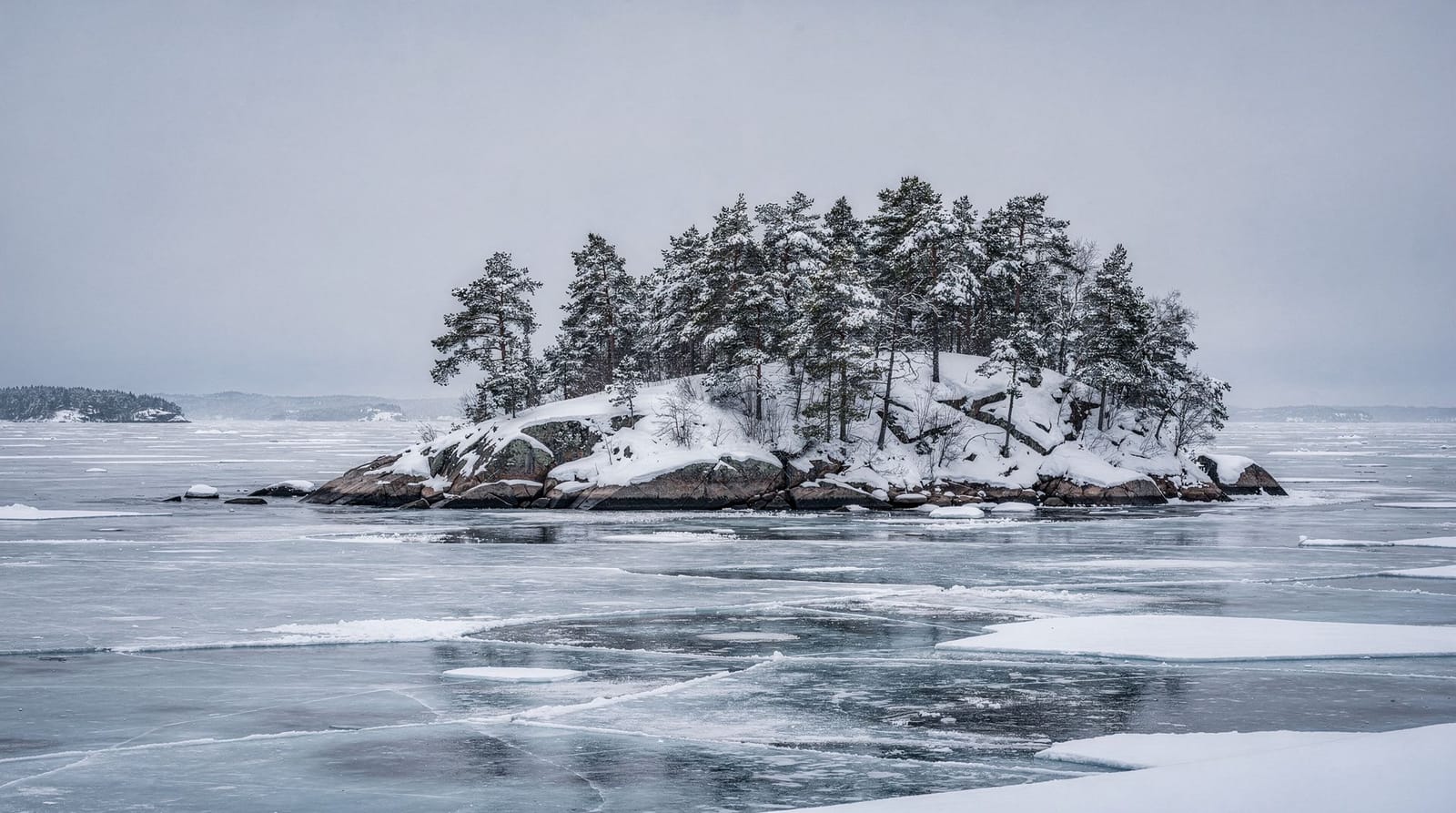
Framing: Include a dark foreground — trees, lake ice, or the archipelago shoreline — to add depth. Aurora photographs with featureless sky backgrounds lack context.
Safety and etiquette on dark nights
A dark location is, by definition, a place without much lighting. Tell someone where you are going, charge your phone before you leave, and carry a head torch with a red-light setting so you can see without ruining your own or other people’s night vision. Park considerately, keep car headlights off when other watchers are photographing, and do not shine lights across the horizon.
In the woods and along shorelines, remember that frozen water is not always safe to walk on and that forest paths look very different in the dark. Staying on familiar tracks is wiser than wandering off for a better angle. The allemansrätten guide explains the right to roam and the responsibilities that come with it, which matters if you are tempted to pull over somewhere unfamiliar.
Turning an aurora night into a proper evening
Because the odds are modest, the smartest approach is to design an evening that is worthwhile whether or not the sky cooperates. Start with a walk or a meal somewhere you would enjoy anyway, keep one eye on the forecast, and only drive out to a dark spot when the numbers and the cloud cover agree. The hiking near Stockholm guide lists the sort of woodland routes that make a pleasant daytime outing before an evening watch, and Tyresta National Park fits naturally into that plan.
If you are building a longer trip, the three-day winter itinerary gives you a structure in which a flexible evening can be slotted in whenever the sky looks promising. For a quieter side of the season out on the water, winter in the archipelago shows what the islands feel like once the summer crowds have gone, and the stillness there is a good match for a patient night under the stars.
What to do if the lights don’t appear
On most Stockholm winter nights, the aurora will not appear. Plan your winter trip for the cities and experiences themselves — ice skating, Christmas markets, sauna, the winter city atmosphere — and treat any aurora sighting as a bonus rather than the goal. Stockholm’s winter has more than enough intrinsic value without the northern lights. See the Stockholm winter guide for the fuller picture, or the January–February guide if you’re visiting in the darkest, statistically best-odds months.
Frequently asked questions about northern lights from Stockholm
Can I see the northern lights from central Stockholm?
Very rarely — only during major geomagnetic storms (Kp 8–9) when the auroral oval extends to lower latitudes. Even then, the city’s light pollution significantly diminishes visibility. The practical answer is that you need to leave the city centre for a dark location to have a realistic chance.
Are there guaranteed northern lights tours from Stockholm?
No responsible operator guarantees sightings. Aurora tours from Stockholm drive participants to darker locations on promising nights, but sightings depend entirely on solar activity and clear skies. Any guarantee should be treated with scepticism — aurora cannot be guaranteed at Stockholm’s latitude under any circumstances.
Is summer any good for aurora from Stockholm?
No. Stockholm experiences essentially no astronomical darkness from late May through late July. The sky never darkens sufficiently for aurora to be visible. The aurora season from Stockholm runs approximately September through March.
Should I plan a separate trip to Lapland instead?
If northern lights are your primary goal and you have the budget, yes. A dedicated trip to Abisko or Jukkasjärvi (68°N), ideally for 4–5 nights to allow for weather variability, gives substantially higher probability than any number of nights in Stockholm. A Stockholm winter trip with northern lights as a secondary possibility is a different, more relaxed itinerary.