Stockholm Christmas markets: the complete guide for 2026
Stockholm: Christmas market magic walking tour with a local
Which is the best Christmas market in Stockholm?
Skansen Julmarknad is the most atmospheric — traditional crafts, glögg, historic open-air setting, Fridays to Sundays from 27 November to 20 December 2026 (normal Skansen admission, which includes the museum). Stortorget in Gamla Stan is the oldest (since 1837), free to enter, and has authentic charm in a beautiful medieval square. Combine both for the full Stockholm Christmas experience.
Stockholm’s Christmas market landscape
Stockholm has multiple Christmas markets, each with a distinct character. The city doesn’t consolidate its Christmas market into a single mega-event (as some German cities do) — instead, markets are distributed across neighbourhoods and venues, each reflecting its particular context.
The result is that no single market gives you everything. The best Stockholm Christmas market experience involves combining at least two: Skansen for atmosphere and tradition, Stortorget for the historic setting and free access. Add Lucia on 13 December if dates align, and you have one of the most genuinely Nordic Advent seasons available to tourists.
| Where | Skansen (Djurgården), Stortorget (Gamla Stan), Drottningholm, Sigtuna |
| Cost | Stortorget free; Skansen normal admission (see skansen.se) |
| Time needed | Half a day for both flagship markets |
| Getting there | T-bana/bus to Djurgården or Gamla Stan |
| Best time | Second and third weeks of December |
Skansen Julmarknad: the flagship
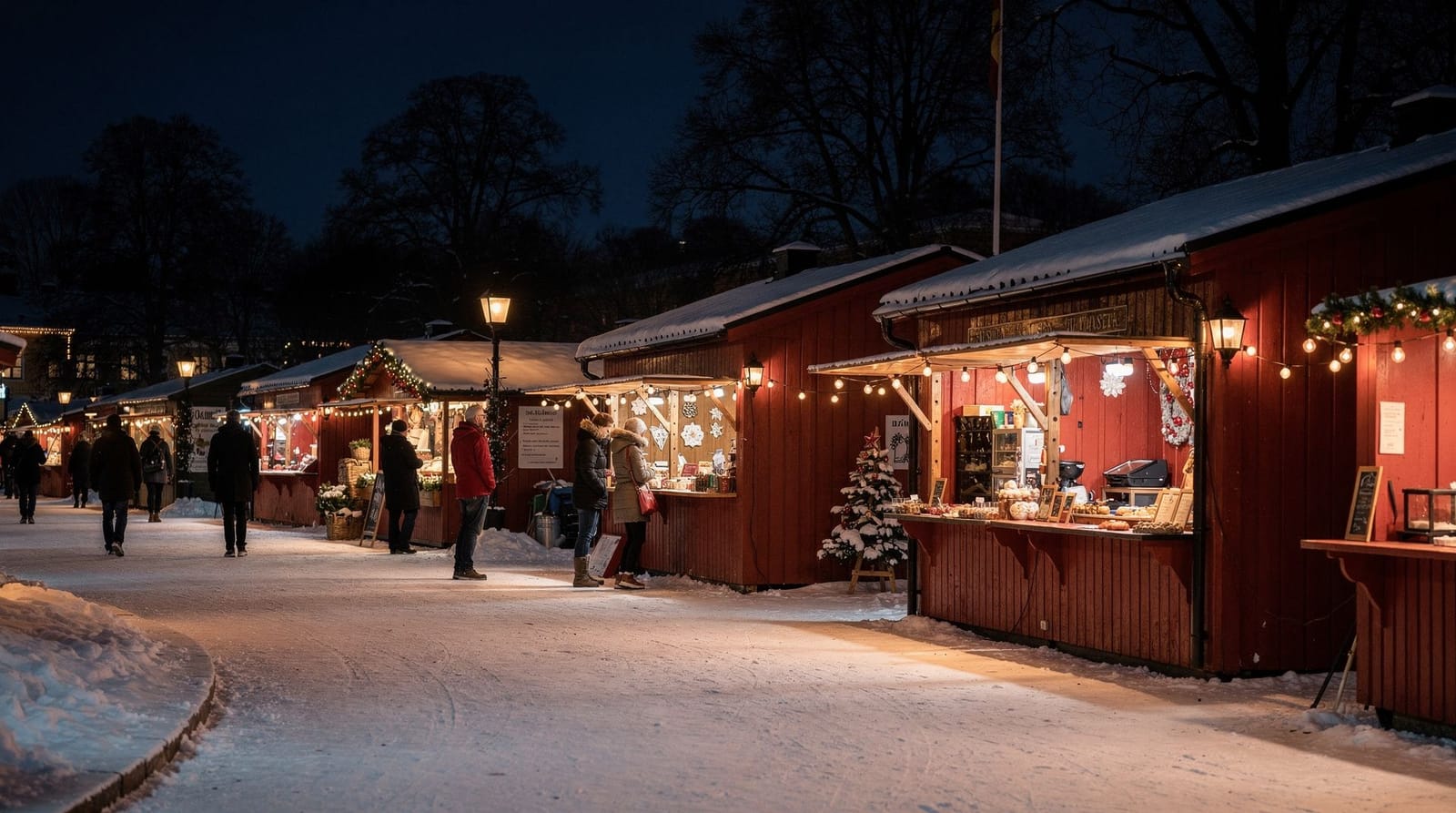
The Skansen Christmas market — Julmarknad — runs on weekends from 27 November to 20 December in 2026 on the grounds of the world’s oldest open-air museum on Djurgården. The combination of candlelit historic buildings, costumed staff, traditional crafts, and the specific smell of glögg and woodsmoke in cold air makes this Sweden’s most celebrated Christmas market.
Entry is through Skansen’s normal admission (price on skansen.se), which also includes the museum and zoo. The market operates Friday–Sunday during its run; weekday access is through normal Skansen visiting.
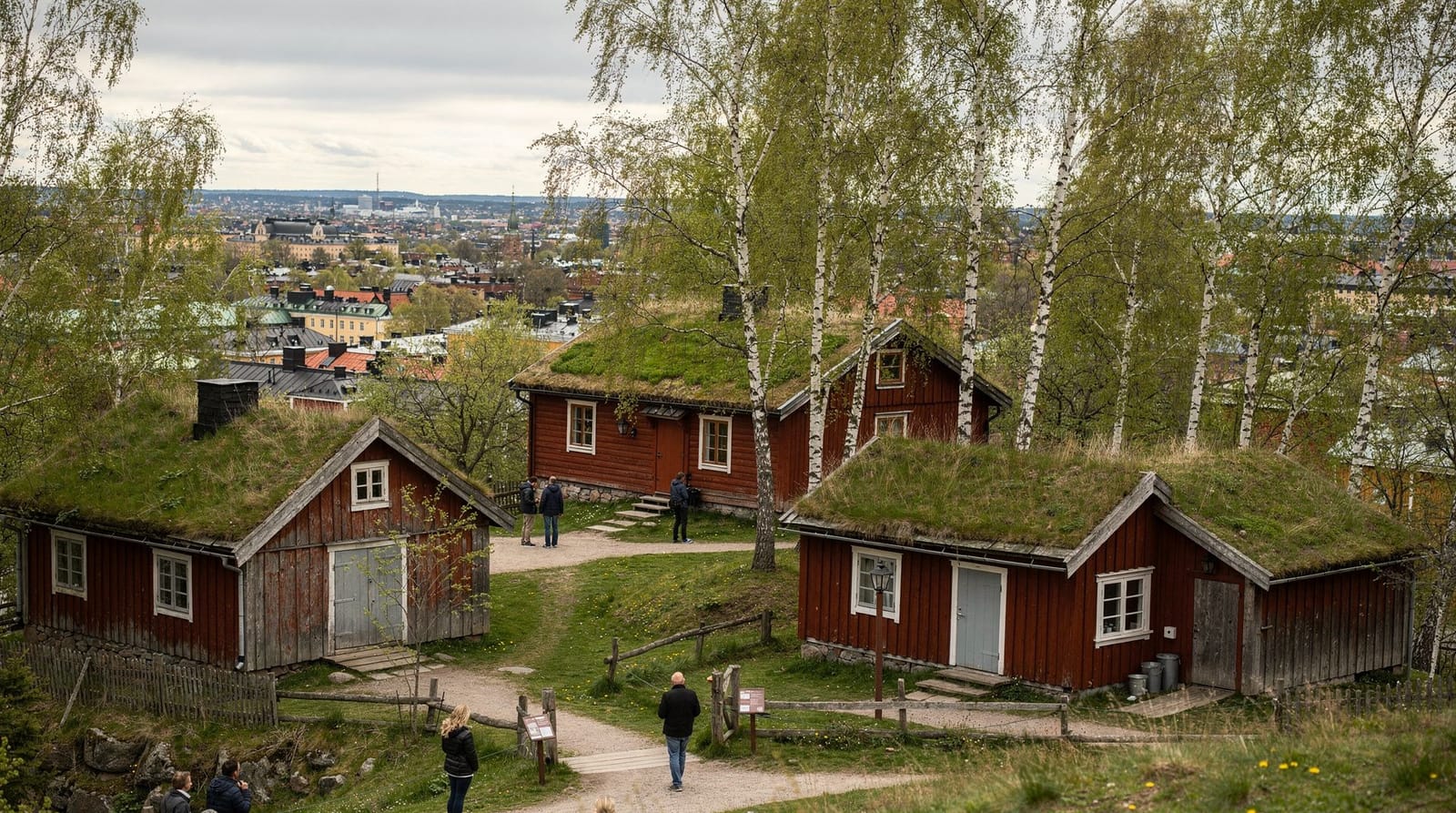
What sets Skansen apart: The historic buildings provide a backdrop unavailable at any other market — an 18th-century Swedish village, candlelit, with craftspeople working at forges, looms, and bakeries exactly as they do throughout the year. The Christmas version adds seasonal activities: traditional decoration making, Advent craft workshops, and seasonal food stalls.
What to eat and drink at Skansen: Glögg with raisins and almonds is available throughout. The historic bakery produces lussekatter (saffron buns, essential Swedish Christmas bread) and pepparkakor (gingerbread). A Christmas julbord (traditional Christmas table) is offered at Solliden restaurant on weekends — book well in advance.
Practical logistics: The market is busiest on Saturday afternoons. Friday evenings and Sunday mornings are quieter. Arriving before 11:00 on a Saturday gets you the best conditions. Dress warmly — the market is outdoors and December evenings at Skansen are cold.
See the Skansen Christmas market guide for full detail.
Stortorget, Gamla Stan: the oldest market
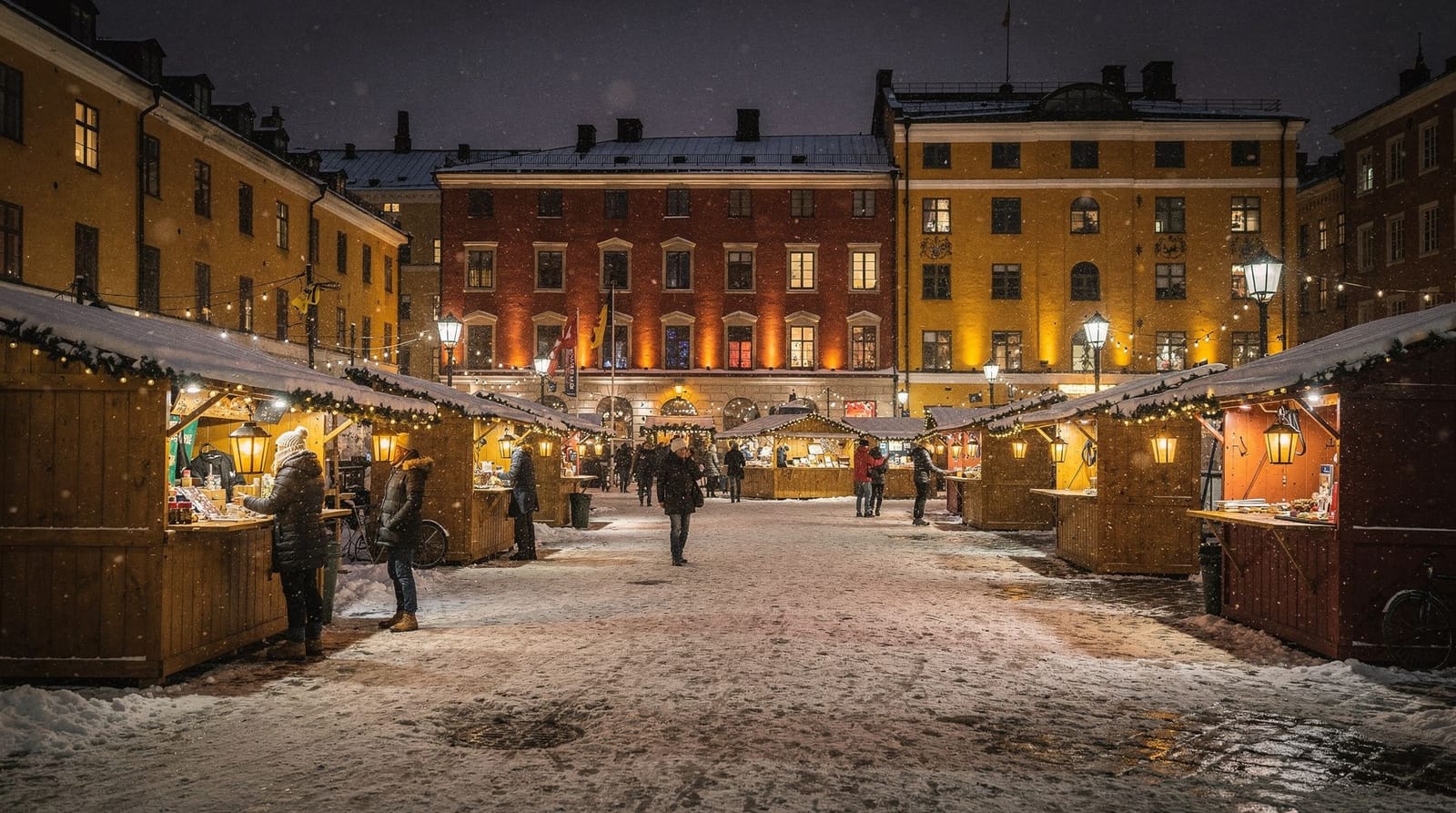
The Christmas market at Stortorget (the main square of the Old Town) has operated since 1837 — making it one of the oldest continuously running Christmas markets in Scandinavia. The setting is extraordinary: a small medieval square surrounded by colourful 17th and 18th-century merchant houses, decorated with Advent lights, with craft stalls filling the square.
Entry is free. The market typically runs daily from late November through 23 December, opening around 11:00.
The atmosphere: Stortorget is Stockholm’s most photographed square regardless of season, but in December with the Christmas market and lights it becomes something memorable. The combination of historic architecture, warm-coloured light, glögg steam, and the hum of the market gives it genuine charm that larger commercial markets often lack.
What to buy: The stall selection varies year to year, but typically includes knitted goods, wooden items, ceramics, Christmas decorations, and food items. Quality ranges from genuine artisan work to tourist goods — look carefully.
Practical note: The square is small, and weekend afternoons are genuinely crowded. Weekday mornings offer the best conditions. See the Gamla Stan Christmas market guide for full detail.
Drottningholm Palace market
One or two weekends each December, Drottningholm Palace hosts a Christmas market in its palace grounds. The UNESCO-listed palace — Sweden’s royal family’s primary residence — provides one of the most dramatic possible backdrops: a Baroque palace in the Swedish countryside, usually with snow by December.
Getting there: Waxholmsbolaget ferry from Stadshuset pier, or bus 176/177/301 from T-Centralen. The boat is more atmospheric and takes about 50 minutes; buses take 30 minutes.
Practical consideration: Specific dates and ticket requirements vary annually — check the Royal Court’s website and Drottningholm’s schedule for the current year’s market dates. The limited number of operating days means this requires specific planning.
Sigtuna Christmas market
Sweden’s oldest town, 50 km north of Stockholm, hosts a Christmas market with an authentically Swedish small-town atmosphere. Sigtuna’s medieval main street (Stora gatan) is lined with wooden buildings, and the Christmas market maintains a vintage, craft-focused character.
Getting there: Commuter rail (pendeltåg) to Uppsala or Märsta, then connecting bus. About 70–80 minutes from Stockholm. The journey is part of the experience.
Combining with Uppsala: Sigtuna and Uppsala sit close enough together that ambitious day-trippers combine a Sigtuna market visit with Uppsala’s cathedral and old town in a single day, though this requires an early start and careful attention to the connecting bus schedule. See the Uppsala day trip guide for the fuller combination itinerary.
Best for: Visitors who want something distinctly non-touristy and are interested in authentic Swedish handicrafts. The market is small enough to explore in an hour, making it feasible as a half-day excursion combined with seeing Sigtuna itself. See the Sigtuna day trip guide for how to combine the market with the rest of Sweden’s oldest town.
Comparing the main markets
| Market | Cost | Setting | Best for |
|---|---|---|---|
| Skansen Julmarknad | Normal Skansen admission (incl. museum) | Historic open-air village | Atmosphere, tradition, crafts |
| Stortorget, Gamla Stan | Free | Medieval square | Photography, casual browsing |
| Drottningholm | Varies, check schedule | Baroque royal palace | A dramatic, less crowded setting |
| Sigtuna | Free to browse | Medieval small town | Authentic, non-touristy craft |
The Christmas walking tours
Stockholm has multiple guided Christmas market tours that navigate the various markets with local guides providing seasonal and historical context. The Christmas market magic walking tour covers the key markets with glögg stops. The Christmas traditions and treats small-group tour emphasises traditional Swedish Christmas culture alongside the markets.
These are most useful for visitors who want the context rather than just the stalls — the combination of Lucia traditions, Swedish Christmas customs (Advent calendars, Jultomten, the straw goat), and the historical background of the markets adds significantly to the experience.
Swedish Christmas food and drink glossary
Glögg: Hot spiced wine (or non-alcoholic grape-juice version), served with raisins and almonds. Non-negotiable.
Lussekatter: Saffron-yellow buns shaped in a specific S-curl pattern, eaten on and around Lucia (13 December). The saffron is not background flavour — it’s prominent and distinctive.
Pepparkakor: Thin, spiced gingerbread. Swedish pepparkakor are darker, thinner, and more intensely spiced than most German gingerbreads. The pepparkakor-and-orange combination is a Swedish Christmas cliché that happens to be genuinely good.
Julbord: The Swedish Christmas table — a large smörgåsbord spread including herring preparations, smoked salmon, gravlax, Swedish meatballs, Jansson’s temptation (an anchovy-potato gratin), sausages, and traditionally a ham. Restaurant julbord begins appearing in early December.
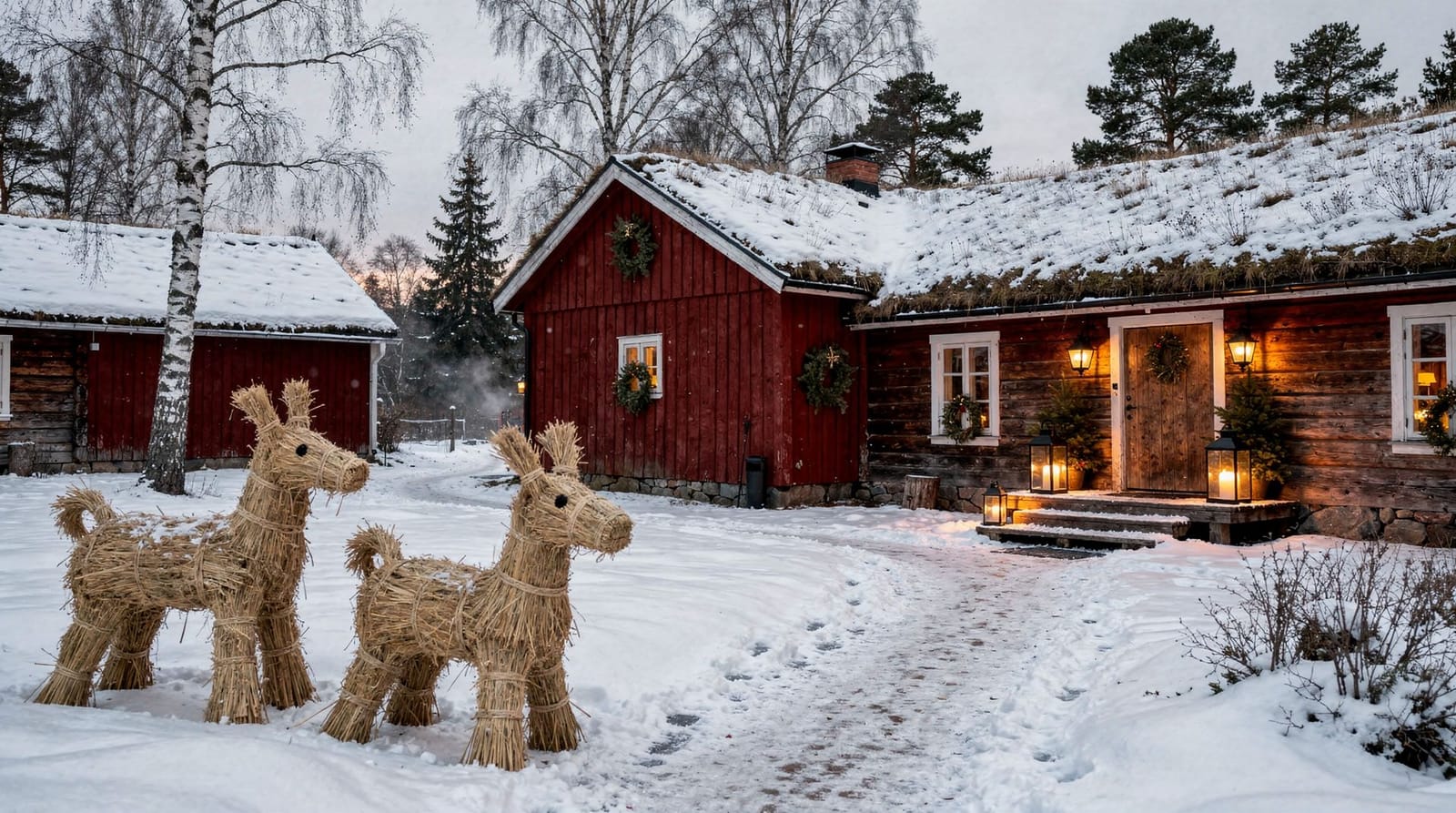
Julbock: The straw goat — Sweden’s oldest Christmas symbol, predating the Christmas tree. Available as decorations in every size from 10 cm to several metres. The large goat at Stortorget is one of Gamla Stan’s December landmarks.
What to wear and how to plan your visit
Stockholm in December is genuinely cold — typically 0 to -5°C, occasionally colder, with short daylight hours (sunset around 15:00). Layering matters more than any single heavy coat: thermal base layers, a warm mid-layer, and a windproof and ideally waterproof outer shell handle both dry cold and the region’s frequent light snow or sleet. Good waterproof boots with grip matter as much as the coat — cobblestones at Stortorget and Skansen’s paths get icy. Gloves and a hat are not optional; standing at an outdoor market stall for even 20 minutes in insufficient clothing will cut a visit short.
Because daylight is limited, plan Christmas market visits for the afternoon and early evening rather than the morning — the markets look genuinely better lit against a dark sky, and the atmosphere from 15:00 onward, once the lights are on, is considerably more festive than the same market at 10:00 in flat grey daylight.
Shaping a Christmas market day
The simplest plan is to let the light decide. Start in Gamla Stan while the streets are still quiet, wander the lanes around Stortorget, and take a slow coffee break before the square fills up. Then cross to Djurgården for Skansen, so that you arrive at the open-air museum as the afternoon light fades and the candles and lanterns start to matter. If you want a calmer pace, our Gamla Stan walking tour guide and the Djurgården walking route both help you link the two areas without backtracking.
Allow time for warming up. Stockholm’s café culture is built for exactly this season, and a stop for a cinnamon bun and a hot drink between markets is part of the rhythm rather than a detour. The fika culture guide and the cinnamon bun guide explain what to order and why it matters here.
If you are travelling with children, the markets work best in short bursts. Skansen suits families well because there is space to move, animals to see and plenty to look at, while Stortorget is better kept to a short visit. The family guide to Stockholm covers the wider picture, and the Stockholm winter itinerary shows how the markets fit into a longer stay.
Getting around in the cold
Winter transport in Stockholm is reliable, but it is worth planning for the weather. The public transport explainer and the SL pass guide walk through how tickets work, which is useful when you will be hopping between Gamla Stan, Djurgården and the city centre several times in one day. Keep your phone and tickets somewhere easy to reach, because pulling off thick gloves at every barrier gets old quickly.
Short walking distances between the central markets mean you rarely need more than one or two journeys, but icy pavements slow everyone down. Leave a little extra time between stops, especially if you have a timed booking, such as a restaurant table for a julbord.
Beyond the markets: other ways to enjoy the season
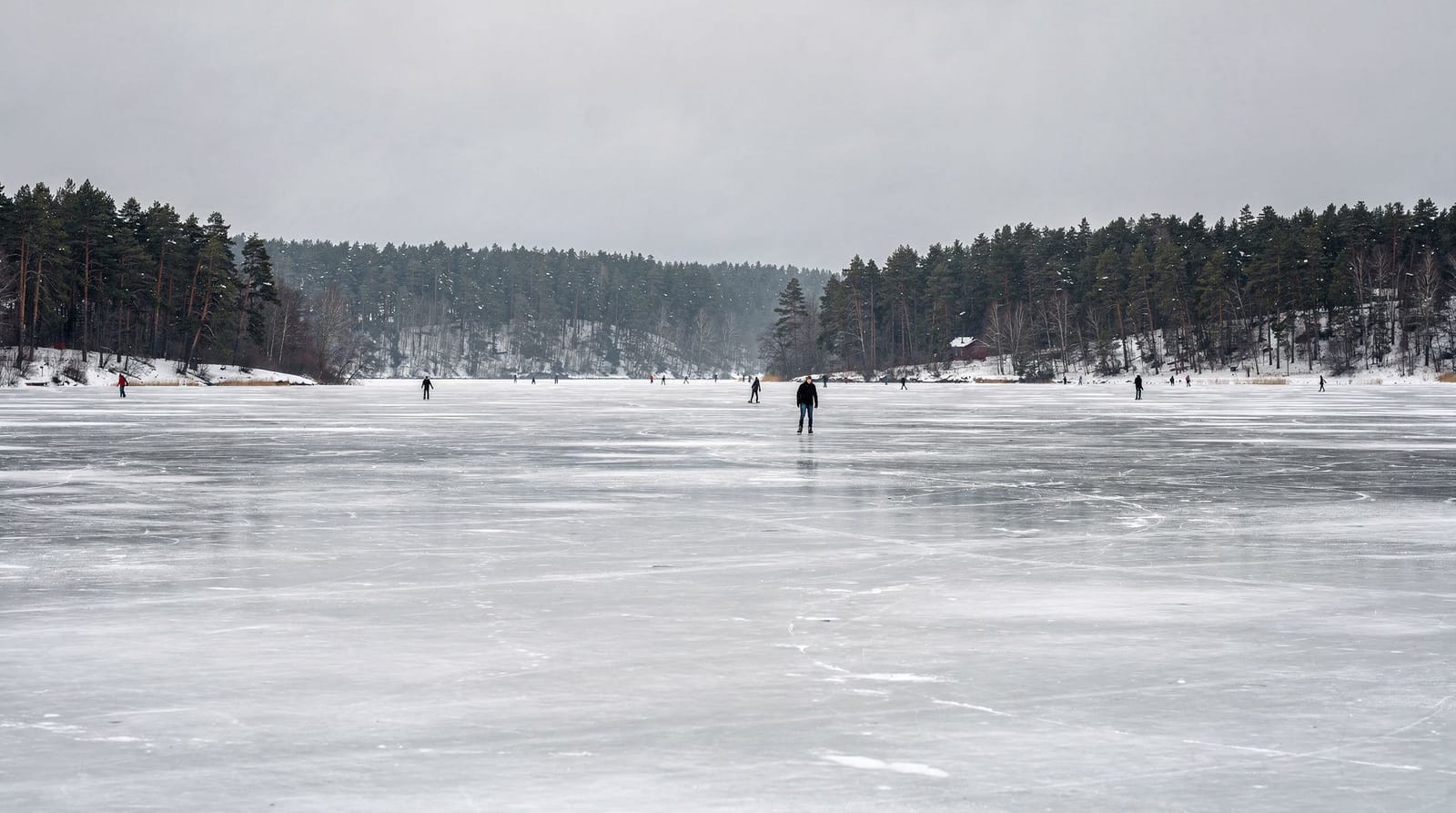
The markets are only part of Stockholm’s December. The city’s decorated streets, shop windows and illuminated squares reward an unhurried evening walk, and the winter canal cruise guide is worth a look if you want to see the lights from the water. The ice skating guide suggests another way to enjoy the cold rather than endure it, and the Stockholm winter clothing rental guide is useful if you are travelling light and do not own proper winter gear.
If you are planning around the Lucia celebrations or building a longer trip around the season, our best time to visit Stockholm guide puts December in context against the rest of the year, and the packing guide covers what to put in the suitcase.
Practical planning
Timing: The best window for all of Stockholm’s Christmas markets is the second and third weeks of December (roughly 5–22 December). You catch Skansen’s Julmarknad, Stortorget is fully running, Lucia (13 December) falls in this window, and the city’s Christmas atmosphere is at peak.
Booking accommodation: December accommodation in Stockholm costs more than January but less than July. Book 3–6 weeks in advance for the best choice; later bookings are possible but central hotels fill during the Lucia week specifically.
Christmas market + winter itinerary: See the Stockholm winter guide for a broader framing of December–March planning. If your trip extends into January, see the January–February guide for how the atmosphere shifts once the markets close.
Skansen’s Julmarknad sits within the Skansen open-air museum, so a market visit doubles naturally as a chance to see the museum’s year-round exhibits — worth factoring into your time budget if you haven’t visited Skansen otherwise.
Frequently asked questions about Stockholm Christmas markets
Is Stockholm’s Christmas market better than German ones?
Different rather than better. German markets (Cologne, Nuremberg) are larger and more elaborate. Stockholm’s markets are smaller and more intimate, with an emphasis on Scandinavian craft traditions rather than quantity of stalls. The Skansen setting — a working historic village — is genuinely unique. The Stortorget square is more beautiful than most German market squares. Both are worth experiencing as different expressions of a shared European tradition.
Can I visit multiple markets in one day?
Yes. Stortorget and the Gamla Stan area can be combined in the morning. The Skansen Julmarknad runs on weekends; a half-day at Skansen in the afternoon provides a complete December day. Combining Stortorget (free, 1 hour) with Skansen (paid, 3–4 hours) makes for a comprehensive Christmas market day.
What is the Lucia celebration and should I plan for it?
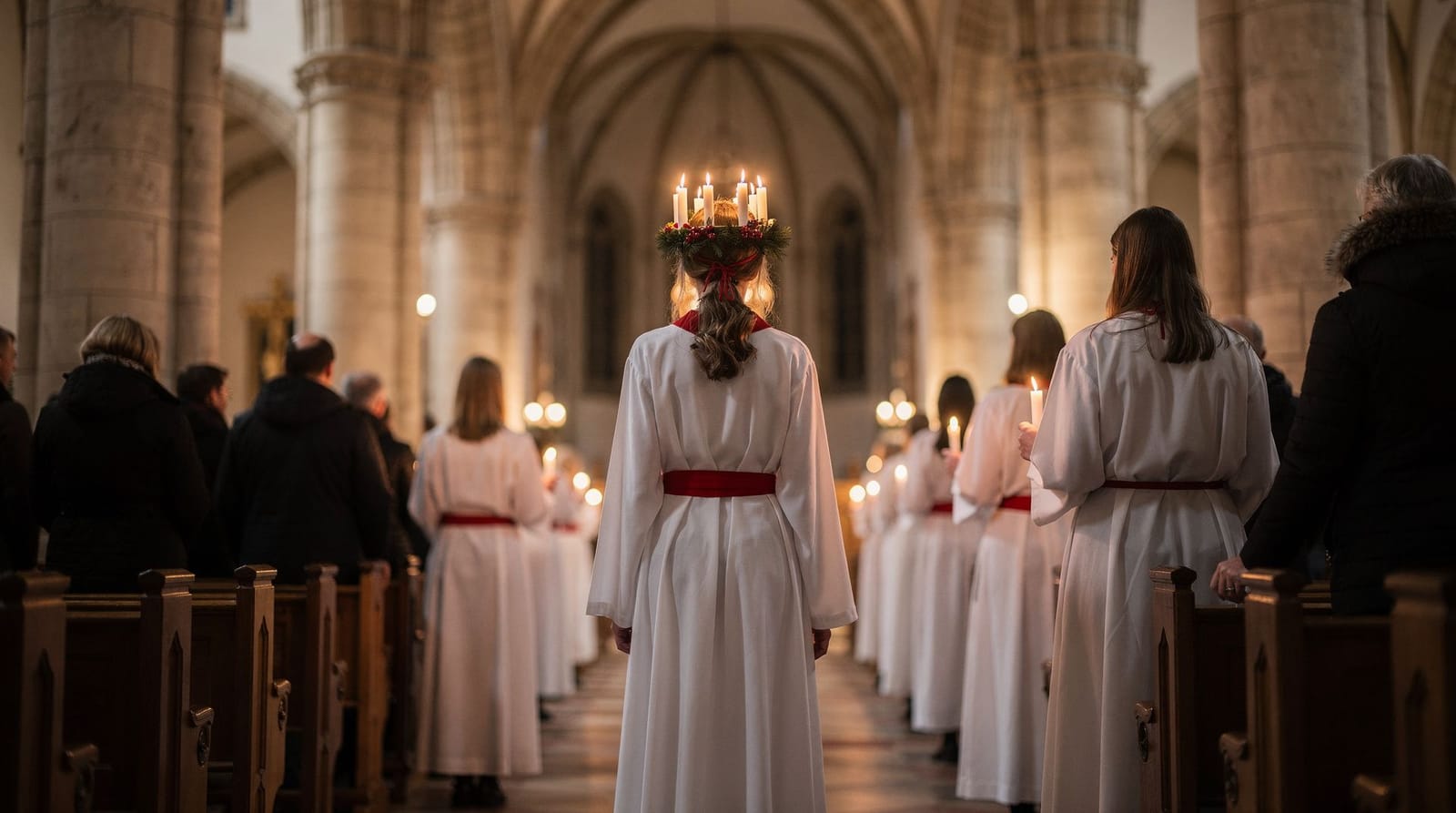
Lucia (13 December) is Sweden’s most distinctive winter ceremony — a procession of candle-crowned Lucia figures singing traditional songs in churches, schools, and workplaces across the country at dawn. The most formal Stockholm ceremony is at Storkyrkan (the cathedral in Gamla Stan), which televises its Lucia procession nationally. For visitors, arriving 60–90 minutes before the ceremony begins is necessary for a seat. See the Lucia guide for full planning.
Top experiences
Bookable activities with verified prices and instant confirmation on GetYourGuide.