Midsummer in Stockholm: what actually happens on Sweden's biggest holiday
Stockholm: Midsummer archipelago boat tour with live guide
Duration: 2.5 hours
What happens in Stockholm on Midsummer?
Most of Stockholm empties — residents leave for summer houses. Many restaurants, shops, and services close or reduce hours on Midsommarafton (Midsummer Eve, the main celebration day, Friday between 19 and 25 June). Skansen hosts a public maypole-raising and folk dancing open to all. The city is quiet, prices are low, and the daylight lasts essentially all night. Plan your activities around Skansen or embrace the emptiness.
Sweden’s biggest holiday, honestly explained
Midsommar is the single most important holiday in the Swedish calendar — more emotionally charged than Christmas for many Swedes, and more quintessentially Swedish. It is the celebration of the light returning, the summer arriving, and the specific Swedish relationship with nature and the outdoors that urban life the rest of the year denies.
For tourists visiting Stockholm on Midsommarafton, the honest experience is: the city empties. Stockholm’s residents head for their summer houses with unusual unanimity. Restaurants in residential neighbourhoods close. Streets that were busy on Wednesday are quiet on Friday afternoon. The city enters a particular suspended state — present, available, but missing its usual population.
This is not the same as a bad experience. It is a specific experience that requires honest preparation.
| When | Midsommarafton (Eve), Friday between 19 and 25 June — 25 June in 2027 |
| Cost | Skansen admission varies by season; see skansen.se |
| What’s open | Hotels, Skansen (open 10:00–22:00 on Midsummer Eve 2027), some museums (check each), Södermalm bars/restaurants |
| What’s closed | Many neighbourhood restaurants, banks, government offices, Systembolaget |
| Getting there | Skansen: T-bana to Karlaplan or bus/tram to Djurgården |
| Best time | Arrive early afternoon for the maypole raising |
What actually happens on Midsommarafton
Midsommarafton (Midsummer Eve) falls on the Friday between 19 and 25 June. This is the celebration day. By Thursday afternoon, the city is already visibly thinning out. By Friday lunchtime, the exodus is essentially complete.
What remains in Stockholm:
- All the major tourist infrastructure (hotels, the Vasa Museum, ABBA Museum, Fotografiska, Moderna Museet)
- Skansen, which holds the most important public Midsummer celebration in the city
- Some centrally located restaurants catering to tourists
- Bars and restaurants on Södermalm, which has the highest density of remaining open venues
- Most convenience shops, pharmacies, and transport networks
What changes:
- Many neighbourhood restaurants close entirely for the weekend
- Afternoon and evening queues at any open food venue, because fewer options are available
- A quieter, more reflective urban atmosphere
- Public transport on a holiday schedule (Saturday timetable on Midsummer Eve, Sunday timetable on Midsummer Day; check sl.se)
Skansen’s Midsommar celebration
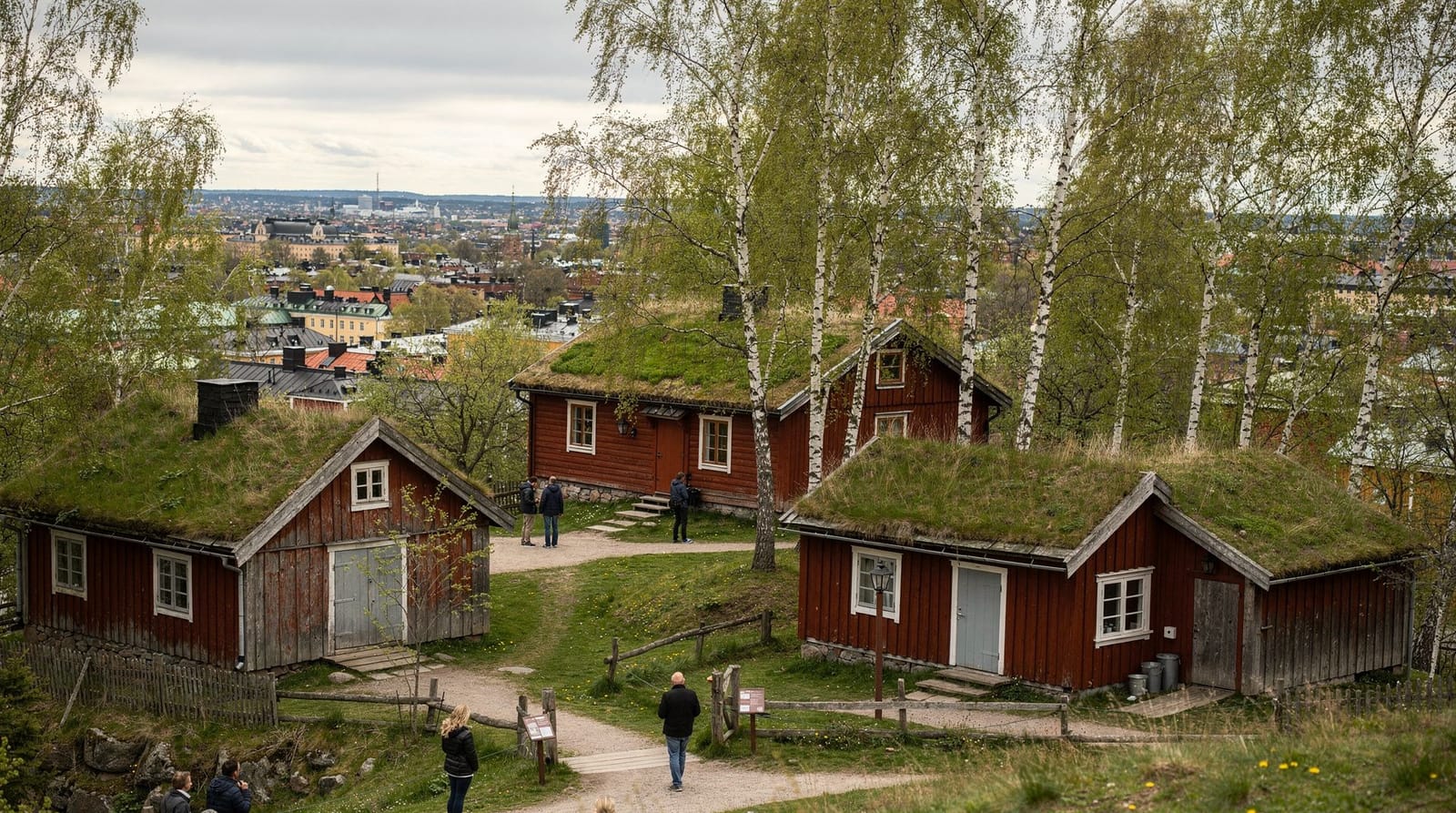
Skansen is the right place to be in Stockholm on Midsommarafton. The museum hosts a full public Midsummer programme including the midsommarstång (maypole) raising, folk dances, traditional music, and the collective participation that makes Midsummer what it is.
The event at Skansen is open to all with normal admission (see skansen.se for current prices). Families, tourists, and Stockholm residents who haven’t left the city converge here for what is the closest thing to the full Midsummer experience available without being invited to a Swedish family’s summer house.
The maypole raising: A large pole decorated with birch branches, leaves, and flowers is raised vertically by the assembled crowd. The effort involves a team of people using long poles to lift the structure while the crowd watches. Once raised, folk dances begin around the pole to traditional Swedish music.
The dances: Traditional Midsummer dances include choreographed circle dances to songs like “Smågrodorna” (the Little Frogs song, where participants make frog movements while singing — this is taken seriously and enjoyed without embarrassment), “Trollmors vaggsång,” and others. Joining in is actively encouraged.
The atmosphere: Skansen on Midsommarafton is one of those Stockholm days that regular visitors tend to plan around. The combination of the historic site, the genuine participation in cultural tradition, and the extraordinary mid-summer light makes it memorable.
Making the most of a Skansen afternoon
Skansen is large, and Midsommarafton draws a crowd, so it helps to have a loose plan rather than drifting in. Arrive before the maypole raising so you can find a spot with a view, then let the dancing carry the afternoon. Once the circle dances start, nobody is watching who gets the steps right. The point is taking part, and visitors who hang back at the edge usually wish they had joined in.
Because the celebration happens on a site full of historic buildings, the rest of the day is easy to fill. Our Skansen open-air guide walks through the farmsteads, the town quarter and the animals, and the Djurgården walking route is a good way to link the park with the rest of the island before or after. If you are travelling with children, Junibacken, Skansen and Gröna Lund shows how to combine the island’s family attractions. Entry is simple to arrange ahead with a Skansen admission ticket, which saves time at the gate on a busy holiday.
Dress for changeable weather. A Swedish summer day can swing from warm sun to a cool breeze, and a long afternoon outdoors on grass is more comfortable with a light layer. Comfortable shoes matter more than anything else, since the site is hilly and much of the day is spent on your feet.
The Midsummer archipelago experience
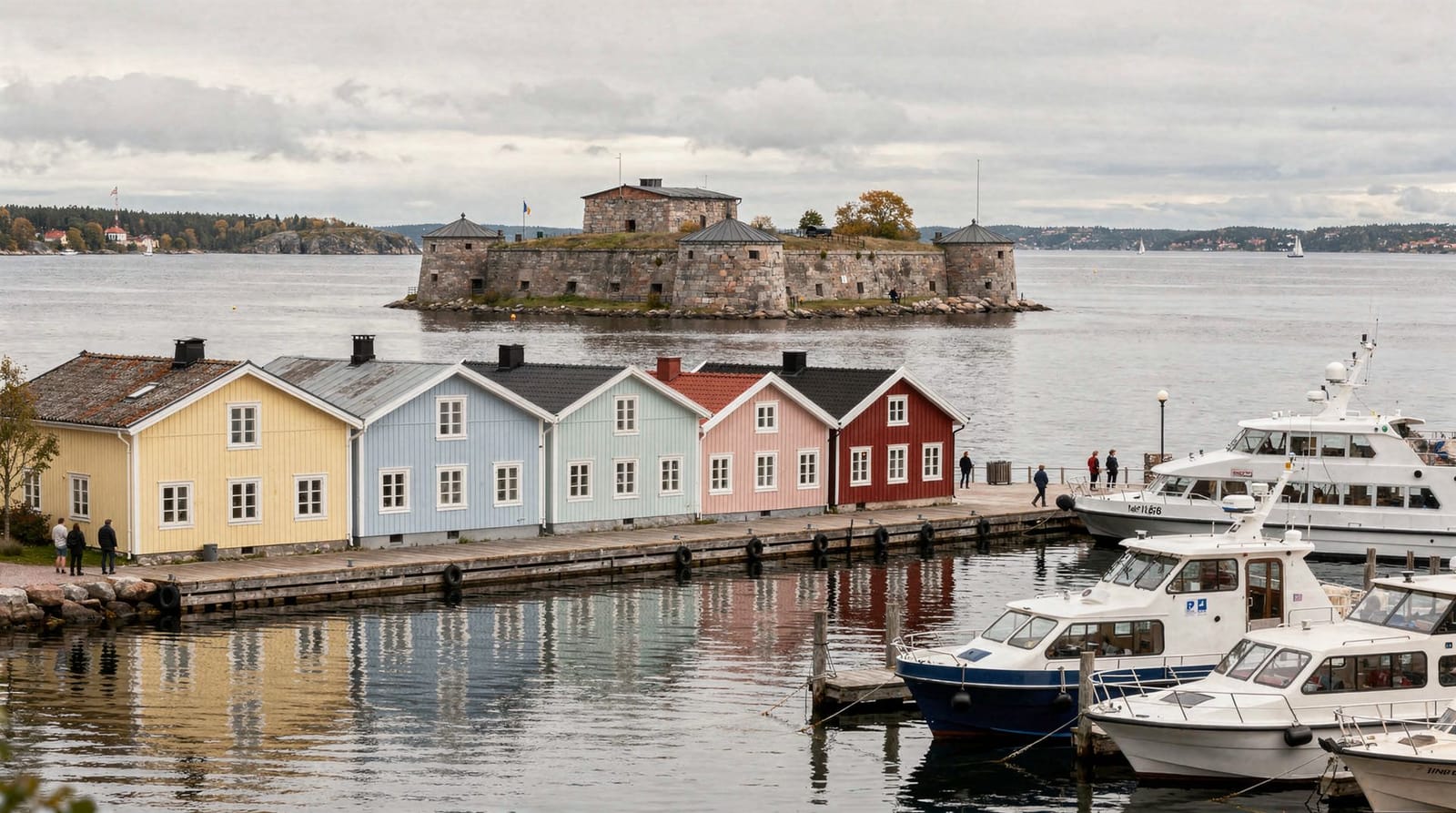
The most Swedish way to experience Midsummer is in the archipelago — in an island cottage, with herring and new potatoes, schnapps, flower crowns, a sauna, and the light that never quite becomes darkness. Swedish popular culture has essentially defined Midsummer this way.
For tourists who want something approaching this experience, the archipelago is the answer — but with planning. Ferries to archipelago islands over the Midsummer weekend are extremely busy. Accommodation in the archipelago is booked months in advance. Restaurants at archipelago destinations are crowded and expensive. Our archipelago day-trip comparison covers which islands handle crowds best if you’re going independently rather than on a guided tour.
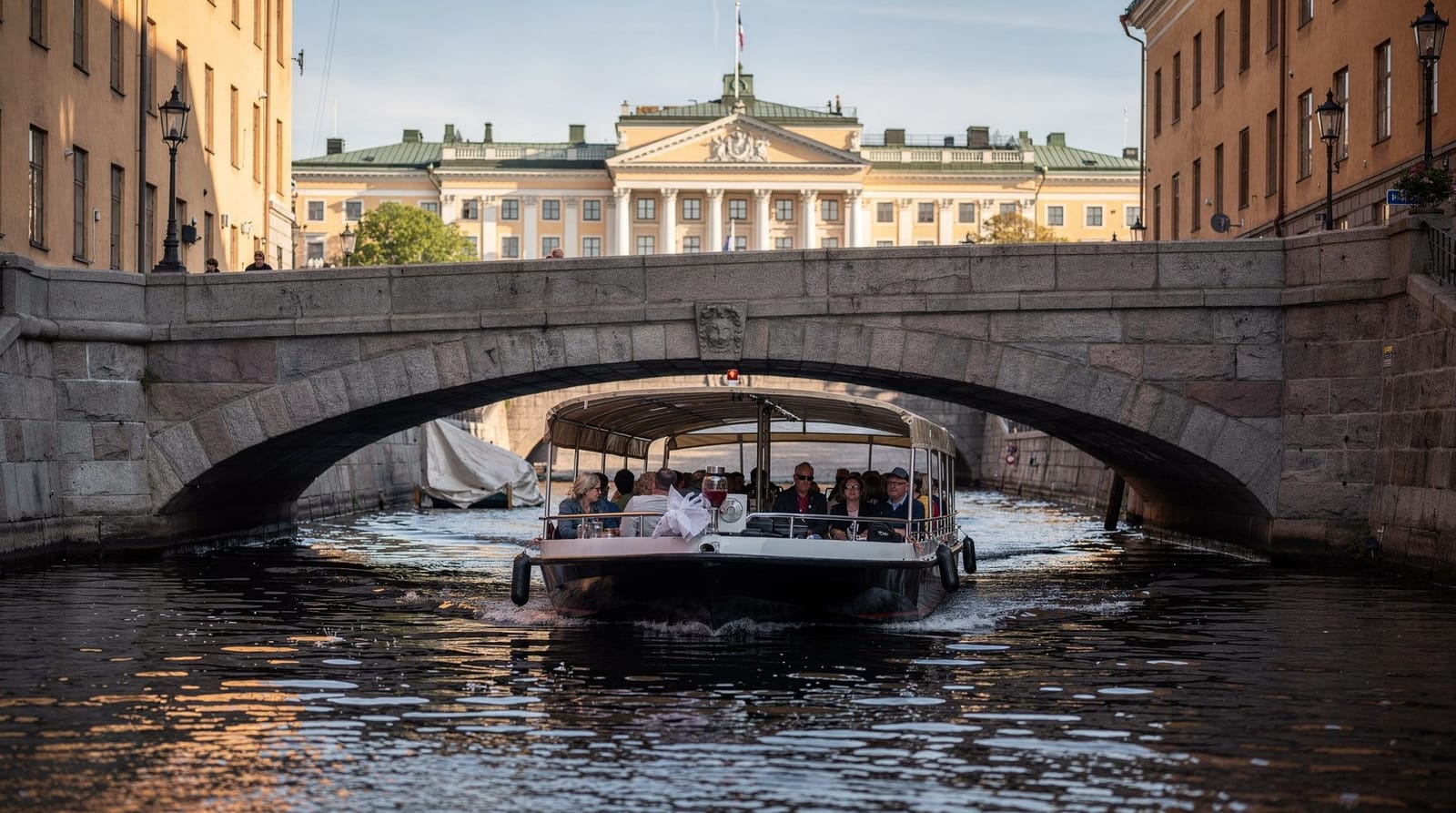
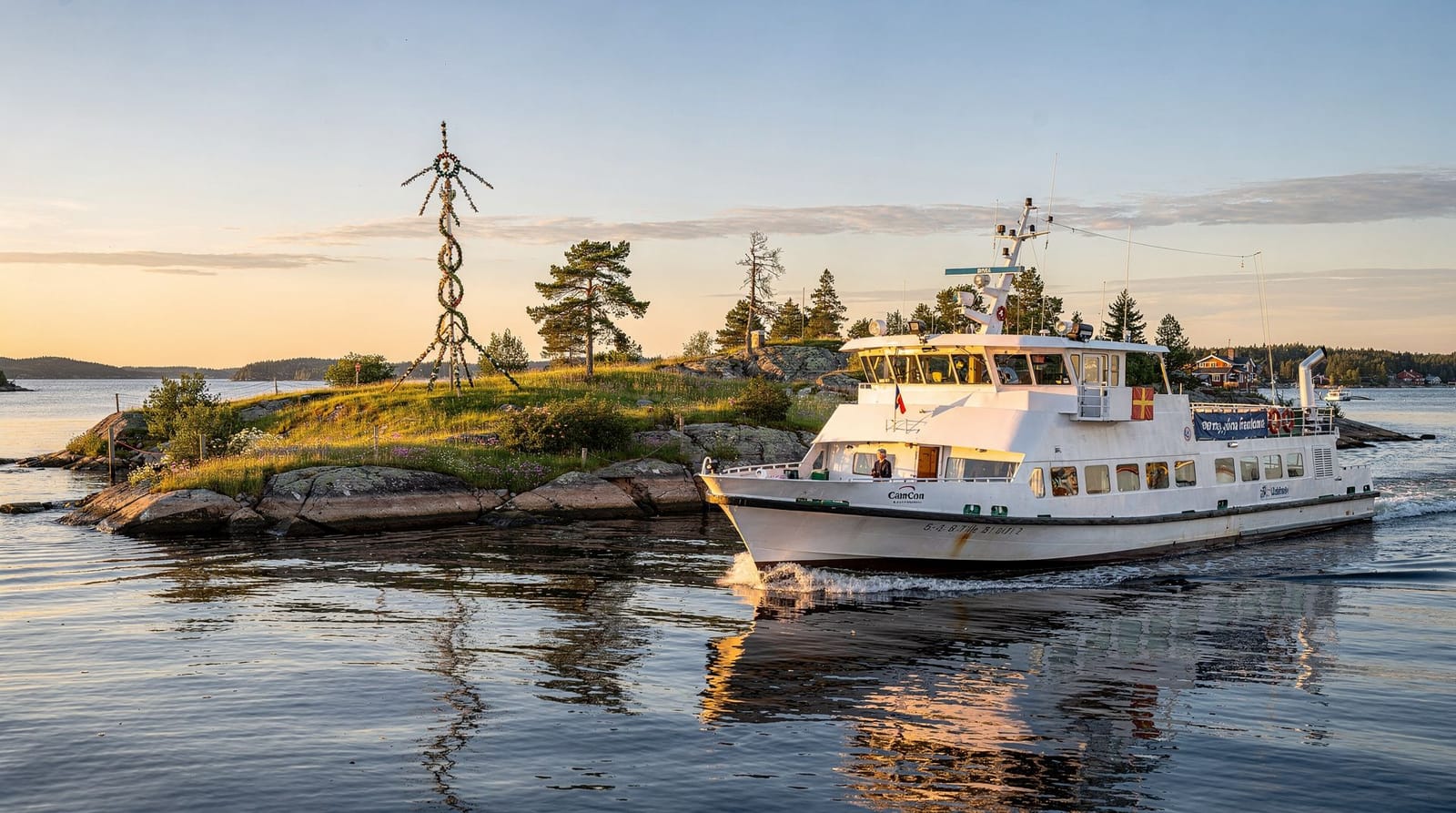
The Midsummer archipelago boat tour with live guide provides an organised way to access the archipelago scenery and atmosphere without the logistics of independent overnight travel. The tour includes the specific Midsummer context from a guide who explains what you’re seeing.
If wildlife and long light appeal to you more than folk dancing, the evening wildlife safari during Midsummer is a quieter way to use the midnight-sun daylight outside the city.
If you would rather keep your feet dry and your plans flexible, the Waxholmsbolaget ferries explained and the Strömma vs Waxholmsbolaget comparison help you understand who runs what before you commit. Closer islands such as Fjäderholmarna are the gentlest introduction to the water, and the Midsummer archipelago cruise guide goes deeper on the cruise options specific to this weekend. For anyone tempted to stay out overnight, remember the rules of Allemansrätten: the right to roam comes with responsibilities, and Midsummer is not the weekend to improvise camping logistics.
The midnight sun on Midsummer
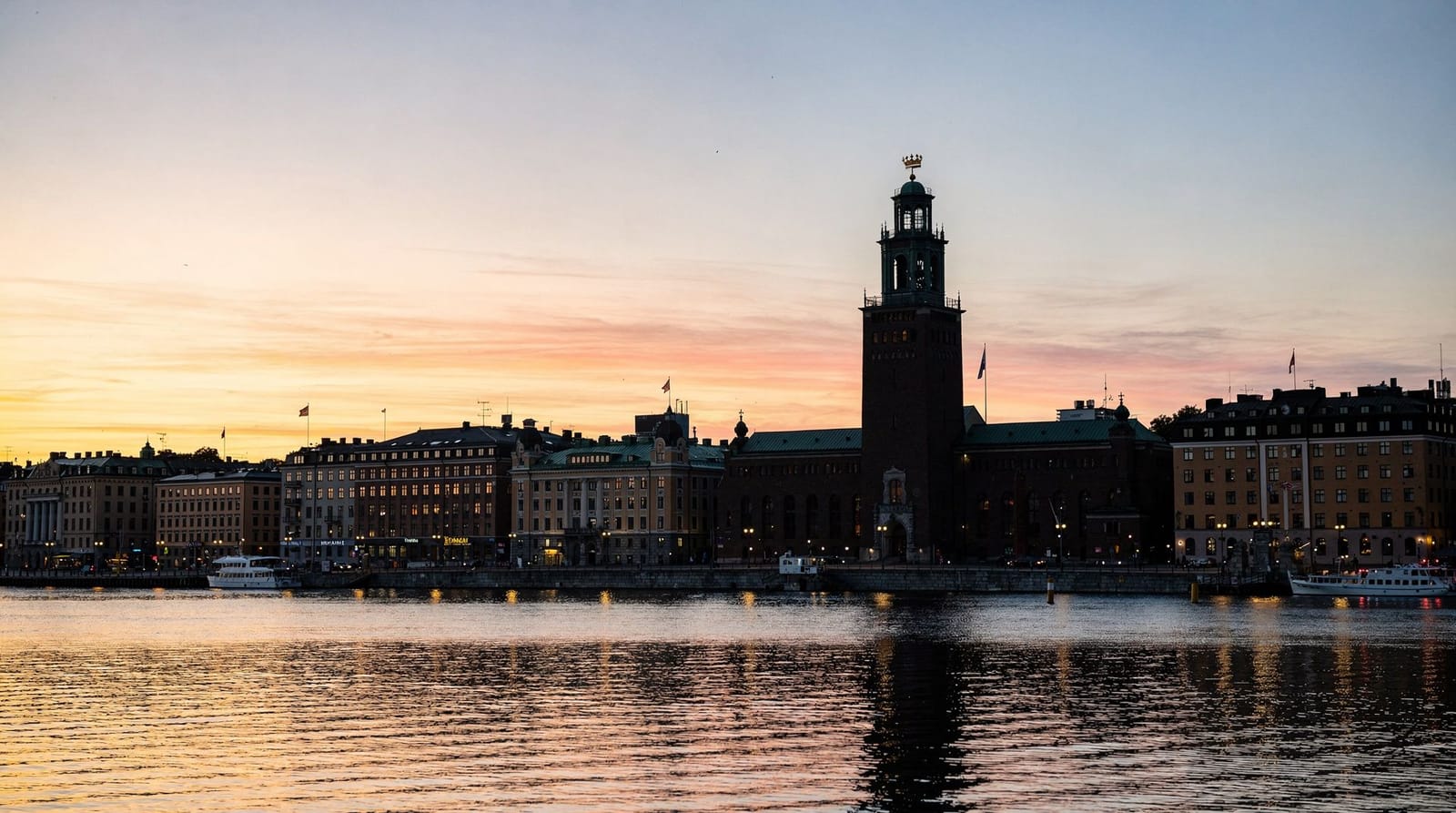
Stockholm doesn’t experience true midnight sun — the sun dips below the horizon briefly around the summer solstice. But the effect is remarkable nonetheless: on Midsommarafton, it doesn’t get dark. The sky transitions through shades of orange and pink, settles into a deep twilight, and begins brightening again before most people go to sleep.
This is genuinely disorienting for visitors from lower latitudes. Sleep masks are essential. The light also means that outdoor activities are possible at any hour — dinner at 22:00, a walk at 23:30, and the sky is still light. Stockholm’s outdoor culture embraces this completely.
Practical planning for Midsummer in Stockholm
Accommodation: Book well in advance. Most Stockholm hotels stay open, but popular central properties fill for the Midsummer weekend. Prices are at or approaching peak July levels.
Food: Research and reserve restaurants in advance. Many that might normally be available close. Focus on the tourist-centre areas (Gamla Stan, Norrmalm, tourist-oriented Södermalm) where more places stay open, and make reservations the moment you arrive.
Activities: Skansen on Midsommarafton is the primary recommendation. Check the opening hours of individual museums, as not all are open. Boat tours operate. The canal district and waterfront areas have activity. Avoid planning evenings around neighbourhood restaurant discovery — it will likely not work.
Transportation: T-bana and buses run on a holiday schedule — less frequent but operational. Taxis and rideshare are available. Cycling is excellent during Midsummer as the city is less congested.
Using the quiet city well
An emptier Stockholm has real upsides. With so many residents away, the museums and streets that are normally crowded feel more relaxed, and it is a good moment to see sights at a gentler pace. The Vasa Museum guide and the ABBA Museum guide both help you decide how to spend an indoor hour, and booking ahead with a Vasa Museum entrance ticket keeps the day simple. If the weather turns, the museum rainy-day guide lists good fallbacks.
The old town is also a pleasant place to wander when the usual bustle thins out. Our Gamla Stan walking tour guide gives a route you can follow on your own, and the self-guided walking Stockholm page suggests other ways to explore on foot without joining a group. Cycling is another good way to enjoy the calm, as covered in the cycling in Stockholm guide.
Eating on a holiday weekend
Midsummer food is a tradition in itself, and trying it is part of the point. If you want the flavours without being invited to a family table, look at the smörgåsbord guide and the Södermalm food scene for places that are more likely to stay open. Think of the weekend as a chance to eat herring, new potatoes and strawberries in a restaurant instead of at a summer house, and reserve early. Our fika culture guide is useful for the in-between hours, since a coffee and a cinnamon bun is often the easiest thing to find open.
Getting around
The Stockholm public transport explained page and the SL pass guide cover how the network works, which is worth reading before a holiday when timetables change. Check the current schedule for the day itself rather than assuming normal service, and leave extra time if you are catching a ferry or heading to the airport.
For a first-hand account of how the weekend plays out, the blog post Midsummer in Stockholm: a survival guide from experience is a candid companion to this guide, and the broader Stockholm summer white nights guide puts the holiday in the context of the whole season.
If you’re visiting Stockholm around Midsummer but not on the day
The week before and after Midsummer is high season without the specific holiday dynamics. The city is busy, prices are at summer levels, and the long daylight is fully present. Arriving the week before Midsommarafton gives you the full summer Stockholm experience before the holiday quietness arrives. See the Stockholm summer white nights guide for what the wider June–August daylight season looks like beyond the single Midsummer weekend.
How Midsummer week compares to the rest of the Stockholm summer
| Period | Restaurants & shops | Crowds | Prices |
|---|---|---|---|
| Week before Midsommarafton | Fully open, normal hours | Busy, full high-season crowds | High season |
| Midsommarafton weekend | Many closed in residential areas | City quiet; archipelago packed | Hotels near peak, archipelago premium |
| Week after Midsummer | Reopening, back to normal | Busy again | High season |
| July (peak) | Fully open | Busiest month of the year | Highest of the year |
Where to stay and what else to plan
Most visitors build Midsummer into a longer Stockholm trip rather than a single-day visit. If you’re combining it with a first look at the city, our 3-day first-timer itinerary works well anchored around the Midsommarafton weekend — just swap in Skansen for whichever day lands on the Friday. Families should also check the Stockholm with kids guide, since Skansen’s Midsummer programme is genuinely one of the better kid-friendly cultural events the city runs all year.
Frequently asked questions about Midsummer in Stockholm
Should I avoid Stockholm during Midsummer?
Not necessarily. It depends on what you want. If you want the full, vivid, restaurant-rich Stockholm experience, the weeks before and after Midsummer are better. If you’re interested in Swedish cultural traditions and the specific atmosphere of Midsommarafton, being in Stockholm for Skansen’s celebration is worth planning for. The honest answer: neither strongly avoid it nor strongly seek it without understanding what the experience actually is.
Can I attend a traditional Midsummer celebration at a Swedish family?
Rarely, without personal connections. Midsummer is intensely family and friend oriented — inviting strangers to a family celebration is unusual. The Skansen public celebration is the designed public alternative. Some tour operators offer “traditional Midsummer experience” excursions, but these tend to be curated tourist events rather than genuine family celebrations.
What flowers go into Midsummer flower crowns?
Traditional Swedish flower crowns (blomsterkransar) use wildflowers — cornflowers, daisies, buttercups, clover, and other summer meadow flowers. The tradition holds that picking seven different types of wildflowers on Midsommarafton and placing them under your pillow will cause you to dream of your future partner. Flower crowns for tourists are sold at Stockholm markets in June.
What do Swedes eat on Midsummer?
The classic menu: pickled herring in multiple preparations (with cream and dill, with mustard sauce, with onion), new potatoes (the first small potatoes of the season with butter and dill), sour cream with chives, gravlax, smoked salmon, and beer or schnapps (snaps). Strawberries with cream are the essential dessert. The whole menu is designed around the fresh, local, beginning-of-summer availability that Midsummer traditionally marks.
Top experiences
Bookable activities with verified prices and instant confirmation on GetYourGuide.