Stockholm's white nights: what to expect May to July
Stockholm: full-day archipelago sailing tour
Duration: 8 hours
When do white nights happen in Stockholm?
Stockholm experiences near-continuous twilight from approximately 15 May to 29 July. The sky never achieves true astronomical darkness around the June 21 solstice — sunset occurs around 22:00 and twilight persists until the sun rises again around 3:30. Pack a sleep mask. The outdoor culture that emerges in response to this light is one of the best things about summer Stockholm.
The light that doesn’t stop
Stockholm’s white nights are one of the most immediately striking experiences in European city travel, particularly for visitors from lower latitudes where summer darkness arrives at a predictable 21:00 or 22:00.
In Stockholm in June, that doesn’t happen. You exit a restaurant at 22:30 and the sky is bright. You step out onto your hotel room balcony at midnight and the northern horizon glows. You wake at 4:00 AM and the room is filled with morning light — except it’s not morning yet by any reasonable clock definition.
The effect is both beautiful and practically disruptive. Stockholm has adapted to it completely: outdoor dining, late-evening cultural events, archipelago trips that run into the evening, a general displacement of the social schedule toward later hours. Visitors need to understand and adapt to this schedule rather than imposing conventional timing on a city whose summer operates differently.
| Peak window | Mid-May to late July |
| Darkest it gets (solstice) | Blue-grey twilight, no true black |
| Best for | Late terraces, evening archipelago trips, golden-hour photography |
| Hotel prices | Highest of the year, 30–40% above spring |
| Essential pack item | Sleep mask |
For the shoulder-season alternative with lower prices and fewer crowds, see the spring guide.
The timeline: when light changes in Stockholm
| Date range | Sunset | Sunrise | Sky at midnight |
|---|---|---|---|
| Mid-May | 21:15 | 04:15 | Deep blue |
| June 1 | 21:50 | 03:45 | Blue-grey twilight |
| June 21 (solstice) | 22:05 | 03:30 | Blue-grey, no true dark |
| July 4 | 22:00 | 03:45 | Twilight |
| Late July | 21:30 | 04:30 | Genuine dusk |
| Mid-August | 20:40 | 05:05 | Real darkness returns |
The May–July period is when the light is most persistent. August represents the rapid decline toward normal summer hours, and by September Stockholm has standard European daylight patterns (declining toward the November–January darkness).
How the white nights reshape Stockholm
Outdoor culture peaks
Stockholm’s outdoor spaces — the parks, waterfront promenades, terrace restaurants, archipelago islands — exist primarily as a counterweight to the long dark winter. In May through July, they reach their full expression.
The terrace culture at restaurants is not the same as southern European terrace dining. Stockholm residents are compensating for eight months of indoor obligation. The outdoor tables at Nytorget (Södermalm), Monteliusvägen (Södermalm ridge), Djurgårdsbrunnsviken (Djurgården waterfront), and dozens of neighbourhood squares fill at times that would be late evening in Paris.
Dinner at 20:00 or later is normal
Swedish summer meal times are not equivalent to Spanish schedule but they shift significantly later than in winter. Restaurant peak times in July run from about 18:00 to 22:00, with outdoor terraces remaining busy well past 23:00 on warm evenings. If you’re used to dinner at 19:00, consider adjusting to 20:30 — the light and atmosphere at that hour in June is exceptional.
Late evening activities
The outdoor activities that make no sense after dark elsewhere continue well into the evening:
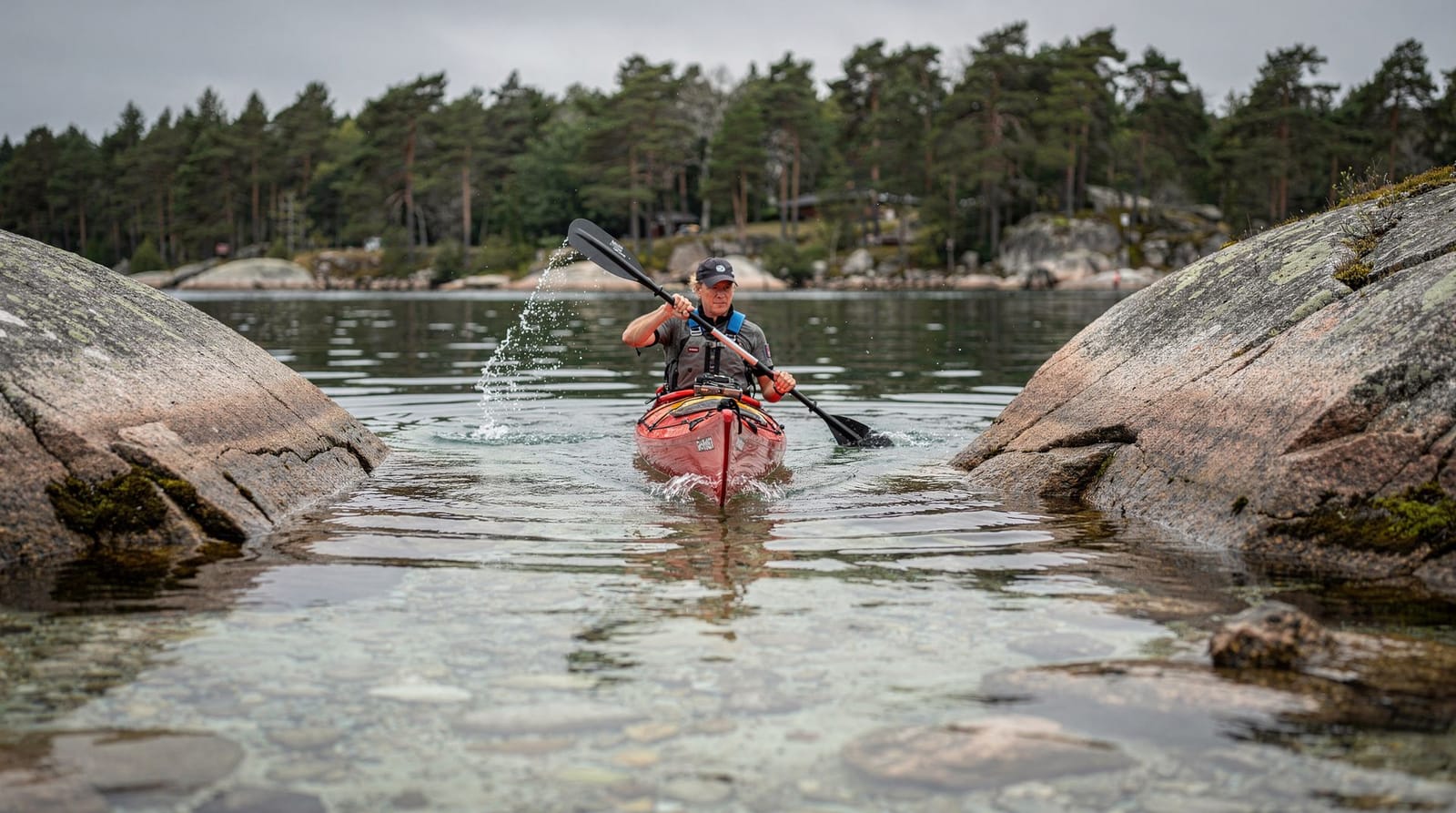
- Kayaking at 20:00 with golden light on the water
- Archipelago day trips that extend until 21:00 ferries
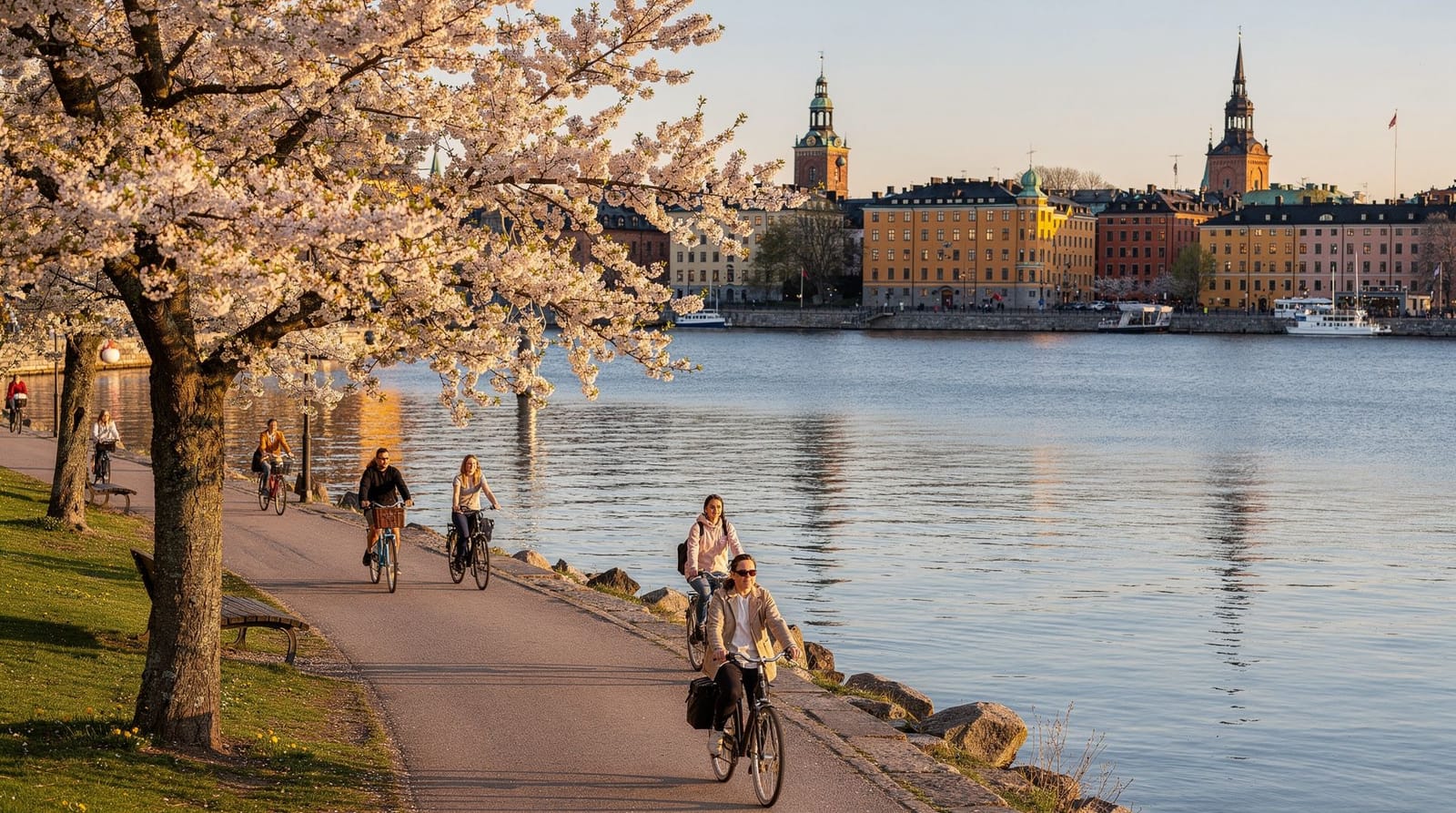
- Cycling around Djurgården and the Djurgårdsbrunnsviken canal at sunset (22:00)
- Photography from Monteliusvägen as the golden hour stretches toward midnight
Parks become living rooms
Stockholm’s parks — Hagaparken, Djurgården, Kungsträdgården, Tantolunden (Södermalm) — transform in summer. Swedes treat them as extensions of their apartments: swimming in the lake (Brunsviken in Hagaparken is popular), grilling in designated areas, sunbathing, playing outdoor sports. The concept of Allemansrätten (the right of public access to nature) is lived practically in these urban parks.
What to do with 22 hours of light
Archipelago explorations
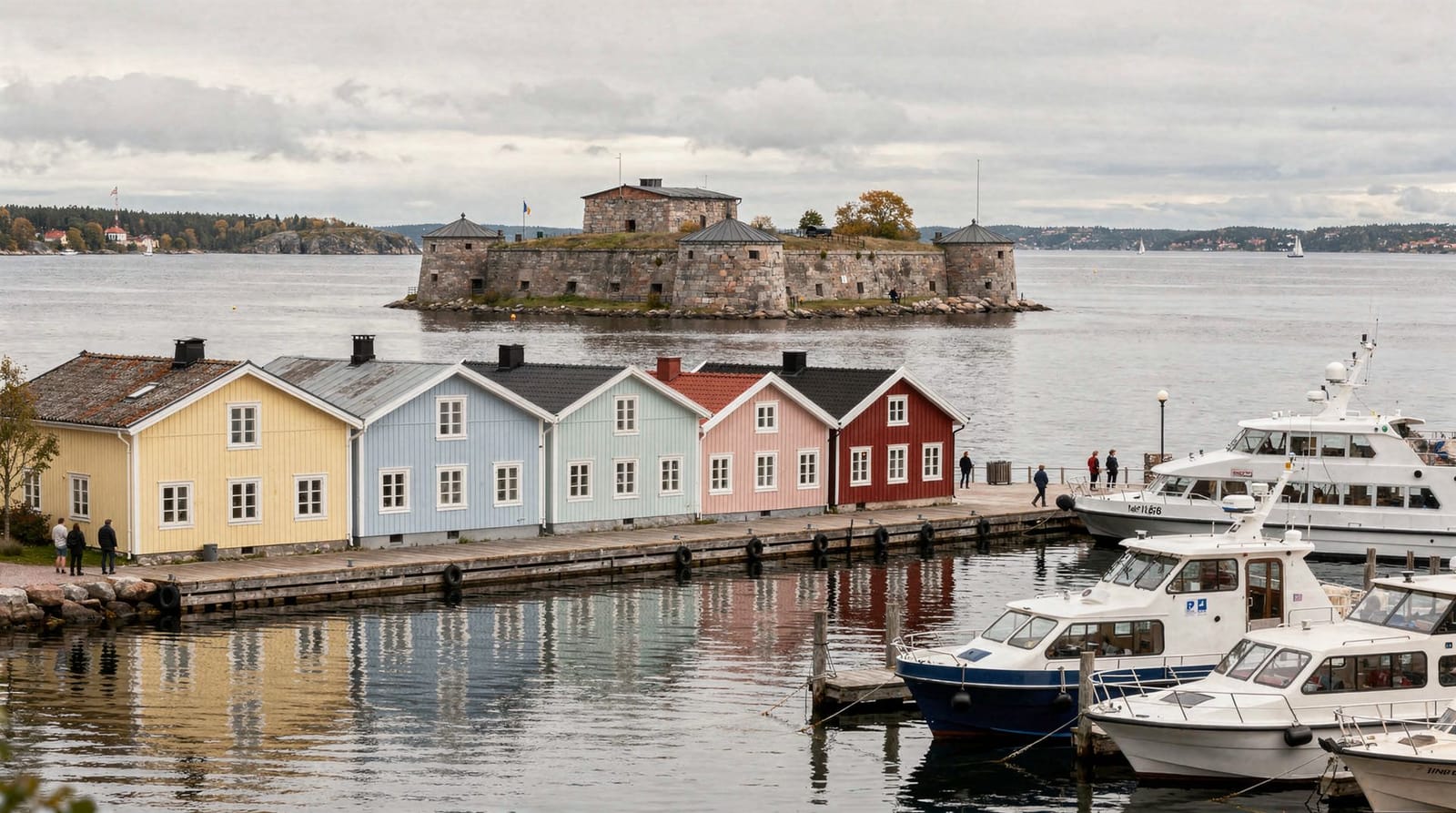
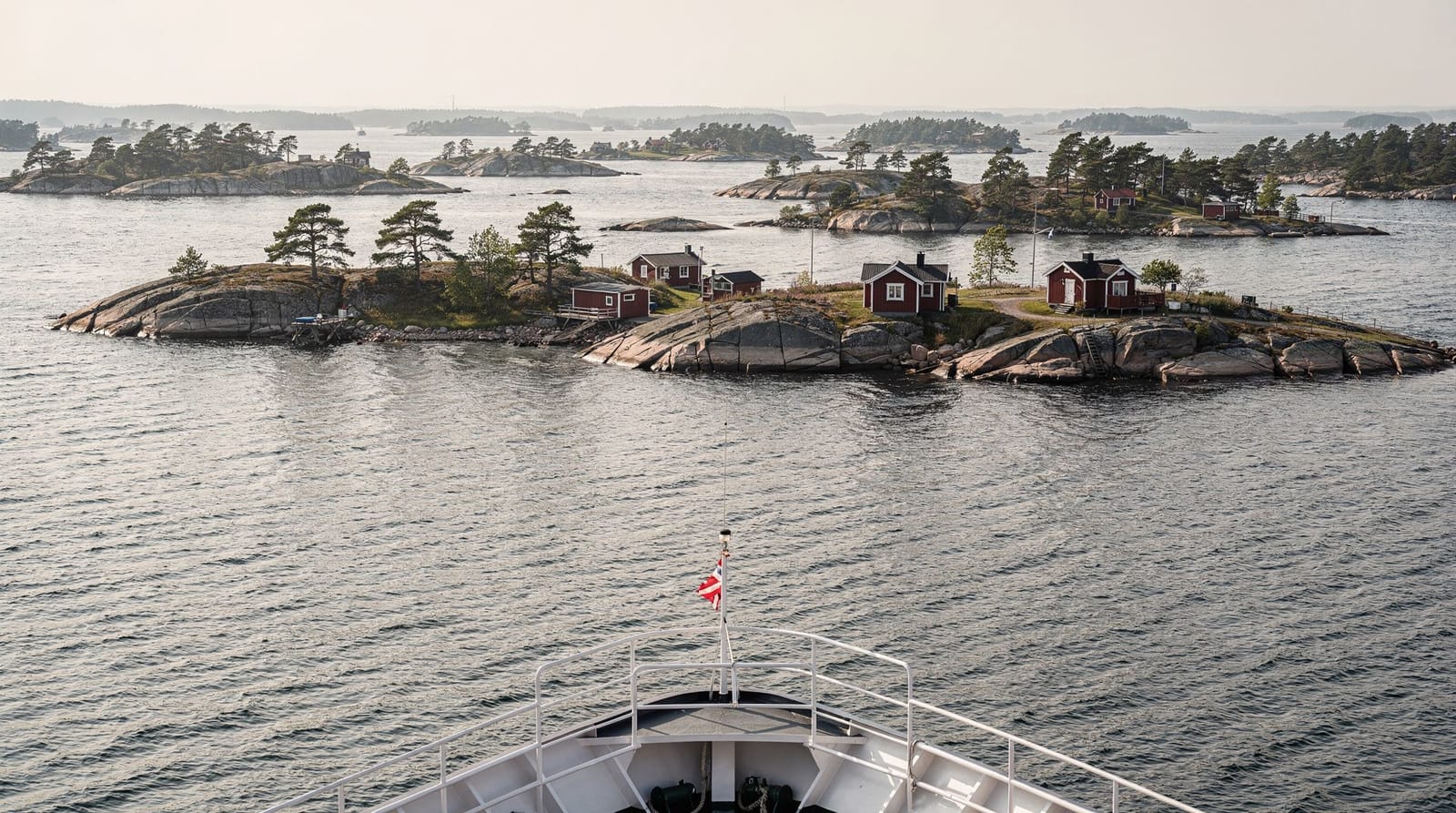
The white nights season is when the archipelago is most accessible and most worth visiting. A full-day archipelago sailing tour in June or July extends into long evening light. The evening light on the archipelago’s red wooden cottages, granite rocks, and dark water is visually extraordinary.
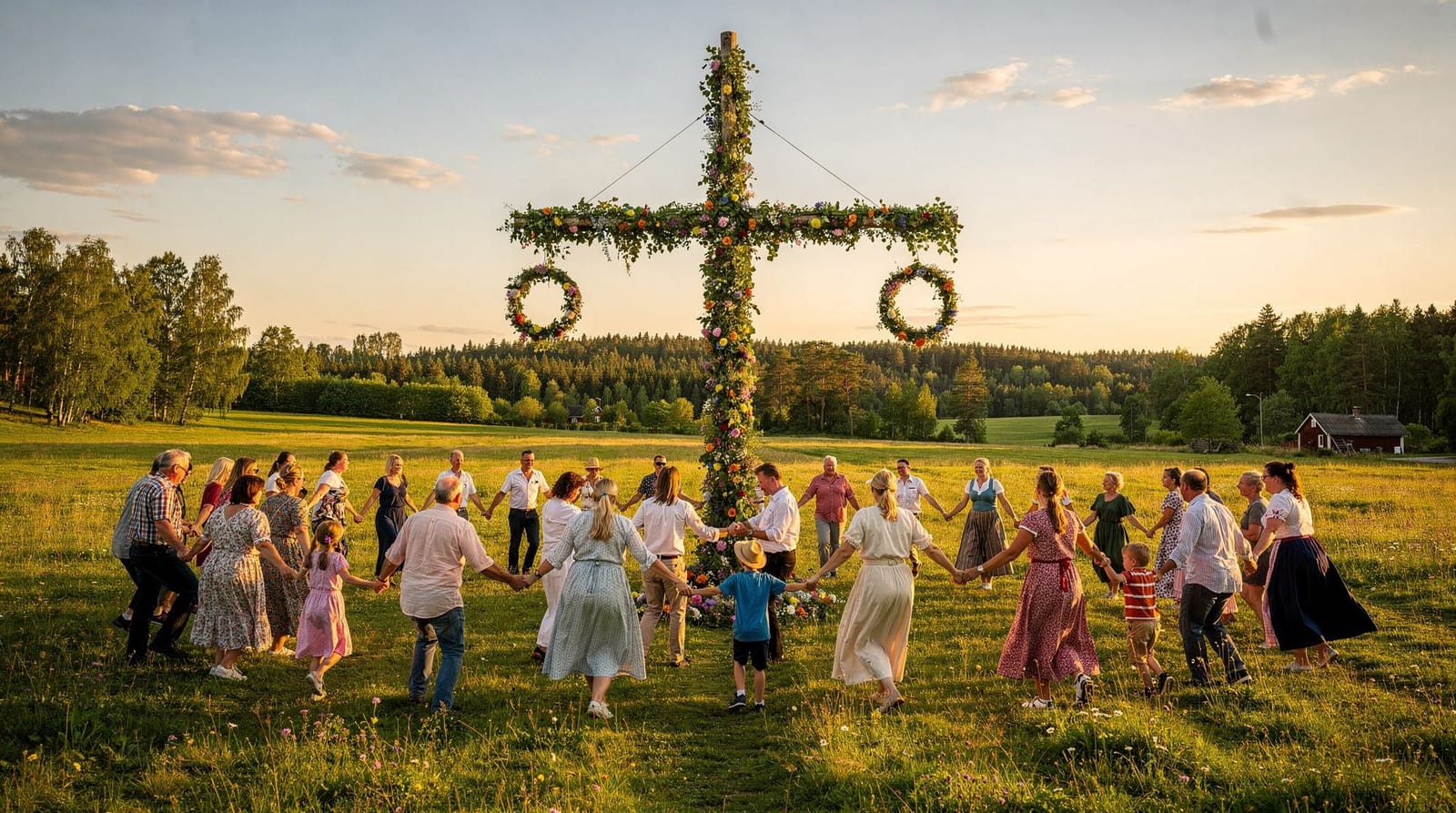
Day trips to Vaxholm, Grinda, or Fjäderholmarna can be planned around late ferries, giving full use of the light. If Midsummer itself falls in your travel window, the celebration reshapes the whole city and archipelago for a weekend — see the Midsummer in Stockholm guide for what actually happens and how to join in respectfully.
An evening wildlife safari around Midsummer is a good way to use the extended light for something other than the standard sightseeing route.
Swimming
Stockholm’s swimming spots are at their peak from June through August. Långholmsbadet (Långholmen island, natural lake beach), Smedsuddsbadet (Kungsholmen, western waterfront), and the archipelago beaches are all accessible by public transport. Water temperatures reach 18–20°C in July.
Evening walking routes
The 21:00–23:00 window in June is exceptional for walking. Monteliusvägen on Södermalm — a cliff-top path with views across Kungsholmen, Stadshuset, and Riddarfjärden — is Stockholm’s best sunset-watching spot. In June, “sunset” extends so long that the light is effectively permanent.
Djurgårdsbrunnsviken: The canal between Djurgården and Östermalm at golden hour is quiet, beautiful, and far enough from the tourist centre to feel like a genuine local discovery.
Gamla Stan at 23:00 in June: The tourist crowds have thinned, the narrow streets have a different quality in the semi-dark blue light, and the experience is more personal than at any daytime hour.
Pairing the light with a neighbourhood
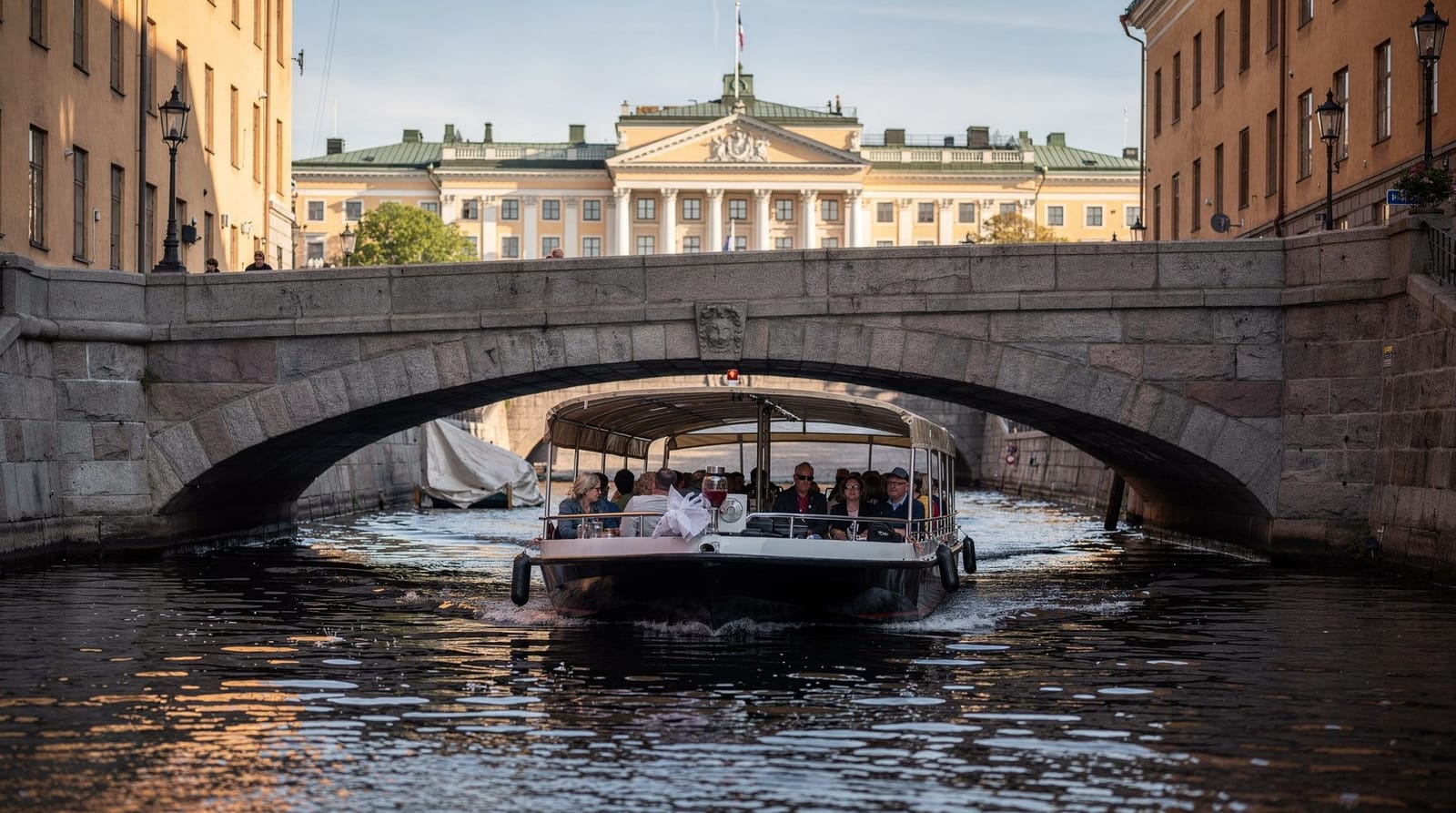
The long evenings reward picking one area and staying in it rather than racing across the city. Södermalm suits a slow loop of terraces and viewpoints, and the Södermalm walking tour guide gives a route you can start late and still finish in good light. Djurgården works well for a quieter, greener evening; the Djurgården walking route is a natural fit when you want water and trees rather than crowds. If you prefer to see the city from the water as the light softens, the evening cruise guide explains what to expect on the boats that run into the late hours.
Using the daylight for indoor sights too
Endless light changes how you order your day. A sensible pattern is to take the big indoor sights earlier, when queues and heat are the issue, and keep the evening free for the outdoor things that only make sense in this light. The Vasa Museum guide and the Skansen open-air museum guide both help you choose how much time to give each, and Skansen in particular is pleasant when the day stretches on. Because the sky tells you nothing about the hour, it is easy to lose track of time: set a loose closing-time reminder for anything you really want to see, rather than trusting the brightness outside.
A sample white-nights day
Start slowly. Breakfast and a late morning wander, then a main sight in the early afternoon. Take a long break in a park, ideally near water, when the city is at its busiest. Eat a late dinner on a terrace, then walk until the light finally turns blue-grey. If you want a longer plan that builds the archipelago into a summer stay, the five-day summer itinerary with the archipelago shows how to spread these ideas over several days without exhausting yourself.
Respecting the quiet hours
Even when the sky says it is the middle of the afternoon, the people who live here still sleep. Keep noise down when walking back through residential streets late at night, and remember that island cottages in the archipelago are private homes. The Allemansrätten guide explains how the right of public access works in practice and where its limits lie, which matters most on long evenings when you are tempted to linger on someone’s shoreline.
Practical guide to sleeping through the white nights
Sleep mask: The single most important purchase before visiting Stockholm in May–July. A contoured eye mask that blocks light completely. Hotels rarely have fully blackout curtains; apartments almost never do.
Book rooms carefully: When booking, check specifically whether your hotel room has blackout curtains. South-facing rooms on upper floors in June can be genuinely bright at 3:00 AM. Some hotels advertise “blackout blinds” as a specific feature.
Sleep schedule adjustment: Some visitors adapt by shifting their sleep schedule later — going to bed at midnight rather than 22:00, getting up at 8:00 rather than 6:00. This aligns with how the city actually runs in summer and avoids fighting the light.
Ear plugs: Not for the light, but for the summer: Stockholmers, freed from winter, celebrate loudly. Outdoor bars and patios near accommodation can be noisy until 2:00–3:00 AM on weekends.
The light itself as an experience
There is a specific quality to Stockholm’s June light at 21:00–23:00 that photographers and artists travel specifically to experience. It is the world’s longest golden hour — the sun is low enough to cast long shadows and warm everything with a reddish-gold tone, but it stays there for hours rather than the 20–30 minutes of golden hour at lower latitudes.
Gamla Stan’s medieval facades in this light. The waterfront at Södermalm. The wooden red cottages of Djurgården. The archipelago island clusters viewed from a slow ferry. All of these are transformed by light that doesn’t exist elsewhere in Europe with this consistency.
Getting the logistics right
Public transport keeps running late into the white nights, which makes it easy to build an evening-heavy schedule. The T-bana runs frequently until around 01:00 on weekdays and later on weekends, and the SL pass covers buses and the archipelago boats that connect to Vaxholm and the inner islands. If you’re planning a swimming stop as part of an evening walk, Stockholm’s public swimming spots has the practical detail on which lake and harbour beaches are cleanest and best served by transit. And because the crowds and prices both build through June and July, travellers who want the light without the peak-season intensity often compromise on late May or early June — see the best time to visit Stockholm guide for how the whole year compares.
Planning around the light
The white nights are not only a matter of what you see, but of how you plan. Build your days around two energy peaks: a morning start and a long evening. The middle of the day is the time to rest, swim, or step into a museum. Travellers who try to run on a winter schedule, with everything finished by dinner, miss the best part of the season, while those who push through from early morning to midnight tend to burn out by the third day. Leave at least one evening completely unplanned, and let the light decide where you end up.
If you are travelling with children, the same logic applies with extra care: the light makes bedtime hard, so the Stockholm with kids family guide is worth reading before you commit to late schedules. For help with the budget side of a high-season trip, the Stockholm budget per day guide covers where the money tends to go.
Frequently asked questions about Stockholm’s white nights
Is it worth visiting Stockholm just for the white nights?
The white nights are a significant enhancement to Stockholm’s already strong summer offering. They’re a reason to choose Stockholm over other European cities in May–July, but they’re not the sole reason — the archipelago, Skansen, the museums, the food scene, and the waterfront culture all peak simultaneously in summer.
Do other Scandinavian cities have the same effect?
Copenhagen (55°N) has long summer days but not the same extent of persistent twilight. Oslo (60°N) is similar to Stockholm. Helsinki (60°N) is similar. For true midnight sun, you need to go significantly further north — Tromsø, Norway (70°N) or Swedish Lapland. Stockholm’s experience is in between: not midnight sun but white nights that are nonetheless genuinely remarkable.
What should I photograph during white nights?
The best photography windows: 21:00–23:00 (long golden light, warm tones, low shadows) and 03:00–05:00 (cool blue light, empty streets, a particular quiet atmosphere). For the 03:00 window, set an alarm — it’s worth it at least once during a June trip to see Stockholm’s empty streets in near-darkness-that-isn’t-quite-darkness.
Top experiences
Bookable activities with verified prices and instant confirmation on GetYourGuide.