Midsummer archipelago cruise Stockholm: what to expect and how to book
Stockholm: Midsummer archipelago boat tour with live guide
Duration: 2.5 hours
What is the Midsummer archipelago cruise in Stockholm and is it worth booking?
The Midsummer archipelago boat tour departs from central Stockholm and combines a guided cruise through the inner archipelago with onboard Midsummer celebrations — flower crowns, traditional food, and live guide commentary on Swedish Midsummer traditions. The cruise lasts about 2.5 hours; check the operator's booking page for the current price. For visitors who want to experience Swedish Midsummer without access to a Swedish family celebrating in the countryside, this is one of the most organised ways to participate.
Midsummer in Sweden: the most important holiday
Midsommar — Swedish Midsummer — is not a minor folk festival. It is Sweden’s most important holiday after Christmas and New Year. The streets of Stockholm empty; trains to the countryside are booked weeks in advance; the archipelago fills with boats anchored in coves, families gathered around maypoles, and the peculiarly Swedish ritual of dancing and singing about frogs (the traditional Midsummer frog song, Små grodorna, is not explained by logic and understood only by experience).
| Where | Departs Strömkajen or Strandvägen, central Stockholm |
| Cost | Check the booking page for current prices; the standard cruise lasts about 2.5 hours, dinner-cruise formats about 4 hours |
| Time needed | 2.5–4 hours |
| Getting there | Walk from Norrmalm/Gamla Stan/Östermalm, or T-bana to Kungsträdgården |
| Best time | Book 4–6 weeks ahead; Midsummer Eve 2027 is Friday 25 June, so check the booking page for sailing dates |
For tourists in Stockholm on Midsummer weekend, the primary practical reality is that the city is effectively closed. Most restaurants, many museums, and essentially all shops are shut on Midsummer Eve (Friday) and Midsummer Day (Saturday). This creates a specific problem: you are in one of Europe’s most attractive cities and almost nothing is open.
The Midsummer archipelago cruise solves this. It is one of the few organised experiences running specifically on Midsummer Eve, it incorporates the cultural elements of the holiday (traditional food, flower crowns, aquavit), and it does all of this from the extraordinary perspective of Stockholm’s inner archipelago on the longest evening of the year.
Book Stockholm Midsummer archipelago boat tour with live guideWhat the Midsummer cruise involves
The route
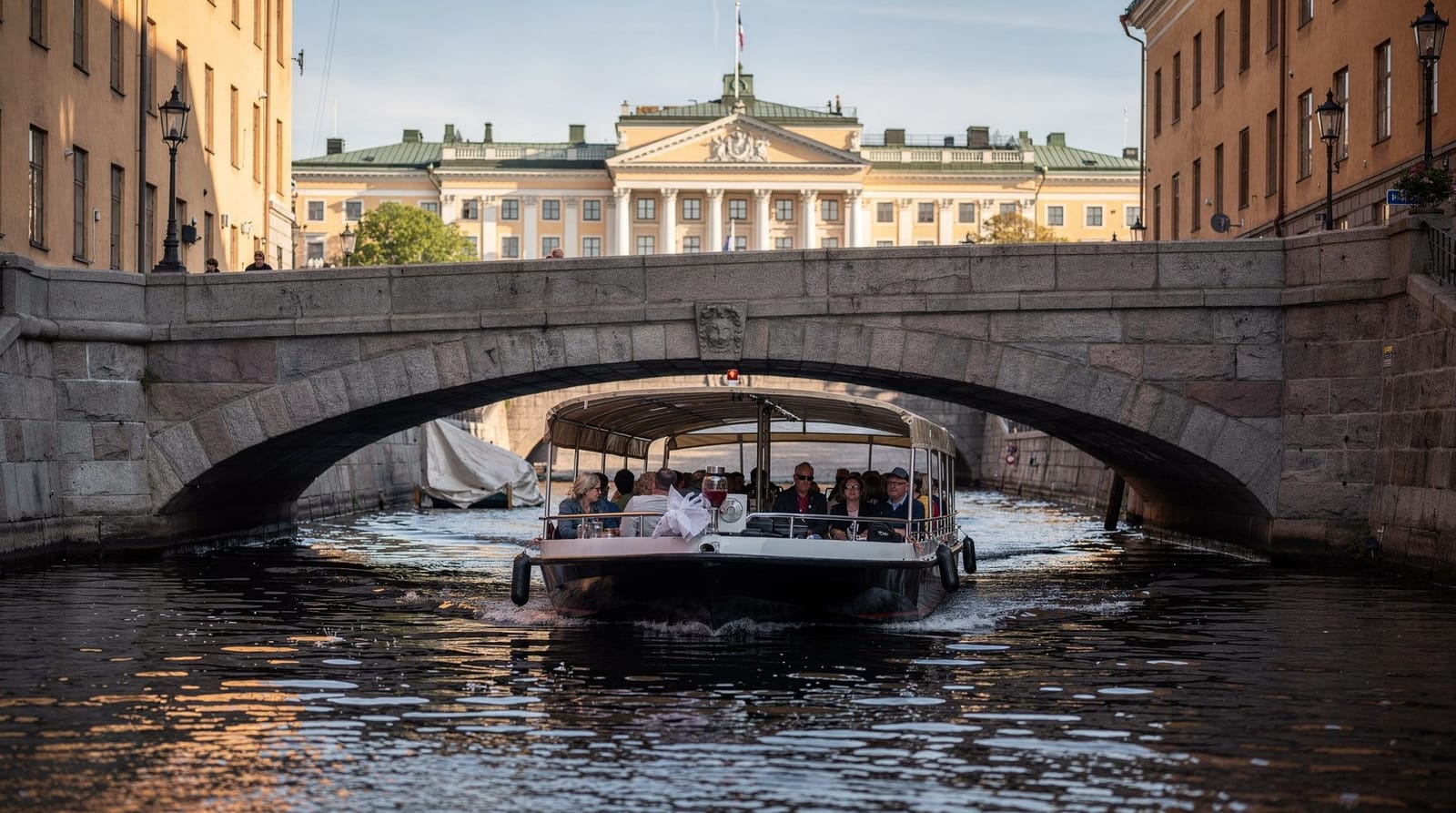
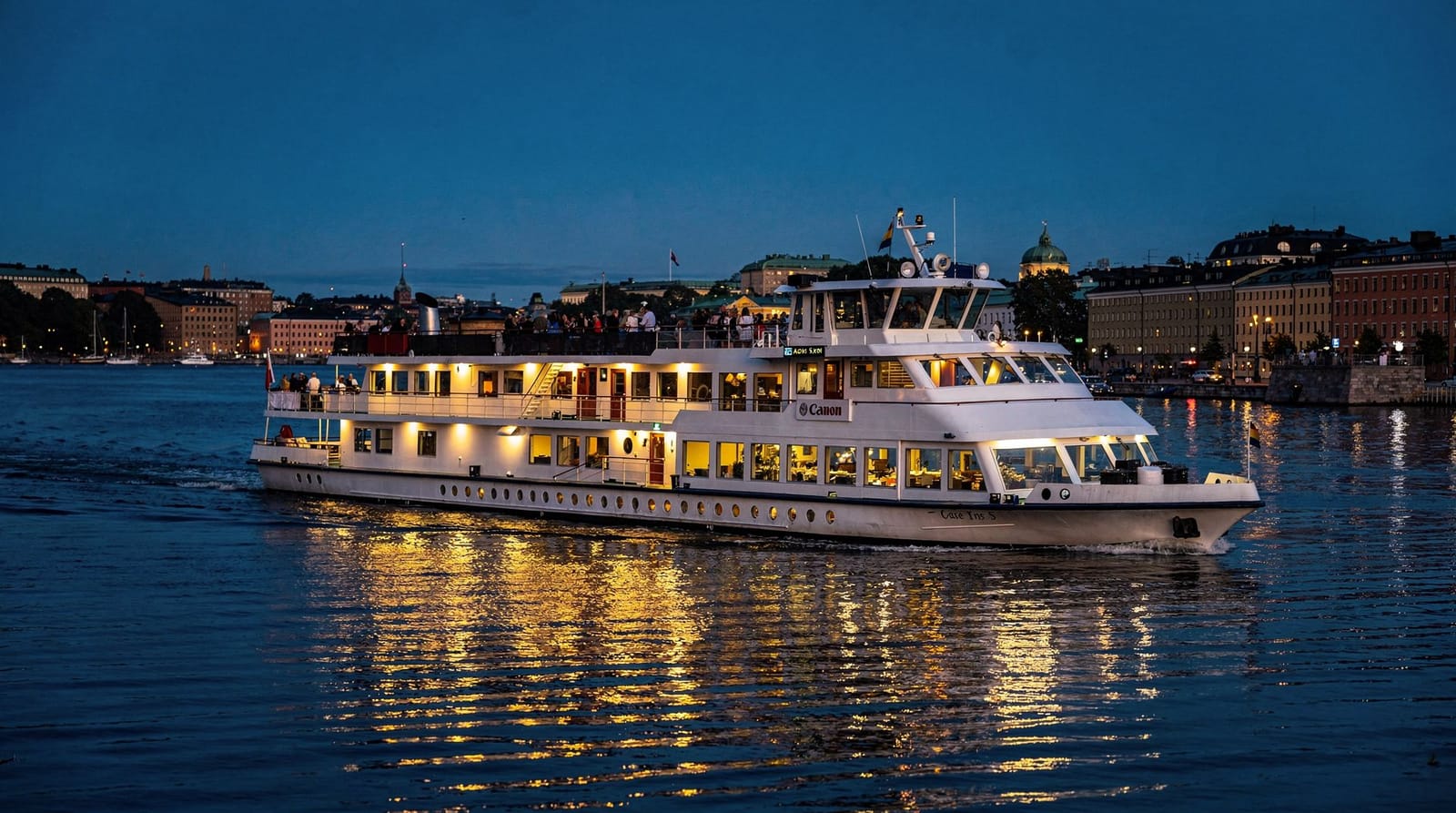
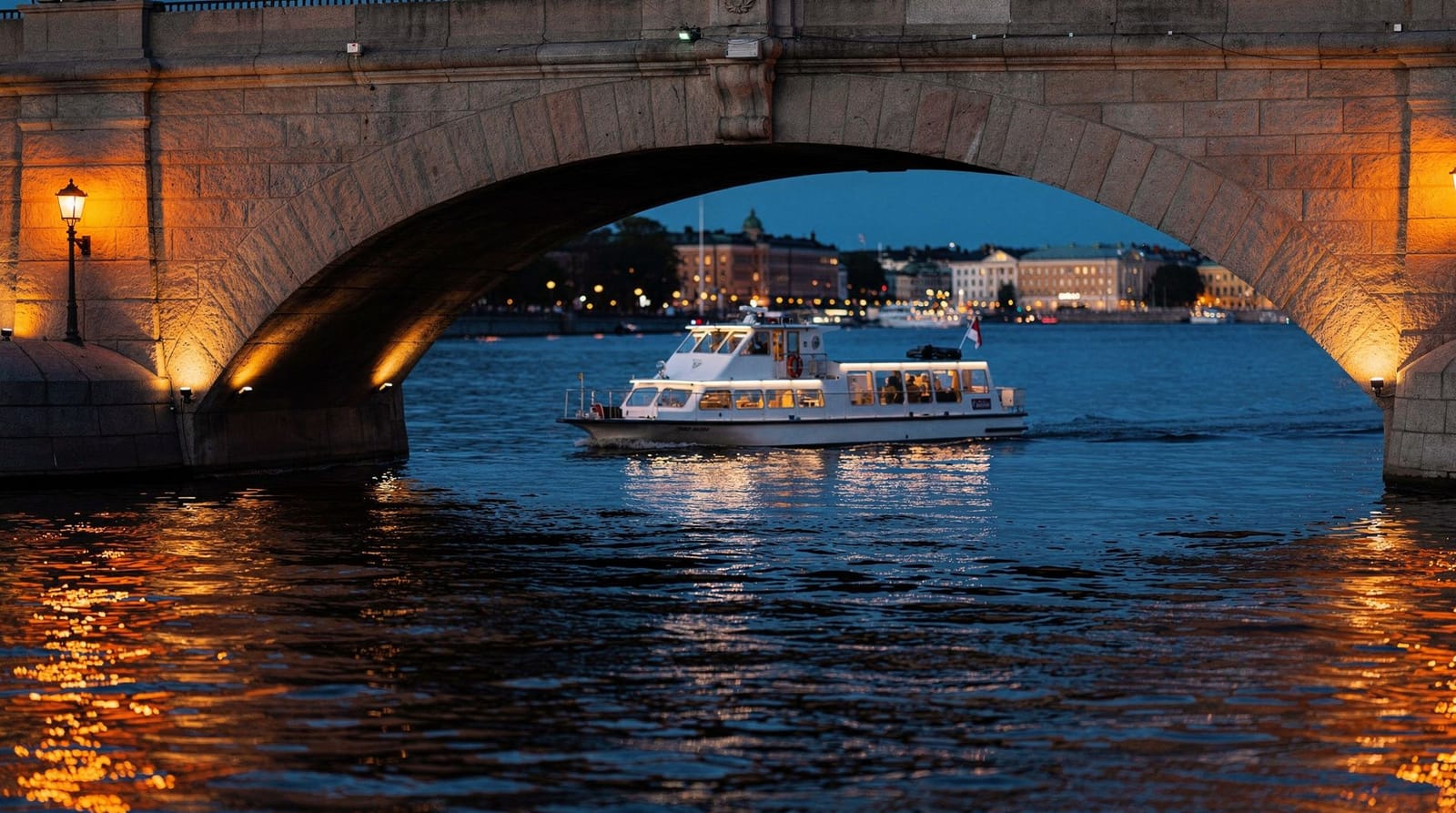
Departing from central Stockholm (Strömkajen or Strandvägen), the Midsummer cruise heads east into the inner archipelago — the channels and islands between Djurgården, Lidingö, and the first belt of archipelago islands. The route varies by operator but typically covers 20–35 kilometres of archipelago waterway.
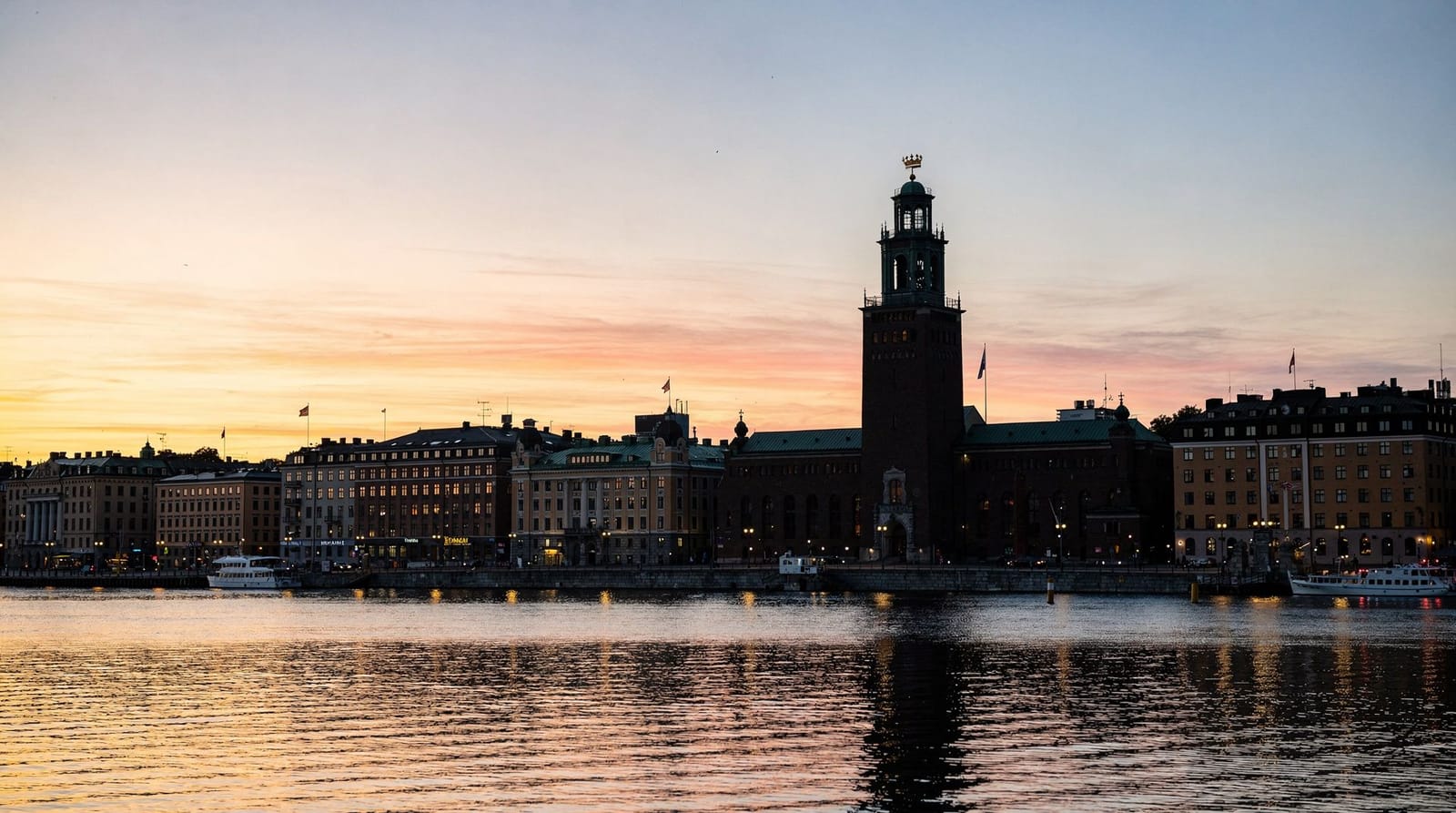
The June timing means the full route runs in daylight. Even at 21:30 — approaching the end of the cruise — the sky is bright. This is the specific combination that makes the Midsummer cruise distinct from any other archipelago excursion.
The onboard experience
Live commentary: A guide explains Swedish Midsummer traditions, their origins, the specific food and drink customs, and the significance of the date in Swedish culture. Commentary is in English and Swedish on most operators.
Flower crowns: Most operators provide wildflower crowns or materials for making one. Making a midsommarkrans is part of the activity, not just decoration.
Traditional food: The standard Midsummer spread — pickled herring, new potatoes, gravlax, strawberries. Presented as a buffet or shared table depending on the operator and vessel size.
Aquavit toast: The traditional Midsummer snaps — aquavit, ideally dill-flavoured, drunk with the herring and accompanied by a song. The toasting ritual is central to the Swedish Midsummer meal. Operators provide this with appropriate explanation; non-drinkers are accommodated.
Maypole dancing: Some cruise formats include a brief maypole (midsommarstång) activity onboard — the pole is miniature, the frog song is performed, and the dancing is participatory rather than observational. This is more charming than it sounds, particularly with the archipelago as backdrop.
Duration and pricing
Standard Midsummer archipelago cruise: 2.5 hours. Prices vary by operator and date, so check the booking page. Some operators offer extended 4-hour dinner-cruise formats including a full Midsummer dinner with wine.
Booking logistics: the critical detail
Midsummer is the most constrained booking period in Stockholm’s tourism calendar. The Midsummer archipelago cruise sells out — typically weeks in advance. In years when Midsummer falls on a date that creates a long weekend (many years: the Thursday before Midsummer Eve is taken as holiday by many Swedes, creating a four-day break), demand is extreme.
Book 4–6 weeks in advance. This is not an exaggeration. The combination of reduced city infrastructure (most restaurants and hotels operate at reduced capacity) and concentrated tourist demand for a few organised activities creates a bottleneck that early booking is the only solution to.
If the standard Midsummer cruise is sold out: the all-you-can-eat shrimp cruise running around the same period, or a private charter on Midsummer Eve, are alternatives. The shrimp cruise is more casual; private charter is expensive but circumvents the sold-out problem.
What to eat and drink during Midsummer
Swedish Midsummer food is highly specific. The ideal full Midsummer table includes:
Matjessill (pickled herring): Usually several varieties — classic, mustard, onion, and tomato. Served with sour cream, chives, and new potatoes. This is the heart of the meal.
Nya potatis (new potatoes): Small Swedish summer potatoes with dill and butter. In June, these are newly harvested — tender and distinct from the stored potatoes of other months.
Gravlax or rökt lax (gravlax or smoked salmon): A secondary centrepiece alongside the herring.
Jordgubbar med grädde (strawberries with cream): The non-negotiable Midsummer dessert. Swedish strawberries in June are genuinely excellent — small, intensely flavoured, grown in the brief Swedish summer. They taste different from Spanish winter strawberries.
Aquavit: The Midsummer snaps — typically a dill-flavoured aquavit such as O.P. Anderson or Aalborg. The ritual toasting songs (snapsvisa) are an integral part of the meal; the guide on the cruise will typically lead at least one.
Practical advice for Midsummer weekend in Stockholm
Thursday before Midsummer: Not an official holiday but many Swedes take it off. The archipelago begins to fill Thursday afternoon. If taking a day trip to the archipelago, Thursday is more manageable than Friday.
Midsummer Eve (Friday): City essentially closed. Plan around the cruise or other booked activities. Some major museums (Vasa, ABBA, Skansen) maintain Midsummer hours — check in advance.
Midsummer Day (Saturday): The city begins to reopen. Some restaurants return to service Saturday evening.
Sunday–Monday: Normal service largely restored. The archipelago begins emptying Sunday afternoon as Swedish families return to the city.
Grocery shopping: Stock up on Friday morning before departures increase and shop hours shorten. Most Systembolaget (the state alcohol monopoly, the only place to buy wine and spirits in Sweden) are closed on Midsummer Eve.
Swedish Midsummer traditions in depth
For visitors arriving with little context, Swedish Midsummer can appear simultaneously festive and strange. Understanding the traditions makes the cruise experience more legible — and more rewarding.
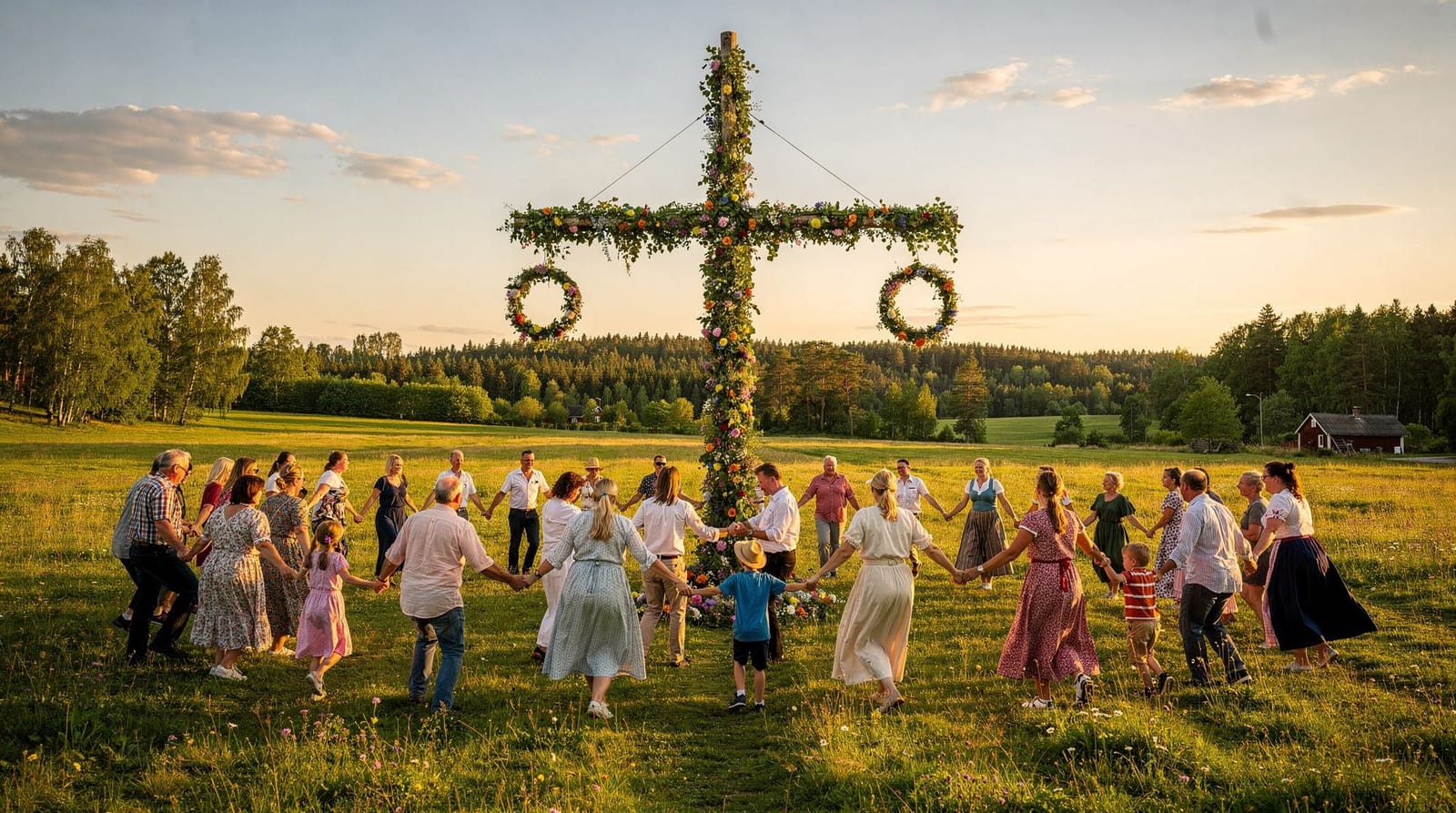
The midsommarstång (maypole): Midsummer in Sweden uses a “maypole” (literally “midsummer pole”) — a cross covered in fresh birch leaves and wildflowers, raised vertically and decorated with rings and garlands. The pole represents the axis of the summer sun. Around it, people dance traditional ring dances to songs that have been sung for generations, including Små grodorna (Little Frogs) — a song about frogs jumping, performed with accompanying frog movements by the dancers. Non-Swedes often find this puzzling and then irresistible. The cruise’s miniature version gives the idea if not the full countryside scale.
The midsommarkrans (flower crown): Traditionally made from 7 different wildflowers picked on Midsummer Eve. The Swedish tradition holds that if you pick exactly 7 flowers in silence and place them under your pillow on Midsummer night, you will dream of your future spouse. The wildflowers used are typically: buttercup (smörblomma), clover (klöver), common daisy (prästkrage), speedwell (ärenpris), meadow vetchling (gulvial), crane’s-bill (näva), and cow parsley (hundkäx). On the cruise, the materials provided are usually pre-picked; the making of the crown is the participatory element.
Aquavit and the snaps ceremony: Swedish aquavit (akvavit) is a grain spirit flavoured with caraway, dill, fennel, or other botanicals. The Midsummer snaps is typically dill-flavoured (dillaquavit, such as O.P. Anderson Dill or Skåne Akvavit). The ritual involves filling a small glass (snapsglas), raising it, making eye contact around the table, singing the snaps song (typically “Helan går” — the most common snapsvisa), drinking the aquavit in one, and setting down the glass. The song is sung multiple times over a traditional Swedish meal; visitors are expected to participate.
Herring and the Midsummer table: No Midsummer meal is complete without herring (sill). Swedish pickled herring comes in numerous varieties — the classic matjessill (lightly fermented herring in brine), senapsill (mustard herring), löksill (onion herring), tomatsill (tomato herring), and many regional variations. The traditional preparation involves serving the herring cold with new potatoes, sour cream, chives, and crispbread. New Swedish potatoes (nya potatis) available only from late May onward are a seasonal luxury — tiny, thin-skinned, intensely flavoured, unlike stored winter potatoes in taste and texture.
Strawberries: The canonical ending to the Midsummer meal is jordgubbar med grädde — Swedish strawberries with cream. Swedish summer strawberries are grown in the brief northern summer and have a concentrated sweetness and fragrance that distinguishes them from the Spanish or Dutch greenhouse strawberries available in supermarkets year-round. In June, fresh Swedish strawberries are sold from roadside stalls throughout the country. On a Midsummer cruise, the strawberry course is not optional — it is the essential conclusion.
The 2027 Midsummer dates and logistics
Midsummer 2027 falls on:
- Midsummer Eve: Friday 25 June 2027
- Midsummer Day (national holiday): Saturday 26 June 2027
Stockholm will be quieter than usual on 25 June. Most Swedes will have left for the countryside or the archipelago by Thursday evening. The practical schedule:
Wednesday 23 June: Last normal day. Book any final restaurant visits for this evening; many restaurants will be closed or operating with reduced menus from Thursday onward.
Thursday 24 June: Many Stockholmers take this day off. The archipelago begins filling; ferries and trains to the country are crowded. If you want to see the archipelago less crowded, Thursday is your last good option.
Friday 25 June (Midsummer Eve): City largely closed. Systembolaget is closed. The Midsummer archipelago cruise is the primary organised activity. Grocery stores close at varying times.
Saturday 26 June (Midsummer Day): Partial reopening. Some restaurants and shops return to limited service.
Alternatives if the cruise is sold out
Private picnic in the archipelago: Fjäderholmarna (20 minutes by public ferry from Slussen) remains accessible and relatively functional on Midsummer Eve. Bring food prepared in advance; the island’s cafés may have limited hours.
Self-catered Midsummer on Djurgården: Djurgården’s parks and waterfront are open. A self-catered Midsummer picnic with the traditional foods (purchased from a Stockholm ICA supermarket before it closes) and the archipelago view is an informal alternative.
The evening cruise on Midsummer Eve: Some operators run standard evening cruises in addition to the specific Midsummer product. Check availability; these sell out later than the Midsummer-specific cruise.
Other boats worth considering around Midsummer
If the Midsummer-specific departure is full, the boat itself is still a good idea. A casual evening with a relaxed shrimp supper on the water keeps the social, food-centred spirit of the holiday without the flower crowns and songs. Travellers who would rather see the islands in a calmer setting can look at a plain sightseeing cruise through the archipelago on another day of the trip, when the city is open and you can pair it with a museum or a meal.
It also helps to understand which part of the archipelago you are seeing. The Stockholm archipelago complete guide and the inner vs outer archipelago comparison explain why the Midsummer cruise stays in the sheltered inner channels and what the farther islands offer if you have more time. The wider Stockholm archipelago destination page is a good starting point for choosing islands for a later day trip.
Planning the rest of your trip around the holiday
Midsummer is a strange moment to be a visitor, so it pays to build the surrounding days carefully. The Stockholm summer 5-day itinerary with archipelago time shows how to balance city sights with island days, and the Stockholm 3-day overview works if your stay is shorter. For travellers who want a first-hand account of how the weekend actually feels, the Midsummer survival guide written from experience is a candid companion to this page.
If you plan to reach the islands on your own rather than on a tour, read how the ferries work for day-trippers and the Waxholmsbolaget ferries explained pages before the holiday weekend, since timetables and crowds behave differently when half the city is heading for the same boats. The Fjäderholmarna destination page covers the nearest island, which suits a low-effort Midsummer outing, and the Stockholm public transport explained guide helps with getting to the quay.
Comparing your Midsummer Eve options
| Archipelago cruise | Self-catered picnic | Private charter | Standard evening cruise | |
|---|---|---|---|---|
| Cost | See booking page | Cost of groceries only | Expensive, price on request | Varies by operator |
| Cultural content | Full (food, crowns, aquavit, dancing) | Self-arranged | Optional, arrange with operator | Minimal |
| Booking lead time | 4–6 weeks | None needed | Several weeks | 1–2 weeks |
| Best for | Visitors wanting the full tradition | Budget travellers, flexible plans | Groups wanting privacy | Those who missed the cruise booking window |
| Availability risk | Sells out early | Low risk | Low risk once booked | Sells out later than the Midsummer cruise |
The archipelago cruise remains the best single option for most visitors precisely because it bundles the food, the ritual, and the setting into one bookable product. But it is not the only reasonable choice, and knowing the alternatives matters if you’re planning late or on a tighter budget.
What to bring on the cruise
Most Midsummer cruise operators handle the food, flower crown materials, and aquavit, but a few things are worth bringing yourself. A light layer for after sunset — even at the height of summer, evenings on open water can turn cool once the boat is moving, and the deck areas catch more wind than the sheltered inner city. Sunglasses matter more than you’d expect for a late-evening cruise, since the sun sits low but stays bright for hours rather than dropping quickly as it would further south. A phone or camera is worth keeping accessible rather than packed away — the combination of the flower-crown ceremony, the archipelago backdrop, and the near-midnight light produces some of the most distinctive photos available anywhere in a Stockholm trip. Cash isn’t generally needed since food and drink are included, but a card is useful if you want to add extra drinks beyond what’s covered.
Other ways to spend Midsummer in Stockholm
The archipelago cruise is the single most organised option, but it isn’t the only way to experience the holiday. The Midsummer in Stockholm guide covers the fuller picture — including options beyond the cruise for visitors who want more flexibility or a lower price point than the boat tour. If a formal boat cruise isn’t your style but you still want to be on the water, a standard 2-hour archipelago boat tour at another point in your trip gives a similar sense of the islands without the Midsummer-specific programming (or the premium pricing that comes with peak-demand dates).
For a different kind of evening on the water without the seasonal cultural content, the dinner cruise guide covers Stockholm’s year-round dinner cruise options — useful if your dates don’t align with Midsummer weekend specifically.
Why the light matters as much as the food
What makes the Midsummer cruise genuinely distinct from any other Stockholm boat tour is the light, not just the ceremony. The Stockholm summer white nights guide explains the seasonal mechanics behind Stockholm’s near-endless June daylight — worth reading before your cruise, since it changes how you plan the rest of your evening. A 21:30 cruise return in full daylight is disorienting the first time; knowing to expect it beforehand makes the experience land better.
Frequently asked questions about the Stockholm Midsummer cruise
Understanding Midsummer through the cruise format
Visitors to the Midsummer cruise often ask whether the experience is “authentic” — whether they are experiencing Swedish Midsummer or a performed version for tourists. The question deserves a direct answer.
The Midsummer archipelago cruise is a product designed for visitors, not for Swedes. Swedish Midsummer is celebrated privately — in the countryside, in the archipelago, with family and friends. Swedes do not typically celebrate Midsummer on commercial cruises; they celebrate it at their summer houses or in friends’ gardens. The cruise is explicitly designed to give visitors access to the cultural content (the food, the traditions, the setting) that they would otherwise miss because the genuine celebration is closed to outsiders.
Within this framing, the cruise is authentic where it can be authentic — the food is real, the traditions are real (the flower crowns, the dancing, the aquavit toasts), and the archipelago setting in Stockholm’s white-night light is unquestionably real. The organised format and the fact of paying for it are the compromises. Whether this constitutes “authentic” experience depends on what you mean by the word.
The most useful comparison: attending a Christmas market in Nuremberg or Vienna as a tourist is not the same as celebrating Christmas in a German or Austrian family home. But the market is not fake — the glühwein is real, the Lebkuchen are real, the city’s Christmas atmosphere is real. The market exists because the private celebration is not accessible to outsiders. The Midsummer cruise operates on the same logic.
Getting to Strömkajen for the Midsummer departure
On Midsummer Eve, Stockholm’s public transport runs on a reduced weekend schedule. Many Stockholmers will have left the city; the T-bana is quieter than usual but still running. Taxi and ride-hailing services are available but demand and prices may be elevated in the 30–60 minutes before the cruise departure as other visitors converge on the same destination.
The most reliable approach: walk if your accommodation is in Norrmalm, Gamla Stan, or Östermalm (all within 15–20 minutes on foot from Strömkajen). The route along the Norrmalm waterfront is pleasant in the early summer evening light.
If using the T-bana: Kungsträdgården (lines 10/11) is 5 minutes from Strömkajen. T-Centralen is 15 minutes. Both are operational on Midsummer Eve.
After the Midsummer cruise: the empty city
One of the more specific experiences of Midsummer in Stockholm is what the city feels like at 22:00 on the Friday evening, after the cruise returns. Stockholm on Midsummer Eve is essentially empty. The streets that would normally be full of tourists and locals at 22:00 in June are quiet to the point of surrealism. Gamla Stan, usually busy well into the evening, is nearly deserted. The shops are closed; most restaurants are closed; the city has departed.
This emptiness is not unpleasant — it has the quality of a city given back to itself for a weekend. Walking Gamla Stan at 22:30 on Midsummer Eve, in the full Stockholm twilight (still completely light), through near-empty cobbled streets, is an experience unique to this specific time. It is Stockholm without its own inhabitants — strange, atmospheric, and available to you entirely by accident of scheduling.
Is the Midsummer cruise appropriate for children?
Yes. Children are welcome on most Midsummer cruise products. The duration (2.5 hours) is manageable for children 5 and above. The flower crown making, the dancing, and the food are all accessible to children. The aquavit component is adult-only and the guide manages this appropriately.
Can vegetarians participate fully in the Midsummer cruise food?
The traditional Midsummer menu is heavily fish-based (herring, salmon). Operators can usually provide a vegetarian alternative to the fish elements — new potatoes, egg, cheese, bread, and strawberries are naturally vegetarian. Confirm with the operator when booking. Vegan options exist but are more limited.
What happens to the Midsummer cruise if it rains?
Most cruise vessels have covered indoor sections. Traditional Swedish Midsummer is famously rainy — there is a saying that “rain on Midsummer makes a good harvest.” A light rain does not cancel the experience; heavy rain limits deck time. Check the operator’s weather cancellation policy. A genuinely stormy Midsummer Eve is rare in Stockholm.
How does the Midsummer cruise compare to celebrating with a Swedish family?
There is no comparison for authenticity — a real Swedish family Midsummer in the countryside or archipelago, with its own rituals and food, is the genuine article. The cruise is for visitors who do not have that access. Within that category, it delivers the cultural content (food, traditions, setting) with reasonable honesty. It is tourist-organised Midsummer, not the thing itself, but done with enough care to be genuinely educational and enjoyable.
What should you book in advance for Midsummer in Stockholm?
Beyond the cruise itself: book any restaurant you want to visit on Thursday 24 June or Wednesday 23 June well in advance, as Midsummer Eve closures will eliminate most options on the 25th. If you plan to visit any Stockholm museums over the Midsummer weekend, check their specific Midsummer hours — some close entirely, others maintain reduced hours. The Vasa Museum, Skansen, and ABBA Museum typically maintain Midsummer hours but reduced. Systembola (the state wine/spirits shop) closes early on Midsummer Eve — stock up Thursday if you want to drink over the holiday weekend.
Top experiences
Bookable activities with verified prices and instant confirmation on GetYourGuide.