Moderna Museet guide: Stockholm's world-class art museum
Stockholm: Moderna Museet entry ticket
Is the Moderna Museet free in Stockholm?
Not in general. Entry is 170 SEK (140 SEK reduced); it is free for visitors up to 18 and on Free Friday, 18:00–20:00. The permanent collection includes major works by Picasso, Matisse, Warhol, Dali, and a strong Swedish modern art holding. It is on Skeppsholmen island, reachable by a 15-minute walk from the city centre.
World-class modern art on a Stockholm island
Moderna Museet is one of those institutions that punches well above its expected weight for a city of Stockholm’s size. The permanent collection includes significant works by Picasso, Matisse, Salvador Dali, Marcel Duchamp, Andy Warhol, Robert Rauschenberg, and Louise Bourgeois — artists whose work commands nine-figure valuations at auction, displayed here in a light-filled building on a small island in the middle of Stockholm.
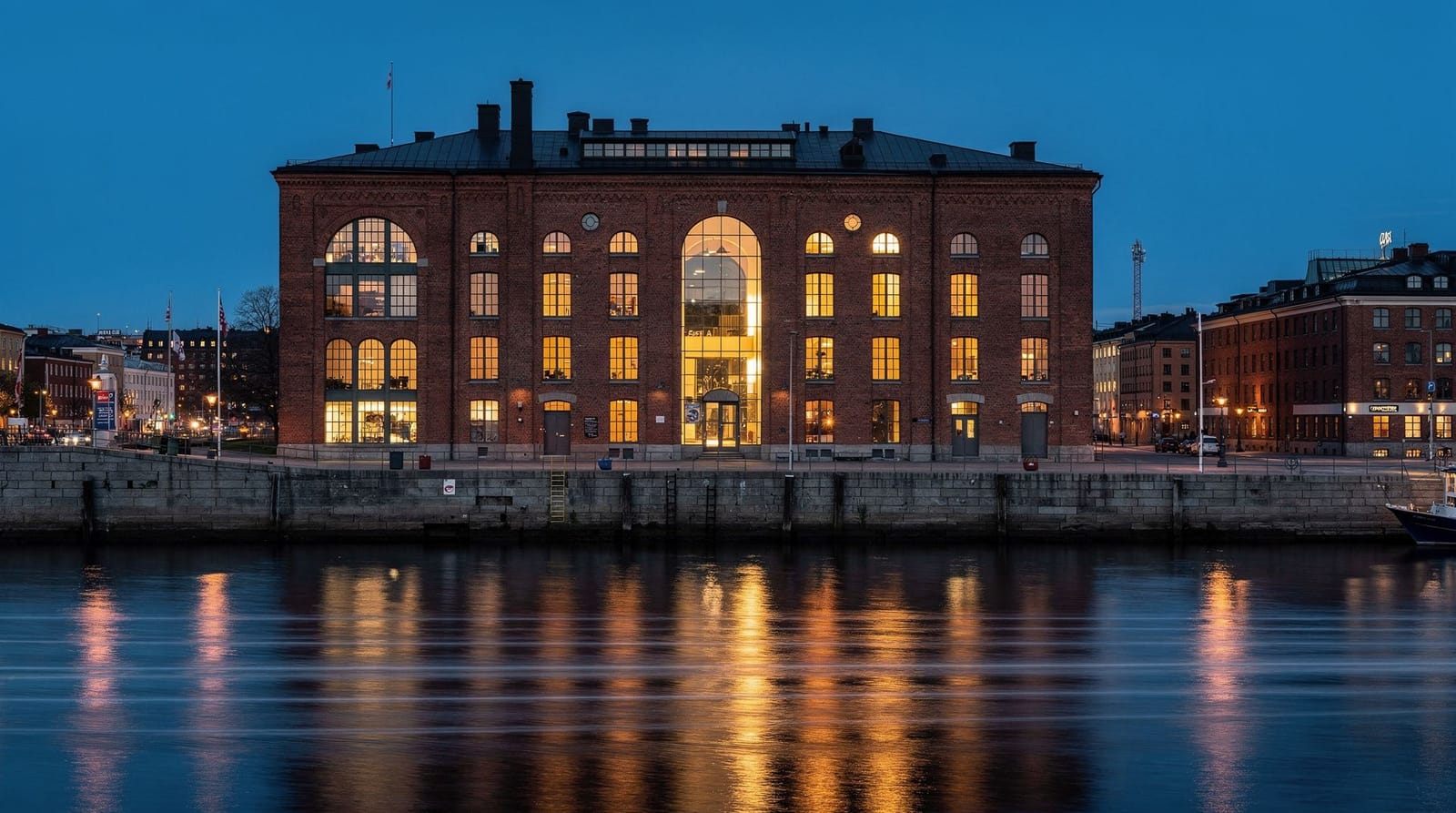
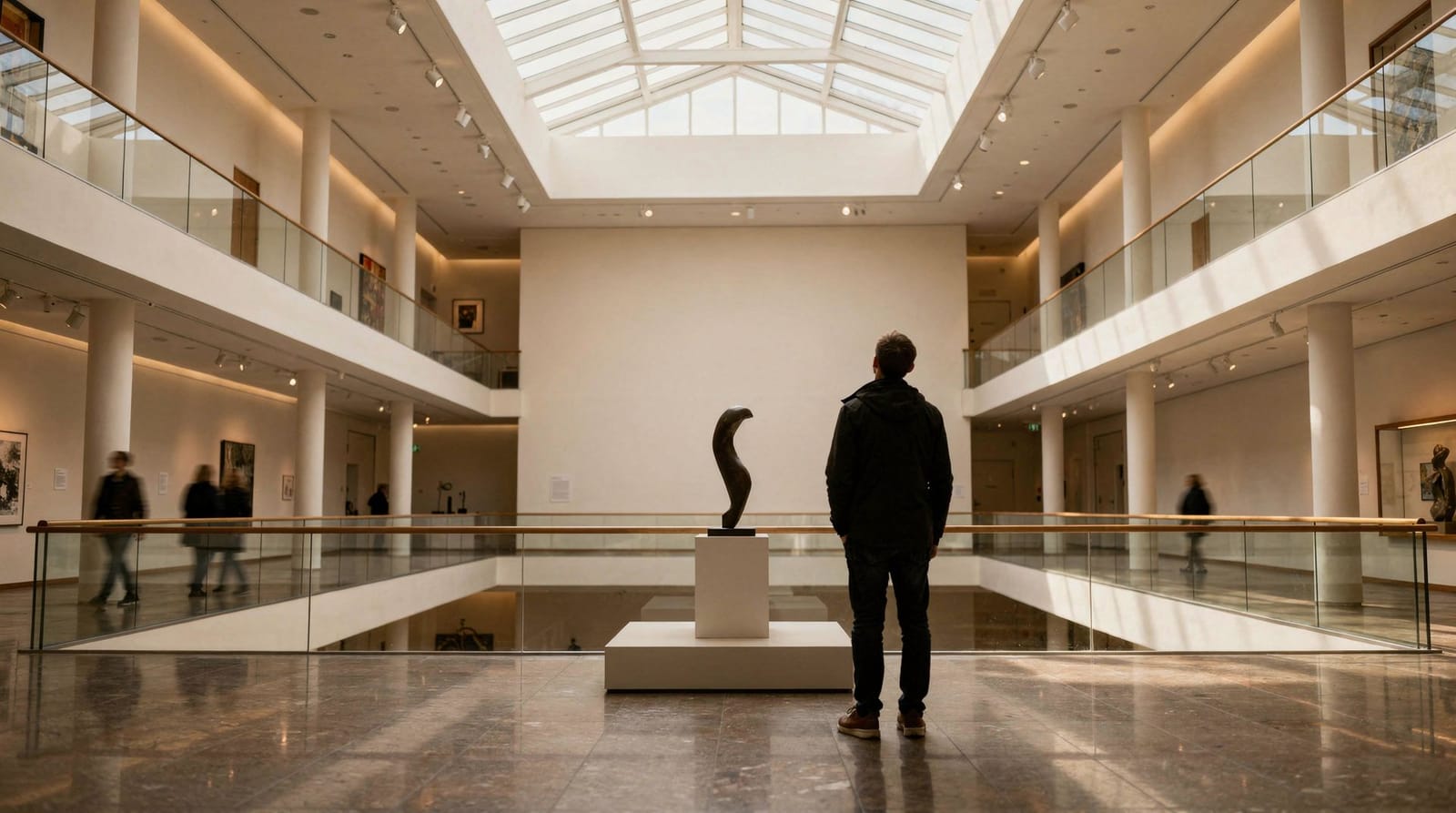
The building itself — a long, low structure by Rafael Moneo, opened in 1998 — sits on the eastern end of Skeppsholmen island. Large skylights fill the main galleries with changing natural light; the building opens onto terraces facing the harbour and the Djurgården shoreline. On a clear day the views from the outdoor sculpture garden are as good as the art inside.
The permanent collection is the draw. Entry is 170 SEK (free on Free Friday, 18:00–20:00), and the permanent collection alone justifies a visit from anyone with even passing interest in 20th-century European and American art.
Practical essentials
| Detail | Information |
|---|---|
| Address | Exercisplan 4, Skeppsholmen |
| Opening hours | Tue & Thu 10:00–20:00; Wed, Fri, Sat, Sun 10:00–18:00; closed Mon |
| Admission | 170 SEK (140 SEK reduced) |
| Free entry | Up to age 18; Free Friday 18:00–20:00 |
| Recommended time | 1.5–2.5 hours |
| T-bana | Kungsträdgården (Green line), 15 min walk across Skeppsholmsbron |
What to see in the permanent collection
Picasso
The Moderna Museet holds one of northern Europe’s strongest Picasso collections, acquired largely in the 1960s when the museum’s then-director Pontus Hultén made a series of strategic purchases. The holdings include major cubist works, significant canvases from the 1920s–40s, and large-format late works. The best single piece is arguably the large painting from the late Blue Period, though opinions among regular visitors differ. The Picasso section is typically the first stop for visitors and worth more than a quick pass-through.
Matisse
The Matisse holdings include several large-format paper cut-out works from the 1950s — the series that Matisse developed as a final major body of work when declining health limited his ability to paint. These works are among the museum’s most visually striking and have a scale and colour intensity that reproduces poorly in books. The Matisse room is consistently one of the most popular in the permanent collection.
Salvador Dali: The Enigma of William Tell
The museum owns Salvador Dali’s monumental 1933 painting The Enigma of William Tell (Gåtan om Wilhelm Tell), showing Vladimir Lenin in an extended and typically bizarre Dali composition. The painting was a source of controversy — the Surrealist movement considered it too politically complicated — and its presence in Stockholm is accidental: Dali sent it to a Paris exhibition and could not afford to pay the transport costs to retrieve it. The museum eventually acquired it. It is one of the genuinely canonical Dali works outside of Spanish collections.
Marcel Duchamp
A significant Duchamp holdings including works from the period when Duchamp was reconsidering the relationship between art and the everyday object — among the most intellectually important works in the collection for those interested in the history of conceptual art.
Andy Warhol and American postwar art
The museum’s American postwar holdings cover the major Pop Art and Abstract Expressionist movements, including Warhol, Rauschenberg, Jasper Johns, and Cy Twombly. The Warhol works include several of the Marilyn and Campbell’s Soup series variants — canonical works that most people know from reproductions but have not seen in person.
Swedish modern art
A substantial section of the permanent collection is dedicated to Swedish modern art from the early 20th century onward. This section is often neglected by international visitors focused on the canonical names but contains significant works — particularly the interwar Swedish modernists and the postwar abstract movement — that are less visible internationally.
The sculpture garden and outdoor works
The outdoor areas include large-scale sculpture. Jean Tinguely’s mechanical sculpture Fontänen (The Fountain) is a permanent outdoor installation that many visitors find unexpectedly compelling. Louise Bourgeois’s Spider at the museum entrance is one of the iconic outdoor sculpture installations in Stockholm.
Insider tips
Tuesday and Thursday evenings are the best visiting times. Extended hours until 20:00 on these days make for an ideal uncrowded visit after the typical tourist day-visit peaks. Bring a book or journal; the reading light in the main galleries in the evening is excellent.
Start from the top floor and work down. The permanent collection is distributed across multiple levels. Starting from the upper floor and working down allows you to end near the café and sculpture garden when your feet want rest.
The museum shop is excellent. One of Stockholm’s better art bookshops, with a good selection of catalogues, Swedish art books, and art-adjacent design objects. Worth 20 minutes even if you do not buy.
Combine with the Architecture Museum. The Arkitekturmuseet (Swedish Centre for Architecture and Design) is in the same building on Skeppsholmen and shares entrance facilities. A temporary architecture exhibition often runs alongside the art exhibitions; the permanent architecture collection is small but interesting.
Go on Free Friday if budget matters. Entry is free for everyone on Fridays 18:00–20:00; otherwise it is 170 SEK (140 SEK reduced). The permanent collection alone is sufficient for 1.5–2 hours.
Photography is generally permitted. Non-flash photography of the permanent collection is allowed in most galleries, though some loaned works or temporary exhibitions restrict it — signage at the gallery entrance makes the current rule clear. The sculpture garden has no restrictions at all, and the harbour backdrop makes it one of the better outdoor photo spots on Skeppsholmen.
History of Moderna Museet
The museum was founded in 1958 under director Pontus Hultén, who built the collection aggressively through the 1960s and was responsible for many of the most significant acquisitions. Hultén’s tenure at Moderna Museet (1960–1974) is considered a golden period in the museum’s history and one of the most creative periods in Swedish cultural life — he brought major international artists to Stockholm, produced landmark exhibitions, and established the museum’s international reputation in a remarkably short time.
The original building on Skeppsholmen was replaced by the current Rafael Moneo structure in 1998 after the 1988 building was found to have serious structural and moisture problems, forcing the collection into storage for nearly a decade. The current building, opened in 1998, is generally well-regarded as a museum architecture solution, though some critics found Moneo’s restraint too conservative.
Tickets and passes
Admission: 170 SEK (140 SEK reduced). Free up to age 18 and for Klubb Moderna members; Free Friday gives everyone free entry 18:00–20:00.
Stockholm Pass: Verify inclusion at time of purchase. If you’re weighing whether a pass makes sense for your trip beyond just this museum, the Stockholm museum pass guide breaks down when it pays off.
Check current Stockholm Pass pricing and inclusionsCombined with Architecture Museum: The architecture museum shares the building; combination tickets sometimes available.
Moderna Museet compared with Stockholm’s other state museums
Skeppsholmen and neighbouring Östermalm host several of Stockholm’s best museums, but they reward different interests:
| Museum | Focus | Admission | Typical visit time |
|---|---|---|---|
| Moderna Museet | Modern & contemporary art (Picasso, Matisse, Warhol) | 170 SEK (free Fri 18:00–20:00) | 1.5–2.5 hrs |
| Swedish History Museum | National history, Viking-era gold | 180 SEK (free up to 18) | 1.5–2 hrs |
| Army Museum | Military history | 140 SEK (free under 19) | 1–1.5 hrs |
| Fotografiska | Contemporary photography | 195 SEK | 1.5–2 hrs |
| Nordiska Museet | Swedish cultural history | 170 SEK | 1.5–2 hrs |
If your time in Stockholm is limited and budget matters, pairing Moderna Museet with the Swedish History Museum or Army Museum is a rich museum day, but each charges admission (Moderna is free only on Fridays 18:00–20:00). For a broader look at planning a museum-heavy day, see the rainy day museums guide.
Accessibility
The museum has lift access to all floors. The sculpture garden has accessible paths. Wheelchair-accessible toilets available. The building is generally regarded as one of Stockholm’s more accessible museum venues.
Getting there
On foot: From Kungsträdgården, walk south toward the water, then east across Blasieholmsbron bridge and then Skeppsholmsbron to reach the island. Total: approximately 15 minutes.
From Gamla Stan: Walk or cycle across the bridge to Blasieholmen, then across to Skeppsholmen. Approximately 15 minutes.
Bus: Route 65 stops near the Skeppsholmen bridge. Check the current SL schedule.
Hop-on hop-off boat: The boat circuit stops at the Skeppsholmen area in summer.
Where to eat nearby
Moderna Museet restaurant (on-site): The museum restaurant serves lunch and café meals. The terrace facing the harbour is one of the better museum café views in Stockholm.
Café Skansen (Skeppsholmen, adjacent): An outdoor café on the island that is open seasonally — simple sandwiches and coffee with harbour views.
Nalen restaurant (Regeringsgatan 74, Norrmalm): Twenty minutes’ walk into the city, a classic Stockholm restaurant in a former dance hall with a good Swedish lunch menu.
Combine with
Fotografiska: On Södermalm’s waterfront, approximately 15 minutes’ walk via Gamla Stan. The photography-focused Fotografiska and the art-focused Moderna Museet complement each other well as a half-day cultural combination. See the Fotografiska guide.
Swedish History Museum: On the other side of the city in Östermalm but with a 180 SEK ticket (free up to 18). See the Swedish History Museum guide.
Army Museum: A 20-minute walk from Skeppsholmen in Östermalm, with a 140 SEK adult ticket (free under 19). Dramatic military history with very different sensory registers from the modern art. See the Army Museum guide.
Fitting Moderna Museet into a wider Stockholm plan
Because it needs no advance booking, Moderna Museet is one of the easiest museums to slot into a trip at the last minute. It works well as a flexible half-day anchor: if the weather turns, you already have a good indoor plan, and if the sky clears, the terraces and sculpture garden reward the same visit. Our Stockholm in 3 days overview shows where a museum morning like this can sit between the headline sights.
If you are staying near the old centre, the Gamla Stan neighbourhood deep dive pairs naturally with a walk out to the island, since the route passes through that part of town. For a second museum day on the neighbouring island of Djurgården, the Djurgården neighbourhood deep dive lays out what else is within easy reach, and the Nordiska Museet guide covers a very different kind of collection, focused on Swedish cultural history.
Travelling with children? The family guide to Stockholm helps you decide how much gallery time to plan around the sculpture garden. And if you are unsure how to reach the island by public transport, the public transport explained guide covers the system in more detail than the short directions above.
Frequently asked questions about Moderna Museet
What does Moderna Museet mean?
It means “the Modern Museum” in Swedish. The name is straightforward — it was established in 1958 as Sweden’s national museum of modern and contemporary art, and the name reflects its founding mandate.
Does Moderna Museet have a Picasso collection?
Yes. One of the better Picasso holdings in Scandinavia, acquired during the 1960s. The collection spans several periods of Picasso’s work including significant cubist canvases and major late works.
Can children visit Moderna Museet?
Yes. The museum has family-focused programming and hosts children’s workshops on weekends. Entry is free up to age 18, which removes a barrier for families. The sculpture garden is engaging for children who find the interior galleries slow.
Is the Moderna Museet on an island?
Yes. Skeppsholmen is a small island connected to the mainland at Blasieholmen by two pedestrian bridges. There is no T-bana stop on the island; the walk from the nearest T-bana station (Kungsträdgården) is approximately 15 minutes.
What is the best temporary exhibition Moderna Museet has had?
Recent highlights include retrospectives of major postwar Swedish artists and international shows featuring contemporary European and American photographers and sculptors. The quality varies but the standard is high compared to mid-tier European contemporary art institutions. Check the current programme at modernamuseet.se.
Top experiences
Bookable activities with verified prices and instant confirmation on GetYourGuide.