Swimming spots in Stockholm: lakes, sea, and the best urban beaches
Stockholm: Vasa Museum entrance ticket
Can you swim in Stockholm?
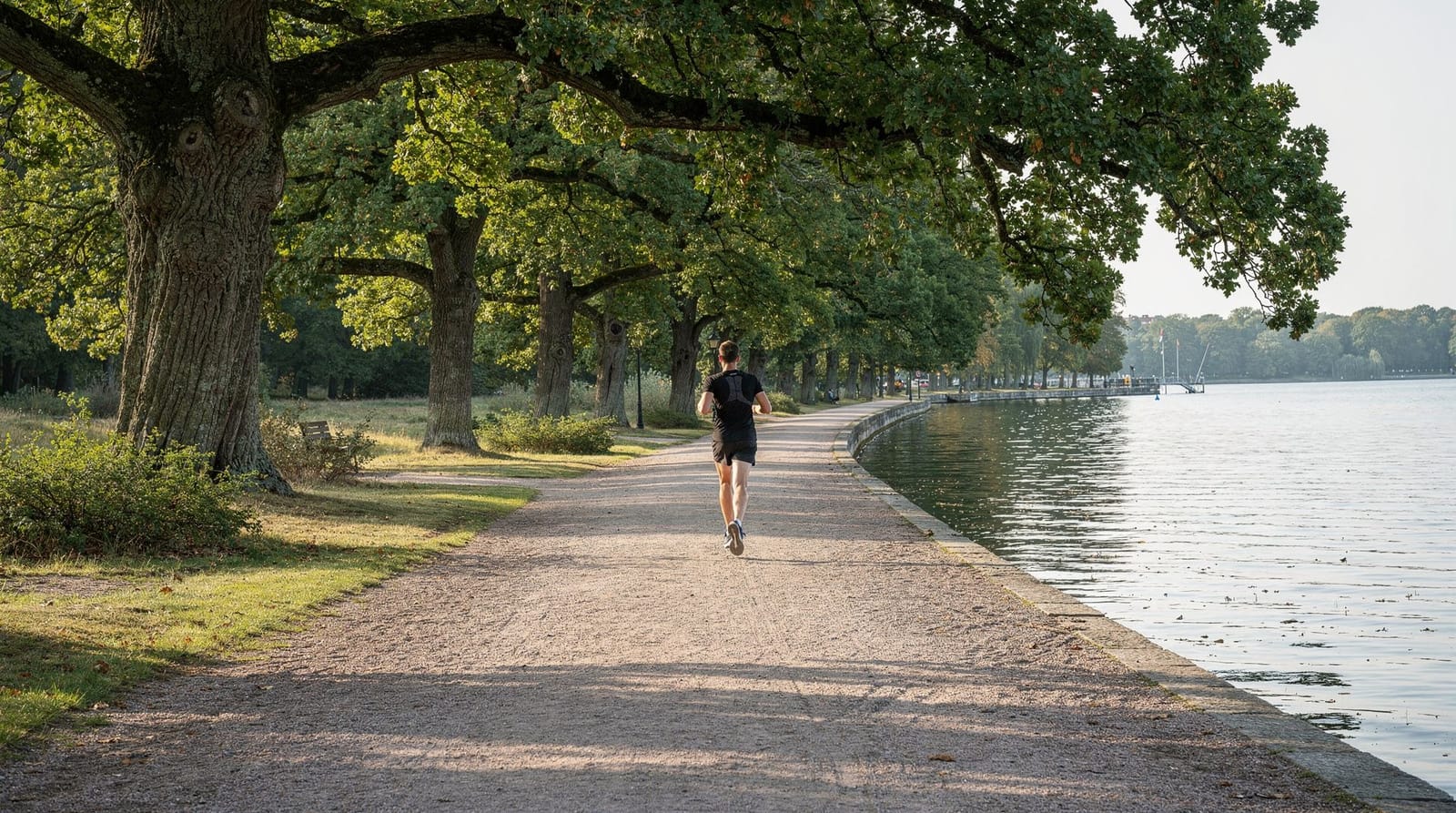
Yes — and it is genuinely excellent. Stockholm is one of the few capitals where you can swim in clean water within walking distance of the centre. Långholmen (freshwater, Mälaren) and Smedsuddsbadet on Kungsholmen are 15 minutes from T-Centralen. Water quality meets EU standards; swimming season is June–August.
Swimming in Stockholm: the honest picture
Few European capitals offer the combination of clean water and easy access that Stockholm provides for swimming. The city sits at the juncture of Lake Mälaren and the Baltic Sea, and the water quality in both — after decades of environmental investment — consistently meets and exceeds EU bathing water standards.
| Where | Långholmen (rocks) or Smedsuddsbadet (beach), both central |
| Cost | Free at every spot in this guide |
| Time needed | 1–2 hours, no booking required |
| Getting there | T-bana to Hornstull (Långholmen) or on foot from T-Centralen |
| Best time | Mid-July to mid-August, weekday evenings for quieter water |
The practical implication: you can walk from a Stockholm hotel to a swimming rock, jump in the lake, and be back in the city within an hour. This is not something you can do in Paris, London, or Berlin. It is a genuine and underused perk of visiting Stockholm in summer.
Most swimming spots are free, require no booking, and are accessible by T-bana. This guide covers the best options in the city (within 30 minutes of T-Centralen) and notes the water character — freshwater (Mälaren) vs brackish sea water (Saltsjön side).
Water quality and seasons
When to swim
Official season: The municipality of Stockholm designates the main bathing sites as officially monitored from June through August. Water quality testing is published weekly on the Stockholm Vatten och Avfall website during this period.
Actual window: In a warm year, water temperatures are comfortable from late May to mid-September. Peak temperatures of 20–23°C occur in mid-July. Earlier and later in the season, 14–17°C is more typical — cold but manageable for a 20-minute swim.
| Month | Water temp (approx.) | Comment |
|---|---|---|
| May | 12–16°C | Bracing; OK for confident swimmers |
| June | 16–19°C | Good; increasingly comfortable |
| July | 20–23°C | Best; peak temperatures |
| August | 19–22°C | Excellent; still warm, fewer people late August |
| September | 15–18°C | Reducing; cool but clear water |
| October+ | Below 15°C | Cold water swimming only |
Freshwater vs sea water
Mälaren (freshwater): The lake that covers the western and southern edges of Stockholm city. Swimmable, very clean (the lake is also part of Stockholm’s drinking water supply after treatment). The water is soft and typically quite dark brown/amber from natural tannic acids — this is normal and harmless, not pollution.
Saltsjön (Baltic Sea inlet): The eastern side of Stockholm, towards the archipelago. Brackish water — very low salinity (the Baltic is barely salty near Stockholm). Slightly clearer visually than Mälaren.
The best swimming spots in Stockholm
Långholmen — the urban classic
Långholmen island, accessible from Södermalm via the Långholmskajen bridge, has the best combination of accessibility, scenery, and swimming conditions of any central Stockholm bathing spot.
The southern shore of the island consists of flat granite rocks dropping into Lake Mälaren. The rocks have been used for bathing for over a century; the smooth, sun-warmed surfaces are ideal for stretching out between swims. There is a designated bathing beach on the eastern end (Klippbadet Långholmen) with changing facilities, and the rocky sections to the west are less formal and often quieter.
Water type: Freshwater (Mälaren). Nearest T-bana: Hornstull (red line), then 10-minute walk north. Facilities: Changing rooms, toilets (seasonal), limited food kiosks in peak season. Best for: Couples, solo swimmers, anyone who wants a genuine urban lakeside experience. Note: Popular on weekday evenings when locals come after work — arrive before 5pm on summer evenings for a good rock.
Brunnsviken — the park lake
Brunnsviken is a slim lake that cuts through Hagaparken (the Royal National City Park) north of central Stockholm. Unlike Långholmen, the access points are grassy banks and gentle sandy edges rather than rock — a softer, more conventional lakeside feel. The lake is longer and narrower than it appears on maps; paddling or SUP is excellent here alongside swimming.
Water type: Freshwater (connected to Lake Mälaren system). Nearest T-bana: Universitetet (red line), then 15-minute walk through Hagaparken. Facilities: Minimal — this is a park, not a developed beach. Bring your own towel and food. Best for: Combining with a walk or cycle through Hagaparken; swimming with children on grassy banks. Note: The northern end near Naturhistoriska Riksmuseet (Natural History Museum) has the best access points.
Smedsuddsbadet — Kungsholmen waterfront
On the southern shore of Kungsholmen, Smedsuddsbadet is a proper waterfront bathing area with a small sandy beach, floating pontoon, and a good view across Lake Mälaren towards Södermalm. One of the most accessible spots from the city centre — about 15 minutes on foot from T-Centralen via Hantverkargatan.
Water type: Freshwater (Mälaren). Nearest T-bana: T-Centralen (walking distance) or Stadshuset stop (green line). Facilities: Changing rooms, pontoon/diving platform (seasonal), kiosks. Best for: Quick city-centre swimming without a long transit journey. Note: Gets very busy at lunchtime on hot weekdays (this is a working city — people actually swim at lunch). Morning and evening are quieter.
Vällingby badet — suburban, less crowded
Vällingby badet is in the western suburb of Vällingby — about 20 minutes on the T-bana from T-Centralen on the blue line. It is a properly developed bathing facility with a prepared sandy beach on Lake Mälaren, facilities for children (shallow areas, water play), and typically much lower crowd pressure than the central spots in peak summer.
Water type: Freshwater (Mälaren). Nearest T-bana: Vällingby (blue line), 10-minute walk. Facilities: Full facilities — changing rooms, café, rentals, lifeguard in peak season. Best for: Families with young children; avoiding crowds on the hottest July days; combining with a day in the western suburbs.
Swimming alongside other water activities
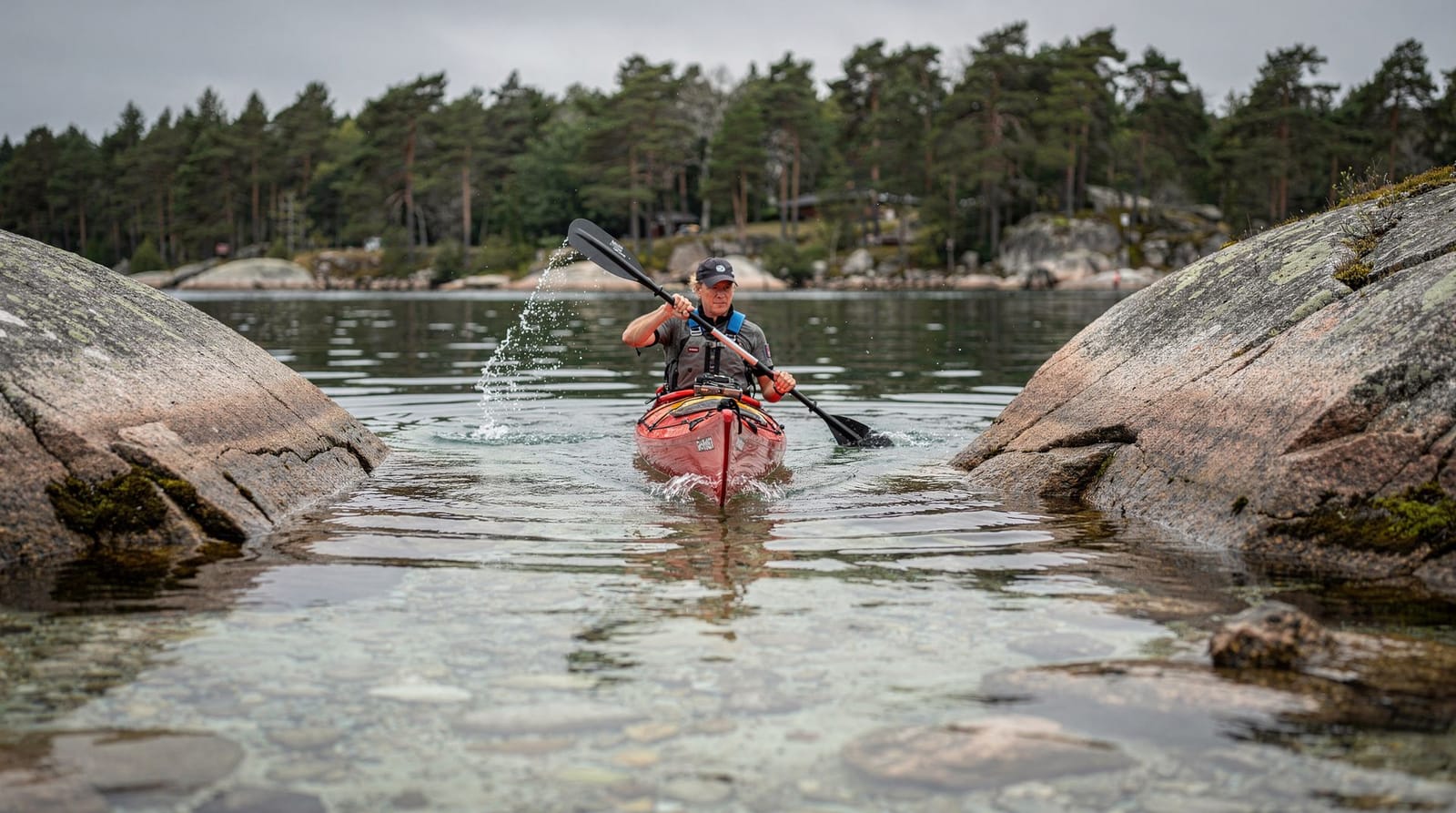
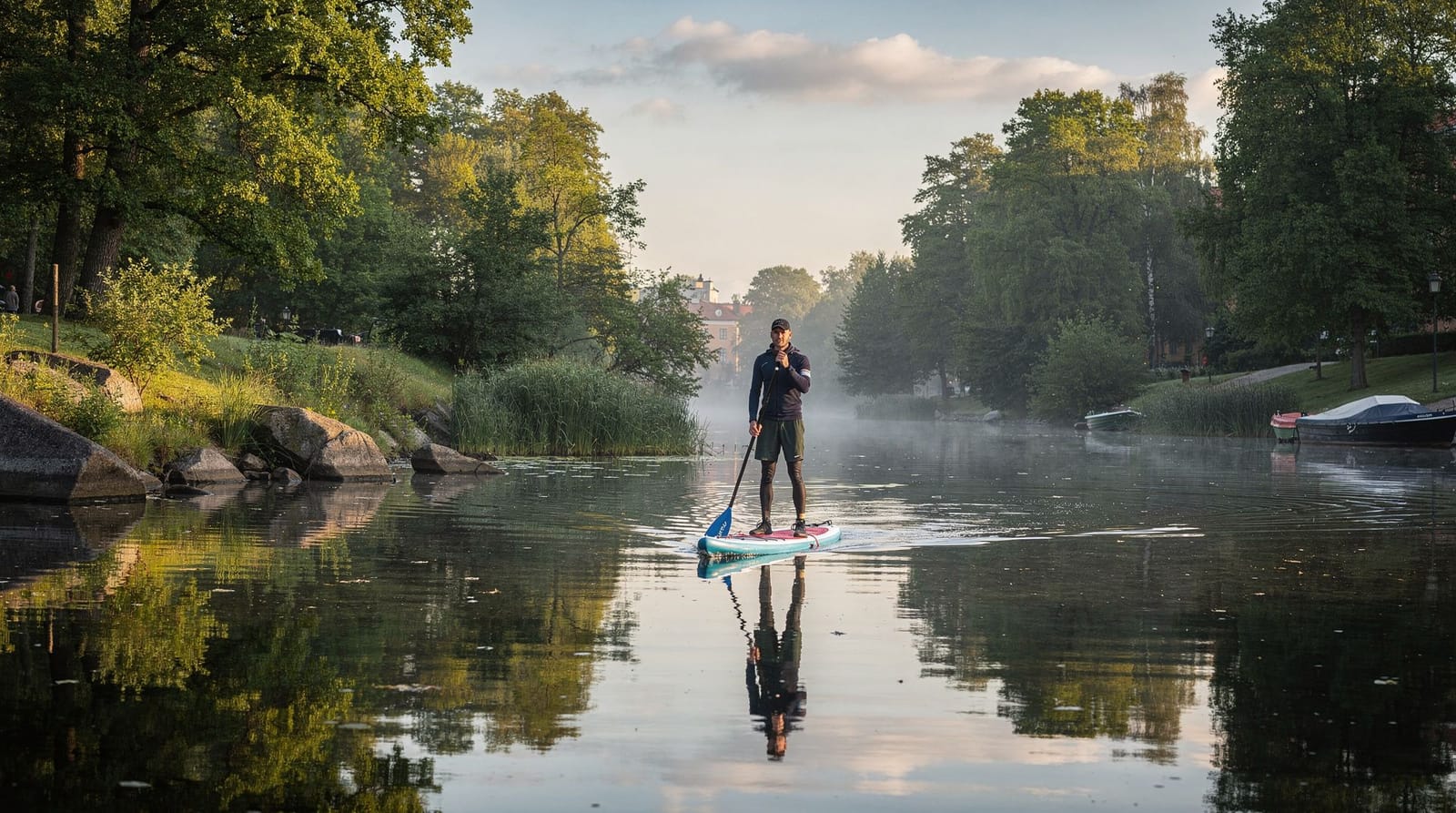
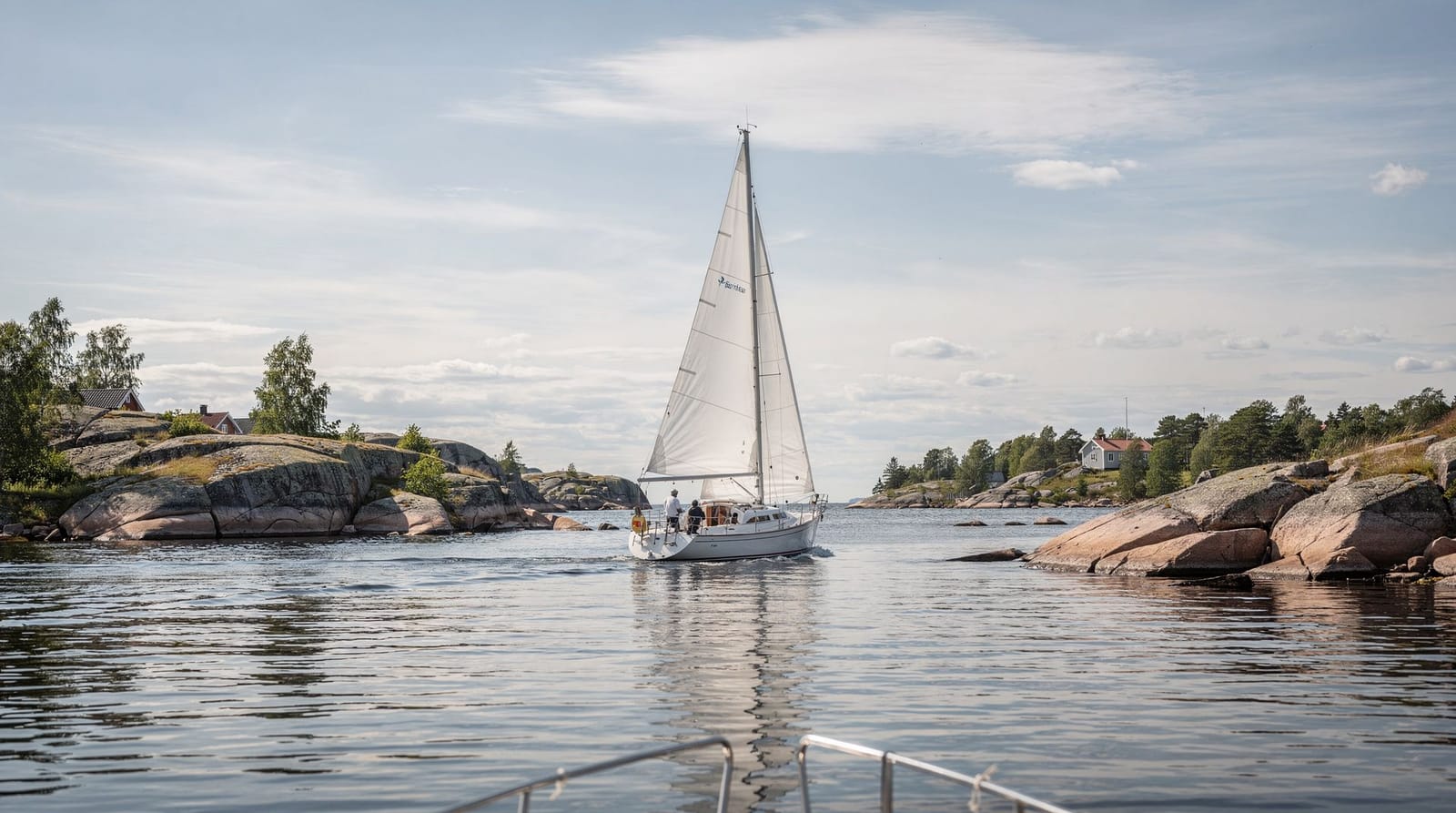
Several of Stockholm’s swimming spots double as launch points for other water activities. Brunnsviken is one of the best flat-water stretches near the city for SUP, and paddlers frequently combine a swim with a session on the board. Långholmen and the Djurgårdskanalen area are also good starting points for a kayaking trip that includes a swim break partway through. For a lower-effort way to see the same water without getting in it, a sailing trip covers more distance while still passing many of the same swimming spots.
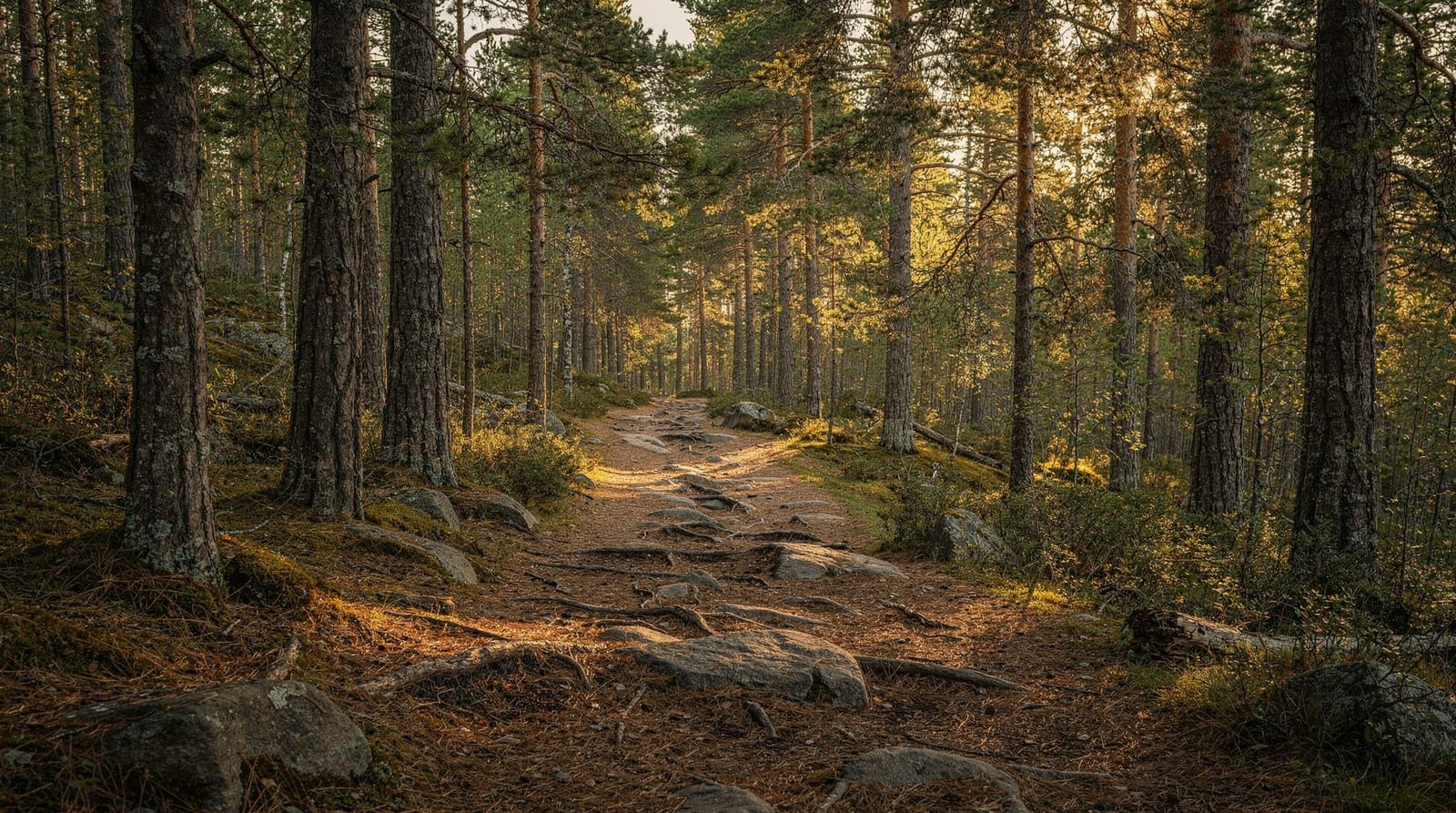
If you would rather combine swimming with a longer day out on foot, several routes described in the hiking near Stockholm guide pass lakeside or coastal swimming spots partway through, and the urban running routes guide covers paths that pass directly by Långholmen and Smedsuddsbadet for a run-then-swim combination that is a genuinely popular local habit.
Building a swim into a longer day
A swim works best as one part of a day rather than the whole plan. Smedsuddsbadet sits on Kungsholmen, so it pairs naturally with a wander through that neighbourhood and a coffee stop afterwards; the fika culture guide explains why a post-swim pastry is practically part of the ritual. Långholmen is a short hop from Södermalm, which makes it an easy add-on to a day of cafés, vintage shops and viewpoints.
On Djurgården, a morning swim from the quieter eastern rocks fits well with the route in the Djurgården walking route guide. When the water has cooled you down, an afternoon indoors is the logical next step: the Vasa Museum is the classic choice, and you can arrange entry to the 17th-century warship in advance so the visit does not depend on the queue. The open-air museum next door is just as good in dry weather, and you can book a ticket for the open-air museum and zoo before you leave your hotel; the Skansen guide covers what to see first.
Swimming is also a good fit for the long light of summer. The white nights guide explains how late evening swims, when the crowds thin out, have become a favourite local habit. If you are planning the rest of the trip around the weather, the what to pack guide lists what to bring besides a towel, and the Swedish sauna guide covers the traditional way to warm up after a cold dip. Travelling with children? The family guide to Stockholm helps you decide which of the gentler beaches suits your plans, and the three-day overview shows where a swim slot fits in a short first visit.
Archipelago swimming
The Stockholm archipelago offers swimming from granite rocks on hundreds of islands, with brackish Baltic water that is slightly cooler than Mälaren but clearer. If you are taking a day trip to Vaxholm, Fjäderholmarna, or Grinda, swimming from the rocks is absolutely possible and widely practiced.
Key considerations for archipelago swimming:
- Seaweed on rocks near the water line — wear water shoes when entering
- Boat wash near harbours — swim away from ferry terminals
- Current in narrow channels between islands — stronger than it looks from shore
- Temperature: Baltic water runs 1–3°C cooler than Mälaren in peak summer
See the Stockholm archipelago guide for details on reaching specific islands.
The sea on the Saltsjön side
The eastern side of the city faces the Baltic Sea inlet (Saltsjön). Swimming spots here include several points along the Nacka shore and the outer Djurgården eastern tip. Water quality is good; the character is more “sea swimming” with a mild saltiness and occasional jellyfish (harmless moon jellyfish are common in late summer).
Fjäderholmarna: The closest archipelago island (20 minutes by boat from Strömkajen), has accessible rock swimming and is good for a combined boat trip + swim afternoon. See the Fjäderholmarna guide.
Djurgården itself, on the Saltsjön side, is worth a mention beyond its museums — the eastern tip has quieter rock-swimming spots away from the crowds around the main attractions. See the Södermalm neighborhood guide for the equivalent picture on the freshwater side of the city, where several of the spots above (Långholmen, Smedsuddsbadet) sit at the neighbourhood’s edges.
Practical swimming tips
Allergies and cyanobacteria: In hot, windless summer weather (late July–August), blue-green algae (cyanobacteria) can bloom in sheltered bays and warm lake edges. The municipality posts warnings at affected bathing sites. Heed these — cyanobacteria can cause skin and eye irritation. Brunnsviken is occasionally affected; open Mälaren at Långholmen less so.
Water shoes: Recommended for entering from rocky shores (Långholmen, archipelago). The rocks below the water line are smooth but slippery and sometimes covered in freshwater snails.
Sun exposure: Water amplifies UV exposure significantly. SPF 50 on shoulders and back is worth applying before a swimming session.
Open water distances: All the spots listed are within 50–100 metres of shore entry and re-exit points. Swim parallel to shore rather than directly away from it in areas with boat traffic.
Frequently asked questions about swimming in Stockholm
Is it safe to swim in Lake Mälaren?
Yes. Lake Mälaren’s water quality for bathing has been consistently good for the past two decades. The municipality tests water quality weekly at all designated bathing sites during summer and posts results publicly. The lake also supplies Stockholm’s drinking water (after treatment), which reflects its baseline quality.
Are there lifeguards at Stockholm’s swimming spots?
At developed bathing facilities like Vällingby badet, yes — lifeguards are present during peak season hours. At informal rock swimming spots like Långholmen and Smedsuddsbadet, generally no. Swim within your abilities and within easy distance of re-entry points.
Can I swim directly from central Stockholm?
Yes. Smedsuddsbadet is about 15 minutes’ walk from T-Centralen and is the most central option with actual facilities. Långholmen requires an additional 10 minutes on the T-bana but has better swimming conditions and scenery.
When is the water warmest in Stockholm?
Mid-July to mid-August. Peak temperatures on Mälaren reach 21–23°C in a warm year, which is comfortable for extended swimming. The temperature drops relatively quickly after mid-August.
Is Stockholm’s water clear to swim in?
Mälaren water is naturally amber-brown from dissolved organic acids (tannins from forest soil) — this is normal and does not indicate contamination. The water is actually very clean; the colour is aesthetic. Saltsjön/Baltic water is clearer but cooler.
Can I swim year-round in Stockholm?
Officially, only June–August is designated as monitored bathing season, but cold-water swimming (vinterbad) has a genuine and growing following in Stockholm through autumn and winter, often paired with a sauna. This is a different activity from casual summer swimming — very short dips, often through a cut ice hole, followed immediately by warming up. Not recommended without local guidance for a first attempt.
Do I need to pay to swim at any of these spots?
No. Every spot covered in this guide — Långholmen, Brunnsviken, Smedsuddsbadet, Vällingby badet, and the archipelago rocks — is free and open to the public. Some facilities charge a small fee for locker or towel rental, but entry to the water itself is never ticketed.