Gamla Stan Christmas market at Stortorget: what to expect
Stockholm: Christmas market magic walking tour with a local
Is the Gamla Stan Christmas market worth visiting?
Yes — Stortorget's Christmas market is free, genuinely atmospheric in one of Stockholm's most beautiful squares, and has operated since 1837. It's smaller than Skansen but more conveniently located and immediately accessible. Best experienced on a weekday morning or in the early blue-hour afternoon light of December. Combine with the surrounding Gamla Stan alleyways for the full effect.
Stortorget: the oldest Christmas market in Sweden
The market at Stortorget has run every December since 1837, apart from a break in 1907–1914 and in 2020. Before that, Stortorget — the Great Square — had functioned as Stockholm’s primary marketplace for centuries, dating to the medieval founding of the city in the 13th century. The Christmas market is, in this sense, a continuation of a commercial tradition that stretches back further than the modern date suggests.
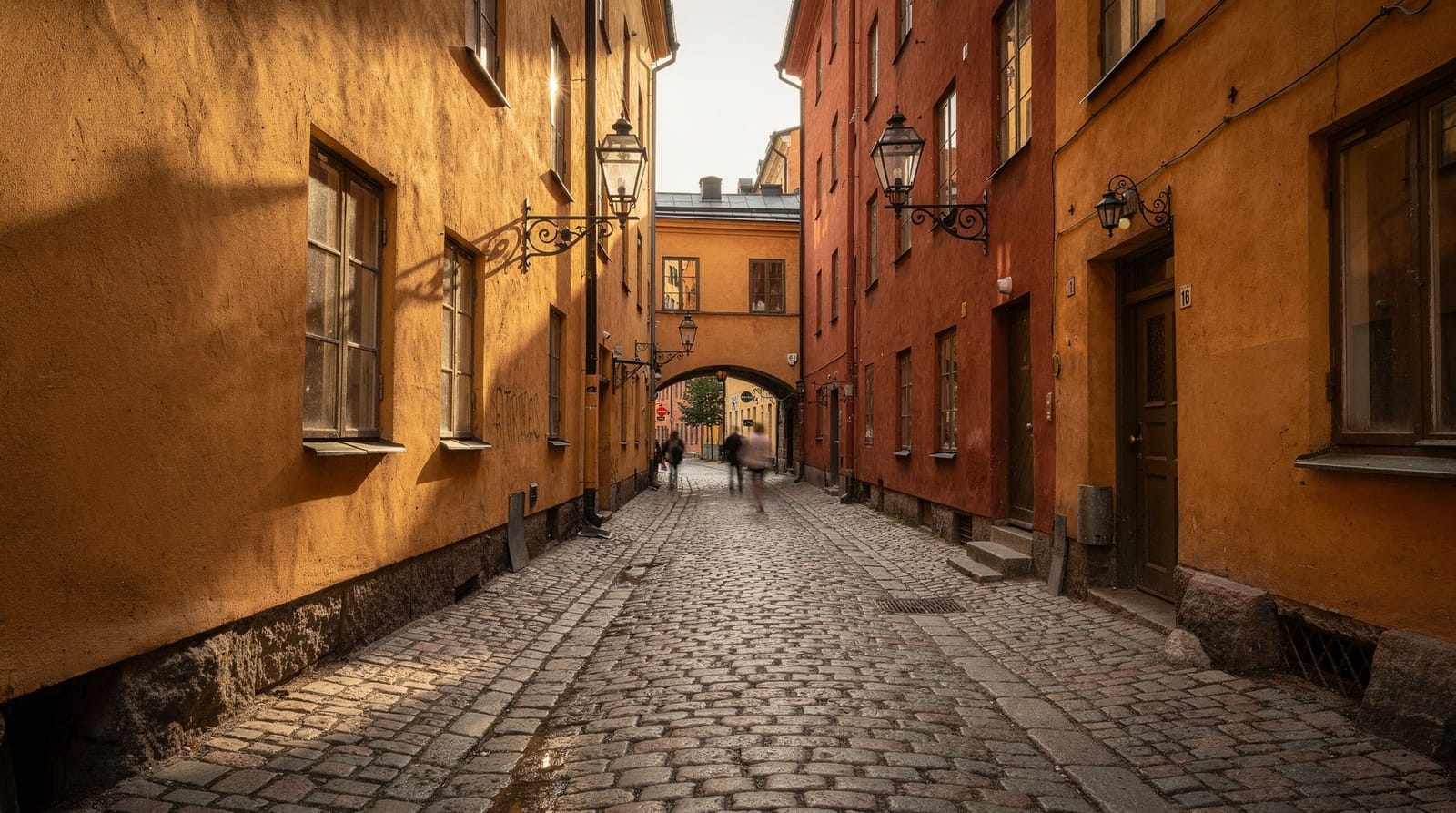
The square itself is architecturally extraordinary. Low medieval buildings painted in ochre, yellow, salmon, and red — the oldest dating from the 15th century — surround a cobblestone square that has changed less dramatically than most central European equivalents. It was here that the Stockholm Bloodbath of 1520 took place, an event that ended the Kalmar Union and shaped Scandinavian history. The Christmas market layers light and decoration over this layered history.
| Where | Stortorget, Gamla Stan |
| Cost | Free entry; glögg and food priced by each stall |
| Open | Late November to 23 December; Sun–Thu 11:00–18:00, Fri–Sat 11:00–19:00 (confirm the 2026 dates on the market’s website) |
| Time needed | 45–90 minutes |
| Getting there | T-bana to Gamla Stan, 5–7 min walk |
| Best time | Weekday, 14:00–16:00 for blue-hour light |
The market itself
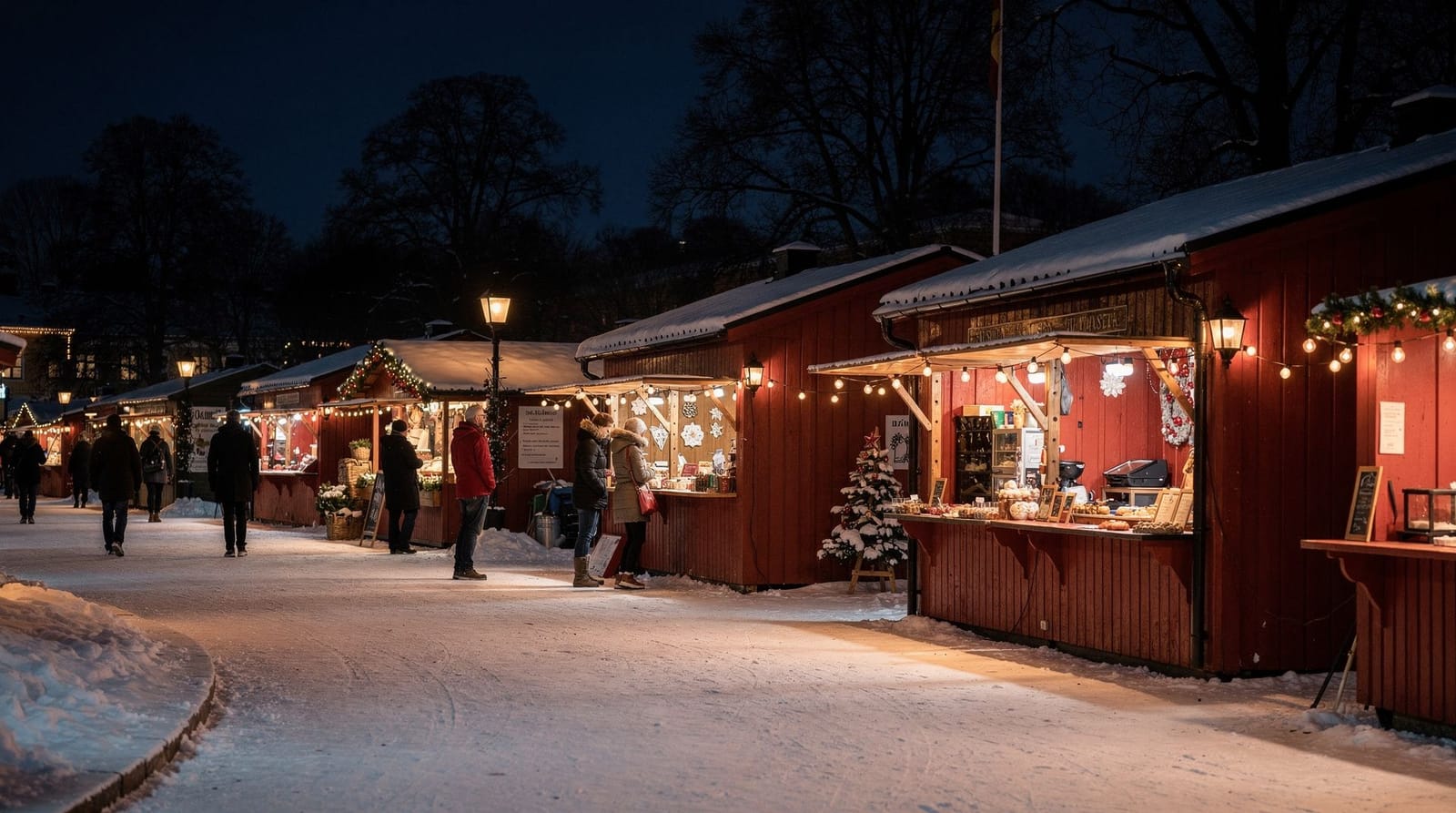
Stortorget’s Christmas market is small — the square holds perhaps 40 stalls when fully set up. This is part of its charm. You can see the whole market in an hour, there are no decisions to make about navigation, and the historic square proportions mean the market never feels as aggressively commercial as larger events.
What the stalls offer:
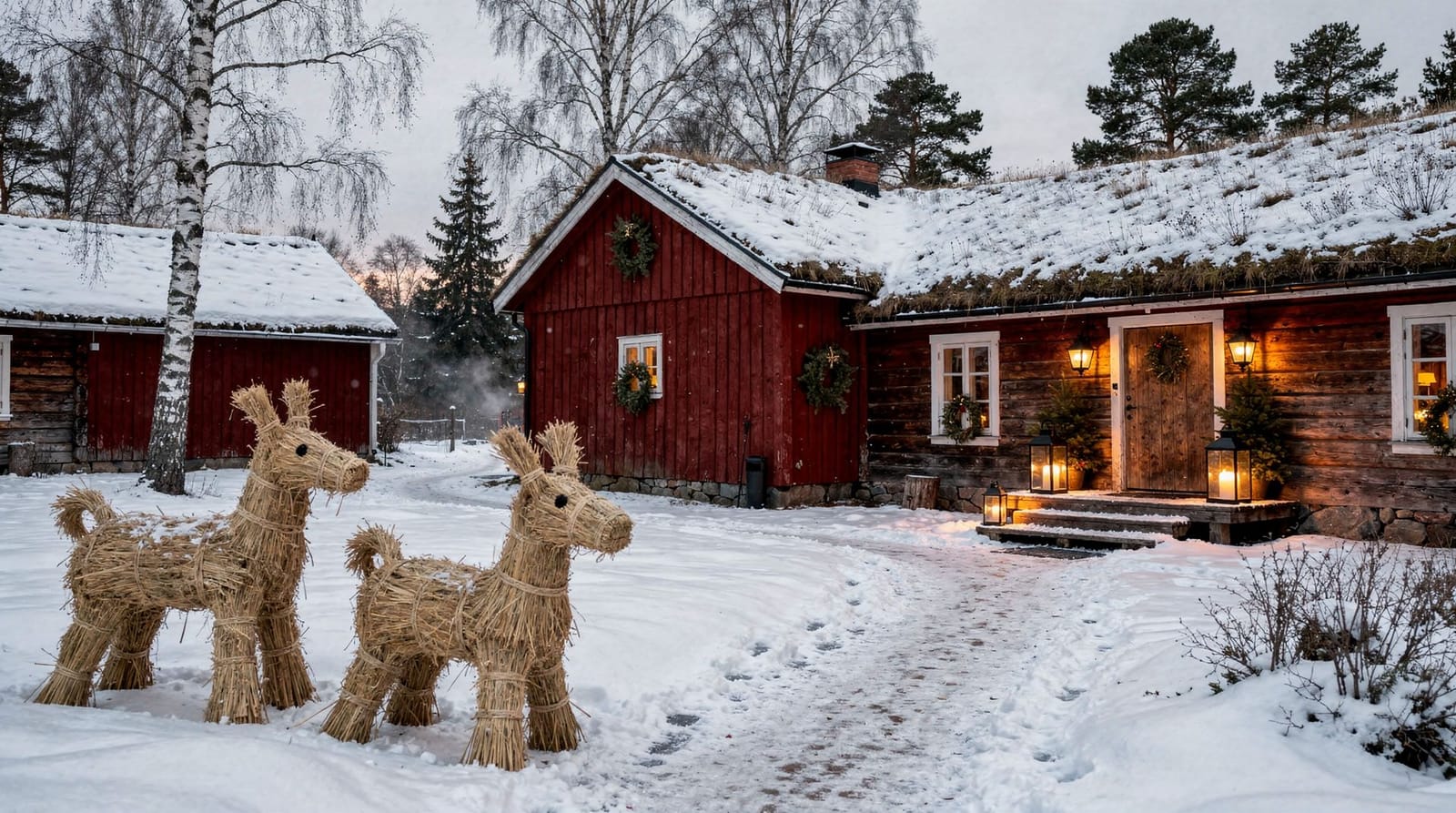
- Traditional Swedish Christmas decorations: straw julbocks, wooden ornaments, Advent stars for windows
- Handicrafts: knitted items, scarves, mittens in Nordic patterns
- Christmas food: glögg, pepparkakor, lussekatter, smoked sausages
- Ceramics and small decorative items
- Swedish confectionery: knäck (Christmas toffee), polkagrisar (traditional peppermint sticks)
The quality range is wide — some stalls are genuine artisans, others are selling imported goods with Swedish-looking packaging. Look carefully at what you’re buying.
Glögg at Stortorget
The glögg served at Stortorget’s market is a highlight. Swedish glögg differs from German Glühwein primarily in spicing — cardamom and cloves are more prominent, cinnamon slightly less so. The cup includes raisins and almonds. The non-alcoholic version (made with grape juice or apple juice) is widely available at the same stalls.
The ritual is Swedish: stand at the stall with your paper cup, cup your hands around the warmth, watch the December light change over the coloured medieval facades, and drink slowly. This is one of those specific travel moments worth making time for.
Gamla Stan in December beyond the market
The Christmas market at Stortorget exists within a broader December atmosphere that makes all of Gamla Stan worth experiencing:
Västerlånggatan (the main street): Usually one of Stockholm’s more tourist-saturated streets, in December it becomes tolerable because the Christmas atmosphere normalises the crowds. The shops sell Christmas items alongside the usual souvenirs, and the street itself is heavily decorated with lights.
The medieval alleyways: Gamla Stan’s narrower streets — Mårten Trotzigs Gränd (the narrowest in Stockholm at 90cm), Prästgatan, the passages around the Royal Palace — have minimal lighting in winter, making them atmospheric in a different way from the lit market. Worth exploring in the blue-hour afternoon light.
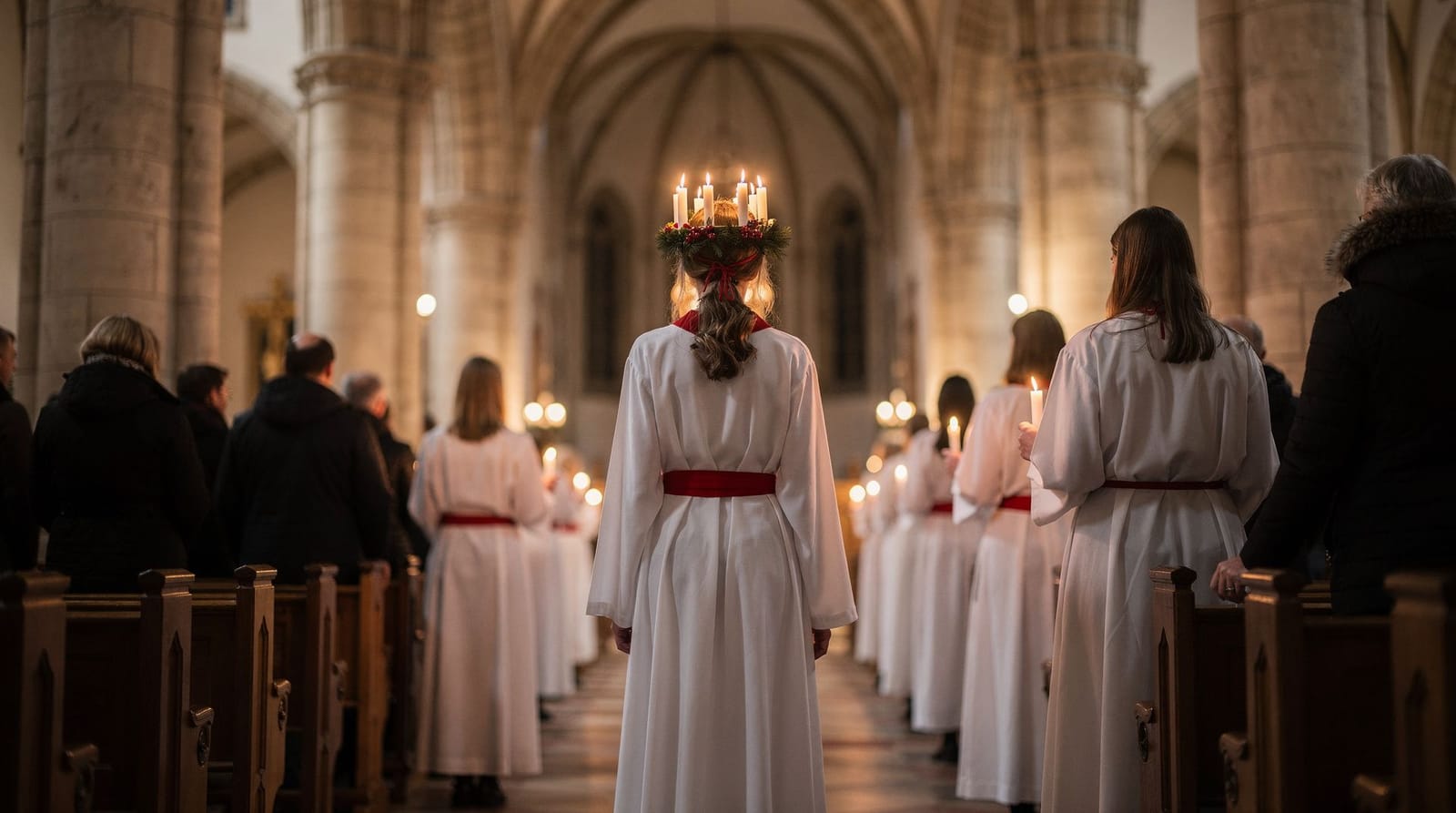
Storkyrkan (the Cathedral): Adjacent to Stortorget, the cathedral presents ticketed Lucia concerts in the days up to 13 December. Outside the Lucia season, the church is open for visits and has its own Advent and Christmas decorations worth seeing. See the Lucia guide for planning.
Gamla Stan restaurants in winter: Several of Gamla Stan’s better restaurants lean into the season with game dishes and warming menus in December — the honest Gamla Stan restaurant guide covers which are worth booking after the market.
Warming up between stalls
A visit to the market goes better if you treat it as a slow loop rather than a checklist. Walk the edge of the square once without buying anything, note which stalls draw the most interest, and then come back for the glögg and the purchases. The stalls near the middle tend to be the busiest, so the edges are where you can pause and look at the facades without being nudged along.
Cold is the real constraint in December. Stand still for a while with a paper cup and you will feel it through your boots, so wear proper winter footwear and layers you can adjust. The winter clothing rental guide is useful if you arrived underdressed, and the packing guide covers what to bring in the first place. Gloves that still let you use a phone or hold a cup make a bigger difference than most visitors expect.
If the chill gets to you, Gamla Stan has no shortage of cafés where you can step inside. The Swedish habit of a fika break fits the day naturally: a hot drink and a cinnamon bun while the light fades outside. The fika culture guide explains the custom, and the cinnamon bun guide helps you pick what to order. If you would rather be led to the good spots, a guided walk through the old town with fika stops built in turns the café break into part of the route.
Making the visit work with children or on a budget
Because entry costs nothing, the market is an easy addition for families. Children tend to enjoy the straw goats, the sweets, and the general glow of the square, and the short time needed means nobody gets restless. Keep expectations modest, though: there are no rides or large attractions here, so it suits a short stop rather than an afternoon of entertainment. For something bigger with younger visitors, the Skansen Christmas market guide describes the open-air museum option, and the family guide gathers more ideas for the whole trip.
On a budget, the market is among the better December value stops in the city. You can enjoy the setting, the lights and the atmosphere without spending anything, and a single cup of glögg or a small treat is enough to feel part of the occasion. The daily budget guide helps you see where the money in Stockholm actually goes, and a market visit rarely needs to be a significant part of it.
Reading the square on a guided walk
The market is pleasant on its own, but the buildings around Stortorget carry stories that a casual visitor will not pick up from the stalls. A guide can point out which facades matter, explain how the old town grew on its small island, and connect the square to the events described above. If that appeals, a guided walking tour of Gamla Stan is a sensible way to add that depth without planning a route yourself.
Prefer your own pace? The Gamla Stan neighbourhood deep dive and the Gamla Stan destination page lay out the island in detail, while the medieval secrets guide goes further into the older layers of the streets you will walk between the market and the palace. Those who like their history a little darker can look at the ghost walking tour guide, which suits a December evening when the alleyways are quiet.
Stortorget vs Stockholm’s other Christmas markets
| Stortorget (Gamla Stan) | Skansen | Rosendals Trädgård | |
|---|---|---|---|
| Entry | Free | Paid | Free |
| Size | Small, 40 stalls | Large, museum-scale | Small, garden setting |
| Time needed | 45–90 minutes | Half day | 1–2 hours |
| Setting | Medieval square | Open-air museum | Organic garden café |
| Best for | A quick, atmospheric stop | A full festive outing with kids | A quieter, local-feeling market |
For visitors with limited December time, Stortorget is the highest-value stop per minute spent — free, central, and photogenic. The complete Christmas markets guide covers the full list if you have more than one afternoon for markets.
Practical considerations
Free entry: No ticket. Walk in from any of the several entrances to Stortorget.
Cash or card: Stockholm is 90%+ card-based. Most market stalls accept contactless payment. A few older traditional stalls may prefer cash — have some SEK available as backup.
Crowds: Weekend afternoons in December are genuinely very crowded. Stortorget is a small square and it fills. Weekday mornings are substantially better. The period from 14:00 to 16:00 on a Wednesday is probably the optimal combination of low crowds and good December light.
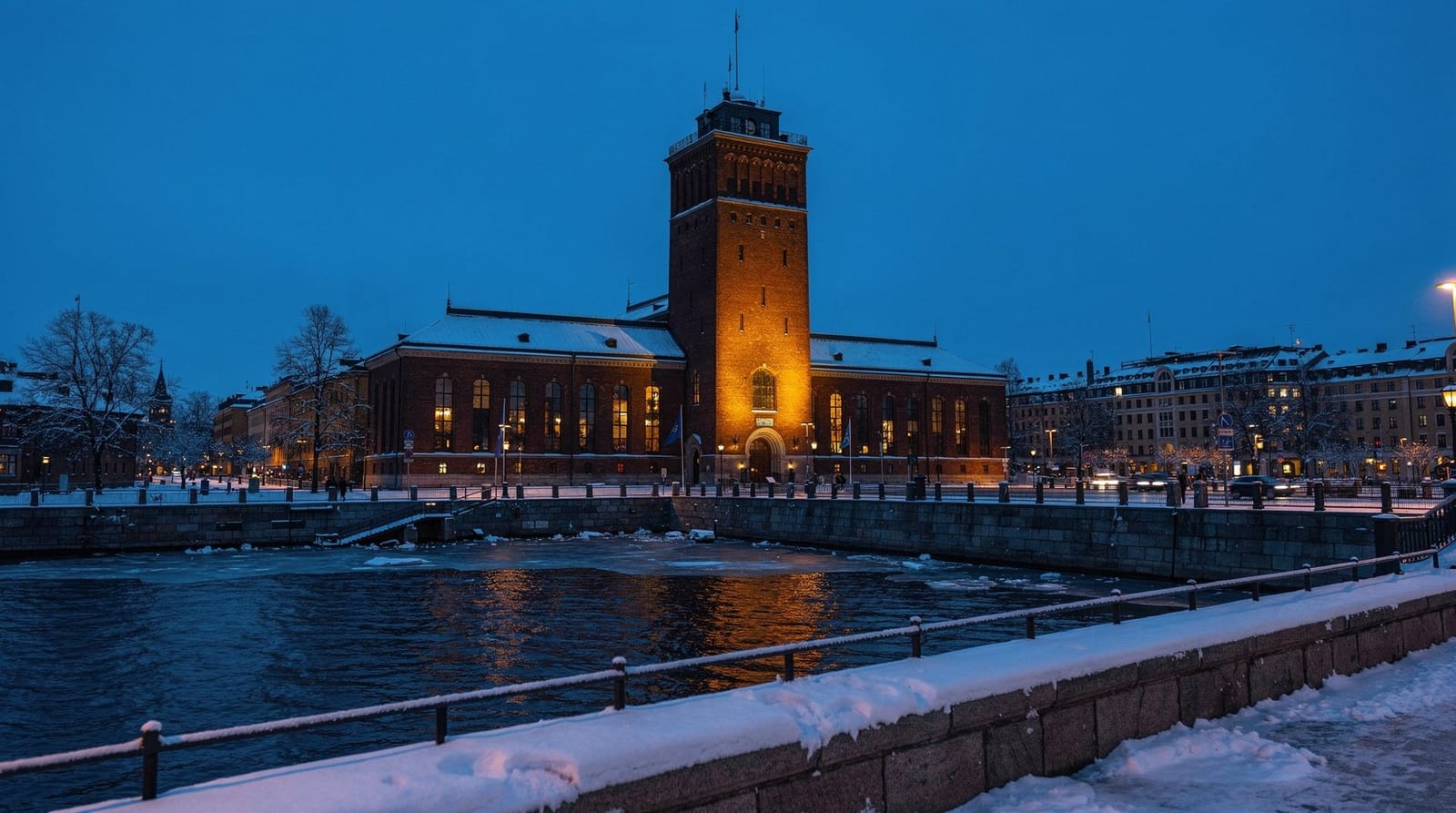
Photography: The square photographs beautifully in the blue-hour light, from roughly 14:00 to 16:30 in December, when the Advent stars in windows glow and the coloured facades pick up the twilight colour. Arrive with a tripod if you’re serious; your phone will do fine if you’re not.
Kombining with Skansen: The Christmas market walking tour covers multiple markets including both Stortorget and some neighbouring locations, with a guide who provides historical and cultural context. Worth considering for a first visit if you want the background story alongside the market itself.
Planning the rest of a Stockholm Christmas trip
If the market is one part of a longer stay, a few other pages help you build the days around it. The Stockholm winter itinerary shows how markets, museums and evenings can fit together, and the blog’s ranking of the city’s Christmas markets gives a more opinionated comparison. The Skansen market and the market at Stortorget complement each other well, one large and one intimate, so many visitors do both on separate days.
Remember also that the Royal Palace sits right beside the square, so a Christmas visit can include a look inside as well as around it; the Royal Palace guide explains what to expect.
The historical context: the Stockholm Bloodbath
Stortorget is not just pretty. On 8–10 November 1520, the Danish King Christian II executed 80–90 Swedish nobles, bishops, and citizens in this square — an event that broke the Kalmar Union and led directly to Swedish independence under Gustav Vasa. The square’s beautiful facades were witnesses to one of the darkest events in Swedish history.
This context doesn’t make the Christmas market less pleasant — it makes the square more layered. Swedish history has a habit of being very large in very small spaces.
Fitting the market into a December day in Stockholm
The Stortorget market works best as one stop within a wider December day rather than the sole destination. A common sequence: a morning at the Vasa Museum or another indoor sight, lunch in Gamla Stan, the market in the mid-afternoon blue-hour light, then dinner nearby before the evening lights come on fully. For a broader sense of what Stockholm in December offers beyond markets — the ice skating, the winter light, the seasonal food — see the Stockholm winter guide. Pairing the market with the self-guided Gamla Stan walking tour beforehand also means you arrive at Stortorget already knowing the history behind the square, rather than treating it as just a backdrop for stalls.
Frequently asked questions about the Gamla Stan Christmas market
Can I visit Gamla Stan’s Christmas market at night?
Stortorget itself is well-lit in December; the market closes at 18:00 Sunday to Thursday and at 19:00 on Friday and Saturday. Gamla Stan’s streets are lit and safe at night. An evening visit after 17:00, when it’s fully dark, gives a different atmosphere — the candles, the glögg steam, the lantern-lit alleyways — than the daytime or blue-hour experience.
Is Gamla Stan the same as Old Town?
Yes — Gamla Stan means “old town” in Swedish. It is interchangeable. The island of Gamla Stan contains Stockholm’s medieval city, surrounded by water, connected to the mainland districts by bridges. The Christmas market is specifically at Stortorget, the central square.
What else is near the Gamla Stan Christmas market?
The Royal Palace is immediately adjacent — worth a walk around the exterior even if not visiting the museums inside. The Nobel Prize Museum is on Stortorget itself. The Gamla Stan city museum (Stadsmuseet) is at Slussen, a 5-minute walk south. The Storkyrkan cathedral is 30 metres from the market entrance.
Top experiences
Bookable activities with verified prices and instant confirmation on GetYourGuide.