Sigtuna day trip from Stockholm: Sweden's oldest town guide
Stockholm: Sigtuna — oldest town in Sweden guided day trip
Is Sigtuna worth a day trip from Stockholm?
Sigtuna is worth a half-day trip, especially combined with Uppsala in the same day. Founded in 980 AD, it is Sweden's oldest surviving town with a genuine medieval main street, ruined churches, and runestones. On its own it is a 2–3 hour visit. The Sigtuna Stadshotell is beautiful if you want to stay overnight. Getting there takes 45 minutes from Märsta by bus, reached in 40 minutes by commuter train.
A Sigtuna day trip works best as a half-day add-on rather than a destination in its own right — it rewards visitors who like quiet medieval streets and don’t need a headline attraction to feel a place was worth the trip.
| Where | 45km north of Stockholm, on Lake Mälaren |
| Cost | SL pass or 43 SEK train + bus |
| Time needed | 2–3 hours alone; full day combined with Uppsala |
| Getting there | Pendeltåg to Märsta (~40 min) + Bus 575 (~15 min) |
| Best time | Year-round; summer for the waterfront, winter for the ruins in snow |
Why Sigtuna is worth visiting
Sigtuna occupies a specific niche that no other destination near Stockholm fills: it is Sweden’s oldest surviving town, founded in 980 AD by King Erik the Victorious, and its main street is an authentic medieval thoroughfare — not a reconstruction or a heritage site, but a town that has remained inhabited and functional since the Viking Age.
This is not the dramatic archaeology of Birka or the architectural grandeur of Uppsala. Sigtuna’s appeal is subtler: walking down Stora Gatan past runestones embedded in the ground and the roofless ruins of 11th-century churches creates a particular sense of historical continuity. The town is small enough to feel genuinely intimate rather than tourist-processed.
Compared with the other classic day trips from the city, Sigtuna sits in the “quick and quiet” category rather than the “big attraction” one — see the day trips from Stockholm overview for how it stacks up against Drottningholm, Vaxholm and Birka before you commit a half-day to it.
Getting to Sigtuna
By public transport
The standard route from central Stockholm:
-
Pendeltåg (commuter train) from Stockholm City or T-Centralen to Märsta — approximately 40 minutes. Trains run every 15–20 minutes during the day. The journey is covered by an SL 24/72-hour pass or by a single ticket (43 SEK).
-
Bus 575 from Märsta station to Sigtuna centre — approximately 15 minutes, running regularly throughout the day. Also covered by SL pass.
Total journey time from central Stockholm: 55–65 minutes. There is no direct train to Sigtuna; this connection is the standard route that all Swedes use.
Arlanda connection
Märsta station (where you transfer to the bus) is directly adjacent to Stockholm Arlanda Airport — one stop on the commuter rail. Visitors flying into Arlanda can travel directly to Märsta and pick up the Sigtuna bus without entering central Stockholm. This makes Sigtuna a convenient arrival or departure day trip for anyone with an Arlanda flight at the end of their Stockholm visit.
By car
Sigtuna is about 45 km north of central Stockholm via E4. Parking is available near the town centre. A car adds no significant advantage over public transport unless you are combining Sigtuna with rural locations not served by buses.
By boat
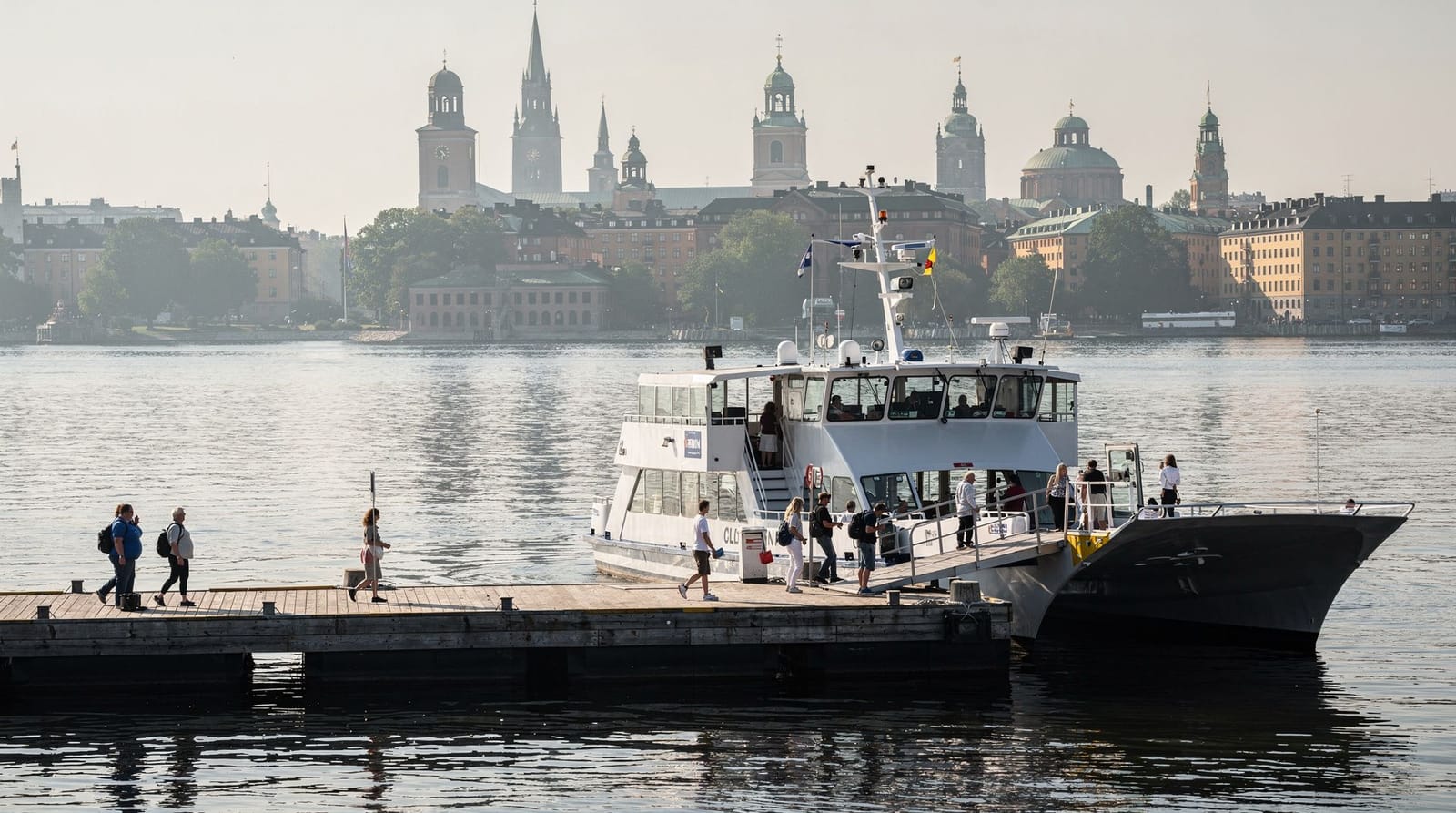
In summer, some operators run seasonal boat connections on Lake Mälaren between central Stockholm and Sigtuna, though schedules are limited compared with the train-and-bus route. If a boat option is running, it makes a scenic one-way leg — for a broader look at which Mälaren and archipelago boat routes are worth chasing, see the ferries for day trippers guide.
What to see in Sigtuna
Stora Gatan — Sweden’s oldest main street
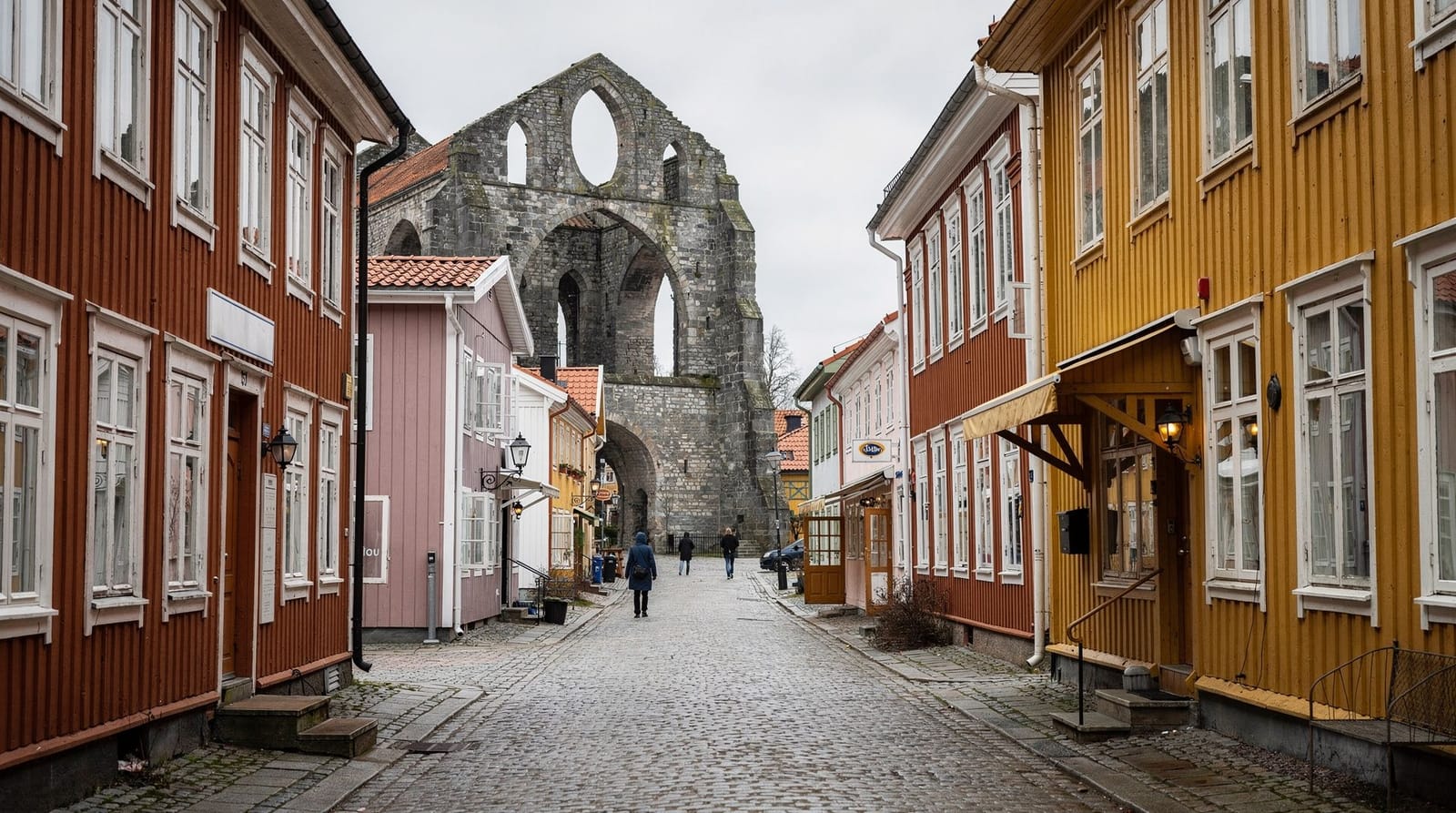
Stora Gatan (literally “Main Street”) is considered Sweden’s oldest surviving main street. The street’s layout, orientation, and commercial function have remained essentially unchanged since the Viking Age, when Sigtuna was Sweden’s primary trading town. The buildings on it are mostly 19th and early 20th century — the medieval structures burned or collapsed long ago — but the street itself has archaeological continuity that makes it different from modern reconstructions.
Walking Stora Gatan from the church ruins to the town hall takes about 20 minutes at a comfortable pace. Several cafés and small shops occupy the street; it is not a museum exhibit but a functioning small-town main street.
The church ruins
Three medieval churches were built in central Sigtuna in the 11th and 12th centuries. All three were abandoned or destroyed by the 15th century; their roofless stone shells remain in the town centre as open-air monuments.
St Per (Saint Peter): The largest ruin. Built in the early 12th century, it stood as one of Sigtuna’s most important churches before being abandoned in the 15th century. The remaining walls, reaching several metres high in places, give a sense of the church’s original scale.
St Olof (Saint Olaf): Named after the Norwegian king Olaf II, who was venerated as a saint shortly after his death in 1030. The ruin is slightly smaller and more overgrown, with a more atmospheric quality.
St Lars (Saint Lawrence): The third ruin, in the best state of preservation of the three.
All three ruins are accessible without charge and can be viewed at any time.
Maria Church
The only medieval church in Sigtuna still in use, Maria Church (Mariakyrkan) dates from the 13th century and contains original medieval frescoes — unusually well-preserved for their age. Free to enter during opening hours. The whitewashed interior with its painted arches is worth 15 minutes.
Runestones
Approximately 150 runestones have been found in the Sigtuna municipality — a remarkable concentration. Several of the most important are embedded in the ground or displayed along Stora Gatan and in the town park area. These are genuine Viking Age inscriptions, mostly from the 11th century.
Reading runestones requires knowing Elder Futhark or Younger Futhark (the runic alphabets), which most visitors do not. What matters is the scale: walking past actual Viking Age carved stones in a still-inhabited town connects the present to the medieval past more immediately than any museum exhibit.
The Sigtuna Museum has translation panels for the major inscriptions.
Sigtuna Museum and Old Town Hall
The museum is small but well-curated, focusing on Sigtuna’s Viking Age and medieval history. The old town hall (rådhuset) is one of Sweden’s smallest — a single-storey timber building that dates from the 18th century. Together they take about 45–60 minutes.
Where to eat and have fika
Sigtuna has several cafés appropriate for a fika stop or a light lunch:
Tant Brun Kafé: A traditional Swedish café near the church ruins. Good pastries, appropriate atmosphere for the historic setting.
Sigtuna Stadshotell: The boutique hotel on the waterfront has a restaurant and café serving Swedish food at prices appropriate for its beautiful 19th-century setting. A fika here is slightly expensive but the terrace overlooking Mälaren is excellent in good weather.
Lunch options are limited compared to Uppsala — Sigtuna is a small town. Plan for a light lunch or fika rather than a full restaurant meal, or combine with Uppsala (which has much better lunch options).
Stora Gatan shops and local products
Beyond the cafés, Stora Gatan has a handful of small independent shops — a bookshop, a ceramics studio, and a couple of home-goods and gift stores selling Swedish design objects and local crafts. None of it is essential shopping, but browsing for 20–30 minutes between the church ruins and Maria Church fills the gap naturally without feeling like a detour. Prices are comparable to central Stockholm rather than discounted, so this is not a bargain-hunting stop — treat it as part of the town’s atmosphere rather than a shopping destination.
Is Sigtuna worth it if you’ve already done Uppsala?
If you have already spent a full day in Uppsala and are wondering whether Sigtuna adds enough on its own, the honest answer is: only if you have a spare half-day and enjoy quiet medieval streets without a headline attraction. Sigtuna’s ruins and runestones are genuinely old, but there is no cathedral-scale sight here. Visitors who prioritise big attractions over atmosphere may prefer to spend that half-day on the archipelago or a return visit to Drottningholm instead.
Guided day trips
Book a guided Sigtuna day trip from Stockholm Book the Uppsala and Sigtuna 8-hour tour from StockholmGuided day trips to Sigtuna typically include the guided walking tour of the church ruins, runestones, and historical context that is harder to grasp without local knowledge. The Viking culture tour that combines Sigtuna with Uppsala is a good option if you want both destinations covered efficiently.
Sigtuna combined with Uppsala
The most efficient use of a Sigtuna day trip is to combine it with Uppsala:
Morning in Sigtuna (10:00–13:00): Train to Märsta, bus to Sigtuna, walk the church ruins, runestones, and Stora Gatan. Fika at Tant Brun or similar.
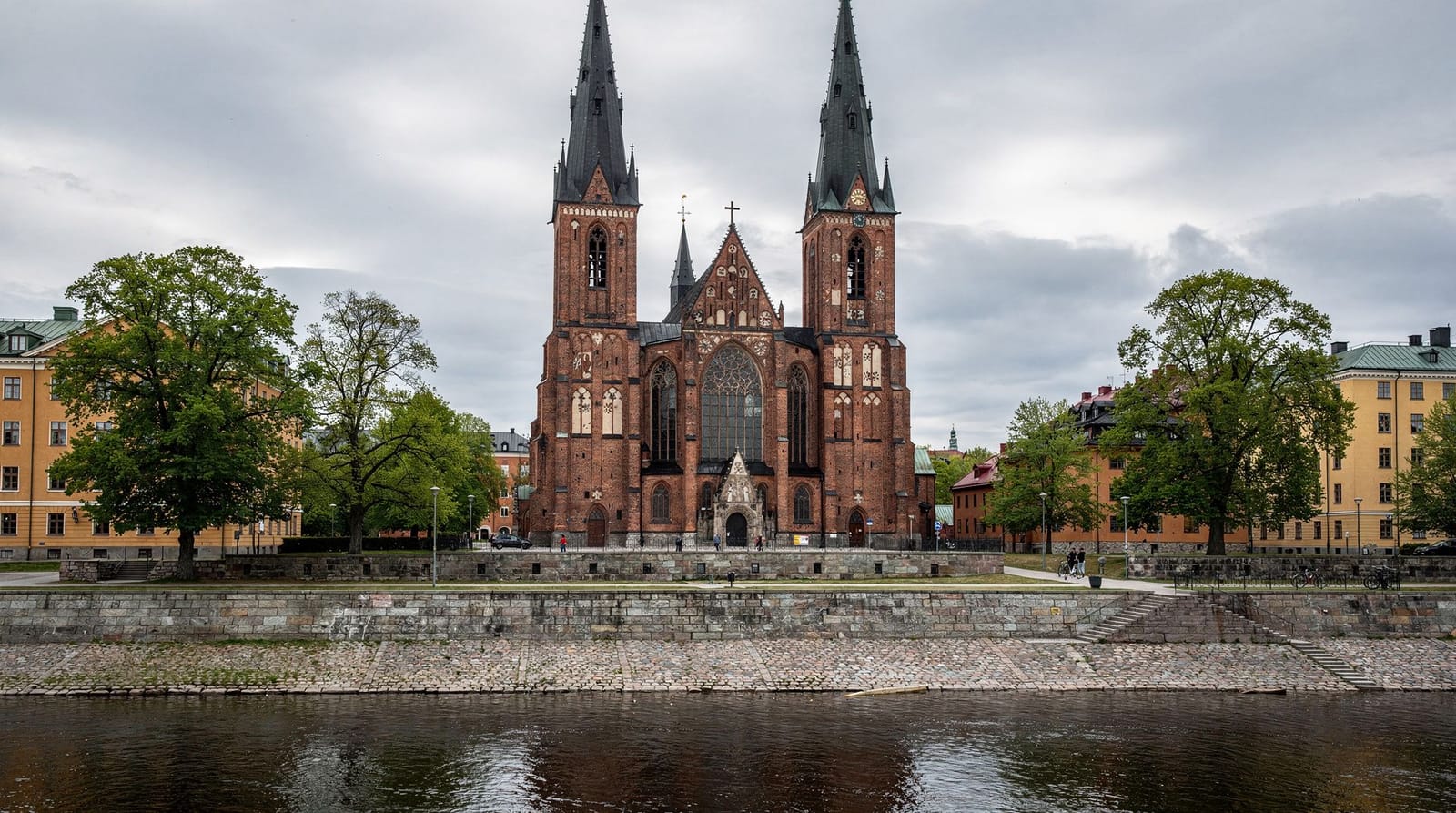
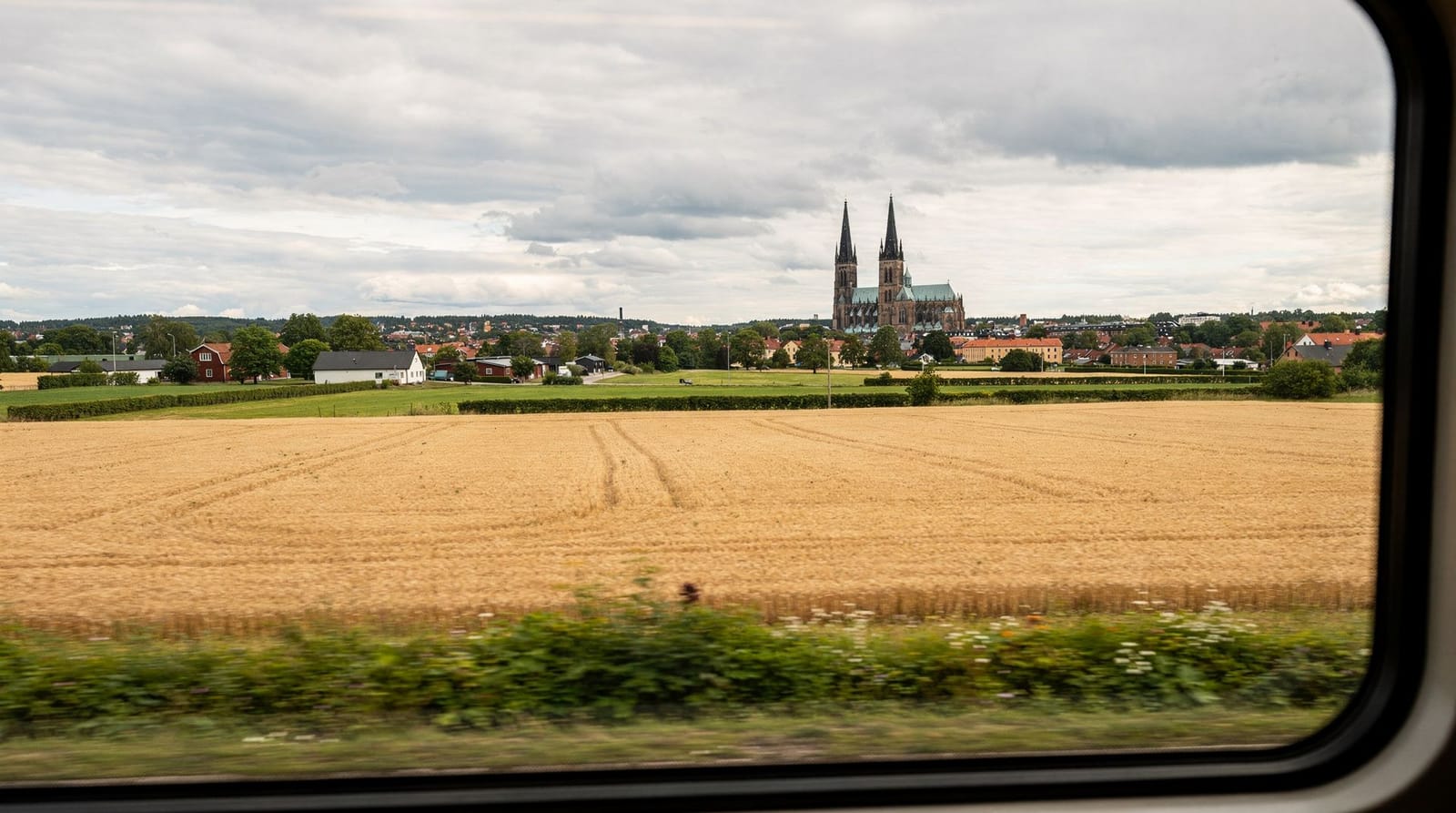
Afternoon in Uppsala (14:00–18:00): Bus or train from Sigtuna to Uppsala (approximately 30 minutes). Visit Uppsala Cathedral and the university main building. Walk to Gamla Uppsala burial mounds (3 km, manageable on foot or by bicycle rental).
Return: Train from Uppsala to Stockholm T-Centralen (38 minutes).
This combined day covers two distinct aspects of Swedish medieval and Viking history without significant redundancy.
Seasonal notes
Sigtuna in summer (June–August) is beautiful — the waterfront is pleasant, the outdoor café seating works, and the light is long. In winter, the town becomes very quiet, some cafés reduce their hours, and the outdoor ruins have a certain beauty in snow or frost. Year-round accessibility is one of Sigtuna’s advantages over seasonal options like Birka, which effectively closes outside the summer season.
Practical information
| Detail | Information |
|---|---|
| Travel time from Stockholm | ~55–65 minutes |
| Transport | Pendeltåg to Märsta + Bus 575 |
| Cost (transport) | SL pass or 43 SEK train + bus |
| Duration in town | 2–3 hours (half-day) |
| Best combined with | Uppsala |
| Accommodation | Sigtuna Stadshotell (boutique, waterfront) |
| Seasonal | Year-round |
Frequently asked questions about Sigtuna day trip
How do I get from Stockholm to Sigtuna?
Pendeltåg to Märsta (40 min) + Bus 575 to Sigtuna (15 min). Total: 55–65 minutes. Covered by SL pass.
How long should I spend in Sigtuna?
2–3 hours is sufficient for the main sights. A half-day allows more time. Combining with Uppsala in a full day is the most efficient approach.
What are the main things to see in Sigtuna?
Three medieval church ruins (St Per, St Olof, St Lars), the runestones on Stora Gatan, Maria Church with medieval frescoes, and Stora Gatan itself.
Is there a Sigtuna + Arlanda connection?
Yes — Märsta station is one stop from Arlanda airport. Convenient for visitors starting or ending at Arlanda.
How does Sigtuna compare to Uppsala?
Sigtuna is smaller and charming; Uppsala has more substance. If you can only do one, Uppsala wins. Combining both in a single day is efficient.
Top experiences
Bookable activities with verified prices and instant confirmation on GetYourGuide.