Skansen Christmas market guide: the Julmarknad in full
Stockholm: Christmas market magic walking tour with a local
When is the Skansen Christmas market and how much does it cost?
Skansen Julmarknad runs on weekends (Friday–Sunday) from 27 November to 20 December in 2026. Admission to Skansen includes the museum and zoo (the price varies by season and is lowest online; see skansen.se). Weekday visits are possible through normal Skansen admission but without the full Christmas market programme. Arrive before 11:00 to avoid the busiest Saturday afternoon crowds.
Skansen’s Julmarknad is the most atmospheric of Stockholm’s Christmas markets, but it takes planning around weekend-only hours, timed entry crowds, and a site large enough that rushing defeats the point.
| Where | Skansen, Djurgården |
| Cost | Normal Skansen admission (includes museum and zoo); see skansen.se for the current price |
| When open | Fri–Sun, 27 November to 20 December 2026 (Fri–Sat 10:00–17:00, Sun 10:00–16:00) |
| Time needed | 3+ hours for the combined market and museum |
| Getting there | Bus 69 or tram 7 (Djurgårdslinjen) to Skansen |
Why Skansen’s Christmas market stands apart
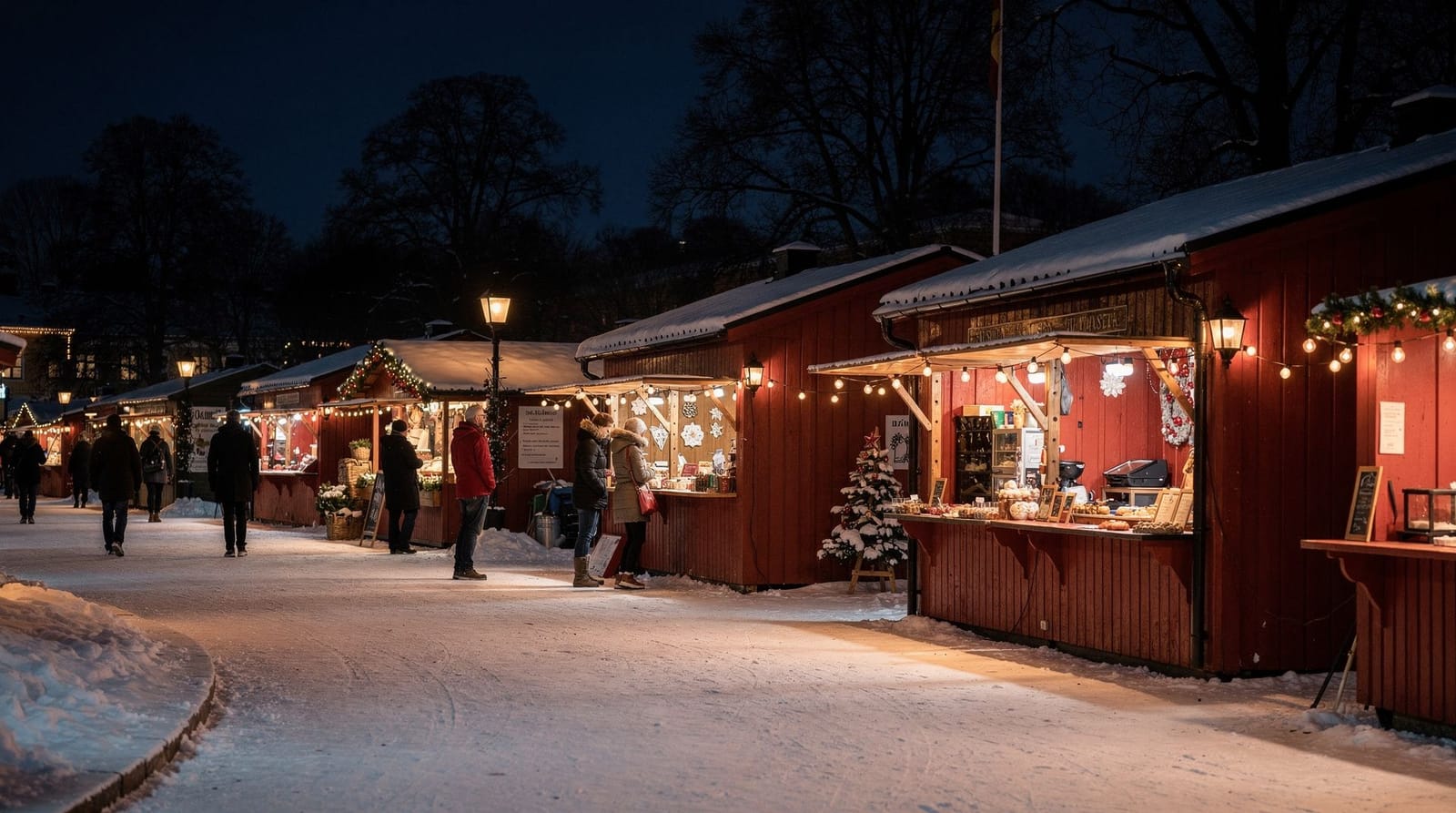
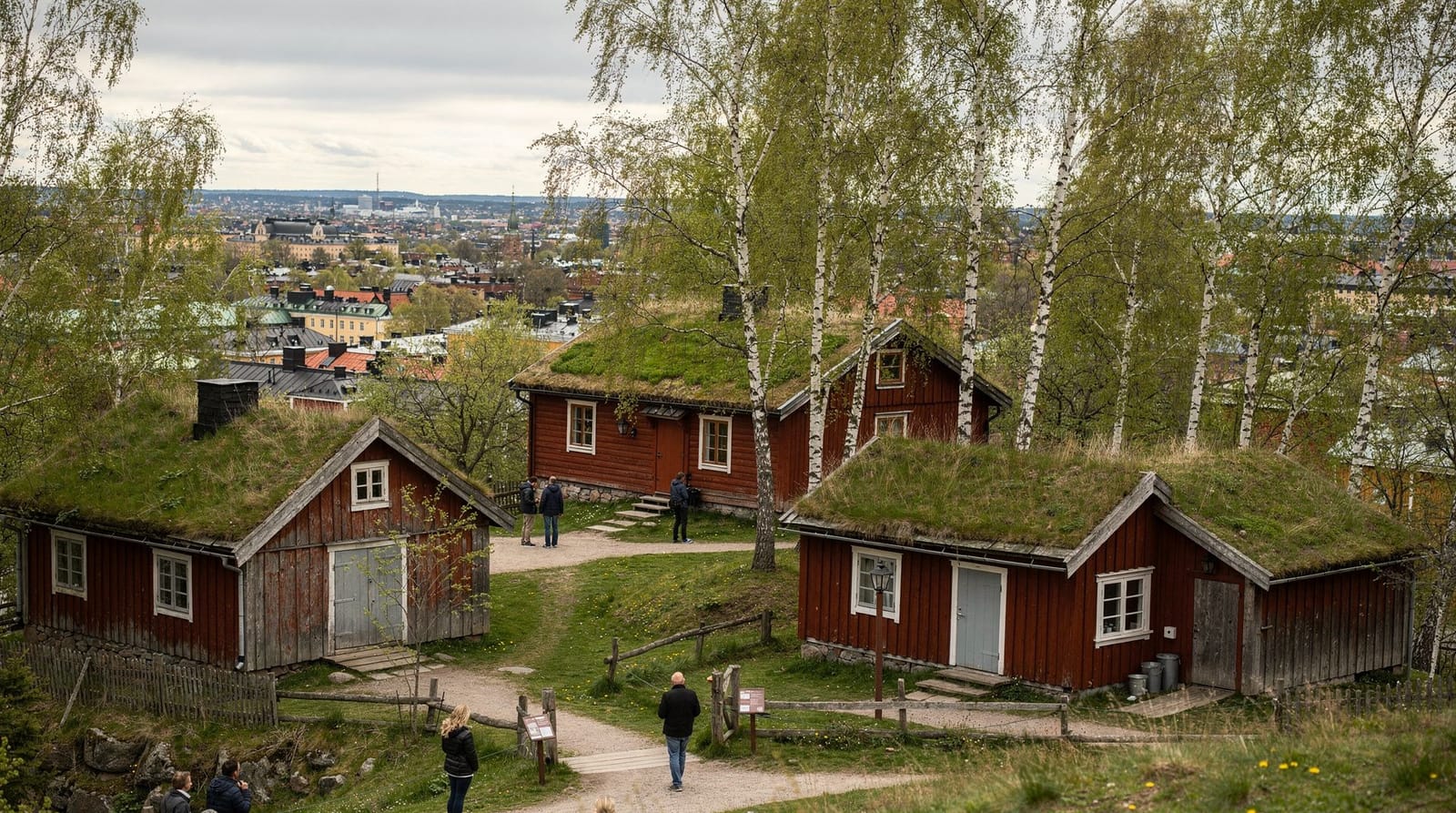
Most Christmas markets are about commerce with festive decoration. Skansen’s Julmarknad is something different: a working 18th-century Swedish village, lit by lanterns and candles in the December dark, with craftspeople demonstrating the same trades they practice year-round but now with juniper sprigs on the doorways and the smell of glögg and woodsmoke everywhere.
The context does the heavy lifting. You are not in a city square looking at decorated stalls. You are walking through a relocated 18th-century Swedish farmstead from Dalarna, past a historically accurate forge, past the wooden church that still conducts weddings, with a mulled-wine cup in your mittened hands. It is one of the few Christmas experiences in Scandinavia that genuinely connects to the tradition it’s evoking.
The entry fee covers the full Skansen site — museum, zoo, and the Christmas market. This is worth pointing out: you’re not paying for a market where the product at the stalls is extra. The fee covers a full cultural attraction of which the Christmas market is one element.
Think of the day as a slow loop rather than a checklist. The site is built on a hillside, the paths wind between farmsteads, and the best moments tend to come when you stop planning and follow the smell of woodsmoke to whichever cottage has its door open. Visitors who treat Skansen as a series of photo stops usually leave tired; those who allow time to sit, warm their hands and watch a craftsperson work usually leave with the memory they came for. If you want the wider context of the site outside December, the Skansen open-air museum guide covers the buildings, the town quarter and the zoo in more depth.
What to expect: the Julmarknad programme
The market stalls
The Christmas market stalls at Skansen are curated toward traditional Swedish craft rather than generic Christmas merchandise. Expect:
- Hand-painted Dala horses (the iconic Swedish souvenir, done properly)
- Woven textiles: table runners, dishcloths, traditional patterns
- Handmade wooden decorations and utensils
- Hand-thrown ceramic bowls and mugs
- Straw goods including the julbock (Christmas straw goat) in various sizes
- Candles, natural soap, and aromatics in traditional styles
Quality is higher than at most commercial markets but prices reflect this. Budget for genuine artisan goods rather than mass-produced items.
A useful approach is to walk the whole market once without buying anything, then circle back for the pieces you remember. Stalls repeat similar goods, and the maker whose Dala horse you liked at the start of the path is easier to find again than to replace. Ask the person behind the stall about the piece: makers here are usually glad to explain the pattern, the paint or the weave, and that conversation is part of what you are paying for. Wrapping is typically basic, so bring a small bag or pack ceramics carefully if you are flying home. For more ideas on what to look for and what to avoid, the guide to souvenir shops that overcharge in Stockholm is a good counterpoint, and the Stockholm design shopping guide covers the modern side of Swedish craft.
Food and drink
Glögg is everywhere and the Skansen version follows an older Swedish recipe — deeply spiced, served warm with raisins and almonds in the cup. The non-alcoholic version (julmust, a sweet dark Christmas soda that Swedes consume in enormous quantities December–January) is also available.
Lussekatter: The saffron-yellow Lucia buns are a specific pleasure in December. Skansen’s bakery produces them daily; the saffron flavour in a properly made version is pronounced and distinctive.
Pepparkakor: Thin, dark Swedish gingerbread. Available in shapes — hearts, stars, Santas — and often sold in tins for taking home. Dipping them in a glögg is not traditional but works well.
Julbord at Solliden: The historic hilltop restaurant runs a traditional Christmas table (julbord) on weekends during December. This is a multi-course smörgåsbord of traditional Swedish Christmas foods: herring preparations, gravlax, Jansson’s temptation, meatballs, lutfisk (dried cod in lye, an acquired taste), rice pudding, and much more. Bookings fill quickly — reserve several weeks in advance.
If a full julbord is more than you want, the market itself offers plenty of smaller bites to graze on between buildings. A warm drink, a bun and a bag of something sweet is a perfectly good lunch for a lighter appetite, and it keeps the day moving. For a closer look at the pastry side of Swedish winter, the kanelbulle guide and the fika culture guide explain the habit of stopping for coffee and a bun that runs through every Swedish day, Christmas or not. Those who want a wider tasting of Swedish dishes can also compare the julbord with the smörgåsbord options around Stockholm.
Craft demonstrations
The craftspeople who work at Skansen year-round continue through December, with a seasonal lens: the glass-blower creates Christmas ornaments from Dalarna glass, the textile workshop demonstrates the weaving patterns traditionally used for Christmas table runners, the bakery produces specifically seasonal breads.
This is the element that most distinguishes Skansen from commercial markets — the demonstrations are genuine work, not staged performances for tourists.
Book a Skansen Christmas traditions and treats tourThe Scandinavian animals in winter
The zoo at Skansen operates through December. The brown bears are typically still active in early December before their winter sleep begins. Wolves are most visible during feeding times. The moose are present year-round. In snow, the animal enclosures have a specific Nordic winter aesthetic that summer visitors never see.
Children’s activities
The Julmarknad has a dedicated children’s programme: Christmas decoration workshops (making traditional Swedish ornaments from straw, paper, and natural materials), a Christmas story programme, visits to the Lill-Skansen petting zoo, and the regular animal attractions. For families visiting Stockholm in December, Skansen is one of the strongest choices.
Younger children cope best when the day is broken into short blocks: a workshop, then the animals, then a warm-up with a hot drink, then back out. Dress them in more layers than seems necessary, since standing still at a craft demonstration is colder than walking. Our Stockholm with kids family guide and the toddler guide have more on pacing a December day with little ones, and the Junibacken, Skansen and Gröna Lund guide helps if you are weighing Skansen against the other family attractions on Djurgården.
Crowd patterns and best visiting times
Weekend afternoons (12:00–16:00): Busiest period. Stalls are fully staffed, all activities running, but the site can feel crowded on the busiest Saturdays.
Weekend mornings (opening–12:00): The best compromise — full programme running, noticeably fewer visitors for the first two hours.
Late Friday afternoons: The market is open Fridays and Saturdays until 17:00 and Sundays until 16:00. It gets dark in the afternoon in December, so a Friday visit offers the lantern-lit atmosphere with fewer visitors than weekend afternoons.
Weekday visits: The full Christmas market stalls don’t operate on weekdays, but the museum’s Christmas decorations, the zoo, and the buildings’ festive elements are present. A weekday Skansen visit in December is a pleasant option if you want the site largely to yourself.
What to wear and how to stay comfortable
Skansen is almost entirely outdoors, and December in Stockholm is dark, damp and cold. The practical answer is layers: a warm base, an insulating middle layer, and a windproof outer shell, plus a hat, gloves and shoes with a proper grip, because paths between the farmsteads can be icy or muddy depending on the week. Mittens beat gloves when you are holding a hot cup. The buildings you step into for craft demonstrations are warm, which means you will be constantly adding and removing layers, so a bag or a jacket with roomy pockets helps. If you did not pack for the season, the what to pack for Stockholm guide and the page on winter clothing rental can save you from buying a coat you will wear once.
Daylight is short at this time of year, which works in your favour: the lanterns and candles take over from the afternoon and the site changes character as it darkens. Many visitors plan to arrive in the morning for the quiet and stay until the lights come on, breaking the day with a long sit-down meal indoors.
Skansen vs. a guided Christmas market walk
Visiting independently gives you full control over pace and which stalls to linger at. A guided Christmas market walking tour instead adds context — which craftspeople are worth stopping for, the history behind specific traditions, and often a route that also covers central Stockholm’s markets in one outing. Neither is objectively better: independent visits suit slower, more personal exploration, while guided walks suit visitors with limited time who want the highlights explained rather than discovered by trial and error.
If you prefer your Christmas atmosphere in the evening, an after-dark tour of the city’s Christmas lights and markets pairs well with a quieter daytime visit to Skansen. And if the Djurgården setting appeals more than the market itself, the Djurgården neighbourhood deep dive and the Djurgården walking route show how to string together the island’s other sights in the same trip.
Getting there
Book Skansen admission online to avoid the ticket queue at the gate. During busy December weekends, walk-in queues at the ticket office can add 15–20 minutes.
Bus 69: From Nybroplan (adjacent to Grand Hôtel) or from Sergels Torg. Runs directly to the Skansen stop. Journey time ~15 minutes from Nybroplan. The bus runs every 10–15 minutes.
Djurgårdslinjen tram (line 7): Seasonal, but runs through winter on weekends during busy periods. From Norrmalmstorg. The Skansen stop is outside the main entrance.
On foot from Vasa Museum: 15 minutes east along Djurgårdsvägen. A pleasant walk even in cold weather.
Avoid driving: Parking near Skansen is limited and expensive. Stockholm’s December traffic is heavier than usual. Public transport is significantly more practical.
Combining with the rest of Stockholm’s Christmas
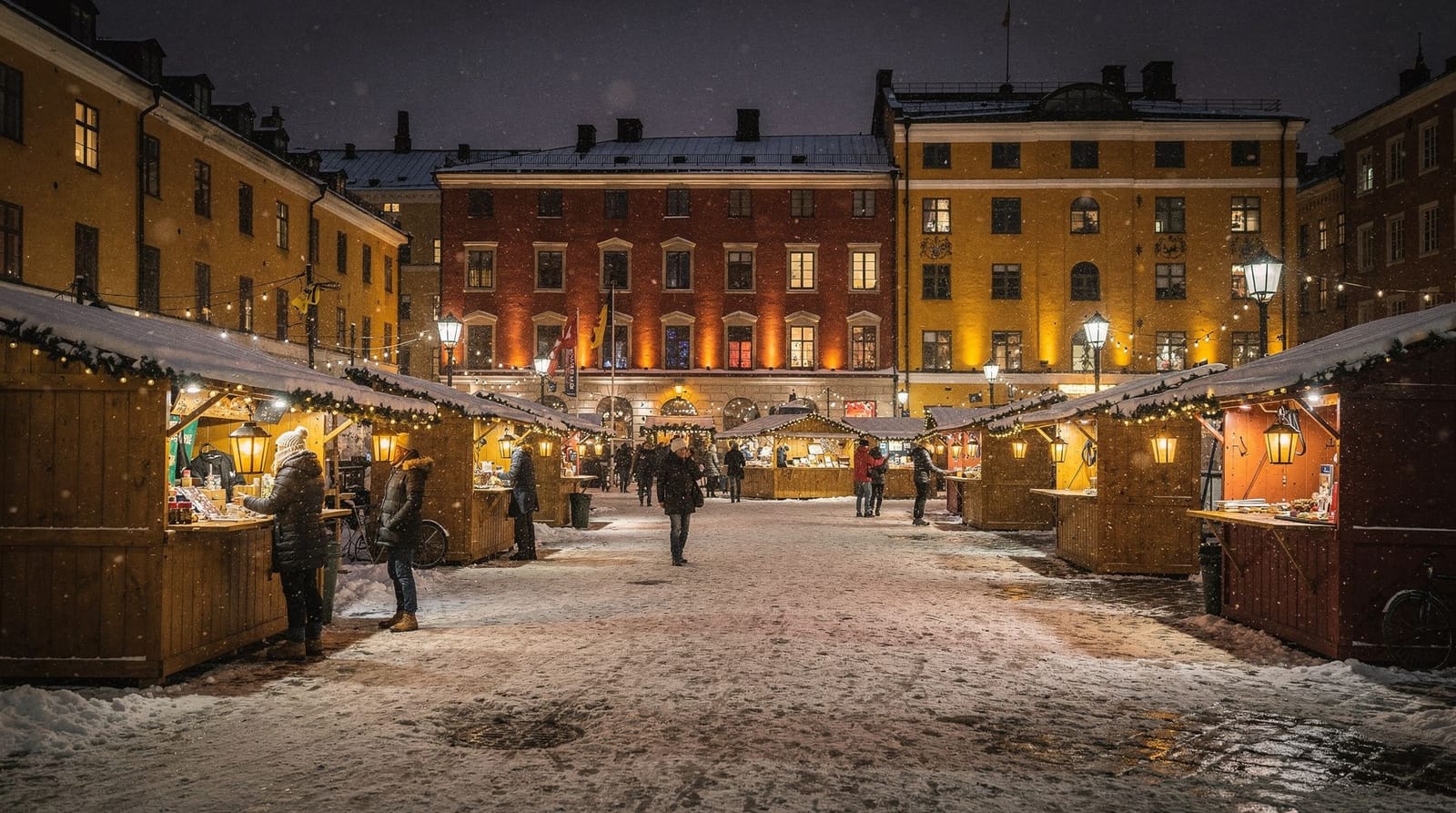
Morning at Skansen, afternoon at Stortorget: A natural combination. Visit Skansen for 3–4 hours (mornings are quietest), then take bus 69 or tram into central Stockholm for the late-afternoon blue-hour atmosphere at the Gamla Stan Christmas market around Stortorget.
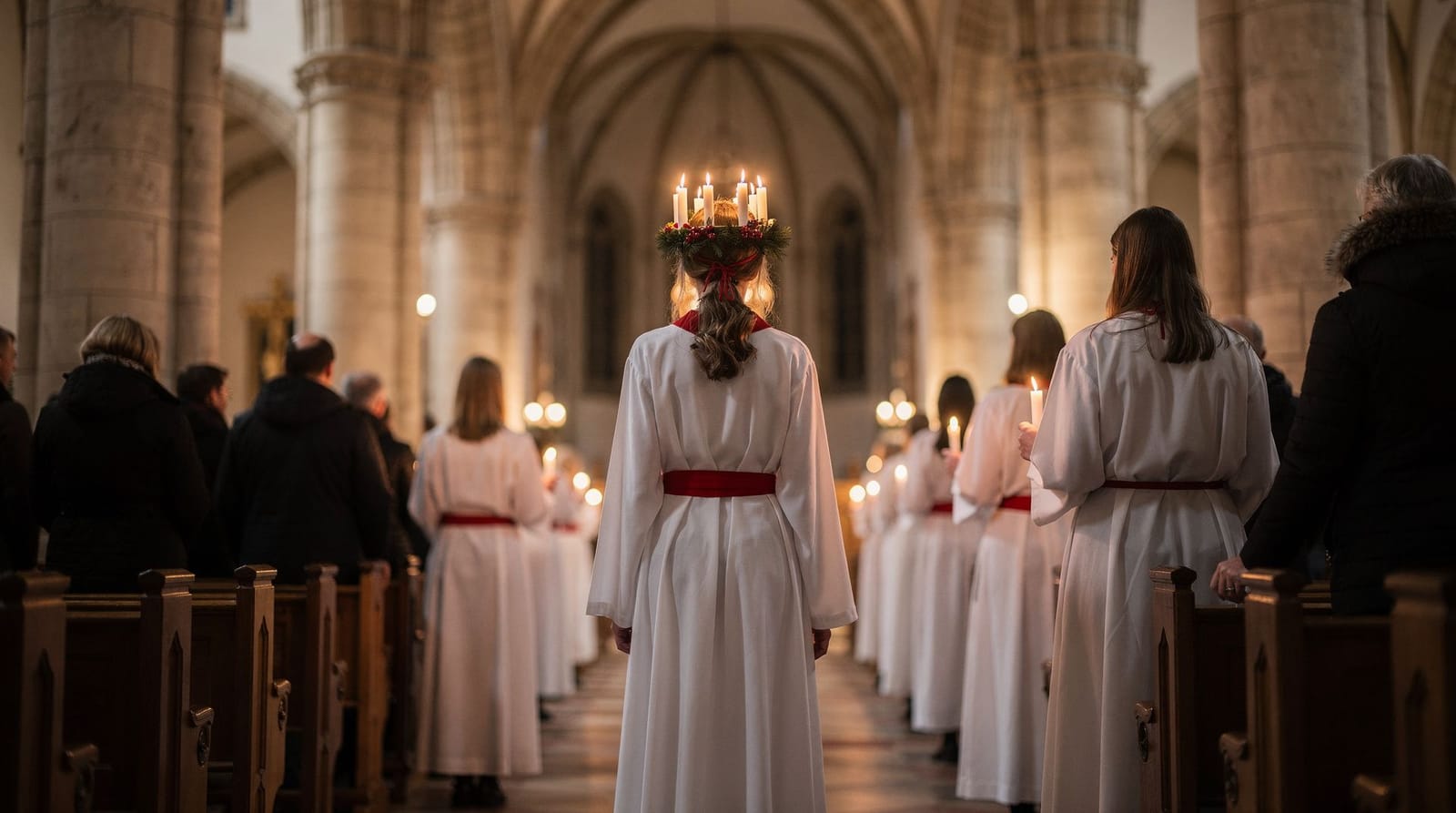
Lucia on 13 December: If your visit coincides, Skansen hosts a Lucia procession through the historical buildings on the morning of 13 December. This is one of the most authentic and atmospheric Lucia Day events in the city. Arrive early; the ceremony draws both locals and visitors.
A full Christmas weekend in Stockholm: For a broader plan covering all the city’s markets, lights and seasonal events, see the Stockholm Christmas markets complete guide and the Stockholm winter guide for what else the season brings.
If you are building a longer winter stay around the market, the Stockholm winter 3-day itinerary shows how Skansen can fit alongside indoor stops, and the Stockholm Christmas markets ranked post gives a personal take on how the markets compare. For anyone who wants a rainy-day fallback, the museum rainy day guide lists indoor options on the same side of town.
Weekend-by-weekend crowd guide
| Period | Crowds | Notes |
|---|---|---|
| First weekend of the season | Moderate | Full programme running, novelty draws locals |
| Mid-December weekends | Busiest | Peak gift-shopping and tourist overlap |
| Weekend before 20 December | Very busy | Last chance before closing; Solliden julbord books out |
| Weekdays (market stalls closed) | Quiet | Museum, zoo and decorations only, no stalls |
Frequently asked questions about Skansen Julmarknad
Is the Skansen Christmas market worth the entry fee?
Yes, particularly because the paid entry (current price on skansen.se) includes the full museum and zoo. You are paying for a day at Skansen with the Christmas market as a component, not paying just for a Christmas market. The historic buildings, Scandinavian animals, and craft demonstrations would make the visit worthwhile without the market element — the Julmarknad adds seasonal magic on top.
What is the difference between Skansen and Stortorget for Christmas markets?
Skansen is paid (current price on skansen.se), larger, more traditional, more craft-oriented, and set in a unique historic open-air museum context. Stortorget is free, smaller, in a beautiful medieval square, more convenient for central-Stockholm visitors. They are complementary rather than competing — the ideal Stockholm Christmas market visit includes both.
What Swedish Christmas decorations should I buy?
Julbock (straw goat), Dala horse, and traditional Swedish candle stars (used in windows during Advent) are the most distinctively Swedish items. Hand-woven textiles in traditional patterns are excellent for practical souvenirs. Avoid anything that looks mass-produced — the artisan quality at Skansen’s market is one of its genuine advantages.
Top experiences
Bookable activities with verified prices and instant confirmation on GetYourGuide.