Fjäderholmarna ferry guide: Stockholm's closest archipelago island
Stockholm: guided archipelago boat tour to Fjäderholmarna
Is Fjäderholmarna worth visiting from Stockholm and how do you get there?
Fjäderholmarna is the closest inhabited island in the Stockholm archipelago — 25–30 minutes by ferry from Slussen or Nybroplan. It is a pleasant half-day trip: craft workshops, decent fish restaurants, a small smokery, and a genuine archipelago atmosphere without committing to a full-day excursion. Best in May–September when the island is fully operational. Entry to the island is free; ferry round-trip is approximately 205–215 SEK adult.
Fjäderholmarna: the archipelago within reach
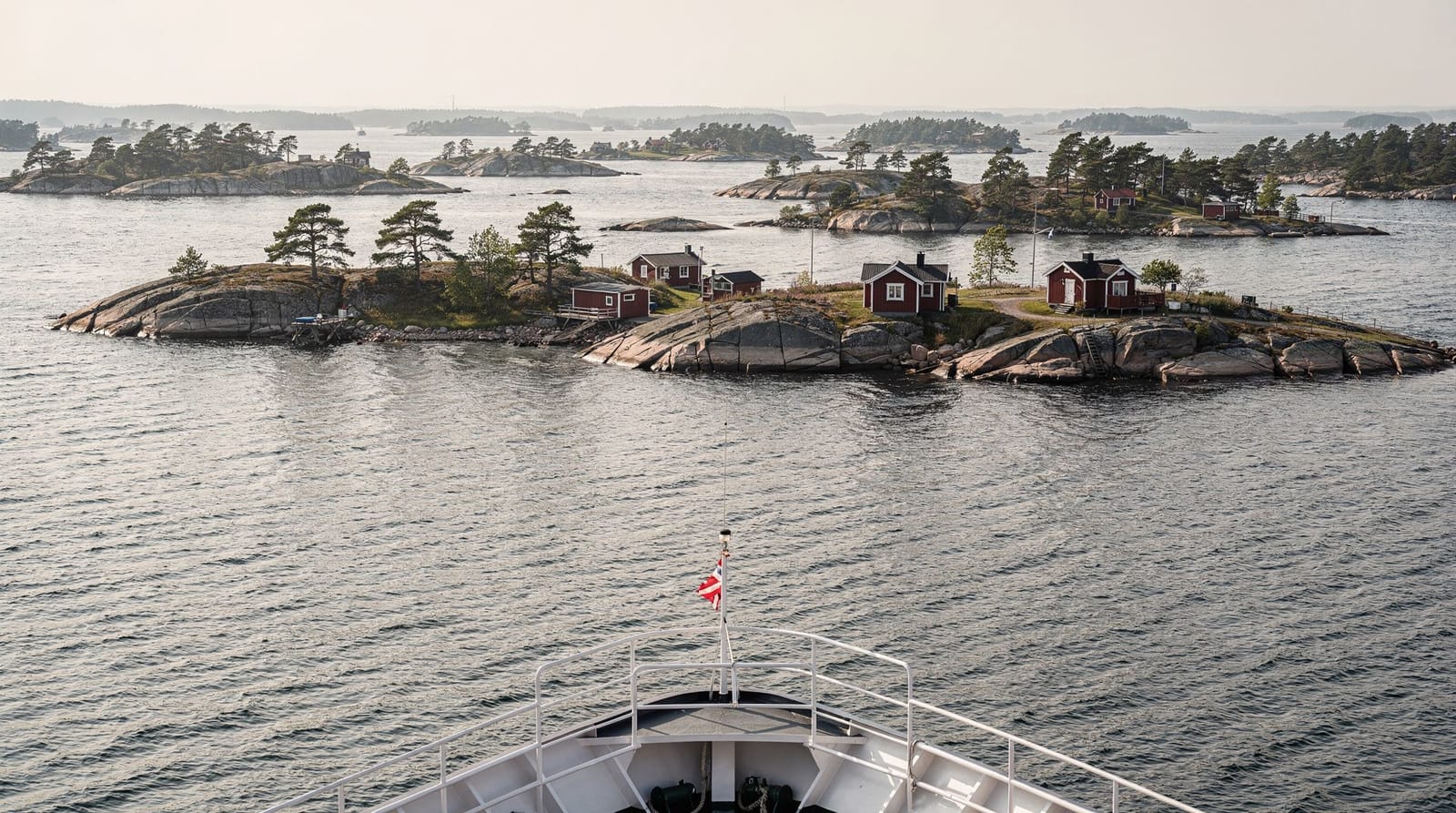
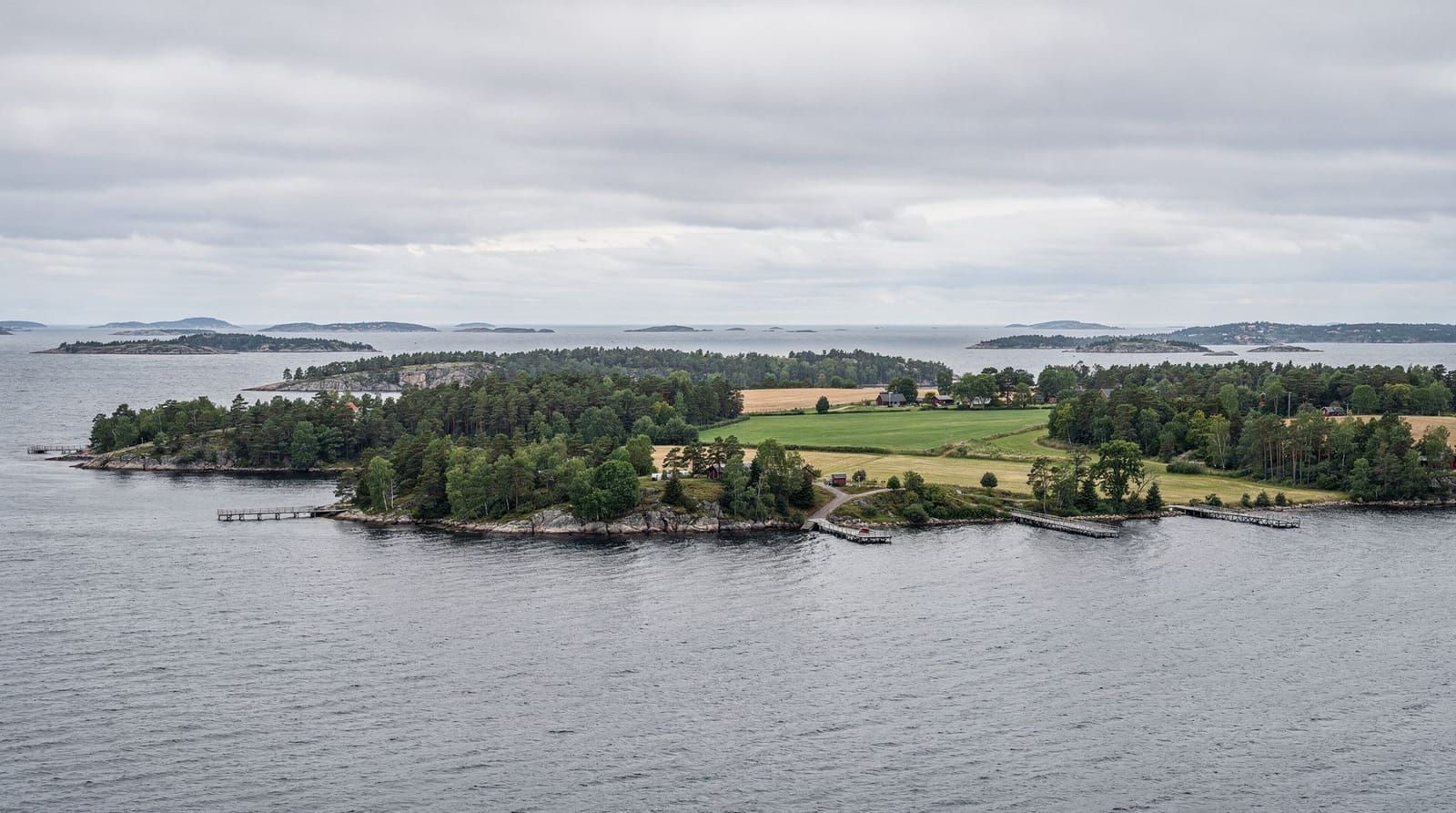
Fjäderholmarna (literally “feather islands”) is the collective name for four small islands immediately east of Djurgården — approximately 6 kilometres from Stockholm city centre. It is the closest inhabited archipelago island to Stockholm, reachable in 25 minutes by regular summer ferry. The name is plural because the archipelago unit consists of Stora Fjäderholmen, Lilla Fjäderholmen, Libertas, and Rövar-Liljan, though visitors are deposited on Stora Fjäderholmen, which contains all the facilities.
The island’s significance in Stockholm’s tourism landscape is its accessibility. For visitors with limited time — a half day, or an afternoon in a city itinerary otherwise focused on museums and old town — Fjäderholmarna delivers a genuine archipelago experience without the commitment of a full day trip to Vaxholm (75 minutes each way) or the outer islands.
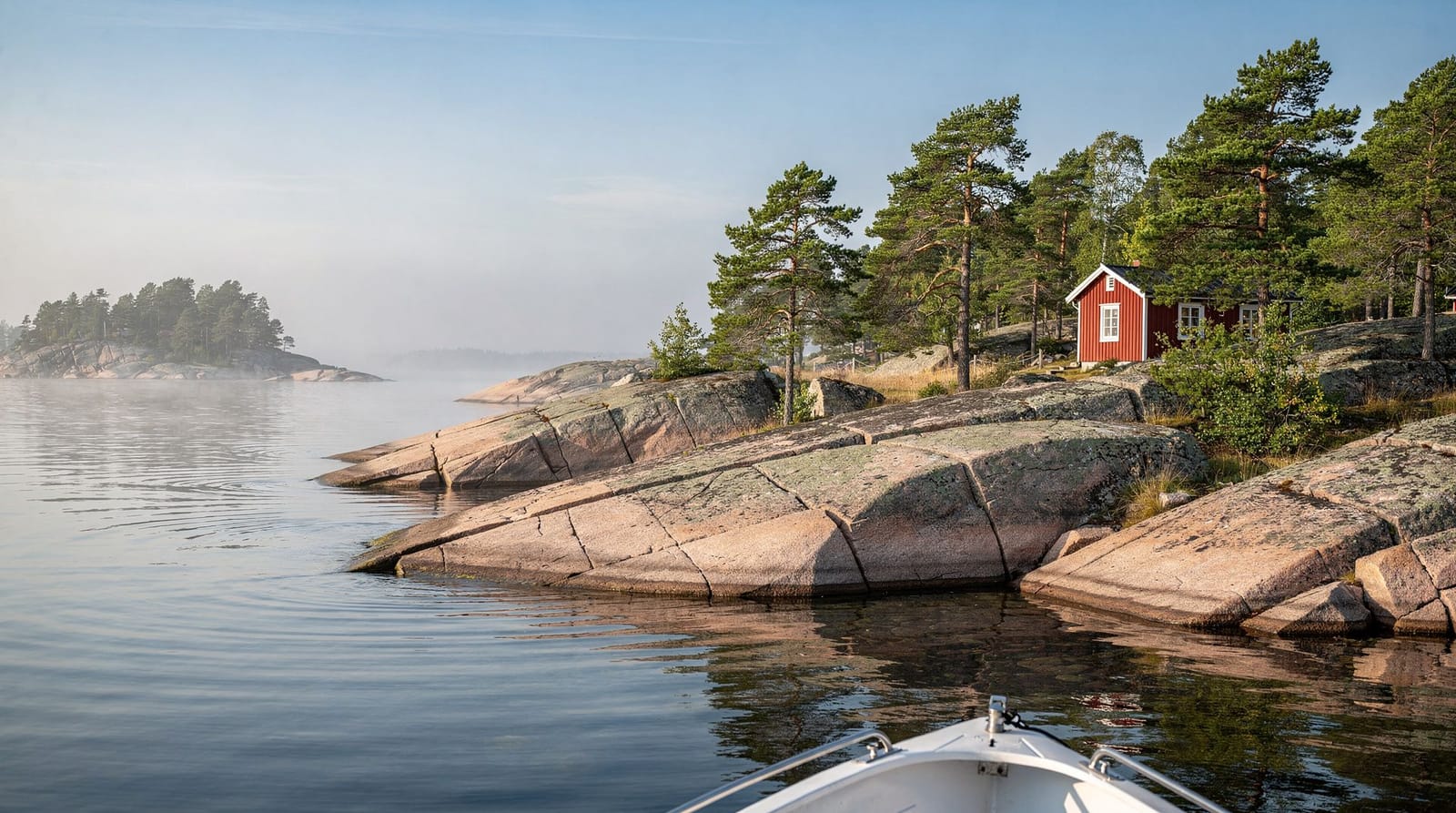
The trade-off is depth. Fjäderholmarna has no dramatic fortress, no historic town, no particularly remarkable hiking. It has restaurants, craft workshops, swimming, and the specific pleasure of being on a Swedish archipelago island in summer — salt air, granite rocks, Falun-red buildings, the smell of smoked fish, the sound of rigging from moored sailboats.
| Where | Ferry from Slussen or Nybroplan |
| Cost | Around 205–215 SEK round-trip; island entry free |
| Time needed | 2.5–4 hours |
| Getting there | ~25 minutes each way, no SL pass coverage |
| Best time | May–September; August for warmest swimming |
Getting there: the ferry from Stockholm
Departure points:
- Slussen (Södermalm): The primary departure point. Multiple daily departures in peak season. 5-minute walk from Gamla Stan.
- Nybroplan (Östermalm): Alternative departure, convenient for visitors staying in Östermalm or near the Grand Hôtel.
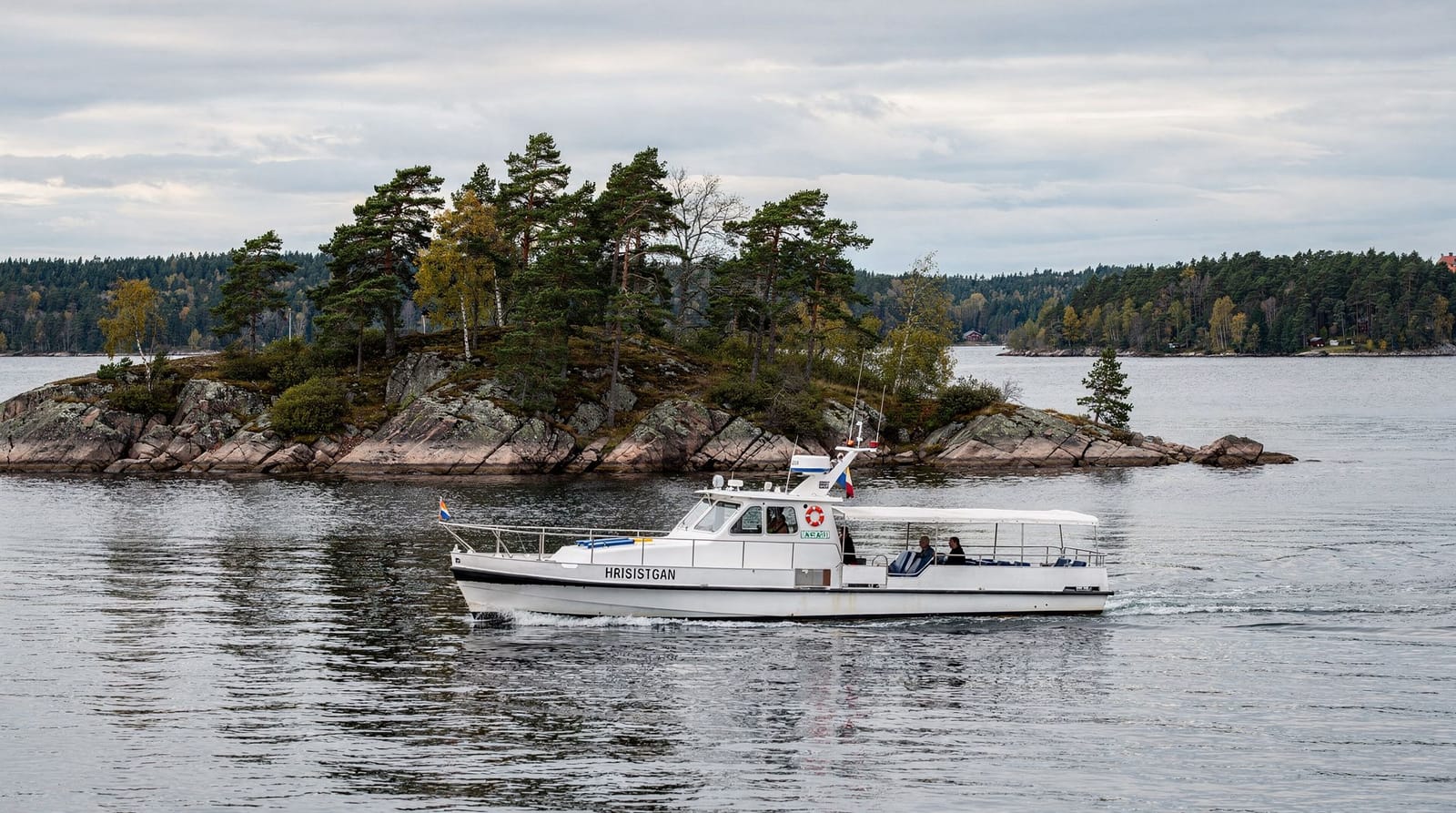
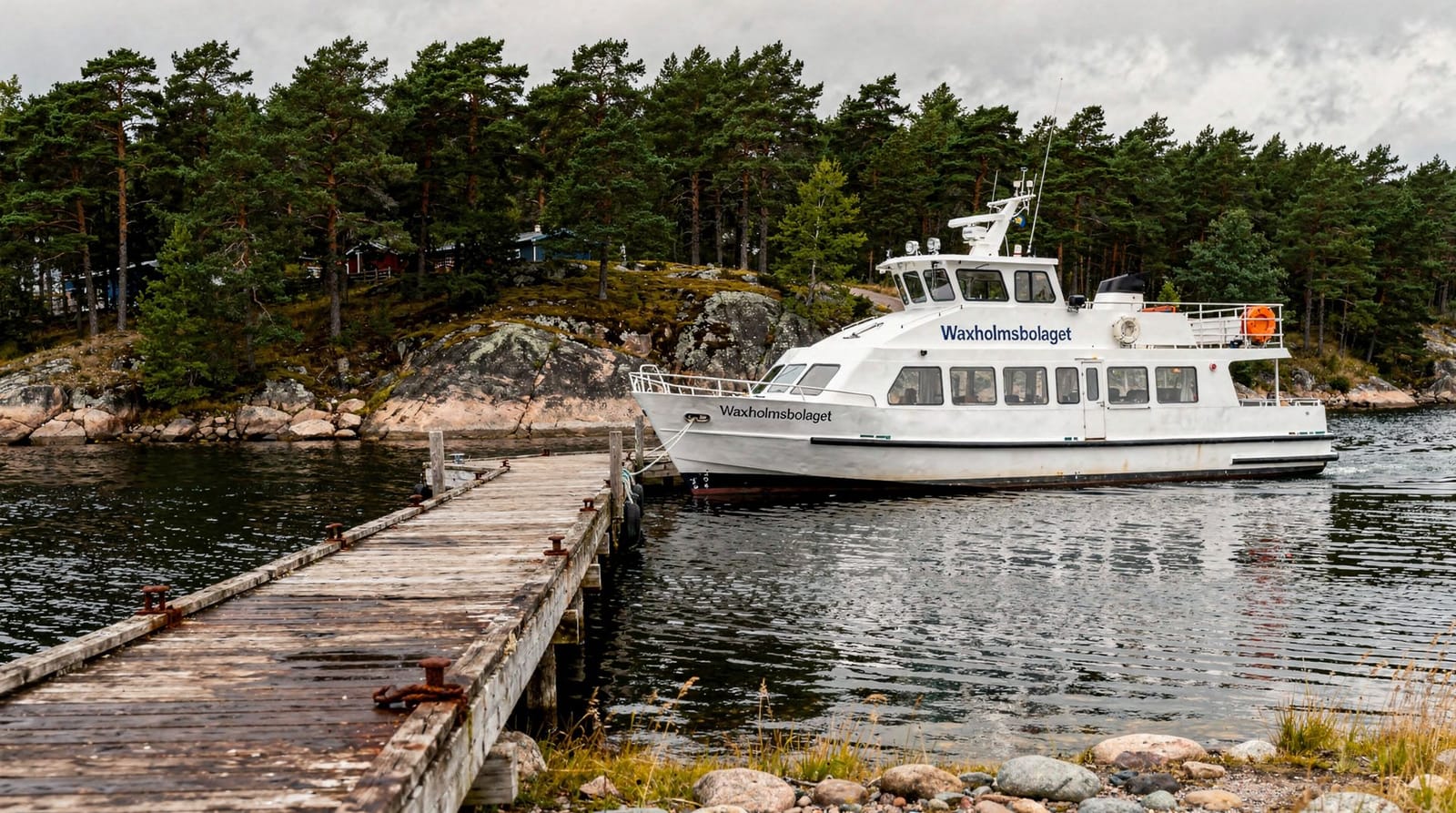
Operator: Two companies sail to the island. Fjäderholmslinjen leaves from Slussen (about 25 minutes, hourly departures from 10:00 in 2026); Strömma leaves from Strandvägen, quay 13, a short walk from Nybroplan (about 30 minutes; some departures call at Nacka Strand). SL travel cards do not cover either route — they are separately ticketed services; the Waxholmsbolaget ferries guide explains which archipelago routes are and aren’t included in an SL pass.
Frequency: In 2026 Fjäderholmslinjen sails every hour from Slussen, 10:00–22:00 Monday to Saturday (last return from the island 22:30) and 10:00–20:00 on Sundays (last return 20:30). Check Strömma’s current timetable for its departures.
Price: 2026 round-trip fares: Fjäderholmslinjen 205 SEK adult, 180 SEK senior and 105 SEK child (card payment on board, no cash); Strömma 215 SEK return (180 SEK one way).
Season: Fjäderholmslinjen sails from 1 May to 13 September 2026. Dates change each year, so check the operator’s site before planning a visit near either end of the season.
The island on foot
Stora Fjäderholmen’s perimeter walking path takes 30–45 minutes at a moderate pace. The island’s highest point is modest — Fjäderholmarna are the flat, low-lying inner-archipelago type, granite polished by glacier and wave to a low profile, with pine and rowan scrub on the interior.
The harbour: The landing stage and main harbour area concentrate the island’s commercial life: the smokery, the brewery restaurant, café, and craft shops are all within a few minutes of where the ferry deposits you.
The eastern shore: The most peaceful part of the island — rocky shoreline with views east into the archipelago, away from the harbour noise. Good swimming from flat granite slabs.
The craft workshops: Fjäderholmarna has maintained a small colony of artisan workshops since the 1980s: glass-blowing, textile work, ceramics, and jewellery. Some workshops are open for visitors to observe production. The craft focus distinguishes the island slightly from the pure restaurant-and-swimming profile of some other near-archipelago islands.
The smokery (rökeri): Fjäderholmarnas Rökeri is the island’s most distinctive food destination. Traditional cold- and hot-smoked fish — Baltic herring, salmon, eel — produced on-site and served with appropriate simplicity. This is the dish to eat on the island.
Eating and drinking on the island
Fjäderholmarnas Rökeri: The smokery restaurant. Open-air tables in summer, views of the harbour, smoked fish plates from the on-site rökeri. Worth the visit for the herring and the setting.
Fjäderholmarnas Bryggeri (brewery): A brewpub with outdoor seating and lake views. Swedish craft beer brewed on the island, food menu tilted toward hearty Swedish dishes. The terrace in afternoon sun is one of the more pleasant beer gardens in the Stockholm region.
Café: A simpler option for fika — coffee, kanelbulle, sandwiches. Good for those arriving early or preferring lighter eating.
Picnic: Fjäderholmarna is an excellent picnic destination. The Allemansrätten applies — you can sit anywhere on the island’s rocks or grass with food brought from Stockholm. The eastern shore rocks make ideal picnic spots with sea views.
How Fjäderholmarna fits into a Stockholm itinerary
Half-day add-on: The island works perfectly as an afternoon add-on to a morning in Stockholm. Spend the morning at Vasa Museum or Gamla Stan, take the 13:00 or 14:00 ferry from Slussen, spend 3 hours on the island, return by 18:00.
Full day from Södermalm or Östermalm: Start on the mainland with a morning in Södermalm (Monteliusvägen viewpoint, Mosebacke terrace), walk down to Slussen for a midday ferry, spend the afternoon on the island, return for dinner in the city.
First day orientation: For visitors who want an immediate impression of the archipelago before committing to a longer day trip — taking the 10:00 ferry from Slussen on day one, spending until 13:00 on the island, and returning to Stockholm for the afternoon gives a useful early taste.
Fjäderholmarna vs other archipelago islands
| Fjäderholmarna | Vaxholm | Grinda | Sandhamn | |
|---|---|---|---|---|
| Ferry time from Stockholm | 25 min | 75 min | 2h | 3h |
| Suitable for half-day | Yes | Marginal | No | No |
| Town/town life | Minimal | Yes | No | Village |
| Fortress/castle | No | Yes | No | No |
| Swimming | Yes | Yes | Yes | Yes |
| Restaurants | Yes | Yes | Limited | Yes |
| Best for | Quick taste of archipelago | Full day, history | Overnight/camping | Remote feeling |
The Stockholm archipelago complete guide and the inner vs outer archipelago guide expand this comparison in detail.
The guided boat tour alternative
Rather than taking the regular ferry and exploring independently, a guided boat tour to Fjäderholmarna combines the water journey with commentary — the guide explains the island’s history, the archipelago ecology, and the context of Fjäderholmarna in Stockholm’s cultural geography. The guided option lands you on the island; the tour format then differs by operator. For a longer guided introduction to the wider inner archipelago that extends beyond Fjäderholmarna itself, the 2-hour archipelago boat tour covers more water and more islands in a single outing.
Stockholm: guided archipelago boat tour to FjäderholmarnaPractical essentials
| Detail | Information |
|---|---|
| Ferry from | Slussen (Södermalm) or Nybroplan (Östermalm) |
| Journey time | ~25 minutes |
| Round-trip price | ~205–215 SEK adult |
| Season | May–September |
| Time needed | 2.5–4 hours on island |
| What’s there | Smokery, brewery, craft shops, swimming |
The island’s history and character
Fjäderholmarna had a turbulent early modern history. The islands’ strategic position at the entrance to Stockholm’s harbour made them militarily sensitive for centuries — they were part of the defensive system protecting the city from seaborne attack from the east. In the 19th century, the islands housed a quarantine station for ships arriving at Stockholm carrying disease (particularly cholera, which swept Europe multiple times in the 1800s). The quarantine function made the islands simultaneously important and avoided — a place where ships stopped but people didn’t willingly go.
In the mid-20th century, Fjäderholmarna became an alcohol-free zone and was developed as a family recreation area — an early attempt at converting a former industrial/military site to leisure use. The craft-based revival of the 1980s established the artisan workshops that still characterise the island today. The transition from quarantine station to café-smokery-craft-workshop destination is not seamless in concept, but the result is a working island community with more genuine activity than many comparable tourist islands that have been more aggressively commercialised.
Craft production: what the workshops make
The craft workshops on Fjäderholmarna produce work in several traditions:
Glass-blowing: One of the oldest of the island’s crafts. The glass-blower’s workshop is typically visible from outside — the heat, the blown glass taking form, and the physical skill involved make it one of the more compelling demonstrations. Objects produced range from decorative pieces to functional glassware.
Textile and weaving: Traditional Swedish textile work includes woven table runners, wall hangings, and cushions in the natural palette (grey, cream, rust-red) associated with Scandinavian craft. The island’s textile workshop typically uses traditional patterns derived from regional Swedish folk traditions.
Ceramics and pottery: Wheel-thrown and hand-built stoneware in the Nordic tradition — matte surfaces, natural glazes, functional objects with a restrained aesthetic. Some pieces reflect the island’s maritime location in their imagery.
Jewellery: Typically silver-based, drawing on Norse and nature motifs. The archipelago’s ecology (sea eagles, grey seals, granite skerries) provides imagery. Prices are higher than souvenir shops but represent genuine craft work.
The workshops’ output is not tourist kitsch. It is produced for a Swedish market that takes craft seriously; the quality standards reflect that. For visitors looking for souvenirs beyond the standard Gamla Stan offerings, the island’s workshops are worth 30 minutes of deliberate browsing.
Eating strategy on Fjäderholmarna
With a half day on the island, food is part of the experience rather than a fuel stop. The smoked fish plates from the rökeri represent the island at its most characteristic — cold-smoked herring with accompaniments, or hot-smoked salmon with horseradish cream, eaten at an outdoor table with a view of the harbour. This is exactly what lunch on a Swedish archipelago island should look like.
The brewery restaurant (Fjäderholmarnas Bryggeri) is a more substantial option — full meals including grilled fish, shrimp dishes, and Swedish summer classics. The terrace seats fill quickly on fine days; arrive before 12:30 or after 14:00 to avoid the peak rush.
For the cheapest approach: a picnic brought from Stockholm. The ferry ride is short enough that food stays fresh; buying supplies from an Östermalm deli or Saluhall before departure and eating on the island’s eastern rocks gives the full archipelago picnic experience without restaurant prices.
Getting back to Stockholm
The return ferry follows the same hourly rhythm as the outward journey. In 2026 Fjäderholmslinjen’s last departure from the island is at 22:30 Monday to Saturday and 20:30 on Sunday. Check the current timetable on the operator’s website before you depart Stockholm — missing the last ferry is an avoidable problem with a moment’s planning.
If you miss the last ferry (unlikely if you check times in advance), the island is not large. The staff at the restaurants or café can advise on emergency arrangements; in practice, stranded visitors have occasionally been helped onto private boats or arranged taxi-boat services.
Seasonal notes
May: Island just opening. Quieter crowds, everything operational. Weather variable; bring layers.
June–July: Peak season. Weekends are crowded — the island is popular with Stockholmers as a casual half-day outing. Weekday visits offer the same island with a fraction of the crowd.
August: High season. The water is warmest (16–20°C) — best swimming month.
September: Last full operational month. Crowds drop sharply; the light is excellent; the smoked fish is still available. The best month for adults without children.
Frequently asked questions about Fjäderholmarna
Is Fjäderholmarna worth it if you only have one day in Stockholm?
Depends on priorities. If museums and old town are the priority, the 25-minute ferry each way plus 2.5 hours on the island is 3+ hours of a one-day visit. For visitors who genuinely want to experience the archipelago, it is a reasonable trade-off. For one-day visitors focused on the Vasa Museum, Gamla Stan, and City Hall: skip the island and take the canal boat tour instead for your water experience.
Can you camp on Fjäderholmarna?
No. The island does not have camping facilities and Allemansrätten’s prohibition on camping near dwellings applies given the island’s compact development. The island is strictly a day-visit destination.
Are there dogs allowed on Fjäderholmarna?
Dogs are welcome on the ferry and on the island. The island is popular with dog-walking Stockholmers in summer, given the easy ferry access from central Stockholm.
What is the island like in early September versus late July?
Very different. Late July is peak season — the island can feel crowded on sunny weekends, with ferry queues and full restaurant tables. The atmosphere is festive but compressed. Early September is quieter: the summer crowds have largely departed, the smoked fish and brewery are still operating, the water is at its warmest (16–19°C), and the light has the characteristic amber quality of Scandinavian early autumn. September is the most recommended month for adults without children. The island retains full operational status until late September, when it begins closing for the season.
The ferry journey itself: what to watch
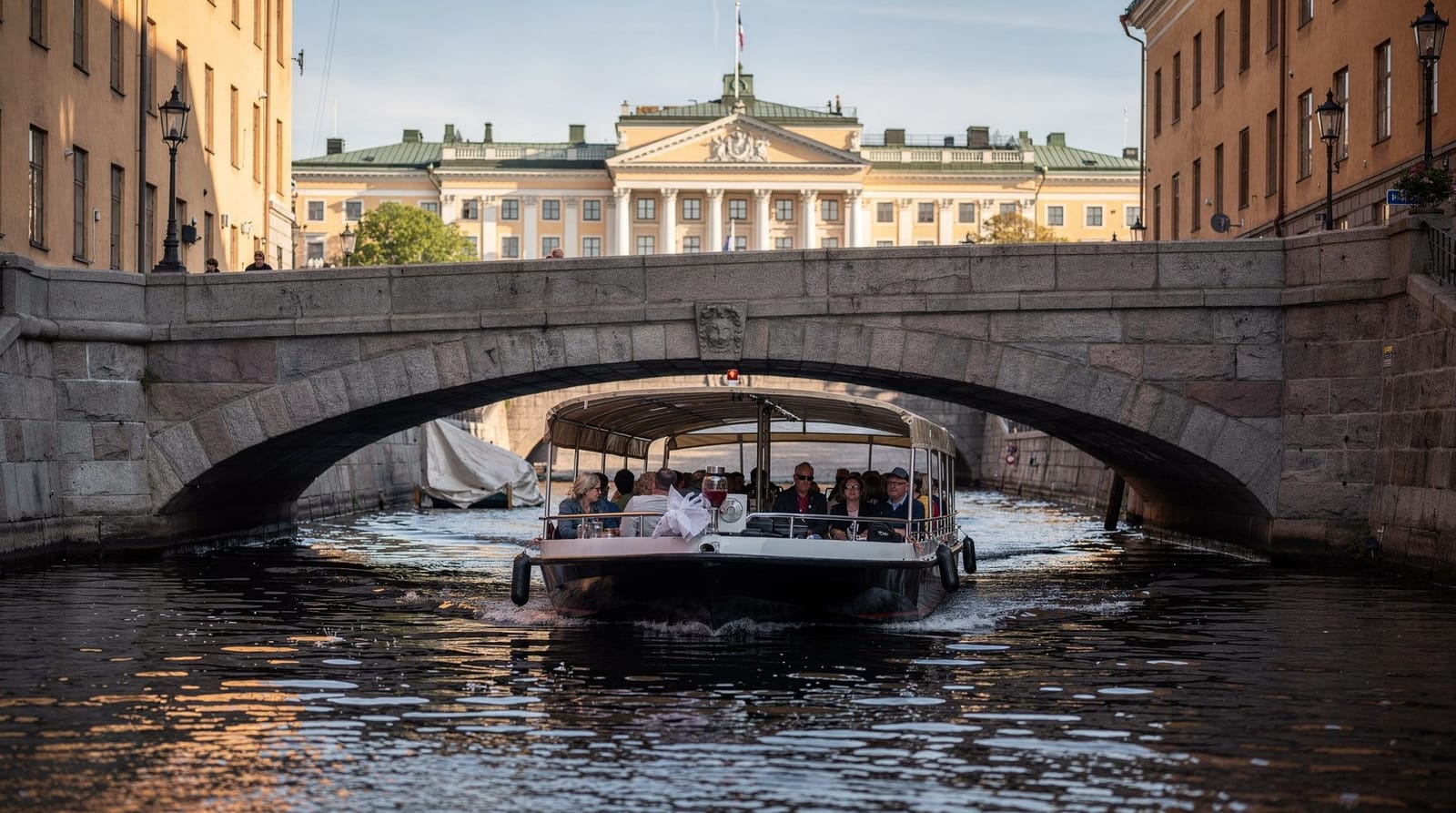
The 25-minute ferry from Slussen to Fjäderholmarna is itself a mild introduction to the Stockholm archipelago experience. Departing from Slussen, the boat passes under the old city walls of Södermalm, moves east along the Djurgårdskanalen shoreline, and opens into the wider water leading to the first archipelago islands. The journey is brief but shows the transition from urban Stockholm to the more open water of the inner archipelago.
Sitting at the bow of the ferry on a fine June morning, with the city receding and the wooded islands of Djurgården visible to the north, and ahead the low outline of Fjäderholmarna — this is a small but genuine version of the departure-for-the-islands experience that Swedish summer culture is built around.
For visitors who will not take a longer archipelago ferry (to Vaxholm or beyond), this 25-minute journey is the most accessible taste of the ferry-boat experience specific to Stockholm. More than the hop-on hop-off boat (which is primarily about sightseeing rather than transit) and more purposeful than the canal tour (which circles and returns), the Fjäderholmarna ferry feels like going somewhere — because it is.
Swimming at Fjäderholmarna: the specifics
Swimming from the island’s eastern and southern shores is one of the primary summer activities. The shallow granite-shelf shoreline on the southeast side drops gradually — suitable for children who can wade into the water rather than jumping directly. The northeast corner has steeper drops directly from flat rock, more appropriate for confident adult swimmers.
Water temperature in the Stockholm archipelago: typically 12–15°C in June (cold by most standards), reaching 16–20°C in July–August, and dropping to 14–16°C by September. Swedish summer swimmers generally acclimate to these temperatures; visitors from warmer climates may find the water challenging. A wetsuit is not necessary but makes the experience significantly more comfortable for long swims in June.
The water quality around Fjäderholmarna is monitored regularly by Stockholm County; the island’s proximity to the city means some years see elevated bacteria counts following heavy rain — check the current water quality report at badplatsen.se before swimming if you are health-sensitive.
Fjäderholmarna as a gateway to the archipelago
For visitors who discover at Fjäderholmarna that they want more — more archipelago, more distance, more time on an island — the island serves as a natural stepping stone.
Fjäderholmarna is the gateway; Vaxholm is the next step (75 minutes, a real town, a historic fortress); Grinda is the relaxed camping and swimming island (2 hours); Sandhamn is the furthest practical day trip (3 hours, the outer archipelago, the classic Swedish archipelago island experience).
The progression from Fjäderholmarna (25 minutes) through Vaxholm (75 minutes) to Sandhamn (3 hours) is not merely spatial distance but a change in the character of the experience. Fjäderholmarna is an attraction in a frame; Sandhamn is an experience with no frame. Understanding this progression helps visitors decide how much archipelago time their Stockholm visit warrants.
The Stockholm archipelago complete guide covers the full comparison. The Vaxholm day guide covers the next step specifically.
Budgeting a Fjäderholmarna half-day
| Item | Around cost |
|---|---|
| Round-trip ferry | 205–215 SEK |
| Smoked fish plate at the rökeri | See the menu |
| Brewery meal + beer | See the menu |
| Craft souvenir (small item) | See the menu |
| Total for a relaxed half day | Ferry fare plus your own food and shopping |
A picnic brought from Stockholm cuts the food portion to near zero, making the island one of the cheaper archipelago outings once you skip the restaurant meal — the ferry ticket is the only fixed cost, and Allemansrätten means any rock or patch of grass is fair game to sit and eat.
Which departure point to choose
Slussen and Nybroplan both reach Fjäderholmarna in about the same 25–30 minutes, so the choice usually comes down to where you’re staying or what you’re doing beforehand. Slussen suits visitors basing a morning around Södermalm or Gamla Stan — the walk down from Monteliusvägen or the old town takes only a few minutes, and it’s an easy hop onto the ferry without backtracking. Nybroplan suits visitors coming from Östermalm, the Royal Dramatic Theatre area, or the Grand Hôtel end of the waterfront, and tends to have marginally shorter queues in peak season since more visitors default to Slussen.
Neither departure point requires an SL pass, and neither offers a meaningful time saving over the other — pick whichever is closer to where your morning already has you. If you are unsure, check both departure boards on arrival; whichever has the sooner sailing is usually the better choice, since the difference between the two quays matters far less than not waiting an extra 40 minutes for the next boat.
Fjäderholmarna for different types of visitor
First-time visitor with one free afternoon: The clearest, lowest-risk archipelago taste available from central Stockholm — 25 minutes each way means almost no logistics risk compared to Vaxholm or Sandhamn.
Photographers: The eastern shore at golden hour (evening light, similar timing to the evening cruise guide) gives granite-and-water compositions without the crowds of the harbour side.
Food-focused travellers: The rökeri’s smoked fish is a genuine destination in its own right, arguably better value than some Gamla Stan restaurants covered in the honest restaurant guide.
Visitors with only one full day in Stockholm: Skip it — the inner vs outer archipelago guide explains why a single-day visitor is usually better served prioritising Gamla Stan, the Vasa Museum, and City Hall over a half day on the water.
Top experiences
Bookable activities with verified prices and instant confirmation on GetYourGuide.