Hop-on hop-off boat vs bus Stockholm: which pass is worth buying?
Stockholm: City Sightseeing hop-on hop-off bus & boat tour
Should I get the hop-on hop-off boat or bus pass in Stockholm?
For first-timers: the combined bus-and-boat 24-hour pass (~330–350 SEK) offers the best coverage. If you prioritise the water experience and Djurgården access, the boat-only pass is sufficient. The bus network is more extensive; the boat route is more scenic. Neither is essential — Stockholm's T-bana plus walking covers most of the same ground at lower cost.
The honest context: do you need either pass?
| Boat only | Around 230 SEK, ~8 stops, most scenic |
| Bus only | Around 270 SEK, ~16 stops, most coverage |
| Combined 24h | Around 330–350 SEK, both networks |
| SL 24h pass | Around 180 SEK, full public transport, no commentary |
| Best for | First-timers, families, mobility-limited visitors |
Before comparing the two products, the most useful thing to say is this: Stockholm’s regular SL public transport network — T-bana (metro), trams, and buses — covers the vast majority of tourist destinations at considerably lower cost than any sightseeing pass. A 24-hour SL pass costs approximately 180 SEK and provides access to every major district, including the Djurgårdslinjen tram that runs to the museum strip on Djurgårdsvägen.
The hop-on hop-off products make practical sense for a specific type of visitor:
- First-time visitors who want orientation without navigating route maps and planning stops.
- Visitors who specifically want the boat experience as a component of their sightseeing.
- Families with children who find the structured “get on, see a sight, get off” format easier to manage than planning individual journeys.
If you are comfortable navigating public transport and plan to walk between most sights, the SL pass is almost always better value. If you want the path of least resistance for your first day and value the boat dimension, the combined pass is defensible. Neither is a trap — the question is simply understanding what you are actually paying for.
If you are still building your overall plan, the Stockholm public transport explained guide shows how the everyday network fits together, and the Stockholm walking tour vs bus comparison looks at the same trade-off from the walking side. Weighing several city passes at once? The Stockholm Pass vs Go City vs SL guide lays them side by side.
The Stockholm hop-on hop-off boat
Route and stops
The commercial hop-on hop-off boat follows a circuit of Stockholm’s most visited waterfront areas. Standard stops include:
Strandvägen (Norrmalm/Östermalm waterfront): The main boarding point, within walking distance of T-Centralen via Hamngatan.
Djurgården/Allmänna Gränd: Access to Skansen, ABBA Museum, and the Vasa Museum area (5–10 minute walk from the boat stop to each museum).
Grona Lund: The Djurgården amusement park’s waterfront entrance — the most direct access point if you are visiting the park.
Slussen: Transfer point between Södermalm and Gamla Stan. The boat gives access to Södermalm’s waterfront without the inland walk; Gamla Stan is a 5-minute walk north from Slussen.
Stadshuset (City Hall): Kungsholmen. The most photographed Stockholm landmark from the water — the boat approach from Riddarfjärden gives the standard City Hall view with the three golden crowns catching the light.
The boat’s specific advantage over the bus is that it reaches these waterfronts in ways the bus cannot. The Stadshusbron approach to City Hall and the view from Riddarfjärden is a genuine photographic and experiential enhancement that the corresponding bus stop cannot replicate.
What the boat does well
The boat is genuinely enjoyable as a way to move between sites on summer days. The views of Gamla Stan approaching Slussen, City Hall from Riddarfjärden, and the approach to Djurgården’s museum strip from the water are all more visually interesting than the corresponding bus approaches. For visitors with children, the boat adds an attraction-within-transport quality that the bus cannot.
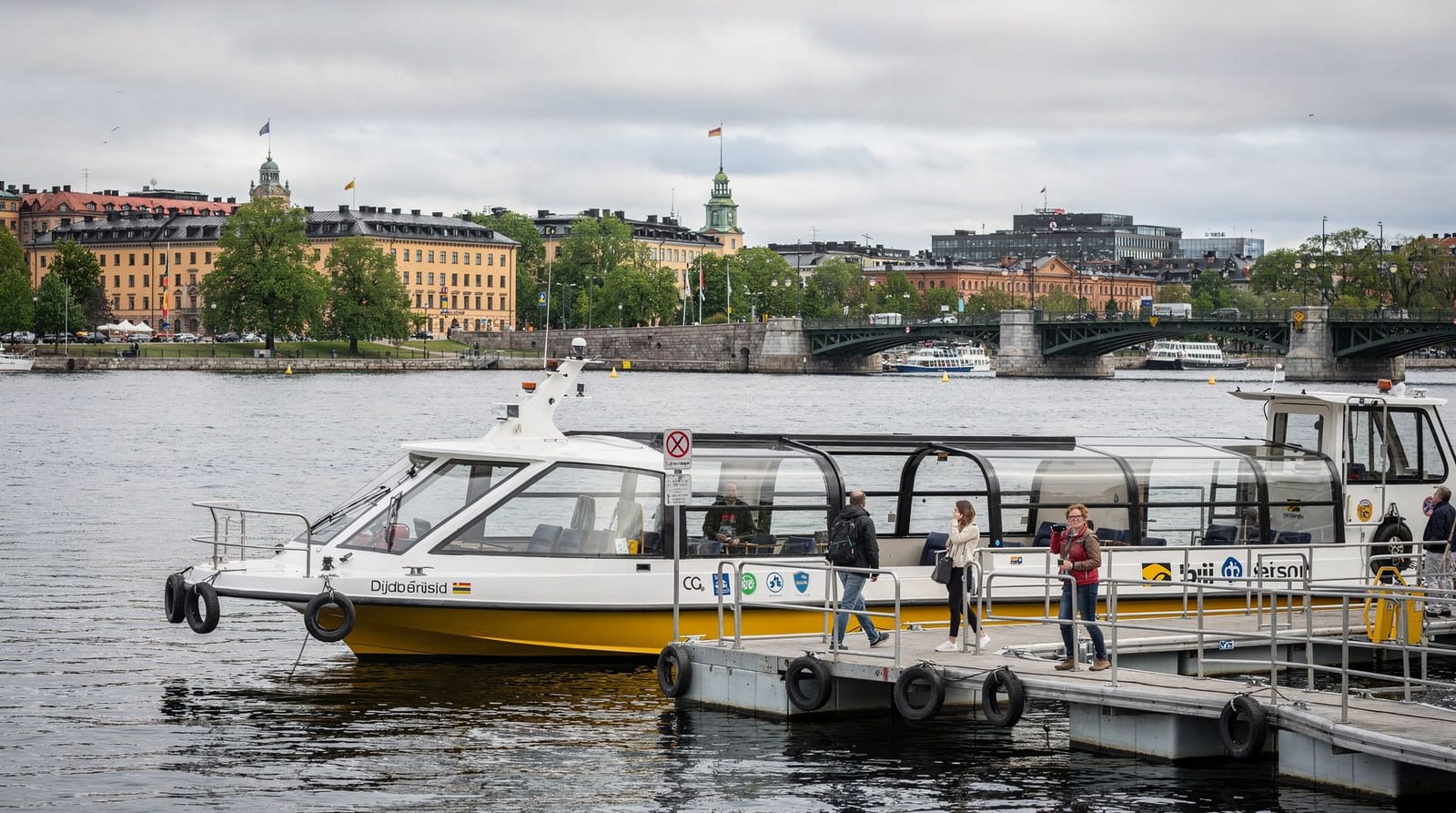
Stockholm: City Sightseeing hop-on hop-off bus and boat passThe boat’s limitations
Frequency in shoulder season: In September and October, boats run hourly rather than every 30 minutes. Waiting 45–55 minutes for the next boat at Slussen is a significant time cost if your schedule is tight.
Weather dependence: Open deck boats in Stockholm rain are not comfortable. The covered sections exist but reduce the viewing experience substantially. The SL ferry between Slussen and Djurgården runs on a covered vessel regardless of sightseeing-tour weather.
The Gamla Stan gap: The boat route does not stop within Gamla Stan itself — you land at Slussen and walk up into the old town, which adds 10 minutes to any Gamla Stan visit.
The afternoon crowding problem: In July and August, popular boat departures from Strandvägen at 11:00–14:00 can be fully loaded before arriving at Djurgårdsbroen. If you miss a boat at Djurgården, the next departure may be 60 minutes later.
The hop-on hop-off bus
Route coverage
The bus covers considerably more ground than the boat: typically 14–20 stops including Gamla Stan (multiple stops), Djurgården, Södermalm viewpoints (Monteliusvägen), Östermalm, Norrmalm commercial centre, and in some cases Vasastan or Kungsholmen. Commentary is typically via headphone audio rather than live guide.
The bus is more comprehensive as pure sightseeing transport: it reaches parts of the city not served by the boat route, and in rain it provides shelter the open-boat sections cannot.
What the bus does poorly
Stockholm’s central areas — Gamla Stan, Norrmalm, Djurgården — are all walkable within 20–30 minutes of each other. The bus speed advantage over walking is minimal in central-city traffic, and the city’s relatively legible grid makes navigation easy with a basic map or phone.
The audio commentary on bus-only products is also less engaging than live guide commentary — you hear the same pre-recorded script regardless of what is actually visible from your specific seat position. The Royal Palace from Slottsbacken is described the same way whether you are looking at it from your seat or cannot see it because someone taller is blocking the window.
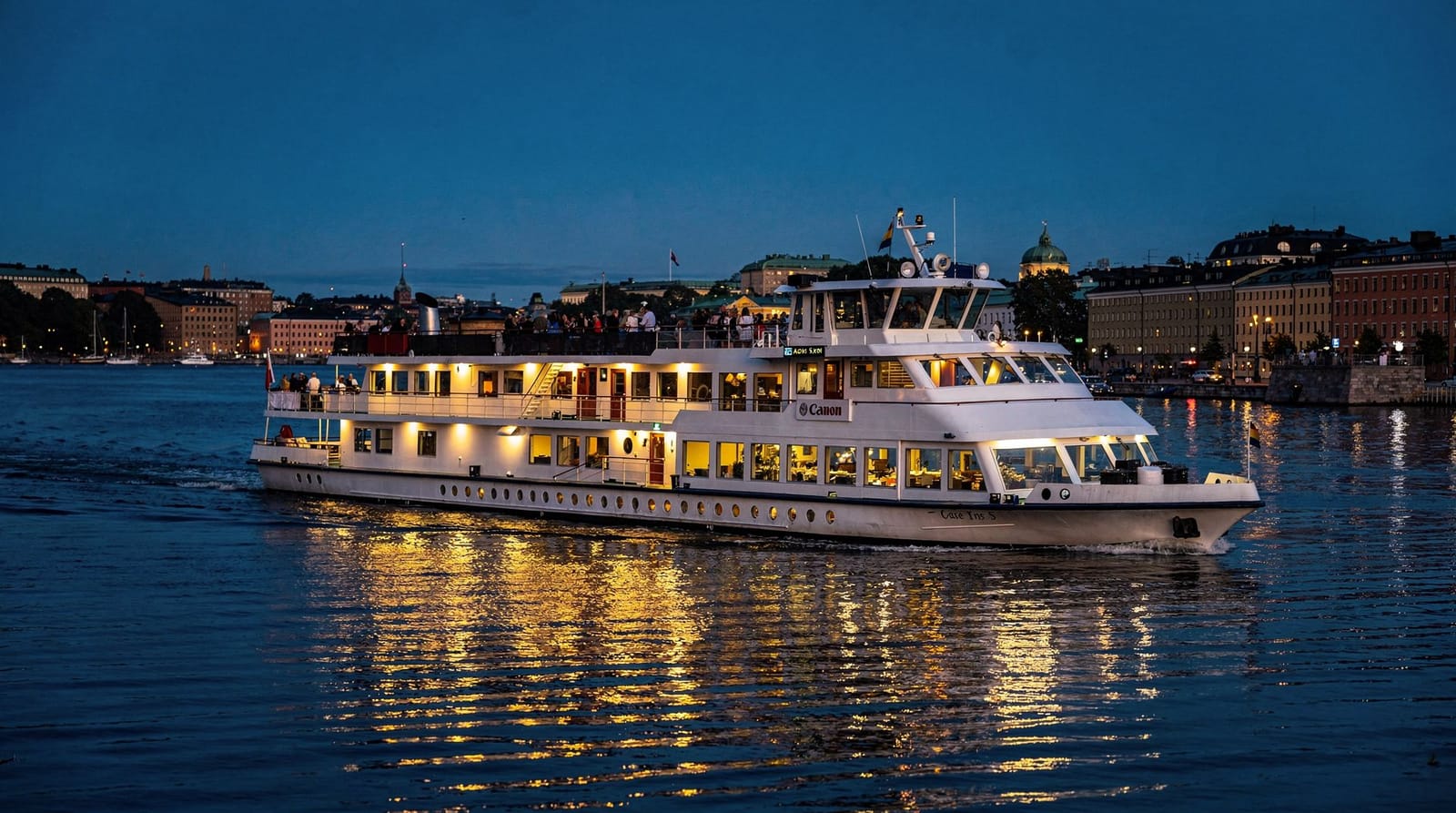
Stockholm: hop-on hop-off bus or boat (choose your option)The combined bus-and-boat pass
The combined 24-hour pass (~330–350 SEK) gives access to both networks and makes the strongest individual case for itself. A first day in Stockholm on the combined pass:
- Morning: Board the boat at Strandvägen → Djurgården stop (Vasa Museum or Skansen, ideally before 11:00 when they fill with guided tour groups).
- Midday: Take the boat from Allmänna Gränd → Slussen → walk up to Gamla Stan for lunch and 2 hours of walking.
- Late afternoon: Bus from Gamla Stan → Södermalm Monteliusvägen viewpoint → bus back to hotel.
This circuit uses both products usefully and visits Djurgården, Gamla Stan, and Södermalm in a single day. The 24-hour validity means one day is the logical use period; extending to 72 hours rarely adds proportional value unless your Stockholm visit is entirely museum-and-sightseeing-focused with no independent time for restaurants, local neighbourhoods, or slower exploration.
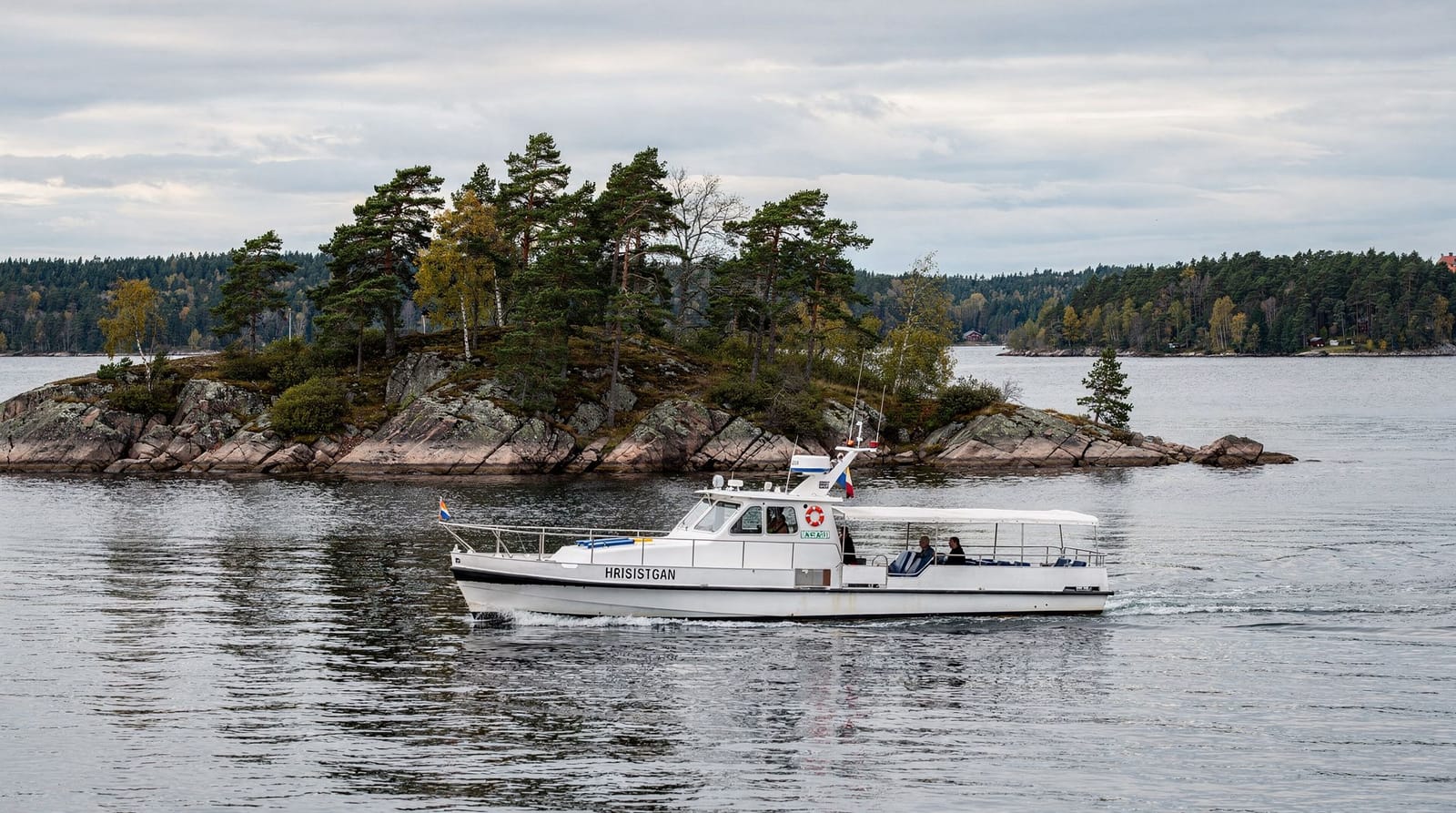
Stockholm: hop-on hop-off bus and boat 72-hour passComparing costs with the SL pass
| Product | Price | Coverage | Commentary |
|---|---|---|---|
| SL 24h pass | ~180 SEK | All T-bana, bus, tram, Djurgården ferry | None |
| Hop-on hop-off boat only | ~230 SEK | Boat circuit 8 stops | Audio or live |
| Hop-on hop-off bus only | ~270 SEK | ~16 bus stops | Audio |
| Combined bus + boat 24h | ~330–350 SEK | Full boat + bus circuit | Audio/live |
| Stockholm Pass (1 day) | ~1070 SEK | 80+ attractions included | Varies |
For most visitors, the most efficient combination is the SL pass for all transport needs (~180 SEK) plus the Royal Bridges canal boat tour (~280 SEK) for the dedicated water sightseeing experience. This total (~420 SEK) provides better transport coverage than the hop-on hop-off combined pass (~330 SEK) and delivers a more focused canal boat experience with live guide commentary. See the Royal Canal boat tour guide for what that dedicated tour actually covers.
The combined hop-on hop-off pass (~330 SEK) provides less comprehensive transit coverage than the SL pass but adds the structured sightseeing format and the specific boat stops that the SL public network does not serve (particularly Stadshuset/City Hall). The SL pass guide covers the public transit options in full.
Which visitors benefit most
Benefit most from hop-on hop-off:
- First-time visitors on a single day who want maximum orientation with minimum planning effort.
- Families with children aged 4–10 who enjoy the bus/boat format as entertainment.
- Older visitors or those with mobility considerations who prefer seated sightseeing.
- Visitors who don’t speak English well enough to navigate SL’s maps and information systems.
Benefit least:
- Return visitors to Stockholm.
- Independent travellers comfortable navigating public transport in unfamiliar cities.
- Budget travellers: the SL pass plus walking is significantly cheaper.
- Visitors primarily focused on museums, which require separate tickets regardless of what transport pass you hold.
The SL alternative in detail
The SL 24-hour pass covers:
- All T-bana lines (metro) connecting every major district
- All SL buses including those to Djurgården
- Djurgårdslinjen tram (seasonal, Djurgården museum strip)
- Waxholmsbolaget archipelago ferries within the SL zone (inner islands)
- Commuter rail within greater Stockholm
For Djurgården specifically: the SL-covered Djurgårdslinjen tram from Norrmalmstorg is a 10-minute scenic ride to the Vasa Museum and Skansen — every bit as useful as the hop-on hop-off boat stop and covered by the SL pass. The SL ferry from Slussen to Djurgården is a faster alternative when the tram is crowded. Once you’re on the island, the Djurgården walking route covers how to link the museums on foot rather than shuttling between individual stops.
The visitor who doesn’t need either product
It is worth spending a paragraph on the visitor who should ignore both products entirely.
If you are:
- Staying 3+ days in Stockholm
- Comfortable navigating city public transport
- Primarily interested in museums, specific neighbourhoods, and food
- Travelling light with a good map or phone
Then the SL pass covers your needs completely. Stockholm’s T-bana is one of the most art-integrated metro systems in the world (the cavern stations have genuine artwork, not decorative tiles); the commuter system connects the archipelago ferry terminals; the buses fill the gaps.
The specific insight Stockholm gives to the experienced traveller is that the city is remarkably walkable in a way that sightseeing buses disguise. The distance from Strömkajen to Gamla Stan’s far end is a 30-minute walk. The distance from Gamla Stan to Skansen is a 20-minute walk via Djurgårdsbroen. None of these journeys requires a sightseeing pass; all of them are more interesting on foot than from a bus window.
The hop-on hop-off products are best understood as a product for visitors who want to maximise coverage in minimum time with minimum planning. For visitors who want to understand Stockholm rather than photograph it, the feet-and-T-bana combination is superior.
If you go that route, the self-guided walking Stockholm guide gives you a ready-made way to cover the centre without a pass, and the Stockholm in 3 days overview shows how to pace a longer stay so that a sightseeing ticket is not needed at all. Visitors with only a single day can also look at the Stockholm in 24 hours itinerary before deciding whether a hop-on hop-off pass adds anything.
Making the decision: a practical framework
Take the combined bus-and-boat pass if:
- This is your first day in Stockholm and you have 5–6 hours of sightseeing time
- You have never navigated Stockholm before and want the path of least resistance
- You have children aged 4–10 who find transport-as-entertainment appealing
- You are staying only one night and want to cover maximum ground
Take the boat-only pass if:
- You are primarily interested in the Djurgården museums and want the water approach
- You already have an SL pass for general transport
Take neither and use the SL pass if:
- You are staying 2+ days
- You are comfortable with maps and public transport
- You want to walk between sights (the better way to see Stockholm)
- You are on a budget
Take neither and use the Royal Bridges canal boat (~280 SEK) if:
- You want the water experience without the transport framing
- You are satisfied with a single-loop dedicated canal tour rather than an on/off network
What the boat route shows that the bus cannot
The single strongest argument for the boat component specifically — as distinct from the general hop-on hop-off concept — is the views of Stockholm’s waterfront architecture from water level that the bus cannot replicate.
The Royal Palace from Strömmen. City Hall from Riddarfjärden. Gamla Stan’s waterfront along Skeppsbron. Södermalm’s cliffs from the channel below Slussen. These views are available only from a boat; the bus approaches all of these landmarks from landward, through streets, past parked cars and pedestrians.
For photographers and for anyone who wants to understand Stockholm’s identity as a water city rather than a land city, the boat provides irreplaceable perspective. This is the honest case for the boat — not efficiency or convenience, but the specific visual access to the city’s relationship to its waterways.
Seasonal notes
April–May: The hop-on hop-off boat may not yet be running full summer frequency; verify before booking. The SL-covered services are consistent year-round.
June–August: Full service on both boat and bus. The boat stops at Djurgården see high demand; book or arrive at the departure point early for popular morning departures.
September: The best month for the boat tour — clear autumn light, reduced crowds, good colour on Djurgårdens trees. Service frequency beginning to reduce.
October–March: The hop-on hop-off boat typically suspends service. Bus service may continue at reduced frequency or cease entirely. Confirm with City Sightseeing directly.
Booking tips and practical logistics
Where to buy: Tickets are available online in advance, at kiosks near the main stops (Strandvägen, Slussen), or occasionally directly from the crew when boarding, though online booking is the most reliable way to lock in the current price and avoid a queue at a busy stop. Mobile tickets (a QR code on your phone) are standard and work without printing.
Activation: Most passes activate on first use, not on the date of purchase, so buying a day or two ahead of when you plan to use it does not shorten the useful window. This makes advance booking mostly about convenience and price-locking rather than urgency.
Group and family tickets: Children typically travel at a reduced rate, and family tickets (two adults plus children) are sometimes available at a discount versus buying individual passes — check the specific operator’s pricing page, since this varies by season and provider.
Luggage: Hop-on hop-off boats and buses are designed for day sightseeing, not luggage transport. If you’re moving between accommodation with bags, use the T-bana or a taxi instead; the sightseeing products are not set up for wheeled suitcases.
Mobility access: The bus is generally easier for visitors with limited mobility than the boat, since boarding a moving or gently rocking boat can be more physically demanding than stepping onto a bus. If mobility is a significant concern, check the specific vessel and vehicle accessibility with the operator before booking, as this varies between older and newer boats in the fleet.
Weather planning: Because a meaningful part of the boat’s value is the open-air view, check the forecast before committing to a boat-heavy day. A wet, grey morning is a reasonable trigger to flip your plan — do the bus stops or an indoor museum first, and save the boat circuit for an afternoon or the next day if the weather clears. Since the pass is valid for a full 24 hours, this kind of reshuffling costs nothing once you’ve bought it.
Combining with a Stockholm Pass: If you already hold a Stockholm Pass that includes hop-on hop-off access, do not also buy a separate boat or bus ticket — check your Pass’s specific inclusions first, since coverage varies by season and by which tier of Pass you purchased. Buying a duplicate ticket is a genuinely common and avoidable mistake among first-time visitors juggling multiple booking confirmations.
Frequently asked questions about Stockholm’s hop-on hop-off products
Is the audio commentary good quality?
It varies by operator. City Sightseeing’s pre-recorded audio is professionally produced but generic. Live commentary is available on specific boat departures but not standard on bus routes. For more contextual narrative about Stockholm’s history and neighbourhoods, a guided walking tour of Gamla Stan provides better depth. The Gamla Stan walking tour guide covers the options.
Can you use the hop-on hop-off boat in winter?
Most commercial hop-on hop-off boats suspend service from November through March, or operate a very reduced schedule. For winter, the SL public ferries continue on core routes. Check specific operator websites for current winter schedules before booking.
What is the best stop to start from?
Strandvägen (Östermalm waterfront) or Djurgårdsbroen are most convenient for visitors staying in Norrmalm or Östermalm. Slussen is convenient for Södermalm-based accommodation. Starting at the first stop in the boat circuit maximises coverage within the validity period.
Can you use the hop-on hop-off pass multiple times on the same boat?
Yes — the 24-hour pass allows unlimited boarding and alighting throughout its validity period. A common pattern: board at Strandvägen in the morning (to Djurgården), re-board at Allmänna Gränd in the afternoon (to Slussen), and board again at Slussen for the City Hall approach in the early evening.
Does the hop-on hop-off boat reach the outer archipelago?
No. The commercial hop-on hop-off boat operates on the urban waterways only — roughly the same circuit as the Royal Bridges canal tour. It does not venture into the open archipelago beyond the city’s immediate waterfront. For the outer archipelago (Vaxholm, Fjäderholmarna, Grinda), the Waxholmsbolaget public ferries or the dedicated 2-hour archipelago guided tours are the appropriate products. The 2-hour archipelago boat tour guide and the Fjäderholmarna ferry guide cover the inner-archipelago options.
Can the hop-on hop-off bus take you to the Royal Palace?
The bus stops near the Royal Palace area in Gamla Stan, but the palace’s exact position on Stadsholmen island means the bus stop is a short walk from the main entrance rather than directly adjacent. For the Royal Palace, walking from T-bana station Gamla Stan (5 minutes) is at least as fast as the bus. The bus is more useful for reaching the Södermalm viewpoints and the Östermalm district, which are less walkable from the central tourist cluster.
Is the Stockholm hop-on hop-off ticket refundable?
Cancellation and refund policies vary by operator and booking channel. Most operators allow refund or rebooking within 24–48 hours of the departure if the pass has not been activated. Once the pass is activated (scanned or punched at first use), it is generally non-refundable. Check the specific booking terms when purchasing, particularly if your Stockholm travel dates are uncertain.
How does the Stockholm hop-on hop-off compare to similar products in other cities?
Stockholm’s product is smaller-scale than London, Barcelona, or Rome equivalents — fewer stops, smaller vessels, a circuit rather than multiple routes. This is appropriate to the city’s size. The specific advantage Stockholm has over most hop-on hop-off networks is the boat component: the water route through the city’s channels is genuinely more scenic than the equivalent bus route through the same areas. In cities where the sightseeing bus is purely a land vehicle, the hop-on hop-off is mostly convenience and commentary. In Stockholm, the boat adds an experience that the bus cannot replicate.
Top experiences
Bookable activities with verified prices and instant confirmation on GetYourGuide.