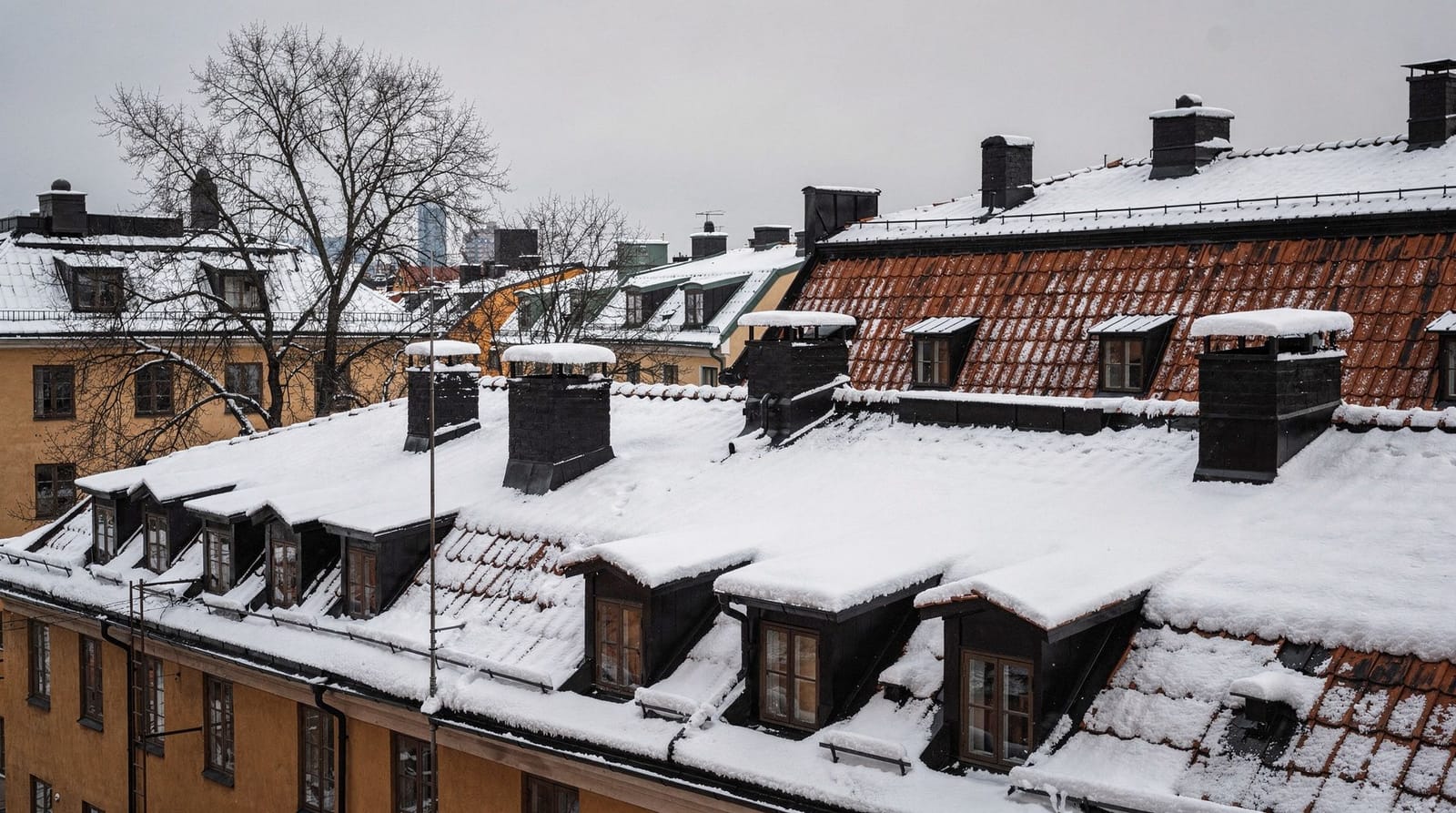
Stockholm archipelago in winter: frozen islands and sauna culture
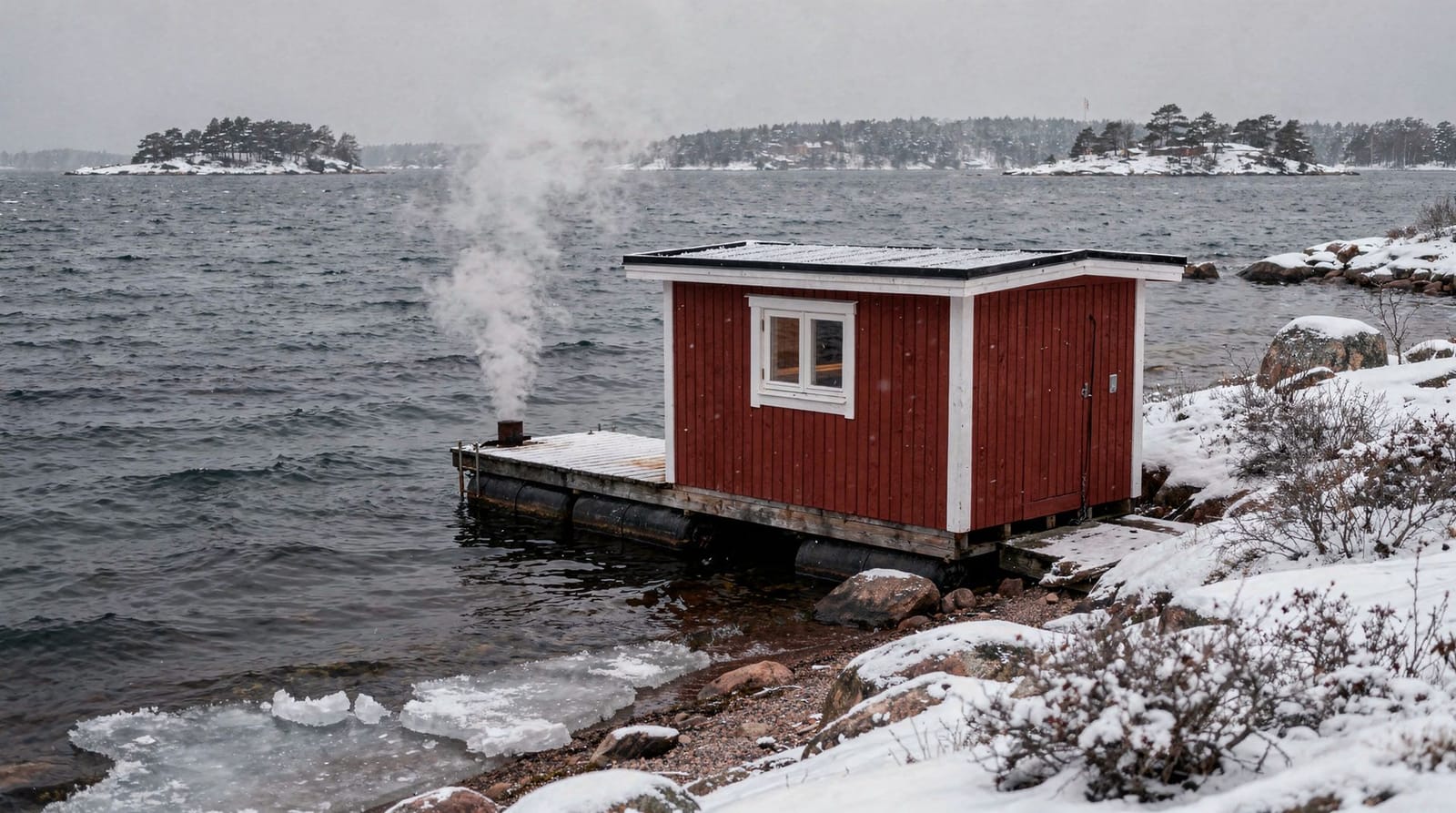
Vaxholm: traditional sauna with polar plunge in the Baltic Sea
Is the Stockholm archipelago worth visiting in winter?
Yes, but it's a different experience from summer. Most summer-only facilities close. Fewer ferries run. But the landscape transforms — frozen sea ice, bare granite islands, the possibility of skating between them. Vaxholm is the best winter base, accessible year-round. The main attraction becomes sauna culture, cold plunges, and the stark Nordic landscape rather than island-hopping.
What winter changes in the archipelago
The Stockholm archipelago in winter is not the summer archipelago with the population removed. It’s a different place. The 30,000 islands of the outer archipelago lose almost all human presence — summer cottages sealed and dark, boat traffic absent. The inner islands, particularly Vaxholm, maintain their small permanent communities.
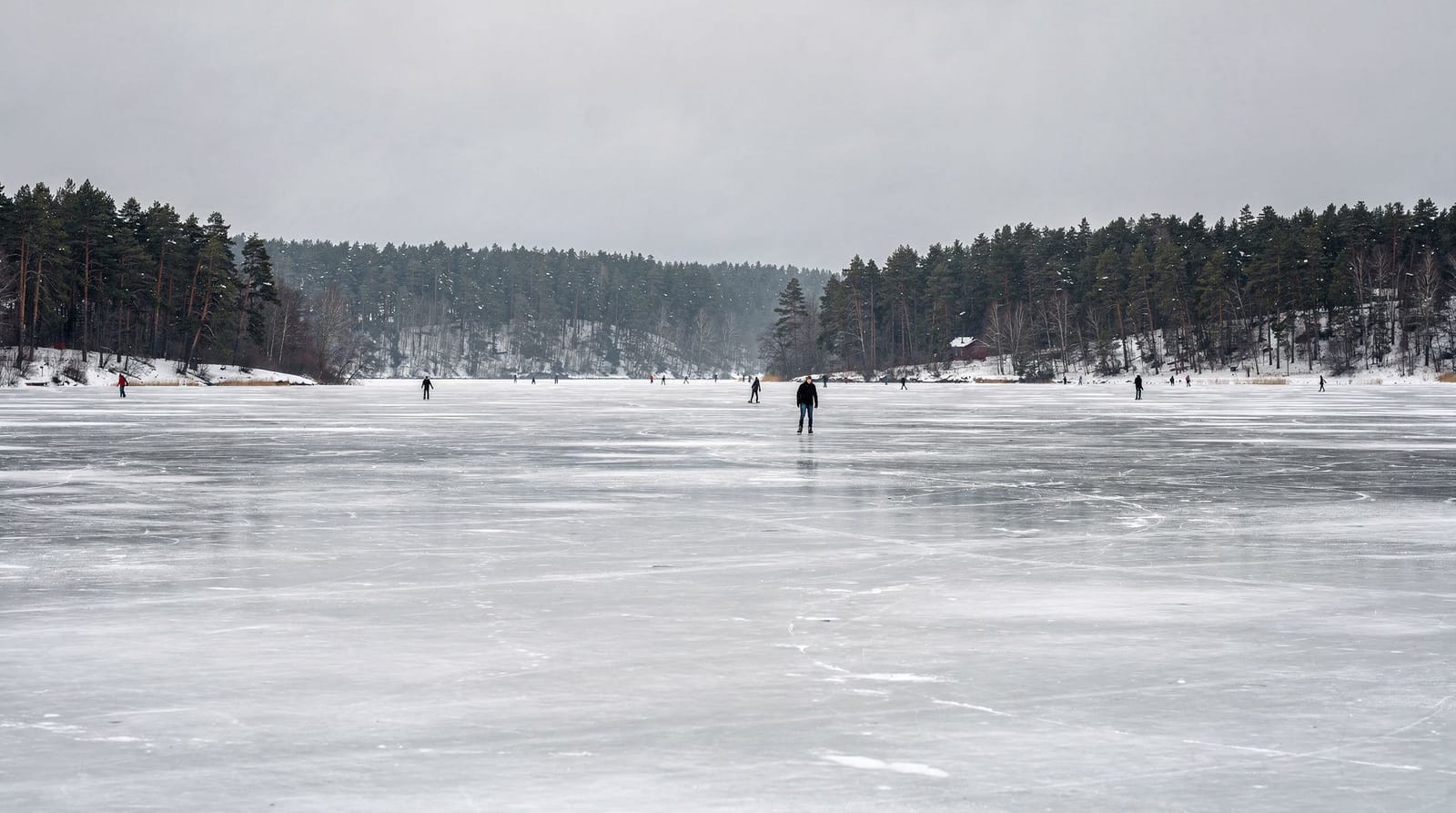
What the cold adds: sea ice forming in protected bays, granite rocks dusted with snow, the particular pale light of northern winter over open water, and almost complete silence. In cold winters, the inner archipelago channels freeze hard enough to skate across — an experience with no summer equivalent.
What the cold takes: most ferries, most restaurants, the visual density of summer green vegetation, and the long light of summer evenings.
For the right traveller — someone who genuinely values silence, Nordic winter aesthetics, and experiences unavailable in summer — the winter archipelago is compelling. For those who want the full ferry-hopping island experience, summer is the answer.
| Where | Vaxholm, 55–65 min by ferry from Strömkajen |
| Cost | Sauna + polar plunge tours: price set by the operator; ferry covered by SL pass |
| Time needed | Full day (9:00–16:00 to use available daylight) |
| Bring | Thermal layers, waterproof boots, swimsuit for sauna — see winter clothing guide |
| Best months | December–February for ice and sauna culture |
Vaxholm: the winter base
Vaxholm, 35 km northeast of Stockholm by sea, is the practical starting point for winter archipelago visits. The town has year-round population, hotels, and restaurants that stay open. The Waxholmsbolaget ferry from Strömkajen in central Stockholm reaches Vaxholm in about 55–65 minutes, running on a reduced but reliable winter schedule.
What Vaxholm offers in winter:
- Vaxholm Fortress (closed inside but dramatic from outside, especially with ice in the channel)
- Traditional Swedish village atmosphere without summer crowds
- Sauna facilities with direct cold plunge into the Baltic
- Views of frozen sea channels when temperatures drop consistently
The main winter activity organiser is the sauna complex at the harbour area. Traditional sauna with polar plunge in the Baltic Sea combines the wood-fired sauna session with a supervised cold plunge into the sea — water temperatures of 1–3°C in January. This is not a tourist gimmick: it is what Swedish archipelago locals do.
Sea ice conditions
In a cold winter (January–February temperatures consistently below -5°C), the inner archipelago channels freeze. The ice starts in sheltered bays and works outward. In an average winter, solid skatable ice forms in parts of the inner archipelago 2–3 times per decade. In mild winters, the water barely freezes.
Ice skating across frozen sea between islands is one of the most distinctive Swedish winter experiences — archipelago skating (skärgårdsskridskor) uses long Nordic blades and requires ice picks, knowledge of ice conditions, and ideally a guide. The Stockholm Ice Touring Club organises guided outings when conditions permit.
Checking conditions: The Swedish Coast Guard and local rowing clubs post ice condition reports during cold spells. Never venture onto archipelago ice without verifying current conditions.
Winter kayaking
The water is cold but the kayaking season doesn’t stop. Winter archipelago kayaking with sauna and fika uses drysuits to manage the cold water exposure and runs guided tours through the quietest, most dramatic version of the archipelago. The experience includes a sauna session at a waterside facility.
This is a physically engaging activity that shows a side of Stockholm’s surroundings inaccessible in any other season. Groups are small (cold-season tours rarely exceed 8–10 people) and the guide-to-participant ratio means genuinely personal guidance.
Practical winter ferry information
Waxholmsbolaget operates the public archipelago ferries. In winter, the schedule reduces significantly — routes that run every 30–60 minutes in summer may run 3–4 times daily in winter. Some outer island routes stop entirely.
Key winter routes:
- Stockholm–Vaxholm: Year-round, reduced frequency (~4–6 sailings per day in winter). SL pass valid for basic island routes within SL zone.
- Stockholm–Sandhamn: Very limited winter service; not a practical winter destination.
- Stockholm–Fjäderholmarna: Seasonal only (Fjäderholmslinjen sails 1 May–13 September in 2026); no regular winter service, so it is not a winter destination.
SL pass validity: The 24h, 72h, and 7-day SL transit passes are valid on Waxholmsbolaget ferries for destinations within the SL zone. This covers Vaxholm and most inner archipelago destinations. Check the current SL zone map as boundaries occasionally change.
Fjäderholmarna: the closest island, but a summer one
Fjäderholmarna is only 6 km from central Stockholm, but its ferries are seasonal: in 2026 Fjäderholmslinjen sails from Slussen between 1 May and 13 September, and Strömma’s boat from Strandvägen is also a summer service. In winter the restaurants, brewery and craft studios are closed and there is no regular crossing, so the island is not a winter option.
For a short winter outing close to the city, Vaxholm remains the practical choice; keep Fjäderholmarna for a summer or early-autumn visit.
Shaping a winter archipelago day
The most common mistake is treating the winter archipelago as a shortened summer trip. A better approach is to pick one anchor and let the rest of the day stay loose. If the anchor is the sauna and plunge, build the day around its booking, arrive at the harbour with time to spare, and leave the hours before and after for a slow walk through Vaxholm. If the anchor is the water itself, the kayaking outing does the same job. Trying to stack both into a single short winter day only means rushing through both of them.
Between activities, the town does the rest. A warm café, a walk along the waterfront, and a long look at the fortress across the channel make a complete day without any further planning. The Vaxholm destination page and the Vaxholm day guide describe the town in more detail, and most of what they cover works just as well in the cold months, minus the open-air seating.
Because the ferry is part of the experience, treat it as one. The crossing in winter feels quite different from a summer sailing: the deck is nearly empty, the water is dark and often steaming in the cold, and the islands slide past with snow on their rocks. If you want a ferry-free alternative with a guide, a winter boat tour through the archipelago waters gives you the same scenery from a heated cabin, which suits travellers who feel the cold quickly or are travelling with older relatives. To compare how the two seasons differ across the whole archipelago, the archipelago winter versus summer guide lays out the trade-offs side by side.
For a broader picture of the region beyond the winter months, the complete Stockholm archipelago guide and the Stockholm archipelago destination page are the places to start. The Waxholmsbolaget ferries explained guide is worth reading before you go, since it covers how the public boats work and how tickets are handled.
Who should skip it, and who should go
Some travellers will love a winter day in the archipelago and others will be quietly miserable, and it helps to know which group you belong to before you commit. If you dislike being outdoors in the cold, if the idea of a plunge into near-freezing water makes you wince, or if you are counting on lingering lunches on a sunny terrace, you will probably be happier staying in the city and choosing indoor sights. The museum rainy day guide is a good starting point for those days.
If, on the other hand, you are drawn to quiet, to hard light, and to the odd satisfaction of getting properly cold and then properly warm, the archipelago is one of the best things Stockholm offers between the first snow and the thaw. It works particularly well for couples and for friends who want a shared story rather than a checklist; the romantic weekend itinerary and the winter three-day itinerary both show where a day like this can slot into a longer stay.
Families with children should think carefully about daylight, warmth, and the length of the ferry crossing. Young children tire quickly in the cold, and a shorter Vaxholm outing with an early return is often a better fit than a full day. The Fjäderholmarna ferry guide explains how that shorter trip works.
Rhythm of the sauna ritual
Swedish sauna culture is less about enduring heat and more about a repeated cycle: heat, a moment in the cold, rest, and then heat again. In the archipelago the cold part is the sea itself, and the rest is often taken wrapped up beside the water, watching the light change. Go in without a stopwatch. The guides on site will tell you how long to stay in the water, and it is wise to follow them rather than push your limits, particularly on your first plunge.
Wear what the organisers recommend, bring a towel and warm dry clothes for afterwards, and plan something unhurried for the hour after you finish. Many people feel a clear, calm energy after a plunge, and a hot drink and a snack taste better than they have any right to. The Swedish fika culture guide explains why the coffee-and-pastry break is such a fixed part of the day, and it pairs naturally with a sauna session.
If you want to understand the wider tradition before you try it, the Swedish sauna guide covers etiquette and what to expect, and the Swedish sauna experience compared with Finland offers a more personal account.
The winter archipelago aesthetic
Sweden’s winter light has specific qualities that photographers and outdoor enthusiasts travel specifically to experience. The low winter sun (never more than 7–10° above the horizon in January) casts extremely long shadows and a warm-toned light even in the middle of the day. On clear days, the combination of granite islands, sea ice, bare silver birch trees, and this light creates images impossible to replicate in any other season.
If photography is a priority, a winter day trip to Vaxholm — leaving Stockholm at 9:00 when the light is already in the golden-hour range — can be one of the most productive shooting days of the entire trip.
What to prepare
Clothing: See the winter clothing guide. On the ferries and exposed waterfront, wind-chill is significant. A windproof outer layer is more important than extra insulation.
Boots: More critical in the archipelago than in the city. Harbour areas may have black ice, boat ramps can be icy, and snow-covered paths between buildings are not always cleared.
Timing: Winter days are short. A day trip to Vaxholm that leaves Stockholm at 9:00 and returns by 16:00 uses most of the available daylight. Evening ferry returns are possible but involve arriving in darkness.
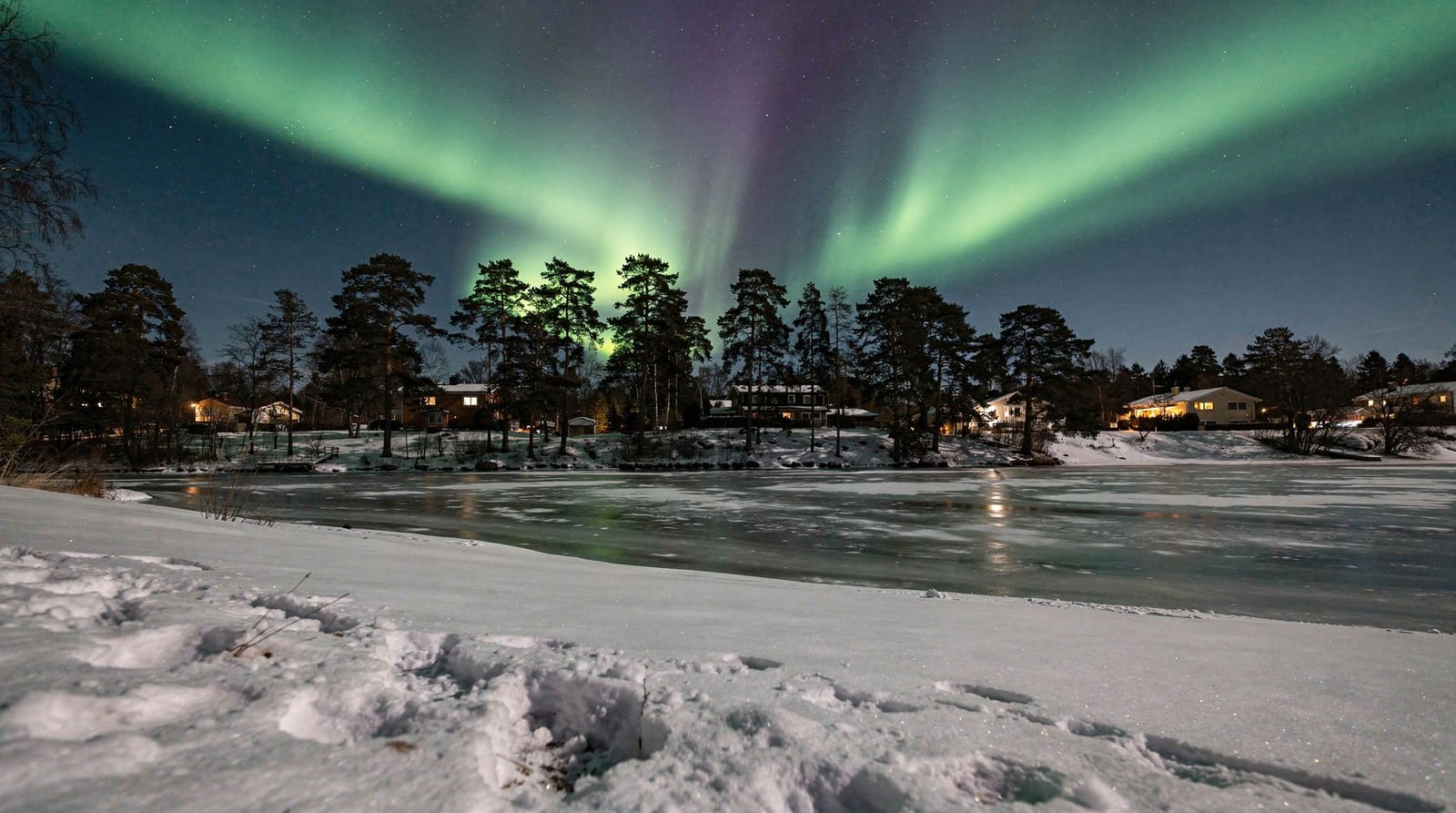
A winter archipelago day pairs naturally with a broader Stockholm winter visit — see the Stockholm winter guide for how to combine it with city sights, and the Stockholm January–February guide for month-specific planning. If clear skies are forecast, check the Northern Lights from Stockholm guide — archipelago darkness away from city light pollution occasionally offers a viewing chance. Back in the city, the Swedish sauna guide and ice skating guide cover the equivalent winter activities without the ferry trip.
Frequently asked questions about the winter Stockholm archipelago
Is it worth going to the archipelago in January?
For sauna culture, winter silence, and dramatic Nordic landscape: yes, emphatically. For the summer island-hopping experience: no, that’s genuinely seasonal. The winter visit requires recalibrating expectations — this is about the cold-season experience specifically, not a substitute for summer.
Can I stay overnight on an island in winter?
Some Vaxholm hotels operate year-round. Sandhamn and Grinda have limited winter accommodation. Staying overnight in winter is possible but requires advance booking as options are few, and checking that restaurants will be open for dinner.
Do I need a special SL pass for archipelago ferries?
The standard SL transit pass (24h, 72h, 7-day) covers Waxholmsbolaget ferries within the SL zone. No separate archipelago ticket is needed for basic routes to Vaxholm and the inner islands. For destinations outside the SL zone (further-out archipelago), additional tickets are purchased on board.
Top experiences
Bookable activities with verified prices and instant confirmation on GetYourGuide.