Birka Viking village guide: the UNESCO site on Lake Mälaren
Stockholm: Viking island tour — Birka from Stockholm by boat
Duration: 7 hours
What is Birka and is the day trip worth it from Stockholm?
Birka on Björkö island in Lake Mälaren is one of the most important Viking Age archaeological sites in the world — Sweden's first town and a major trading centre from around 750–975 CE. It is a UNESCO World Heritage Site. The guided boat trip from Stockholm takes 2 hours each way; the price (~495 SEK) includes boat, guided tour of the site, and museum access. For anyone interested in the Vikings beyond the entertainment-museum of Djurgården, this is the most substantive day trip available from Stockholm.
Birka: where the Viking Age was real
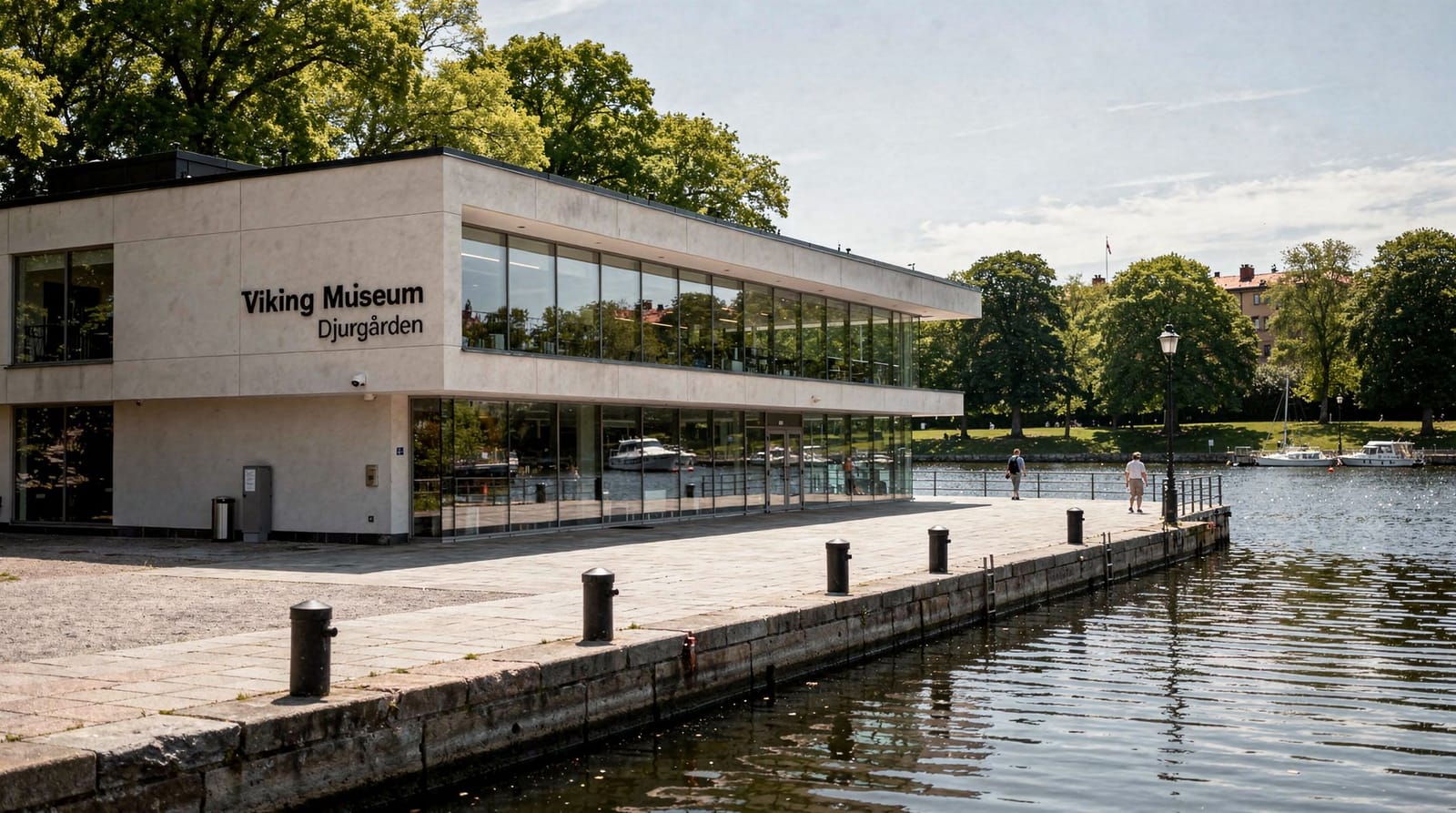
There is an important distinction between the Viking experience at the Djurgården Viking Museum and what you find at Birka. The Djurgården museum is excellent at what it does — a produced, accessible introduction to the Viking world, built around an entertainment ride and designed for families and casual visitors. Birka is the actual Viking Age itself: a UNESCO-inscribed archaeological site on a quiet island in Lake Mälaren where the physical remnants of one of the most important trading towns of the 9th century are visible in the landscape.
| Where | Björkö island, Lake Mälaren |
| Departure | Stadshuskajen, next to City Hall |
| Cost | Around 495 SEK, incl. boat, guide and museum |
| Time needed | Full day, around 8 hours total |
| Season | May–September only |
For the day-logistics version of this guide (timings, booking windows, packing list), see the Birka day trip guide.
Birka was not a warrior base. It was a market town. From approximately 750 to 975 CE, Björkö island was the principal emporium of the Nordic world — a place where merchants from the Arab world, Byzantium, the Frankish kingdoms, and the Norse interior met to trade silver, furs, amber, and slaves. The finds from Birka’s graves — which archaeologists began excavating in the 1870s and have continued to work on since — tell this story with objects: Arab dirhams, Frankish glass, Byzantine silk, and the remarkable discovery in 2017 that a grave long assumed to be a male warrior’s contained instead the skeleton of a woman, with all the warrior’s equipment intact, rewriting assumptions about gender in Viking Age military life.
Book the Birka Viking island tour by boat from StockholmThe boat journey: two hours of Lake Mälaren
The day begins at Stadshuskajen — the quay adjacent to City Hall on Kungsholmen (Stadshusbron). Departures are typically at 10:00 in peak season; confirm the current schedule when booking.
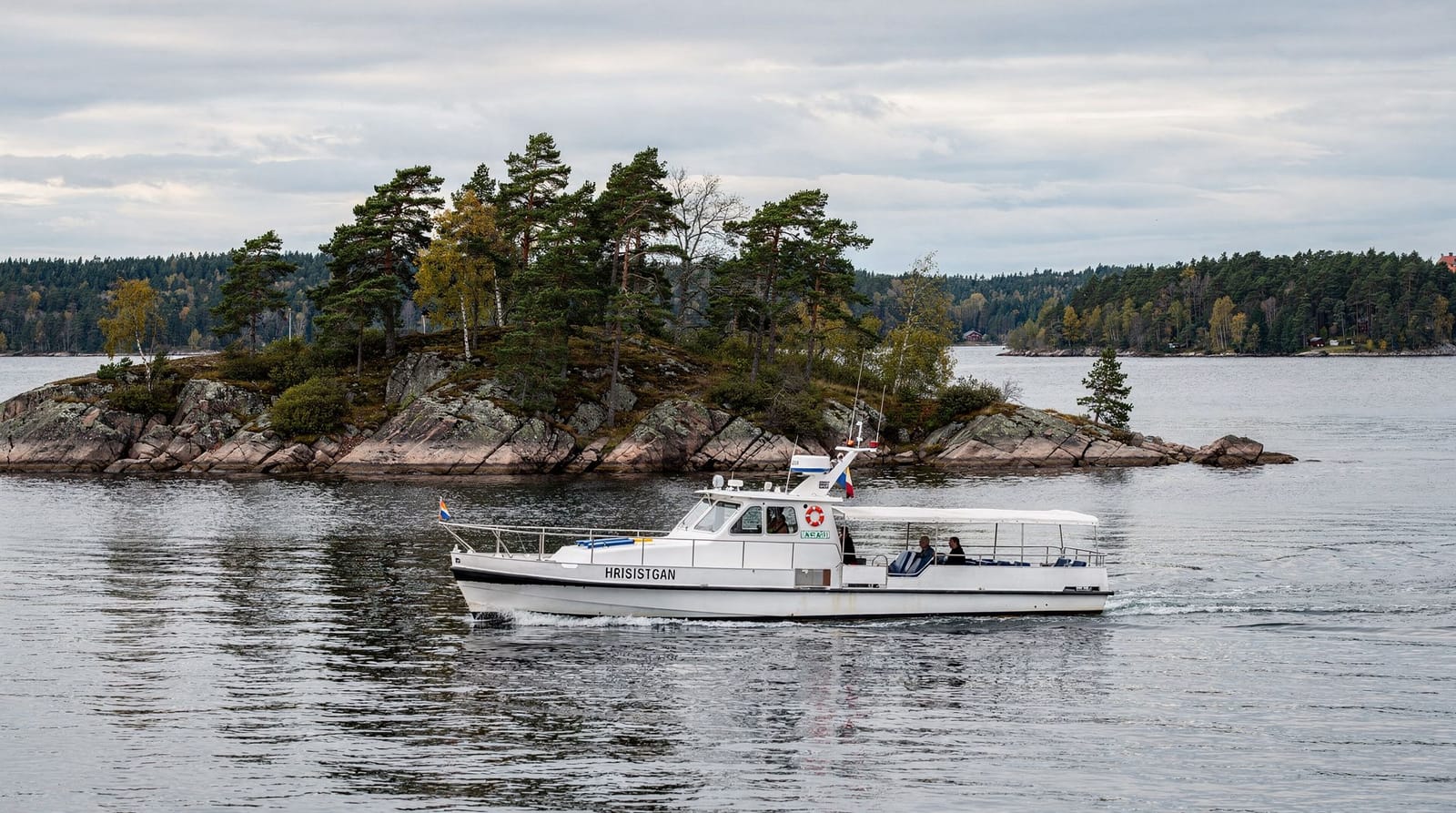
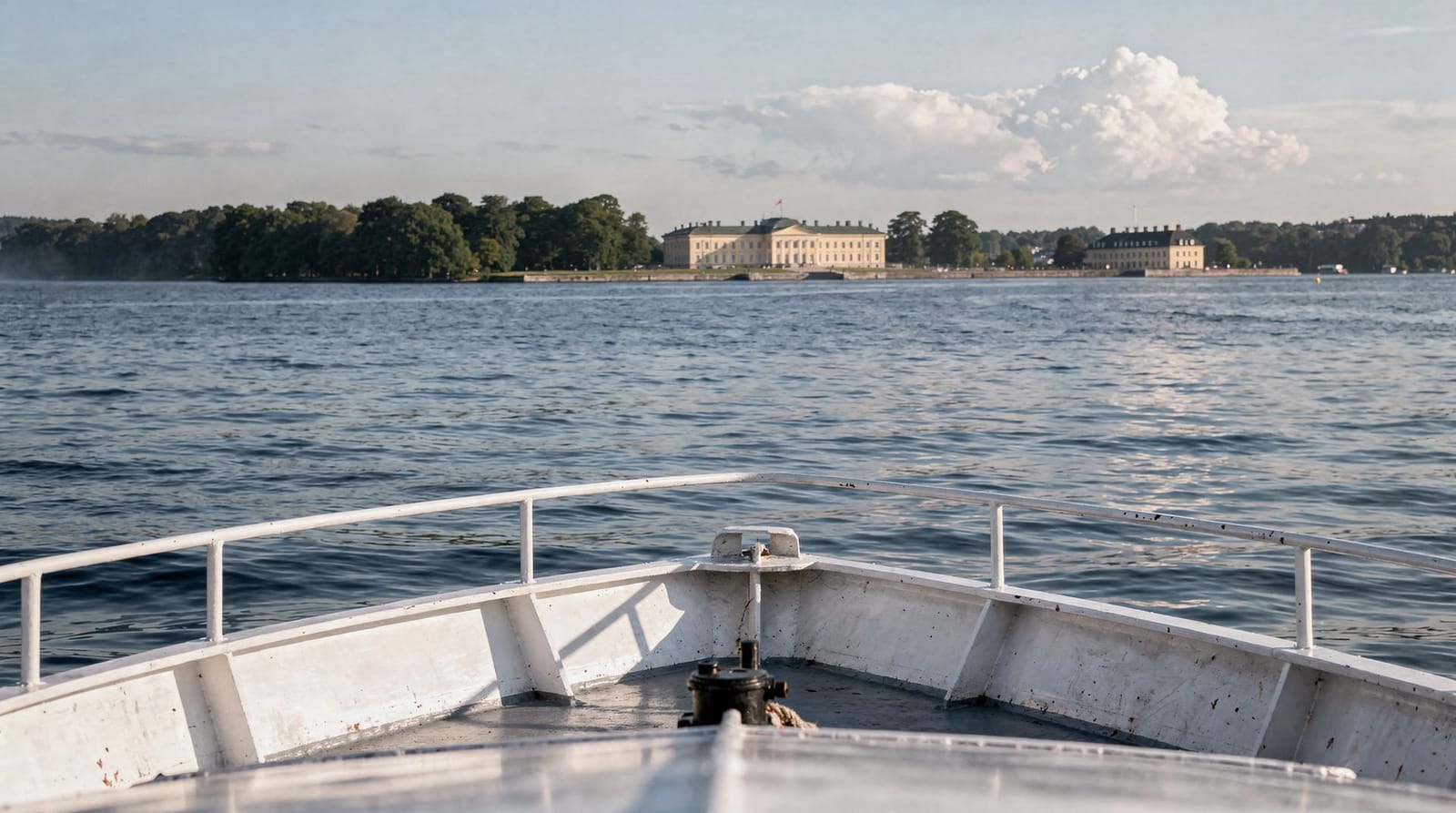
The 2-hour crossing of Lake Mälaren is not merely transit. Lake Mälaren is a vast body of water — 1,140 square kilometres, Sweden’s third-largest lake — and the crossing passes through the same waterway that connected Birka to the wider world of the Viking Age. The boats used then were Norse trading vessels (knarrar) rather than the modern passenger ferry; the lake’s scale and the islands that rise from it are unchanged. The guide often begins their commentary on the boat, contextualising the landscape before arrival.
Heading west from Stockholm, the lake opens progressively: from the urban western edge of the city, through the wooded islands of Ekerö municipality, to the more open water that stretches toward Birka. Björkö island is visible from some distance before landing — a long, low forested island rising slightly above the surrounding water.
The site: what you see at Birka
The Black Earth (Svarta Jordens)
The term used by archaeologists for Birka’s settlement area — a dark layer of organic material, ash, charcoal, and waste products deposited by dense habitation over two centuries. The Black Earth is not visually spectacular; it looks like dark soil. But for archaeologists, it is one of the most information-rich deposits in Scandinavia. Within it, and beneath it, the remnants of the town’s workshops, market stalls, and domestic structures have been found in thousands of small objects.
The guide explains the settlement’s layout from the visible landscape — the town terraces, the harbour area, the main market axis — and uses the current topography to reconstruct how the town functioned.
The burial mounds
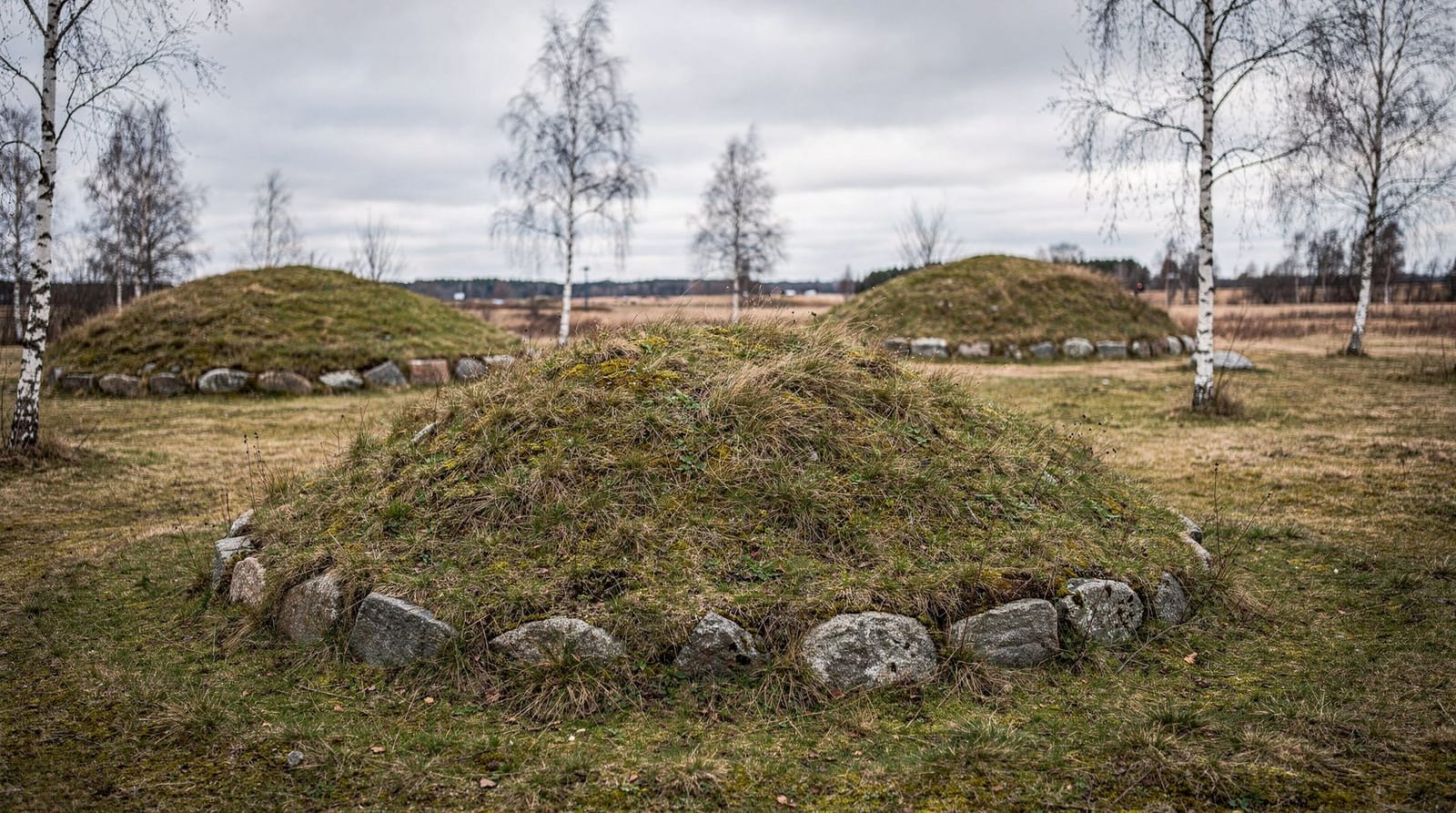
Birka’s more immediately legible archaeological feature is its cemetery. Over 3,000 graves surround the settlement site — the largest Viking Age cemetery in Scandinavia. Most graves were cremations; some were inhumations in wooden chambers. The mounds that remain visible are the largest of the chamber graves.
The famous “warrior grave” (Bj 581) was excavated in the 1870s. Its contents — a full warrior’s equipment, two horses, gaming pieces, and the remains of the occupant — suggested to 19th-century archaeologists a high-status male warrior. DNA analysis published in 2017 revealed the skeleton to be genetically female, initiating a significant reassessment of Viking Age gender roles and, more importantly, forcing archaeology to confront its own assumptions. The guide explains this discovery in detail; it is now central to the Birka narrative.
The hillfort (Borgen)
Above the settlement, the hillfort — a defensive earthwork with stone walls on the island’s highest ground — protected the trading town. The walls are still visible, and the view from the hillfort over Lake Mälaren is one of the finest in the Stockholm region. On a clear day, the lake stretches in all directions; the strategic value of the position (visible approach from all quarters) is immediately apparent.
The Birka Museum
The on-island museum holds the most significant objects from the excavations: finds from the graves including swords, jewellery, trade goods, and the extraordinary assemblage from the warrior woman’s grave. The museum’s presentation is modest in scale but high in quality — the objects are interpreted with archaeological rigour rather than the entertainment focus of the Djurgården Viking Museum.
Particularly significant objects include: Arab silver dirhams (evidence of the eastern trade routes), Byzantine silk fragments (the longest-distance luxury goods found at Birka), and Norse metalwork of exceptional quality from the high-status graves.
Who runs the boat and what tickets exist
The Birka boat service is operated primarily by Strömma, the same company behind several Lake Mälaren and archipelago routes. Standard adult tickets cover the round-trip crossing, the guided walking tour, and Birka Museum admission as a single package — there is no cheaper “boat only” option, since the site itself has no independent entrance and the guided tour is considered essential to the experience. Family and child tickets are typically available at reduced rates, and some seasons see combination tickets that pair Birka with a Stockholm city sightseeing cruise on the same day for visitors staying in Stockholm only briefly. Check current combination offers when booking, as they change season to season.
The guide’s role at Birka
The guided tour is essential. Without the guide, Birka is a pleasant landscape with some earthworks and mounds. With a good guide, it is a specific window into the Viking Age that the Djurgården Viking Museum cannot provide — not because the objects are better explained, but because the site itself is real. Standing in the Black Earth, looking at actual burial mounds, being told that the woman in grave 581 was buried with weapons suggesting she was a military commander — this is the primary source material of history.
The quality of guides varies between tours and seasons. The Birka tour operators (primarily Strömma) employ specialist guides with archaeological training; the peak-season guides tend to have the most current knowledge of recent finds.
Practical essentials
| Detail | Information |
|---|---|
| Departure | Stadshuskajen (City Hall quay), Kungsholmen |
| Journey time | ~2 hours each way |
| Full day duration | ~8 hours total |
| Typical price | ~495 SEK adult (includes boat + guide + museum) |
| Children | Approximately half price |
| Season | May–September |
| What’s included | Round-trip boat, guided site tour, Birka Museum entry |
Seasonal notes
May–June: Quiet, excellent conditions. The vegetation is at its freshest. The guide may be more accessible in smaller groups.
July–August: Peak season. More tourists on the boat and site. Book ahead; the tour can sell out on popular dates.
September: The best month. Autumn colour beginning in the surrounding forest, small groups, and the lake in its clearest late-season condition. The last weeks of the season give a specific atmosphere to the site — the sense of a place approaching its annual closing.
Season-by-season comparison
| Month | Weather on the lake | Crowds | Notes |
|---|---|---|---|
| May | Cool, fresh | Low | Tours resume; vegetation freshest |
| June | Mild, long days | Moderate | Demonstrations beginning |
| July | Warm | High | Book 2+ weeks ahead |
| August | Warm | High, easing late month | Mosquitoes present in meadows |
| September | Cooling, clear | Low | Best combination of weather and quiet |
For a full month-by-month breakdown of Stockholm generally, including how Birka’s season fits into the wider trip calendar, see the best time to visit Stockholm guide.
The Viking Age context: Birka’s place in Norse history
Birka operated for approximately 225 years — from around 750 CE until the late 10th century, when the site was abandoned and the trading functions moved to Sigtuna on the mainland. The reasons for abandonment are debated: changing water levels in Lake Mälaren, shifting political power, or the decline of the eastern silver trade routes may all have contributed.
During its active period, Birka was part of the network of northern European trading emporia that included Hedeby (Denmark/Germany), Ribe (Denmark), and Dorestad (Netherlands). These were not primitive settlements but sophisticated commercial towns with regulated markets, specialist craftsmen, and connections reaching as far as Central Asia.
The Arabic silver that fills Birka’s graves came from the Abbasid Caliphate, traded through Volga Bulgaria and the Rus river-route system — a trade network that gave the Norse world its name: the Varangians of Byzantine chronicles. Birka was at the western end of this system; the graves show what that connection brought.
Connecting Birka to other Viking sites
The Viking heritage Stockholm region guide maps the full extent of Viking Age sites accessible from Stockholm. The Viking Museum Stockholm guide covers the Djurgården museum — the complementary urban option for those who want the visual experience without the boat trip. For the Uppsala connection (the great pagan temple at Gamla Uppsala and its burial mounds), the Uppsala day trip guide is the relevant resource.
Because Birka’s trading role passed to Sigtuna when the island was abandoned, the two places make a natural pair on separate days: Birka for the town that was, Sigtuna for the town that replaced it. If you would rather have the story told on the move, a guided day trip to Sigtuna picks up the thread, and the Sigtuna day trip guide covers the town in more detail.
If a full day feels too much of a commitment, a shorter 2-hour archipelago boat tour or the Drottningholm by boat guide both give a taste of Lake Mälaren’s scenery without the Birka schedule.
The warrior woman: archaeology’s most discussed recent discovery
No guide to Birka can omit the warrior woman. In 1878, archaeologist Hjalmar Stolpe excavated grave Bj 581 on Björkö island and recorded a high-status burial: a warrior’s grave containing two horses, a complete military arsenal (sword, shield, quiver, arrows, axe, spear, knife), two gaming pieces (interpreted as evidence of military planning), and the skeletal remains of the occupant.
For 139 years, the occupant was assumed to be male. Viking Age warrior graves were, by scholarly assumption, male graves — because warriors were male, and this was clearly a warrior’s grave.
In 2017, a research team led by Charlotte Hedenstierna-Jonson published DNA analysis of the skeletal material. The occupant was genetically female (XX chromosomes). The finding was confirmed by multiple methods and multiple laboratories. The warrior in grave Bj 581 was a woman.
The publication generated controversy that is still active in 2026. Some archaeologists questioned whether the DNA might be contaminated or whether the skeleton might belong to a different grave. The research team responded to these objections in subsequent publications. The current scholarly consensus is that the DNA result is valid: grave Bj 581 contains a biological female buried with all the equipment of a high-status Norse warrior, in a grave that clearly indicated military leadership (the gaming pieces being interpreted as maps or military planning tools).
What the discovery does not prove: that Viking Age women regularly served as warriors. A single grave is a single data point, not a statistical claim. What it does prove: that at least one woman in Viking Age Birka was buried as a warrior, which means the category of “women cannot be warriors” was not absolute — and that archaeologists’ assumptions about gender from grave goods need revision.
You can stand on the ground above grave Bj 581. The guide will show you where it is. There is nothing visible above the soil — the excavation was conducted and backfilled in the 19th century — but the location is known. Standing there is, for anyone interested in how archaeology changes history, one of the more charged spots in the Stockholm region.
Birka’s trade goods: the evidence of the eastern connection
The objects found in Birka’s graves tell a story of the Viking Age’s commercial reach that the textbooks describe but the physical objects make visceral.
Arab silver: The Stockholm archipelago region has produced more Arab silver dirhams (Islamic coins from the Abbasid Caliphate, minted in cities from Tashkent to Baghdad) than any comparable area in northern Europe. These coins arrived via the eastern trade route — through what is now Russia and Ukraine, via the Volga River network, through Viking trading posts at Staraya Ladoga, Novgorod, and Bulgar, and ultimately to Birka as payment for Norse trade goods.
The quantity is extraordinary: Swedish archaeologists have found over 100,000 Arab coins in Scandinavia. They did not arrive by accident. They arrived because the Viking Age Norse controlled the river routes east and west — the same traders who raided the Frankish coast in the west were trading silver and silk in the east.
Frankish glass: Glass manufacture in the Viking Age was concentrated in the Rhineland. Frankish glass vessels found at Birka represent luxury goods traded north through the Carolingian world. Their presence at Birka establishes direct or indirect contact between Swedish and Frankish merchants.
Byzantine silk: The furthest-travelled objects at Birka. Silk textiles from the Byzantine workshops in Constantinople appear in the most prestigious Birka graves. These are not fragments — they are substantial textile pieces in the warrior woman’s grave included silk that had been made in the eastern Mediterranean, transported thousands of kilometres north, and buried with a person of sufficient status to warrant such luxury.
The Birka Museum holds originals or facsimiles of these finds. The guide explains the trade networks that brought each type of object to the island. This material evidence — the actual objects, not a conceptual description — is what transforms the understanding of the Viking Age from a story of raid and conquest to a story of commercial globalisation, 1,100 years before the term existed.
Frequently asked questions about Birka Viking village
How is Birka different from the Viking Museum in Stockholm?
The Viking Museum on Djurgården is an entertainment-focused indoor museum designed for families, centred on a motion ride and interactive exhibitions. Birka is an actual UNESCO-inscribed archaeological site — the physical remnant of a real Viking Age town. The museum is better for children and casual introduction; Birka is better for serious historical interest and the experience of standing on the actual ground.
Can you swim at Birka?
The island has shoreline accessible under Allemansrätten, and swimming in Lake Mälaren is generally of good water quality. There are no organised beach facilities. Some tour participants swim from the boat on the return journey if the schedule permits. July–August water temperature is 16–20°C.
Is the Birka boat tour affected by weather?
The Lake Mälaren crossing is generally calm — the lake is sheltered from Baltic conditions. In heavy rain, the boat has covered interior sections. Tour cancellations for weather are rare. However, a rainy Birka visit is a wet outdoor experience; the site has minimal shelter. Check the forecast and bring a waterproof jacket.
What should you read before visiting Birka?
Two books give the best background: Neil Price’s “Children of Ash and Elm” (Allen Lane, 2020) provides the broadest modern account of the Viking Age with Birka embedded in its commercial trading context. Charlotte Hedenstierna-Jonson’s research papers on grave Bj 581 (the warrior woman) are freely available as published papers and provide the scientific basis for the 2017 discovery. For children: Sanna Boberg and Tor Åge Bringsværd’s illustrated Norse mythology for children is available in English and gives the religious background that contextualises the burial practices.
How does the Birka guide handle the warrior woman discovery for international visitors?
The guides at Birka are trained to present the Bj 581 discovery accurately — explaining the 1878 excavation, the 139-year assumption of a male occupant, the 2017 DNA analysis, and the ongoing scholarly discussion. For international visitors who arrive knowing the headline (“female Viking warrior”) but not the nuance, the guide typically spends considerable time on the evidence base and what can and cannot be concluded from a single grave. This nuanced presentation is one of the tour’s strengths.
Is Birka too academic for children?
Children aged 8–12 with some historical curiosity find the site engaging — particularly the guide’s narrative about what Viking Age life on a trading island would have looked like (the noise, the smells, the foreigners in the market, the boats in the harbour). The burial mounds have a physical scale that makes them impressive to children. The 2-hour boat journey each way is the more significant challenge for younger children; for children under 8, the Viking Museum on Djurgården is a more appropriate introduction.
Top experiences
Bookable activities with verified prices and instant confirmation on GetYourGuide.