Viking heritage in the Stockholm region: a guide to all major sites
Stockholm: Viking island tour — Birka from Stockholm by boat
Duration: 7 hours
What are the best Viking heritage sites accessible from Stockholm?
The Stockholm region contains exceptional Viking Age heritage: Birka on Lake Mälaren (UNESCO, 2h by boat), Gamla Uppsala with its royal burial mounds (1h by commuter train), Sigtuna — Sweden's first town (50 min by train) — and in Stockholm itself the Swedish History Museum's Gold Room and the Viking Museum on Djurgården. Together they represent one of the world's most concentrated areas of Viking Age historical material.
The Viking Age in the Mälaren valley
The region surrounding Lake Mälaren — today the greater Stockholm area — was not peripheral to the Viking Age. It was central. The lake’s connection to the Baltic Sea via the narrow strait at Stockholm (Slussen, today) made it the natural hub of Norse trading networks. The island of Björkö (Birka) in the middle of the lake was for 225 years the most important market town in northern Europe. The ridge at Gamla Uppsala, 70 kilometres north of Stockholm, was the most significant sacred and royal site in pagan Scandinavia.
Stockholm itself didn’t exist during the Viking Age — the city was founded in the 13th century, two centuries after the Viking Age’s conventional end (1066 CE). But the landscape in which Stockholm was built is layered with Viking Age physical evidence: burial mounds, runestones, archaeological excavations, and the archaeological material in several major museums.
This guide maps the full extent of Viking heritage accessible from Stockholm, from the city’s own museums outward to the day-trip sites in the surrounding region.
If you are still shaping the wider trip, the Stockholm destination page sets the city in context, and the complete day trips guide shows where the Viking sites sit among the other excursions. Those who want a ready-made route can start from the Stockholm and Uppsala 3-day itinerary, which already builds a history-focused trip around the region’s northern sites.
| In Stockholm | Swedish History Museum (180 SEK, Gold Room) + Viking Museum, Djurgården (~230 SEK) |
| Nearest day trip | Birka, 2h boat, around 350–450 SEK incl. guided tour |
| Furthest day trip | Gamla Uppsala, 1h by commuter train, ~100–160 SEK round trip |
| Best single day | Birka (most substantive single site) |
| Best for families | Viking Museum on Djurgården |
| Booking | Birka in summer: a few days ahead. Uppsala/Sigtuna: no booking needed |
Viking heritage in Stockholm itself
The Swedish History Museum: the Gold Room
The most important Viking Age archaeological collection in Stockholm is in the Swedish History Museum (Historiska museet) in Östermalm — specifically the Gold Room (Guldrummet), a purpose-built vault holding Sweden’s national collection of prehistoric and Viking Age gold.
The Gold Room contains approximately 3,000 gold objects from prehistory through the Viking Age — including golden neck rings, bracteates (gold pendants with runic inscriptions), and the accumulated portable wealth that the Viking Age’s silver and gold economy created. The Viking Age material represents the peak of Norse metalwork: twisted gold collars, filigree brooches, and the elaborate animal-art ornament characteristic of Scandinavian art in the 9th–11th centuries.
This is the primary archaeological material. The objects are real, many of them excavated from burial hoards, and the curation explains both the objects’ origins and the social context that produced them.
The Viking Museum, Djurgården
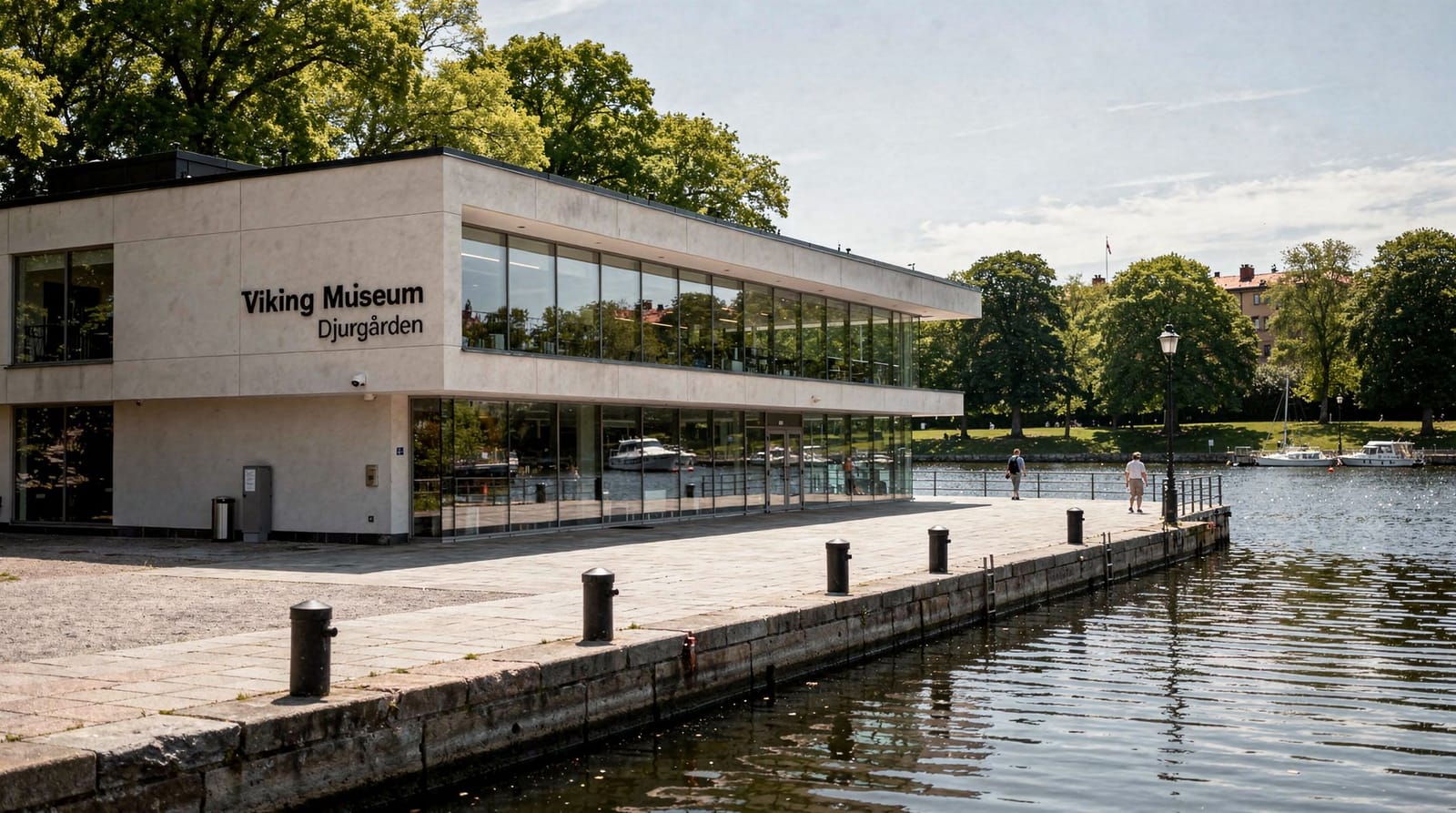
The entertainment-focused museum on Djurgårdsstranden covers the Viking Age through the Ragnfrid Viking Saga motion ride and surrounding exhibition. Better for families and those new to the subject than for serious archaeological interest. The Viking Museum Stockholm guide covers this in detail.
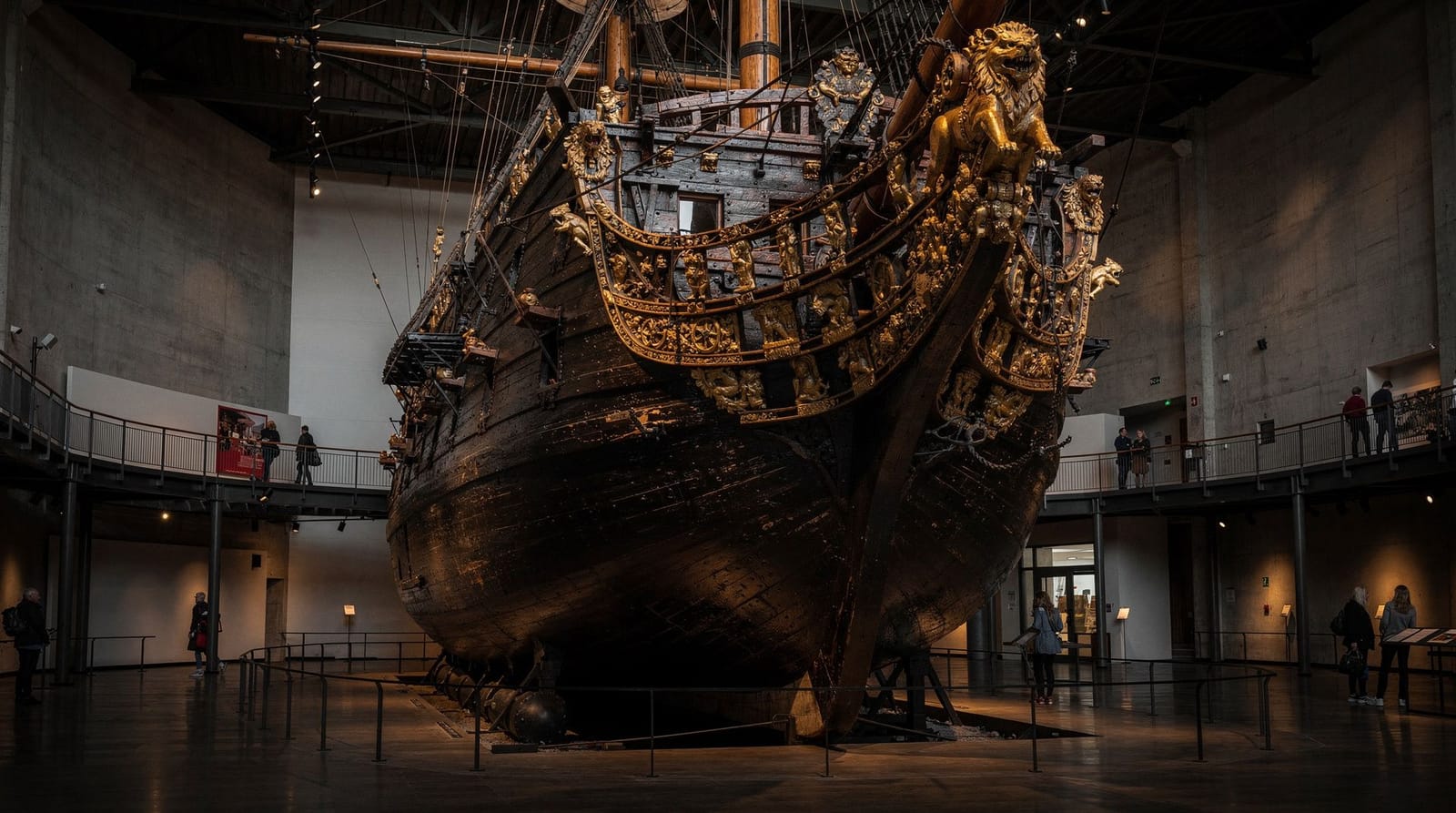
Book Viking Museum exhibition and Viking Ride ticketsA useful combined ticket for a Viking-history-plus-Vasa day is the guided history museum and Vasa Museum combo — it pairs the Gold Room’s genuine Norse artefacts with the 17th-century warship, back to back.
Book the Swedish History Museum and Vasa Museum combo tourRunestones at the Swedish History Museum
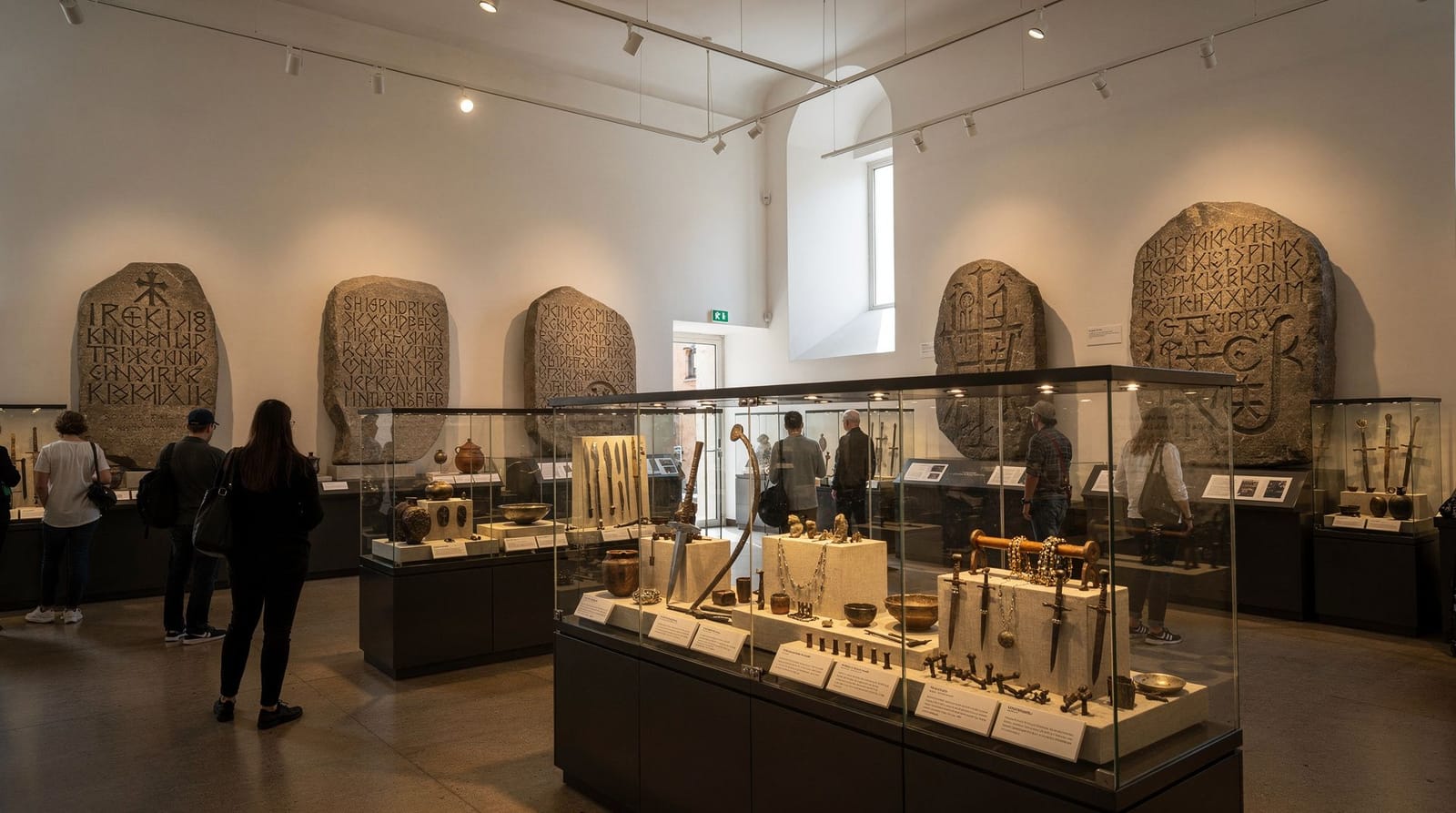
The History Museum holds several significant runestones, including stones moved from their original locations for preservation. Runestones — standing stones carved with runic inscriptions, typically memorialising the dead — are Sweden’s most abundant form of Viking Age textual record. The inscriptions are typically brief (name of deceased, who commissioned the stone, occasionally circumstances of death), but collectively they constitute a remarkable social documentary of the 11th century.
Birka: the UNESCO trading town
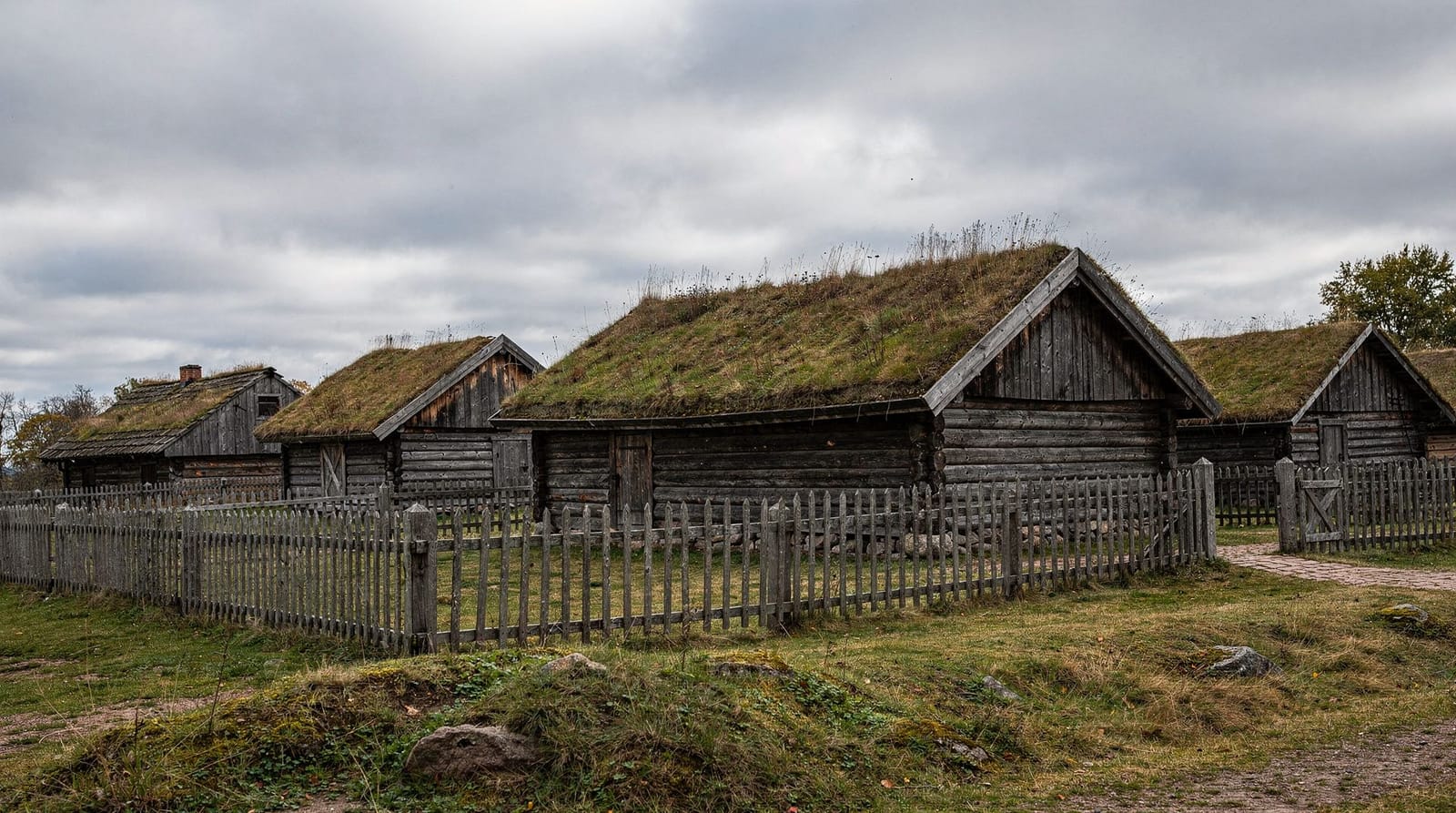
Birka on Björkö island is the most important single Viking Age site accessible from Stockholm — a UNESCO World Heritage site representing the physical remnant of the Norse world’s principal trading emporium for 225 years. The 2-hour boat journey from Stockholm is required; the archaeological site, Birka Museum, and guided tour together constitute the most substantive Viking heritage experience in the region.
The Birka Viking village guide covers the full logistics, what to see, and the archaeological significance in detail. The separate Birka Viking day trip guide is the better read if you mainly want to plan the day itself, and the Birka destination page gives a shorter overview of the island. For a first-person verdict, the blog post Birka Viking day trip: was it worth it is an honest account from a visitor.
Because the crossing is by boat, it also helps to understand how the lake and archipelago ferries are organised; the Strömma vs Waxholmsbolaget comparison explains the two main operators, even though Birka itself is usually reached on a dedicated excursion.
Book the Birka Viking island boat trip from StockholmGamla Uppsala: the royal burial mounds
Gamla Uppsala (Old Uppsala) is 70 kilometres north of Stockholm by commuter train — accessible in approximately 1 hour from Stockholm Central. It was the most significant sacred site in pagan Scandinavia: the location of the great temple described by the medieval chronicler Adam of Bremen (c. 1070 CE) as housing golden idols of Odin, Thor, and Freyr, with blood sacrifices of humans and animals performed on a 9-year cycle.
The burial mounds: Three enormous royal burial mounds rise above the flat Uppsala plain — the largest (Kungshögen, the King’s Mound) is approximately 300 metres in circumference and 9 metres high. Archaeological investigation has dated the mounds to the 5th–6th centuries — slightly earlier than the Viking Age proper, representing the Migration Period Svear kings who preceded the Viking Age Norse royal dynasties. The mounds are open to approach; you can walk around and over them.
The Gamla Uppsala Museum: The small museum at the site holds finds from the burial mound excavations and explains the site’s religious and political significance. The gold and jewellery recovered from the mounds are extraordinary examples of Migration Period Scandinavian metalwork.
Gamla Uppsala Church: A medieval church built partially from the stones of the pagan temple after Sweden’s Christianisation. The church contains Viking Age runestones incorporated into its walls.
Getting there: Commuter train (pendeltåg) from Stockholm Central to Uppsala (~45 min), then local bus 2 to Gamla Uppsala (15 min). Alternatively, the Uppsala day trip guide combines Gamla Uppsala with Uppsala Cathedral and the university town; the Uppsala destination page gives the wider picture of the town itself.
Stockholm: full-day Viking culture tour to Uppsala and surroundingsSigtuna: Sweden’s first Christian town
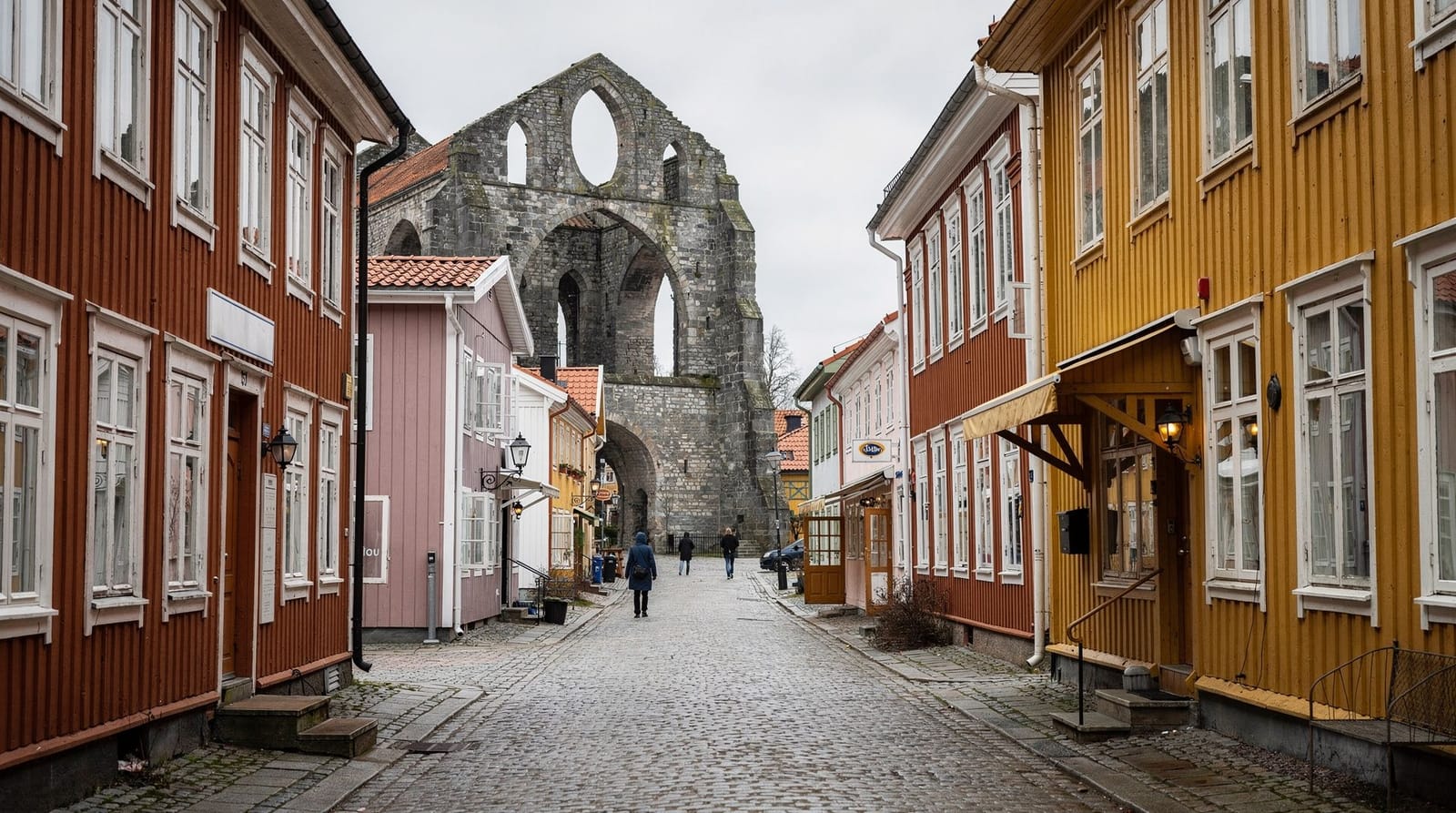
Sigtuna, 50 kilometres north of Stockholm (40 minutes by commuter train from Stockholm Central to Märsta, then bus 570), was founded around 980 CE — making it Sweden’s oldest surviving town. It was established precisely as Birka was declining and served as the successor trading centre, now within a Christian framework rather than the pagan structure of Birka.
What to see:
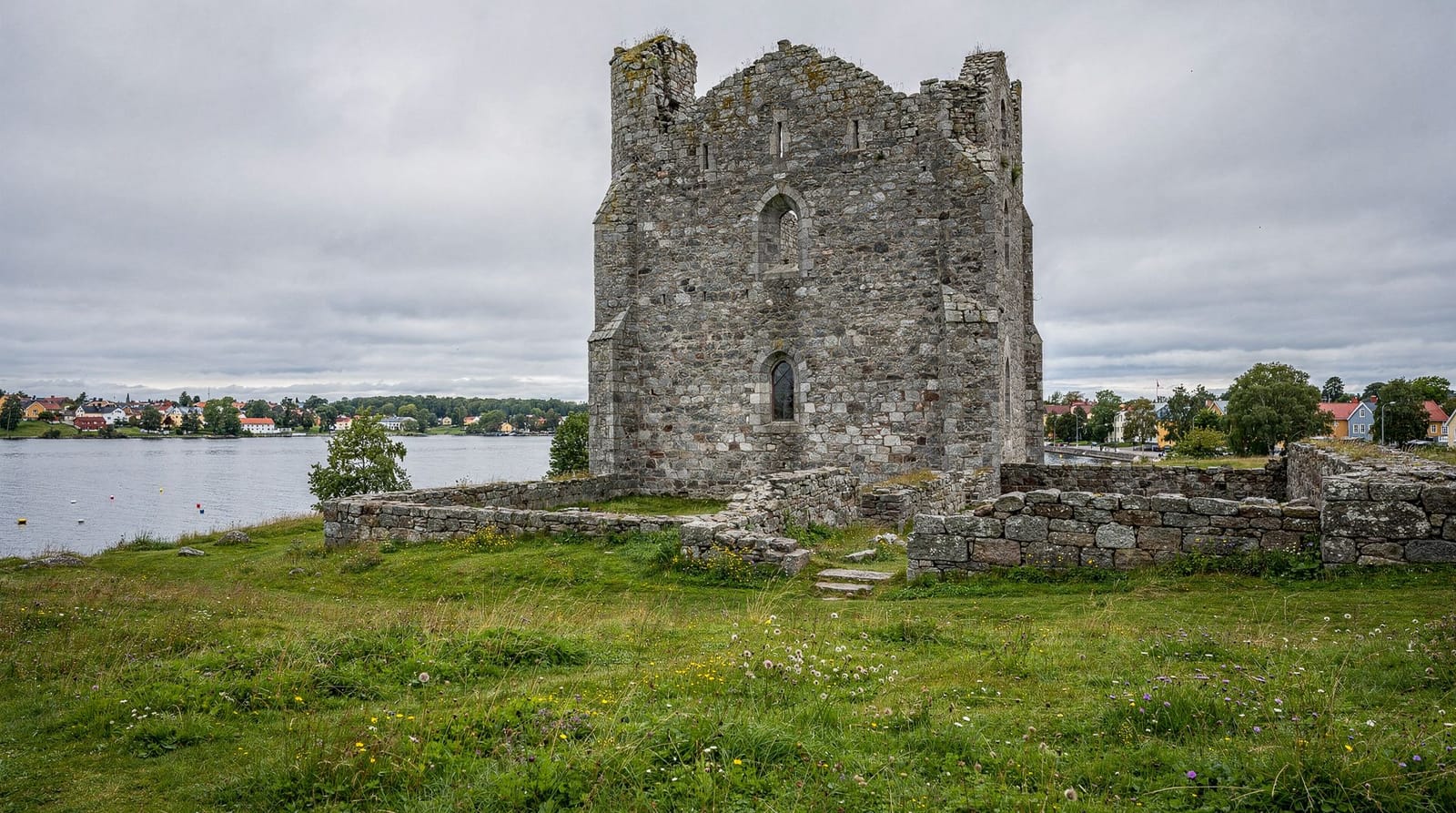
- Medieval ruins: Three ruined 11th–12th century churches — St Olof’s, St Lars’s, and St Per’s — whose stone towers still stand above the town. These are the oldest preserved stone buildings in Sweden.
- Sigtuna Museum: Viking Age finds from local excavations, including trade goods, jewellery, and the material evidence of Sigtuna’s commercial function.
- Runestones: Several runestones remain in situ around Sigtuna, including stones in the ruins of St Lars’s church. The Sigtuna runestone corpus is one of the densest in Sweden.
- Sigtuna town: The main street (Stora gatan) is the oldest surviving planned street in Sweden — still following the Viking Age layout. The small wooden houses and scale give the town a genuine historical atmosphere.
For the practical side of getting there and what to do once you arrive, see the Sigtuna day trip guide and the Sigtuna destination page. If you plan to do Sigtuna and Uppsala on separate days, the guide to day trips by train helps you compare the rail options side by side.
The Ingvar runestones, Täby
A specific cluster of runestones near Täby, north of Stockholm, commemorates a disastrous 11th-century expedition to the east — the Ingvar the Far-Travelled expedition of approximately 1036–1042 CE. More than 25 runestones across the Mälaren region are believed to commemorate men who died on this journey, which reached as far as Georgia or Azerbaijan. The Täby cluster (at Täby kyrka and Nibble) is the most accessible; the inscriptions name expedition members and their relationships.
These stones are not major museum sites but they represent something specific: the private grief of Viking Age families, recorded in stone, commemorating ordinary men killed far from home. The runic formulae (“He died in the East”) contain worlds.
Vreta and the Viking Age in the western Mälaren valley
The western shores of Lake Mälaren contain scattered Viking Age sites — burial fields at Adelsö island (near Birka), the monastery at Vreta with its Norse-age context, and the agricultural landscape that supported the Birka trading town. These sites are primarily of interest to specialist visitors; guided archaeology tours occasionally cover them.
Comparing the four main sites
| Site | Travel time | Cost | Best for |
|---|---|---|---|
| Swedish History Museum | In city (Östermalm) | 180 SEK (free up to 18) | Genuine artefacts, the Gold Room |
| Viking Museum, Djurgården | In city | ~230 SEK | Families, quick introduction |
| Birka | 2h boat each way | 350–450 SEK | The single most substantive site |
| Gamla Uppsala + Sigtuna | 1h train / 40min train | 100–160 SEK | Landscape, burial mounds, runestones in situ |
None of these sites replace the others — they answer different questions. The History Museum shows you the objects; Birka shows you the place where many of them were found; Gamla Uppsala and Sigtuna show you how the Viking Age landscape looked and how it evolved into Christian Sweden.
Practical mistakes to avoid
Planning a comprehensive Viking heritage itinerary
2 days focused on Viking heritage:
Day 1:
- Morning: Swedish History Museum, Östermalm — Gold Room (1.5 hours).
- Afternoon: Viking Museum on Djurgården (1.5 hours), walk the Djurgårdsstranden waterfront.
Day 2:
- Full day: Birka boat trip (depart 10:00, return ~17:00) — the primary archaeological site.
3 days, extended:
- Day 1: Swedish History Museum + Viking Museum.
- Day 2: Birka.
- Day 3: Uppsala (Gamla Uppsala burial mounds + Uppsala Cathedral, which contains the relics of St Eric, the Viking Age king of Sweden) or Sigtuna (Viking Age town + runestones).
Runestones in Stockholm’s urban environment
Scattered through greater Stockholm are runestones in situ — not in museums but in their original landscape settings. Several are in Gamla Stan (including one in the wall of the German Church at Stortorget; the Gamla Stan medieval secrets guide is a good companion for that walk); others are in parks and churchyards around the suburban municipalities. The Stockholm County Museum (Stockholms läns museum) maintains a database of regional runestone locations for those who want to find them.
The warrior woman: a note on living archaeological history
The 2017 publication of DNA results from Birka’s warrior grave (Bj 581) — revealing the skeleton to be genetically female despite burial with full warrior’s equipment — generated international discussion that extended well beyond academic archaeology. The discovery did not prove that Viking Age women regularly served as warriors; it proved that at least one individual did, and that archaeologists’ assumption of gender based on grave goods was methodologically flawed.
This matters for a guide to Stockholm’s Viking heritage because the discovery came from a site you can visit. Birka’s warrior woman is not a hypothetical; she is a specific person buried at a specific point on Björkö island that you can stand on. The Swedish History Museum holds some of the grave goods; the Birka Museum holds others. The story is told with care and accuracy at both institutions.
Frequently asked questions about Viking heritage near Stockholm
Gamla Uppsala in detail: the most sacred site in pagan Sweden
Gamla Uppsala deserves more than a footnote in any Viking Age guide to the Stockholm region. The site 70 kilometres north of Stockholm was the most significant religious and royal centre in pre-Christian Sweden — what the 11th-century German chronicler Adam of Bremen described as a great pagan temple with golden idols of Odin, Thor, and Freyr, surrounded by a sacred grove in which human and animal sacrifices were hung from the trees at a great 9-year festival.
Adam of Bremen’s account (written approximately 1070 CE, when the site was still active or recently active) is the most detailed description of Scandinavian paganism by an outside observer. His account is not disinterested — he was a Christian cleric describing a heathen practice with the intent of condemning it — but archaeologists have found enough supporting physical evidence at the site to take the description seriously as a historical document.
The burial mounds: The three great mounds at Gamla Uppsala are royal graves from the Migration Period (5th–6th centuries) — slightly earlier than the Viking Age proper, representing the earliest Swedish kings known by name. The mounds are enormous: the largest (Kungshögen) is over 9 metres high and 300 metres in circumference. Inside, excavations have found cremated remains, weapons, horses, and the kind of grave goods appropriate to the most powerful rulers of pre-Viking Sweden.
The temple location: Archaeological investigation of the site immediately behind the medieval church has found evidence of the large central wooden building described by Adam of Bremen. The building’s post-holes and surrounding structures are consistent with a major cult site.
The Christian overlay: Uppsala’s medieval church was built on and from the pagan site — the church’s stones include carved elements from the destroyed temple. This deliberate appropriation of a sacred site was a standard Christian conversion strategy: building a church on the most sacred pagan location transfers the site’s power rather than abandoning it. Walking through the church grounds at Gamla Uppsala involves walking on literally the most sacred ground in pre-Christian Sweden.
Sigtuna in detail: the Viking Age town that survived
Sigtuna was founded approximately 980 CE — as Birka was declining, probably due to changing water levels making its harbour unnavigable, the trading town function moved to the mainland at Sigtuna. The town was Sweden’s first Christian town (Birka had been converted to Christianity in 829 CE but reverted to paganism; Sigtuna was founded explicitly as a Christian settlement by the first Christian Swedish king, Olof Skötkonung).
The town is remarkable for its continuity. The street plan of Sigtuna today follows the Viking Age layout — Stora gatan, the main street, runs along the same line as the 10th-century market street. Houses have been built and rebuilt on the same plots for a thousand years. This continuity makes Sigtuna more physically legible as a Viking Age town than Birka, which exists only as archaeology.
The runic inscriptions at Sigtuna: The Sigtuna area has one of the highest concentrations of runestones in Sweden. Several stones remain in situ in the town — including in the ruins of the 11th-century churches — making Sigtuna the most accessible location for seeing runestones in their original landscape context. The Swedish History Museum in Stockholm holds the most important single runestones for academic study; Sigtuna gives them in their natural setting.
The Sigtuna Museum: The local museum holds finds from Sigtuna excavations, including coins from the mint that operated here in the early 11th century. Sigtuna was one of the first places to mint coins in Sweden — an innovation that reflects the town’s role in the monetised economy that replaced the barter-and-silver-weight economy of the Viking Age.
Connecting the sites: a one-week Viking heritage itinerary
For visitors with a week and specific interest in the Viking Age:
Day 1: Swedish History Museum (Historiska museet), Östermalm — Gold Room and Viking Age collections. Nobel Prize Museum optional (for contemporary Swedish achievements as contrast). Evening in Gamla Stan.
Day 2: Viking Museum on Djurgården (morning), Vasa Museum (afternoon — not Viking Age but 17th-century maritime Swedish history, continuous with the seafaring tradition; see the Vasa Museum guide). The Djurgården destination page helps you pair the two stops into one easy day. Evening canal boat tour.
Day 3: Full day Birka (boat from Stadshuskajen 10:00, return 17:00). The most archaeologically important day of the itinerary.
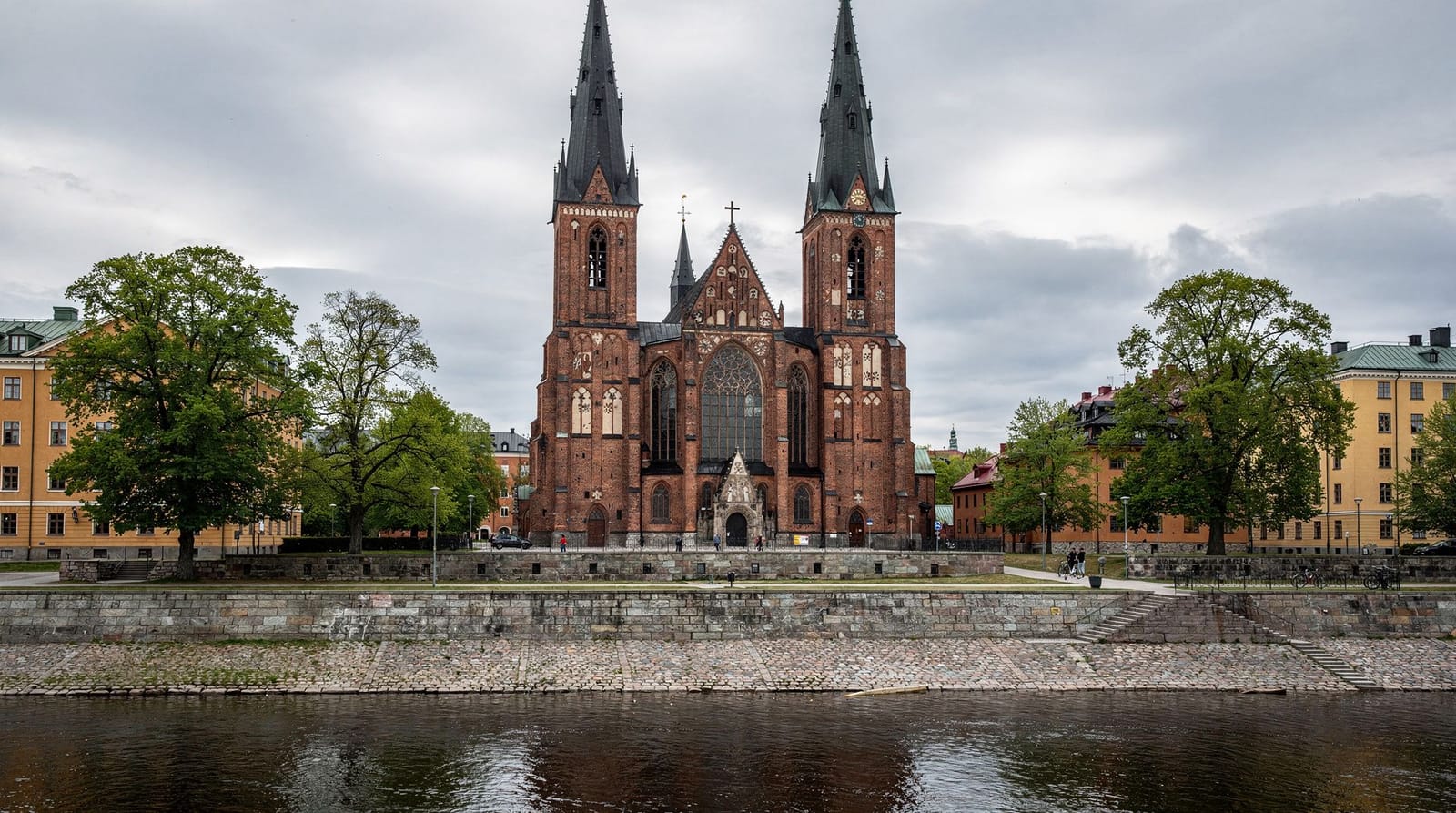
Day 4: Gamla Uppsala + Uppsala. Take commuter train to Uppsala (~45 minutes), local bus to Gamla Uppsala (15 minutes). The burial mounds, the Gamla Uppsala Museum, and the church take 2–3 hours. Return to Uppsala for Uppsala Cathedral (Sweden’s largest cathedral, containing the tombs of multiple Swedish kings including Gustav Vasa) and the university town. Return to Stockholm.
Day 5: Sigtuna. Commuter train to Märsta (~40 minutes from Stockholm), bus 570 to Sigtuna (15 minutes). The town, museum, ruined churches, and runestones take 3–4 hours. Return to Stockholm in time for dinner.
Day 6–7: Flexible — Gripsholm (for the National Portrait Collection connecting medieval to modern Swedish history), or the archipelago (for Allemansrätten and the landscape that Viking Age Norse navigated; the Stockholm archipelago complete guide is the place to start), or simply time in Stockholm’s other museums. The Gripsholm Castle guide covers the castle option in more detail.
Can you visit all the major Viking sites in one trip to Stockholm?
Yes, with 4–5 days. The city museums (Swedish History Museum + Viking Museum on Djurgården) cover the first day or two. Birka requires one full day. Gamla Uppsala and Sigtuna can be combined in one day by public transport (Uppsala first, Sigtuna on the return — the trains align reasonably well). A 5-day Viking-focused Stockholm trip would cover all the major sites.
Are the Viking heritage sites accessible without a car?
All the sites described above are accessible by public transport from Stockholm:
- Birka: guided boat from central Stockholm (included in tour price).
- Gamla Uppsala: commuter train to Uppsala + local bus.
- Sigtuna: commuter train to Märsta + regional bus.
- Swedish History Museum and Viking Museum: tram/bus from central Stockholm.
Where can you buy genuine Viking Age artefact replicas?
The Swedish History Museum shop sells high-quality reproductions of artefacts from the collection — jewellery, brooches, and ornamental objects based on actual Viking Age pieces from Swedish excavations. These are accurate reproductions made by licensed craftspeople and are among the better Viking-related souvenirs available in Stockholm. Avoid the Viking knick-knacks in Gamla Stan tourist shops, which bear no relationship to actual Norse material culture.
A note on Viking-themed restaurants
Several restaurants in Gamla Stan market themselves with Viking branding — longship décor, mead served in horns, staff in approximated period dress. They can be a fun evening but they are not historical sites and the food is modern Scandinavian cooking rather than anything Viking Age Norse people actually ate. If genuine Viking history is the goal rather than themed dinner theatre, the sites in this guide — not the restaurants — are where to spend the time. See the Viking restaurants honest guide for the full picture, including where to eat traditional Swedish food instead.
Top experiences
Bookable activities with verified prices and instant confirmation on GetYourGuide.