Stockholm in January — the locals-only experience
We arrived at Arlanda on January 7th, two days after Trettondedag jul (Epiphany, a Swedish public holiday), when the Christmas decorations were mostly down and the city had a post-celebration quietness that wasn’t quite melancholy. The airport was calm. The pendeltåg to T-Centralen was a third full.
Stockholm in January is not something the tourist industry markets heavily. This is, we think, a mistake — both editorially (January has genuine things to offer) and practically (the city is considerably more pleasant with fewer visitors). Here’s what you find.
| Daylight | Around 6.5 hours; usable outdoor light roughly 10 AM–2:30 PM |
| Temperature | -2°C to -5°C typically, colder with Baltic wind |
| Hotel prices | Lowest of the year — often 700-900 SEK for rooms that cost 2,000+ SEK in July |
| Crowds | Lowest of the year at every major museum |
| Best for | Museums, fika culture, natural ice skating (weather-dependent) |
The light at this latitude
Six and a half hours of daylight in early January. The sun, when it appears, stays low — it rises in the southeast and sets in the southwest, barely clearing the horizon, so that even noon light has the quality of a perpetual golden hour. Shadows are long all day.
This is alternately depressing and extraordinarily photogenic, depending on your mood and expectations. Walk along Södermalm’s heights above the city at 2 PM and the view across to Gamla Stan and the City Hall in that low amber light is one of the better Stockholm photographs available in any season.
The practical implication: plan your outdoor walking and photography for 10 AM to 2:30 PM. Everything after 3 PM is in an increasing dark.
What’s actually open and uncrowded
Every museum is fully operational and uncrowded. January is when Stockholm’s museum staff are most willing to talk to you, when the Vasa Museum has room to actually look at the ship rather than peer between other visitors, when the ABBA Museum doesn’t require weeks of advance booking.
Restaurants are available. The same restaurants that require two-week advance booking in July are booking-on-the-day in January. This matters for the better places.
The hotel price. A hotel that costs 200 USD/night in July averages 75-90 USD in January. Quality is the same; the price difference is pure demand economics.
What Stockholm locals actually do in January
Yoga and gym. After the holiday excess, January is when Stockholmers commit to physical regimes. The city’s indoor swimming pools and gym culture are more accessible than summer.
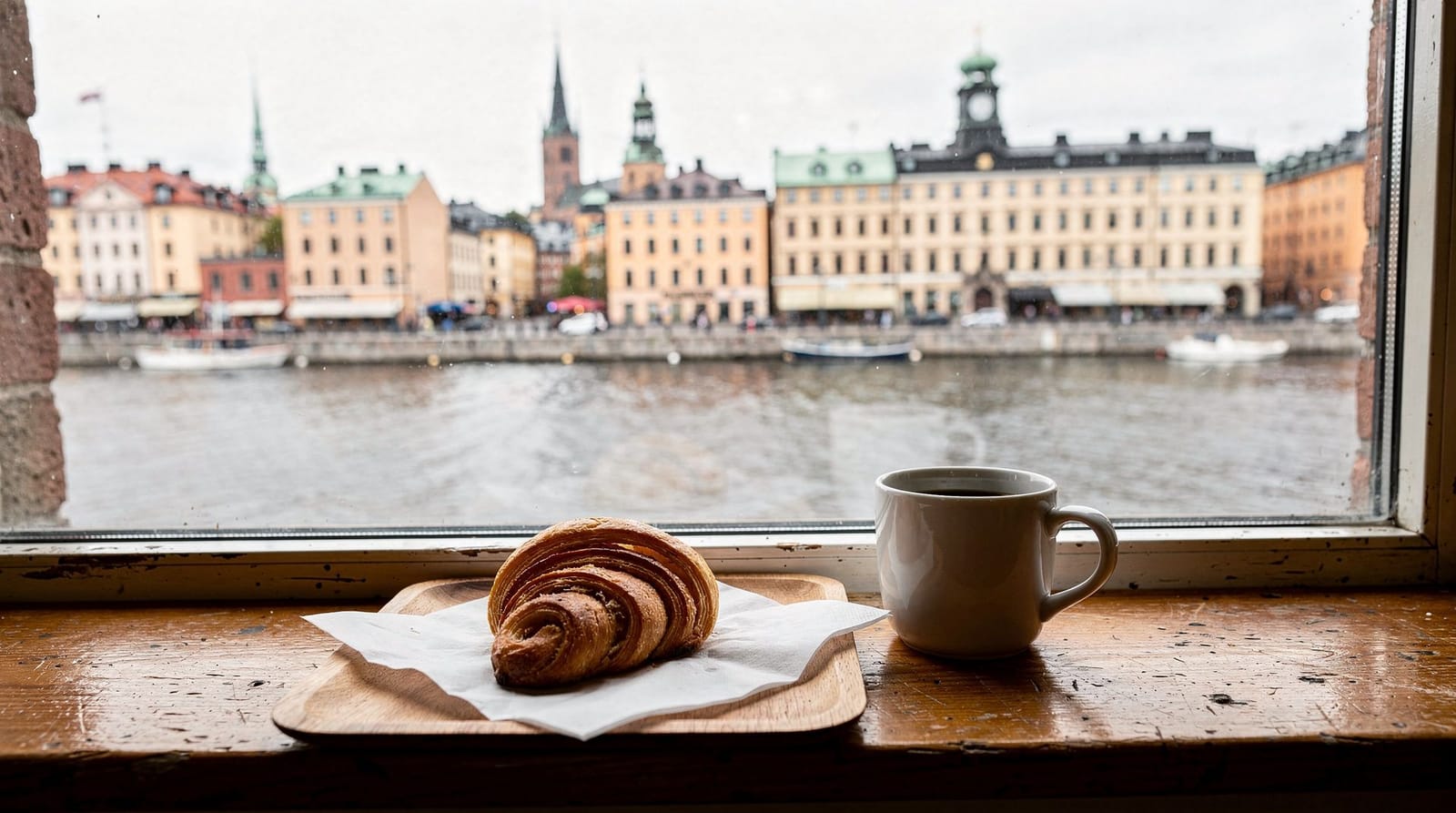
Long fika sessions. The January fika runs longer than the summer version because there’s no pressure to go anywhere in the dark. The neighbourhood cafés are warm and busy with regulars. This is the best month to see fika as it actually functions rather than as a tourist activity.
Winter sports. If the temperature holds at -3°C or below, the lakes freeze. When Djurgårdsbroen freezes properly, locals skate on it. The natural ice skating experience — with borrowed skates and no artificial ice surface — is one of the specifically Swedish winter activities that has no warm-weather equivalent.
Inomhus culture. Museums, concerts, cinema. January is culturally active indoors in ways that summer, which spills everyone outside, doesn’t quite replicate.
The specific Stockholm January experiences
Ice skating on natural ice: Dependent on temperature cooperation, but when it happens — Djurgårdsbroen, some parks, the lake outskirts — it’s remarkable. Check the Stockholm ice skating conditions report (skridskopojkarna.se has current conditions).
Fotografiska at night: Open until 11 PM most nights, and the top-floor café looking out over a dark January Stockholm, with the city lights on the water and the warm interior — this is one of our favourite Stockholm experiences in any season.
The T-bana without crowds: Riding the blue line for the art stations in January means often being nearly alone in Kungsträdgården station. The scale of the art registers differently without the summer throng.
Södermalm in the evening. The bars and restaurants of Södermalm in January are doing what they were designed for: warm interiors, local clientele, good food, no competition for tables. SoFo (the area south of Folkungagatan) has excellent small restaurants that are particularly good in winter.
The honest January negatives
The dark. Six hours isn’t much. If you need long days to function well, January in Stockholm will challenge you.
Some archipelago ferries run reduced schedules. Vaxholm is accessible year-round. The outer islands run winter service, but it’s sparse. Plan accordingly.
The cold is real. -5°C with a Baltic wind is not decorative. Dress seriously: proper winter coat, hat, gloves, warm boots.
Post-Christmas energy. The city is quiet in a way that can tip from “peaceful” to “empty” depending on your expectations. January is not festive Stockholm.
Stockholm guided natural ice skating with lunchOur winter activities guide covers ice skating, sauna and winter kayaking in detail. Full seasonal advice in the Stockholm seasonal guide.
The museums in their proper state
Stockholm’s major museums are designed for winter. The Vasa Museum, Fotografiska, Nordiska Museet — all of them are indoor experiences built around objects that don’t interact with daylight or weather. In July, you’re sharing them with the 800 other people who had the same morning. In January, you’re often sharing them with about eighty.
The specific January museum experience:
At the Vasa Museum in January, you can stand in front of the ship — the full 69-metre warship — and be essentially alone with it for ten minutes. In July, this doesn’t happen. The emotional quality of the encounter is different when you’re not managing your position in a crowd.
At Fotografiska, the top-floor café in January has tables available at any time of day. The view of the dark water and lit city through the floor-to-ceiling windows, with a coffee and the late afternoon light — this is why the building exists.
At Nordiska Museet, the main hall with Carl Milles’s Vasa statue in the centre of a cavernous painted ceiling is a January experience that asks you to stand still and look up without being jostled.
How Swedes spend January
Observing what Stockholm’s residents actually do in January is its own kind of tourism. A few patterns:
The January gym phenomenon. Every major gym in Stockholm is full in January in a way that no other month replicates. This is the Swedish version of the New Year resolution, played out in a culture that genuinely values physical activity.
Extended indoor socialising. Swedish winter social life concentrates in domestic space. Dinner parties and home gatherings run long because nobody is going outside for a walk after. The city’s restaurant culture in January is full of long, slow dinners.
Serious coffee. Winter fika is longer, hotter, and more necessary than its summer version. The neighbourhood cafés in Södermalm and Vasastan in January at 3 PM — already dark outside, warm inside, the steam on the windows — are worth an hour of nothing particular.
Film and culture. Stockholm’s winter cultural programme is active. Check the Kulturhuset Stadsteatern calendar, the Film Institute’s screenings (often in English), and the Konserthuset programme for the Royal Philharmonic’s season.
What the city looks like in January light
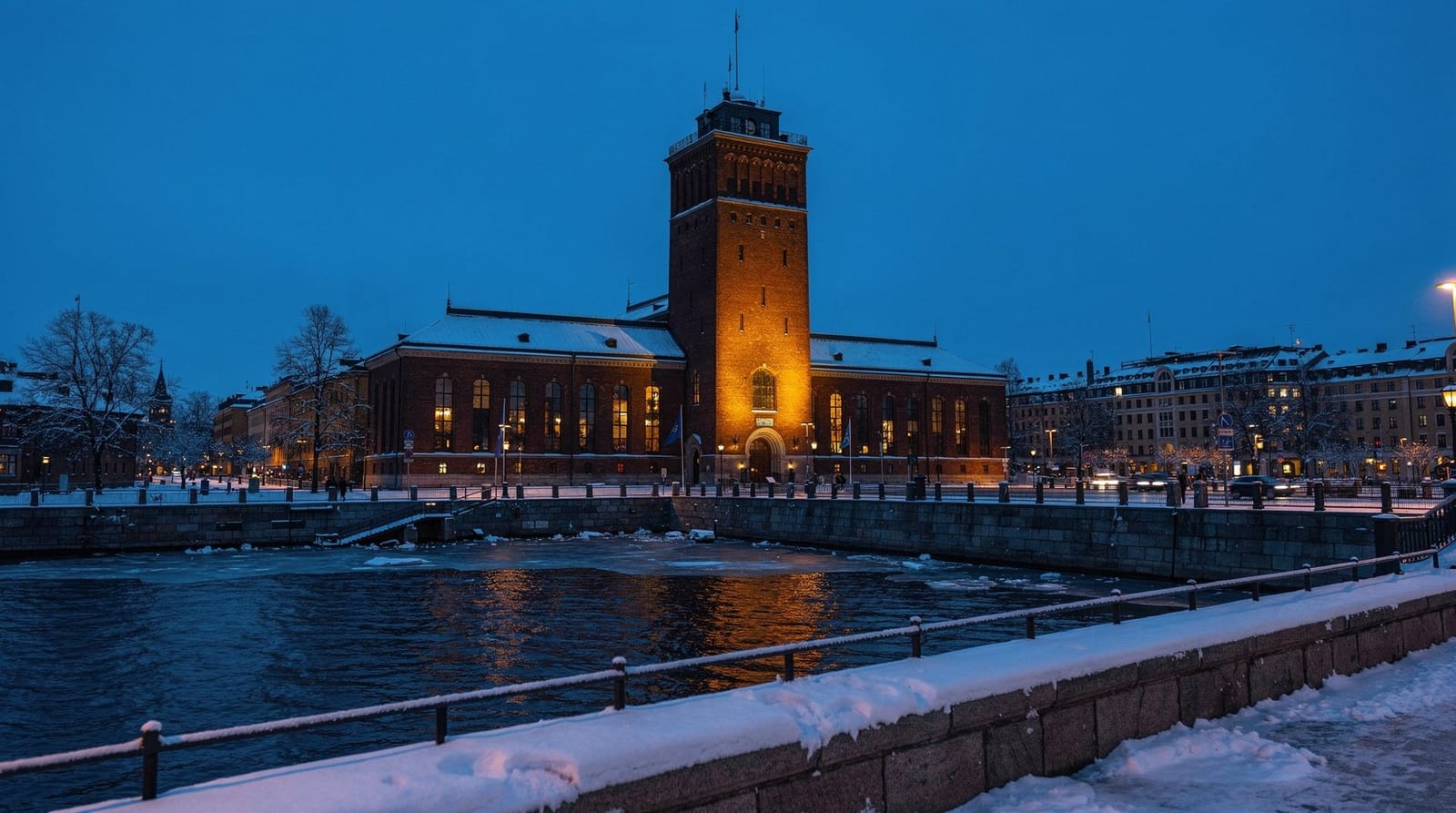
There’s a specific Stockholm light in January that doesn’t exist in any other month. Between 11 AM and 1 PM, on a clear day, the sun is low enough to hit building facades at angles that summer light never reaches. The red brick of the City Hall from the Södermalm heights at 12:30 PM in January is a different colour than it is at 12:30 PM in June.
The contrast between this horizontal light and the dark water is what makes winter Stockholm photogenic in a way that’s entirely different from its summer self. Bring a camera and plan your outdoor time around the two-hour window of decent light.
The hotel price advantage
January hotel prices are worth emphasising because they’re dramatically lower than any other season. The same rooms that cost 2,000-2,500 SEK per night in July (at mid-range properties near the centre) run 700-900 SEK in January. This difference allows an upgrade to a room with a view or a waterfront property that would be inaccessible in summer.
The Stadshuset area hotels, Södermalm waterfront properties, and several Gamla Stan boutique options are all significantly more accessible in January. A room overlooking the water at a property that would be fully booked six months in advance for summer can be booked a week ahead in January.
The museum-by-museum January case
Beyond the general point that January museums are uncrowded, each has a specific character worth knowing before you go. The Vasa Museum rewards patience most: standing close to the ship without a crowd changes the encounter entirely. Fotografiska is worth building an evening around, since it stays open late and January’s dark arrives early enough that the top-floor café view is at its best by mid-afternoon. Nordiska Museet rounds out a three-museum January day if you have the stamina, particularly for the Carl Milles statue under the painted ceiling.
Södermalm evenings in January
SoFo and the wider Södermalm restaurant scene come into their own once the tourist season ends. Our Södermalm food scene guide covers the neighbourhood’s best small restaurants, most of which are far easier to get a table at in January than in July. If a longer evening out is the plan, the Södermalm bar scene guide covers where locals actually drink once the tourist crowd has thinned, which in January is essentially everywhere.
Ice conditions and checking before you go
Natural ice skating is the single most weather-dependent item on this list — it doesn’t happen every January, only when temperatures hold cold enough for long enough. Check current conditions before planning around it; our ice skating guide explains where to look and what “safe ice” actually means on open lake surfaces, since this isn’t a rink with staff checking thickness.
Stockholm introductory ice skating experienceFrequently asked questions about January in Stockholm
Is Stockholm cold and miserable in January?
Cold: yes, typically -2°C to -5°C. Miserable: dependent on your relationship to cold weather and darkness. The darkness is real (6.5 hours of daylight). If you dress for it and plan around the light, the cold isn’t a problem — the city is very well adapted to winter.
What are the practical challenges of visiting in January?
Fewer archipelago ferry departures. Some outdoor attractions with reduced hours. The dark window for outdoor photography is narrow. Otherwise, the city functions fully.
Are restaurants open in January?
Yes, fully. January is not a holiday period in Sweden after January 6th (Epiphany). Restaurants are open normal hours and more likely to have walk-in availability than any other month.
Is January better or worse than December for a Stockholm visit?
Different, not strictly better or worse — December has Christmas markets and Lucia but higher prices; January has the lowest prices, quietest museums and the most authentic look at local life, at the cost of festive atmosphere. See our December vs January comparison for the fuller tradeoff.
Is natural ice skating guaranteed in January?
No. It depends on sustained cold temperatures, and some winters don’t produce reliable natural ice at all. Check local conditions reports before planning a day around it, and treat it as a bonus rather than a certainty.