Swedish History Museum guide: Vikings, gold, and 10,000 years of history
Stockholm: Swedish History Museum + Vasa Museum tour with tickets
How much does the Swedish History Museum cost in Stockholm?
Entry to the Swedish History Museum (Historiska museet) is 180 SEK for adults, and free for visitors under 19. The ticket covers the whole museum including the Gold Room, which holds one of the world's finest collections of prehistoric and Viking Age gold. Located in Östermalm, open Tuesday through Sunday.
Sweden’s national history collection
The Swedish History Museum — Historiska museet — is one of Stockholm’s most consistently underappreciated resources. It holds the national archaeological and historical collections, covering 10,000 years of Swedish history from the Stone Age through the medieval period. Entry costs 180 SEK for adults and is free for anyone under 19; one ticket covers the whole museum. The headline attraction — the Gold Room — is one of the most extraordinary single-room museum experiences in Scandinavia, holding 52 kilograms of prehistoric and Viking Age gold in a purpose-built underground vault.
The museum sits in Östermalm, a neighbourhood better known for its upmarket food market and residential character than its cultural institutions. The building is a 1940s functionalist structure that does not prepare visitors for what is inside. This understatement is part of the museum’s character: it is not flashy, but the collections are genuinely important.
Practical essentials
| Detail | Information |
|---|---|
| Address | Narvavägen 13–17, Östermalm |
| Opening hours | Tue–Sun 11:00–17:00 (Wed until 20:00); closed Monday |
| Entry (adults 19+) | 180 SEK — covers the whole museum, Gold Room included |
| Under 19 | Free |
| Recommended time | 2–3 hours |
| T-bana | Östermalmstorg (Green line 17/18/19), 5 min walk |
What to see
The Gold Room (Guldrummet)
The centerpiece of the museum. An underground vault, accessed via a spiral staircase, holds 52 kilograms of gold objects spanning 2,500 years of Swedish prehistory and early history. The collection includes:
Prehistoric gold: Jewellery and ritual objects from the Bronze Age (circa 1800–500 BCE) — torques, rings, and collar pieces in the Swedish and Nordic bronze-working tradition. The scale and craftsmanship of the largest pieces is arresting; these are objects made by people whose society left no written records, and the gold is the most eloquent evidence of their existence.
Viking Age gold: The Viking Age section (approximately 793–1066 CE) includes golden collar pieces, pendants, arm rings, and bracteates (thin gold medallions stamped with imagery from Norse mythology). Several pieces in this section are unique — there are no comparable examples elsewhere in the world. The large gold collars from Ödeshög, Vittene, and Färjestaden are the highlights: elaborate multiple-tube collar-necklaces whose precise function — ceremonial, religious, status marker — remains debated.
The Timboholm treasure: One of the largest hoards of Viking Age silver in Sweden, displayed adjacent to the gold collection. Viking Age silver hoards (typically buried for safekeeping and never recovered by their owners) are the primary archaeological evidence for the scale of Norse commercial activity; the Timboholm find gives a concrete sense of the wealth flowing through the region.
The Gold Room is included in the 180 SEK entry ticket — there is no separate ticket for it. Allow at least 45 minutes here.
The Viking Age exhibition (Vikingatidens Sverige)
The permanent Viking Age exhibition covers Swedish Viking history in archaeological depth considerably greater than the Djurgården Viking Museum. The focus is on the evidence — actual excavated objects, burial finds, rune stones (several genuine stones are displayed inside), and the archaeological record of Viking Age towns and settlements. This is the academic counterpart to the Viking Museum’s experiential approach.
Rune stones: Several actual carved rune stones are displayed inside the museum, including memorial stones with runic inscriptions naming specific individuals. Reading a rune stone — even in translation — gives an immediacy to the Viking Age that reconstructed environments cannot replicate.
The Vendel and Valsgärde boat burials: The museum holds significant material from the Vendel and Valsgärde boat burials in Uppsala County — pre-Viking Age (6th–7th century) aristocratic burials where chieftains were interred in boats with elaborate grave goods. The helmets from Vendel, with their intricate bronze ornamentation, are among the most important pre-Viking period artefacts in Scandinavia.
Swedish medieval art: the church collection
One of the museum’s largest sections covers medieval Swedish church art — altarpieces, baptismal fonts, crucifixes, reliquaries, and wooden sculptures removed from churches during the Reformation and preserved by the state. The collection includes hundreds of medieval wooden figures, many with their original painted surfaces intact. The quality range is wide but the best pieces — a 12th-century baptismal font from Gotland, several polychrome crucifixions — are outstanding.
Warning for non-specialists: This section is large and dense. Without prior interest in medieval church art, it can feel overwhelming. Focus on the labelled highlights near the entrance to the section and work outward from there.
The prehistory galleries
Stone Age, Bronze Age, and Iron Age Sweden are covered in a sequence of galleries that takes the visitor from the first humans in Scandinavia after the last ice age through the societies that preceded the Viking Age. The Bronze Age section is particularly strong, with well-preserved metal objects and reconstructed environments.
A suggested two-hour route
For visitors with limited time, this order avoids backtracking and front-loads the highlights:
- Gold Room first (45 min) — go directly down the spiral staircase on arrival, before the mid-morning crowd builds.
- Viking Age exhibition (30 min) — immediately adjacent, covering the archaeological context for much of what you just saw in gold.
- Prehistory galleries (30 min) — Bronze Age and Iron Age Sweden, a natural chronological follow-on.
- Medieval church collection (15–20 min, selective) — focus on the labelled highlights near the entrance rather than attempting the whole section.
This route covers the essential 90% of the museum’s significance in roughly two hours, leaving the deeper church-art galleries for a longer visit if time allows.
Combining with rainy-day planning
The Swedish History Museum is one of the better rainy-day options in Stockholm precisely because it is indoors and rarely crowded — a useful fallback if weather disrupts an archipelago or Djurgården day. See the museum rainy day guide for how it fits alongside other indoor options, and the Stockholm museum pass guide if you are planning to visit several paid museums during the same trip — the History Museum charges its own 180 SEK entry, so check whether the pass covers it before buying.
The museum also works well as one stop in a longer museum-focused itinerary. The Stockholm in 3 days overview shows where an Östermalm morning can fit, and the Östermalm neighbourhood deep dive covers what else is worth doing in the area before or after your visit.
Insider tips
Start with the Gold Room. The underground vault has timed capacity in busy periods. Go directly there when you arrive to ensure you get the best experience; the main exhibitions can be visited after.
Wednesday evenings are quiet. Extended hours until 20:00 on Wednesdays; the museum is significantly less crowded than weekend afternoons.
The museum café is underused. The café in the main building serves simple Swedish lunches at reasonable prices. Not tourist-area pricing — this is a residential Östermalm neighbourhood.
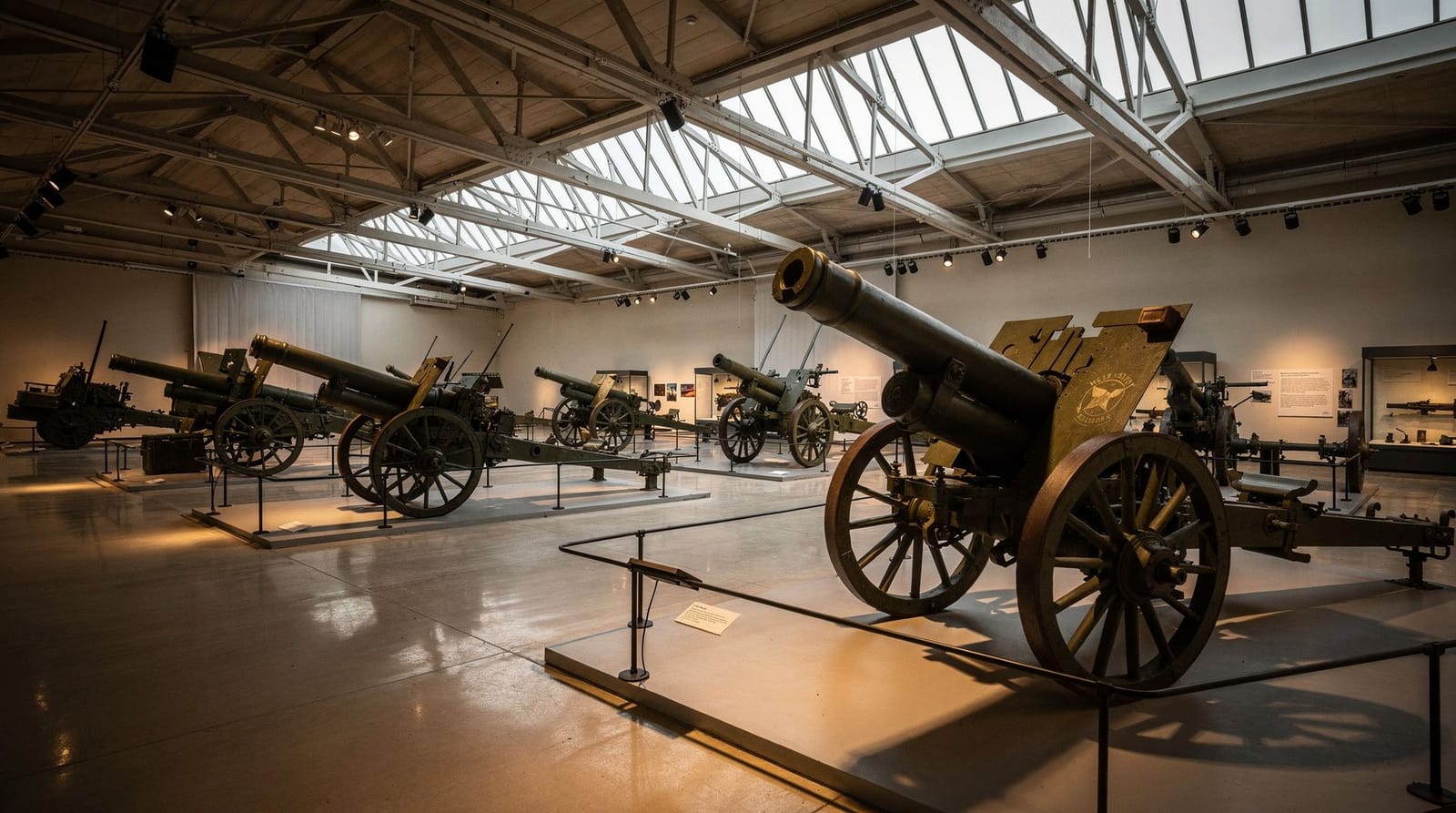
Combine with Army Museum. The Army Museum (Armémuseum) is a 10-minute walk from the History Museum. Together they cover a comprehensive picture of Swedish history through different lenses. See the Army Museum guide.
History of the museum
The museum was founded in 1866 as the national archaeological and historical collections authority for Sweden. The current building on Narvavägen was completed in 1943. The Gold Room was added in its current underground format in 1994 — a purpose-built secure vault designed to display the collection at its proper scale while maintaining the security conditions the objects require.
The collections have grown substantially through ongoing archaeological work; Swedish law requires that significant finds from excavations enter the national collection, meaning the museum receives new material regularly.
Tickets and passes
Entry: 180 SEK for adults, free for under-19s. One ticket covers the whole museum, Gold Room included.
Temporary exhibitions: Check the museum website for current pricing.
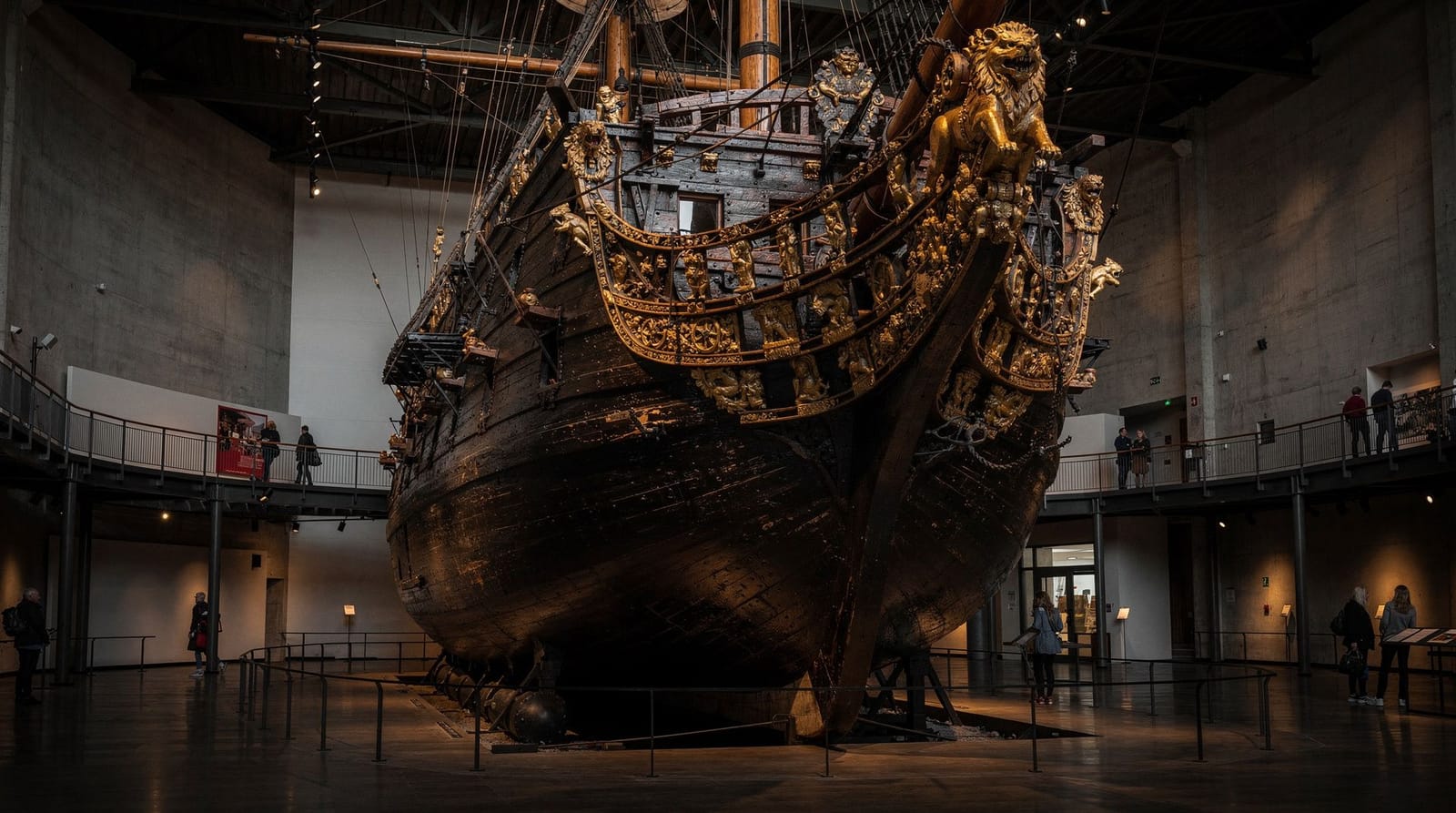
Combo tour: The Swedish History Museum and Vasa Museum tour with tickets is a guided combination that pairs both museums — a good option for visitors with specific interest in Swedish maritime and Viking history who want guided context.
Multi-attraction pass: If your plans include several paid sights, an all-inclusive sightseeing pass covering many Stockholm attractions may be worth comparing against paying at the door; the Stockholm Pass vs Go City vs SL comparison explains how to weigh the options.
Vikings beyond the museum: The collections here make more sense once you have seen the places they came from. The Viking heritage guide to the Stockholm region, the Birka Viking day trip guide and the Uppsala day trip guide are natural follow-ups, and the Vendel and Valsgärde burials mentioned above sit in that same Uppsala landscape.
Other museums to pair with it: For a very different kind of museum day, compare the Vasa Museum guide and the Nordiska museet guide, both of which cover Swedish history from another angle.
Accessibility
The museum has lift access to all floors. The Gold Room spiral staircase has an alternative lift route for wheelchair users. Wheelchair-accessible toilets available. The Östermalm location is accessible by T-bana.
Getting there
T-bana: Östermalmstorg (Green lines 17/18/19). Walk east along Strandvägen for approximately 5 minutes; turn north on Narvavägen.
Bus: Routes 56 and 76 stop near the museum.
On foot from Central Stockholm: About 20 minutes from T-Centralen on foot; a pleasant walk along Strandvägen.
Where to eat nearby
Östermalms Saluhall (Östermalmstorg): One of Stockholm’s best indoor food markets, 10 minutes’ walk from the museum. Excellent traditional Swedish lunch at the market counters — gravad lax, herring plates, open sandwiches.
Restaurant Frantzén (Klara Norra Kyrkogata 26): Further afield but one of Stockholm’s three-Michelin-star restaurants. Worth knowing about for special occasion dinners.
Cafe Saturnus (Eriksbergsgatan 6): Known for serving the largest cinnamon bun in Stockholm — the kafferepet (coffee break) here is genuinely impressive.
Combine with
Army Museum: Ten minutes’ walk west in Östermalm, covering Swedish military history from the Viking Age to the 20th century. See the Army Museum guide.
Viking Museum (Djurgården): For the contrast between academic archaeological collections (this museum) and experiential family-oriented Viking content (the Viking Museum). See the Viking Museum guide.
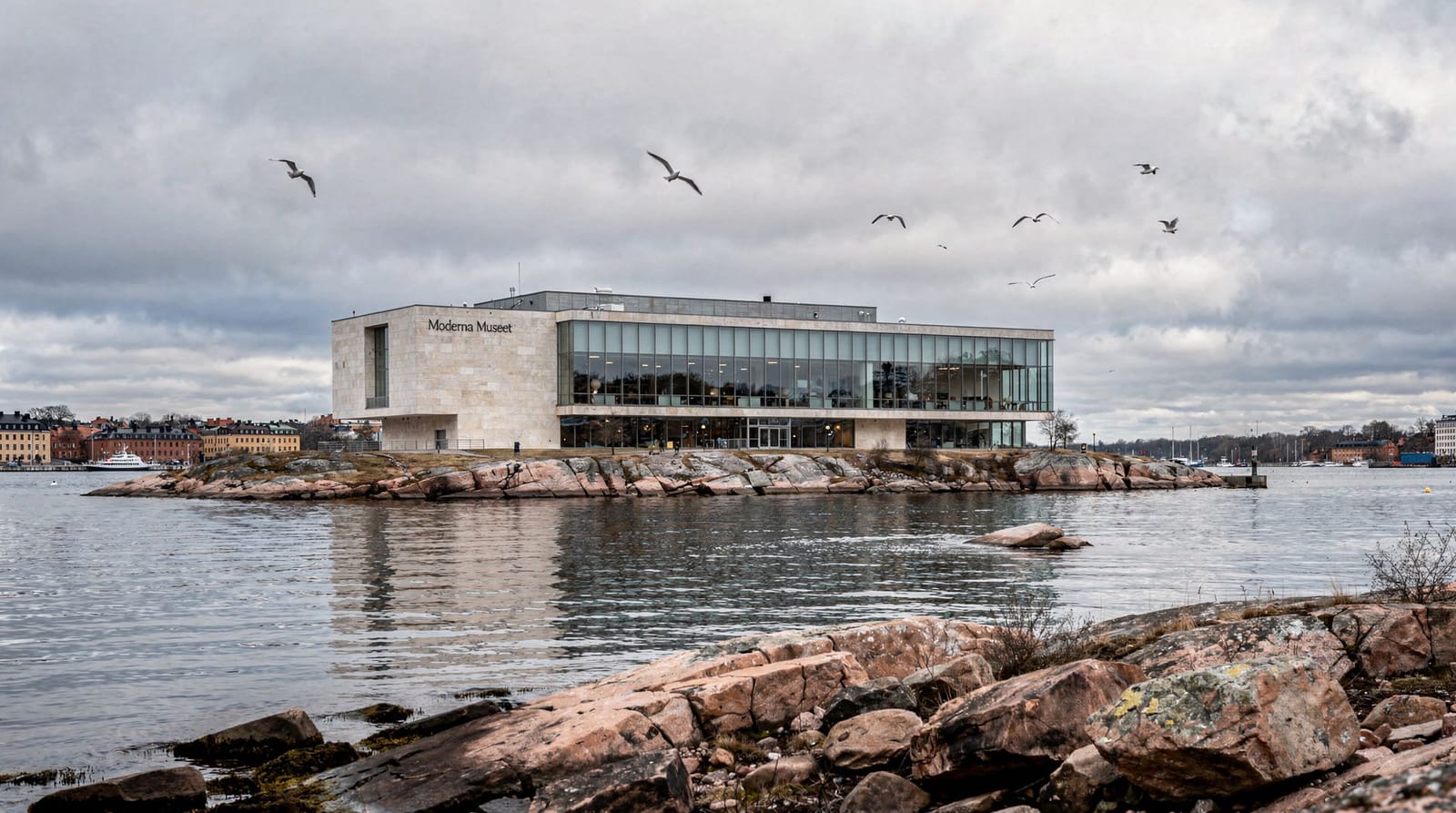
Moderna Museet: A 25-minute walk or short bus ride, covering the 20th century after the History Museum’s medieval period. Admission 170 SEK, free on Fridays 18:00–20:00. See the Moderna Museet guide.
Frequently asked questions about the Swedish History Museum
What is the Gold Room at the Swedish History Museum?
An underground vault displaying 52 kilograms of prehistoric and Viking Age gold — the most important collection of early medieval gold in Sweden and one of the most significant in northern Europe. It includes Viking Age gold collars, Bronze Age jewellery, and Iron Age pendants and coins. Entry to the Gold Room is included in the 180 SEK museum ticket — there is no separate ticket.
How important are the Viking collections compared to the Viking Museum on Djurgården?
The Swedish History Museum holds the primary archaeological collections — actual excavated artefacts from Viking Age sites. The Viking Museum on Djurgården is primarily experiential, with replica objects and a motion-ride attraction. For genuine archaeological material, the History Museum is the more serious destination.
Is the Swedish History Museum good for children?
Entry is free for under-19s, which helps for families. The Viking Age section and Gold Room tend to engage children well. The medieval church art section is less child-friendly. Overall, the museum is suitable for children aged 8 and above who have some interest in history; younger children may find the pace slow compared to Skansen or the Viking Museum.
Are the rune stones at the Swedish History Museum authentic?
Yes. Several of the rune stones displayed inside the museum are genuine carved stones from Swedish archaeological sites, brought inside for preservation reasons. Many original rune stones remain outdoors where they were originally found — notably at Gamla Uppsala — but the indoor examples give close-up access to the inscriptions and ornamental details that is not always possible with outdoor monuments.
Top experiences
Bookable activities with verified prices and instant confirmation on GetYourGuide.