Stockholm tourist traps to avoid: an honest guide for first-timers
Stockholm: Viking Museum exhibition and Viking Ride
What are the biggest tourist traps in Stockholm?
The main traps: restaurants on Västerlånggatan with no posted prices (budget 500–700 SEK when alternatives cost 250–400 SEK nearby), unlicensed taxis from Arlanda (deregulated since 1990), Viking-themed restaurants with theatre prices and average food, 'free' walking tours where EUR 10–20 tip is effectively expected, and overpriced souvenir shops when the same items cost half as much at museum gift shops.
Why honest travel advice matters for Stockholm
Stockholm is not a city that swindles tourists aggressively — there are no shell games on Gamla Stan’s cobblestones, no street vendors selling fake Rolexes on Drottninggatan. The traps here are quieter: pricing that relies on opacity, services that use appealing words (“free”, “Viking”, “authentic”) to obscure what you are actually getting, and a taxi market that was deregulated in 1990 and has never quite fixed the consequences.
This guide covers each of these honestly. The goal is not to make you cynical about Stockholm — it is a genuinely excellent city — but to make sure you spend your money on things you actually chose rather than things you stumbled into.
| Biggest risk category | Pricing opacity, not crime |
| Worst single trap | Unlicensed Arlanda taxis (up to 2,000 SEK vs 500–700 SEK regulated) |
| Cheapest fix | Check for posted prices before sitting down anywhere |
| Season to plan around | Midsummer weekend (most independents close) |
| Daily budget context | See the Stockholm budget per day guide for realistic totals |
The Västerlånggatan restaurant strip
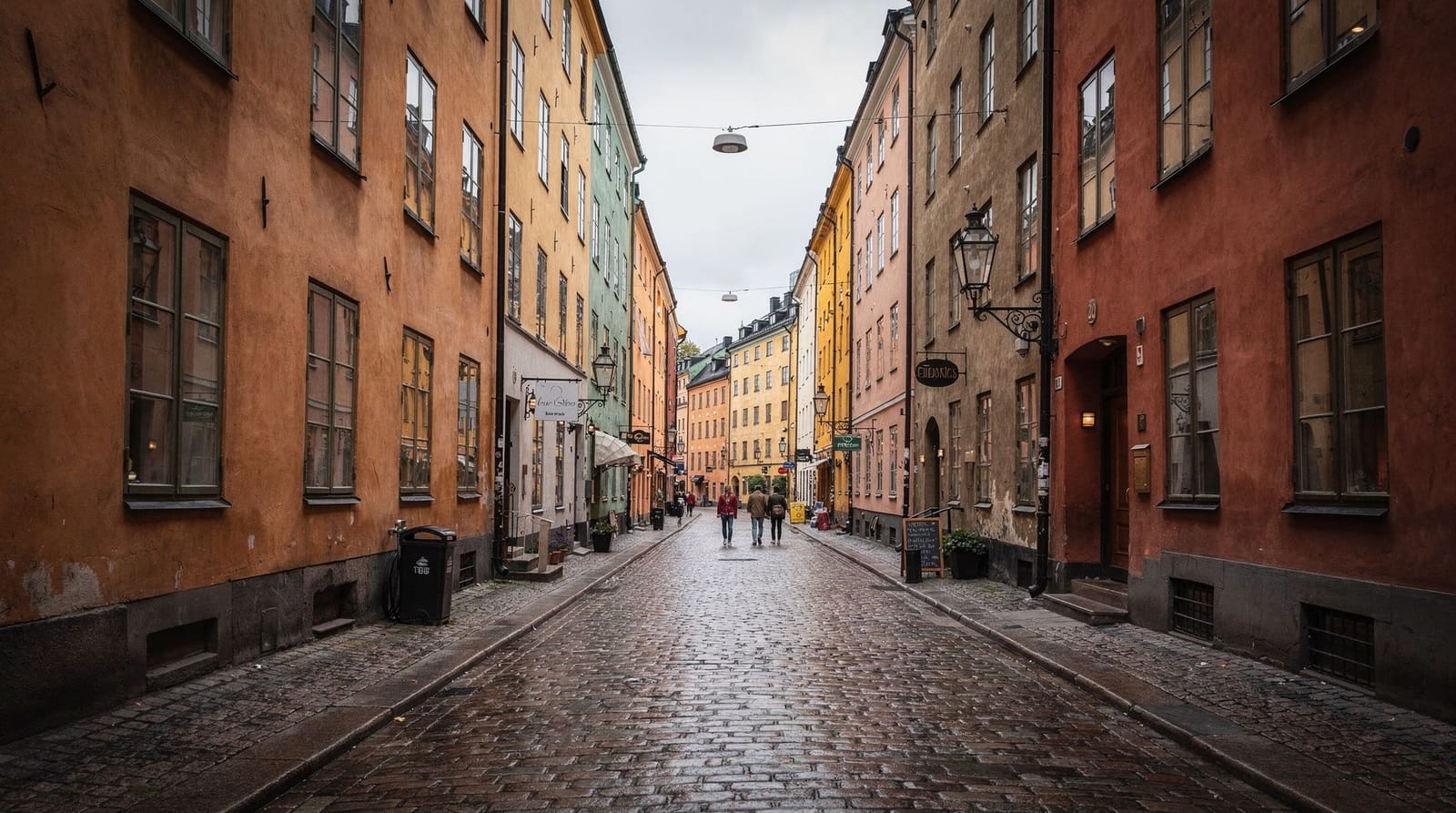
Västerlånggatan is Gamla Stan’s main pedestrian tourist artery: the street that runs the length of the Old Town island from Stortorget down to Järntorget. It is beautiful — medieval cobblestones, ochre-and-red facades, a street level unchanged in broad outline for five centuries — and it is lined with restaurants competing for tourist attention.
The problem is pricing opacity. Many restaurants on Västerlånggatan do not post their prices outside, or post only a sample “starter from 89 SEK” that gives no sense of what a full meal costs. English-only menus are common. The visual codes — “Viking menu”, “traditional Swedish”, faux-runic decorations — suggest a unique experience. What they often deliver is a competent but unremarkable meal at 500–700 SEK per person before drinks.
That is roughly double what a comparable meal costs on Österlånggatan (the parallel street one block east) or at Stortorget’s southern side. Tradition (Österlånggatan 1), Den Gyldene Freden (Österlånggatan 51, open since 1722), and Bistro Ruby (Köpmangatan) all serve excellent Swedish food at 250–400 SEK per person including a modest drink, in surroundings that are at least as atmospheric.
The diagnostic: a reasonable Gamla Stan dinner runs 250–400 SEK per person plus drinks. If you cannot find the prices before sitting down, they are probably at the higher end.
See the full analysis in Västerlånggatan restaurants: an honest review.
Viking-themed restaurants
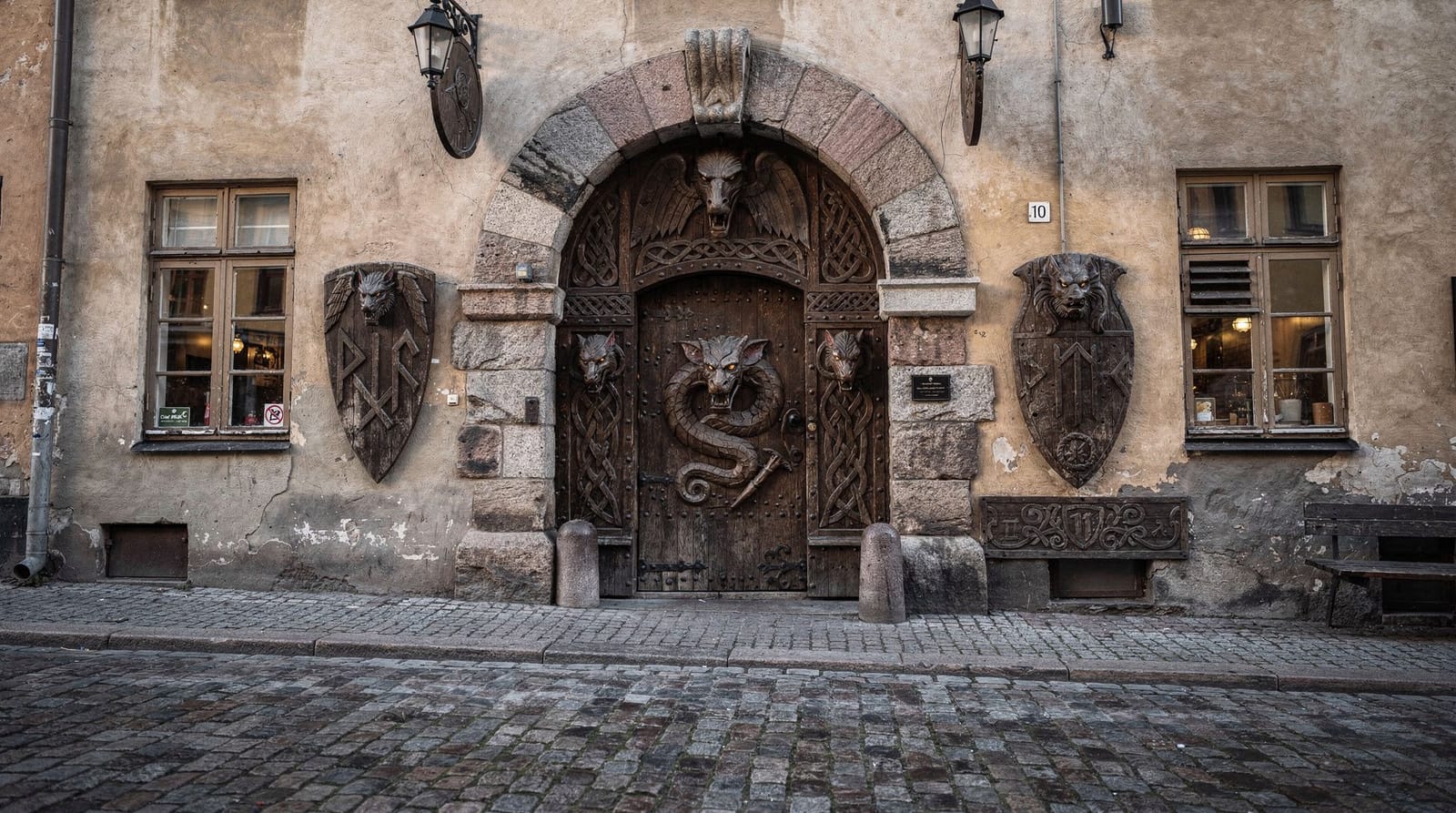
Gamla Stan has several restaurants built around a theatrical Viking atmosphere: longship beams, runic decorations, mead served in horns, staff in rough-woven tunics. The best-known are Aifur Krog (Västerlånggatan 68b) and Sjätte Tunnan (basement location, Gamla Stan).
The honest picture: Aifur is a genuine experience if you want the atmosphere and are willing to pay for it — expect 600–800 SEK per person. The food is competent Swedish-Scandinavian cooking. The theatre is real, not embarrassing, and children often love it.
The trap is the gap between expectation and reality. “Viking restaurant” suggests something rooted in authentic Swedish food culture. What it delivers is a tourist experience priced accordingly. If you want actual traditional Swedish food — husmanskost (home cooking), pickled herring, gravlax, meatballs — and do not need a costume, you will eat better and pay less at several other Gamla Stan locations.
The deeper issue is that the Viking Age in Stockholm’s specific location (Gamla Stan dates to 1252, well after the Viking Age ended around 1100) makes the branding historically approximate. Birka, a genuine UNESCO-listed Viking site 30 km from Stockholm, offers more authentic Viking context. See the Birka Viking day trip guide.
If the Viking theme is what draws you, spend it on something built to teach rather than to seat diners: a Viking museum visit with its exhibition and ride gives the story a proper frame, and our Viking Museum guide explains what to expect.
For the full picture on Viking restaurants: Viking-themed restaurants: what to actually expect.
Stockholm’s taxi deregulation problem
Sweden deregulated its taxi industry in 1990. The result was the abolition of fixed-price zones and the introduction of market pricing. In practice, for a city’s tourist areas and airports, this created a tiered market: regulated operators who display prices transparently, and unregulated operators who maximise revenue per fare.
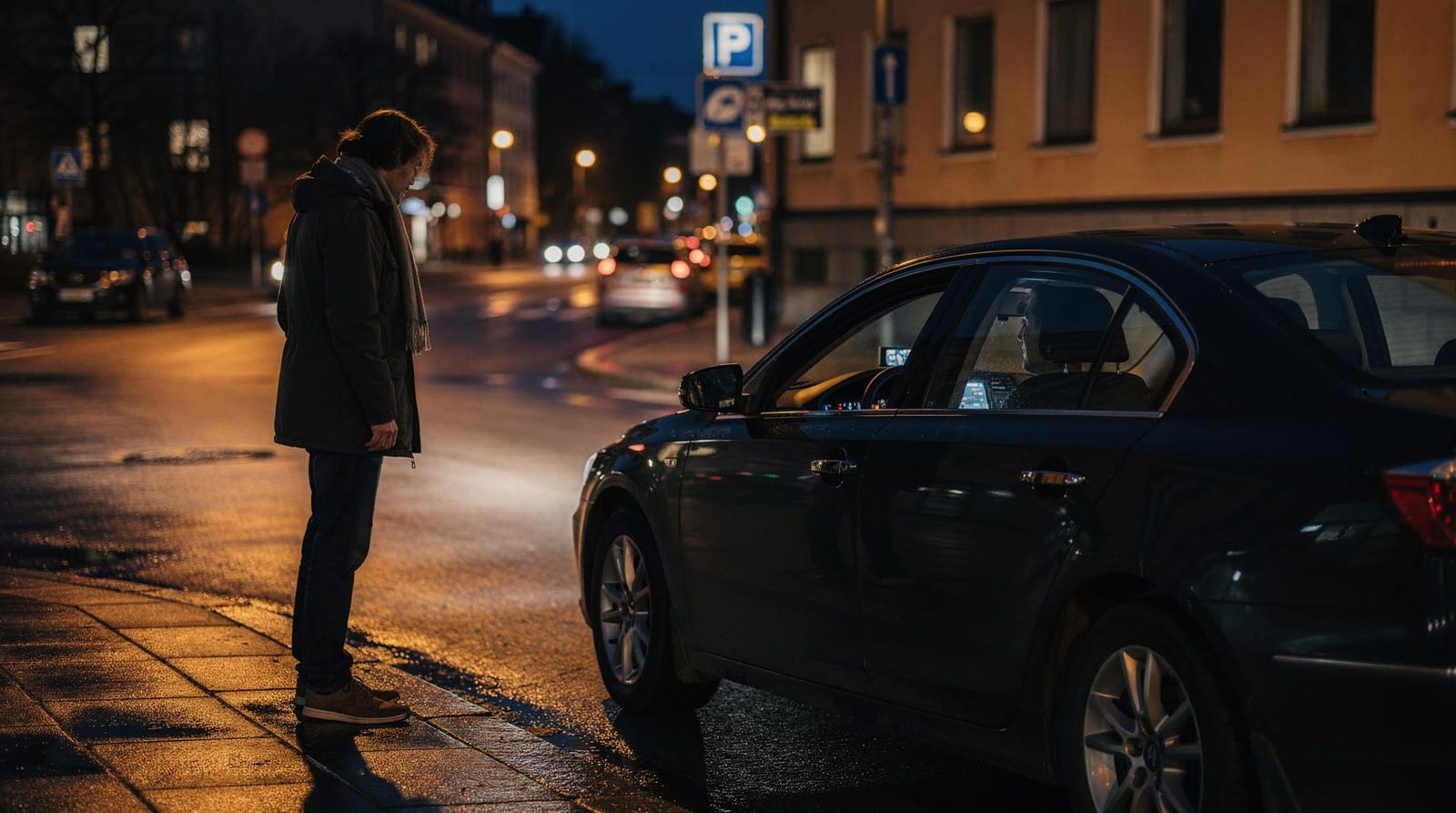
The worst manifestation is at Arlanda airport. Unlicensed vehicles — which may look identical to licensed taxis — approach arriving passengers at arrivals halls. A trip from Arlanda to central Stockholm (about 45 km) should cost approximately 500–700 SEK with a licensed operator. Unregulated operators have charged 2,000 SEK for the same journey.
How to avoid it: Book in advance (welcome pickups, private transfers via GetYourGuide), use Bolt or Uber, or take the commuter train (Pendeltåg) for 43 SEK. If you take a taxi, use Taxi Stockholm (yellow signs), Cabonline, or Sverigetaxi — all of which are regulated. Check the price sticker on the rear passenger window before getting in. The sticker is legally required to show the estimated fare for a standard 10-km trip in the city.
See the complete guide: Taxi scams in Stockholm: how to get the fare you expect.
The “free” walking tour tip economy
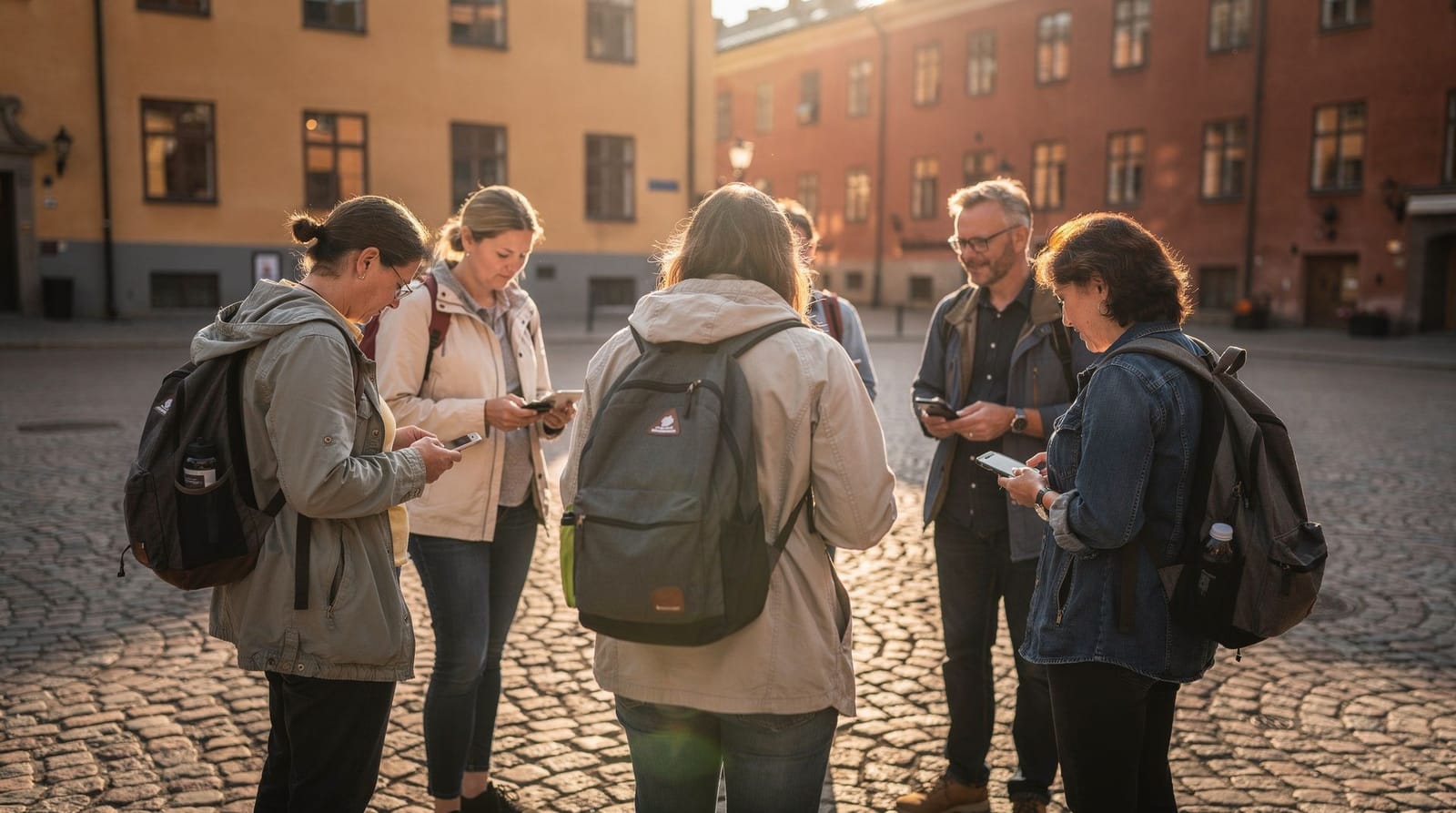
Stockholm has a well-developed free walking tour market — tours operated by companies including Free Tour Stockholm, Sandemans, and Strawberry Tours. The format is the same across Europe: no booking fee, just show up, guides work exclusively for tips.
The honest arithmetic: these companies recommend tips of 100–250 SEK per person. A group of 20 people tipping an average 150 SEK means a guide earns 3,000 SEK for a 2-hour tour — a reasonable Stockholm hourly rate. The guide has no salary fallback.
This is not a scam — the arrangement is disclosed on most booking platforms. But “free” is not accurate. A paid guided walking tour costs 250–400 SEK and includes a fixed-price contract with a professional guide. The tip pressure on free tours is real; some guides are explicit about it, others rely on social obligation.
The choice: if you are comfortable tipping at the 100–200 SEK level, free tours are good value — Stockholm’s free walking tours are generally well-informed and enthusiastic. If you find tip dynamics stressful, a paid tour is more comfortable. See the full comparison: Free walking tour Stockholm: what it actually costs.
If you decide the tip format suits you, a tip-based walking tour of the city is an easy way to get oriented on day one. Decide your tip amount beforehand, so the moment at the end is a calm choice rather than an awkward one. The wider options are laid out in the guide to free walking tours in Stockholm.
Overpriced souvenir shops
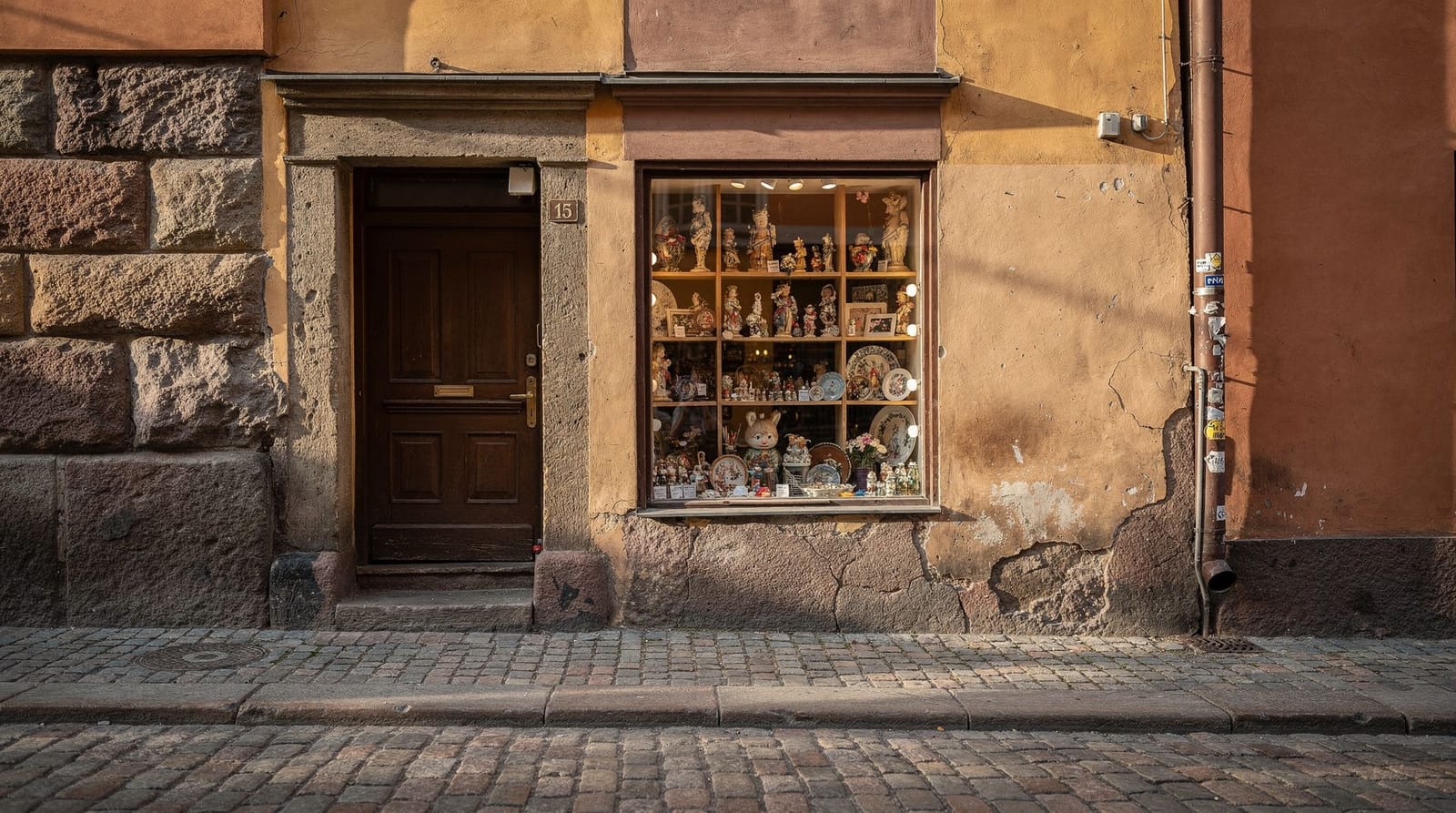
The tourist souvenir axis runs along Drottninggatan and through Gamla Stan. The products are recognisable: Dala horses (the painted wooden horse), Viking replicas, Swedish flag items, moose-related merchandise.
The pricing problem is not that these items are worthless — a Dala horse is a genuine piece of Swedish craft tradition. The problem is the price inflation that comes with location. A tourist-tier Dala horse on Drottninggatan: 150–300 SEK. The same quality item at the Stockholm City Museum gift shop or Designtorget: 80–150 SEK.
For genuinely high-quality Swedish craft goods at fair prices, the relevant destinations are:
- Iris Hantverk (Norrmalm, also Södermalm): traditional Swedish craft items — brushes, textiles, wooden goods — made by visually impaired craftspeople. Expensive but legitimately so.
- Svenskt Tenn (Östermalm): Sweden’s most prestigious design house, founded 1924. Not cheap, but real.
- Designtorget (multiple locations): a collective of independent Swedish designers. Mid-range prices, genuine design quality.
- NK department store (Norrmalm): the Stockholm equivalent of Selfridges. The gift section sells Swedish brands without the street markup.
See: Souvenir shopping in Stockholm: where to avoid and where to buy.
The Midsummer blindspot
Most travel guides cover Midsummer (Midsommar) as an attraction — and it is genuinely beautiful. What they often fail to state clearly: if you arrive in Stockholm for Midsummer weekend (the Friday–Sunday around June 20–21) expecting a functioning city, you will be surprised.
Sweden shuts down for Midsummer more completely than for any other holiday. Independent restaurants, most shops (except tourist shops and supermarkets), and many services close for two or three days. Stockholmers leave the city to celebrate in the countryside or on archipelago islands. The city itself is quiet.
What this means practically: if you visit during Midsummer, book restaurants and activities well in advance. Some venues will be open — Skansen holds a major public Midsummer celebration that is excellent. But do not plan a weekend of spontaneous restaurant exploration; plan a weekend where every meal is pre-booked or where you are comfortable eating at tourist establishments.
Free WiFi and the unwritten café rule
Swedish cafés broadly operate on an unwritten social code: you buy something to use the space. In tourist areas the rule is looser, but in neighbourhood cafés — particularly in Södermalm and Vasastan — sitting for two hours on a single coffee and using the WiFi is noticed and mildly frowned upon. This is not a scam, but it is a social norm worth knowing.
Practical advice: order a refill, or buy a piece of cake with your coffee. Swedish cafés are not aggressively money-grabbing; they simply operate on the assumption that using their space means being their customer.
SL ticket fines: a trap that catches honest confusion
This one is less about deliberate ripoffs and more about a system that punishes unfamiliarity. Stockholm’s SL transit network mixes barrier-gated T-bana stations with buses and trams where you are simply expected to have already validated a ticket before boarding. Visitors sometimes assume, from experience in other cities, that they can pay in cash on the bus or sort out a ticket after the fact. You cannot, reliably, and inspectors do check.
The cost of getting it wrong: an on-the-spot fine of around 1,500 SEK, issued regardless of whether the lack of a valid ticket was a genuine misunderstanding. There is no tourist grace period.
How to avoid it: buy tickets through the SL app before you travel, or get an SL Access card at a station machine or Pressbyrån kiosk. The SL pass guide covers the practical purchase process, and the SL pass vs individual tickets comparison helps decide which ticket type suits your itinerary.
Hop-on-hop-off overselling
Stockholm’s combined hop-on-hop-off bus-and-boat tickets are heavily marketed at hotel desks and tourist information points, often bundled with claims of covering “everything” in the city. They are a legitimate product, but for a first visit they are frequently oversold relative to what a guided walking tour delivers for similar or lower cost — a walking guide explains what you’re looking at, while a hop-on-hop-off route mostly moves you past it.
A guided Old Town walking tour is a straightforward, transparently priced alternative for a first morning in the city, and it avoids the common trap of buying a 24- or 72-hour hop-on-hop-off pass and then only using two of the stops. See the walking tour vs bus comparison for a fuller breakdown of when the bus-and-boat combo actually pays off.
The Stockholm Pass: when it is and is not worth it
The Stockholm Pass (Go City) is marketed strongly at Arlanda, on hotel desks, and at tourist information. At 107–108 USD for a one-day pass, it is worth the price only if you plan to visit three or more paid attractions on a single day.
The math: Vasa Museum (~240 SEK), Skansen (~200 SEK), ABBA Museum (~280 SEK) = approximately 720 SEK in individual tickets. A 1-day Stockholm Pass costs roughly 1,100 SEK. To break even, you need the three museums plus transit.
For most visitors — two museums over two days — the SL transit pass (140 SEK/24 hours) plus individual tickets will cost less. See the full analysis: SL pass vs Stockholm Pass: the honest maths.
Practical summary
| Trap | What to do instead |
|---|---|
| Västerlånggatan restaurants | Walk to Österlånggatan or Stortorget south side; check prices are posted |
| Viking-themed restaurants | Tradition, Den Gyldene Freden for real Swedish food |
| Unlicensed taxis | Bolt, Uber, or commuter train from Arlanda |
| ”Free” walking tours | Budget 150 SEK tip, or book a paid tour at 300–400 SEK |
| Souvenir street shops | Museum gift shops, Designtorget, Iris Hantverk |
| Stockholm Pass | Only buy if you plan 3+ museums in one day |
| Midsummer plans | Book everything in advance; Skansen celebrations are genuine |
Frequently asked questions about tourist traps in Stockholm
Is Stockholm generally safe for tourists?
Yes — Stockholm is one of Europe’s safest capitals. The ‘traps’ here are mostly about pricing opacity and mildly aggressive upselling, not crime. Standard urban vigilance (watch your bag on the T-bana, don’t accept drinks from strangers in bars) covers the genuine safety side.
How do I know if a Gamla Stan restaurant is overpriced?
Two tests: does it have prices posted outside, and is the menu English-only with no Swedish version? If both answers are yes, walk on. Reasonable Gamla Stan meals run 250–400 SEK per person plus a drink.
Are all Viking-themed restaurants a trap?
Not categorically. The trap is expecting Viking-restaurant prices to equal regular-restaurant prices. If you want actual Swedish food at normal prices, Tradition or Den Gyldene Freden are the right alternatives.
What is the safe way to get a taxi in Stockholm?
Use Bolt, Uber, or Cabonline (Sverigetaxi). If taking a metered taxi, check the price sticker on the rear passenger window before getting in. Taxi Stockholm (yellow signs) is the largest regulated operator.
Do I have to tip on free walking tours?
Legally, no. In practice, free walking tour guides earn entirely from tips. Budget 100–150 SEK per person as a standard tip.
Where can I buy Dala horses without being overcharged?
The Stockholm City Museum gift shop and Designtorget sell the same quality items as tourist strip shops at roughly half the price: 80–150 SEK versus 200–300 SEK.
What happens during Midsummer?
Most of Stockholm closes for 2–3 days. Stockholmers leave for the countryside. Book everything in advance or join the Skansen public celebration.